



Wine Market Size 2025-2029
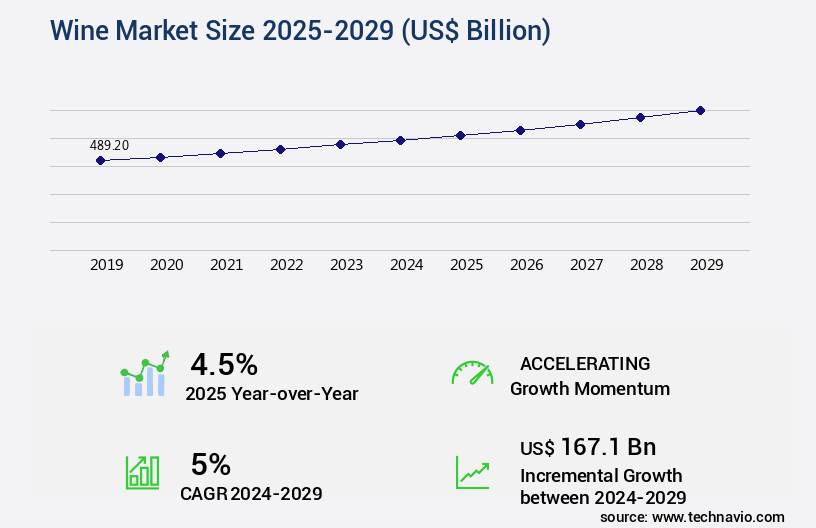
The wine market size is valued to increase USD 167.1 billion, at a CAGR of 5% from 2024 to 2029. Online sales channels gaining traction in global wine market will drive the wine market.
Major Market Trends & Insights
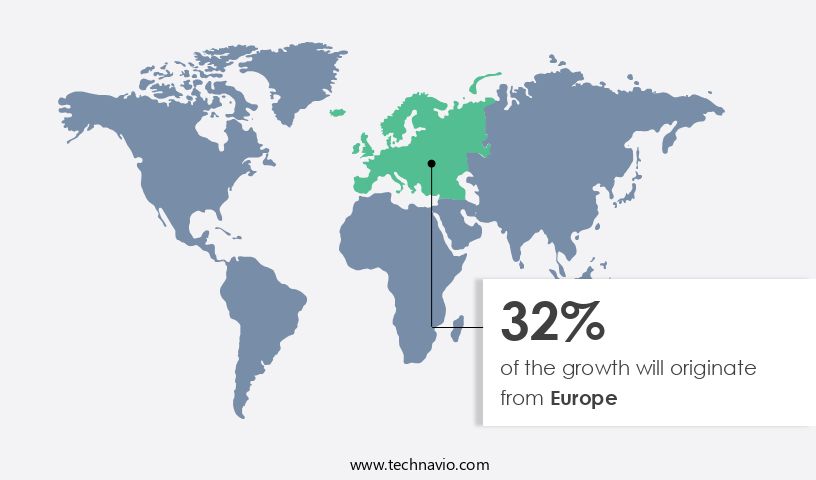
- Europe dominated the market and accounted for a 32% growth during the forecast period.
- By Distribution Channel - Off-trade segment was valued at USD 271.00 billion in 2023
- By Product - Red segment accounted for the largest market revenue share in 2023
Market Size & Forecast
- Market Opportunities: USD 57.09 billion
- Market Future Opportunities: USD 167.10 billion
- CAGR : 5%
- Europe: Largest market in 2023
Market Summary
- The market is a dynamic and evolving industry, characterized by the continuous unfolding of market activities and emerging patterns. Online sales channels are gaining significant traction in this market, with an estimated 3% annual growth rate in global wine sales through e-commerce platforms. Another notable trend is the increasing prominence of private-label brands, which are projected to account for over 15% of the total the market share by 2025. However, the market also faces challenges such as rising competition from other alcoholic beverages and evolving regulations.
- For instance, in the European Union, new labeling regulations have come into effect, requiring more detailed information on wine labels. These trends and challenges create opportunities for innovation and growth in the wine industry, making it an exciting space to watch.
What will be the Size of the Wine Market during the forecast period?
Get Key Insights on Market Forecast (PDF) Request Free Sample
How is the Wine Market Segmented and what are the key trends of market segmentation?
The wine industry research report provides comprehensive data (region-wise segment analysis), with forecasts and estimates in "USD billion" for the period 2025-2029, as well as historical data from 2019-2023 for the following segments.
- Distribution Channel
- Off-trade
- On-trade
- Product
- Red
- Fortified
- White
- Sparkling
- Pricing
- Economy
- Mid-Range
- Premium
- Super-Premium
- Geography
- North America
- US
- Canada
- Europe
- France
- Germany
- Italy
- UK
- Middle East and Africa
- Egypt
- KSA
- Oman
- UAE
- APAC
- China
- India
- Japan
- South America
- Argentina
- Brazil
- Rest of World (ROW)
- North America
By Distribution Channel Insights
The off-trade segment is estimated to witness significant growth during the forecast period.
In the dynamic and evolving the market, off-trade distribution channels have gained significant traction, with sales expected to expand substantially during the forecast period. This distribution method, which involves the sale of wine outside of bars, restaurants, and nightclubs, is popular due to its convenience for consumers who prefer to purchase and consume wine at home. The growth of the off-trade the market can be attributed to several factors. First, the proliferation of wine e-commerce portals has made it easier for consumers to access a wide range of wines from the comfort of their homes. Additionally, the increasing number of supermarkets, hypermarkets, and departmental stores worldwide offers consumers greater convenience and selection.
Moreover, sustainable winemaking practices, such as spectrophotometric measurements and volatile acidity analysis, have become essential in ensuring wine quality. Chromatographic analysis techniques and quality control parameters are used to maintain consistency and efficiency in wine production. Wine aging potential is influenced by various factors, including temperature and wine fermentation kinetics, which are carefully monitored during the production process. Sulfite addition protocols and vineyard management practices, such as ph control techniques and terroir influence, are crucial in maintaining the flavor profile and aroma compounds of wine. Wastewater treatment and microbial spoilage prevention are also essential aspects of sustainable winemaking.
Grapevine propagation techniques, ethanol concentration measurement, and sensory evaluation methods are used to ensure the optimal production of wine. Sugar content determination and sensory descriptors are essential in assessing the final product's quality. Wine filtration techniques are used to remove impurities and ensure a clear, consistent product. The market for wine is continually unfolding, with ongoing research and development in areas such as flavor profile development, acidity levels adjustment, and aroma compound analysis. The future of the market looks promising, with expectations of substantial growth in sales due to increasing consumer demand and the expanding distribution network.
Specifically, sales of off-trade wine are projected to increase by 15% during the forecast period. Furthermore, The market is expected to reach a value of USD350 billion by 2027, growing at a rate of 5% annually. These figures reflect the significant potential and ongoing evolution of the market.
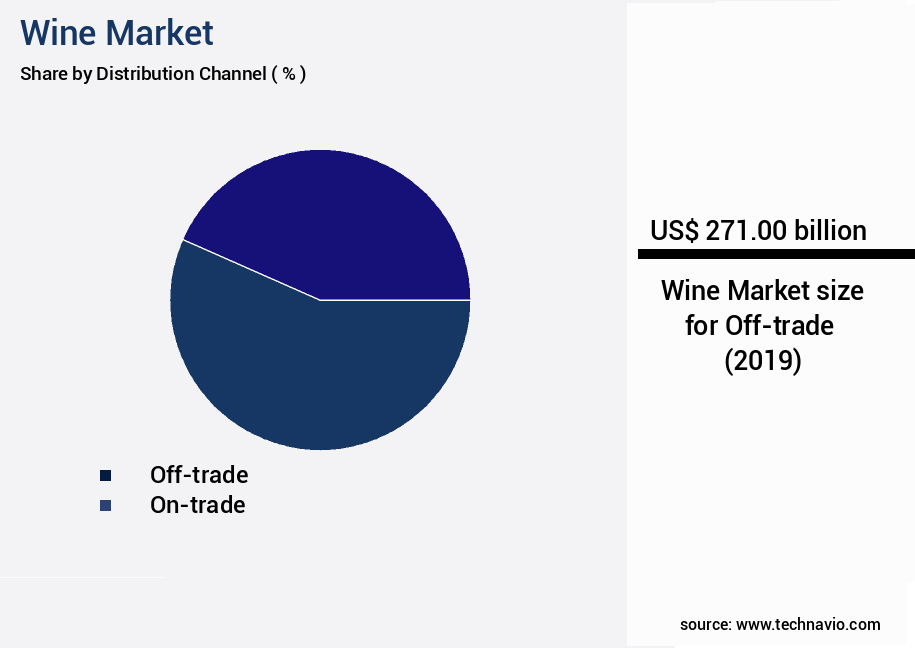
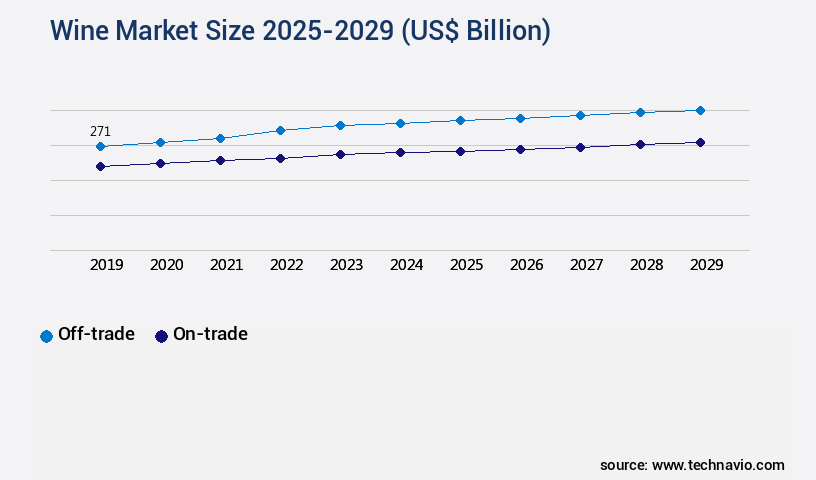
The Off-trade segment was valued at USD 271.00 billion in 2019 and showed a gradual increase during the forecast period.
Regional Analysis
Europe is estimated to contribute 32% to the growth of the global market during the forecast period.Technavio's analysts have elaborately explained the regional trends and drivers that shape the market during the forecast period.
See How Wine Market Demand is Rising in Europe Request Free Sample
In Europe, the market holds a significant position globally, accounting for a substantial market share. The region's dominance is attributed to the presence of key wine-producing and consuming countries like Portugal, France, Italy, and Switzerland. The market's growth is underpinned by a steady increase in demand, particularly in Eastern Europe. With breweries and wineries being among the largest businesses in Europe, the sector presents substantial employment opportunities. The off-trade consumption of wine in Europe outpaces on-trade consumption, making it an essential market segment.
The elderly population, with its high demand for premium wines, is a significant consumer base. companies in Europe can capitalize on this trend by focusing on new product launches and effective marketing strategies. This approach is expected to yield a favorable return on investment during the forecast period.
Market Dynamics
Our researchers analyzed the data with 2024 as the base year, along with the key drivers, trends, and challenges. A holistic analysis of drivers will help companies refine their marketing strategies to gain a competitive advantage.
The market is a dynamic and intricate industry, shaped by various factors that influence the production, aging, and consumer preferences for this beloved beverage. One of the critical aspects of winemaking is the impact of oak type on wine aging, with American oak imparting vanilla and coconut notes, while French oak contributes to more subtle flavors and aromas. The relationship between terroir and wine aroma is another essential element, with the unique environmental conditions of vineyards contributing to distinct aroma compounds in different grape varieties. For instance, analysis of aroma compounds in Pinot Noir from Burgundy and Oregon reveals notable differences, enhancing the allure of terroir-driven wines.
Fermentation temperature plays a crucial role in wine quality, with optimal temperatures ensuring the desired balance between alcohol production and preservation of aroma compounds. Moreover, the influence of malolactic fermentation on wine flavor is significant, as it converts malic acid to lactic acid, softening the wine's taste and texture. Optimization of wine filtration for clarity is essential, with advanced filtration techniques enabling the removal of unwanted particles while preserving the wine's delicate flavors and aromas. The role of yeast strain in wine fermentation is another critical factor, with different strains producing distinct flavor profiles and aromas.
Controlling volatile acidity during winemaking is vital, as excessive levels can negatively impact wine quality. Measuring phenolic compounds in red wine is also essential, as they contribute to color, astringency, and antioxidant properties. The application of spectroscopy for wine quality control has gained significant attention, enabling non-destructive analysis of wine composition and ensuring consistent product quality. Development of novel wine preservation methods and improvement of wine quality through precision viticulture are other key trends shaping the market. Consumer preferences for wine style vary significantly, with some favoring full-bodied reds, while others prefer crisp whites or rosés.
Evaluation of consumer preferences for wine style is essential for producers, as it informs marketing strategies and product development. Sustainable practices are increasingly important in wine production, with techniques such as reduced sulfite addition, grape maturity optimization, and controlled oxidation in white wine production gaining popularity. Assessment of wine aging potential and optimization of wine fermentation parameters are other critical aspects of winemaking, ensuring the production of high-quality wines that meet consumer expectations. Comparatively, more than 70% of new product developments in the wine industry focus on enhancing consumer experience and catering to evolving preferences, reflecting the market's dynamic nature.
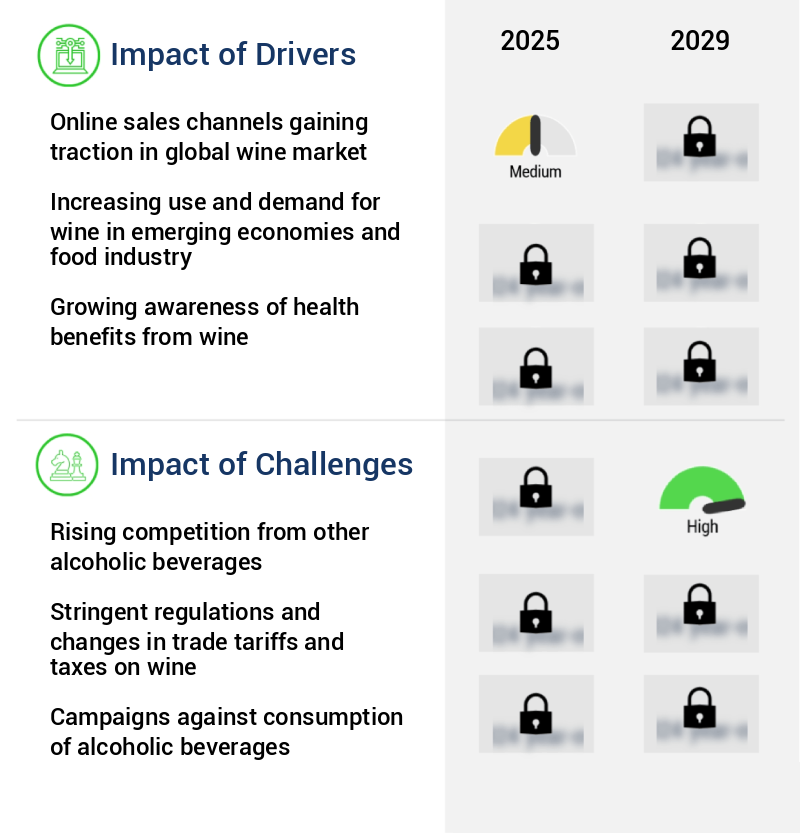
What are the key market drivers leading to the rise in the adoption of Wine Industry?
- The market is experiencing significant growth due to the increasing popularity and prevalence of online sales channels.
- The market experiences continuous expansion as consumers increasingly turn to online shopping for its convenience and price comparison advantages. Online stores and specialty retailers offer a vast selection, driving market growth during the forecast period. Key players, such as WineWell and LiquorKart, strengthen the online distribution landscape, propelling the growth of online wine sales. This shift offers companies the opportunity to expand their customer base beyond geographical boundaries, streamline operations, and cater to individual consumer preferences.
- The online the market's dynamic nature underscores its potential for ongoing growth and innovation.
What are the market trends shaping the Wine Industry?
- The rising prevalence of private-label brands represents a significant market trend in the business landscape. Private labels are increasingly gaining prominence within the market.
- Private-label wine is experiencing significant attention from retailers worldwide, driving the expansion of the market. Retailers, including grocery stores, are increasingly introducing their own branded wines to cater to the escalating consumer demand and secure higher profitability. The private-label sector has witnessed substantial growth in the last decade, with major players such as Alibaba offering a range of sparkling wines under their labels. Retailers benefit from private-label wines by securing profit margins that are 10% to 15% higher than those of national and global brands. The private-label category's growth is a response to the evolving consumer preferences and the increasing competition in the wine industry.
- This trend is not confined to any specific region, with retailers in various parts of the world embracing the private-label strategy to meet the growing demand for affordable, high-quality wine offerings. The continuous expansion of the private-label the market underscores its potential as a lucrative business opportunity for retailers.
What challenges does the Wine Industry face during its growth?
- The alcoholic beverages industry faces significant growth challenges due to increasing competition from various other beverage categories.
- The market encounters escalating competition from various alcoholic beverages, potentially influencing its expansion and appeal. Several factors fuel this competition: First, the accessibility and affordability of alternatives, such as beer and spirits, pose a significant challenge to wine. These beverages are widely distributed across regions and can offer more economical options compared to wine. Second, evolving consumer preferences contribute to the competition. Younger demographics often lean towards sweeter and more flavorful alcoholic beverages, diverting attention away from the traditional taste of wine. Third, the growing popularity of imported brands in the alcoholic beverage sector can also impact The market.
- Consumers' increasing preference for international offerings in beer, spirits, and cocktails can lead to a decline in wine consumption. In conclusion, The market faces stiff competition from various alcoholic beverages, driven by factors like availability, changing consumer preferences, and the growing popularity of imported brands.
Exclusive Technavio Analysis on Customer Landscape
The wine market forecasting report includes the adoption lifecycle of the market, covering from the innovator's stage to the laggard's stage. It focuses on adoption rates in different regions based on penetration. Furthermore, the wine market report also includes key purchase criteria and drivers of price sensitivity to help companies evaluate and develop their market growth analysis strategies.
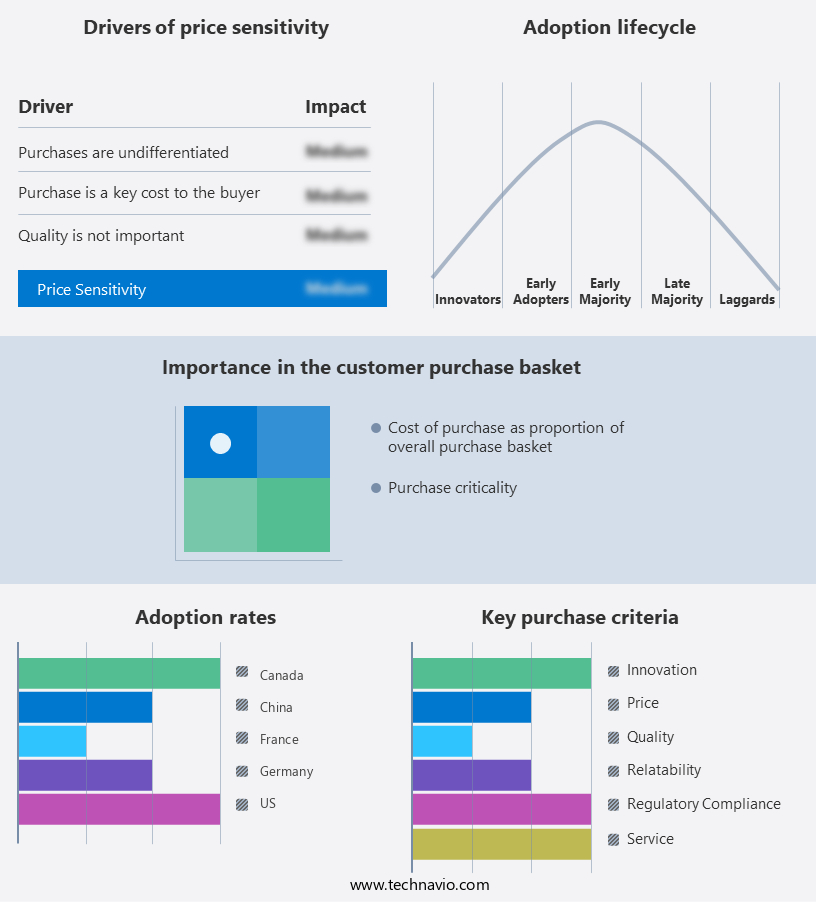
Customer Landscape of Wine Industry
Competitive Landscape
Companies are implementing various strategies, such as strategic alliances, wine market forecast, partnerships, mergers and acquisitions, geographical expansion, and product/service launches, to enhance their presence in the industry.
Accolade Wines - This company specializes in producing a range of wines, including Pinot Gris, Sauvignon Blanc, and Riesling, showcasing a commitment to diverse viniculture. Their offerings reflect an expertise in winemaking, providing consumers with high-quality options.
The industry research and growth report includes detailed analyses of the competitive landscape of the market and information about key companies, including:
- Accolade Wines
- Casella Family Brands
- Changyu Pioneer Wine Company
- Concha y Toro
- Constellation Brands, Inc.
- E. & J. Gallo Winery
- Fetzer Vineyards
- Jackson Family Wines
- Johanniter-Weinkellerei GmbH
- LVMH Moët Hennessy Louis Vuitton
- Maison Louis Jadot
- Miguel Torres S.A.
- Pernod Ricard S.A.
- Treasury Wine Estates Limited
- Trinchero Family Estates
- Viña Concha y Toro S.A.
- Vivino ApS
- When in Rome Wine
- Yellow Tail (Casella Family Brands)
- Zonin1821
Qualitative and quantitative analysis of companies has been conducted to help clients understand the wider business environment as well as the strengths and weaknesses of key industry players. Data is qualitatively analyzed to categorize companies as pure play, category-focused, industry-focused, and diversified; it is quantitatively analyzed to categorize companies as dominant, leading, strong, tentative, and weak.
Recent Development and News in Wine Market
- In January 2024, Constellation Brands, a leading wine producer, announced the acquisition of a significant stake in a Chilean winemaker, Viña Concha y Toro, marking a significant geographic expansion for the company (Constellation Brands Press Release, 2024). This strategic move aimed to strengthen Constellation Brands' position in The market and expand its presence in South America.
- In March 2024, Treasury Wine Estates, another major player in the wine industry, unveiled a new range of vegan-friendly wines under its Penfolds label, catering to the growing demand for plant-based products (Treasury Wine Estates Press Release, 2024). This strategic product launch demonstrated the company's commitment to innovation and consumer trends.
- In May 2024, Diageo, the world's leading spirits company, entered the market through its acquisition of a majority stake in Prosecco producer, Casa Vallone (Diageo Press Release, 2024). This move marked a significant strategic shift for Diageo, expanding its portfolio beyond spirits and into the wine sector.
- In February 2025, the European Union granted approval to the United States Trade Representative's proposal to eliminate tariffs on wine imports between the EU and the US (European Commission Press Release, 2025). This regulatory approval is expected to boost cross-border trade and increase market access for wine producers in both regions.
Dive into Technavio's robust research methodology, blending expert interviews, extensive data synthesis, and validated models for unparalleled Wine Market insights. See full methodology.
|
Market Scope |
|
|
Report Coverage |
Details |
|
Page number |
202 |
|
Base year |
2024 |
|
Historic period |
2019-2023 |
|
Forecast period |
2025-2029 |
|
Growth momentum & CAGR |
Accelerate at a CAGR of 5% |
|
Market growth 2025-2029 |
USD 167.1 billion |
|
Market structure |
Fragmented |
|
YoY growth 2024-2025(%) |
4.5 |
|
Key countries |
US, Canada, Germany, UK, Italy, France, China, India, Japan, Brazil, Egypt, UAE, Oman, Argentina, KSA, UAE, Brazil, and Rest of World (ROW) |
|
Competitive landscape |
Leading Companies, Market Positioning of Companies, Competitive Strategies, and Industry Risks |
Research Analyst Overview
- In the dynamic and evolving world of wine production, various techniques and practices continually shape the industry's landscape. One significant area of focus is the implementation of advanced analytical methods to ensure consistent quality and efficiency. Spectrophotometric measurements and chromatographic analysis techniques play a crucial role in assessing wine quality by determining parameters such as volatile acidity, ethanol concentration, and colorimetric properties. These analyses offer valuable insights into the wine's aging potential and production efficiency. Bottling procedures require stringent quality control, with sulfite addition protocols and titration techniques employed to maintain optimal preservation and stability. Sustainable winemaking practices, such as vineyard management and grape variety selection, are increasingly influential in the market, with consumers demanding environmentally friendly production methods.
- Temperature control during fermentation and aging significantly impacts wine quality. Wine fermentation kinetics and malolactic fermentation processes are essential aspects of winemaking, with temperature regulation crucial for optimal flavor profile development and aroma compound analysis. Sensory evaluation methods, including sensory descriptors and sensory descriptive analysis, are integral to understanding consumer preferences and market trends. Wastewater treatment and microbial spoilage prevention are also essential aspects of modern winemaking, ensuring a clean and safe production process. The influence of terroir on wine character continues to be a topic of interest, with ph control techniques and grapevine propagation methods essential for optimizing vineyard conditions.
- Clarification methods and tartaric acid stabilization are critical for ensuring a clear and stable final product. In summary, the market is characterized by continuous innovation and improvement, with a focus on advanced analytical techniques, sustainable practices, and consumer preferences shaping the industry's future.
What are the Key Data Covered in this Wine Market Research and Growth Report?
-
What is the expected growth of the Wine Market between 2025 and 2029?
-
USD 167.1 billion, at a CAGR of 5%
-
-
What segmentation does the market report cover?
-
The report segmented by Distribution Channel (Off-trade and On-trade), Product (Red, Fortified, White, and Sparkling), Geography (Europe, APAC, North America, South America, and Middle East and Africa), and Pricing (Economy, Mid-Range, Premium, and Super-Premium)
-
-
Which regions are analyzed in the report?
-
Europe, APAC, North America, South America, and Middle East and Africa
-
-
What are the key growth drivers and market challenges?
-
Online sales channels gaining traction in global wine market, Rising competition from other alcoholic beverages
-
-
Who are the major players in the Wine Market?
-
Key Companies Accolade Wines, Casella Family Brands, Changyu Pioneer Wine Company, Concha y Toro, Constellation Brands, Inc., E. & J. Gallo Winery, Fetzer Vineyards, Jackson Family Wines, Johanniter-Weinkellerei GmbH, LVMH Moët Hennessy Louis Vuitton, Maison Louis Jadot, Miguel Torres S.A., Pernod Ricard S.A., Treasury Wine Estates Limited, Trinchero Family Estates, Viña Concha y Toro S.A., Vivino ApS, When in Rome Wine, Yellow Tail (Casella Family Brands), and Zonin1821
-
Market Research Insights
- The market encompasses a dynamic and intricate industry, characterized by ongoing advancements in production techniques and consumer preferences. Approximately 270 million hectoliters of wine were produced worldwide in 2020, representing a 3% increase from the previous year. This growth can be attributed to various factors, including cost reduction strategies, oenological practices, and wine production automation. For instance, grape harvesting technology and precision viticulture have streamlined the harvesting process, while microbial diversity assessment and quality control testing ensure consistent product quality. Additionally, the adoption of advanced fermentation vessel designs, aging vessel materials, and chemical analysis techniques contribute to the development of superior wine varieties.
- The integration of sensory profiling methods and consumer perception analysis further enhances the overall wine production process, ensuring a product that caters to evolving market demands. Wine aging technology, bottling line optimization, and wine stabilization methods also play crucial roles in maintaining the market's competitiveness.
We can help! Our analysts can customize this wine market research report to meet your requirements.
 RIA -
RIA -