



Wheel Loaders Market Size 2025-2029
The wheel loaders market size is forecast to increase by USD 30.24 billion, at a CAGR of 10.4% between 2024 and 2029.
- The market is experiencing significant growth, driven by escalating investments in public infrastructure projects and the increasing preference for compact and efficient machinery. These factors are leading to an uptick in demand for wheel loaders, particularly in the construction and mining industries. Furthermore, the rental equipment sector is gaining momentum, providing businesses with flexible and cost-effective solutions for their equipment needs. However, the market faces challenges, including the rising cost of raw materials and increasing competition from other types of heavy machinery.
- Manufacturers must innovate and differentiate their offerings to remain competitive, focusing on enhancing the efficiency, productivity, and versatility of their wheel loaders. Companies that can effectively address these challenges and capitalize on the market's growth opportunities will be well-positioned for success.
What will be the Size of the Wheel Loaders Market during the forecast period?
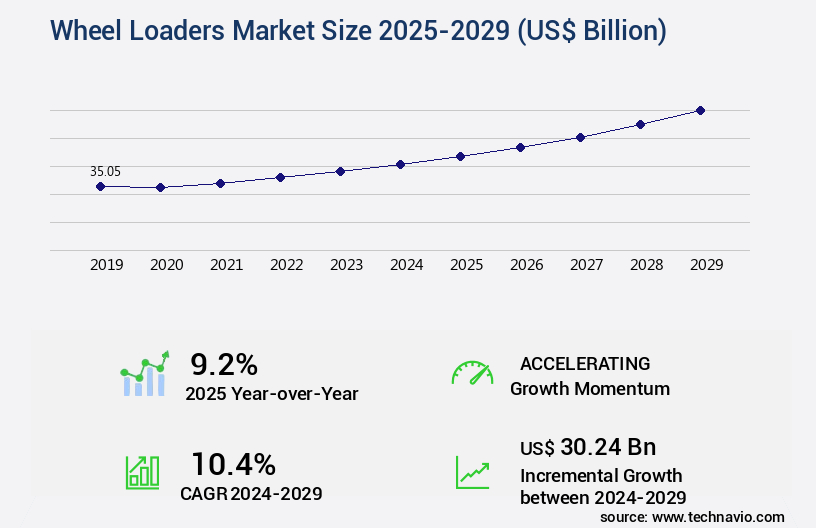
Explore in-depth regional segment analysis with market size data - historical 2019-2023 and forecasts 2025-2029 - in the full report.
Request Free Sample
The wheel loader market continues to evolve, driven by advancements in technology and shifting industry trends. Applications span various sectors, including material handling in construction, waste management, and precision agriculture. Operating costs remain a key focus, with ongoing developments in hydraulic systems, remote diagnostics, and alternative fuels. Compact track loaders have gained popularity due to their versatility and reduced environmental impact. Waste management applications benefit from advanced hydraulic systems and cab features, ensuring efficient and safe operations. Safety regulations, operator training, and rental market trends continue to shape the industry. Cab features, such as improved operator comfort and machine monitoring, enhance productivity and reduce fatigue.
Hydraulic pumps, motors, and electronic controls have undergone significant advancements, contributing to increased efficiency and performance. The ongoing integration of autonomous operation, AI, and machine learning further transforms the market landscape. The component lifecycle, maintenance intervals, and emission regulations also play crucial roles in market dynamics. The evolving nature of the wheel loader market continues to unfold, with lease agreements, financing options, and environmental impact becoming increasingly important considerations.
How is this Wheel Loaders Industry segmented?
The wheel loaders industry research report provides comprehensive data (region-wise segment analysis), with forecasts and estimates in "USD billion" for the period 2025-2029, as well as historical data from 2019-2023 for the following segments.
- End-user
- Construction
- Agriculture
- Power Output
- More than 80 HP
- 40 to 80 HP
- Less than 40 HP
- Geography
- North America
- US
- Canada
- Europe
- France
- Germany
- UK
- APAC
- China
- India
- Japan
- South Korea
- South America
- Brazil
- Rest of World (ROW)
- North America
By End-user Insights
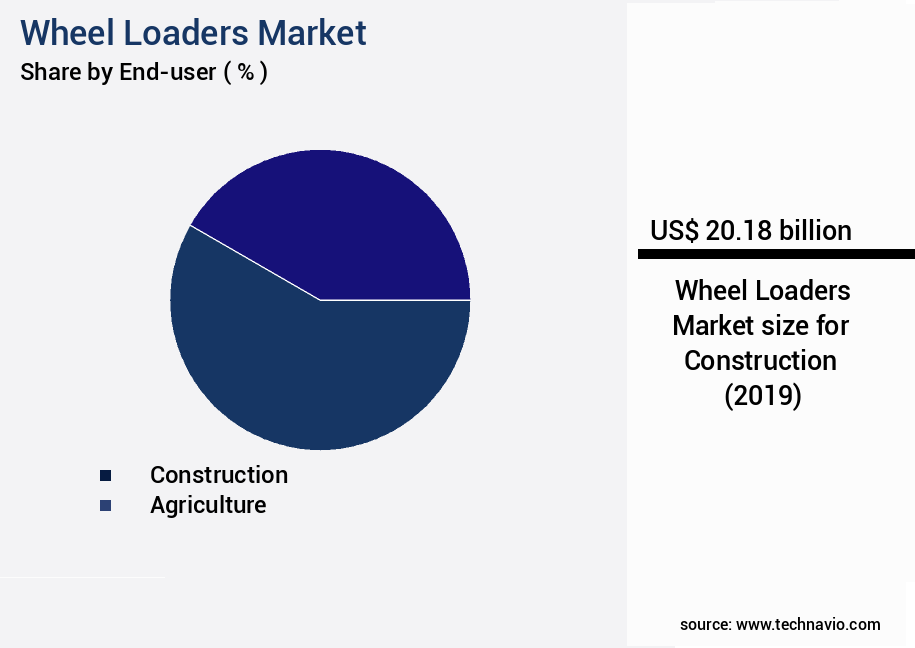
The construction segment is estimated to witness significant growth during the forecast period.
The market witnessed notable expansion in the construction sector in 2024, fueled by urbanization and population growth. Infrastructure development, such as roads, bridges, airports, and residential complexes, necessitated the use of wheel loaders. Government investments in public works projects further propelled market growth. Technological innovations, including hybrid and electric hydraulic systems, improved fuel efficiency and reduced emissions, aligning with the global focus on sustainability. Engine management systems optimized performance and emissions control, encouraging wheel loader adoption. Dealers provided essential support through extensive service networks and parts availability. Autonomous operation and remote diagnostics enhanced productivity and safety. Backhoe loaders and compact track loaders catered to various material handling needs.
Precision agriculture and waste management applications expanded the market scope. Operating costs, including financing options, remained a crucial consideration. Lift height, safety systems, and operator comfort were essential features. Compliance with safety regulations and emission standards was mandatory. Operator training ensured efficient and safe machine operation. The rental market offered flexibility. Electronic controls and maintenance intervals streamlined machine maintenance. Component lifecycle and control systems ensured optimal performance. Hydraulic motors and skid steer loaders catered to diverse material handling requirements. Fuel efficiency and payload capacity were significant factors. Machine monitoring and quick couplers facilitated seamless operations. Hybrid technology further optimized performance and reduced environmental impact.
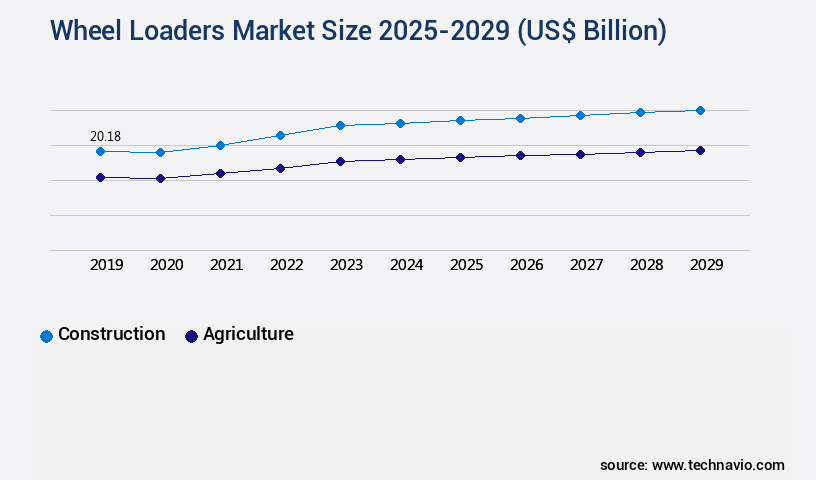
The Construction segment was valued at USD 20.18 billion in 2019 and showed a gradual increase during the forecast period.
Regional Analysis
APAC is estimated to contribute 32% to the growth of the global market during the forecast period. Technavio's analysts have elaborately explained the regional trends and drivers that shape the market during the forecast period.

The wheel loader market is witnessing significant growth due to the increasing demand for material handling equipment in various industries, particularly construction and agriculture. GPS guidance technology is increasingly being adopted for improved machine efficiency and productivity. Dealers provide essential support through service networks and parts availability, ensuring seamless operations. Alternative fuels, such as biodiesel and hydrogen, are gaining traction for their environmental benefits. Backhoe loaders and compact track loaders are popular choices for material handling in construction and waste management applications. Engine performance and fuel efficiency are key considerations, with tier emissions standards driving innovation in control systems and hydraulic motors.
Lease agreements offer flexible financing options, while autonomous operation and remote diagnostics enhance safety and productivity. Precision agriculture and waste management applications are expanding the market's reach. Operating costs, including maintenance intervals and component lifecycle, are crucial factors influencing purchasing decisions. Safety regulations and operator training ensure safe and efficient machine operation. The rental market offers flexibility for businesses, while electronic controls and hydraulic systems streamline machine performance. Lift height, safety systems, and artificial intelligence are advancing machine capabilities. Operator comfort and resale value are essential for long-term investment. Environmental impact and financing options are critical considerations for environmentally-conscious businesses.
Hybrid technology is an emerging trend, offering a balance between performance and sustainability.
Market Dynamics
Our researchers analyzed the data with 2024 as the base year, along with the key drivers, trends, and challenges. A holistic analysis of drivers will help companies refine their marketing strategies to gain a competitive advantage.
Wheel loaders, versatile heavy machinery, are integral to various industries, including construction, agriculture, and mining. These powerful machines, characterized by their wheeled chassis and robust loading buckets, facilitate material handling and transportation. The market trends reflect an increasing focus on fuel efficiency, productivity, and operator comfort. Technological advancements, such as intelligent hydraulics and telematics, enhance performance and ease of use. Manufacturers continuously innovate to meet evolving customer needs, offering wheel loaders with diverse specifications, attachments, and sizes. The market's growth is driven by infrastructure development, agricultural modernization, and the mining sector's expansion. Additionally, rental services and used wheel loader sales contribute to the market's dynamic landscape. With ongoing research and development, the market is poised to deliver innovative solutions, ensuring continued growth and competitiveness.
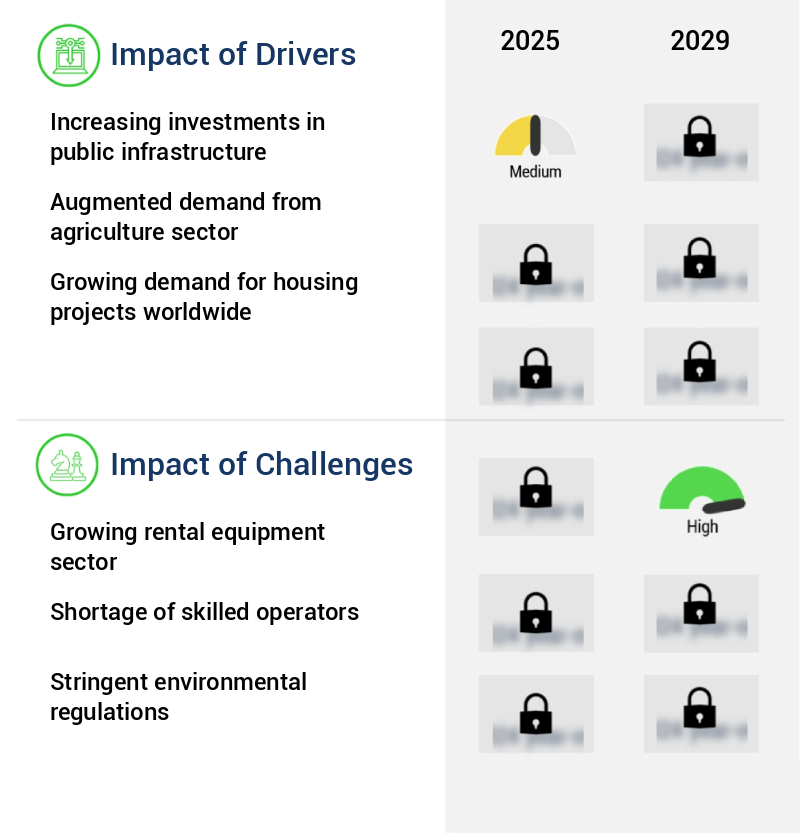
What are the key market drivers leading to the rise in the adoption of Wheel Loaders Industry?
- A significant increase in public infrastructure investments serves as the primary catalyst for market growth.
- Wheel loaders play a crucial role in the construction industry, facilitating material handling and transportation on worksites. With population growth and subsequent demand for residential and commercial development, infrastructure projects are underway in various developing countries, including the UAE, Saudi Arabia, India, China, and others. These projects are driving the need for wheel loaders due to their versatility in handling materials like dirt, gravel, and asphalt. Moreover, advancements in technology have led to improvements in wheel loader functionality, such as GPS guidance for increased efficiency and dealer support for maintenance and service networks. Additionally, the shift towards alternative fuels, like biodiesel and hydrogen, is gaining traction in the industry.
- Lease agreements offer flexible financing options for businesses, while advancements in engine performance and autonomous operation further enhance the appeal of wheel loaders. The parts availability and service networks ensure minimal downtime, making these machines an essential investment for construction projects.
What are the market trends shaping the Wheel Loaders Industry?
- The increasing preference for compact and efficient wheel loaders represents a significant market trend. This trend is driven by the growing demand for machinery that offers improved productivity and reduced operational costs.
- The market is experiencing growth due to the rising adoption of compact and efficient models in various industries, including construction, agriculture, and waste management. Compact wheel loaders offer advantages such as enhanced maneuverability and the ability to operate in confined spaces, making them suitable for urban projects and smaller operations. Moreover, technological advancements have led to the development of fuel-efficient and eco-friendly models, aligning with increasing environmental regulations and the push for sustainable practices. The integration of advanced features, such as telematics, automation, and improved cab comfort, further enhances the appeal of these machines.
- Operating costs are a significant consideration in the market, with hydraulic systems and steering systems playing crucial roles in optimizing efficiency. Remote diagnostics and operator training programs are also essential for minimizing downtime and ensuring optimal performance. The rental market is another key driver, providing flexibility and affordability for businesses with fluctuating equipment needs.
What challenges does the Wheel Loaders Industry face during its growth?
- The expanding rental equipment sector poses a significant challenge to the industry's growth trajectory.
- Wheel loaders, a significant investment in construction machinery, face challenges for small-scale or short-term projects due to their high cost and limited ROI. The economic downturn intensified this issue, leading construction companies to explore alternative solutions. Renting machinery for specific timeframes has emerged as a popular choice, allowing companies to save on upfront costs and eliminate maintenance expenses. Advancements in technology, such as electronic controls and AI-driven control systems, have enhanced wheel loader functionality and efficiency. Tier emissions standards ensure that these machines adhere to environmental regulations, while safety systems prioritize operator comfort and equipment protection.
- Maintenance intervals have been extended due to these advanced components, reducing the overall cost of ownership. As technology progresses, the component lifecycle is prolonged, further increasing the value of the investment. These factors contribute to the resale value of wheel loaders, making them a financially sound choice for construction companies. In conclusion, the wheel loader market is evolving, with technological advancements and rental options providing flexibility and cost savings for construction companies. The focus on safety systems, operator comfort, and emission regulations ensures that these machines meet the demands of modern construction projects while maintaining a strong resale value.
Exclusive Customer Landscape
The wheel loaders market forecasting report includes the adoption lifecycle of the market, covering from the innovator's stage to the laggard's stage. It focuses on adoption rates in different regions based on penetration. Furthermore, the wheel loaders market report also includes key purchase criteria and drivers of price sensitivity to help companies evaluate and develop their market growth analysis strategies.
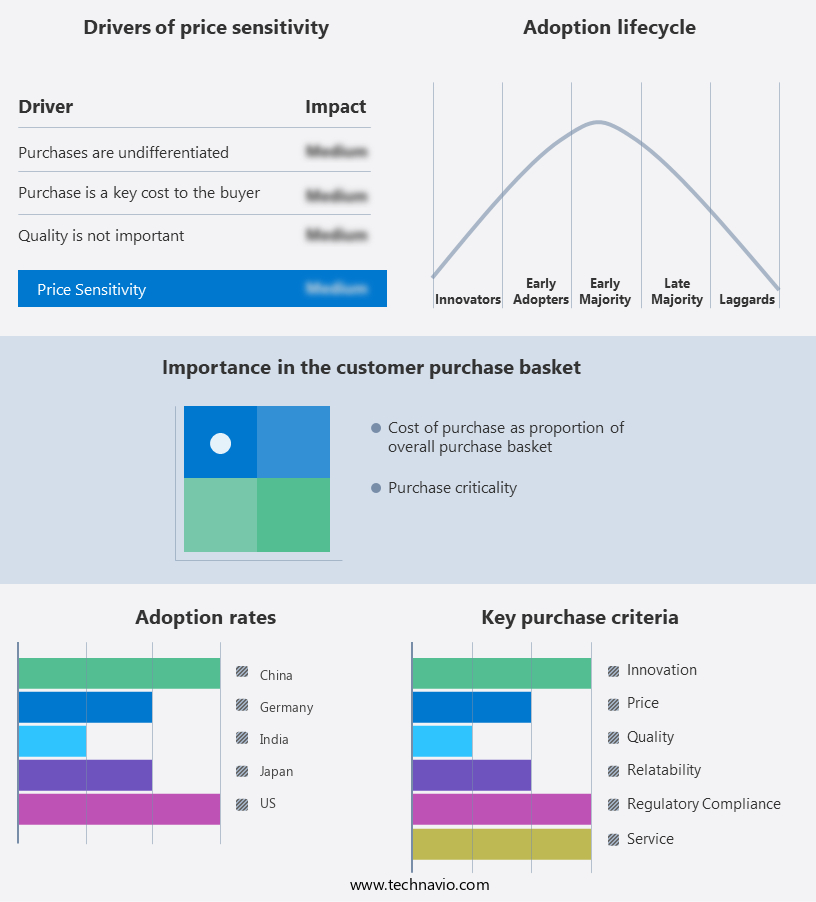
Customer Landscape
Key Companies & Market Insights
Companies are implementing various strategies, such as strategic alliances, wheel loaders market forecast, partnerships, mergers and acquisitions, geographical expansion, and product/service launches, to enhance their presence in the industry.
AB Volvo - The company specializes in providing advanced wheel loader models, including the L350H, L260H, and L220H.
The industry research and growth report includes detailed analyses of the competitive landscape of the market and information about key companies, including:
- AB Volvo
- AGCO Corp.
- Caterpillar Inc.
- CNH Industrial NV
- Deere and Co.
- Doosan Corp.
- Groupe Mecalac SAS
- Hidromek Hidrolik ve Mekanik Makina Imalat Sanayi ve Ticaret A.S.
- Hitachi Ltd.
- Hyundai Heavy Industries Co. Ltd.
- J C Bamford Excavators Ltd.
- Komatsu Ltd.
- Liebherr International AG
- Lonking Holdings Ltd.
- Manitou BF SA
- Sany Group
- Schaffer Maschinenfabrik GmbH
- Shandong Heavy Industry Group Co. Ltd.
- Wacker Neuson SE
- Yanmar Holdings Co. Ltd.
Qualitative and quantitative analysis of companies has been conducted to help clients understand the wider business environment as well as the strengths and weaknesses of key industry players. Data is qualitatively analyzed to categorize companies as pure play, category-focused, industry-focused, and diversified; it is quantitatively analyzed to categorize companies as dominant, leading, strong, tentative, and weak.
Recent Development and News in Wheel Loaders Market
- In January 2024, Caterpillar Inc., a leading manufacturer of construction equipment, launched its new 992K XE wheel loader, featuring improved fuel efficiency and enhanced operator experience (Caterpillar Inc. Press release).
- In March 2024, Volvo Construction Equipment and Liebherr signed a strategic partnership to co-develop and manufacture electric wheel loaders, aiming to reduce emissions and enhance sustainability in the construction industry (Volvo Construction Equipment press release).
- In April 2025, Terex Corporation announced the acquisition of Mecalac, a French manufacturer of compact wheel loaders, expanding Terex's product portfolio and strengthening its presence in the European market (Terex Corporation press release).
- In May 2025, the European Union approved new emission regulations for wheel loaders, mandating a 50% reduction in emissions by 2030, driving the market towards electric and hybrid solutions (European Commission press release).
Research Analyst Overview
- Wheel loaders, a crucial component of construction and mining operations, undergo dynamic market trends and evolving product lifecycles. Parts management plays a significant role in maintaining operational efficiency and jobsite productivity. Advanced safety features, such as emergency shut-off systems and joystick controls, enhance worksite safety. In the mining sector, wheel loaders facilitate land clearing and material transfer, while excavator loaders and articulated dump trucks contribute to mining operations and waste recycling. Operational efficiency and bulk handling are essential in infrastructure development, including road construction and infrastructure development. Diesel engines power wheel loaders, necessitating preventive maintenance and warranty programs to ensure component wear and industrial maintenance are addressed.
- Vibration dampening and sound suppression systems improve operator comfort and reduce noise pollution. Safety features, such as warning systems and proportional valves, are essential for worksite safety. Customer segmentation and fleet management strategies optimize distribution channels, ensuring timely delivery and access to repair services. Load sensing systems and auxiliary hydraulics boost productivity in various applications, including waste disposal and site preparation. The supply chain's intricacies require effective communication and collaboration between manufacturers, dealers, and end-users. Crawler tractors and compact excavators complement wheel loaders in various applications, offering versatility and flexibility in industrial maintenance and construction projects.
- Power take-off (PTO) and auxiliary hydraulics enable diverse attachments for enhanced functionality.
Dive into Technavio's robust research methodology, blending expert interviews, extensive data synthesis, and validated models for unparalleled Wheel Loaders Market insights. See full methodology.
|
Market Scope |
|
|
Report Coverage |
Details |
|
Page number |
202 |
|
Base year |
2024 |
|
Historic period |
2019-2023 |
|
Forecast period |
2025-2029 |
|
Growth momentum & CAGR |
Accelerate at a CAGR of 10.4% |
|
Market growth 2025-2029 |
USD 30.24 billion |
|
Market structure |
Fragmented |
|
YoY growth 2024-2025(%) |
9.2 |
|
Key countries |
US, China, Canada, Japan, India, UK, South Korea, Germany, Brazil, and France |
|
Competitive landscape |
Leading Companies, Market Positioning of Companies, Competitive Strategies, and Industry Risks |
What are the Key Data Covered in this Wheel Loaders Market Research and Growth Report?
- CAGR of the Wheel Loaders industry during the forecast period
- Detailed information on factors that will drive the growth and forecasting between 2025 and 2029
- Precise estimation of the size of the market and its contribution of the industry in focus to the parent market
- Accurate predictions about upcoming growth and trends and changes in consumer behaviour
- Growth of the market across APAC, North America, Europe, South America, and Middle East and Africa
- Thorough analysis of the market's competitive landscape and detailed information about companies
- Comprehensive analysis of factors that will challenge the wheel loaders market growth of industry companies
We can help! Our analysts can customize this wheel loaders market research report to meet your requirements.
 RIA -
RIA -