



Video Surveillance As A Service (VSaaS) Market Size 2025-2029
The video surveillance as a service (VSaaS) market size is valued to increase USD 11.39 billion, at a CAGR of 26.5% from 2024 to 2029. Rise in urbanization and infrastructure development will drive the video surveillance as a service (VSaaS) market.
Major Market Trends & Insights
- North America dominated the market and accounted for a 33% growth during the forecast period.
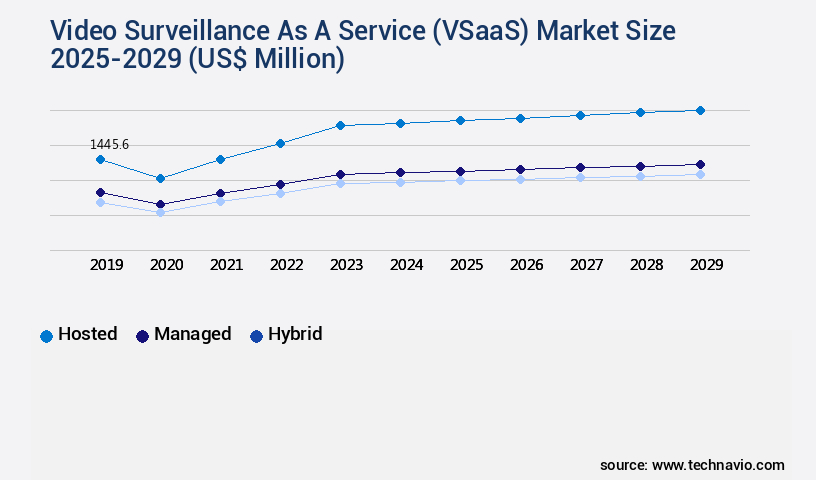
- By Solution - Hosted segment was valued at USD 1.45 billion in 2023
- By End-user - Commercial segment accounted for the largest market revenue share in 2023
Market Size & Forecast
- Market Opportunities: USD 428.06 million
- Market Future Opportunities: USD USD 11.39 billion
- CAGR : 26.5%
- North America: Largest market in 2023
Market Summary
- The market represents a dynamic and continually evolving industry, driven by the rising adoption of advanced technologies and shifting market trends. Core technologies, such as artificial intelligence (AI) and machine learning, are revolutionizing video surveillance, enabling real-time threat detection and analysis. Applications of VSaaS span various sectors, including transportation, retail, and healthcare, with the transportation sector accounting for a significant market share due to increasing security concerns. Regional markets, like Europe and North America, are expected to dominate the VSaaS landscape, driven by stringent regulations and the advent of smart cities. However, emerging economies in Asia Pacific and Latin America present substantial growth opportunities as urbanization and infrastructure development accelerate.
- Despite these opportunities, challenges persist, including privacy and security concerns and the need for standardized regulations. The market is forecasted to continue its expansion, with the number of enterprises adopting VSaaS solutions projected to reach 50% by 2025. For businesses exploring related markets such as the Internet of Things (IoT) and cloud computing, understanding the evolving VSaaS landscape is essential for staying competitive and securing their operations.
What will be the Size of the Video Surveillance As A Service (VSaaS) Market during the forecast period?
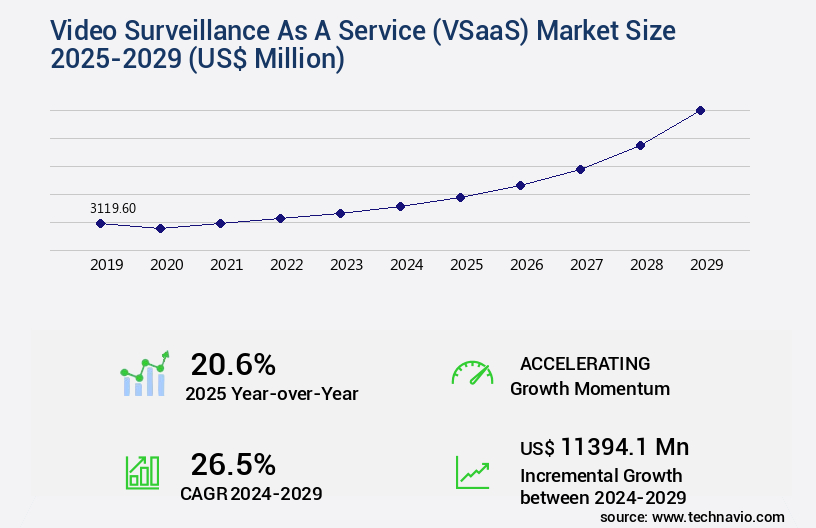
Get Key Insights on Market Forecast (PDF) Request Free Sample
How is the Video Surveillance As A Service (VSaaS) Market Segmented and what are the key trends of market segmentation?
The video surveillance as a service (VSaaS) industry research report provides comprehensive data (region-wise segment analysis), with forecasts and estimates in "USD million" for the period 2025-2029, as well as historical data from 2019-2023 for the following segments.
- Solution
- Hosted
- Managed
- Hybrid
- End-user
- Commercial
- Industrial
- Residential
- Technology
- IP-based surveillance
- Analog surveillance
- Deployment
- Cloud based
- On-premises
- Geography
- North America
- US
- Canada
- Europe
- France
- Germany
- UK
- APAC
- China
- India
- Japan
- South Korea
- South America
- Brazil
- Rest of World (ROW)
- North America
By Solution Insights
The hosted segment is estimated to witness significant growth during the forecast period.
The market is currently witnessing significant growth, with hosted VSaaS solutions accounting for a substantial market share. According to recent reports, over 40% of businesses have adopted hosted VSaaS solutions, a figure that is projected to reach 50% within the next three years. This trend is driven by the financial advantages offered by VSaaS providers, enabling Small and Medium Enterprises (SMEs) to access high-quality video surveillance systems and camera footage without the need for extensive infrastructure investments. Hosted VSaaS solutions provide several benefits, including scalability, accessibility, and reduced maintenance burden. These systems can easily accommodate changing requirements by adding or removing cameras and storage capacity as needed, without the need for significant infrastructure modifications.
Furthermore, video footage and monitoring interfaces are accessible from anywhere with an Internet connection, allowing businesses to maintain security and oversight from remote locations. Key features of hosted VSaaS solutions include access control systems, third-party integrations, mobile application support, analytics dashboards, video analytics platforms, motion detection alerts, system uptime monitoring, event logging capabilities, storage capacity planning, video surveillance software, customer access portals, cybersecurity protocols, remote video monitoring, data encryption methods, video recording retention, live video streaming, real-time video processing, user authentication protocols, multi-camera management, incident management systems, network bandwidth usage, compliance certifications, data privacy regulations, scalable video platforms, system performance metrics, latency measurement tools, secure video transmission, video compression codecs, API integrations, facial recognition software, video metadata extraction, cloud video storage, video quality assessment, and IP camera integration.
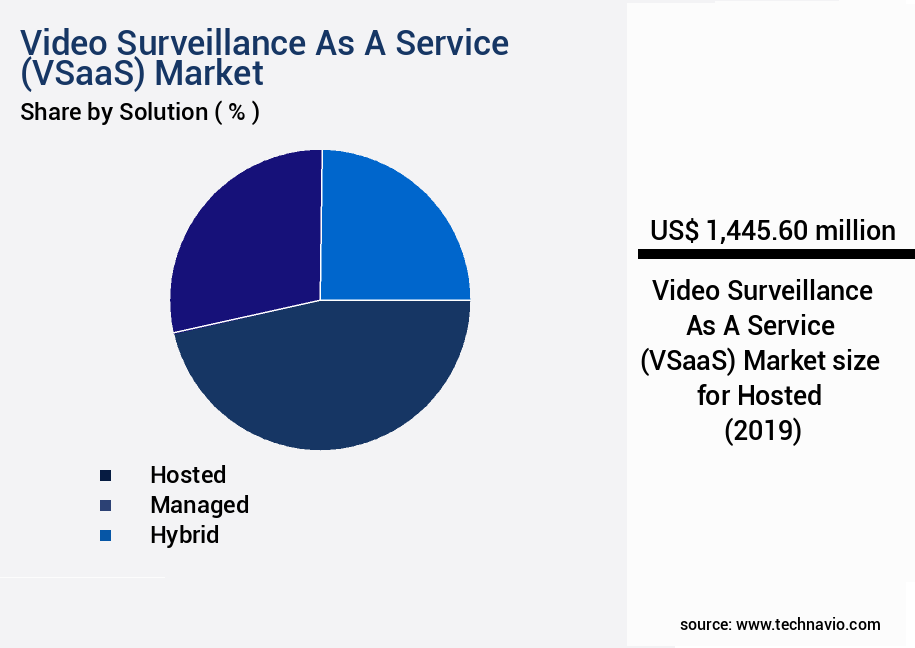
The Hosted segment was valued at USD 1.45 billion in 2019 and showed a gradual increase during the forecast period.
Moreover, hosted VSaaS solutions offer advanced capabilities such as real-time video processing, user authentication protocols, and multi-camera management, ensuring robust security and incident management. These systems also provide valuable insights through analytics dashboards and video analytics platforms, helping businesses optimize operations and improve overall efficiency. In conclusion, the VSaaS market is experiencing continuous growth, with hosted solutions gaining significant traction due to their financial advantages and numerous benefits, including scalability, accessibility, and reduced maintenance burden. These systems offer a range of features, including advanced security features, analytics capabilities, and remote monitoring, making them an essential investment for businesses seeking to enhance their security and operational efficiency.
Regional Analysis
North America is estimated to contribute 33% to the growth of the global market during the forecast period. Technavio's analysts have elaborately explained the regional trends and drivers that shape the market during the forecast period.
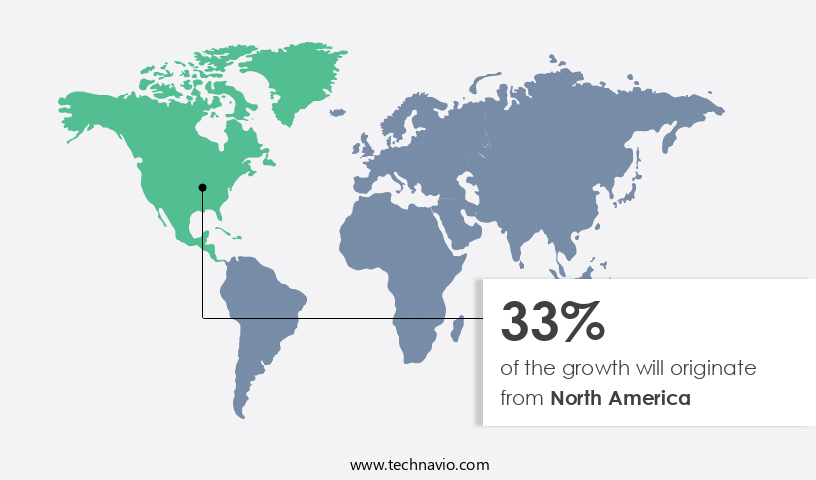
See How Video Surveillance As A Service (VSaaS) Market Demand is Rising in North America Request Free Sample
The market in North America is experiencing significant growth, driven by the adoption of advanced technologies in various industries, the necessity of counter-terrorism prevention, and urbanization and industrialization. Major cities like Houston, Chicago, and New York City are leading the way in public video surveillance implementation. Industries in the region utilize video surveillance to safeguard assets, create secure and compliant work environments, and enhance workforce productivity. The US market's early adoption of technology infrastructure enables the deployment of video surveillance solutions.
With the increasing need for security and safety, the VSaaS market in North America is poised for continued expansion. According to recent reports, the number of surveillance cameras installed in the US reached over 30 million in 2020, and the market is projected to grow by 15% annually. Additionally, the integration of AI and machine learning technologies in VSaaS solutions is expected to boost market growth.
Market Dynamics
Our researchers analyzed the data with 2024 as the base year, along with the key drivers, trends, and challenges. A holistic analysis of drivers will help companies refine their marketing strategies to gain a competitive advantage.
The market is experiencing robust growth, driven by the increasing adoption of cloud-based video surveillance systems. These systems offer several advantages, including real-time video processing capabilities through advanced IP camera video analytics integration. The use of secure video transmission protocols and data encryption for video surveillance ensures the protection of valuable data. Scalability is another key factor fueling the market's growth, with remote video monitoring capabilities allowing businesses to expand their surveillance operations without the need for on-premises infrastructure. User authentication for video access adds an essential layer of security, while video storage capacity requirements are met through cloud-based solutions.
Video analytics dashboards can be customized to meet specific business needs, providing valuable insights through facial recognition accuracy metrics and motion detection false positive rates. Video compression codec efficiency and video quality at different bandwidths are crucial considerations for optimizing system performance. Compliance certification needs are addressed through rigorous system testing and certification processes. Customer access portals offer convenient management options, while third-party API integration allows for seamless integration with other business systems. Mobile application user experiences are increasingly important, with many VSaaS providers offering intuitive, user-friendly interfaces. Video metadata search functionality and event logging and reporting features provide additional value to users.
Compared to traditional video surveillance systems, VSaaS solutions offer significant cost savings, with a recent study revealing a 30% reduction in total cost of ownership over a five-year period. The flexibility and scalability of cloud-based solutions make them an attractive alternative for businesses seeking to enhance their security operations.
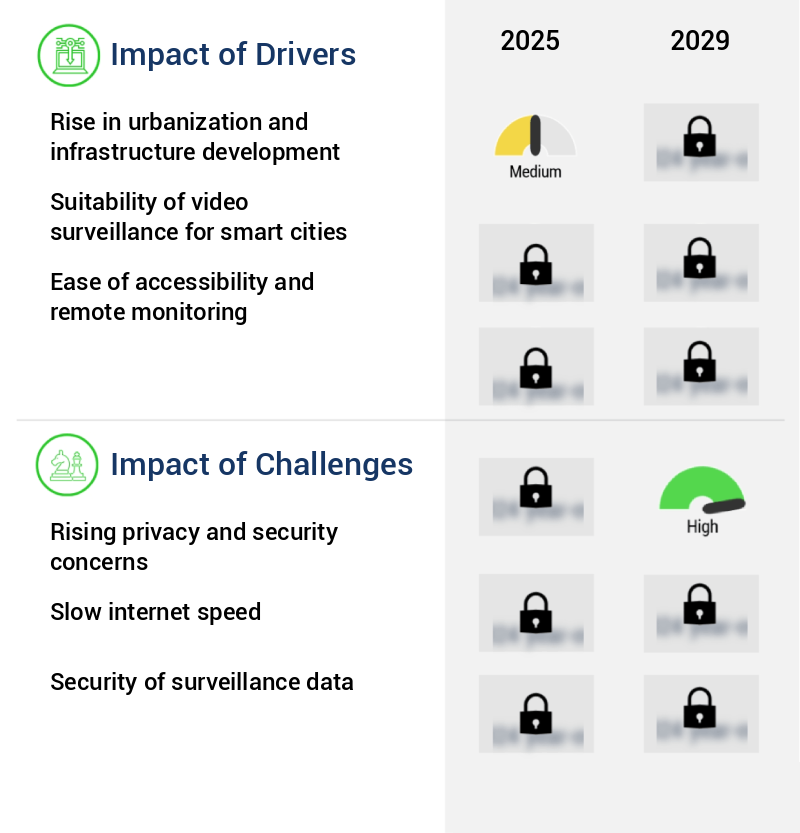
What are the key market drivers leading to the rise in the adoption of Video Surveillance As A Service (VSaaS) Industry?
- Urbanization and infrastructure development are primary catalysts driving market growth.
- The market has experienced significant growth alongside urbanization and infrastructure development. As cities expand and new projects emerge, the demand for advanced video surveillance solutions, particularly cloud-based offerings, has escalated. The adoption of smart city concepts in urban areas has further fueled this trend, with VSaaS playing a pivotal role in enhancing efficiency, security, and quality of life. Real-time video monitoring of public spaces, traffic management, and emergency response systems are essential components of these initiatives. As urban populations continue to increase, ensuring public safety remains a top priority.
- Cloud-based surveillance solutions enable cities to deploy and manage surveillance cameras across various locations, empowering law enforcement agencies to effectively respond to incidents. The ongoing evolution of VSaaS encompasses advancements in artificial intelligence, machine learning, and data analytics, further enhancing its capabilities and value proposition for businesses and governments alike.
What are the market trends shaping the Video Surveillance As A Service (VSaaS) Industry?
- The adoption of smart AI-based video surveillance systems is becoming increasingly prevalent in the market. A sophisticated trend in the industry is the implementation of artificial intelligence technology in video surveillance systems.
- The integration of Artificial Intelligence (AI) in video surveillance systems has significantly enhanced their capabilities beyond passive deterrence. AI's ability to analyze vast amounts of data in real time results in actionable insights. For example, Intel's Movidius utilizes AI and deep learning to proactively detect unattended objects and monitor behavior. Partnerships between Movidius and industry leaders like Hangzhou Hikvision Digital Technology and Dahua Technology are expected to boost the adoption of AI-based video surveillance. AI surpasses human capabilities in facial, faceless, behavioral, and object detection, thereby minimizing errors.
- This intelligent automation not only improves efficiency but also ensures enhanced security. The ongoing advancements in AI technology are transforming video surveillance into a more dynamic and responsive tool for businesses. By continuously learning and adapting, AI systems can provide valuable insights, enabling organizations to make informed decisions and maintain a secure environment.
What challenges does the Video Surveillance As A Service (VSaaS) Industry face during its growth?
- The expansion of the industry is being significantly influenced by escalating privacy and security concerns, which present a major challenge.
- The video surveillance market continues to expand, with indexed growth in demand fueled by advancements in technology and security concerns. According to industry reports, the global video surveillance market is projected to reach a value of over 75 billion US dollars by 2025, representing a significant increase from its current size. This growth is driven by the increasing adoption of IP cameras, cloud-based video surveillance services, and the integration of artificial intelligence and machine learning technologies. However, the market's dynamism also raises concerns regarding privacy breaches.
- Extensive video surveillance systems may infringe on individuals' right to anonymity, as they can cover private areas without consent. This tension between security and privacy is a complex issue that requires ongoing dialogue and regulation. Despite these challenges, the video surveillance market's continuous evolution presents opportunities for innovation and growth.
Exclusive Customer Landscape
The video surveillance as a service (VSaaS) market forecasting report includes the adoption lifecycle of the market, covering from the innovator's stage to the laggard's stage. It focuses on adoption rates in different regions based on penetration. Furthermore, the video surveillance as a service (VSaaS) market report also includes key purchase criteria and drivers of price sensitivity to help companies evaluate and develop their market growth analysis strategies.
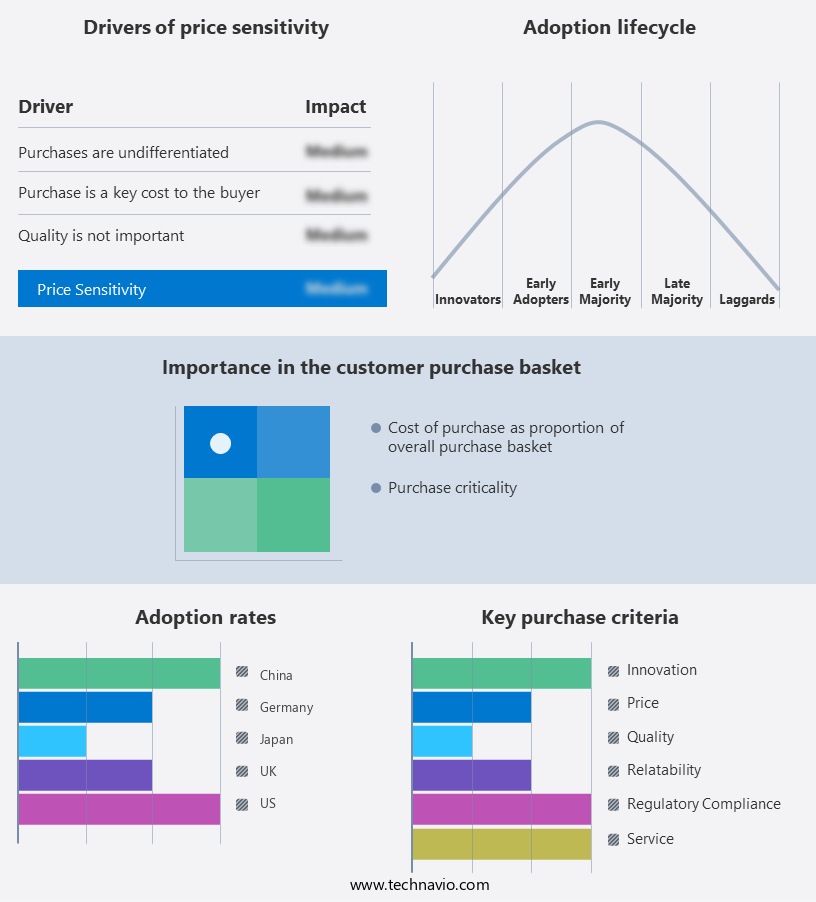
Customer Landscape of Video Surveillance As A Service (VSaaS) Industry
Competitive Landscape & Market Insights
Companies are implementing various strategies, such as strategic alliances, video surveillance as a service (VSaaS) market forecast, partnerships, mergers and acquisitions, geographical expansion, and product/service launches, to enhance their presence in the industry.
ADT Inc. - This company specializes in video surveillance solutions, catering to small businesses' security needs through customizable camera systems and versatile video storage options.
The industry research and growth report includes detailed analyses of the competitive landscape of the market and information about key companies, including:
- ADT Inc.
- Advanced Control Corp.
- Avid Communications LLC
- Camcloud Inc.
- Canon Inc.
- Cisco Systems Inc.
- Cloudastructure Inc.
- ControlByNet LLC
- D Link Corp.
- Drive Headquarters Inc.
- Eagle Eye Networks Inc.
- Genetec Inc.
- Honeywell International Inc.
- IVEDA SOLUTIONS, INC.
- Motorola Solutions Inc.
- Napco Security Technologies Inc.
- NW Security Group Ltd.
- Pacific Control Systems
- Robert Bosch GmbH
- VIVOTEK Inc.
Qualitative and quantitative analysis of companies has been conducted to help clients understand the wider business environment as well as the strengths and weaknesses of key industry players. Data is qualitatively analyzed to categorize companies as pure play, category-focused, industry-focused, and diversified; it is quantitatively analyzed to categorize companies as dominant, leading, strong, tentative, and weak.
Recent Development and News in Video Surveillance As A Service (VSaaS) Market
- In January 2024, Genetec, a leading technology provider in unified security, announced the launch of its Video Surveillance as a Service (VSaaS) offering, Security Center 21, which allows users to manage their video surveillance systems remotely (Genetec Press Release).
- In March 2024, Verizon and ADT, two major players in the security industry, entered into a strategic partnership to offer VSaaS solutions to small and medium-sized businesses (ADT Press Release). This collaboration aimed to leverage Verizon's 5G network capabilities and ADT's security expertise.
- In May 2024, Hikvision, the world's largest video surveillance equipment supplier, raised USD 1.3 billion in a share sale to expand its VSaaS offerings and enhance its technology (Reuters). The company aimed to strengthen its position in the growing VSaaS market and compete with leading cloud-based security providers.
- In April 2025, the European Union passed the Data Protection Regulation (GDPR) for video surveillance, requiring businesses to obtain explicit consent from individuals before recording and processing their personal data (European Commission Press Release). This regulation significantly impacted the VSaaS market, forcing providers to ensure compliance and offer privacy-focused solutions.
Dive into Technavio's robust research methodology, blending expert interviews, extensive data synthesis, and validated models for unparalleled Video Surveillance As A Service (VSaaS) Market insights. See full methodology.
|
Market Scope |
|
|
Report Coverage |
Details |
|
Page number |
234 |
|
Base year |
2024 |
|
Historic period |
2019-2023 |
|
Forecast period |
2025-2029 |
|
Growth momentum & CAGR |
Accelerate at a CAGR of 26.5% |
|
Market growth 2025-2029 |
USD 11,394.1 million |
|
Market structure |
Fragmented |
|
YoY growth 2024-2025(%) |
20.6 |
|
Key countries |
US, China, Germany, Canada, Japan, UK, India, France, South Korea, and Brazil |
|
Competitive landscape |
Leading Companies, Market Positioning of Companies, Competitive Strategies, and Industry Risks |
Research Analyst Overview
- In the dynamic and evolving realm of video surveillance as a service (VSaaS), access control systems have emerged as a crucial component, enabling secure and controlled access to premises and digital environments. Third-party integrations have become essential for enhancing VSaaS functionality, allowing seamless collaboration with other business systems. Mobile application support is another significant trend, empowering users to monitor their security systems remotely from anywhere. Analytics dashboards and video analytics platforms offer valuable insights, transforming raw video data into actionable intelligence. Motion detection alerts, system uptime monitoring, event logging capabilities, and storage capacity planning are essential features that ensure optimal system performance.
- Video surveillance software encompasses a wide range of capabilities, including customer access portals, cybersecurity protocols, and real-time video processing. User authentication protocols, multi-camera management, incident management systems, and network bandwidth usage are all critical elements that contribute to a robust and scalable video platform. Compliance certifications and data privacy regulations are increasingly shaping the VSaaS landscape, with companies adopting rigorous cybersecurity measures and secure video transmission methods. Data encryption methods, video recording retention, and video quality assessment are essential components of a comprehensive security strategy. Cloud video storage, API integrations, and facial recognition software are among the latest innovations in VSaaS, offering advanced features and improved user experience.
- Video metadata extraction, secure video transmission, latency measurement tools, and video compression codecs are other essential elements that contribute to the ongoing evolution of this dynamic market.
What are the Key Data Covered in this Video Surveillance As A Service (VSaaS) Market Research and Growth Report?
-
What is the expected growth of the Video Surveillance As A Service (VSaaS) Market between 2025 and 2029?
-
USD 11.39 billion, at a CAGR of 26.5%
-
-
What segmentation does the market report cover?
-
The report segmented by Solution (Hosted, Managed, and Hybrid), End-user (Commercial, Industrial, and Residential), Technology (IP-based surveillance and Analog surveillance), Deployment (Cloud based and On-premises), and Geography (North America, APAC, Europe, South America, and Middle East and Africa)
-
-
Which regions are analyzed in the report?
-
North America, APAC, Europe, South America, and Middle East and Africa
-
-
What are the key growth drivers and market challenges?
-
Rise in urbanization and infrastructure development, Rising privacy and security concerns
-
-
Who are the major players in the Video Surveillance As A Service (VSaaS) Market?
-
Key Companies ADT Inc., Advanced Control Corp., Avid Communications LLC, Camcloud Inc., Canon Inc., Cisco Systems Inc., Cloudastructure Inc., ControlByNet LLC, D Link Corp., Drive Headquarters Inc., Eagle Eye Networks Inc., Genetec Inc., Honeywell International Inc., IVEDA SOLUTIONS, INC., Motorola Solutions Inc., Napco Security Technologies Inc., NW Security Group Ltd., Pacific Control Systems, Robert Bosch GmbH, and VIVOTEK Inc.
-
Market Research Insights
- The market continues to expand, driven by the increasing demand for advanced security solutions. According to recent estimates, the global VSaaS market is projected to reach USD15.6 billion by 2025, growing at a compound annual growth rate (CAGR) of 18.4% during the forecast period. One key factor fueling this growth is the adoption of high definition video, which offers superior image quality and enhanced security. Another significant trend is the integration of customer support channels, enabling seamless communication between users and service providers. Low latency streaming and video playback controls ensure real-time monitoring, while software updates deployment and centralized management consoles simplify system management.
- Contract negotiation and pricing models comparison facilitate flexible and cost-effective solutions. Access permission levels, integration complexity, and video data archiving are essential considerations when evaluating VSaaS offerings. Remote troubleshooting tools, data breach prevention, and system scalability options are critical features for ensuring business continuity and security. Customizable dashboards, deployment options, and compliance audits support offer added value, while reporting and analytics, video content management, and alert notification systems provide actionable insights. Ultimately, VSaaS solutions offer a range of benefits, from improved security and operational efficiency to reduced costs and scalability.
We can help! Our analysts can customize this video surveillance as a service (VSaaS) market research report to meet your requirements.
 RIA -
RIA -