



Trimethylamine Market Size 2026-2030
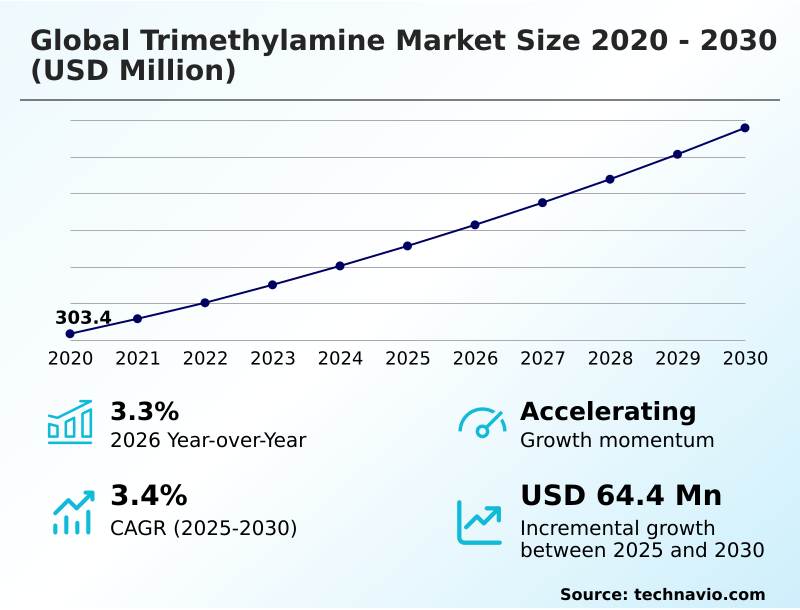
The trimethylamine market size is valued to increase by USD 64.4 million, at a CAGR of 3.4% from 2025 to 2030. Growth in application of trimethylamine in ion exchange resin will drive the trimethylamine market.
Major Market Trends & Insights
- APAC dominated the market and accounted for a 48.9% growth during the forecast period.
- By Application - Choline chloride segment was valued at USD 164.1 million in 2024
- By Type - Aqueous solution segment accounted for the largest market revenue share in 2024
Market Size & Forecast
- Market Opportunities: USD 112.3 million
- Market Future Opportunities: USD 64.4 million
- CAGR from 2025 to 2030 : 3.4%
Market Summary
- The trimethylamine market operates as a pivotal segment within the broader specialty chemicals industry, primarily functioning as a key chemical intermediate. Its fundamental role is in the production of choline chloride, an indispensable nutrient in animal feed, which links the market's trajectory directly to global agricultural and food production demands.
- Beyond this core application, trimethylamine is integral to manufacturing ion-exchange resins for water treatment and serves as a precursor in synthesizing various agrochemicals and pharmaceuticals. A significant market dynamic involves managing the volatile costs of essential raw materials like methanol and ammonia, prompting manufacturers to adopt advanced production technologies and integrated supply chain models.
- For instance, a chemical producer might leverage predictive analytics to optimize feedstock procurement, aligning purchasing cycles with market price troughs to reduce input costs by over 12%. This strategic approach is crucial for maintaining competitive pricing and profitability in a market characterized by both commodity and specialty characteristics.
- Furthermore, stringent environmental regulations governing emissions and waste disposal are driving innovation toward more sustainable manufacturing processes.
What will be the Size of the Trimethylamine Market during the forecast period?
Get Key Insights on Market Forecast (PDF) Request Free Sample
How is the Trimethylamine Market Segmented?
The trimethylamine industry research report provides comprehensive data (region-wise segment analysis), with forecasts and estimates in "USD million" for the period 2026-2030, as well as historical data from 2020-2024 for the following segments.
- Application
- Choline chloride
- Chemical intermediate
- Ion-exchange resins
- Others
- Type
- Aqueous solution
- Anhydrous liquefied gas
- End-user
- Animal feed
- Agrochemicals
- Oil and gas
- Others
- Geography
- APAC
- China
- India
- Japan
- North America
- US
- Canada
- Mexico
- Europe
- Germany
- France
- UK
- Middle East and Africa
- Saudi Arabia
- South Africa
- UAE
- South America
- Brazil
- Argentina
- Colombia
- Rest of World (ROW)
- APAC
By Application Insights
The choline chloride segment is estimated to witness significant growth during the forecast period.
The market is segmented by application, type, and geography. The choline chloride segment is driven by its essential role as an animal feed additive, particularly for poultry. This demand is sustained by the continuous need for protein-rich food sources globally.
Utilizing trimethylamine as a crucial chemical building block, choline chloride production benefits from established synthesis processes. However, a key consideration is maintaining aqueous solution concentration below toxicity thresholds, as levels exceeding 200ppm can cause malabsorption in animals.
Managing the supply of methanol and ammonia precursors is vital for operational stability. The use of salt-based water softener systems also indirectly supports the segment through its connection to ion-exchange resin formulation.
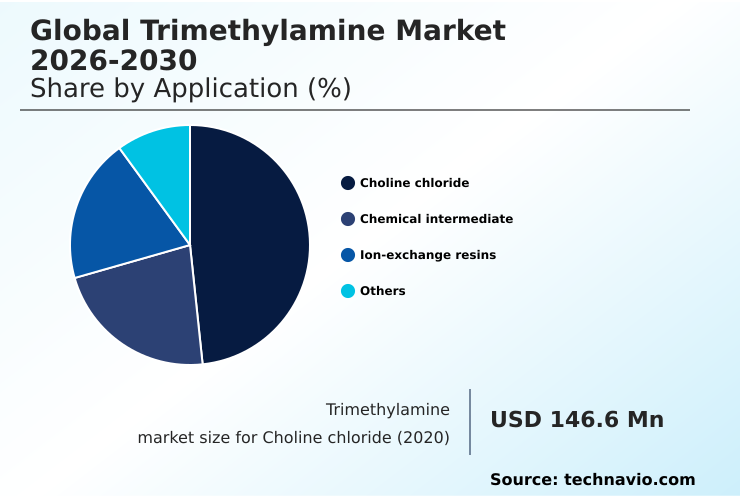
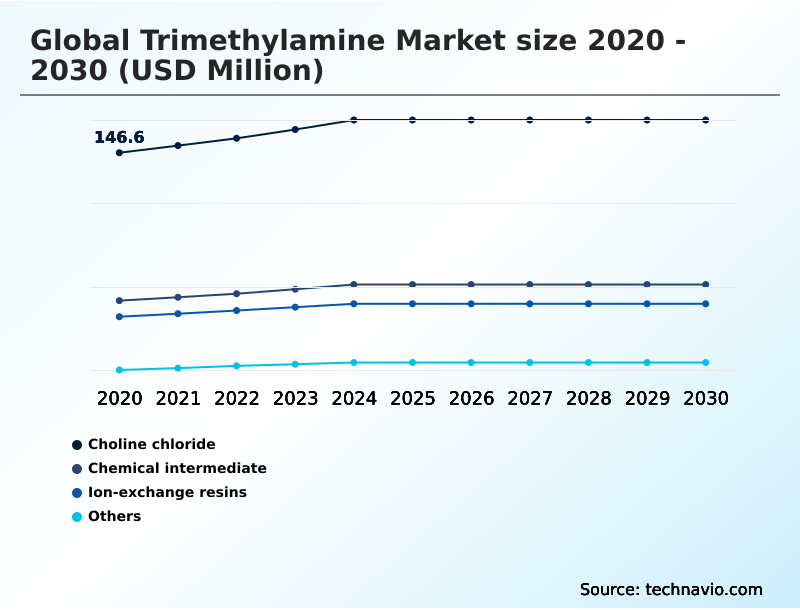
The Choline chloride segment was valued at USD 164.1 million in 2024 and showed a gradual increase during the forecast period.
Regional Analysis
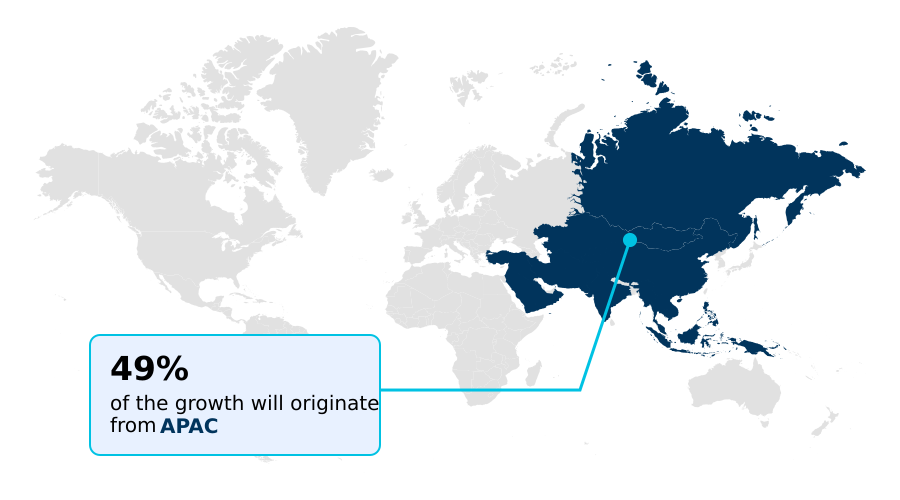
APAC is estimated to contribute 48.9% to the growth of the global market during the forecast period.Technavio’s analysts have elaborately explained the regional trends and drivers that shape the market during the forecast period.
See How Trimethylamine Market Demand is Rising in APAC Request Free Sample
The geographic landscape of the market is heavily influenced by regional industrial strengths. APAC leads in consumption, driven by its large-scale chemical and animal feed production sectors.
The availability of cost-effective labor and raw materials in countries like China and India underpins the region's dominance in choline chloride production. This region accounts for nearly 49% of the market's incremental growth.
North America's market is characterized by a strong focus on specialty chemical manufacturing and advanced applications, including oil and gas. Europe's market is shaped by stringent environmental regulations, which drive innovation in sustainable chemical production and advanced wastewater management solutions.
Market Dynamics
Our researchers analyzed the data with 2025 as the base year, along with the key drivers, trends, and challenges. A holistic analysis of drivers will help companies refine their marketing strategies to gain a competitive advantage.
- The global trimethylamine market 2026-2030 is fundamentally shaped by its core applications and the technical specifications of its different forms. The role of trimethylamine in choline chloride synthesis remains the primary demand driver, underpinning its importance in the agricultural sector. The use of trimethylamine in ion exchange resins is a close second, critical for industrial and municipal water treatment processes.
- As a versatile chemical intermediate, its applications are expanding. For instance, the applications of anhydrous liquefied gas trimethylamine are preferred in processes requiring high purity and no water content, such as in certain pharmaceutical syntheses. In contrast, the benefits of aqueous solution trimethylamine include safer handling and easier integration into water-based reactions, making it ideal for large-scale production.
- The impact of trimethylamine on agrochemicals is seen in the development of more effective plant growth regulators. In parallel, trimethylamine in the oil and gas industry is used in formulating drilling fluids and other specialty chemicals. However, navigating the challenges of trimethylamine toxicity requires significant investment in safety and environmental compliance.
- Companies are also exploring trimethylamine for water treatment processes beyond resins, such as in flocculants. The demand for high-purity trimethylamine for electronics is a high-growth niche, while trimethylamine derivatives in pharmaceuticals are expanding into new therapeutic areas. To stay competitive, firms must perform a rigorous cost-benefit of trimethylamine in production.
- Key to this is managing feedstock price for trimethylamine and navigating the complex regulatory landscape for trimethylamine use. This has spurred a move toward sustainability in trimethylamine manufacturing, with some producers achieving a 5% reduction in energy consumption through process optimization. Success also hinges on optimizing trimethylamine in feed additives for maximum efficacy and understanding supply chain logistics for trimethylamine.
- Emerging areas like trimethylamine's role in gas scrubbing and developing new trimethylamine applications represent future growth frontiers.
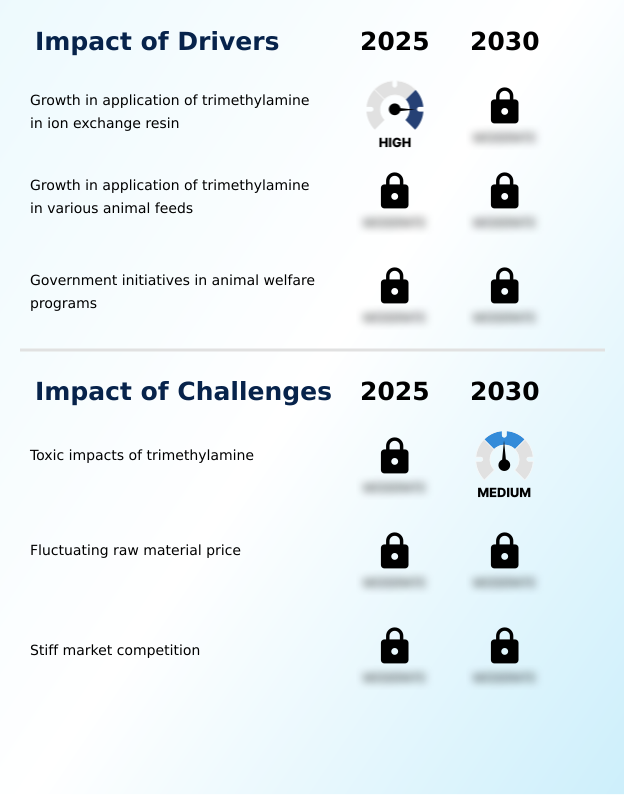
What are the key market drivers leading to the rise in the adoption of Trimethylamine Industry?
- The expanding application of trimethylamine in the formulation of ion-exchange resins serves as a key market driver.
- The market's primary driver remains the indispensable role of trimethylamine in choline chloride production for the animal feed industry. This is reinforced by the growing demand for poultry and swine feed nutrients to support global protein consumption.
- The use of trimethylamine as a tertiary amine property makes it a highly effective chemical precursor. Additionally, the expansion of industrial water treatment chemicals, specifically ion-exchange resin formulation, drives demand, with systems demonstrating a 40% increase in mineral removal efficiency.
- Demand from agrochemical formulation ingredients for new plant growth regulators and from fuel additive performance enhancers also contributes significantly to market momentum, showcasing the compound's versatility.
What are the market trends shaping the Trimethylamine Industry?
- The emergence of new applications for trimethylamine represents a significant upcoming market trend.
- Evolving applications are reshaping the trimethylamine market. Beyond traditional uses, trimethylamine synthesis processes are being adapted for innovative sectors. There is a notable rise in its use for manufacturing high-purity trimethylamine for advanced semiconductor cleaning, where precision is paramount.
- Another key trend involves its role in formulating flocculants and corrosion inhibitors, which supports wastewater management solutions and aligns with stricter environmental standards, improving water clarification efficiency by 25%. Furthermore, its utility as a precursor for active pharmaceutical ingredients (apis) is expanding, particularly in the production of hygiene and disinfectant chemicals, where demand has remained elevated.
- These new avenues are creating diversified revenue streams.
What challenges does the Trimethylamine Industry face during its growth?
- The toxicological impacts associated with trimethylamine present a key challenge to the industry's growth trajectory.
- Key challenges center on the compound's inherent toxicity and the stringent regulatory landscape. Environmental toxicity concerns related to trimethylamine's high solubility in water necessitate advanced byproduct treatment and disposal protocols, increasing operational costs by up to 15%. Strict worker safety protocols for trimethylamine handling safety are mandatory due to its hazardous nature, requiring investment in advanced containment technologies.
- Furthermore, raw material price volatility, particularly for methanol and ammonia, creates significant financial risk. Navigating regulatory compliance for amines while managing production cost optimization presents a persistent challenge for manufacturers across the board.
Exclusive Technavio Analysis on Customer Landscape
The trimethylamine market forecasting report includes the adoption lifecycle of the market, covering from the innovator’s stage to the laggard’s stage. It focuses on adoption rates in different regions based on penetration. Furthermore, the trimethylamine market report also includes key purchase criteria and drivers of price sensitivity to help companies evaluate and develop their market growth analysis strategies.
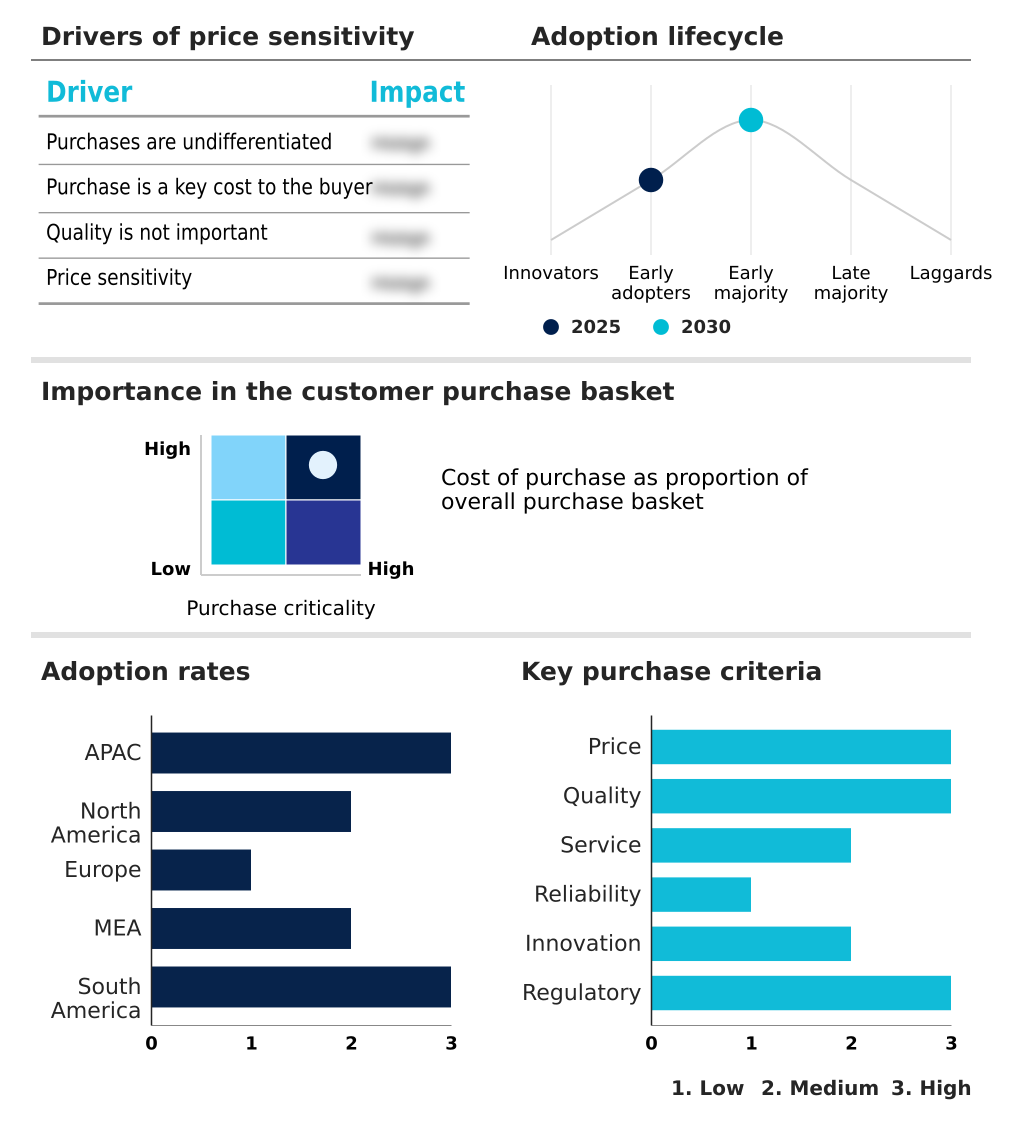
Customer Landscape of Trimethylamine Industry
Competitive Landscape
Companies are implementing various strategies, such as strategic alliances, trimethylamine market forecast, partnerships, mergers and acquisitions, geographical expansion, and product/service launches, to enhance their presence in the industry.
Alkyl Amines Chemicals Ltd. - Key offerings include trimethylamine as anhydrous liquefied gas and aqueous solutions, vital for producing choline chloride, ion-exchange resins, and various chemical intermediates.
The industry research and growth report includes detailed analyses of the competitive landscape of the market and information about key companies, including:
- Alkyl Amines Chemicals Ltd.
- Balaji Amines Ltd.
- BASF SE
- Belle Chemical
- Celanese Corp.
- Eastman Chemical Co.
- Jaysons Chemical Industries.
- Linde Plc
- LOTTE Fine Chemical Co.
- Luxi Chemical Group Co. Ltd.
- Merck KGaA
- Mitsubishi Gas Chemical Co. Inc.
- SOCIETA ITALIANA ACETILENE Spa
- Suqian Xinya Technology Co.
- Thermo Fisher Scientific Inc.
- Tokyo Chemical Co. Ltd.
- Triveni Interchem Pvt. Ltd.
Qualitative and quantitative analysis of companies has been conducted to help clients understand the wider business environment as well as the strengths and weaknesses of key industry players. Data is qualitatively analyzed to categorize companies as pure play, category-focused, industry-focused, and diversified; it is quantitatively analyzed to categorize companies as dominant, leading, strong, tentative, and weak.
Recent Development and News in Trimethylamine market
- In August, 2024, Chemanol announced the development of a new grade of trimethylamine optimized for fuel additive and water gel explosive applications, targeting a 15% improvement in stability.
- In November, 2024, Balaji Amines Ltd. completed the expansion of its methylamine production facility, increasing its capacity for trimethylamine anhydrous liquefied gas to meet growing demand from the pharmaceutical sector.
- In February, 2025, Eastman Chemical Co. entered a strategic partnership with a leading agricultural firm to co-develop next-generation plant growth regulators utilizing trimethylamine as a key precursor.
- In May, 2025, BASF SE launched a sustainable trimethylamine product line produced using certified renewable methanol, reducing the carbon footprint by up to 50% compared to conventional methods.
Dive into Technavio’s robust research methodology, blending expert interviews, extensive data synthesis, and validated models for unparalleled Trimethylamine Market insights. See full methodology.
| Market Scope | |
|---|---|
| Page number | 294 |
| Base year | 2025 |
| Historic period | 2020-2024 |
| Forecast period | 2026-2030 |
| Growth momentum & CAGR | Accelerate at a CAGR of 3.4% |
| Market growth 2026-2030 | USD 64.4 million |
| Market structure | Fragmented |
| YoY growth 2025-2026(%) | 3.3% |
| Key countries | China, India, Japan, South Korea, Thailand, Indonesia, US, Canada, Mexico, Germany, France, UK, Italy, The Netherlands, Spain, Saudi Arabia, South Africa, UAE, Egypt, Nigeria, Brazil, Argentina and Colombia |
| Competitive landscape | Leading Companies, Market Positioning of Companies, Competitive Strategies, and Industry Risks |
Research Analyst Overview
- The trimethylamine market is defined by its critical function as a chemical building block across diverse industries. The core of its demand stems from choline chloride production, an essential animal feed additive. The market's structure is influenced by the technical requirements of producing both aqueous solution concentration and anhydrous liquefied gas forms, each serving distinct downstream applications.
- A key dynamic is the management of feedstock supply chains, particularly methanol and ammonia precursors, where raw material price volatility poses a consistent risk. Boardroom decisions are increasingly focused on vertical integration and technology investments in areas like carbon capture technologies and gas treatment absorbents.
- Strategic focus is also on expanding the use of methylamine derivatives in high-value areas such as active pharmaceutical ingredients (apis) and semiconductor cleaning agents. The use of trimethylamine in water gel explosive applications and as an antiknock compound for aviation is also gaining traction, diversifying revenue.
- Firms that successfully navigate the complex supply chain and invest in high-purity trimethylamine production for specialty applications, such as cationic surfactants manufacturing, are best positioned for sustained performance.
What are the Key Data Covered in this Trimethylamine Market Research and Growth Report?
-
What is the expected growth of the Trimethylamine Market between 2026 and 2030?
-
USD 64.4 million, at a CAGR of 3.4%
-
-
What segmentation does the market report cover?
-
The report is segmented by Application (Choline chloride, Chemical intermediate, Ion-exchange resins, and Others), Type (Aqueous solution, and Anhydrous liquefied gas), End-user (Animal feed, Agrochemicals, Oil and gas, and Others) and Geography (APAC, North America, Europe, Middle East and Africa, South America)
-
-
Which regions are analyzed in the report?
-
APAC, North America, Europe, Middle East and Africa and South America
-
-
What are the key growth drivers and market challenges?
-
Growth in application of trimethylamine in ion exchange resin, Toxic impacts of trimethylamine
-
-
Who are the major players in the Trimethylamine Market?
-
Alkyl Amines Chemicals Ltd., Balaji Amines Ltd., BASF SE, Belle Chemical, Celanese Corp., Eastman Chemical Co., Jaysons Chemical Industries., Linde Plc, LOTTE Fine Chemical Co., Luxi Chemical Group Co. Ltd., Merck KGaA, Mitsubishi Gas Chemical Co. Inc., SOCIETA ITALIANA ACETILENE Spa, Suqian Xinya Technology Co., Thermo Fisher Scientific Inc., Tokyo Chemical Co. Ltd. and Triveni Interchem Pvt. Ltd.
-
Market Research Insights
- The trimethylamine market is characterized by dynamic shifts influenced by both mature and emerging applications. As a foundational chemical intermediate, its demand is closely tied to the animal feed sector for choline chloride synthesis. However, diversification into high-value areas like pharmaceutical intermediates synthesis and electronic grade chemicals is accelerating.
- Firms are implementing supply chain integration strategies to mitigate feedstock price fluctuations, with vertically integrated players reporting a 10% reduction in cost volatility. The adoption of advanced gas treatment absorbents using trimethylamine has demonstrated a 20% improvement in acidic gas capture efficiency, aligning with industrial sustainability goals. This strategic pivot highlights the market's adaptation to new economic and regulatory pressures.
We can help! Our analysts can customize this trimethylamine market research report to meet your requirements.