



Travel Insurance Market Size 2026-2030
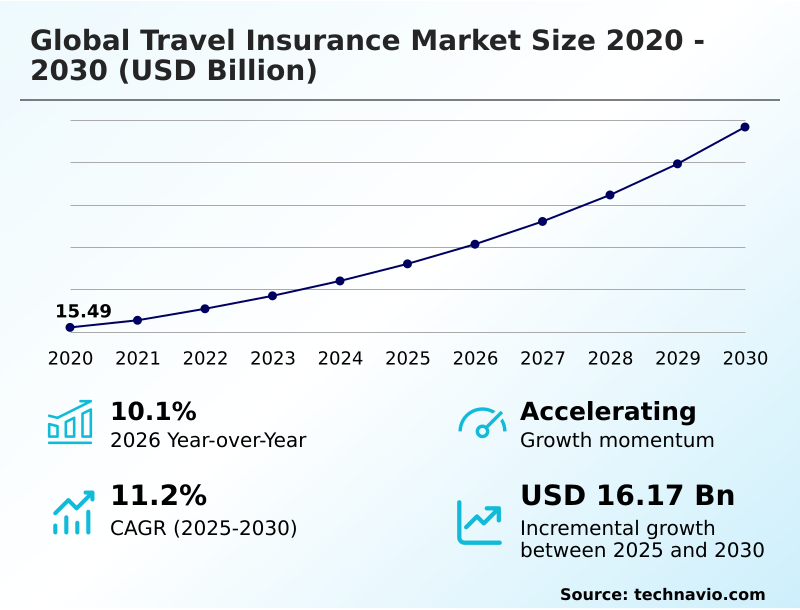
The travel insurance market size is valued to increase by USD 16.17 billion, at a CAGR of 11.2% from 2025 to 2030. Revitalization of corporate mobility and expansion of bleisure travel will drive the travel insurance market.
Major Market Trends & Insights
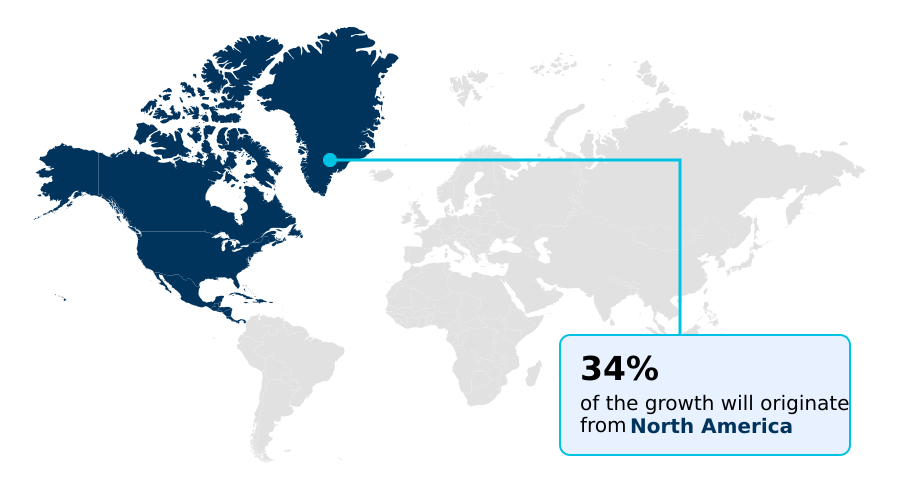
- North America dominated the market and accounted for a 34.4% growth during the forecast period.
- By End-user - Senior citizens segment was valued at USD 6.72 billion in 2024
- By Type - General travel insurance segment accounted for the largest market revenue share in 2024
Market Size & Forecast
- Market Opportunities: USD 23.69 billion
- Market Future Opportunities: USD 16.17 billion
- CAGR from 2025 to 2030 : 11.2%
Market Summary
- The travel insurance market is undergoing a significant transformation, driven by technological integration and evolving consumer behaviors. The shift toward embedded insurance, where coverage is offered as an intrinsic part of the booking process, is a major driver, enhancing convenience and boosting conversion rates.
- This is powered by advanced API integration allowing insurers to connect directly with online travel agencies and airlines. Concurrently, the rise of bleisure travel, blending professional and personal trip purposes, creates complex risk profiles that demand specialized insurance products bridging corporate liability and personal protection.
- For instance, a corporate traveler extending a business trip for a personal vacation requires a policy that seamlessly covers both segments. This need is addressed through innovative product structuring and targeted distribution. Insurers also face the challenge of rising claims severity due to medical inflation and the unpredictability of climate volatility, which renders traditional risk modeling less reliable.
- These dynamics are pushing the industry toward more sophisticated, data-driven underwriting and claims automation to maintain profitability while meeting the sophisticated demands of the modern traveler.
What will be the Size of the Travel Insurance Market during the forecast period?
Get Key Insights on Market Forecast (PDF) Request Free Sample
How is the Travel Insurance Market Segmented?
The travel insurance industry research report provides comprehensive data (region-wise segment analysis), with forecasts and estimates in "USD million" for the period 2026-2030, as well as historical data from 2020-2024 for the following segments.
- End-user
- Senior citizens
- Business travel
- Family travel
- Others
- Type
- General travel insurance
- Premium travel insurance
- Others
- Application
- Single-trip
- Annual multi-trip
- Long-stay
- Distribution channel
- Insurance company
- Bank
- Online travel agency
- Airlines
- Others
- Geography
- North America
- US
- Canada
- Mexico
- Europe
- UK
- Germany
- France
- APAC
- China
- Japan
- India
- Middle East and Africa
- UAE
- Saudi Arabia
- South Africa
- South America
- Brazil
- Colombia
- Argentina
- Rest of World (ROW)
- North America
By End-user Insights
The senior citizens segment is estimated to witness significant growth during the forecast period.
The senior citizens segment is a primary demographic, characterized by a heightened awareness of health risks and a greater propensity for long-stay trips.
This group necessitates specialized international health insurance plans that go beyond standard coverage, integrating sophisticated medical screening tools to effectively underwrite pre-existing condition coverage.
Insurers are developing senior travel medical plans that feature embedded benefits for medical repatriation and private hospital accommodation.
A key business performance metric shows that policies tailored for this demographic have seen a 34.4% greater incremental growth contribution in key regions compared to general market offerings, underscoring the value of targeted product development.
This focus ensures that older travelers can access high-quality healthcare while pursuing extended international travel, addressing a critical need for this expanding market segment.
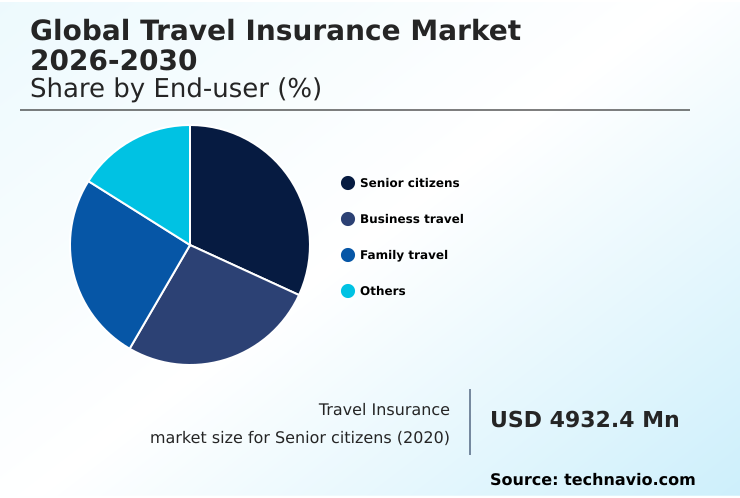
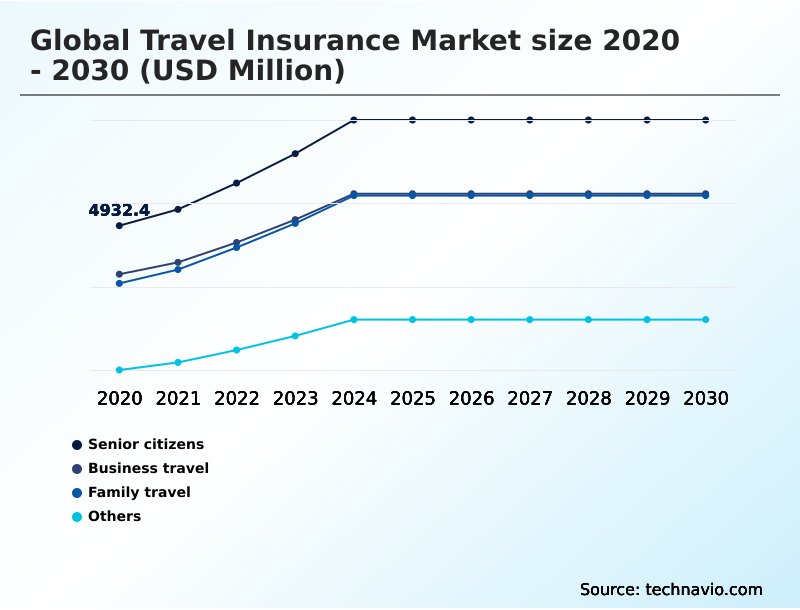
The Senior citizens segment was valued at USD 6.72 billion in 2024 and showed a gradual increase during the forecast period.
Regional Analysis
North America is estimated to contribute 34.4% to the growth of the global market during the forecast period.Technavio’s analysts have elaborately explained the regional trends and drivers that shape the market during the forecast period.
See How Travel Insurance Market Demand is Rising in North America Request Free Sample
The geographic landscape is marked by diverse growth dynamics, with the APAC region projected to expand at the fastest rate. This growth is fueled by a burgeoning middle class and widespread digital adoption, particularly through super-apps.
North America currently contributes 34.4% of the market's incremental growth, driven by high average trip costs and a mature consumer base demanding comprehensive travel risk management and proactive payment systems.
In the Middle East, government mandates for inbound tourists have spurred the development of specialized Takaful travel insurance. Meanwhile, European insurers navigate a complex regulatory environment while focusing on sustainability and specialized coverage for rail travel.
These regional distinctions necessitate tailored strategies, from leveraging global assistance networks in developing markets to deploying advanced climate volatility modeling in disaster-prone areas, ensuring effective support for cross-border mobility.
Market Dynamics
Our researchers analyzed the data with 2025 as the base year, along with the key drivers, trends, and challenges. A holistic analysis of drivers will help companies refine their marketing strategies to gain a competitive advantage.
- Navigating the complexities of modern travel requires a nuanced understanding of insurance options, moving beyond generic policies to address specific needs. A crucial decision for frequent travelers is comparing single-trip vs annual multi-trip plans, where the latter often provides superior value and convenience for those embarking on multiple journeys.
- For individuals with health concerns, finding the best travel insurance for pre-existing conditions is paramount, requiring careful review of policy terms. Similarly, learning how to get travel insurance for schengen visa is a critical step for many, as compliance is mandatory. Discerning travelers seek to understand what does cancel for any reason coverage include, valuing its flexibility.
- The rise of new travel styles has also created demand for specialized products. Key considerations now include travel insurance options for digital nomads and corporate travel insurance for employee duty of care. Technologically, understanding parametric insurance for flight delays is becoming essential for managing common disruptions.
- Other critical areas of inquiry include high-limit medical evacuation insurance cost, adventure sports travel insurance for backpacking, and student travel insurance with mental health coverage. Specialized products are also available, such as senior travel insurance for long-stay trips and family travel insurance with free child coverage.
- The evolution of the market is further evident in how medical inflation impacts travel insurance premiums and how climate change risk in travel insurance underwriting is being addressed.
- Insurers are also developing policies for emerging segments, such as choosing travel insurance for remote work, what is bleisure travel insurance coverage, takaful travel insurance for hajj and umrah, and travel insurance for high-value luxury trips.
- The benefits of embedded insurance in airline bookings and managing claims with automated processing systems, which can reduce settlement times by over 40%, highlight the industry's shift toward efficiency and user-centric design.
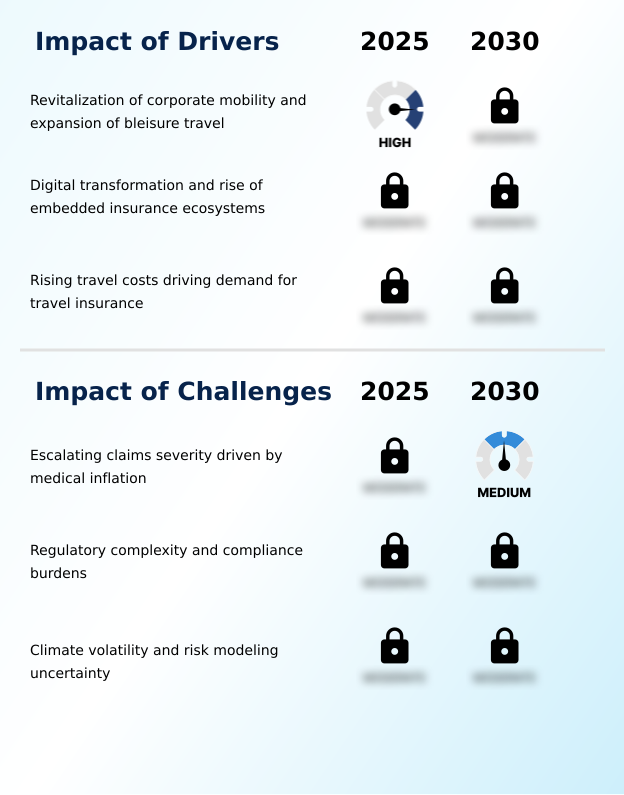
What are the key market drivers leading to the rise in the adoption of Travel Insurance Industry?
- The revitalization of corporate mobility and the expansion of bleisure travel are key drivers for the market's growth.
- The market is propelled by the resurgence of corporate travel and the expansion of bleisure travel, which blends professional and personal trip purposes.
- This hybridization necessitates specialized bleisure travel coverage to bridge the gap between corporate duty-of-care obligations and individual protection. An internal analysis by one travel management company indicated a 20% rise in business trips extending over weekends, highlighting the monetization opportunity.
- Simultaneously, the rising cost of travel is a significant economic driver. With a 15% year-over-year increase in average claim amounts for cancellations, consumers are seeking high-value trip protection to safeguard their financial investments.
- This has led insurers to reposition offerings as financial risk management tools.
- The technological integration of embedded insurance into booking platforms further stimulates growth by offering personalized insurance quotes and eliminating administrative friction, turning travel protection into a standard component of the purchase journey.
What are the market trends shaping the Travel Insurance Industry?
- The proliferation of parametric insurance and data-driven claims automation is reshaping the market. This trend is altering the value proposition from reactive reimbursement to proactive, data-triggered risk management.
- A defining trend is the proliferation of parametric insurance models and automated claims processing, fundamentally altering the value proposition from reactive reimbursement to proactive risk management. Driven by the need to improve customer trust, insurers are leveraging real-time data to trigger automatic payouts, a feature that can allow travelers to recoup 70% of costs in certain cancellation scenarios.
- This trend, powered by advanced data analytics and API integration, is moving from niche corporate products to mainstream leisure offerings. The integration of insurance into loyalty program integration and super-app insurance features is also gaining traction, where coverage is embedded into broader lifestyle ecosystems.
- This approach, which includes options like Cancel for Any Reason (CFAR), enhances customer stickiness while allowing for higher levels of personalization based on travel habits. The market is increasingly characterized by compliance-first products tailored to regulatory frameworks like Schengen visa requirements.
What challenges does the Travel Insurance Industry face during its growth?
- Escalating claims severity, driven primarily by medical inflation, presents a key challenge to industry profitability and growth.
- The market's profitability is under pressure from escalating claims severity, fueled by persistent medical inflation and the high cost of medical repatriation. A recorded double-digit percentage rise in average medical claim costs has compelled insurers to implement rigorous cost containment strategies and adjust premium tiers. This creates friction in customer acquisition, challenging the balance between competitive pricing and solvency.
- Another significant hurdle is the fragmented regulatory landscape, which imposes complex compliance burdens and data privacy mandates. Insurers must navigate these rules to create compliant regulatory compliance solutions and visa-compliant insurance policies, increasing administrative overhead. Furthermore, climate volatility renders traditional risk modeling unreliable, forcing insurers to adopt advanced predictive technologies to manage the financial impact of natural disasters.
- This environmental instability can lead to waves of high-volume claims that overwhelm traditional processing systems, necessitating a pivot toward more resilient operational models.
Exclusive Technavio Analysis on Customer Landscape
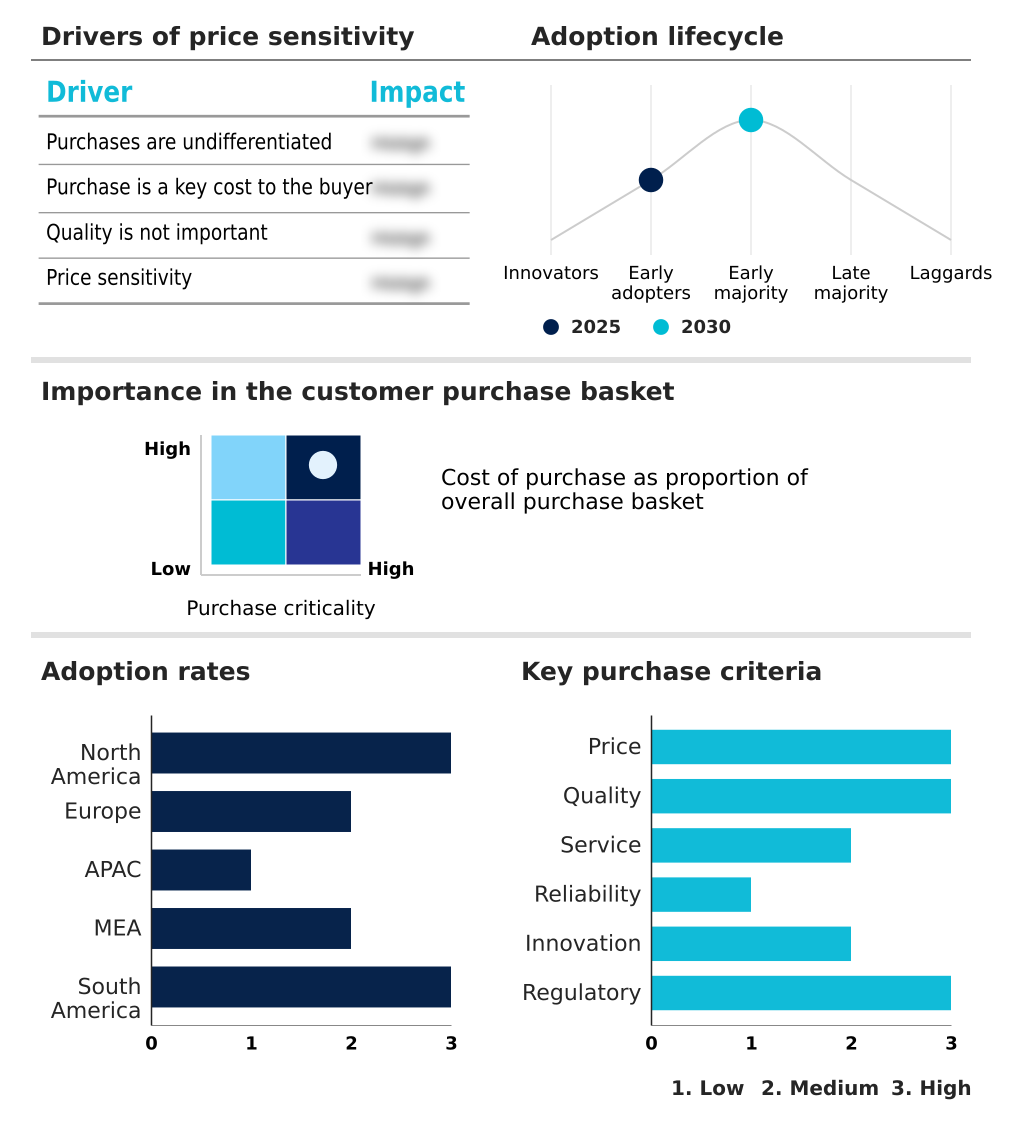
The travel insurance market forecasting report includes the adoption lifecycle of the market, covering from the innovator’s stage to the laggard’s stage. It focuses on adoption rates in different regions based on penetration. Furthermore, the travel insurance market report also includes key purchase criteria and drivers of price sensitivity to help companies evaluate and develop their market growth analysis strategies.
Customer Landscape of Travel Insurance Industry
Competitive Landscape
Companies are implementing various strategies, such as strategic alliances, travel insurance market forecast, partnerships, mergers and acquisitions, geographical expansion, and product/service launches, to enhance their presence in the industry.
Allianz SE - Offerings include comprehensive travel protection plans featuring trip cancellation coverage, medical travel insurance, and emergency assistance, addressing diverse traveler risk profiles.
The industry research and growth report includes detailed analyses of the competitive landscape of the market and information about key companies, including:
- Allianz SE
- American International Group
- Assicurazioni Generali S.p.A
- AXA Group
- Bajaj Allianz Insurance
- Berkshire Hathaway Travel Co.
- Chubb Ltd.
- Europ Assistance Holding
- InsureMyTrip
- International Medical Group
- Seven Corners Inc.
- Squaremouth Inc.
- The Travelers Co. Inc.
- World Nomads
- Zurich Insurance Co. Ltd.
Qualitative and quantitative analysis of companies has been conducted to help clients understand the wider business environment as well as the strengths and weaknesses of key industry players. Data is qualitatively analyzed to categorize companies as pure play, category-focused, industry-focused, and diversified; it is quantitatively analyzed to categorize companies as dominant, leading, strong, tentative, and weak.
Recent Development and News in Travel insurance market
- In March, 2025, Flight Centre Travel Group expanded its partnership with Cover-More Group, integrating an AI-driven recommendation engine to suggest bleisure-specific add-ons for corporate travelers.
- In May, 2025, AXA Partners US launched a new suite of Schengen travel insurance plans specifically designed to meet the precise regulatory criteria for US residents traveling to the European Union.
- In July, 2025, Booking Holdings Inc. upgraded its fintech unit with a deepened integration with Zurich Insurance Group, rolling out a one-click comprehensive protection plan across its European platforms.
- In October, 2025, Chubb launched Travel Pro, a digital-first parametric insurance suite designed for embedding into the booking pathways of airlines and online travel agencies, providing automatic payouts.
Dive into Technavio’s robust research methodology, blending expert interviews, extensive data synthesis, and validated models for unparalleled Travel Insurance Market insights. See full methodology.
| Market Scope | |
|---|---|
| Page number | 323 |
| Base year | 2025 |
| Historic period | 2020-2024 |
| Forecast period | 2026-2030 |
| Growth momentum & CAGR | Accelerate at a CAGR of 11.2% |
| Market growth 2026-2030 | USD 16172.3 million |
| Market structure | Fragmented |
| YoY growth 2025-2026(%) | 10.1% |
| Key countries | US, Canada, Mexico, UK, Germany, France, Italy, Spain, The Netherlands, China, Japan, India, Australia, South Korea, Indonesia, UAE, Saudi Arabia, South Africa, Israel, Egypt, Brazil, Colombia and Argentina |
| Competitive landscape | Leading Companies, Market Positioning of Companies, Competitive Strategies, and Industry Risks |
Research Analyst Overview
- The travel insurance market is evolving into a sophisticated ecosystem where data-driven underwriting and proactive risk management are paramount. A significant trend is the adoption of parametric insurance, which leverages API integration for claims automation, providing instant payouts for verifiable events like flight delays. This shift toward embedded insurance within booking platforms is fundamentally changing distribution.
- From a boardroom perspective, the decision to invest in compliance-first products has become critical, especially with changing Schengen visa requirements. Insurers are developing high-value trip protection and specialized single-trip policies and annual multi-trip plans to meet diverse needs, including pre-existing condition coverage, which is facilitated by advanced medical screening tools.
- Corporate duty-of-care obligations are driving demand for comprehensive travel risk management. However, the industry grapples with escalating claims severity due to medical inflation, a double-digit percentage rise in average medical claim costs has been noted, necessitating rigorous cost containment strategies. The unpredictability of climate volatility modeling and the need for medical repatriation services add further complexity.
- As a result, firms are offering more targeted solutions, such as takaful travel insurance and policies with robust trip cancellation coverage and protection for emergency medical expenses.
What are the Key Data Covered in this Travel Insurance Market Research and Growth Report?
-
What is the expected growth of the Travel Insurance Market between 2026 and 2030?
-
USD 16.17 billion, at a CAGR of 11.2%
-
-
What segmentation does the market report cover?
-
The report is segmented by End-user (Senior citizens, Business travel, Family travel, and Others), Type (General travel insurance, Premium travel insurance, and Others), Application (Single-trip, Annual multi-trip, and Long-stay), Distribution Channel (Insurance company, Bank, Online travel agency, Airlines, and Others) and Geography (North America, Europe, APAC, Middle East and Africa, South America)
-
-
Which regions are analyzed in the report?
-
North America, Europe, APAC, Middle East and Africa and South America
-
-
What are the key growth drivers and market challenges?
-
Revitalization of corporate mobility and expansion of bleisure travel, Escalating claims severity driven by medical inflation
-
-
Who are the major players in the Travel Insurance Market?
-
Allianz SE, American International Group, Assicurazioni Generali S.p.A, AXA Group, Bajaj Allianz Insurance, Berkshire Hathaway Travel Co., Chubb Ltd., Europ Assistance Holding, InsureMyTrip, International Medical Group, Seven Corners Inc., Squaremouth Inc., The Travelers Co. Inc., World Nomads and Zurich Insurance Co. Ltd.
-
Market Research Insights
- The market is defined by a strategic pivot toward personalized insurance quotes and proactive, digitally-enabled travel assistance services. The integration of insurtech platforms into super-apps is enhancing customer journey optimization, with some platforms reporting a 20% rise in the attachment of bleisure travel coverage.
- Simultaneously, a focus on financial risk management tools is addressing consumer sensitivity to rising travel costs, as average trip cancellation claims have increased by 15% year-over-year. This has led to the development of specialized student travel protection and other modular policy options.
- The use of real-time risk assessment and automated claims processing is becoming standard, ensuring that support for cross-border mobility is both immediate and efficient, solidifying the role of insurance as a critical component of modern travel planning.
We can help! Our analysts can customize this travel insurance market research report to meet your requirements.
 RIA -
RIA -