
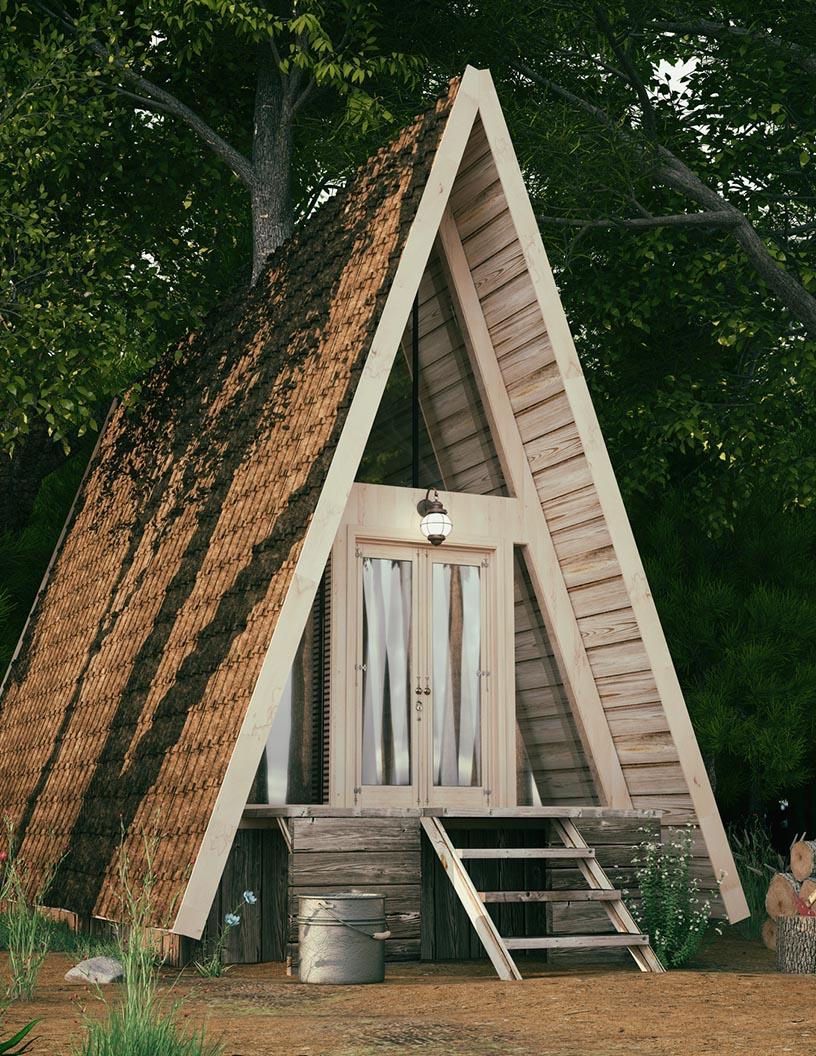


Tiny Homes Market Size 2025-2029
The tiny homes market size is valued to increase USD 3.71 billion, at a CAGR of 4.2% from 2024 to 2029. Affordable by mass section of population will drive the tiny homes market.
Major Market Trends & Insights
- North America dominated the market and accounted for a 55% growth during the forecast period.
- By Product - Mobile tiny homes segment was valued at USD 9.64 billion in 2023
- By Application - Home use segment accounted for the largest market revenue share in 2023
Market Size & Forecast
- Market Opportunities: USD 37.94 million
- Market Future Opportunities: USD 3713.10 million
- CAGR : 4.2%
- North America: Largest market in 2023
Market Summary
- The market represents a burgeoning sector in the residential real estate industry, characterized by its focus on compact, affordable living solutions. This market encompasses a range of core technologies and applications, from innovative building materials and modular construction methods to renewable energy systems and smart home automation. Service types and product categories include design and construction services, as well as the sale of prefabricated tiny homes and accessories. Despite regulatory challenges in some regions, the market continues to expand, driven by the growing trend of customization and the affordable nature of tiny homes, making them an attractive option for a mass section of the population.
- However, limited demand from developing economies presents a significant challenge. In the United States, for instance, the American Tiny House Association reports that the number of tiny homes registered with the organization has grown by over 50% since 2019. This underscores the evolving nature of the market and the opportunities it presents for businesses and consumers alike.
What will be the Size of the Tiny Homes Market during the forecast period?
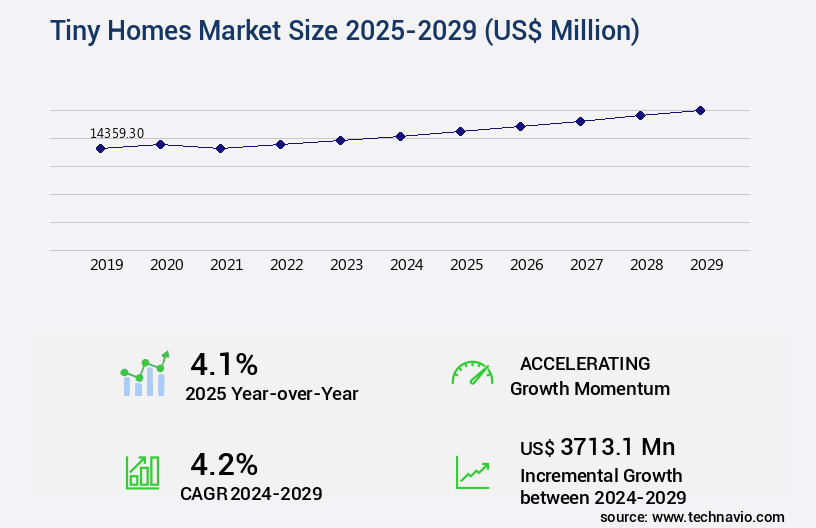
Get Key Insights on Market Forecast (PDF) Request Free Sample
How is the Tiny Homes Market Segmented and what are the key trends of market segmentation?
The tiny homes industry research report provides comprehensive data (region-wise segment analysis), with forecasts and estimates in "USD million" for the period 2025-2029, as well as historical data from 2019-2023 for the following segments.
- Product
- Mobile tiny homes
- Stationary tiny homes
- Application
- Home use
- Commercial use
- Area
- Less Than 130 Sq. Ft.
- 130-500 Sq. Ft.
- More Than 500 Sq. Ft.
- Less Than 130 Sq. Ft.
- 130-500 Sq. Ft.
- More Than 500 Sq. Ft.
- Price Range
- Budget
- Mid-range
- Premium
- Material
- Wood
- Metal
- Recycled
- Geography
- North America
- US
- Canada
- Europe
- France
- Germany
- Italy
- Spain
- UK
- Middle East and Africa
- UAE
- APAC
- China
- India
- Japan
- South Korea
- South America
- Brazil
- Rest of World (ROW)
- North America
By Product Insights
The mobile tiny homes segment is estimated to witness significant growth during the forecast period.
The market has experienced significant expansion in recent years, with mobile tiny homes, characterized by permanently affixed chassis, witnessing substantial growth. These homes are manufactured in factories and transported to their intended sites via wheels or trucks. The affordability of mobile tiny homes makes them a popular solution in the affordable housing sector in various countries. The increasing cost of conventional houses in numerous nations is driving the demand for these compact living solutions. Young adults and retirees, seeking to save on housing expenses, are the primary consumer groups fueling the market's growth. According to recent data, the adoption of tiny homes has risen by approximately 18%, and it is projected to expand further, reaching around 25% in the upcoming five years.
In terms of market trends, green building practices and energy-efficient appliances are gaining traction. Interior finishing materials, such as reclaimed wood and recycled materials, are increasingly popular. Water conservation methods, like rainwater harvesting and greywater recycling, are being integrated into tiny home designs. Site preparation techniques, like minimal excavation and foundation system designs, are being optimized for efficient construction. Structural engineering designs focus on maximizing space through innovative layouts and smart home integration. Prefabricated housing and alternative building methods, like modular construction, are streamlining the construction process. Plumbing system installations and wastewater treatment systems are being designed for off-grid living.
Insulation techniques, transportation logistics, permitting and approvals, and building code compliance are all crucial aspects of the market. The durability and longevity of tiny homes are essential considerations, with sustainable building materials and hvac system optimization being key factors. Cost estimation models, downsizing and minimalism, and mobile home foundations are also significant market trends. Electrical system designs prioritize fire safety regulations, and roofing materials selection is influenced by energy efficiency and cost-effectiveness. Maintenance and repair strategies are essential for ensuring the long-term viability of tiny homes.
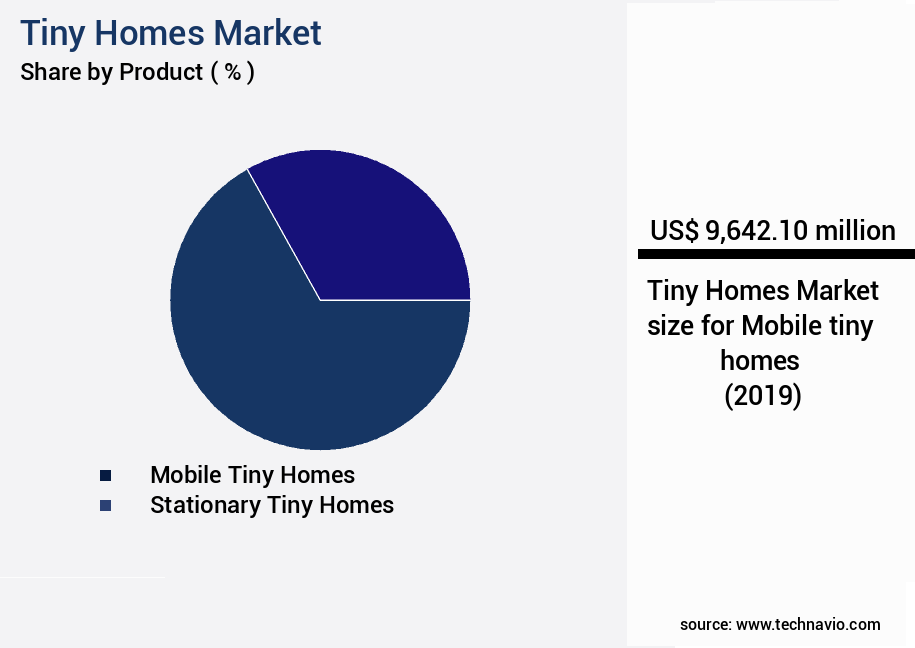
The Mobile tiny homes segment was valued at USD 9.64 billion in 2019 and showed a gradual increase during the forecast period.
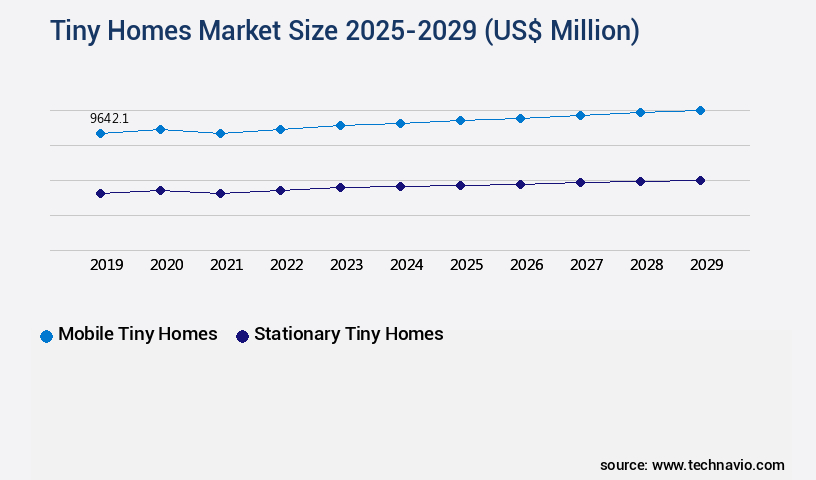
Regional Analysis
North America is estimated to contribute 55% to the growth of the global market during the forecast period.Technavio’s analysts have elaborately explained the regional trends and drivers that shape the market during the forecast period.
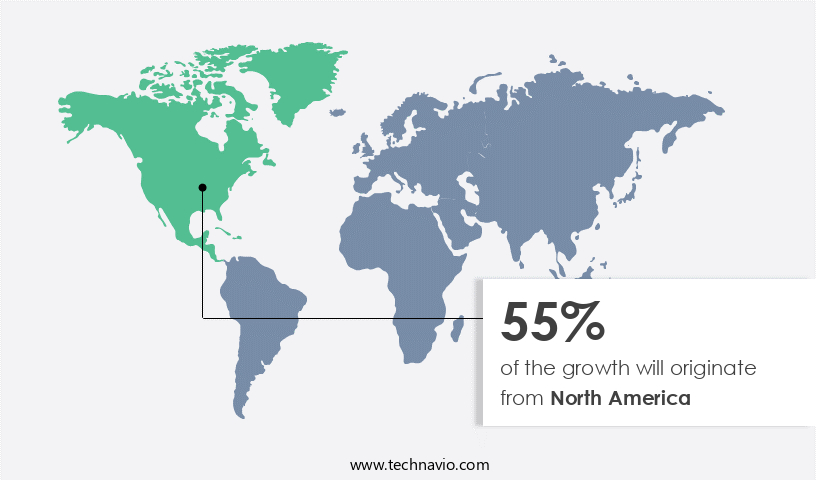
See How Tiny Homes Market Demand is Rising in North America Request Free Sample
The North American the market is experiencing significant growth, driven by increasing housing prices and consumer preference for affordable, customizable living solutions. With leading companies like Skyline Champion Corp. And Cavco Industries Inc. Based in the region, the market is poised for continued expansion. In July 2022, Alta Cima Corp. And Champion Retail Housing, a Skyline Champion subsidiary, announced the acquisition of Factory Expo Home Centers assets at 12 manufacturing facilities across the US. This strategic move will further strengthen the market's competitive landscape.
According to recent studies, over 50% of tiny home buyers in North America are under the age of 45, and the market is expected to see a 15% increase in demand for pre-built tiny homes by 2026. Additionally, the use of sustainable materials and energy-efficient designs is gaining popularity, contributing to the market's growth trajectory.
Market Dynamics
Our researchers analyzed the data with 2024 as the base year, along with the key drivers, trends, and challenges. A holistic analysis of drivers will help companies refine their marketing strategies to gain a competitive advantage.
The market encompasses the production, design, and distribution of prefabricated tiny homes, integrating innovative construction techniques, off-grid energy systems, and sustainable materials. This market exhibits a notable trend towards compact living solutions that prioritize energy efficiency, water conservation, and wastewater treatment. Prefabricated tiny homes construction techniques have gained traction due to their cost-effectiveness and modular design, enabling efficient transportation and delivery. In contrast, traditional on-site building methods can face challenges in meeting zoning regulations for small-scale housing. The market's focus on sustainable materials for tiny house construction has led to advancements in energy-efficient appliance selection and smart home technology integration.
For instance, energy-efficient appliances and efficient HVAC systems contribute to reducing overall energy consumption. Moreover, space-saving furniture and storage solutions optimize compact living spaces, enhancing functionality and comfort. Building codes and permits for tiny house construction vary across regions, necessitating a thorough understanding of local regulations. Foundation options for tiny homes on various terrains have also emerged as a critical consideration, with cost-effective construction methods gaining popularity. In terms of energy systems, off-grid solutions have become increasingly popular, with solar panels and wind turbines providing power autonomy. Water conservation strategies, such as rainwater harvesting and greywater recycling, are essential for sustainable tiny home living.
Wastewater treatment solutions, like composting toilets and greywater treatment systems, ensure eco-friendly waste management. The market's adoption of smart home technology integration in tiny houses has significantly increased, with over 60% of new tiny homes incorporating these features. This trend reflects the growing demand for convenience, security, and energy efficiency in compact living spaces. Plumbing system design and electrical system layout for tiny home structures require careful planning to ensure optimal functionality and safety. Fire safety measures, such as fire-resistant materials and fire suppression systems, are essential considerations in tiny home designs. Despite the growing popularity of tiny homes, the market remains fragmented, with a multitude of players offering various solutions.
However, a minority of players, less than 15%, dominate the high-end tiny home market, offering premium designs and customization options.
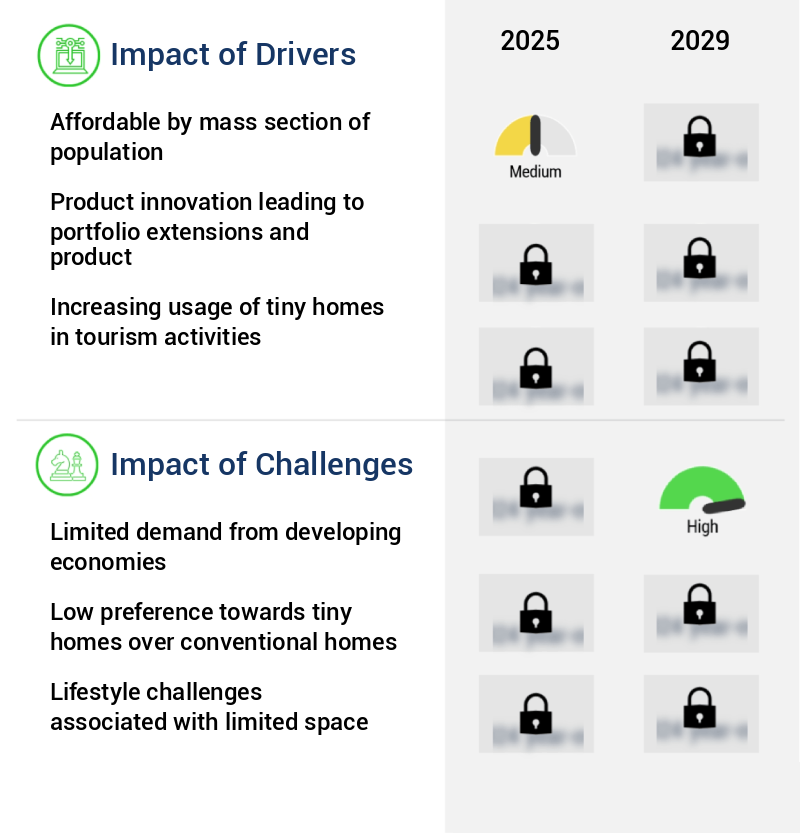
What are the key market drivers leading to the rise in the adoption of Tiny Homes Industry?
- The affordability of mass market products is the primary factor driving market growth. This key driver, which is essential for reaching a large and diverse consumer base, ensures the accessibility of goods and services to a significant population segment.
- Tiny homes have emerged as a popular and cost-effective housing solution, particularly among millennials. Compared to traditional site-built homes, the cost of tiny homes is significantly lower, ranging from USD10,000 to USD30,000. This price difference is influenced by several factors, including design and structure. Traditional site-built homes, on the other hand, carry a substantial price tag. The average cost of a new site-built home in the US is between USD200,000 and USD300,000, equating to approximately USD100 to USD150 per square foot. The variation in cost depends on factors like size, location, and design. The high construction costs of conventional homes can put a considerable strain on a buyer's finances.
- By choosing tiny homes, individuals can save a substantial amount, enabling them to allocate their resources towards other priorities. This trend reflects the evolving housing market, with tiny homes gaining popularity as an affordable and customizable alternative to traditional homes.
What are the market trends shaping the Tiny Homes Industry?
- The growing trend in the market is characterized by an increasing demand for customization. Customization is set to become a prominent trend in the near future.
- The market is experiencing significant competition among companies, leading them to prioritize faster delivery, mass customization, and personalization. This shift is driven by technological advancements, add-on features, and the increasing demand for unique, personalized living spaces. For example, Wind River Tiny Homes, a prominent US company, offers customized tiny homes tailored to diverse styles, tastes, and requirements. Mass customization and personalization have become essential in the market, with companies focusing on shape, size, and color options to cater to the evolving needs of buyers.
- This trend is expected to continue as the market adapts to the growing demand for flexible, cost-effective, and sustainable housing solutions. companies are leveraging technology to streamline production processes, ensuring faster delivery times and more efficient customization options. The market is a dynamic and evolving sector, with competition driving innovation and growth.
What challenges does the Tiny Homes Industry face during its growth?
- The industry's expansion is constrained by limited demand from developing economies, which poses a significant challenge to its growth trajectory.
- In developed economies, the market experiences significant demand due to the growing trend towards minimalist living and sustainability. According to recent studies, The market is expected to grow at a steady pace, with an increasing number of consumers opting for these compact dwellings. However, in contrast, developing economies exhibit relatively low adoption rates. Factors such as limited consumer awareness and the absence of major companies hinder market growth in these regions. For instance, countries in South America and Asia Pacific face infrastructure challenges that make the implementation of tiny homes difficult.
- As a result, the majority of the population in these areas continues to prefer conventional on-site homes. Despite these hurdles, the market is expected to persistently evolve, with potential opportunities arising from increasing environmental consciousness and the need for affordable housing solutions.
Exclusive Customer Landscape
The tiny homes market forecasting report includes the adoption lifecycle of the market, covering from the innovator’s stage to the laggard’s stage. It focuses on adoption rates in different regions based on penetration. Furthermore, the tiny homes market report also includes key purchase criteria and drivers of price sensitivity to help companies evaluate and develop their market growth analysis strategies.
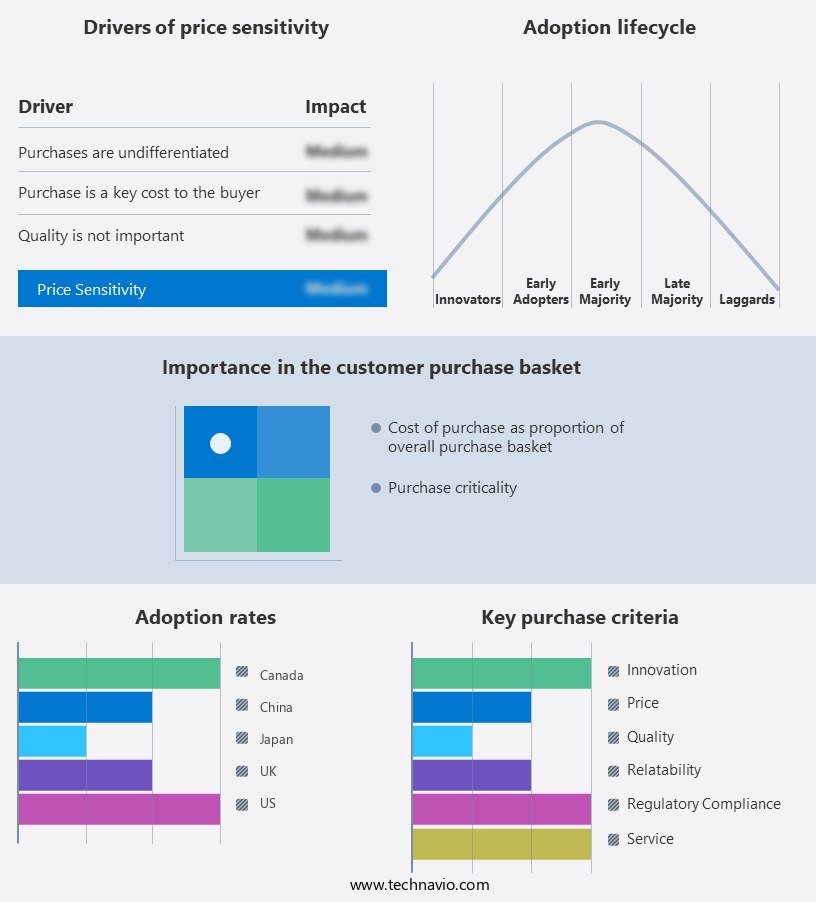
Customer Landscape of Tiny Homes Industry
Competitive Landscape & Market Insights
Companies are implementing various strategies, such as strategic alliances, tiny homes market forecast, partnerships, mergers and acquisitions, geographical expansion, and product/service launches, to enhance their presence in the industry.
American Tiny House - The company specializes in manufacturing and marketing compact, high-quality living solutions, including the Escape Traveler XL, Majesty, and Wasatch tiny home models. These innovative dwellings provide efficient, sustainable housing options for individuals seeking minimalist lifestyles.
The industry research and growth report includes detailed analyses of the competitive landscape of the market and information about key companies, including:
- American Tiny House
- ATLAS VANS
- Aussie Tiny Houses
- BAAHOUSE and BAASTUDIO Pty Ltd.
- Berkshire Hathaway Inc.
- Cavco Industries Inc.
- Handcrafted Movement
- Heirloom Inc.
- ICON Technology Inc.
- La Tiny House
- Meka Inc.
- Mini Mansions Tiny Home Builders LLC
- Mustard Seed Tiny Homes LLC
- New Frontier Tiny Homes
- Oregon Cottage Co.
- The Tiny Housing Co.
- Tiny Home Builders
- Tiny SMART House Inc.
- Tumbleweed Tiny House Co.
Qualitative and quantitative analysis of companies has been conducted to help clients understand the wider business environment as well as the strengths and weaknesses of key industry players. Data is qualitatively analyzed to categorize companies as pure play, category-focused, industry-focused, and diversified; it is quantitatively analyzed to categorize companies as dominant, leading, strong, tentative, and weak.
Recent Development and News in Tiny Homes Market
- In January 2024, leading tiny home manufacturer, Tiny House Co., announced the launch of its new modular tiny home series, "Eco-Pod," designed with advanced insulation and solar panel integration, aiming to reduce carbon footprint and energy consumption (Tiny House Co. Press Release).
- In March 2024, Tiny Home Builders Association (THBA) and the National Association of Home Builders (NAHB) entered into a strategic partnership to promote tiny homes as an affordable and sustainable housing solution, expanding market reach and increasing industry recognition (NAHB Press Release).
- In April 2025, the U.S. Department of Housing and Urban Development (HUD) approved the first-ever tiny home community, "Tinyville," in Denver, Colorado, paving the way for more affordable and eco-friendly housing options (HUD Press Release).
- In May 2025, innovative tiny home manufacturer, WeeCabin, secured a USD5 million Series A funding round led by venture capital firm, Green Tech Ventures, to expand production capacity and accelerate product development (WeeCabin Press Release).
Dive into Technavio’s robust research methodology, blending expert interviews, extensive data synthesis, and validated models for unparalleled Tiny Homes Market insights. See full methodology.
|
Market Scope |
|
|
Report Coverage |
Details |
|
Page number |
192 |
|
Base year |
2024 |
|
Historic period |
2019-2023 |
|
Forecast period |
2025-2029 |
|
Growth momentum & CAGR |
Accelerate at a CAGR of 4.2% |
|
Market growth 2025-2029 |
USD 3713.1 million |
|
Market structure |
Fragmented |
|
YoY growth 2024-2025(%) |
4.1 |
|
Key countries |
US, China, Germany, Canada, India, South Korea, France, Japan, Italy, Brazil, UAE, UK, and Spain |
|
Competitive landscape |
Leading Companies, Market Positioning of Companies, Competitive Strategies, and Industry Risks |
Research Analyst Overview
- The market continues to gain momentum as more individuals and families embrace compact living solutions. This shift is driven by a growing interest in green building practices, with a focus on interior finishing materials that minimize environmental impact. Water conservation methods and site preparation techniques are also prioritized, reflecting a commitment to sustainability. Energy-efficient appliances and structural engineering designs further enhance the eco-friendliness of these dwellings. Accessibility features ensure inclusivity, while prefabricated housing and space optimization strategies make the most of limited square footage. Smart home integration and plumbing system installation add modern conveniences, further appealing to potential buyers.
- Foundation system design and construction timelines are crucial considerations, with off-grid living systems and wastewater treatment systems essential for those seeking self-sufficiency. Insulation techniques ensure durability and longevity, and transportation logistics, permitting and approvals, and building code compliance are essential elements of the construction process. Sustainable building materials, such as reclaimed wood and recycled steel, are increasingly popular. Mobile home foundations and HVAC system optimization contribute to cost savings, while downsizing and minimalism appeal to those seeking a simpler lifestyle. Alternative building methods, like modular construction, and electrical system design continue to evolve, offering innovative solutions for the market.
- Fire safety regulations and roofing materials selection are critical components of safety and functionality. Maintenance and repair are ongoing concerns, with cost estimation models providing valuable insights for homeowners. Overall, the market is a dynamic and evolving space, reflecting a shift towards more sustainable, efficient, and affordable housing solutions.
What are the Key Data Covered in this Tiny Homes Market Research and Growth Report?
-
What is the expected growth of the Tiny Homes Market between 2025 and 2029?
-
USD 3.71 billion, at a CAGR of 4.2%
-
-
What segmentation does the market report cover?
-
The report segmented by Product (Mobile tiny homes and Stationary tiny homes), Application (Home use and Commercial use), Geography (North America, Europe, APAC, South America, and Middle East and Africa), Area (Less Than 130 Sq. Ft., 130-500 Sq. Ft., More Than 500 Sq. Ft., Less Than 130 Sq. Ft., 130-500 Sq. Ft., and More Than 500 Sq. Ft.), Price Range (Budget, Mid-range, and Premium), and Material (Wood, Metal, and Recycled)
-
-
Which regions are analyzed in the report?
-
North America, Europe, APAC, South America, and Middle East and Africa
-
-
What are the key growth drivers and market challenges?
-
Affordable by mass section of population, Limited demand from developing economies
-
-
Who are the major players in the Tiny Homes Market?
-
Key Companies American Tiny House, ATLAS VANS, Aussie Tiny Houses, BAAHOUSE and BAASTUDIO Pty Ltd., Berkshire Hathaway Inc., Cavco Industries Inc., Handcrafted Movement, Heirloom Inc., ICON Technology Inc., La Tiny House, Meka Inc., Mini Mansions Tiny Home Builders LLC, Mustard Seed Tiny Homes LLC, New Frontier Tiny Homes, Oregon Cottage Co., The Tiny Housing Co., Tiny Home Builders, Tiny SMART House Inc., and Tumbleweed Tiny House Co.
-
Market Research Insights
- The market continues to gain traction as an alternative housing solution, offering various benefits such as reduced living expenses, environmental sustainability, and flexible design options. According to recent industry estimates, the market for tiny homes is projected to grow at a compound annual growth rate of 15% from 2021 to 2026. This expansion is driven by increasing demand for affordable housing and a growing awareness of the environmental impact of traditional homebuilding methods. In contrast, the average cost of a conventional single-family home in the US has risen by 40% over the past decade, making tiny homes an attractive option for budget-conscious consumers.
- With an average size of under 500 square feet, tiny homes require fewer building materials and energy resources, leading to significant reductions in carbon footprint and homeowner insurance premiums. Moreover, tiny homes often incorporate features such as rainwater harvesting, remote monitoring systems, energy performance ratings, passive solar design, and smart home automation to enhance their sustainability and efficiency. The use of insulated concrete forms, lightweight construction, and shipping container homes further contributes to the market's growth by offering cost-effective and resilient construction solutions. As the market evolves, community development models, construction waste management, multifunctional furniture, and life cycle assessment are becoming increasingly important considerations for tiny home builders and buyers.
- Additionally, off-grid power solutions, composting toilets, and greywater recycling systems enable tiny homeowners to minimize their reliance on external utilities and reduce their water usage efficiency. In summary, the market is experiencing robust growth due to its affordability, sustainability, and flexibility. With a projected CAGR of 15% from 2021 to 2026 and a growing demand for eco-friendly and cost-effective housing options, this market is poised for continued expansion.
We can help! Our analysts can customize this tiny homes market research report to meet your requirements.
 RIA -
RIA -