

Thermoplastic Polyurethane Market Analysis, Size, and Forecast 2026-2030: APAC (China, Japan, and India), Europe (Germany, France, and Italy), North America (US, Canada, and Mexico), Middle East and Africa (Saudi Arabia, UAE, and Turkey), South America (Brazil and Argentina), and Rest of World (ROW)

Thermoplastic Polyurethane Market Analysis, Size, and Forecast 2026-2030:
APAC (China, Japan, and India), Europe (Germany, France, and Italy), North America (US, Canada, and Mexico), Middle East and Africa (Saudi Arabia, UAE, and Turkey), South America (Brazil and Argentina), and Rest of World (ROW)

Published: Dec 2025 312 Pages SKU: IRTNTR44834

Market Overview at a Glance

$1.10 B
Market Opportunity
6.4%
CAGR 2025 - 2030
35.7%
APAC Growth
$864.1 Mn
Footwear segment 2024

Thermoplastic Polyurethane Market Size 2026-2030

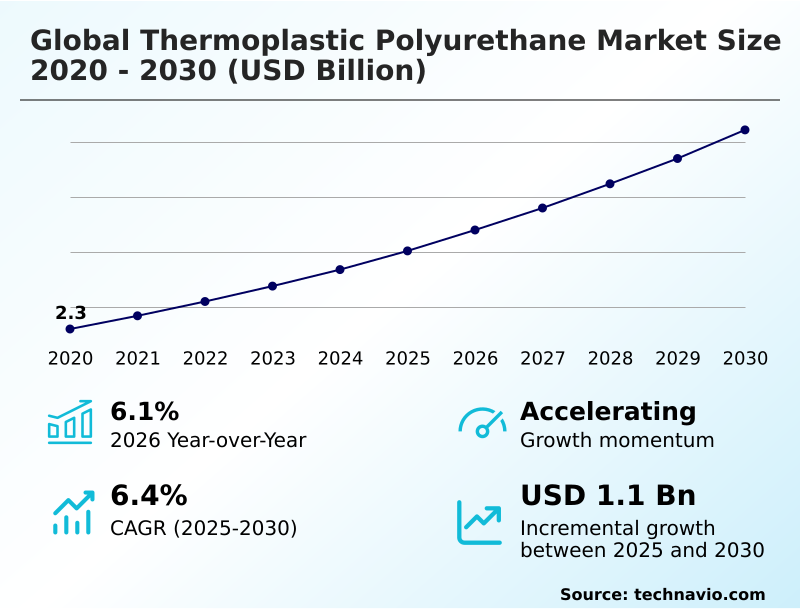
The thermoplastic polyurethane market size is valued to increase by USD 1.10 billion, at a CAGR of 6.4% from 2025 to 2030. Increasing opportunities in automotive industry in APAC will drive the thermoplastic polyurethane market.

Major Market Trends & Insights

  • APAC dominated the market and accounted for a 35.7% growth during the forecast period.
  • By Application - Footwear segment was valued at USD 864.1 million in 2024
  • By Product - Polyester segment accounted for the largest market revenue share in 2024

Market Size & Forecast

  • Market Opportunities: USD 1.81 billion
  • Market Future Opportunities: USD 1.10 billion
  • CAGR from 2025 to 2030 : 6.4%

Market Summary

  • The thermoplastic polyurethane market is defined by its role as a versatile, high-performance polymer bridging the gap between rigid plastics and flexible rubbers. Growth is fueled by strong demand from the automotive and footwear industries, where its superior abrasion resistance, elasticity, and durability are critical for producing lightweight components and high-comfort products.
  • A primary trend shaping the market is the pivot toward sustainability, with significant research and development focused on bio-based thermoplastic polyurethane derived from renewable resources. This shift not only reduces dependence on petrochemicals but also aligns with corporate environmental, social, and governance mandates.
  • However, the industry navigates challenges related to raw material price volatility, which is tied to fluctuating crude oil prices.
  • As a business scenario, an automotive components manufacturer must balance its supply chain to manage these costs, strategically sourcing both traditional polyester-based tpu and innovative bio-based feedstocks to maintain stable production margins while meeting OEM demands for greener, high-performance polymers and recyclable materials.

What will be the Size of the Thermoplastic Polyurethane Market during the forecast period?
Get Key Insights on Market Forecast (PDF) Request Free Sample

How is the Thermoplastic Polyurethane Market Segmented?

The thermoplastic polyurethane industry research report provides comprehensive data (region-wise segment analysis), with forecasts and estimates in "USD million" for the period 2026-2030, as well as historical data from 2020-2024 for the following segments.

  • Application
    • Footwear
    • Consumer goods and electronics
    • Automotive
    • Construction
    • Others
  • Product
    • Polyester
    • Polyether
    • Polycaprolactone
  • Technology
    • Extrusion
    • Injection molding
    • Blow molding
    • Thermoforming
    • Others
  • Geography
    • APAC
      • China
      • Japan
      • India
    • Europe
      • Germany
      • France
      • Italy
    • North America
      • US
      • Canada
      • Mexico
    • Middle East and Africa
      • Saudi Arabia
      • UAE
      • Turkey
    • South America
      • Brazil
      • Argentina
    • Rest of World (ROW)

By Application Insights

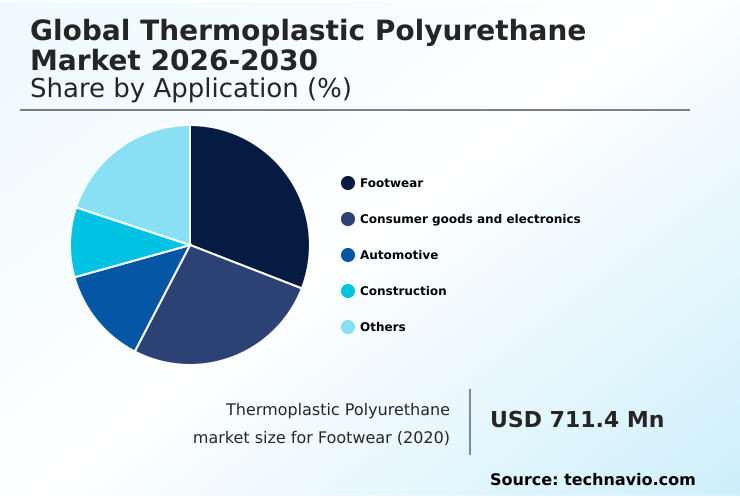
The footwear segment is estimated to witness significant growth during the forecast period.

The footwear sector's adoption of thermoplastic polyurethane continues to expand, driven by demand for lightweight midsoles, durable electronic casings, and high-grip outsoles that utilize advanced material engineering over conventional materials.

The shift toward sustainable polymer development is pronounced, with manufacturers leveraging high-performance polymers for their superior abrasion resistance and design flexibility. Innovations in supercritical fluid foaming enable the creation of midsoles that are up to 20% lighter while improving rebound.

The material's compatibility with extrusion technology and injection molding supports high-volume production of athletic and safety footwear, where long-term compression stability and low-temperature flexibility are critical.

This transition is further supported by the mechanical recycling process, which aligns with circular economy solutions and addresses consumer demand for recyclable thermoplastic materials in modern footwear.
Request Free Sample

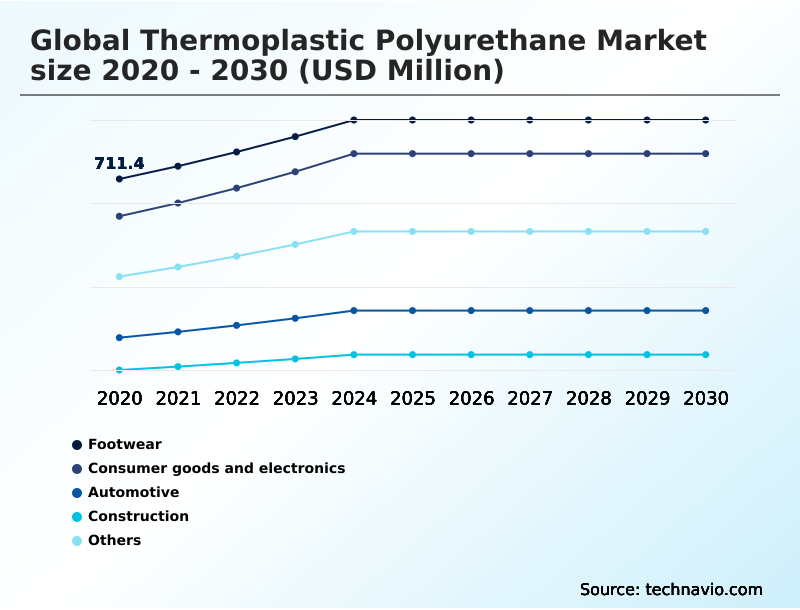
The Footwear segment was valued at USD 864.1 million in 2024 and showed a gradual increase during the forecast period.
Request Free Sample

Regional Analysis

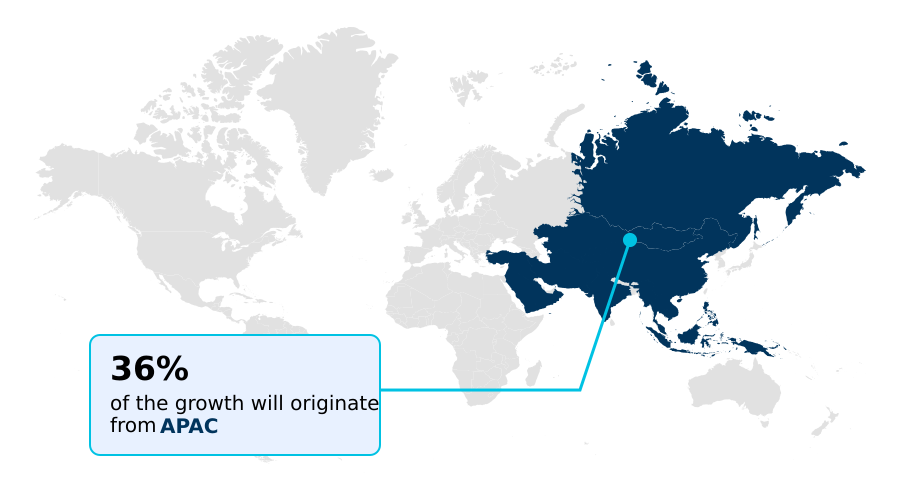
APAC is estimated to contribute 35.7% to the growth of the global market during the forecast period.Technavio’s analysts have elaborately explained the regional trends and drivers that shape the market during the forecast period.
See How Thermoplastic Polyurethane Market Demand is Rising in APAC Request Free Sample

The geographic landscape of the thermoplastic polyurethane market is led by the APAC region, which accounts for 35.7% of the market's incremental growth, solidifying its position as the primary hub for both production and consumption.

This dominance is driven by rapid industrialization and robust manufacturing sectors in countries like China and India, particularly in automotive and footwear applications.

Optimized production lines in this region have enabled a 10% reduction in processing cycle times for high-volume components.

In contrast, North America and Europe function as mature markets focused on innovation in high-value segments, such as medical-grade tpu and bio-based tpu.

These regions prioritize sustainable polymer development and advanced material engineering, driving demand for specialized formulations like polyester-based tpu with superior chemical resistant coatings and abrasion resistance.

Market Dynamics

Our researchers analyzed the data with 2025 as the base year, along with the key drivers, trends, and challenges. A holistic analysis of drivers will help companies refine their marketing strategies to gain a competitive advantage.

  • Strategic decision-making in the global thermoplastic polyurethane market 2026-2030 requires a deep understanding of material capabilities and application-specific demands. For instance, evaluating polyester vs polyether tpu for industrial use is critical, as their distinct properties affect performance in high-stress environments.
  • Understanding the benefits of tpu in automotive cable sheathing, such as superior flexibility and abrasion resistance, is key for vehicle manufacturers. The growing demand for tpu applications in wearable medical devices is driven by biocompatibility and sterilization resilience. Similarly, the use of tpu in high-performance footwear components enhances durability and comfort.
  • For designers of modern electronics, exploring bio-based tpu for sustainable consumer electronics is a priority. Companies are also focused on improving tpu durability with stabilizing additives to counteract environmental degradation. The market for tpu in flexible industrial hose manufacturing continues to expand due to its chemical resistance.
  • The role of tpu in lightweight automotive parts contributes to fuel efficiency, a key industry goal. Adopting bio-based tpu can improve a company's environmental rating, a metric now weighted nearly twice as heavily in procurement decisions.
  • Furthermore, understanding the advantages of tpu for protective electronic casings and the processing benefits of tpu extrusion for continuous profiles is essential for optimizing production. The properties of tpu for shock-absorbing industrial parts and the use of tpu in seals and gaskets for chemical processing are also significant.
  • Exploring thermoplastic polyurethane recycling for circular economy and the applications of tpu in medical-grade tubing are central to sustainability efforts. Finally, analyzing the market for tpu in athletic gear and apparel, the impact of tpu on 3d printing materials, and the benefits of thermoplastic polyurethane for construction sealants reveal the material's vast potential.
What are the key market drivers leading to the rise in the adoption of Thermoplastic Polyurethane Industry?

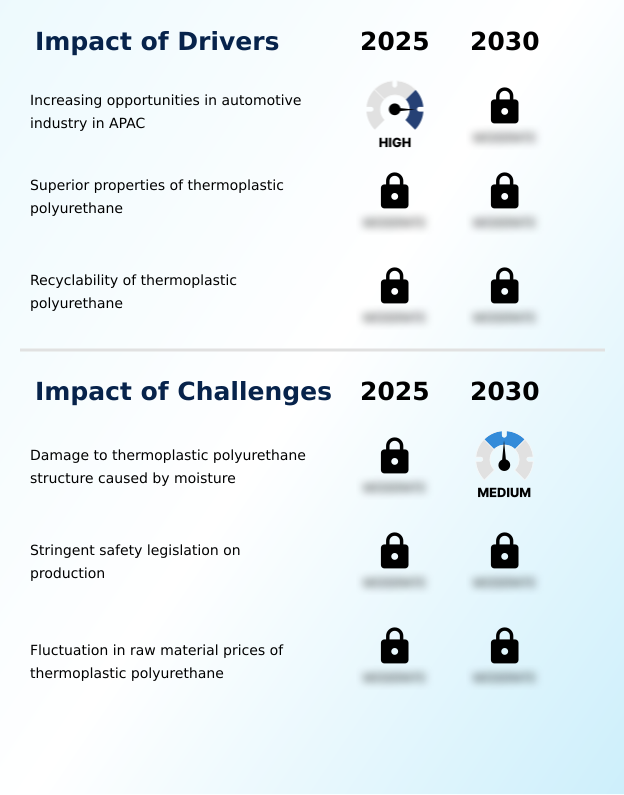
  • A key market driver is the expanding range of opportunities for thermoplastic polyurethane within the automotive industry, particularly in the APAC region.

  • The thermoplastic polyurethane market is propelled by its superior material properties and growing demand in key sectors.
  • The automotive industry's adoption of lightweight material solutions is a major driver, with the use of thermoplastic elastomers reducing component weight by up to 30%, thereby improving fuel efficiency.
  • The inherent versatility and abrasion resistance of these high-performance polymers make them ideal for automotive interior components. Another significant driver is the recyclability of the material, which supports sustainable polymer development.
  • Advanced mechanical recycling processes enable companies to improve material reuse rates by over 40%, meeting stringent circular economy targets. Furthermore, the material's excellent performance in injection molding and extrusion technology processes ensures high-quality, durable outputs for various applications.

What are the market trends shaping the Thermoplastic Polyurethane Industry?

  • A significant market trend is the ongoing development and adoption of bio-based thermoplastic polyurethane products, driven by sustainability initiatives and demand for greener materials.

  • Key trends in the thermoplastic polyurethane market are centered on sustainability and high-performance applications. The development of bio-based tpu is a primary focus, with some manufacturers achieving a 15% reduction in carbon footprint per unit produced. This aligns with a broader industry push for circular economy solutions and recyclable thermoplastic materials.
  • Concurrently, capacity expansions are underway to meet rising demand, especially for specialized materials like polyester-based tpu, which offers superior abrasion resistance. The medical sector is also a significant growth area, with new medical grade tpu formulations enabling devices with a 20% longer in-body lifespan.
  • Innovations in polyether-based tpu are enhancing low-temperature flexibility and impact absorption properties, crucial for demanding industrial and automotive applications requiring high-performance polymers.

What challenges does the Thermoplastic Polyurethane Industry face during its growth?

  • A key challenge affecting industry growth is the susceptibility of certain thermoplastic polyurethane grades to structural damage caused by moisture.

  • The thermoplastic polyurethane market faces operational and economic challenges that temper its growth trajectory. The susceptibility of polyester-based tpu to hydrolysis, or moisture damage, remains a significant technical hurdle, requiring the development of formulations with improved hydrolysis resistance.
  • From a financial perspective, the fluctuation in raw material prices, tied to volatile petrochemical markets, can cause production cost variances of up to 25% quarter-over-quarter. This volatility complicates strategic planning and margin control. Additionally, stringent safety and environmental legislation governing the production of these thermoplastic elastomers adds another layer of complexity.
  • Compliance with these regulations can increase operational overhead by 10% due to mandatory investments in monitoring systems and advanced safety equipment, impacting overall profitability.

Exclusive Technavio Analysis on Customer Landscape

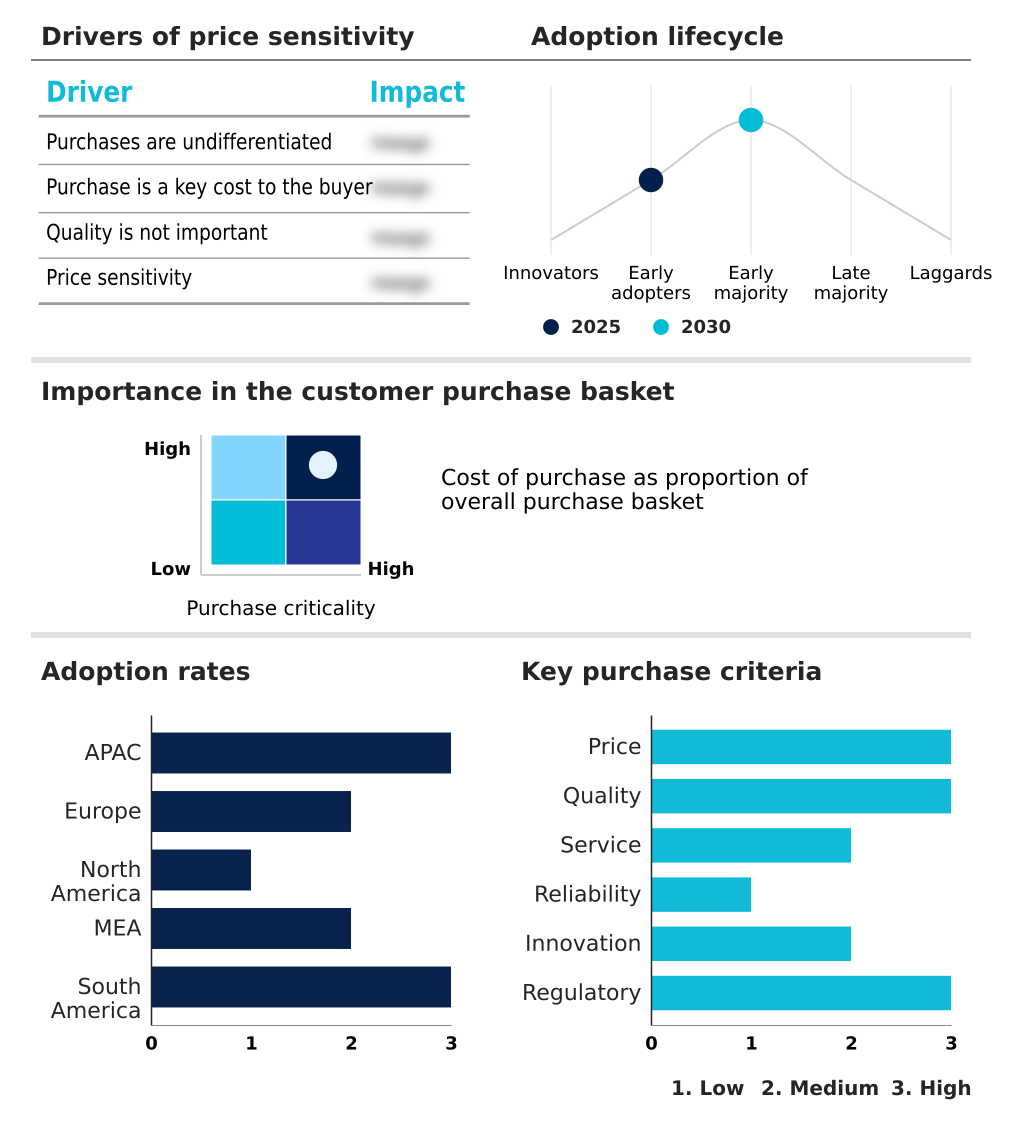
The thermoplastic polyurethane market forecasting report includes the adoption lifecycle of the market, covering from the innovator’s stage to the laggard’s stage. It focuses on adoption rates in different regions based on penetration. Furthermore, the thermoplastic polyurethane market report also includes key purchase criteria and drivers of price sensitivity to help companies evaluate and develop their market growth analysis strategies.
Customer Landscape of Thermoplastic Polyurethane Industry

Competitive Landscape

Companies are implementing various strategies, such as strategic alliances, thermoplastic polyurethane market forecast, partnerships, mergers and acquisitions, geographical expansion, and product/service launches, to enhance their presence in the industry.

Avient Corp. - Delivers a portfolio of advanced thermoplastic polyurethane materials engineered for high-performance industrial and consumer applications, emphasizing durability and versatility.

The industry research and growth report includes detailed analyses of the competitive landscape of the market and information about key companies, including:

  • Avient Corp.
  • BASF SE
  • COIM Spa
  • Covestro AG
  • DIC Corp.
  • Dongsung Corp
  • DSM Firmenich AG
  • HEXPOL AB
  • Huntsman International LLC
  • Kolon Industries Inc.
  • KURARAY Co. Ltd.
  • Mitsui Chemicals Inc.
  • Sanyo Corp of America
  • Songwon Industrial Co. Ltd.
  • The Lubrizol Corp.
  • Tosoh Corp.
  • Trinseo PLC
  • Wanhua Chemical Group Co. Ltd.

Qualitative and quantitative analysis of companies has been conducted to help clients understand the wider business environment as well as the strengths and weaknesses of key industry players. Data is qualitatively analyzed to categorize companies as pure play, category-focused, industry-focused, and diversified; it is quantitatively analyzed to categorize companies as dominant, leading, strong, tentative, and weak.

Recent Development and News in Thermoplastic polyurethane market

  • In June, 2025, Covestro announced its Desmopan FLY technology, a next-generation thermoplastic polyurethane grade optimized for supercritical fluid foaming, had entered scaled production for international footwear customers.
  • In June, 2025, BASF announced the commercialization of its new Polycaprolactone-based thermoplastic polyurethane for medical tubing, implantable components, and biodegradable wearable devices.
  • In March, 2025, BASF announced the launch of its Elastollan E TPU series, specifically engineered for electronic device housings and protective casings that require excellent scratch resistance, chemical stability, and shock absorption.
  • In February, 2025, Covestro announced the commercialization of its Bayflex TPU series for automotive interior and exterior applications, emphasizing its use in flexible gaskets, cable coatings, and soft-touch dashboard components.

Dive into Technavio’s robust research methodology, blending expert interviews, extensive data synthesis, and validated models for unparalleled Thermoplastic Polyurethane Market insights. See full methodology.

Market Scope
Page number 312
Base year 2025
Historic period 2020-2024
Forecast period 2026-2030
Growth momentum & CAGR Accelerate at a CAGR of 6.4%
Market growth 2026-2030 USD 1099.5 million
Market structure Fragmented
YoY growth 2025-2026(%) 6.1%
Key countries China, Japan, India, South Korea, Australia, Indonesia, Germany, France, Italy, UK, Spain, The Netherlands, US, Canada, Mexico, Saudi Arabia, UAE, Turkey, South Africa, Israel, Brazil, Argentina and Chile
Competitive landscape Leading Companies, Market Positioning of Companies, Competitive Strategies, and Industry Risks

Request Free Sample

Research Analyst Overview

  • The thermoplastic polyurethane market remains a critical enabler of innovation across multiple high-stakes industries, where its unique material properties are indispensable. As a leading class of thermoplastic elastomers, its versatility is demonstrated in applications ranging from automotive interior components to flexible tubing applications and advanced medical grade tpu.
  • A key trend influencing boardroom strategy is the industry-wide pivot to bio-based feedstocks, driven by regulatory pressures and ESG compliance goals. This shift compels businesses to re-evaluate supply chains and invest in sustainable polymer development.
  • For instance, the adoption of supercritical fluid foaming technology for polyester-based tpu has enabled manufacturers to achieve a 25% reduction in material usage for equivalent component performance. The mechanical recycling process is also gaining traction, supporting circular economy solutions.
  • Developments in polyether-based tpu continue to enhance hydrolysis resistance and low-temperature flexibility, while innovations in extrusion technology and injection molding improve production efficiency for high-performance polymers. These advancements solidify thermoplastic polyurethane's role as a cornerstone material for creating durable, lightweight, and recyclable products.

What are the Key Data Covered in this Thermoplastic Polyurethane Market Research and Growth Report?

  • What is the expected growth of the Thermoplastic Polyurethane Market between 2026 and 2030?

    • USD 1.10 billion, at a CAGR of 6.4%

  • What segmentation does the market report cover?

    • The report is segmented by Application (Footwear, Consumer goods and electronics, Automotive, Construction, and Others), Product (Polyester, Polyether, and Polycaprolactone), Technology (Extrusion, Injection molding, Blow molding, Thermoforming, and Others) and Geography (APAC, Europe, North America, Middle East and Africa, South America)

  • Which regions are analyzed in the report?

    • APAC, Europe, North America, Middle East and Africa and South America

  • What are the key growth drivers and market challenges?

    • Increasing opportunities in automotive industry in APAC, Damage to thermoplastic polyurethane structure caused by moisture

  • Who are the major players in the Thermoplastic Polyurethane Market?

    • Avient Corp., BASF SE, COIM Spa, Covestro AG, DIC Corp., Dongsung Corp, DSM Firmenich AG, HEXPOL AB, Huntsman International LLC, Kolon Industries Inc., KURARAY Co. Ltd., Mitsui Chemicals Inc., Sanyo Corp of America, Songwon Industrial Co. Ltd., The Lubrizol Corp., Tosoh Corp., Trinseo PLC and Wanhua Chemical Group Co. Ltd.

Market Research Insights

  • The dynamics of the thermoplastic polyurethane market are shaped by a strategic push toward advanced material engineering and sustainable polymer development. The demand for lightweight material solutions is driving adoption in key sectors, with applications in durable electronic casings and flexible tubing applications showing significant uptake.
  • This has led to operational efficiencies, as manufacturers report up to a 20% reduction in component weight without sacrificing performance. The industry's focus on recyclable thermoplastic materials aligns with circular economy goals, enhancing material reuse rates by over 30% in certain applications. Innovations in polyether-based tpu are improving low-temperature flexibility and impact absorption properties, critical for high-stress environments.
  • This focus on high-performance polymers also extends to chemical resistant coatings, where specialized formulations offer enhanced protection and longevity.

We can help! Our analysts can customize this thermoplastic polyurethane market research report to meet your requirements.

Get in touch

1. Executive Summary

1.1 Market overview

Executive Summary - Chart on Market Overview
Executive Summary - Data Table on Market Overview
Executive Summary - Chart on Global Market Characteristics
Executive Summary - Chart on Market by Geography
Executive Summary - Chart on Market Segmentation by Application
Executive Summary - Chart on Market Segmentation by Product
Executive Summary - Chart on Market Segmentation by Technology
Executive Summary - Chart on Incremental Growth
Executive Summary - Data Table on Incremental Growth
Executive Summary - Chart on Company Market Positioning

2. Technavio Analysis

2.1 Analysis of price sensitivity, lifecycle, customer purchase basket, adoption rates, and purchase criteria

2.2 Criticality of inputs and Factors of differentiation

Chart on Overview on criticality of inputs and factors of differentiation

2.3 Factors of disruption

Chart on Overview on factors of disruption

2.4 Impact of drivers and challenges

Chart on Impact of drivers and challenges in 2025 and 2030

3. Market Landscape

3.1 Market ecosystem

Chart on Parent Market
Data Table on - Parent Market

3.2 Market characteristics

Chart on Market characteristics analysis

3.3 Value chain analysis

Chart on Value chain analysis

4. Market Sizing

4.1 Market definition

Data Table on Offerings of companies included in the market definition

4.2 Market segment analysis

Market segments

4.3 Market size 2025

4.4 Market outlook: Forecast for 2025-2030

Chart on Global - Market size and forecast 2025-2030 ($ million)
Data Table on Global - Market size and forecast 2025-2030 ($ million)
Chart on Global Market: Year-over-year growth 2025-2030 (%)
Data Table on Global Market: Year-over-year growth 2025-2030 (%)

5. Historic Market Size

5.1 Global Thermoplastic Polyurethane Market 2020 - 2024

Historic Market Size - Data Table on Global Thermoplastic Polyurethane Market 2020 - 2024 ($ million)

5.2 Application segment analysis 2020 - 2024

Historic Market Size - Application Segment 2020 - 2024 ($ million)

5.3 Product segment analysis 2020 - 2024

Historic Market Size - Product Segment 2020 - 2024 ($ million)

5.4 Technology segment analysis 2020 - 2024

Historic Market Size - Technology Segment 2020 - 2024 ($ million)

5.5 Geography segment analysis 2020 - 2024

Historic Market Size - Geography Segment 2020 - 2024 ($ million)

5.6 Country segment analysis 2020 - 2024

Historic Market Size - Country Segment 2020 - 2024 ($ million)

6. Qualitative Analysis

6.1 Impact of AI on global thermoplastic polyurethane market

7. Five Forces Analysis

7.1 Five forces summary

Five forces analysis - Comparison between 2025 and 2030

7.2 Bargaining power of buyers

Bargaining power of buyers - Impact of key factors 2025 and 2030

7.3 Bargaining power of suppliers

Bargaining power of suppliers - Impact of key factors in 2025 and 2030

7.4 Threat of new entrants

Threat of new entrants - Impact of key factors in 2025 and 2030

7.5 Threat of substitutes

Threat of substitutes - Impact of key factors in 2025 and 2030

7.6 Threat of rivalry

Threat of rivalry - Impact of key factors in 2025 and 2030

7.7 Market condition

Chart on Market condition - Five forces 2025 and 2030

8. Market Segmentation by Application

8.1 Market segments

Chart on Application - Market share 2025-2030 (%)
Data Table on Application - Market share 2025-2030 (%)

8.2 Comparison by Application

Chart on Comparison by Application
Data Table on Comparison by Application

8.3 Footwear - Market size and forecast 2025-2030

Chart on Footwear - Market size and forecast 2025-2030 ($ million)
Data Table on Footwear - Market size and forecast 2025-2030 ($ million)
Chart on Footwear - Year-over-year growth 2025-2030 (%)
Data Table on Footwear - Year-over-year growth 2025-2030 (%)

8.4 Consumer goods and electronics - Market size and forecast 2025-2030

Chart on Consumer goods and electronics - Market size and forecast 2025-2030 ($ million)
Data Table on Consumer goods and electronics - Market size and forecast 2025-2030 ($ million)
Chart on Consumer goods and electronics - Year-over-year growth 2025-2030 (%)
Data Table on Consumer goods and electronics - Year-over-year growth 2025-2030 (%)

8.5 Automotive - Market size and forecast 2025-2030

Chart on Automotive - Market size and forecast 2025-2030 ($ million)
Data Table on Automotive - Market size and forecast 2025-2030 ($ million)
Chart on Automotive - Year-over-year growth 2025-2030 (%)
Data Table on Automotive - Year-over-year growth 2025-2030 (%)

8.6 Construction - Market size and forecast 2025-2030

Chart on Construction - Market size and forecast 2025-2030 ($ million)
Data Table on Construction - Market size and forecast 2025-2030 ($ million)
Chart on Construction - Year-over-year growth 2025-2030 (%)
Data Table on Construction - Year-over-year growth 2025-2030 (%)

8.7 Others - Market size and forecast 2025-2030

Chart on Others - Market size and forecast 2025-2030 ($ million)
Data Table on Others - Market size and forecast 2025-2030 ($ million)
Chart on Others - Year-over-year growth 2025-2030 (%)
Data Table on Others - Year-over-year growth 2025-2030 (%)

8.8 Market opportunity by Application

Market opportunity by Application ($ million)
Data Table on Market opportunity by Application ($ million)

9. Market Segmentation by Product

9.1 Market segments

Chart on Product - Market share 2025-2030 (%)
Data Table on Product - Market share 2025-2030 (%)

9.2 Comparison by Product

Chart on Comparison by Product
Data Table on Comparison by Product

9.3 Polyester - Market size and forecast 2025-2030

Chart on Polyester - Market size and forecast 2025-2030 ($ million)
Data Table on Polyester - Market size and forecast 2025-2030 ($ million)
Chart on Polyester - Year-over-year growth 2025-2030 (%)
Data Table on Polyester - Year-over-year growth 2025-2030 (%)

9.4 Polyether - Market size and forecast 2025-2030

Chart on Polyether - Market size and forecast 2025-2030 ($ million)
Data Table on Polyether - Market size and forecast 2025-2030 ($ million)
Chart on Polyether - Year-over-year growth 2025-2030 (%)
Data Table on Polyether - Year-over-year growth 2025-2030 (%)

9.5 Polycaprolactone - Market size and forecast 2025-2030

Chart on Polycaprolactone - Market size and forecast 2025-2030 ($ million)
Data Table on Polycaprolactone - Market size and forecast 2025-2030 ($ million)
Chart on Polycaprolactone - Year-over-year growth 2025-2030 (%)
Data Table on Polycaprolactone - Year-over-year growth 2025-2030 (%)

9.6 Market opportunity by Product

Market opportunity by Product ($ million)
Data Table on Market opportunity by Product ($ million)

10. Market Segmentation by Technology

10.1 Market segments

Chart on Technology - Market share 2025-2030 (%)
Data Table on Technology - Market share 2025-2030 (%)

10.2 Comparison by Technology

Chart on Comparison by Technology
Data Table on Comparison by Technology

10.3 Extrusion - Market size and forecast 2025-2030

Chart on Extrusion - Market size and forecast 2025-2030 ($ million)
Data Table on Extrusion - Market size and forecast 2025-2030 ($ million)
Chart on Extrusion - Year-over-year growth 2025-2030 (%)
Data Table on Extrusion - Year-over-year growth 2025-2030 (%)

10.4 Injection molding - Market size and forecast 2025-2030

Chart on Injection molding - Market size and forecast 2025-2030 ($ million)
Data Table on Injection molding - Market size and forecast 2025-2030 ($ million)
Chart on Injection molding - Year-over-year growth 2025-2030 (%)
Data Table on Injection molding - Year-over-year growth 2025-2030 (%)

10.5 Blow molding - Market size and forecast 2025-2030

Chart on Blow molding - Market size and forecast 2025-2030 ($ million)
Data Table on Blow molding - Market size and forecast 2025-2030 ($ million)
Chart on Blow molding - Year-over-year growth 2025-2030 (%)
Data Table on Blow molding - Year-over-year growth 2025-2030 (%)

10.6 Thermoforming - Market size and forecast 2025-2030

Chart on Thermoforming - Market size and forecast 2025-2030 ($ million)
Data Table on Thermoforming - Market size and forecast 2025-2030 ($ million)
Chart on Thermoforming - Year-over-year growth 2025-2030 (%)
Data Table on Thermoforming - Year-over-year growth 2025-2030 (%)

10.7 Others - Market size and forecast 2025-2030

Chart on Others - Market size and forecast 2025-2030 ($ million)
Data Table on Others - Market size and forecast 2025-2030 ($ million)
Chart on Others - Year-over-year growth 2025-2030 (%)
Data Table on Others - Year-over-year growth 2025-2030 (%)

10.8 Market opportunity by Technology

Market opportunity by Technology ($ million)
Data Table on Market opportunity by Technology ($ million)

11. Customer Landscape

11.1 Customer landscape overview

Analysis of price sensitivity, lifecycle, customer purchase basket, adoption rates, and purchase criteria

12. Geographic Landscape

12.1 Geographic segmentation

Chart on Market share by geography 2025-2030 (%)
Data Table on Market share by geography 2025-2030 (%)

12.2 Geographic comparison

Chart on Geographic comparison
Data Table on Geographic comparison

12.3 APAC - Market size and forecast 2025-2030

Chart on APAC - Market size and forecast 2025-2030 ($ million)
Data Table on APAC - Market size and forecast 2025-2030 ($ million)
Chart on APAC - Year-over-year growth 2025-2030 (%)
Data Table on APAC - Year-over-year growth 2025-2030 (%)
Chart on Regional Comparison - APAC
Data Table on Regional Comparison - APAC

12.3.1 China - Market size and forecast 2025-2030

Chart on China - Market size and forecast 2025-2030 ($ million)
Data Table on China - Market size and forecast 2025-2030 ($ million)
Chart on China - Year-over-year growth 2025-2030 (%)
Data Table on China - Year-over-year growth 2025-2030 (%)

12.3.2 Japan - Market size and forecast 2025-2030

Chart on Japan - Market size and forecast 2025-2030 ($ million)
Data Table on Japan - Market size and forecast 2025-2030 ($ million)
Chart on Japan - Year-over-year growth 2025-2030 (%)
Data Table on Japan - Year-over-year growth 2025-2030 (%)

12.3.3 India - Market size and forecast 2025-2030

Chart on India - Market size and forecast 2025-2030 ($ million)
Data Table on India - Market size and forecast 2025-2030 ($ million)
Chart on India - Year-over-year growth 2025-2030 (%)
Data Table on India - Year-over-year growth 2025-2030 (%)

12.3.4 South Korea - Market size and forecast 2025-2030

Chart on South Korea - Market size and forecast 2025-2030 ($ million)
Data Table on South Korea - Market size and forecast 2025-2030 ($ million)
Chart on South Korea - Year-over-year growth 2025-2030 (%)
Data Table on South Korea - Year-over-year growth 2025-2030 (%)

12.3.5 Australia - Market size and forecast 2025-2030

Chart on Australia - Market size and forecast 2025-2030 ($ million)
Data Table on Australia - Market size and forecast 2025-2030 ($ million)
Chart on Australia - Year-over-year growth 2025-2030 (%)
Data Table on Australia - Year-over-year growth 2025-2030 (%)

12.3.6 Indonesia - Market size and forecast 2025-2030

Chart on Indonesia - Market size and forecast 2025-2030 ($ million)
Data Table on Indonesia - Market size and forecast 2025-2030 ($ million)
Chart on Indonesia - Year-over-year growth 2025-2030 (%)
Data Table on Indonesia - Year-over-year growth 2025-2030 (%)

12.4 Europe - Market size and forecast 2025-2030

Chart on Europe - Market size and forecast 2025-2030 ($ million)
Data Table on Europe - Market size and forecast 2025-2030 ($ million)
Chart on Europe - Year-over-year growth 2025-2030 (%)
Data Table on Europe - Year-over-year growth 2025-2030 (%)
Chart on Regional Comparison - Europe
Data Table on Regional Comparison - Europe

12.4.1 Germany - Market size and forecast 2025-2030

Chart on Germany - Market size and forecast 2025-2030 ($ million)
Data Table on Germany - Market size and forecast 2025-2030 ($ million)
Chart on Germany - Year-over-year growth 2025-2030 (%)
Data Table on Germany - Year-over-year growth 2025-2030 (%)

12.4.2 France - Market size and forecast 2025-2030

Chart on France - Market size and forecast 2025-2030 ($ million)
Data Table on France - Market size and forecast 2025-2030 ($ million)
Chart on France - Year-over-year growth 2025-2030 (%)
Data Table on France - Year-over-year growth 2025-2030 (%)

12.4.3 Italy - Market size and forecast 2025-2030

Chart on Italy - Market size and forecast 2025-2030 ($ million)
Data Table on Italy - Market size and forecast 2025-2030 ($ million)
Chart on Italy - Year-over-year growth 2025-2030 (%)
Data Table on Italy - Year-over-year growth 2025-2030 (%)

12.4.4 UK - Market size and forecast 2025-2030

Chart on UK - Market size and forecast 2025-2030 ($ million)
Data Table on UK - Market size and forecast 2025-2030 ($ million)
Chart on UK - Year-over-year growth 2025-2030 (%)
Data Table on UK - Year-over-year growth 2025-2030 (%)

12.4.5 Spain - Market size and forecast 2025-2030

Chart on Spain - Market size and forecast 2025-2030 ($ million)
Data Table on Spain - Market size and forecast 2025-2030 ($ million)
Chart on Spain - Year-over-year growth 2025-2030 (%)
Data Table on Spain - Year-over-year growth 2025-2030 (%)

12.4.6 The Netherlands - Market size and forecast 2025-2030

Chart on The Netherlands - Market size and forecast 2025-2030 ($ million)
Data Table on The Netherlands - Market size and forecast 2025-2030 ($ million)
Chart on The Netherlands - Year-over-year growth 2025-2030 (%)
Data Table on The Netherlands - Year-over-year growth 2025-2030 (%)

12.5 North America - Market size and forecast 2025-2030

Chart on North America - Market size and forecast 2025-2030 ($ million)
Data Table on North America - Market size and forecast 2025-2030 ($ million)
Chart on North America - Year-over-year growth 2025-2030 (%)
Data Table on North America - Year-over-year growth 2025-2030 (%)
Chart on Regional Comparison - North America
Data Table on Regional Comparison - North America

12.5.1 US - Market size and forecast 2025-2030

Chart on US - Market size and forecast 2025-2030 ($ million)
Data Table on US - Market size and forecast 2025-2030 ($ million)
Chart on US - Year-over-year growth 2025-2030 (%)
Data Table on US - Year-over-year growth 2025-2030 (%)

12.5.2 Canada - Market size and forecast 2025-2030

Chart on Canada - Market size and forecast 2025-2030 ($ million)
Data Table on Canada - Market size and forecast 2025-2030 ($ million)
Chart on Canada - Year-over-year growth 2025-2030 (%)
Data Table on Canada - Year-over-year growth 2025-2030 (%)

12.5.3 Mexico - Market size and forecast 2025-2030

Chart on Mexico - Market size and forecast 2025-2030 ($ million)
Data Table on Mexico - Market size and forecast 2025-2030 ($ million)
Chart on Mexico - Year-over-year growth 2025-2030 (%)
Data Table on Mexico - Year-over-year growth 2025-2030 (%)

12.6 Middle East and Africa - Market size and forecast 2025-2030

Chart on Middle East and Africa - Market size and forecast 2025-2030 ($ million)
Data Table on Middle East and Africa - Market size and forecast 2025-2030 ($ million)
Chart on Middle East and Africa - Year-over-year growth 2025-2030 (%)
Data Table on Middle East and Africa - Year-over-year growth 2025-2030 (%)
Chart on Regional Comparison - Middle East and Africa
Data Table on Regional Comparison - Middle East and Africa

12.6.1 Saudi Arabia - Market size and forecast 2025-2030

Chart on Saudi Arabia - Market size and forecast 2025-2030 ($ million)
Data Table on Saudi Arabia - Market size and forecast 2025-2030 ($ million)
Chart on Saudi Arabia - Year-over-year growth 2025-2030 (%)
Data Table on Saudi Arabia - Year-over-year growth 2025-2030 (%)

12.6.2 UAE - Market size and forecast 2025-2030

Chart on UAE - Market size and forecast 2025-2030 ($ million)
Data Table on UAE - Market size and forecast 2025-2030 ($ million)
Chart on UAE - Year-over-year growth 2025-2030 (%)
Data Table on UAE - Year-over-year growth 2025-2030 (%)

12.6.3 Turkey - Market size and forecast 2025-2030

Chart on Turkey - Market size and forecast 2025-2030 ($ million)
Data Table on Turkey - Market size and forecast 2025-2030 ($ million)
Chart on Turkey - Year-over-year growth 2025-2030 (%)
Data Table on Turkey - Year-over-year growth 2025-2030 (%)

12.6.4 South Africa - Market size and forecast 2025-2030

Chart on South Africa - Market size and forecast 2025-2030 ($ million)
Data Table on South Africa - Market size and forecast 2025-2030 ($ million)
Chart on South Africa - Year-over-year growth 2025-2030 (%)
Data Table on South Africa - Year-over-year growth 2025-2030 (%)

12.6.5 Israel - Market size and forecast 2025-2030

Chart on Israel - Market size and forecast 2025-2030 ($ million)
Data Table on Israel - Market size and forecast 2025-2030 ($ million)
Chart on Israel - Year-over-year growth 2025-2030 (%)
Data Table on Israel - Year-over-year growth 2025-2030 (%)

12.7 South America - Market size and forecast 2025-2030

Chart on South America - Market size and forecast 2025-2030 ($ million)
Data Table on South America - Market size and forecast 2025-2030 ($ million)
Chart on South America - Year-over-year growth 2025-2030 (%)
Data Table on South America - Year-over-year growth 2025-2030 (%)
Chart on Regional Comparison - South America
Data Table on Regional Comparison - South America

12.7.1 Brazil - Market size and forecast 2025-2030

Chart on Brazil - Market size and forecast 2025-2030 ($ million)
Data Table on Brazil - Market size and forecast 2025-2030 ($ million)
Chart on Brazil - Year-over-year growth 2025-2030 (%)
Data Table on Brazil - Year-over-year growth 2025-2030 (%)

12.7.2 Argentina - Market size and forecast 2025-2030

Chart on Argentina - Market size and forecast 2025-2030 ($ million)
Data Table on Argentina - Market size and forecast 2025-2030 ($ million)
Chart on Argentina - Year-over-year growth 2025-2030 (%)
Data Table on Argentina - Year-over-year growth 2025-2030 (%)

12.7.3 Chile - Market size and forecast 2025-2030

Chart on Chile - Market size and forecast 2025-2030 ($ million)
Data Table on Chile - Market size and forecast 2025-2030 ($ million)
Chart on Chile - Year-over-year growth 2025-2030 (%)
Data Table on Chile - Year-over-year growth 2025-2030 (%)

12.8 Market opportunity by geography

Market opportunity by geography ($ million)
Data Tables on Market opportunity by geography ($ million)

13. Drivers, Challenges, and Opportunity

13.1 Market drivers

Increasing opportunities in automotive industry in APAC
Superior properties of thermoplastic polyurethane
Recyclability of thermoplastic polyurethane

13.2 Market challenges

Damage to thermoplastic polyurethane structure caused by moisture
Stringent safety legislation on production
Fluctuation in raw material prices of thermoplastic polyurethane

13.3 Impact of drivers and challenges

Impact of drivers and challenges in 2025 and 2030

13.4 Market opportunities

Developments in bio-based thermoplastic polyurethane products
Expansion of production capacities of thermoplastic polyurethane
Growing demand for thermoplastic polyurethane in medical applications

14. Competitive Landscape

14.1 Overview

14.2

Overview on criticality of inputs and factors of differentiation

14.3 Landscape disruption

Overview on factors of disruption

14.4 Industry risks

Impact of key risks on business

15. Competitive Analysis

15.1 Companies profiled

Companies covered

15.2 Company ranking index

15.3 Market positioning of companies

Matrix on companies position and classification

15.4 BASF SE

BASF SE - Overview
BASF SE - Business segments
BASF SE - Key news
BASF SE - Key offerings
BASF SE - Segment focus
SWOT

15.5 Covestro AG

Covestro AG - Overview
Covestro AG - Business segments
Covestro AG - Key news
Covestro AG - Key offerings
Covestro AG - Segment focus
SWOT

15.6 DIC Corp.

DIC Corp. - Overview
DIC Corp. - Business segments
DIC Corp. - Key news
DIC Corp. - Key offerings
DIC Corp. - Segment focus
SWOT

15.7 Dongsung Corp

Dongsung Corp - Overview
Dongsung Corp - Product / Service
Dongsung Corp - Key offerings
SWOT

15.8 DSM Firmenich AG

DSM Firmenich AG - Overview
DSM Firmenich AG - Product / Service
DSM Firmenich AG - Key offerings
SWOT

15.9 Huntsman International LLC

Huntsman International LLC - Overview
Huntsman International LLC - Business segments
Huntsman International LLC - Key news
Huntsman International LLC - Key offerings
Huntsman International LLC - Segment focus
SWOT

15.10 Kolon Industries Inc.

Kolon Industries Inc. - Overview
Kolon Industries Inc. - Business segments
Kolon Industries Inc. - Key offerings
Kolon Industries Inc. - Segment focus
SWOT

15.11 KURARAY Co. Ltd.

KURARAY Co. Ltd. - Overview
KURARAY Co. Ltd. - Business segments
KURARAY Co. Ltd. - Key news
KURARAY Co. Ltd. - Key offerings
KURARAY Co. Ltd. - Segment focus
SWOT

15.12 Mitsui Chemicals Inc.

Mitsui Chemicals Inc. - Overview
Mitsui Chemicals Inc. - Business segments
Mitsui Chemicals Inc. - Key offerings
Mitsui Chemicals Inc. - Segment focus
SWOT

15.13 Sanyo Corp of America

Sanyo Corp of America - Overview
Sanyo Corp of America - Product / Service
Sanyo Corp of America - Key offerings
SWOT

15.14 Songwon Industrial Co. Ltd.

Songwon Industrial Co. Ltd. - Overview
Songwon Industrial Co. Ltd. - Business segments
Songwon Industrial Co. Ltd. - Key offerings
Songwon Industrial Co. Ltd. - Segment focus
SWOT

15.15 The Lubrizol Corp.

The Lubrizol Corp. - Overview
The Lubrizol Corp. - Product / Service
The Lubrizol Corp. - Key offerings
SWOT

15.16 Tosoh Corp.

Tosoh Corp. - Overview
Tosoh Corp. - Business segments
Tosoh Corp. - Key offerings
Tosoh Corp. - Segment focus
SWOT

15.17 Trinseo PLC

Trinseo PLC - Overview
Trinseo PLC - Business segments
Trinseo PLC - Key offerings
Trinseo PLC - Segment focus
SWOT

15.18 Wanhua Chemical Group Co. Ltd.

Wanhua Chemical Group Co. Ltd. - Overview
Wanhua Chemical Group Co. Ltd. - Product / Service
Wanhua Chemical Group Co. Ltd. - Key offerings
SWOT

16. Appendix

16.1 Scope of the report

Market definition
Objectives
Notes and caveats

16.2 Inclusions and exclusions checklist

Inclusions checklist
Exclusions checklist

16.3 Currency conversion rates for US$

16.4 Research methodology

16.5 Data procurement

Information sources

16.6 Data validation

16.7 Validation techniques employed for market sizing

16.8 Data synthesis

16.9 360 degree market analysis

16.10 List of abbreviations

Research Methodology

Technavio presents a detailed picture of the market by way of study, synthesis, and summation of data from multiple sources. The analysts have presented the various facets of the market with a particular focus on identifying the key industry influencers. The data thus presented is comprehensive, reliable, and the result of extensive research, both primary and secondary.

INFORMATION SOURCES

Primary sources

  • Manufacturers and suppliers
  • Channel partners
  • Industry experts
  • Strategic decision makers

Secondary sources

  • Industry journals and periodicals
  • Government data
  • Financial reports of key industry players
  • Historical data
  • Press releases

DATA ANALYSIS

Data Synthesis

  • Collation of data
  • Estimation of key figures
  • Analysis of derived insights

Data Validation

  • Triangulation with data models
  • Reference against proprietary databases
  • Corroboration with industry experts

REPORT WRITING

Qualitative

  • Market drivers
  • Market challenges
  • Market trends
  • Five forces analysis

Quantitative

  • Market size and forecast
  • Market segmentation
  • Geographical insights
  • Competitive landscape

Interested in this report?

Get your sample now to see our research methodology and insights!

Download Now

Frequently Asked Questions

Thermoplastic Polyurethane market growth will increase by USD 1099.5 million during 2026-2030.

The Thermoplastic Polyurethane market is expected to grow at a CAGR of 6.4% during 2026-2030.

Thermoplastic Polyurethane market is segmented by Application (Footwear, Consumer goods and electronics, Automotive, Construction, Others) Product (Polyester, Polyether, Polycaprolactone) Technology (Extrusion, Injection molding, Blow molding, Thermoforming, Others)

Avient Corp., BASF SE, COIM Spa, Covestro AG, DIC Corp., Dongsung Corp, DSM Firmenich AG, HEXPOL AB, Huntsman International LLC, Kolon Industries Inc., KURARAY Co. Ltd., Mitsui Chemicals Inc., Sanyo Corp of America, Songwon Industrial Co. Ltd., The Lubrizol Corp., Tosoh Corp., Trinseo PLC, Wanhua Chemical Group Co. Ltd. are a few of the key vendors in the Thermoplastic Polyurethane market.

APAC will register the highest growth rate of 35.7% among the other regions. Therefore, the Thermoplastic Polyurethane market in APAC is expected to garner significant business opportunities for the vendors during the forecast period.

China, Japan, India, South Korea, Australia, Indonesia, Germany, France, Italy, UK, Spain, The Netherlands, US, Canada, Mexico, Saudi Arabia, UAE, Turkey, South Africa, Israel, Brazil, Argentina, Chile

  • Increasing opportunities in automotive industry in APAC is the driving factor this market.

The Thermoplastic Polyurethane market vendors should focus on grabbing business opportunities from the Application segment as it accounted for the largest market share in the base year.