


Brazil Textile Manufacturing Market Size 2026-2030
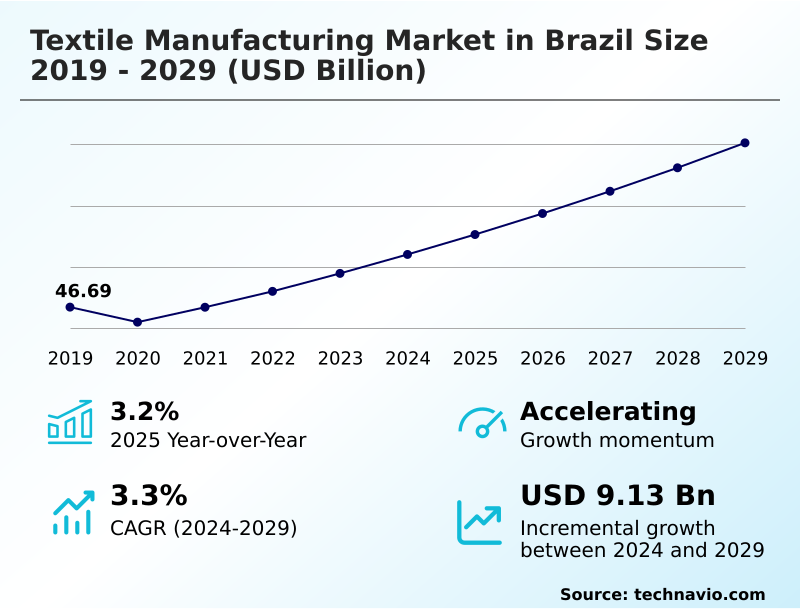
The brazil textile manufacturing market size is valued to increase by USD 9.98 billion, at a CAGR of 3.5% from 2025 to 2030. Strategic realignment of supply chains and near shoring initiatives will drive the brazil textile manufacturing market.
Major Market Trends & Insights
- By Application - Fashion segment was valued at USD 36.15 billion in 2024
- By Material - Natural fibers segment accounted for the largest market revenue share in 2024
Market Size & Forecast
- Market Opportunities: USD 17.15 billion
- Market Future Opportunities: USD 9.98 billion
- CAGR from 2025 to 2030 : 3.5%
Market Summary
- The textile manufacturing market in Brazil is defined by a dynamic interplay of tradition and innovation, where a rich history in natural fiber processing meets modern industrial advancements. Key drivers include a strategic push toward textile value chain optimization and operational efficiency gains, compelling manufacturers to invest in yarn spinning technology and fabric weaving automation.
- A prominent trend is the adoption of circular economy principles, with a focus on sustainable material sourcing and the development of value-added textile products. However, the industry contends with challenges related to achieving competitive product differentiation against lower-cost imports.
- In a typical business scenario, a manufacturer specializing in custom fabric solutions may implement modular production systems and advanced knitting process control to enhance flexibility. By integrating sophisticated fabric printing solutions and overlock stitching systems with process optimization strategies, the firm can reduce waste and shorten lead times.
- This allows it to serve niche fashion and technical segments more effectively, demonstrating how targeted technology adoption is critical for navigating the competitive landscape in synthetic fiber production and textile dyeing techniques.
What will be the Size of the Brazil Textile Manufacturing Market during the forecast period?
Get Key Insights on Market Forecast (PDF) Request Free Sample
How is the Brazil Textile Manufacturing Market Segmented?
The brazil textile manufacturing industry research report provides comprehensive data (region-wise segment analysis), with forecasts and estimates in "USD million" for the period 2026-2030, as well as historical data from 2020-2024 for the following segments.
- Application
- Fashion
- Technical
- Household
- Others
- Material
- Natural fibers
- Polyesters
- Nylon
- Others
- Product type
- Fabrics
- Garments
- Yarns
- Knitted goods
- Non-woven textiles
- Geography
- South America
- Brazil
- South America
By Application Insights
The fashion segment is estimated to witness significant growth during the forecast period.
The fashion segment is a dynamic pillar, driven by evolving consumer preference shifts. Producers are leveraging advanced yarn spinning technology and fabric weaving automation to meet demands for quality.
For competitive product differentiation, firms offer value-added textile products and custom fabric solutions, enabled by flexible production volumes. Investments in digital textile printing allow rapid response to design changes.
A key focus is sustainability, with a growing number of manufacturers adopting eco-friendly dyeing processes, which can reduce chemical runoff by up to 70%.
This trend, with strategic sourcing improvement for materials used in circular knit fabrication and denim fabric production, is reshaping the market.
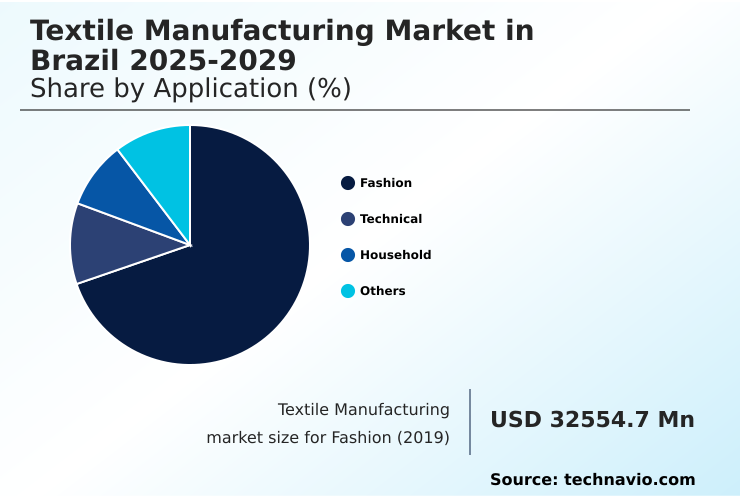
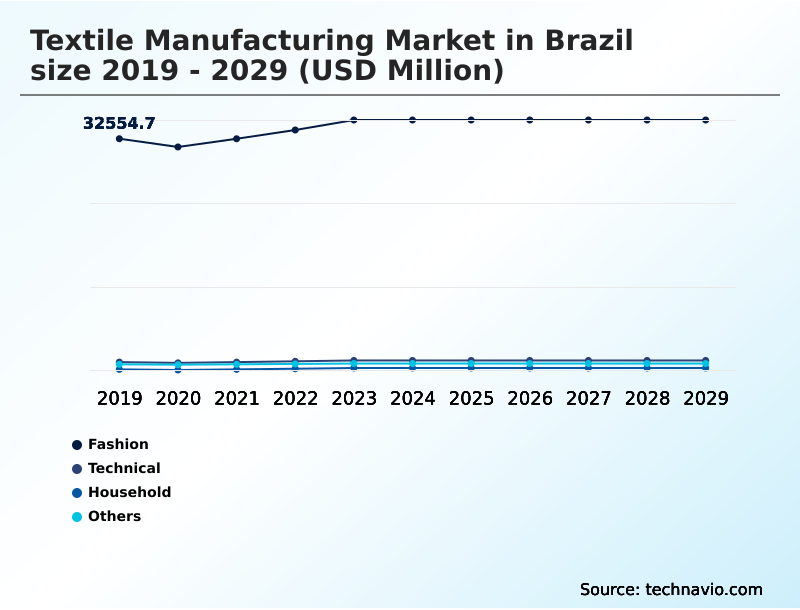
The Fashion segment was valued at USD 36.15 billion in 2024 and showed a gradual increase during the forecast period.
Market Dynamics
Our researchers analyzed the data with 2025 as the base year, along with the key drivers, trends, and challenges. A holistic analysis of drivers will help companies refine their marketing strategies to gain a competitive advantage.
- The market is undergoing a significant transformation, driven by specialized manufacturing approaches and sustainability mandates. The focus on sustainable cotton yarn manufacturing and the sustainable sourcing of natural fibers is paramount, influencing the entire supply chain. In production, automated weaving for denim and data-driven fashion fabric production are enabling greater efficiency and responsiveness.
- Innovations in high-performance technical fabric applications and precision knitting for technical apparel are opening new industrial markets, including nylon yarn for automotive textiles. The push for a circular economy in knitwear is being realized through initiatives like closed-loop recycling for workwear and the development of recycled polyester fiber extrusion processes.
- Water-efficient polyester dyeing methods and digital printing on natural fibers are becoming standard, reducing environmental impact. Firms are also focused on cost optimization in yarn spinning and lean manufacturing in textile finishing. For example, companies implementing automated quality control in weaving have seen defect rates fall by more than half compared to manual inspection methods.
- This drive for efficiency is supported by greater supply chain transparency in apparel and a move toward near-shoring for garment production to reduce lead times. Adherence to regulatory compliance for textile chemicals is non-negotiable, while advancements like antimicrobial finishing for household textiles and energy reduction in fabric dyeing highlight the industry's commitment to value-added, responsible manufacturing.
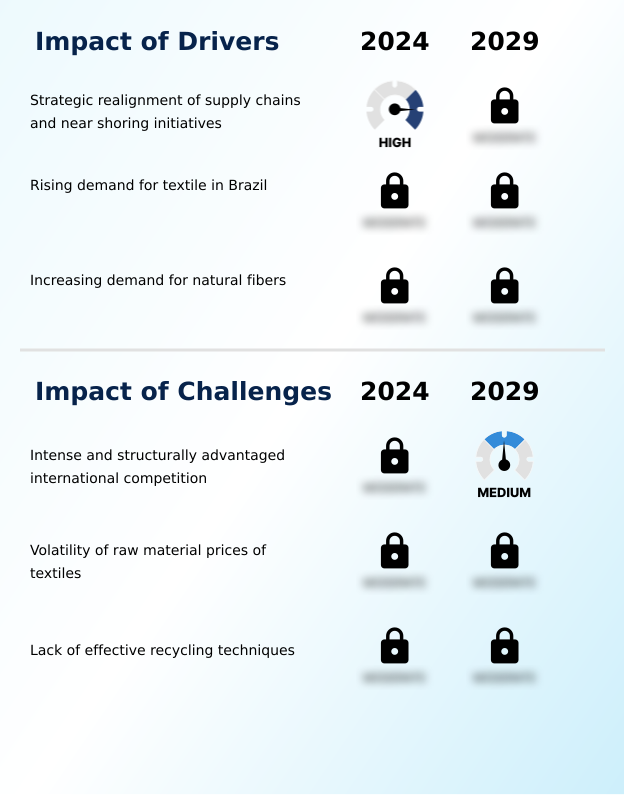
What are the key market drivers leading to the rise in the adoption of Brazil Textile Manufacturing Industry?
- The strategic realignment of supply chains, coupled with near-shoring initiatives, serves as a primary driver for the market's growth and operational efficiency.
- Strategic supply chain realignment and near-shoring initiatives are creating operational efficiency gains throughout the textile value chain optimization process. By localizing, manufacturers are achieving cost-effective manufacturing and reducing lead times by up to 25%.
- This shift facilitates process optimization and production workflow streamlining. Central to this is data-driven production planning, which has improved demand forecasting accuracy by 15%.
- The adoption of automated quality monitoring systems ensures consistency in textile dyeing techniques and fabric finishing methods. This focus strengthens domestic capabilities and improves inventory management improvement, making the industry more competitive.
What are the market trends shaping the Brazil Textile Manufacturing Industry?
- The integration of sustainable practices and circular economy principles is emerging as a defining market trend, influencing production methods, material sourcing, and end-of-life product management.
- Integrating sustainable production practices and circular economy principles is reshaping manufacturing for a significant environmental impact reduction. Companies are implementing closed-loop textile recycling and fabric take-back programs to create resource recovery systems, with leading firms now transforming over 40% of production waste using recycled yarn technology. This is supported by material flow traceability and material traceability technologies, enhancing transparency.
- A focus on a waste minimization strategy and eco-friendly dye application has led to a 60% reduction in water usage. Such initiatives, driven by industry-wide collaboration, achieve resource consumption reduction and serve as key for environmental risk mitigation.
What challenges does the Brazil Textile Manufacturing Industry face during its growth?
- Intense competition from structurally advantaged international producers presents a significant and persistent challenge to the industry's domestic growth and market share.
- Intense international competition remains a primary challenge. Domestic firms must invest in production capacity modernization for polyester fiber extrusion and nylon yarn texturing to match global efficiency. Securing high-quality material inputs at competitive prices impacts margins on workwear fabric engineering. Adhering to stringent regulatory compliance standards adds complexity, accounting for up to 8% of operational expenses.
- Building resilient supply networks and upgrading local logistics infrastructure are critical. Mastering specialized fiber processing, advanced knitting process control, and efficient industrial sewing machinery are essential for creating differentiated, high-performance textiles and remaining competitive.
Exclusive Technavio Analysis on Customer Landscape
The brazil textile manufacturing market forecasting report includes the adoption lifecycle of the market, covering from the innovator’s stage to the laggard’s stage. It focuses on adoption rates in different regions based on penetration. Furthermore, the brazil textile manufacturing market report also includes key purchase criteria and drivers of price sensitivity to help companies evaluate and develop their market growth analysis strategies.
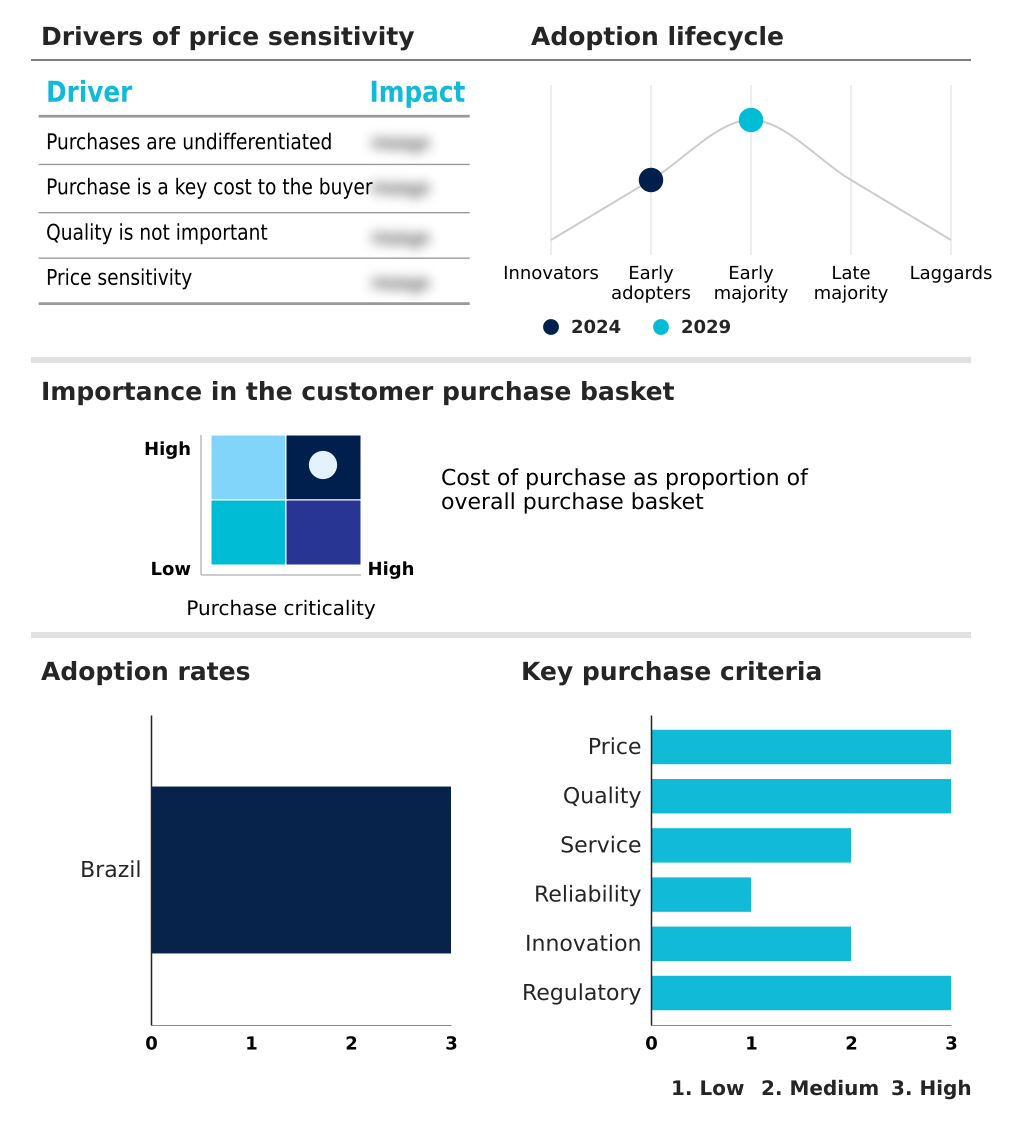
Customer Landscape of Brazil Textile Manufacturing Industry
Competitive Landscape
Companies are implementing various strategies, such as strategic alliances, brazil textile manufacturing market forecast, partnerships, mergers and acquisitions, geographical expansion, and product/service launches, to enhance their presence in the industry.
Alpina Textil by - Manufacturing of high-quality cotton yarns and sustainable textile solutions is achieved through advanced spinning technology for diverse industrial, fashion, and home applications.
The industry research and growth report includes detailed analyses of the competitive landscape of the market and information about key companies, including:
- Alpina Textil by
- ApparelnBags.com Inc
- Blutextil
- Canatiba Textil.
- Cedro Textil S.A.
- Cia. Hering Rua Hermann Hering
- Elian Industria Textil LTDA
- Fabriclore Retail Pvt. Ltd.
- Loyal Textile Mills Ltd.
- Marisol Vestuario SA
- Merrow Sewing Machine Co.
- Pettenati Industria Textil SA
- Santana Textiles
- SANTISTA SA
- Sutlej Textiles and Industries
- Toray Industries Inc.
Qualitative and quantitative analysis of companies has been conducted to help clients understand the wider business environment as well as the strengths and weaknesses of key industry players. Data is qualitatively analyzed to categorize companies as pure play, category-focused, industry-focused, and diversified; it is quantitatively analyzed to categorize companies as dominant, leading, strong, tentative, and weak.
Recent Development and News in Brazil textile manufacturing market
- In May 2025, Canatiba Textil announced the successful integration of a new waterless dyeing technology across its denim production lines, reducing water consumption by 90% and chemical usage by 60% per meter of fabric.
- In March 2025, Cedro Textil S.A. completed a multi-million dollar expansion of its spinning facility to increase its capacity for processing locally sourced Brazilian cotton, aiming to shorten supply chain lead times for its workwear fabric division.
- In December 2024, Cia. Hering entered into a strategic partnership with Pettenati Industria Textil SA to pilot a closed-loop textile recycling program, transforming post-consumer apparel into high-quality recycled yarns for new fashion collections.
- In September 2024, SANTISTA SA launched a new line of high-performance technical fabrics incorporating antimicrobial and flame-retardant properties, designed for the domestic protective clothing and industrial safety markets.
Dive into Technavio’s robust research methodology, blending expert interviews, extensive data synthesis, and validated models for unparalleled Brazil Textile Manufacturing Market insights. See full methodology.
| Market Scope | |
|---|---|
| Page number | 189 |
| Base year | 2025 |
| Historic period | 2020-2024 |
| Forecast period | 2026-2030 |
| Growth momentum & CAGR | Accelerate at a CAGR of 3.5% |
| Market growth 2026-2030 | USD 9976.7 million |
| Market structure | Fragmented |
| YoY growth 2025-2026(%) | 3.3% |
| Key countries | Brazil |
| Competitive landscape | Leading Companies, Market Positioning of Companies, Competitive Strategies, and Industry Risks |
Research Analyst Overview
- The sector's evolution centers on modernizing the textile value chain, from natural fiber processing and synthetic fiber production to advanced yarn spinning technology. Investments target fabric weaving automation with precision weaving looms, and knitting process control for circular knit fabrication, alongside digital textile printing solutions. The industry is advancing textile dyeing techniques with eco-friendly dyeing processes and water-efficient finishing.
- Focus is on technical textile development, including high-performance textile engineering for workwear fabric engineering, with antimicrobial fabric treatment and flame-retardant textile coating. Growth in non-woven fabric manufacturing and denim fabric production is evident. Firms adopting modular production systems and data-driven production planning report a 25% reduction in production cycle times.
- The sustainability shift is clear, with closed-loop textile recycling, recycled yarn technology, and fabric take-back programs becoming standard. This is supported by smart textile integration, automated quality monitoring for cotton yarn manufacturing, polyester fiber extrusion, and nylon yarn texturing, plus enhanced material flow traceability and sustainable material sourcing, which reduces resource consumption.
- Modernization also includes industrial sewing machinery and overlock stitching systems.
What are the Key Data Covered in this Brazil Textile Manufacturing Market Research and Growth Report?
-
What is the expected growth of the Brazil Textile Manufacturing Market between 2026 and 2030?
-
USD 9.98 billion, at a CAGR of 3.5%
-
-
What segmentation does the market report cover?
-
The report is segmented by Application (Fashion, Technical, Household, and Others), Material (Natural fibers, Polyesters, Nylon, and Others), Product Type (Fabrics, Garments, Yarns, Knitted goods, and Non-woven textiles) and Geography (South America)
-
-
Which regions are analyzed in the report?
-
South America
-
-
What are the key growth drivers and market challenges?
-
Strategic realignment of supply chains and near shoring initiatives, Intense and structurally advantaged international competition
-
-
Who are the major players in the Brazil Textile Manufacturing Market?
-
Alpina Textil by, ApparelnBags.com Inc, Blutextil, Canatiba Textil., Cedro Textil S.A., Cia. Hering Rua Hermann Hering, Elian Industria Textil LTDA, Fabriclore Retail Pvt. Ltd., Loyal Textile Mills Ltd., Marisol Vestuario SA, Merrow Sewing Machine Co., Pettenati Industria Textil SA, Santana Textiles, SANTISTA SA, Sutlej Textiles and Industries and Toray Industries Inc.
-
Market Research Insights
- A focus on operational efficiency gains is driving market dynamics, leading to cost-effective manufacturing through process optimization and production workflow streamlining. This strategic supply chain realignment leverages near-shoring initiatives and improved local logistics infrastructure to create resilient supply networks.
- Better inventory management improvement and demand forecasting accuracy are direct results, supporting strategic sourcing improvement and the use of high-quality material inputs. Concurrently, the adoption of circular economy principles and sustainable production practices is critical for environmental risk mitigation, leading to waste minimization strategy and resource recovery systems.
- These trends foster competitive product differentiation with value-added textile products that meet consumer preference shifts. Production capacity modernization supports flexible production volumes and specialized fiber processing, with firms achieving up to a 20% increase in output efficiency while enhancing value chain transparency.
We can help! Our analysts can customize this brazil textile manufacturing market research report to meet your requirements.
 RIA -
RIA -