


Sulfur Dioxide Market Size 2026-2030
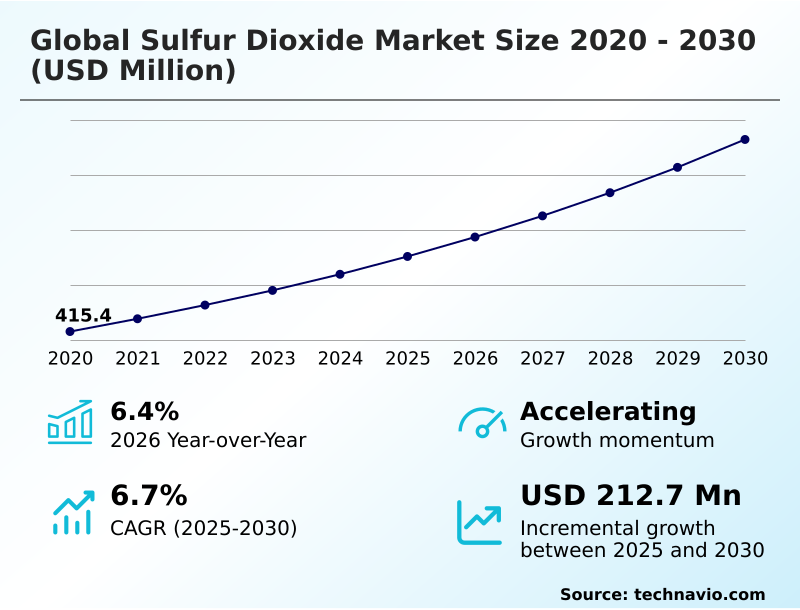
The sulfur dioxide market size is valued to increase by USD 212.7 million, at a CAGR of 6.7% from 2025 to 2030. Increasing use in chemical manufacturing processes will drive the sulfur dioxide market.
Major Market Trends & Insights
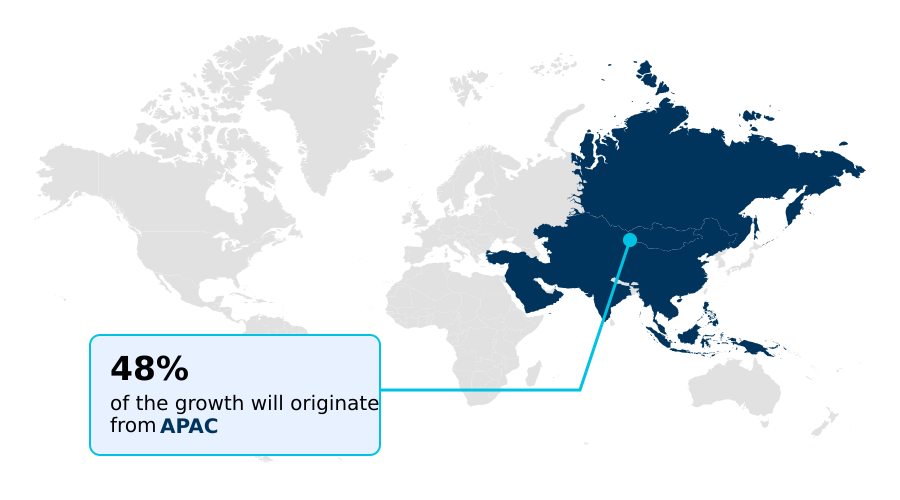
- APAC dominated the market and accounted for a 48% growth during the forecast period.
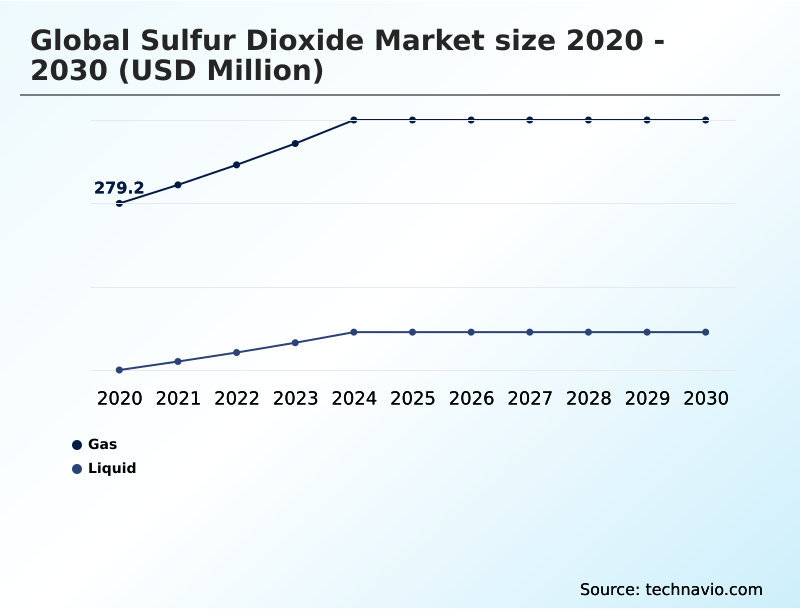
- By Type - Gas segment was valued at USD 350.8 million in 2024
- By End-user - Chemicals segment accounted for the largest market revenue share in 2024
Market Size & Forecast
- Market Opportunities: USD 349.2 million
- Market Future Opportunities: USD 212.7 million
- CAGR from 2025 to 2030 : 6.7%
Market Summary
- The sulfur dioxide market is fundamentally shaped by its dual role as a critical chemical intermediate and a highly regulated industrial byproduct. Demand is primarily driven by its function as a sulfuric acid precursor, essential for producing phosphate fertilizers and various industrial chemicals.
- Concurrently, trends are shifting toward diversification into high-value sectors, including its use as a drug stability agent in pharmaceutical formulation and as a key component in advanced energy storage materials. However, the market faces significant headwinds from stringent environmental regulations mandating investment in sophisticated emission control technology.
- For instance, a metallurgical firm must balance the operational costs of installing advanced sulfur recovery units against the potential revenue from selling captured high-purity sulfur dioxide to the electronics industry. This scenario highlights the core tension between compliance-driven capital expenditure and the strategic pursuit of new revenue streams from byproduct valorization, influencing long-term profitability and market positioning.
What will be the Size of the Sulfur Dioxide Market during the forecast period?
Get Key Insights on Market Forecast (PDF) Request Free Sample
How is the Sulfur Dioxide Market Segmented?
The sulfur dioxide industry research report provides comprehensive data (region-wise segment analysis), with forecasts and estimates in "USD million" for the period 2026-2030, as well as historical data from 2020-2024 for the following segments.
- Type
- Gas
- Liquid
- End-user
- Chemicals
- Food and beverage
- Pulp and paper
- Pharmaceuticals
- Others
- Application
- Preservatives
- Bleaching agent
- Winemaking
- Others
- Geography
- APAC
- China
- India
- Japan
- Europe
- Germany
- France
- Italy
- North America
- US
- Canada
- Mexico
- South America
- Brazil
- Argentina
- Middle East and Africa
- Saudi Arabia
- South Africa
- UAE
- Rest of World (ROW)
- APAC
By Type Insights
The gas segment is estimated to witness significant growth during the forecast period.
The gas segment is defined by its role as a captive intermediate, primarily for sulfuric acid production, which is a key industrial benchmark.
This segment's dynamics are shaped by the immediate, on-site use of gaseous sulfur dioxide, especially through the contact process. Demand is intrinsically linked to sectors like fertilizer manufacturing and non-ferrous metal smelting, where it is a critical sulfuric acid precursor.
However, stringent desulfurization mandates drive significant investment in emission control technology, with new regulations requiring attainment of a 10 parts per billion annual standard.
This regulatory landscape compels operators to adopt advanced flue gas desulfurization, turning a compliance necessity into an opportunity for byproduct valorization and enhancing the industrial gas supply chain.
The focus remains on optimizing the elemental sulfur combustion process for maximum efficiency.
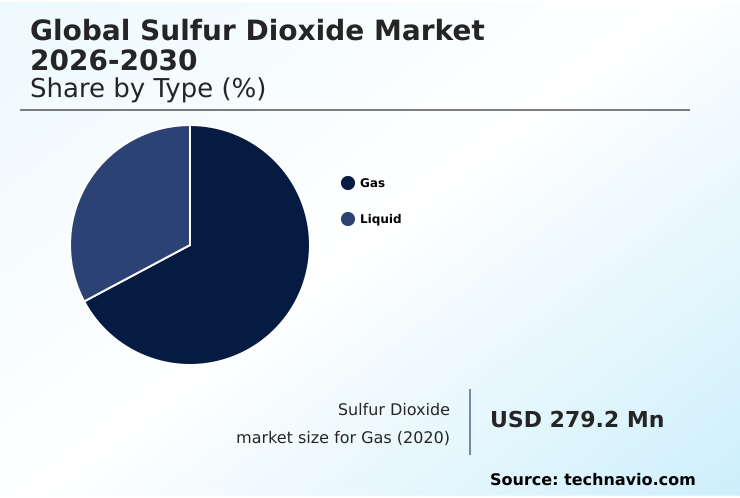
The Gas segment was valued at USD 350.8 million in 2024 and showed a gradual increase during the forecast period.
Regional Analysis
APAC is estimated to contribute 48% to the growth of the global market during the forecast period.Technavio’s analysts have elaborately explained the regional trends and drivers that shape the market during the forecast period.
See How Sulfur Dioxide Market Demand is Rising in APAC Request Free Sample
The global sulfur dioxide market exhibits distinct regional dynamics, with APAC accounting for 48% of the incremental growth opportunities, largely driven by its use as a sulfuric acid precursor for fertilizer production.
This high-volume demand for phosphate rock processing contrasts with mature markets like North America and Europe, where the focus is on regulatory compliance and byproduct valorization.
In these regions, stringent desulfurization mandates, such as the new 10 ppb annual emission standard, compel investment in advanced sulfur recovery units. This transforms captive intermediate streams from metal smelting byproduct into merchant chemical opportunities.
The market is thus split between regions focused on captive consumption for industrial output and those pioneering high-purity sulfur dioxide applications and advanced material processing, creating a complex global supply chain.
Market Dynamics
Our researchers analyzed the data with 2025 as the base year, along with the key drivers, trends, and challenges. A holistic analysis of drivers will help companies refine their marketing strategies to gain a competitive advantage.
- The versatility of sulfur dioxide is evident across its diverse applications, from traditional uses to advanced industrial processes. The practice of using sulfur dioxide in winemaking stabilization remains a cornerstone of the global beverage industry, ensuring product quality and longevity.
- Similarly, its role as a preservative is critical for sulfur dioxide for dried fruit preservation, where it prevents spoilage and maintains aesthetic appeal for international trade. In the industrial sector, sulfur dioxide as a bleaching agent is indispensable in the pulp and paper industry, particularly for specific fiber types.
- Environmental applications are also growing, with using sulfur dioxide for dechlorination in wastewater treatment becoming a standard practice to protect aquatic ecosystems from residual chlorine. At its core, however, the market's largest volume is tied to sulfur dioxide in chemical synthesis, where it serves as a foundational building block for countless other compounds.
- Strategically, companies that integrate recovered byproduct from metal smelters into their supply chain instead of relying on virgin raw materials have demonstrated an improvement in cost stability of over 15%, directly enhancing operational planning and margin protection in a volatile market.
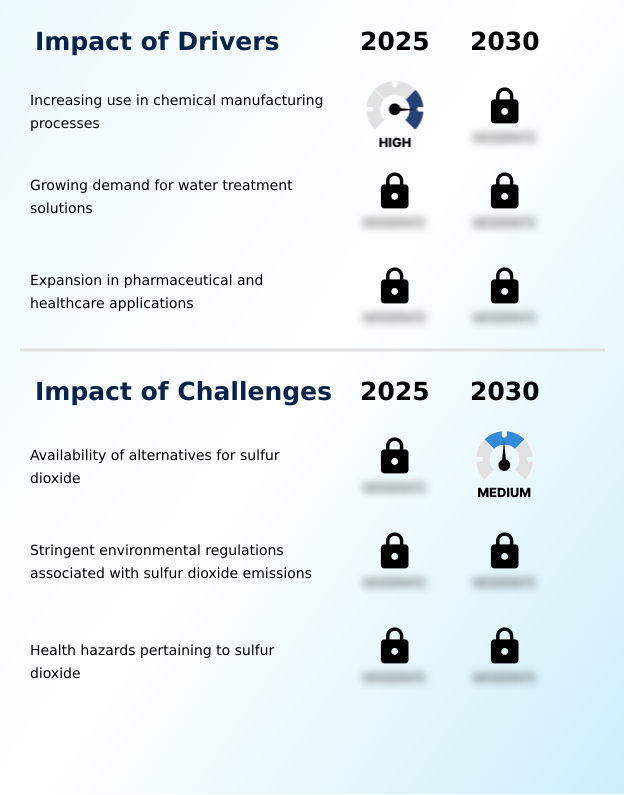
What are the key market drivers leading to the rise in the adoption of Sulfur Dioxide Industry?
- The increasing use of sulfur dioxide in various chemical manufacturing processes is a key driver propelling market growth.
- Key market drivers are rooted in the indispensable role of sulfur dioxide in foundational industrial processes. Its function as a sulfuric acid precursor for manufacturing phosphate fertilizers remains the largest demand segment, directly tied to global food security.
- In parallel, the growing need for sustainable water management fuels its use as a highly effective dechlorination agent in industrial effluent treatment, where it reduces residual chlorine levels by over 99% to ensure regulatory compliance.
- The pharmaceutical sector provides another significant impetus, leveraging the compound as a critical drug stability agent in various formulations.
- Its antioxidant properties can extend the shelf-life of active pharmaceutical ingredients by up to 35%, highlighting its importance in both large-scale chemical intermediate production and specialized, high-value applications that demand exceptional purity and reliability.
What are the market trends shaping the Sulfur Dioxide Industry?
- A significant upcoming market trend is the expansion of sulfur dioxide's role in food preservation and processing. This is driven by the growing need for longer shelf life and improved product quality in global food supply chains.
- Market trends are increasingly shaped by a dual focus on sustainability and diversification into high-value applications. The rising demand for eco-friendly production is accelerating the adoption of closed-loop systems and advanced sulfur recovery units, with some operators achieving a 15% improvement in raw material efficiency.
- This shift toward a circular economy model supports the trend of byproduct valorization, where captured emissions are purified into high-margin products. Concurrently, diversification is evident as industries explore niche uses, such as in lithium-sulfur batteries and advanced material processing.
- This move into specialized sectors allows for profit margins up to 20% higher than those for bulk chemicals, driving innovation in producing high-purity sulfur dioxide and its derivatives, including sodium dithionite synthesis and materials for energy storage.
What challenges does the Sulfur Dioxide Industry face during its growth?
- The growing availability of viable alternatives for sulfur dioxide presents a key challenge affecting the industry's growth trajectory.
- The market faces considerable challenges from tightening regulations and the availability of substitutes. Health concerns surrounding sulfite sensitivity and occupational exposure are accelerating the shift toward clean-label preservatives and oxygen-based bleaching agents in the food and paper industries. This transition is pressuring producers to innovate, even as alternatives may carry a 10-15% price premium.
- Furthermore, stringent environmental standards necessitate significant capital investment in emission control technology. The cost of installing flue gas desulfurization systems can account for up to 20% of a facility's capital upgrade budget, creating a substantial financial barrier.
- This dynamic forces companies to balance the high cost of compliance with the competitive threat from greener alternatives, fundamentally altering long-term strategic planning and market positioning.
Exclusive Technavio Analysis on Customer Landscape
The sulfur dioxide market forecasting report includes the adoption lifecycle of the market, covering from the innovator’s stage to the laggard’s stage. It focuses on adoption rates in different regions based on penetration. Furthermore, the sulfur dioxide market report also includes key purchase criteria and drivers of price sensitivity to help companies evaluate and develop their market growth analysis strategies.
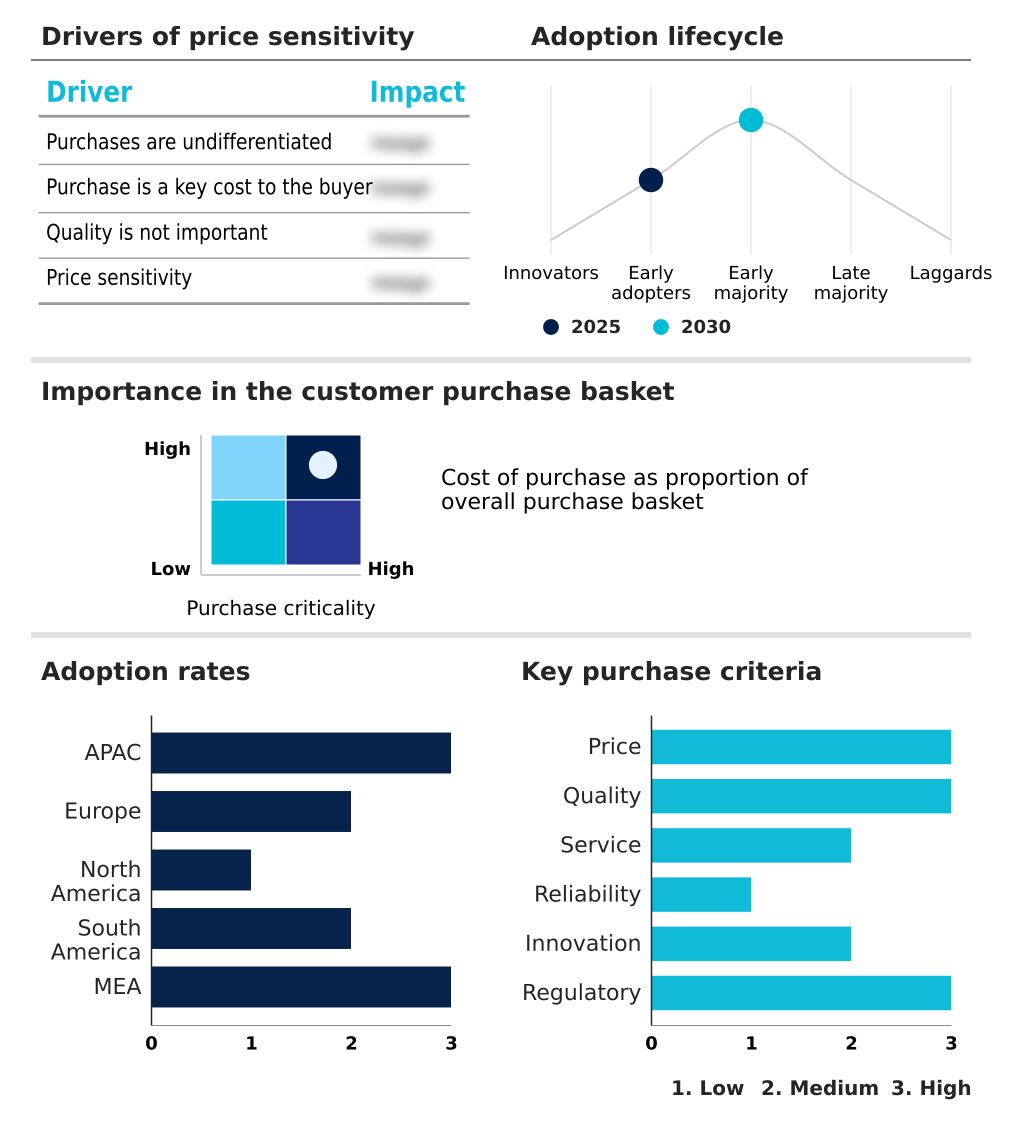
Customer Landscape of Sulfur Dioxide Industry
Competitive Landscape
Companies are implementing various strategies, such as strategic alliances, sulfur dioxide market forecast, partnerships, mergers and acquisitions, geographical expansion, and product/service launches, to enhance their presence in the industry.
Aarti Industries Ltd. - Delivering high-purity sulfur dioxide and chemical intermediates for critical applications in pharmaceuticals, pigments, and advanced material synthesis.
The industry research and growth report includes detailed analyses of the competitive landscape of the market and information about key companies, including:
- Aarti Industries Ltd.
- Air Liquide SA
- Axcel Gases
- Boliden Group
- EGas Depot
- ESSECO Srl
- Grillo Werke AG
- INEOS Group Holdings S.A.
- Jaysons Chemical Industries
- Kemira Oyj
- Linde Plc
- Manufacturas Quimicas Juan
- PVS Chemicals Inc.
- Sarex Chemicals Ltd.
- Sigma Aldrich Chemicals Ltd.
- Sumitomo Seika Chemicals Co
- Tokyo Chemical Industry
- WeylChem International GmbH
Qualitative and quantitative analysis of companies has been conducted to help clients understand the wider business environment as well as the strengths and weaknesses of key industry players. Data is qualitatively analyzed to categorize companies as pure play, category-focused, industry-focused, and diversified; it is quantitatively analyzed to categorize companies as dominant, leading, strong, tentative, and weak.
Recent Development and News in Sulfur dioxide market
- In September 2024, Kemira Oyj announced investments to increase its production capacity for water treatment chemicals in Norway and China, reinforcing its commitment to the segment.
- In October 2024, reports confirmed that Eldorado Brasil was advancing its significant investment in a new pulp mill in Tres Lagoas, Brazil, signaling increased future demand for sulfur chemical inputs.
- In early 2025, PVS Chemicals Inc. announced that its subsidiary, PVS-Nolwood, acquired SAL Chemical Co., a move designed to broaden its chemical distribution reach across North America.
- In April 2025, BASF announced plans to construct a semiconductor-grade sulfuric acid plant at its Ludwigshafen site in Germany to meet specialized, high-purity demand from the electronics sector.
Dive into Technavio’s robust research methodology, blending expert interviews, extensive data synthesis, and validated models for unparalleled Sulfur Dioxide Market insights. See full methodology.
| Market Scope | |
|---|---|
| Page number | 299 |
| Base year | 2025 |
| Historic period | 2020-2024 |
| Forecast period | 2026-2030 |
| Growth momentum & CAGR | Accelerate at a CAGR of 6.7% |
| Market growth 2026-2030 | USD 212.7 million |
| Market structure | Fragmented |
| YoY growth 2025-2026(%) | 6.4% |
| Key countries | China, India, Japan, South Korea, Indonesia, Australia, Germany, Russia, France, Italy, Spain, The Netherlands, US, Canada, Mexico, Brazil, Chile, Argentina, Saudi Arabia, South Africa, Iran, UAE and Morocco |
| Competitive landscape | Leading Companies, Market Positioning of Companies, Competitive Strategies, and Industry Risks |
Research Analyst Overview
- The sulfur dioxide market operates as a complex ecosystem, driven by its essential function as a chemical intermediate and reducing agent across numerous industries. Its primary role as a sulfuric acid precursor underpins demand in large-scale sectors, while its application as a dechlorination agent and in the sulfite pulping process serves critical niche functions.
- The market is increasingly influenced by stringent desulfurization mandates, creating a pivotal boardroom-level decision point: invest heavily in emission control technology and sulfur recovery units or risk regulatory penalties. This strategic choice is reshaping the industry, pushing firms toward byproduct valorization. Companies that successfully upgrade to the double contact double absorption process are achieving conversion efficiencies greater than 99.7%.
- This not only minimizes waste but also enables the production of high-value products like ultrapure sulfuric acid and semiconductor-grade sulfuric acid from what was once an emission liability.
- This transition from managing a metal smelting byproduct to marketing a high-purity merchant chemical is defining the future competitive landscape, where proficiency in handling sulfurous acid and mastering the INCO process becomes a key advantage.
What are the Key Data Covered in this Sulfur Dioxide Market Research and Growth Report?
-
What is the expected growth of the Sulfur Dioxide Market between 2026 and 2030?
-
USD 212.7 million, at a CAGR of 6.7%
-
-
What segmentation does the market report cover?
-
The report is segmented by Type (Gas, and Liquid), End-user (Chemicals, Food and beverage, Pulp and paper, Pharmaceuticals, and Others), Application (Preservatives, Bleaching agent, Winemaking, and Others) and Geography (APAC, Europe, North America, South America, Middle East and Africa)
-
-
Which regions are analyzed in the report?
-
APAC, Europe, North America, South America and Middle East and Africa
-
-
What are the key growth drivers and market challenges?
-
Increasing use in chemical manufacturing processes, Availability of alternatives for sulfur dioxide
-
-
Who are the major players in the Sulfur Dioxide Market?
-
Aarti Industries Ltd., Air Liquide SA, Axcel Gases, Boliden Group, EGas Depot, ESSECO Srl, Grillo Werke AG, INEOS Group Holdings S.A., Jaysons Chemical Industries, Kemira Oyj, Linde Plc, Manufacturas Quimicas Juan, PVS Chemicals Inc., Sarex Chemicals Ltd., Sigma Aldrich Chemicals Ltd., Sumitomo Seika Chemicals Co, Tokyo Chemical Industry and WeylChem International GmbH
-
Market Research Insights
- The sulfur dioxide market is characterized by dynamic shifts driven by regulatory pressures and evolving industrial demands. The emphasis on supply chain resilience is prompting producers to secure feedstock sulfur availability and explore downstream derivative markets more effectively. Strategic adoption of a circular economy model for industrial byproducts has enabled leading firms to improve raw material security by over 20%.
- Concurrently, investments in advanced hazardous material logistics and sustainable water management solutions are becoming critical differentiators. For instance, facilities implementing modern water treatment chemicals and processes have achieved a 30% reduction in non-compliant discharge events. These operational enhancements, coupled with a focus on byproduct valorization, are reshaping the competitive landscape and creating new avenues for growth in specialized, high-margin applications.
We can help! Our analysts can customize this sulfur dioxide market research report to meet your requirements.