


Soybean Seed Market Size 2025-2029
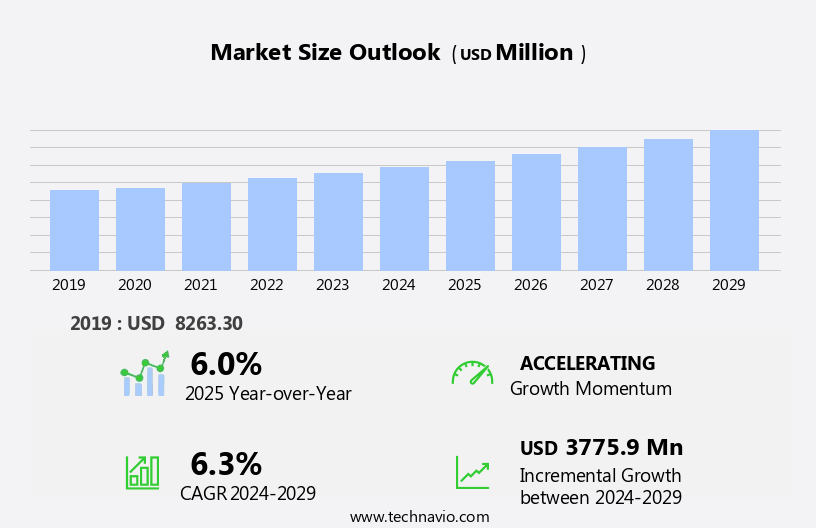
The soybean seed market size is forecast to increase by USD 3.78 billion at a CAGR of 6.3% between 2024 and 2029.
- The market is driven by the high nutritional value of soybeans, making them a preferred choice for livestock feed and human consumption. Soybean seeds are rich in proteins, essential amino acids, and healthy fats, fueling their demand in various industries. Technological advancements in soybean processing have led to the development of improved seed varieties, enhancing productivity and yield. However, the market faces regulatory hurdles due to biotech regulations pertaining to using genetically modified seeds in soybean seed production. These regulations vary across regions, leading to supply chain inconsistencies that temper growth potential. Agriculture robots, powered by artificial intelligence, computer vision, and machine learning, are revolutionizing farming operations by automating labor-intensive tasks such as harvesting.
- Companies seeking to capitalize on market opportunities must navigate these challenges by staying updated with regulatory requirements and ensuring a robust supply chain. Additionally, investing in research and development to introduce innovative seed varieties and processing techniques can help differentiate offerings and gain a competitive edge.
What will be the Size of the Soybean Seed Market during the forecast period?
- In the dynamic the market, various factors influence farming practices and global trade patterns. Soil health plays a crucial role in determining crop maturity and yield improvement. Sensor technology and precision farming tools facilitate data-driven agriculture, enabling farmers to optimize planting density, crop rotation, and harvest timing. Risk management strategies are essential to mitigate price volatility in commodity markets. Seed quality, including disease resistance, pest tolerance, and herbicide resistance, is paramount for farmers. Storage conditions are vital to maintain seed viability, ensuring a steady supply for farmers. Soybean varieties with seed treatment offer enhanced protection against pests and diseases. Equipped with artificial intelligence, computer vision, and advanced hardware, these robots can identify ripe fruits and vegetables with precision, minimizing damage.
- Water management is another critical factor in sustainable farming, as drought and excessive moisture can impact crop maturity. Organic production and non-GMO options cater to diverse market demands, while genetically modified organisms contribute to yield improvement and biofuel production. Crop rotation, crop maturity, and seed quality are essential aspects of farm management practices. Remote sensing technology assists in monitoring crop health and identifying potential issues, allowing farmers to take preventive measures. Global trade patterns impact the market, with key players focusing on supply chain management and ensuring seed availability. Farmers and businesses must adapt to these trends to remain competitive and maintain food security.
- Water management, disease resistance, and pest tolerance are essential for sustainable farming practices and maintaining high-quality seed.
How is this Soybean Seed Industry segmented?
The soybean seed industry research report provides comprehensive data (region-wise segment analysis), with forecasts and estimates in "USD million" for the period 2025-2029, as well as historical data from 2019-2023 for the following segments.
- Type
- Genetically modified
- Non-genetically modified
- Distribution Channel
- Offline
- Online
- Application
- Animal feed
- Food processing
- Biofuel processing
- Product Type
- Treated seeds
- Untreated seeds
- Geography
- North America
- US
- Canada
- Mexico
- APAC
- Australia
- China
- India
- Japan
- South Korea
- South America
- Argentina
- Brazil
- Rest of World (ROW)
- North America
By Type Insights
The genetically modified segment is estimated to witness significant growth during the forecast period. Genetically modified soybean seeds, which offer herbicide tolerance and pest resistance, are gaining popularity among farmers due to the increasing demand for higher yields and improved profitability. The adoption of these seeds is driven by several factors, including a growing population, shrinking arable land, and changing climatic conditions. Advancements in biotechnology and genetic engineering techniques have enabled the development of seeds with enhanced stress tolerance, disease resistance, and other desirable traits. These seeds contribute to more efficient farm management, as they require fewer inputs and reduce the need for crop rotation. The integration of artificial intelligence (AI) in agricultural machinery offers opportunities for human-assisted automation, expediting agricultural practices and reducing human stress. The supply chain benefits from the use of genetically modified seeds, as they allow for more precise and efficient crop production.
The soybean market encompasses various applications, including food processing, animal feed, and biodiesel production, making it a critical component of the agricultural value chain. The market for genetically modified soybean seeds is expected to continue growing, driven by the ongoing research and development efforts and the demand for sustainable agriculture practices.
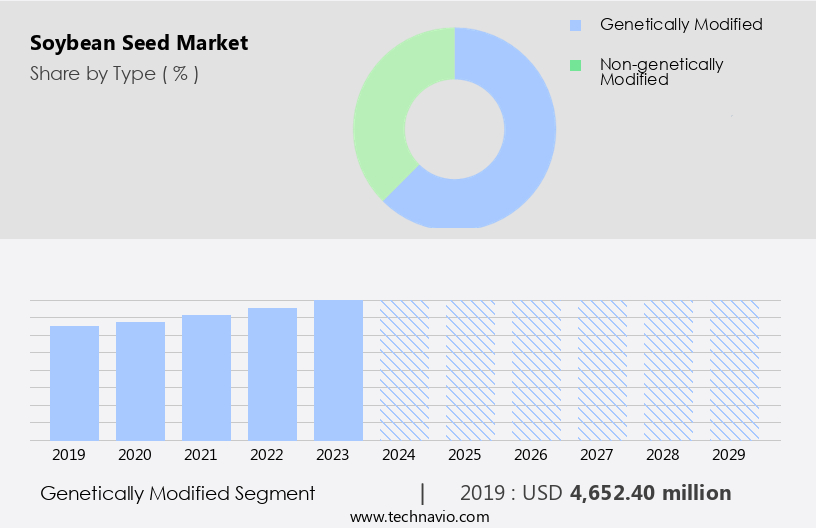
The Genetically modified segment was valued at USD 4.65 billion in 2019 and showed a gradual increase during the forecast period. The integration of GPS guidance, steering systems, and precision agriculture technologies in crop harvesting robots has led to significant advancements. Research and development in the field of genetics continues to drive innovation, with ongoing efforts to improve nitrogen fixation, water conservation, and soil fertility. Sustainability initiatives, such as precision agriculture and remote sensing, are also gaining traction in the industry. Farmers of all sizes, from small-scale to large commercial operations, are adopting these seeds to optimize yields and improve their competitive advantage in the global soybean market. The industry is subject to regulatory compliance and seed certification standards, ensuring the quality and safety of the crops. These robots, which utilize artificial intelligence, computer vision, and robotics, have gained popularity in farms, greenhouses, and nurseries. The value chain analysis reveals that the seeds represent a significant investment for farmers, and the use of sensor technology and data analytics can help optimize planting density and row spacing for maximum yield potential.
Regional Analysis
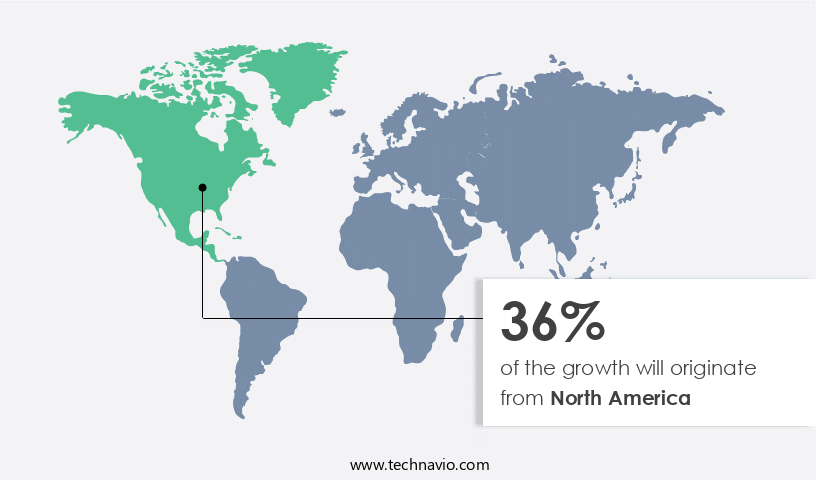
North America is estimated to contribute 36% to the growth of the global market during the forecast period. Technavio's analysts have elaborately explained the regional trends and drivers that shape the market during the forecast period.
The market in the US is experiencing substantial growth, driven by the rising demand for soybean seeds in animal feed production and the increasing preference for plant-based diets. The US is a significant player in the market, with favorable agricultural conditions and practices supporting a robust supply chain. Innovations in the food industry, such as the development of new soy-based products and formulations, are further fueling market growth. Research and development in areas like nitrogen fixation, water conservation, and soil fertility are essential to optimizing crop production and improving yield potential. Herbicide tolerance and sensor technology are also crucial in modern farm management, enabling precision agriculture and pest tolerance.
Soybean varieties with disease resistance and seed genetics that cater to various farm sizes and planting densities are also gaining popularity. Industry standards for seed certification, regulatory compliance, and quality control are essential to maintaining the competitive advantage of US soybean seeds in the global market. Additionally, sustainable agriculture initiatives, including crop rotation and organic soybean production, are becoming increasingly important to meet consumer demand for eco-friendly farming practices. Data analytics and value chain analysis are also critical tools for farmers to optimize their production practices and improve yield. Overall, the market in the US is dynamic and evolving, with ongoing research and development in areas like gene editing and trait stacking shaping the future of soybean production.
Market Dynamics
Our researchers analyzed the data with 2024 as the base year, along with the key drivers, trends, and challenges. A holistic analysis of drivers will help companies refine their marketing strategies to gain a competitive advantage.
What are the Soybean Seed market drivers leading to the rise in the adoption of Industry?
- The soybean's high nutritional value serves as the primary driver for the market's growth. The market experiences continuous growth due to the increasing demand for plant-based protein sources. Soybean seeds, a member of the pea family, are a valuable option for individuals following vegan or vegetarian diets, as they contain all essential amino acids and are a complete protein source. Additionally, they are rich in essential vitamins and minerals, such as vitamin C, folate, thiamin, potassium, phosphorus, calcium, iron, magnesium, and carbohydrates. The global market for soybean seeds is driven by the rising consumption of soy-based food products, including tofu, tempeh, soy milk, and meat substitutes. Farmers also prioritize soybean seeds due to their high yield potential and adaptability to various soil types and climates.
- Seed certification and regulatory compliance are essential aspects of the market, ensuring the production of high-quality seeds that meet industry standards. Modern farming practices incorporate advanced technologies, such as sensor technology and trait stacking, to optimize crop production and improve soil fertility. Gene editing is another emerging trend in the soybean seed industry, enabling farmers to produce seeds with enhanced traits and increased resistance to pests and diseases. Row spacing and maturity group are essential factors in soybean seed selection, as they impact yield potential and overall crop performance. Soybean oil, derived from soybean seeds, is another significant market driver, with applications in various industries, including food, feed, and industrial sectors.
- Overall, the market is expected to continue its growth trajectory, driven by the increasing demand for plant-based protein sources and advancements in seed genetics and farming technologies.
What are the Soybean Seed market trends shaping the Industry?
- Soybean processing is currently undergoing significant technological advancements, making it a noteworthy market trend. These innovations aim to improve efficiency, product quality, and sustainability in the soybean industry. Soybean seeds are in high demand due to their versatility in various applications, including food processing, animal feed, and industrial products. The market is driven by technological innovations that enhance the quality of soybean seeds, resulting in improved flavors, textures, and nutritional profiles. These advancements make soybean seeds more appealing to consumers and increase their demand. Sustainability initiatives, such as sustainable agriculture practices, crop rotation, and seed treatment, are crucial to the market. Farmers prioritize these practices to ensure high germination rates and maintain the health of their crops, which positively impacts the overall yield.
- Advanced processing methods, including improved extraction technologies and protein derivatives, contribute to increased efficiency and functionality. For instance, soybean oil extraction becomes more efficient, leading to a higher overall yield. Soy protein derivatives find applications in a broad range of food and beverage products, further increasing demand. Moreover, technological advancements in lecithin extraction and purification result in higher purity and increased applications. Lecithin, a phospholipid derived from soybeans, is used as an emulsifier and stabilizer in various industries, including food, pharmaceuticals, and cosmetics. Global trade plays a significant role in the market, as soybeans are one of the most traded agricultural commodities worldwide.
- Climate change and remote sensing technologies are also crucial factors influencing the market dynamics. Breeding programs are continuously developing new soybean varieties to adapt to changing climatic conditions and improve crop resistance to diseases and pests. The market is driven by technological innovations, sustainability initiatives, and global trade. These factors contribute to improved product quality, increased efficiency, and a broader range of applications for soybean seeds and their derivatives.
How does Soybean Seed market faces challenges face during its growth?
- The implementation of stringent biotech regulations regarding the utilization of genetically modified seeds in soybean seed production poses a significant challenge to the industry's growth trajectory. The market is shaped by regulations and consumer preferences towards genetically modified (GM) and non-GM seeds. GM soybean varieties provide benefits such as disease resistance and pest tolerance through agricultural technology. However, public concerns and regulatory hurdles restrict their adoption in certain regions. The environmental impact of GM soybean cultivation, including potential harm to biodiversity and ecosystems, influences purchasing decisions. Regulatory frameworks for GM seeds differ globally, necessitating compliance with various standards. Precision agriculture and yield optimization are driving the industry's growth, with data analytics playing a crucial role in improving crop management.
- Farmer demographics and crop insurance also influence market dynamics. Organic soybean seeds cater to the growing demand for sustainable farming practices. Understanding the regulatory landscape, consumer preferences, and technological advancements is essential for companies operating in the market.
Exclusive Customer Landscape
The soybean seed market forecasting report includes the adoption lifecycle of the market, covering from the innovator's stage to the laggard's stage. It focuses on adoption rates in different regions based on penetration. Furthermore, the soybean seed market report also includes key purchase criteria and drivers of price sensitivity to help companies evaluate and develop their market growth analysis strategies.
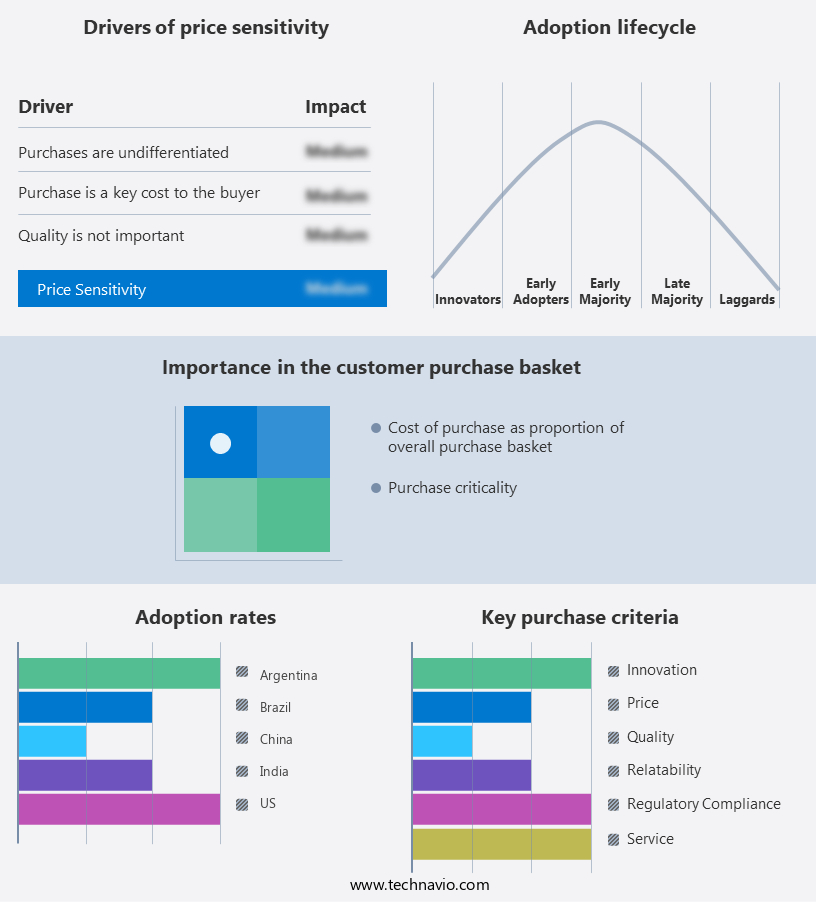
Customer Landscape
Key Companies & Market Insights
Companies are implementing various strategies, such as strategic alliances, soybean seed market forecast, partnerships, mergers and acquisitions, geographical expansion, and product/service launches, to enhance their presence in the industry.
Advanta Seeds - The company offers soybean seeds such as high-yield soybean seed varieties designed to provide a consistent yield advantage while reducing insecticide applications.
The industry research and growth report includes detailed analyses of the competitive landscape of the market and information about key companies, including:
- Advanta Seeds
- Amaggi
- Archer Daniels Midland Co.
- BASF SE
- Bayer AG
- Bioceres Crop Solutions Corp.
- BrettYoung
- Bunge Global SA
- Cargill Inc.
- CHS Inc
- COFCO International
- Corteva Inc.
- Groupe Limagrain
- KWS SAAT SE and Co. KGaA
- Olam Group Ltd.
- RAGT SEMENCES SAS
- Sinochem Group Co. Ltd.
- Syngenta Crop Protection AG
- The Scoular Co.
- Wilmar International Ltd.
Qualitative and quantitative analysis of companies has been conducted to help clients understand the wider business environment as well as the strengths and weaknesses of key industry players. Data is qualitatively analyzed to categorize companies as pure play, category-focused, industry-focused, and diversified; it is quantitatively analyzed to categorize companies as dominant, leading, strong, tentative, and weak.
Recent Development and News in Soybean Seed Market
- In February 2024, Corteva Agriscience, a leading agricultural company, introduced a new soybean seed variety, Enlist E3 Soybeans, featuring three traits: glyphosate tolerance, 2,4-D resistance, and Liberty Link herbicide tolerance (Corteva Agriscience Press Release, 2024). This innovation enables farmers to use multiple herbicide modes of action, enhancing weed control and reducing the risk of herbicide-resistant weeds.
- In May 2025, Bayer AG and Corteva Agriscience announced a strategic collaboration to co-develop and commercialize soybean varieties with multiple traits, including drought tolerance and disease resistance (Bayer AG Press Release, 2025). This partnership combines Bayer's research capabilities with Corteva's commercial expertise, aiming to deliver advanced soybean solutions to farmers and improve their productivity.
- In August 2024, Syngenta, a leading agribusiness company, completed the acquisition of Becker Underwood, a U.S.-based seed company specializing in soybean genetics (Syngenta Press Release, 2024). This acquisition strengthened Syngenta's soybean seed portfolio, expanding its presence in the North American market and providing access to Becker Underwood's advanced breeding technologies.
Research Analyst Overview
The market continues to evolve, shaped by various factors that influence farming practices and supply chain dynamics. Farm size and management play a significant role, with larger farms adopting technology and research and development to optimize planting density, crop production, and yield potential. Sustainability initiatives, such as water conservation and soil fertility, are increasingly important, driving demand for seed treatments, crop rotation, and precision agriculture. Soybean meal and oil are key applications, with a competitive advantage derived from seed genetics, maturity group, and nitrogen fixation. Global trade and sustainable agriculture are shaping industry standards, with a focus on regulatory compliance, seed certification, and product labeling.
Breeding programs and gene editing are at the forefront of innovation, addressing disease resistance, pest tolerance, and trait stacking. Remote sensing and climate change are also influencing the market, with sensor technology and data analytics providing valuable insights into crop health and production practices. Farmers are adopting best practices, such as agronomic practices, to maximize yield optimization and minimize farm inputs. The value chain analysis reveals a complex web of relationships, from farmers to food processors and animal feed producers. Sustainability and regulatory compliance are becoming increasingly important in the market, with a growing emphasis on organic and non-GMO soybeans. Crop insurance and farmer demographics are also factors to watch, as the industry navigates the challenges and opportunities of a dynamic and evolving market.
Dive into Technavio's strong research methodology, blending expert interviews, extensive data synthesis, and validated models for unparalleled Soybean Seed Market insights. See full methodology.
|
Market Scope |
|
|
Report Coverage |
Details |
|
Page number |
216 |
|
Base year |
2024 |
|
Historic period |
2019-2023 |
|
Forecast period |
2025-2029 |
|
Growth momentum & CAGR |
Accelerate at a CAGR of 6.3% |
|
Market growth 2025-2029 |
USD 3.77 Billion |
|
Market structure |
Fragmented |
|
YoY growth 2024-2025(%) |
6.0 |
|
Key countries |
US, Brazil, Argentina, China, India, Canada, Japan, South Korea, Australia, and Mexico |
|
Competitive landscape |
Leading Companies, Market Positioning of Companies, Competitive Strategies, and Industry Risks |
What are the Key Data Covered in this Soybean Seed Market Research and Growth Report?
- CAGR of the Soybean Seed industry during the forecast period
- Detailed information on factors that will drive the growth and forecasting between 2025 and 2029
- Precise estimation of the size of the market and its contribution of the industry in focus to the parent market
- Accurate predictions about upcoming growth and trends and changes in consumer behaviour
- Growth of the market across North America, APAC, South America, Europe, and Middle East and Africa
- Thorough analysis of the market's competitive landscape and detailed information about companies
- Comprehensive analysis of factors that will challenge the soybean seed market growth and forecasting
We can help! Our analysts can customize this soybean seed market research report to meet your requirements.
 RIA -
RIA -