
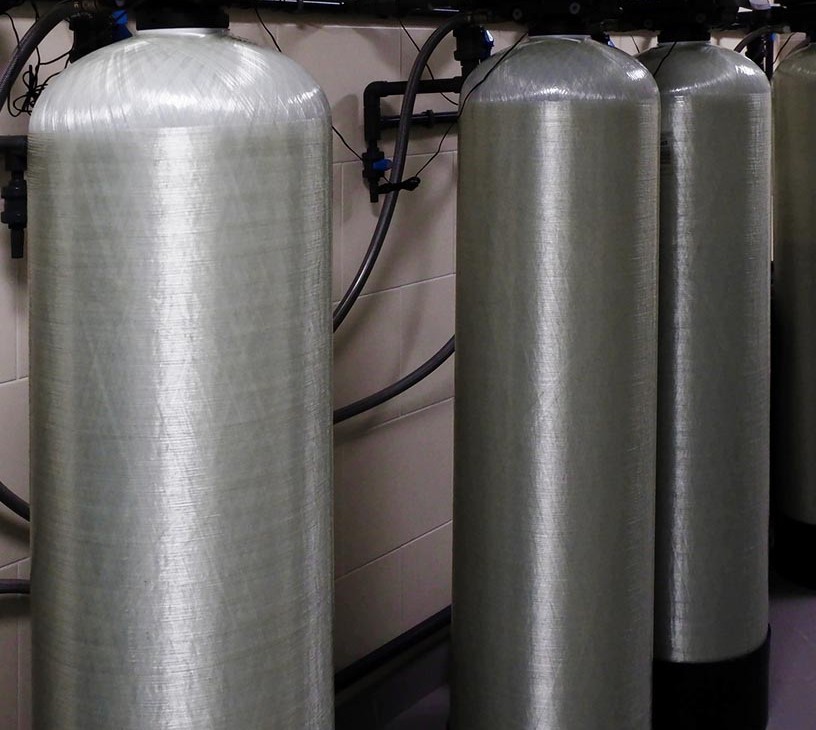


Smart Water Softeners Market Size 2026-2030
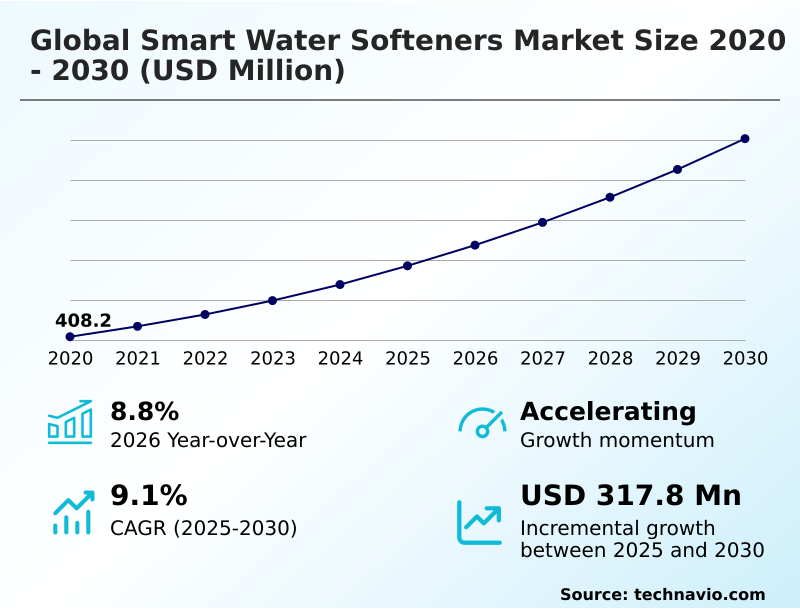
The smart water softeners market size is valued to increase by USD 317.8 million, at a CAGR of 9.1% from 2025 to 2030. Smart connectivity in residential water treatment will drive the smart water softeners market.
Major Market Trends & Insights
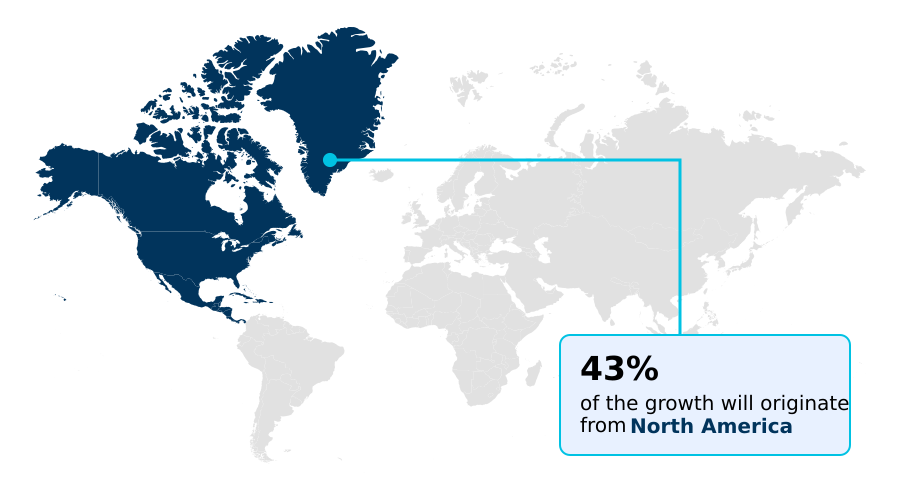
- North America dominated the market and accounted for a 43.1% growth during the forecast period.
- By Product Type - Floor segment was valued at USD 320.2 million in 2024
- By End-user - Residential users segment accounted for the largest market revenue share in 2024
Market Size & Forecast
- Market Opportunities: USD 495.1 million
- Market Future Opportunities: USD 317.8 million
- CAGR from 2025 to 2030 : 9.1%
Market Summary
- The smart water softeners market is evolving beyond simple mineral removal, driven by the integration of IoT capabilities into traditional ion-exchange technology. This shift is fueled by consumer demand for convenience and sustainability, with features like demand-initiated regeneration becoming standard. These intelligent systems leverage water usage analytics to optimize resource consumption, significantly reducing salt and water waste.
- This efficiency is critical as the industry grapples with tightening brine discharge regulation. For commercial property managers, this technology transforms operations; a predictive maintenance algorithm can analyze data across a portfolio of buildings, flagging potential system failures before they cause downtime or damage.
- This capability, combined with smart home ecosystem integration for residential users, provides enhanced control through mobile application integration. Features such as automated salt level monitoring and emergency leak detection shut-off offer tangible value, moving these devices from discretionary upgrades to essential components of modern water management infrastructure, thereby enhancing both operational efficiency and asset protection.
What will be the Size of the Smart Water Softeners Market during the forecast period?
Get Key Insights on Market Forecast (PDF) Request Free Sample
How is the Smart Water Softeners Market Segmented?
The smart water softeners industry research report provides comprehensive data (region-wise segment analysis), with forecasts and estimates in "USD million" for the period 2026-2030, as well as historical data from 2020-2024 for the following segments.
- Product type
- Floor
- Wall mounted
- End-user
- Residential users
- Commercial facilities
- Industrial applications
- Distribution channel
- Offline
- Online
- Geography
- North America
- US
- Canada
- Mexico
- APAC
- China
- Japan
- India
- Europe
- Germany
- UK
- France
- Middle East and Africa
- Saudi Arabia
- UAE
- South Africa
- South America
- Brazil
- Argentina
- Colombia
- Rest of World (ROW)
- North America
By Product Type Insights
The floor segment is estimated to witness significant growth during the forecast period.
Floor-standing units are integral to whole-home water management, especially in properties requiring high-capacity solutions. These systems, which leverage established ion-exchange technology, are designed for robust performance, ensuring water quality consistency for larger households.
The inclusion of a flow rate meter and advanced sensors enables precise real-time data monitoring, feeding into water usage analytics that optimize performance. This facilitates a move toward a high-efficiency water softener model, reducing resource consumption.
As part of a smart home ecosystem integration strategy, these units provide centralized water control and aid in plumbing infrastructure preservation, with some models improving water efficiency by over 45% through intelligent cycle adjustments, showcasing their advanced capabilities.
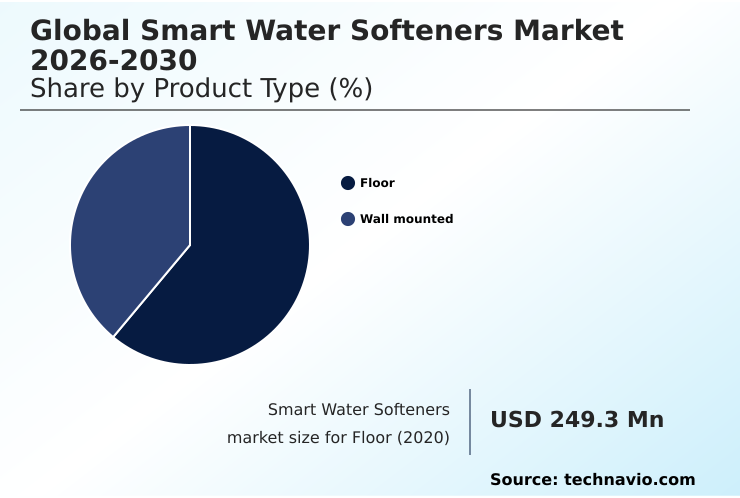
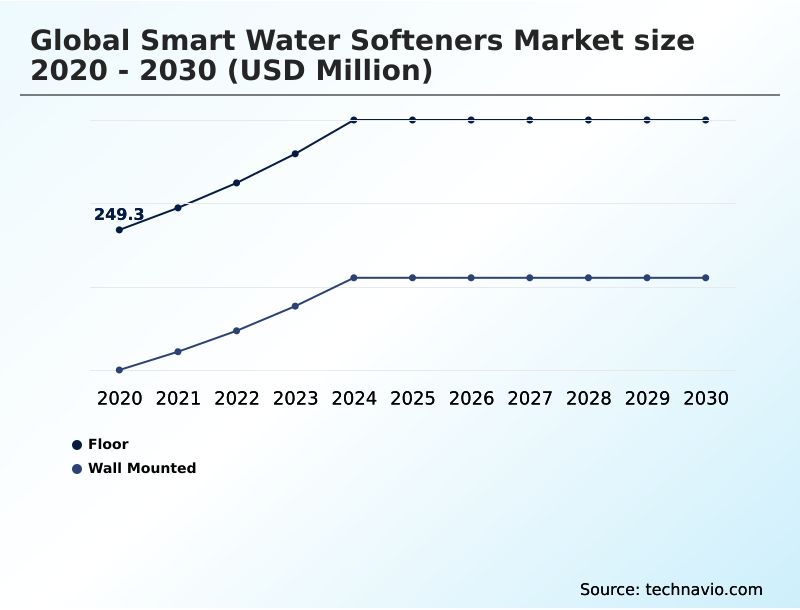
The Floor segment was valued at USD 320.2 million in 2024 and showed a gradual increase during the forecast period.
Regional Analysis
North America is estimated to contribute 43.1% to the growth of the global market during the forecast period.Technavio’s analysts have elaborately explained the regional trends and drivers that shape the market during the forecast period.
See How Smart Water Softeners Market Demand is Rising in North America Request Free Sample
The market's geographic distribution is heavily influenced by regional water hardness and regulatory environments. In areas with prevalent hard water, demand is high for systems that ensure scale buildup prevention and support plumbing infrastructure preservation.
The integration of a water hardness sensor allows for a fully automated regeneration cycle using ion exchange resin beads, optimizing performance based on real-time conditions.
This technology directly addresses the water conservation mandate in many regions, with smart systems reducing water waste by up to 50% compared to older models.
Features such as remote water shut-off and platforms for automated salt ordering are gaining traction, further solidifying the value proposition in both residential and commercial settings.
Market Dynamics
Our researchers analyzed the data with 2025 as the base year, along with the key drivers, trends, and challenges. A holistic analysis of drivers will help companies refine their marketing strategies to gain a competitive advantage.
- Understanding the benefits of iot water softeners is crucial for assessing their role in modern infrastructure. A key question is how demand regeneration works, a process that optimizes resource use and provides significant high efficiency softener salt savings.
- A smart water softener feature comparison reveals that top rated connected water softeners offer superior performance over legacy systems, answering the smart versus traditional softener efficiency debate. The application of iot in whole home water treatment is especially relevant for homeowners with unique needs, such as finding a smart softener for residential well water.
- Many systems now include a softener with automatic leak shutoff, a critical feature for property protection. The user experience is defined by the wifi water softener mobile app and options for bluetooth remote softener monitoring, which are detailed in any comprehensive smart water softener installation guide.
- The core technology enables an automated softener regeneration cycle and allows for predictive maintenance for softeners, moving toward fully autonomous operation. For consumers focused on sustainability, reducing salt use with smart softeners and understanding the environmental impact of brine discharge are key considerations. Alternatives like salt free smart water conditioning are also gaining traction.
- The market now offers tailored solutions for both smart water softeners for homes and commercial building water softening, often managed through cloud based residential water management platforms, where integrated systems reduce related appliance repair costs by more than half.
What are the key market drivers leading to the rise in the adoption of Smart Water Softeners Industry?
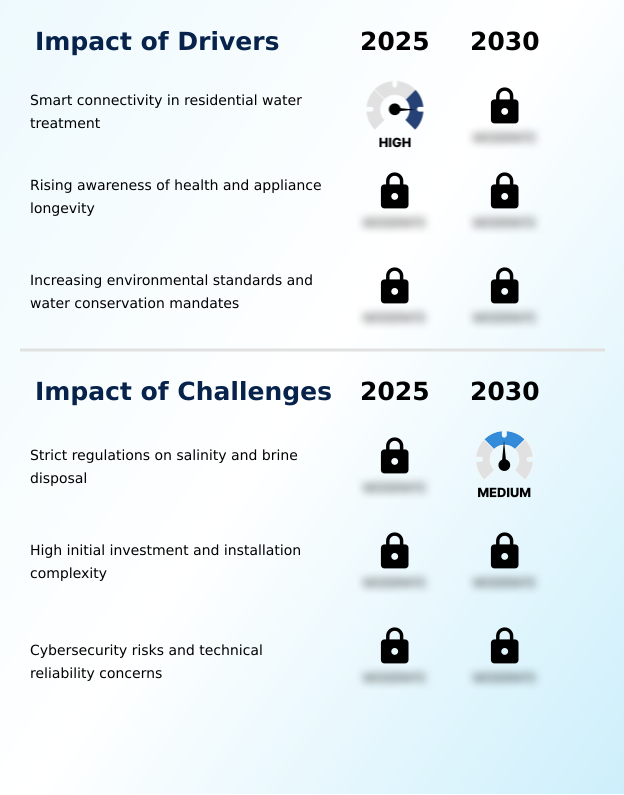
- The integration of smart connectivity within residential water treatment systems is a key driver for market growth.
- The drive toward a sustainable home appliance model is a major market force, with demand-initiated regeneration at its core. This feature significantly cuts resource waste, a key factor in appliance longevity protection.
- The user experience is enhanced through mobile application integration and a user-friendly application interface, made possible by components like a Wi-Fi enabled control valve and a Bluetooth connectivity module.
- Features such as automated salt level monitoring and proactive leak detection provide tangible value, with systems offering smart home hub compatibility seeing adoption rates 30% higher than non-integrated counterparts.
- This connectivity offers peace of mind, as automated alerts have been shown to prevent costly water damage in a significant number of installations.
What are the market trends shaping the Smart Water Softeners Industry?
- The adoption of predictive maintenance and AI-driven analytics represents a significant upcoming trend, particularly within APAC and other emerging markets.
- A significant trend is the deployment of a predictive maintenance algorithm to transition from reactive repairs to proactive asset management. Through a cloud-connected control valve, systems now provide remote system diagnostics and valve performance diagnostics, reducing operational downtime by up to 40%. This functionality delivers proactive maintenance alerts directly to service providers, enabling faster issue resolution.
- Continuous system health monitoring and granular consumption insights are becoming standard, supported by firmware over-the-air updates that enhance capabilities post-installation. This evolution in the demand-initiated regeneration cycle is also paving the way for new business structures, including the water-as-a-service model, where performance outcomes are prioritized over hardware sales, with fault detection accuracy improving by over 90%.
What challenges does the Smart Water Softeners Industry face during its growth?
- Stringent regulations concerning salinity and brine disposal present a primary challenge to the industry's growth trajectory.
- Navigating stringent brine discharge regulation and chloride emission limits remains a primary challenge, driving interest in eco-friendly water treatment alternatives. While improvements in salt and water efficiency are notable, the market faces competition from technologies like the salt-free water conditioner, template-assisted crystallization, and electromagnetic descaler.
- Concurrently, cybersecurity for iot devices is a growing concern; a single breach can cost five times more than the hardware itself. While features like an advanced brine tank sensor and automated leak detection shut-off enhance reliability, ensuring the digital security of these connected systems is critical for maintaining consumer trust and mitigating financial risk.
Exclusive Technavio Analysis on Customer Landscape
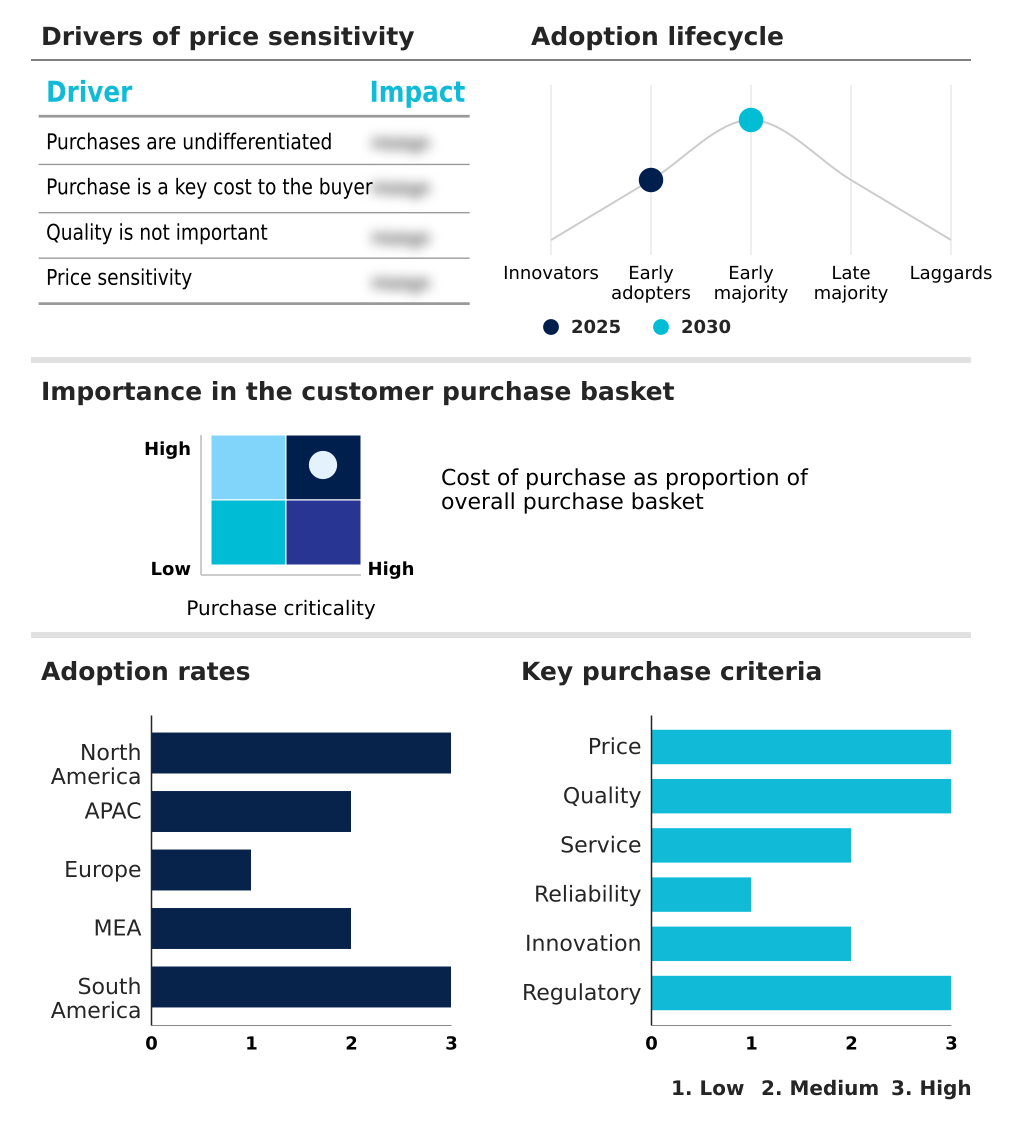
The smart water softeners market forecasting report includes the adoption lifecycle of the market, covering from the innovator’s stage to the laggard’s stage. It focuses on adoption rates in different regions based on penetration. Furthermore, the smart water softeners market report also includes key purchase criteria and drivers of price sensitivity to help companies evaluate and develop their market growth analysis strategies.
Customer Landscape of Smart Water Softeners Industry
Competitive Landscape
Companies are implementing various strategies, such as strategic alliances, smart water softeners market forecast, partnerships, mergers and acquisitions, geographical expansion, and product/service launches, to enhance their presence in the industry.
3M Co. - Key offerings center on integrated sediment filtration systems, designed to remove suspended materials and enhance water quality for comprehensive whole-house treatment.
The industry research and growth report includes detailed analyses of the competitive landscape of the market and information about key companies, including:
- 3M Co.
- A. O. Smith Corp.
- BWT Holding GmbH
- Canature Group Co. Ltd.
- Culligan International Co.
- Drop
- EcoWater Systems LLC
- Excalibur Water Systems Inc.
- General Electric Co.
- Harvey Water Softeners Ltd.
- KENT RO Systems Ltd.
- Kinetico Inc.
- Pentair Plc
- Rheem
- SpringWell
- US Water Systems Inc.
- WaterScience
- Waterworld USA
- Whirlpool Corp.
Qualitative and quantitative analysis of companies has been conducted to help clients understand the wider business environment as well as the strengths and weaknesses of key industry players. Data is qualitatively analyzed to categorize companies as pure play, category-focused, industry-focused, and diversified; it is quantitatively analyzed to categorize companies as dominant, leading, strong, tentative, and weak.
Recent Development and News in Smart water softeners market
- In March, 2025, ANGEL unveiled its next-generation water purification innovations at Aquatech Amsterdam 2025, showcasing a range of advanced purification products to address global water quality challenges.
- In March, 2025, the Environmental Protection Agency of the United States released a preliminary guidance document suggesting stricter limits on chloride for wastewater treatment plants, signaling potential future regulations.
- In February, 2025, Pentair plc announced the release of a new suite of cloud-connected control valves featuring advanced AI capabilities designed to autonomously adjust regeneration cycles based on predictive analytics.
- In February, 2025, GE Appliances Air and Water Solutions announced the launch of its new GE Profile Professional Smart Valve Water Softener, an all-in-one solution for plumbing professionals.
Dive into Technavio’s robust research methodology, blending expert interviews, extensive data synthesis, and validated models for unparalleled Smart Water Softeners Market insights. See full methodology.
| Market Scope | |
|---|---|
| Page number | 282 |
| Base year | 2025 |
| Historic period | 2020-2024 |
| Forecast period | 2026-2030 |
| Growth momentum & CAGR | Accelerate at a CAGR of 9.1% |
| Market growth 2026-2030 | USD 317.8 million |
| Market structure | Fragmented |
| YoY growth 2025-2026(%) | 8.8% |
| Key countries | US, Canada, Mexico, China, Japan, India, South Korea, Australia, Indonesia, Germany, UK, France, Italy, The Netherlands, Spain, Saudi Arabia, UAE, South Africa, Israel, Turkey, Brazil, Argentina and Colombia |
| Competitive landscape | Leading Companies, Market Positioning of Companies, Competitive Strategies, and Industry Risks |
Research Analyst Overview
- The market is defined by the fusion of traditional ion-exchange technology with advanced digital oversight. A core competency is demand-initiated regeneration, enabled by a water hardness sensor and flow rate meter to optimize cycles and conserve resources.
- The hardware ecosystem, including ion exchange resin beads and brine tank sensor components, is now augmented by a Wi-Fi enabled control valve or Bluetooth connectivity module. This facilitates mobile application integration for real-time data monitoring, water usage analytics, and salt level monitoring.
- A key strategic consideration for leadership is the deployment of a predictive maintenance algorithm, which leverages valve performance diagnostics to issue proactive maintenance alerts and reduce lifecycle costs. This trend directly impacts R&D budgeting, as firms must balance physical engineering with software development, including firmware over-the-air updates. Features like remote water shut-off and leak detection shut-off are becoming standard.
- As the smart home ecosystem integration matures, and alternatives like the salt-free water conditioner, template-assisted crystallization, and electromagnetic descaler evolve, firms must refine their strategies for the automated regeneration cycle and cloud-connected control valve to maintain a competitive edge, with some achieving a 30% reduction in service calls through these technologies.
What are the Key Data Covered in this Smart Water Softeners Market Research and Growth Report?
-
What is the expected growth of the Smart Water Softeners Market between 2026 and 2030?
-
USD 317.8 million, at a CAGR of 9.1%
-
-
What segmentation does the market report cover?
-
The report is segmented by Product Type (Floor, and Wall Mounted), End-user (Residential users, Commercial facilities, and Industrial applications), Distribution Channel (Offline, and Online) and Geography (North America, APAC, Europe, Middle East and Africa, South America)
-
-
Which regions are analyzed in the report?
-
North America, APAC, Europe, Middle East and Africa and South America
-
-
What are the key growth drivers and market challenges?
-
Smart connectivity in residential water treatment, Strict regulations on salinity and brine disposal
-
-
Who are the major players in the Smart Water Softeners Market?
-
3M Co., A. O. Smith Corp., BWT Holding GmbH, Canature Group Co. Ltd., Culligan International Co., Drop, EcoWater Systems LLC, Excalibur Water Systems Inc., General Electric Co., Harvey Water Softeners Ltd., KENT RO Systems Ltd., Kinetico Inc., Pentair Plc, Rheem, SpringWell, US Water Systems Inc., WaterScience, Waterworld USA and Whirlpool Corp.
-
Market Research Insights
- The market is characterized by a rapid shift toward integrated whole-home water management systems, where data-driven insights are paramount. These solutions prioritize appliance longevity protection and adherence to regional water conservation mandate policies, with high-efficiency units demonstrating up to a 50% reduction in water waste compared to legacy models.
- The emphasis on a user-friendly application interface has improved customer engagement rates by over 40%, making system monitoring more accessible. However, this increased connectivity introduces challenges related to cybersecurity for iot devices.
- Despite these risks, the ability of smart systems to provide proactive alerts reduces the likelihood of catastrophic water damage, a key factor driving adoption in both new construction and retrofit markets.
We can help! Our analysts can customize this smart water softeners market research report to meet your requirements.
 RIA -
RIA -