



Smart Buildings Market Size 2025-2029
The smart buildings market size is forecast to increase by USD 76.8 billion, at a CAGR of 11.3% between 2024 and 2029.
- The market is experiencing significant growth, driven by the increasing demand for building automation to enhance business outcomes. This trend is further propelled by the integration of Internet of Things (IoT) technology with building automation software. The convergence of these technologies enables real-time monitoring and optimization of energy consumption, indoor environmental quality, and overall operational efficiency. However, the integration of building automation software and IoT devices poses challenges. Interoperability issues between different systems and companies hinder seamless integration and data exchange, limiting the full potential of smart buildings.
- Companies seeking to capitalize on the market opportunities must address these challenges by focusing on standardized communication protocols and open APIs to ensure compatibility and seamless data flow between systems. By doing so, they can create a competitive edge, offering advanced automation solutions that deliver improved operational efficiency, reduced energy consumption, and enhanced occupant comfort.
What will be the Size of the Smart Buildings Market during the forecast period?
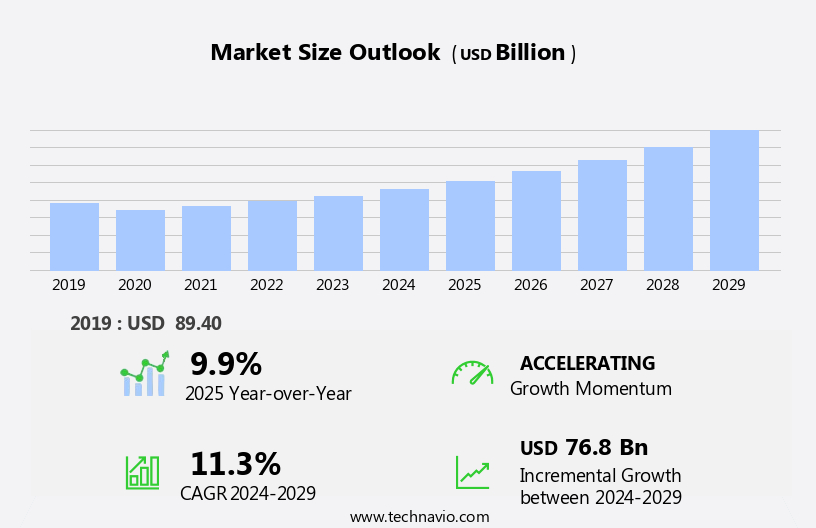
Explore in-depth regional segment analysis with market size data - historical 2019-2023 and forecasts 2025-2029 - in the full report.
Request Free Sample
The market continues to evolve, with various sectors integrating advanced technologies to optimize building performance. Real estate development firms are investing in IoT sensors, edge computing, and building automation systems to enhance energy efficiency and asset management. Smart appliances, such as voice-controlled thermostats and dynamic glazing, are becoming standard features in new constructions. Data integration plays a crucial role in this dynamic landscape, with cloud-based platforms facilitating the seamless exchange of information between different systems. LEED certification and green building standards are driving the adoption of renewable energy, smart grids, and water management solutions. Safety regulations and access control systems are also evolving to accommodate emerging technologies like biometric authentication and facial recognition.
Smart infrastructure, including 5G networks and smart transportation, is transforming urban landscapes into smart cities. Building management software and digital twins are enabling real-time monitoring and analysis of building performance, while machine learning and artificial intelligence are optimizing HVAC control systems and predicting maintenance needs. Smart waste management, air quality sensors, and temperature sensors are addressing health and sustainability concerns. Construction technology, including virtual and augmented reality, is revolutionizing design and planning processes. The ongoing integration of these technologies is creating a complex ecosystem that requires open APIs and advanced data analytics to ensure optimal performance and user experience.
The market is an ever-evolving landscape, with new applications and innovations emerging constantly.
How is this Smart Buildings Industry segmented?
The smart buildings industry research report provides comprehensive data (region-wise segment analysis), with forecasts and estimates in "USD billion" for the period 2025-2029, as well as historical data from 2019-2023 for the following segments.
- Product
- Safety and security management
- Energy management
- Building infrastructure management
- Network management
- IWMS
- Component
- Software
- Hardware
- Services
- Building Type
- Commercial
- Residential
- Industrial
- Application
- Security Systems
- HVAC Control
- Lighting Management
- Geography
- North America
- US
- Canada
- Europe
- France
- Germany
- UK
- Middle East and Africa
- UAE
- APAC
- China
- India
- Japan
- South America
- Brazil
- Rest of World (ROW)
- North America
By Product Insights
The safety and security management segment is estimated to witness significant growth during the forecast period.
The market is experiencing significant growth as advanced technologies are integrated to optimize building performance and enhance safety and security. Building performance optimization is a key focus area, with natural language processing, smart waste management, smart glass, air quality sensors, and virtual reality (VR) technologies improving energy efficiency, reducing waste, and creating immersive occupant experiences. Cloud computing, 5G networks, and edge computing enable real-time data processing and integration, while renewable energy sources and green building standards promote sustainability. Safety regulations are driving the adoption of smart water management, temperature sensors, and motion sensors for early leak detection and occupancy monitoring.
Voice control, facial recognition, and smart thermostats offer convenience and personalized comfort, while smart infrastructure, smart grids, and smart transportation streamline operations and reduce commuting time. Building management software, data analytics, and machine learning (ML) algorithms facilitate efficient asset management and predictive maintenance. Artificial intelligence (AI), computer vision, and deep learning are transforming security systems, with digital twins and open APIs enabling remote monitoring and real-time intervention. Smart cities, urban agriculture, and new construction projects are embracing these innovations to create harmonious, energy-efficient, and secure living and working environments. The integration of solar panels, hvac control systems, and vertical farming technologies further enhances the sustainability and resilience of smart buildings.
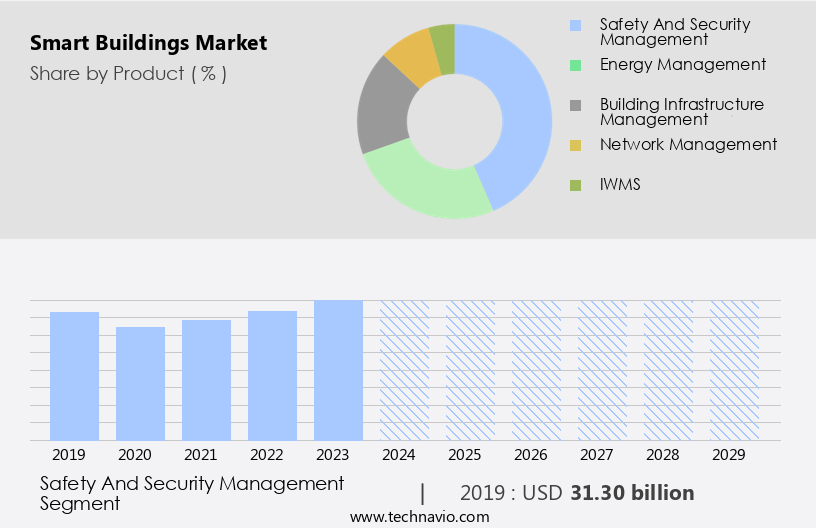
The Safety and security management segment was valued at USD 31.30 billion in 2019 and showed a gradual increase during the forecast period.
Regional Analysis
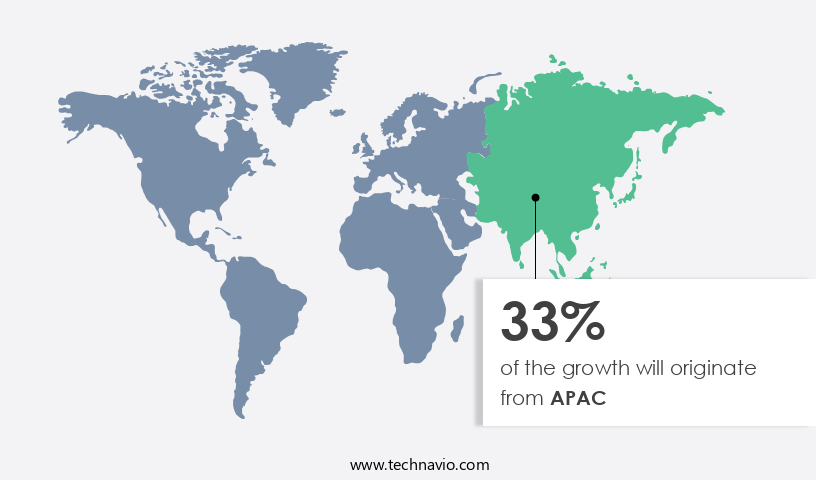
APAC is estimated to contribute 33% to the growth of the global market during the forecast period.Technavio’s analysts have elaborately explained the regional trends and drivers that shape the market during the forecast period.
The market is experiencing significant growth, driven by the integration of advanced technologies such as building performance optimization, natural language processing, and smart waste management. Smart glass, air quality sensors, and virtual reality (VR) are revolutionizing the way buildings are designed and operated. Cloud computing and 5G networks enable real-time data processing and analysis, ensuring energy efficiency and enhanced safety regulations. Renewable energy sources, green building standards, and biometric authentication are key components of the market's sustainability and security focus. Smart water management, voice control, and facial recognition are essential features in modern building management software. Smart thermostats, dynamic glazing, and smart transportation systems optimize energy usage and improve occupant comfort.
Computer vision, humidity sensors, and access control systems ensure building security and safety. Smart grids and energy management systems facilitate the integration of renewable energy sources and promote energy efficiency. Real estate development, smart appliances, and data integration are crucial aspects of the market's growth. Asset management, IoT sensors, edge computing, and LEED certification are essential elements of smart infrastructure. Remote monitoring, building automation systems, and water leak detection ensure efficient maintenance and reduce operational costs. Machine learning (ML), digital twins, and facility management are vital for optimizing building performance and enhancing the user experience. The market is also witnessing the emergence of smart cities, smart security systems, urban agriculture, and vertical farming.
Construction technology and data analytics are transforming the way buildings are designed and constructed. Building codes and energy management systems are evolving to accommodate these advancements. The future of the market lies in the seamless integration of these technologies to create harmonious, efficient, and sustainable built environments.
Market Dynamics
Our researchers analyzed the data with 2024 as the base year, along with the key drivers, trends, and challenges. A holistic analysis of drivers will help companies refine their marketing strategies to gain a competitive advantage.
What are the key market drivers leading to the rise in the adoption of Smart Buildings Industry?
- The increasing demand for building automation is a primary factor propelling market growth, as businesses seek to enhance operational efficiencies and optimize outcomes.
- Building automation software plays a crucial role in optimizing building performance by automatically regulating and controlling various subsystems in industrial, residential, and commercial buildings. This software maintains predefined parameters for different systems, enabling easy and efficient management, control, and operation of buildings. The adoption of building automation software significantly enhances cost savings for organizations through efficient energy management. For instance, the HVAC system's components are connected to building management systems, generating an alarm if any subsystem exceeds predefined limits. Moreover, advanced technologies like natural language processing, virtual reality (VR), augmented reality (AR), and 5G networks are transforming building automation.
- These technologies enable voice control, immersive experiences, and real-time data analysis, respectively. Smart waste management, smart glass, air quality sensors, and renewable energy integration are other essential features of building automation software. Safety regulations and green building standards further emphasize the importance of building automation for ensuring energy efficiency, occupant comfort, and safety. Building management software, cloud computing, and smart water management are other essential components of building automation systems. In conclusion, the adoption of building automation software offers numerous benefits, including cost savings, energy efficiency, and improved occupant comfort, making it a must-have for businesses in today's world.
What are the market trends shaping the Smart Buildings Industry?
- Building automation is evolving with the integration of Internet of Things (IoT) technology becoming an increasingly significant market trend. This fusion of IoT and building automation software enhances efficiency, productivity, and connectivity within structures.
- The traditional buildings, which rely on manual control, face challenges of high operational costs and extended lead times. Moreover, the existing inter-device connectivity within buildings is limited due to complex wired or slow wireless technology. However, the integration of Internet of Things (IoT) into building automation is revolutionizing the industry. With advanced IP-based reliable Internet connections, end-users can monitor multiple building systems through a central hub, leading to increased demand for smart building technology. The growing adoption of IoT, fueled by increasing Internet penetration among certain end-user segments, presents a significant growth opportunity for The market. This new market complements building automation software, enabling real-time monitoring and control of various building systems.
- IoT-enabled smart buildings incorporate technologies such as biometric authentication, cloud-based platforms, smart infrastructure, smart metering, dynamic glazing, smart transportation, computer vision, humidity sensors, access control systems, smart speaker, artificial intelligence (AI), wireless connectivity, and smart grids. These technologies offer benefits such as energy efficiency, improved occupant comfort, enhanced security, and optimized resource utilization.
What challenges does the Smart Buildings Industry face during its growth?
- The integration of building automation software and the interoperability issues associated with it represent significant challenges that hinder industry growth. These complexities necessitate the need for advanced solutions and industry-wide collaboration to ensure seamless communication and data exchange between different systems.
- Smart buildings, characterized by the integration of IoT sensors, data analysis, and building automation systems, are revolutionizing real estate development. These advanced structures go beyond basic automation of heating, ventilation, and air conditioning (HVAC) systems. Instead, they incorporate smart appliances, water leak detection, motion sensors, smart lighting, and occupancy sensors, among other features, to optimize energy efficiency and enhance the user experience. Data integration plays a crucial role in the effective functioning of smart buildings. Building automation systems must seamlessly communicate with various subsystems and legacy systems, requiring sophisticated interfacing software. Edge computing and machine learning algorithms contribute to the real-time analysis of data, enabling remote monitoring and predictive maintenance.
- LEED certification is a significant driver for the adoption of smart building technologies, as it emphasizes energy efficiency and environmental sustainability. By implementing these advanced systems, building owners and managers can effectively manage their assets, reduce operational costs, and improve tenant satisfaction. However, the complexity of smart building systems necessitates technical expertise for installation, configuration, and maintenance. Integration issues may arise when combining new software with existing legacy systems, potentially leading to faulty installations and security vulnerabilities. Despite these challenges, the benefits of smart buildings, including improved energy efficiency, enhanced occupant comfort, and increased operational control, make them a compelling investment for businesses and property developers.
Exclusive Customer Landscape
The smart buildings market forecasting report includes the adoption lifecycle of the market, covering from the innovator’s stage to the laggard’s stage. It focuses on adoption rates in different regions based on penetration. Furthermore, the smart buildings market report also includes key purchase criteria and drivers of price sensitivity to help companies evaluate and develop their market growth analysis strategies.
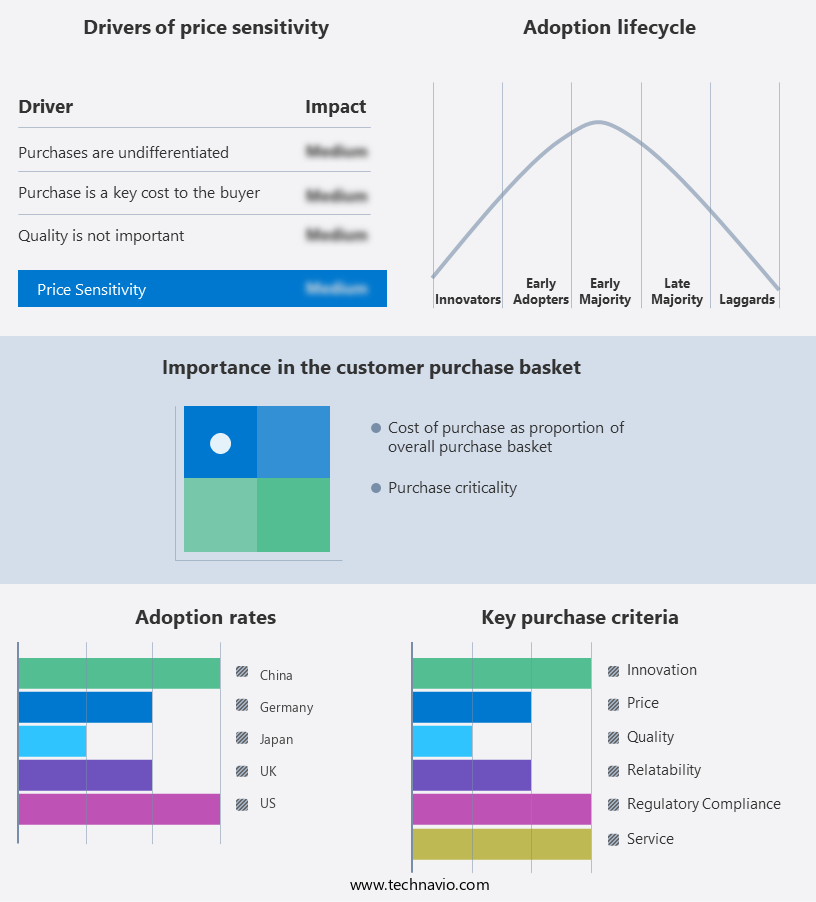
Customer Landscape
Key Companies & Market Insights
Companies are implementing various strategies, such as strategic alliances, smart buildings market forecast, partnerships, mergers and acquisitions, geographical expansion, and product/service launches, to enhance their presence in the industry.
ABB Ltd. - This company specializes in optimizing buildings through innovative solutions, focusing on areas such as occupant well-being, energy efficiency, cost transparency, sustainability, and connectivity. By integrating advanced technologies, we enhance indoor environments, promote energy savings, ensure financial clarity, and contribute to a greener future. Our offerings prioritize user experience and long-term value, making buildings smarter and more effective.
The industry research and growth report includes detailed analyses of the competitive landscape of the market and information about key companies, including:
- ABB Ltd.
- Bosch Building Technologies
- Carrier Global Corporation
- Cisco Systems Inc.
- Delta Electronics Inc.
- Emerson Electric Co.
- Hitachi Ltd.
- Honeywell International Inc.
- Huawei Technologies Co. Ltd.
- IBM Corporation
- Intel Corporation
- Johnson Controls International plc
- Legrand SA
- Mitsubishi Electric Corporation
- Rockwell Automation Inc.
- Schneider Electric SE
- Siemens AG
- Trane Technologies plc
- United Technologies Corporation
- Verdigris Technologies
Qualitative and quantitative analysis of companies has been conducted to help clients understand the wider business environment as well as the strengths and weaknesses of key industry players. Data is qualitatively analyzed to categorize companies as pure play, category-focused, industry-focused, and diversified; it is quantitatively analyzed to categorize companies as dominant, leading, strong, tentative, and weak.
Recent Development and News in Smart Buildings Market
- In January 2024, Schneider Electric, a leading energy management and automation company, announced the launch of its new EcoStruxure Building platform, integrating IoT, cloud, and analytics to optimize energy efficiency and operational performance in commercial buildings (Schneider Electric Press Release, 2024).
- In March 2024, Siemens and Microsoft entered into a strategic partnership to integrate Microsoft Azure IoT and Siemens' MindSphere, creating a powerful platform for managing and analyzing data from smart buildings (Microsoft News Center, 2024).
- In May 2024, Johnson Controls completed the acquisition of Quirks, a leading provider of building automation and energy management systems, expanding its portfolio and strengthening its position in the market (Johnson Controls Press Release, 2024).
- In February 2025, the European Union passed the new Energy Performance of Buildings Directive, mandating all new buildings to be nearly zero-energy by 2020 and all existing buildings to undergo significant energy renovation by 2040, driving demand for smart building technologies (European Parliament, 2025).
Research Analyst Overview
- In the real estate investment sector, the adoption of smart buildings is gaining momentum, integrating facility management software, human-machine interaction, and sustainable materials to enhance property value and efficiency. Cybersecurity standards are a top priority, ensuring data privacy and securing building systems against potential threats. Human-centered design, such as adaptive lighting and user interface (UI), caters to occupant comfort and productivity. Passive house and green building materials contribute to energy savings and reduced carbon footprint. Autonomous vehicles and smart mobility solutions facilitate seamless transportation within urban regeneration areas. Blockchain technology and smart contracts streamline construction management and data-driven decision making.
- Building performance monitoring, AI-powered security, and adaptive learning optimize building operations and provide a personalized experience. Edge-based security and distributed ledger technology ensure secure data access and enable circular economy practices. Open source platforms and cloud-based security enhance collaboration and scalability, while building performance simulation and smart lighting control fine-tune energy usage and occupant satisfaction.
Dive into Technavio’s robust research methodology, blending expert interviews, extensive data synthesis, and validated models for unparalleled Smart Buildings Market insights. See full methodology.
|
Market Scope |
|
|
Report Coverage |
Details |
|
Page number |
221 |
|
Base year |
2024 |
|
Historic period |
2019-2023 |
|
Forecast period |
2025-2029 |
|
Growth momentum & CAGR |
Accelerate at a CAGR of 11.3% |
|
Market growth 2025-2029 |
USD 76.8 billion |
|
Market structure |
Fragmented |
|
YoY growth 2024-2025(%) |
9.9 |
|
Key countries |
US, UK, Germany, China, Japan, France, Canada, India, Brazil, and UAE |
|
Competitive landscape |
Leading Companies, Market Positioning of Companies, Competitive Strategies, and Industry Risks |
What are the Key Data Covered in this Smart Buildings Market Research and Growth Report?
- CAGR of the Smart Buildings industry during the forecast period
- Detailed information on factors that will drive the growth and forecasting between 2025 and 2029
- Precise estimation of the size of the market and its contribution of the industry in focus to the parent market
- Accurate predictions about upcoming growth and trends and changes in consumer behaviour
- Growth of the market across North America, Europe, APAC, South America, and Middle East and Africa
- Thorough analysis of the market’s competitive landscape and detailed information about companies
- Comprehensive analysis of factors that will challenge the smart buildings market growth of industry companies
We can help! Our analysts can customize this smart buildings market research report to meet your requirements.
 RIA -
RIA -