


Refrigerated Cabinet Market Size 2026-2030
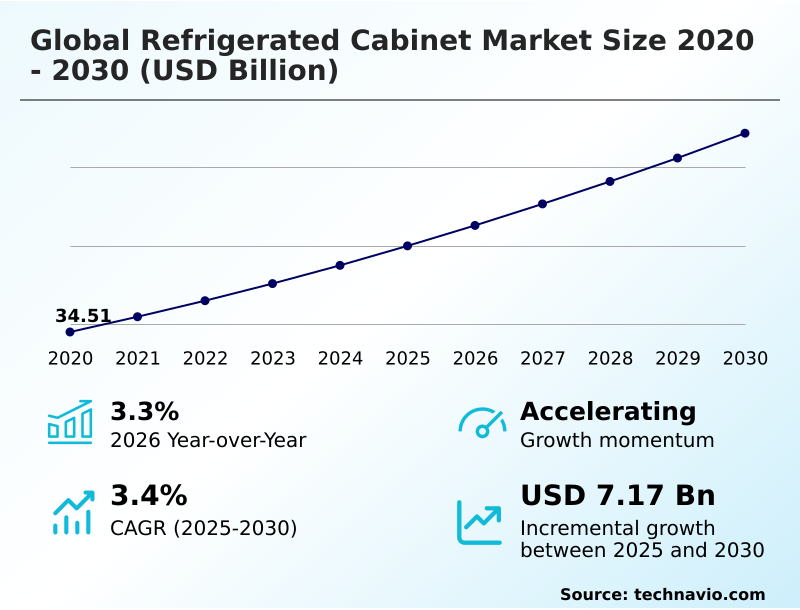
The refrigerated cabinet market size is valued to increase by USD 7.17 billion, at a CAGR of 3.4% from 2025 to 2030. Rising demand from food and beverage industry will drive the refrigerated cabinet market.
Major Market Trends & Insights
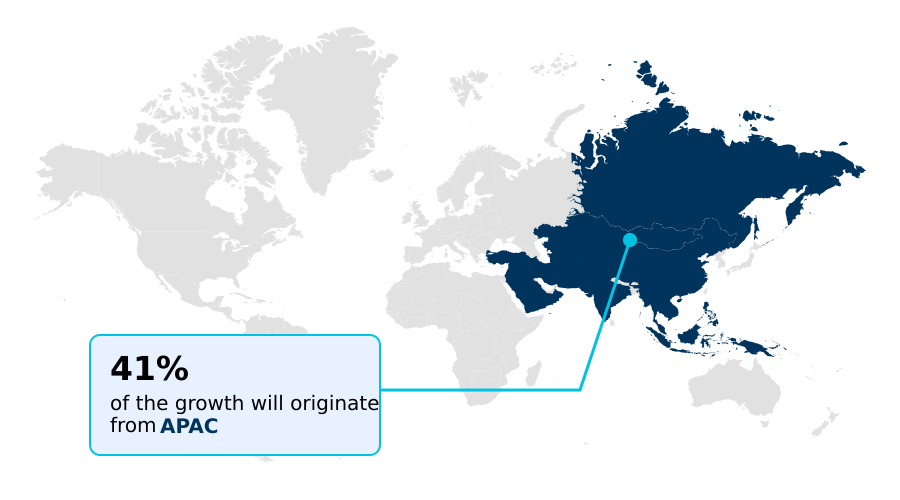
- APAC dominated the market and accounted for a 41% growth during the forecast period.
- By Product - Storage cabinet segment was valued at USD 31.95 billion in 2024
- By End-user - Retail and e-commerce segment accounted for the largest market revenue share in 2024
Market Size & Forecast
- Market Opportunities: USD 12.64 billion
- Market Future Opportunities: USD 7.17 billion
- CAGR from 2025 to 2030 : 3.4%
Market Summary
- The refrigerated cabinet market is undergoing a significant transformation, driven by stringent energy efficiency regulations and a growing demand for sustainable operations. The industry is moving away from traditional hydrofluorocarbon (HFC) refrigerants toward natural alternatives like CO2 and propane, a shift that presents both opportunities and challenges.
- While these eco-friendly options reduce environmental impact, their adoption necessitates higher upfront investment in compatible equipment and specialized technician training. A key area of innovation is the integration of IoT and smart technologies. For instance, a large supermarket chain can deploy a network of connected refrigerated display cases that provide real-time temperature data and predictive maintenance alerts.
- This capability allows facility managers to prevent equipment failures, reduce food spoilage, and optimize energy consumption across hundreds of stores from a central dashboard. This convergence of hardware and data analytics is redefining operational efficiency.
- However, the initial cost of these advanced systems and the complexity of regulatory compliance remain significant hurdles, particularly for small and medium-sized businesses trying to modernize their cold chain infrastructure while managing tight budgets. The market's trajectory will be defined by how effectively manufacturers can balance performance, cost, and sustainability.
What will be the Size of the Refrigerated Cabinet Market during the forecast period?
Get Key Insights on Market Forecast (PDF) Request Free Sample
How is the Refrigerated Cabinet Market Segmented?
The refrigerated cabinet industry research report provides comprehensive data (region-wise segment analysis), with forecasts and estimates in "USD million" for the period 2026-2030, as well as historical data from 2020-2024 for the following segments.
- Product
- Storage cabinet
- Wine cabinet
- Others
- End-user
- Retail and e-commerce
- Food and beverage industry
- Pharmaceutical and life sciences sector
- Others
- Technology
- Conventional refrigeration systems
- Natural refrigerant-based systems
- Smart and connected refrigeration systems
- Hybrid and modular systems
- Geography
- APAC
- China
- Japan
- South Korea
- Europe
- Germany
- UK
- France
- North America
- US
- Canada
- Mexico
- South America
- Brazil
- Argentina
- Colombia
- Middle East and Africa
- Saudi Arabia
- South Africa
- UAE
- Rest of World (ROW)
- APAC
By Product Insights
The storage cabinet segment is estimated to witness significant growth during the forecast period.
The refrigerated cabinet market is segmented by product, end-user, technology, and geography, reflecting its diverse applications. The storage cabinet segment is foundational, driven by the need for robust commercial refrigeration solutions in back-of-house operations across retail and foodservice.
These units prioritize capacity and consistent temperature control, employing technologies like the vapor-compression cycle and advanced vacuum insulation panels to ensure performance.
Innovations focus on enhancing energy efficiency, with some inverter technology compressor models achieving up to 15% reduction in energy use.
As the cold chain infrastructure expands, demand for specialized units using transcritical co2 systems and hydrocarbon refrigerants is growing, especially in sectors requiring stringent pharmaceutical storage refrigeration and energy-efficient display cases for perishable goods.
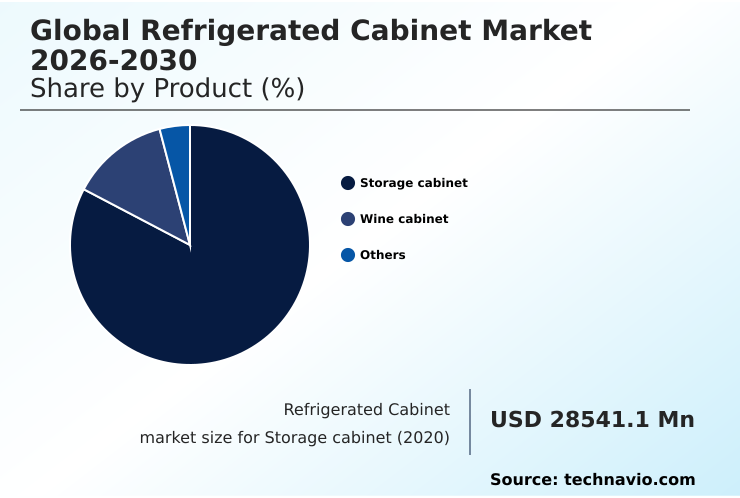
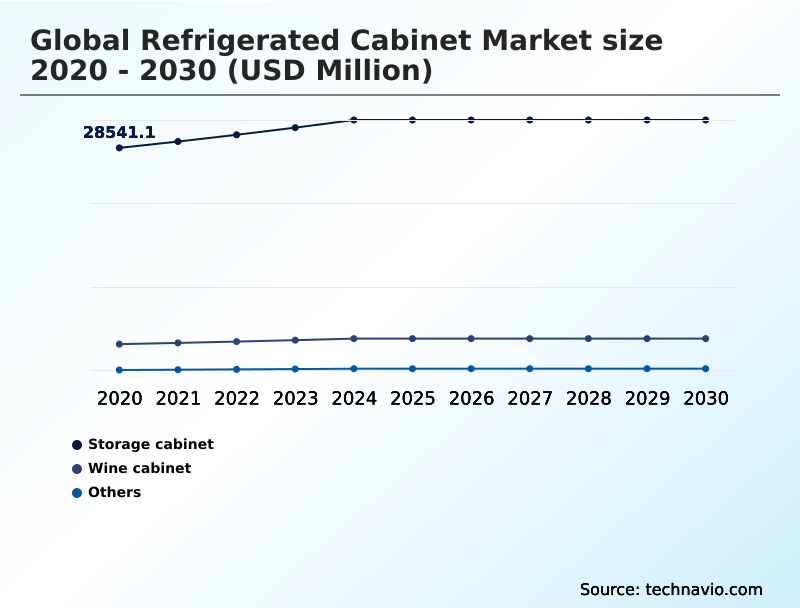
The Storage cabinet segment was valued at USD 31.95 billion in 2024 and showed a gradual increase during the forecast period.
Regional Analysis
APAC is estimated to contribute 41% to the growth of the global market during the forecast period.Technavio’s analysts have elaborately explained the regional trends and drivers that shape the market during the forecast period.
See How Refrigerated Cabinet Market Demand is Rising in APAC Request Free Sample
The geographic landscape of the refrigerated cabinet market is diverse, with APAC poised to contribute over 40% of incremental growth, driven by expanding retail infrastructure in countries like China and India.
In this region, the demand for modular cold rooms, blast chillers, and shock freezers is escalating to support the burgeoning food service refrigeration equipment sector.
Meanwhile, established markets in Europe and North America focus on technological upgrades, particularly in supermarket refrigeration systems and retail refrigeration displays.
Adoption of smart defrost systems in these regions has led to an 18% improvement in energy efficiency for some retailers.
The specialized segment for ultra-low temperature freezers also sees consistent demand from the pharmaceutical and life sciences industries globally, where maintaining precise temperature integrity is paramount.
These regional dynamics highlight a market that is both expanding and maturing, with growth fueled by new construction and modernization alike.
Market Dynamics
Our researchers analyzed the data with 2025 as the base year, along with the key drivers, trends, and challenges. A holistic analysis of drivers will help companies refine their marketing strategies to gain a competitive advantage.
- Strategic decision-making in the global refrigerated cabinet market 2026-2030 is increasingly influenced by long-term operational efficiency and regulatory foresight. The trend toward refrigerated cabinet natural refrigerant adoption is no longer a niche consideration but a central pillar of capital expenditure planning, driven by the ongoing challenges in hfc refrigerant phase-down.
- Businesses evaluating the benefits of variable speed compressors are finding that while initial costs are higher, the long-term energy savings create a compelling ROI. Similarly, investment in iot connectivity in commercial refrigerators is becoming a competitive differentiator. For instance, facilities with connected systems resolve maintenance tickets nearly twice as fast as those with traditional units.
- The impact of ecodesign directive on cabinets has forced manufacturers to innovate, leading to better insulation and more efficient designs. End-users, especially in retail, are analyzing the total cost of ownership, from the energy consumption of refrigerated cabinets to the maintenance of transcritical co2 systems.
- The selection of blast chillers for food safety compliance and the cost of installing modular cold rooms are now critical components of operational budgeting. Consequently, upgrading to energy efficient refrigeration is viewed not just as a cost but as a strategic investment in sustainability and resilience, with temperature control in pharmaceutical refrigerators remaining a non-negotiable standard of quality.
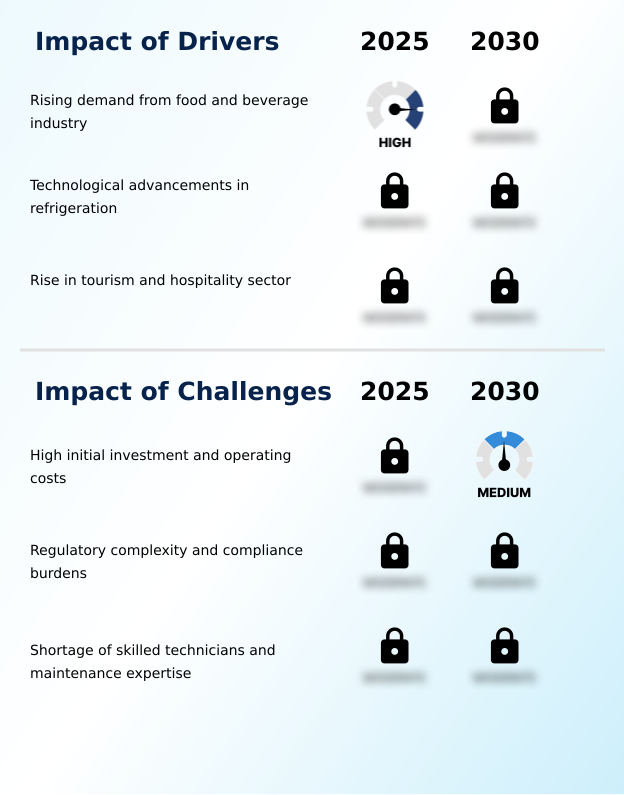
What are the key market drivers leading to the rise in the adoption of Refrigerated Cabinet Industry?
- The rising demand from the food and beverage industry is a primary driver for the global refrigerated cabinet market.
- The expansion of the refrigerated cabinet market is primarily driven by technological advancements and stringent regulatory frameworks. The mandatory hfc refrigerant phasedown is compelling investment in new cold storage technology, with a focus on refrigerant compliance management.
- Innovations such as advanced polyurethane foams enhance insulation, improving thermal efficiency by up to 10% in some models. Furthermore, the integration of remote temperature monitoring and iot-enabled temperature monitoring is becoming essential for ecodesign directive compliance.
- These smart systems provide real-time data, crucial for sectors like professional kitchen equipment and beverage cooling systems, where temperature integrity is non-negotiable.
- This convergence of regulatory push and technological pull is creating a more efficient, compliant, and intelligent generation of refrigeration solutions.
What are the market trends shaping the Refrigerated Cabinet Industry?
- The increasing adoption of natural refrigerants is a significant and transformative trend. This shift is reshaping the global refrigerated cabinet market towards more sustainable solutions.
- The global refrigerated cabinet market 2026-2030 is increasingly shaped by the push for sustainability and operational intelligence. The adoption of natural refrigerant systems is accelerating, with models using low-gwp refrigerants like r290 propane refrigerant and r600a isobutane refrigerant becoming standard for smaller refrigerated merchandisers. This shift toward sustainable cooling solutions can reduce a unit's carbon footprint by over 95%.
- Concurrently, the integration of variable speed compressors enhances refrigeration energy management, with some advanced units demonstrating a 15% reduction in electricity consumption compared to fixed-speed models. This focus on efficiency and eco-friendliness is redefining food preservation technology, aligning equipment performance with both regulatory pressures and corporate sustainability goals, making it a critical trend for all end-users.
What challenges does the Refrigerated Cabinet Industry face during its growth?
- High initial investment and operating costs pose a significant challenge to the growth of the global refrigerated cabinet market.
- Key challenges in the refrigerated cabinet market stem from high initial costs and the operational complexity of modern systems. The capital outlay for energy-efficient refrigerated display cases and specialized commercial kitchen refrigeration, such as upright reach-in refrigerators and undercounter refrigeration units, can be prohibitive for smaller businesses.
- Furthermore, the specialized nature of refrigerated logistics solutions and medical-grade refrigeration demands significant investment in training and infrastructure. Systems offering predictive maintenance alerts, while reducing long-term costs, add to the initial purchase price.
- For instance, deploying advanced refrigerated transport units for laboratory sample storage can increase fleet acquisition costs by up to 25%, creating a significant barrier to entry and slowing widespread adoption despite clear efficiency benefits.
Exclusive Technavio Analysis on Customer Landscape
The refrigerated cabinet market forecasting report includes the adoption lifecycle of the market, covering from the innovator’s stage to the laggard’s stage. It focuses on adoption rates in different regions based on penetration. Furthermore, the refrigerated cabinet market report also includes key purchase criteria and drivers of price sensitivity to help companies evaluate and develop their market growth analysis strategies.
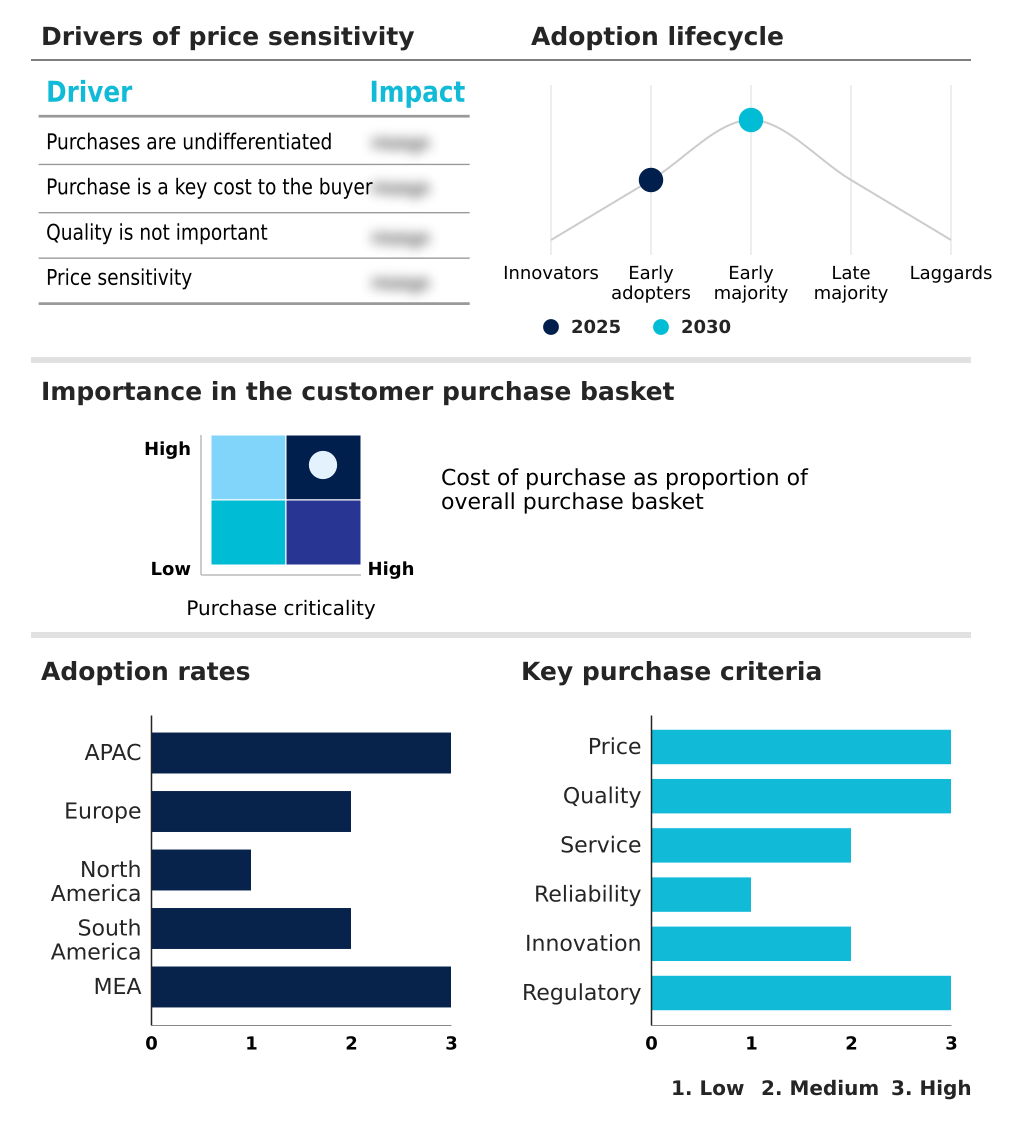
Customer Landscape of Refrigerated Cabinet Industry
Competitive Landscape
Companies are implementing various strategies, such as strategic alliances, refrigerated cabinet market forecast, partnerships, mergers and acquisitions, geographical expansion, and product/service launches, to enhance their presence in the industry.
AHT Cooling Systems GmbH - The vendor landscape features a mix of multinational corporations and specialized regional players, all competing on innovation, energy efficiency, and the adoption of sustainable technologies.
The industry research and growth report includes detailed analyses of the competitive landscape of the market and information about key companies, including:
- AHT Cooling Systems GmbH
- ARNEG SPA
- Ceabis GmbH
- Coldline S.r.l.
- Dalucon Refrigeration Products
- Epta Group
- Foster Refrigerator
- Frigoglass SAIC
- Hengel Industrie
- HOSHIZAKI Corp.
- IRINOX Spa
- ISA Spa
- Liebherr International AG
- Metalfrio Solutions S.A.
- Procool
- Suiling Group
- True Manufacturing Co. Inc.
- TURBO AIR Inc.
- Ugur Cooling Systems
- Vestfrost Solutions
Qualitative and quantitative analysis of companies has been conducted to help clients understand the wider business environment as well as the strengths and weaknesses of key industry players. Data is qualitatively analyzed to categorize companies as pure play, category-focused, industry-focused, and diversified; it is quantitatively analyzed to categorize companies as dominant, leading, strong, tentative, and weak.
Recent Development and News in Refrigerated cabinet market
- In August, 2024, Liebherr International AG announced the launch of a new line of medical-grade ultra-low temperature freezers, featuring enhanced vacuum insulation and advanced connectivity for precise sample tracking in life sciences applications.
- In November, 2024, Epta Group formed a strategic partnership with a leading European software company to integrate advanced AI-driven analytics into its commercial refrigeration systems, enabling predictive maintenance and energy optimization for retailers.
- In January, 2025, True Manufacturing Co. Inc. completed its acquisition of a specialized Italian manufacturer of wine cabinets, a move designed to strengthen its product portfolio and expand its presence in the high-end hospitality market.
- In April, 2025, HOSHIZAKI Corp. unveiled a new global initiative committing to a full transition to natural refrigerants across all its product lines by 2030, supported by a significant investment in R&D and technician training programs.
Dive into Technavio’s robust research methodology, blending expert interviews, extensive data synthesis, and validated models for unparalleled Refrigerated Cabinet Market insights. See full methodology.
| Market Scope | |
|---|---|
| Page number | 304 |
| Base year | 2025 |
| Historic period | 2020-2024 |
| Forecast period | 2026-2030 |
| Growth momentum & CAGR | Accelerate at a CAGR of 3.4% |
| Market growth 2026-2030 | USD 7165.2 million |
| Market structure | Fragmented |
| YoY growth 2025-2026(%) | 3.3% |
| Key countries | China, Japan, South Korea, India, Australia, Indonesia, Germany, UK, France, Italy, Spain, The Netherlands, US, Canada, Mexico, Brazil, Argentina, Colombia, Saudi Arabia, South Africa, UAE, Egypt and Turkey |
| Competitive landscape | Leading Companies, Market Positioning of Companies, Competitive Strategies, and Industry Risks |
Research Analyst Overview
- The refrigerated cabinet market is evolving beyond simple preservation, becoming a focal point of operational intelligence and sustainability. A key trend is the integration of iot-enabled temperature monitoring and advanced analytics, which allows for remote diagnostics and predictive maintenance alerts, significantly reducing product spoilage.
- Boardroom decisions are now heavily influenced by the hfc refrigerant phasedown, compelling investment in natural refrigerant systems using r290 propane refrigerant or r600a isobutane refrigerant. Technologies like variable speed compressors and vacuum insulation panels are critical for achieving ecodesign directive compliance and lowering lifecycle costs. Innovations in advanced polyurethane foams and smart defrost systems are further enhancing thermal efficiency.
- For food service, the deployment of blast chillers, shock freezers, and modular cold rooms is essential for safety and workflow optimization. The market also sees sustained demand for specialized commercial kitchen refrigeration, including upright reach-in refrigerators and undercounter refrigeration units.
- Adoption of these advanced systems has enabled some operators to achieve a 20% reduction in energy waste, demonstrating a clear link between technological investment and bottom-line performance.
What are the Key Data Covered in this Refrigerated Cabinet Market Research and Growth Report?
-
What is the expected growth of the Refrigerated Cabinet Market between 2026 and 2030?
-
USD 7.17 billion, at a CAGR of 3.4%
-
-
What segmentation does the market report cover?
-
The report is segmented by Product (Storage cabinet, Wine cabinet, and Others), End-user (Retail and e-commerce, Food and beverage industry, Pharmaceutical and life sciences sector, and Others), Technology (Conventional refrigeration systems, Natural refrigerant-based systems, Smart and connected refrigeration systems, and Hybrid and modular systems) and Geography (APAC, Europe, North America, South America, Middle East and Africa)
-
-
Which regions are analyzed in the report?
-
APAC, Europe, North America, South America and Middle East and Africa
-
-
What are the key growth drivers and market challenges?
-
Rising demand from food and beverage industry, High initial investment and operating costs
-
-
Who are the major players in the Refrigerated Cabinet Market?
-
AHT Cooling Systems GmbH, ARNEG SPA, Ceabis GmbH, Coldline S.r.l., Dalucon Refrigeration Products, Epta Group, Foster Refrigerator, Frigoglass SAIC, Hengel Industrie, HOSHIZAKI Corp., IRINOX Spa, ISA Spa, Liebherr International AG, Metalfrio Solutions S.A., Procool, Suiling Group, True Manufacturing Co. Inc., TURBO AIR Inc., Ugur Cooling Systems and Vestfrost Solutions
-
Market Research Insights
- The refrigerated cabinet market is defined by a dynamic interplay of technological innovation and evolving end-user demands. The integration of smart refrigeration monitoring is becoming standard, with some systems demonstrating a 25% reduction in equipment downtime through early fault detection. This shift supports the broader expansion of cold chain infrastructure needed for food service refrigeration equipment and retail displays.
- Demand for specialized professional kitchen equipment and beverage cooling systems continues to grow, driving innovation in both performance and design. Moreover, the adoption of sustainable cooling solutions is accelerating, as new models show energy consumption reductions of up to 20% compared to older units.
- This efficiency is critical for businesses looking to lower operational costs and meet stricter environmental regulations, reinforcing the market's move toward more intelligent and eco-conscious commercial refrigeration solutions.
We can help! Our analysts can customize this refrigerated cabinet market research report to meet your requirements.
 RIA -
RIA -