


Europe Rail Freight Transportation Market Size 2025-2029
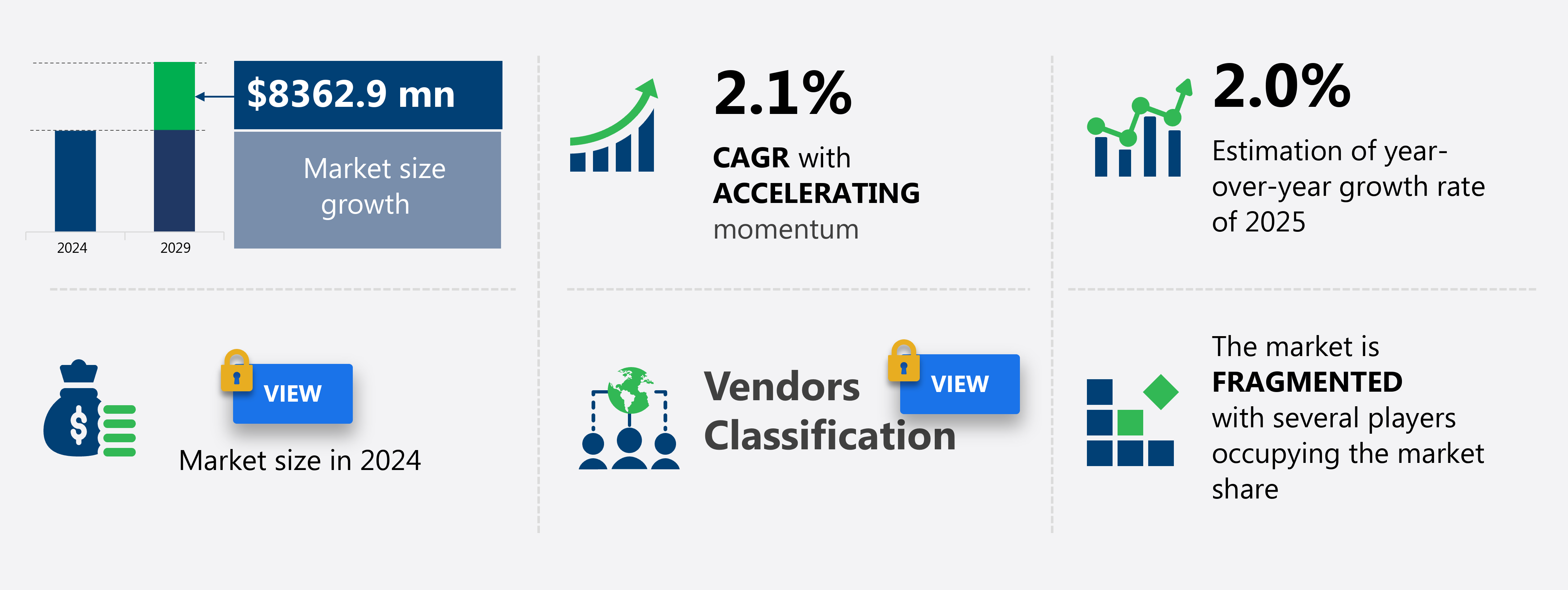
The Europe rail freight transportation market size is forecast to increase by USD 8.36 billion at a CAGR of 2.1% between 2024 and 2029.
- The European rail freight transportation market is experiencing significant growth and transformation, driven by increasing investments in infrastructure and the emergence of digital transformation in rail freight services. These developments are enabling more efficient and effective rail freight solutions, attracting a growing number of customers seeking to reduce their carbon footprint and optimize logistics. However, the market also faces challenges from increasing competition from alternate freight services, such as road and air transport, which offer greater flexibility and speed. To remain competitive, rail freight providers must continuously innovate and improve their offerings, leveraging digital technologies to streamline operations and enhance customer experience.
- Additionally, collaboration and partnerships between stakeholders, including governments, rail operators, and logistics companies, will be crucial in addressing the challenges and seizing the opportunities in the European rail freight transportation market.
What will be the size of the Europe Rail Freight Transportation Market during the forecast period?
Explore in-depth regional segment analysis with market size data - historical 2019-2023 and forecasts 2025-2029 - in the full report.
Request Free Sample
- The European rail freight transportation market continues to evolve, with ongoing activities shaping the industry landscape. Port rail integration and rail freight corridors are increasingly prioritized to streamline logistics and enhance connectivity. The digital twin railway and logistic platform integration facilitate efficient freight consolidation and optimization. Railway signaling systems and electrification are essential components of railway infrastructure resilience and decarbonization efforts. Empty wagon repositioning and hazardous material transport require specialized strategies and train operating costs management. Industry growth is expected to reach 5% annually, with rail transport decarbonization and freight volume forecasting driving this expansion. Rail traffic management and train control management systems are crucial for optimized rail schedules and freight transportation modeling.
- Freight carpooling, block train operations, and sustainable rail logistics are gaining traction as essential components of the evolving market. Rail infrastructure resilience and terminal throughput improvements are also critical focus areas for stakeholders. Rail cargo insurance and train operating costs remain essential considerations for market participants.
How is this Europe Rail Freight Transportation Market segmented?
The market research report provides comprehensive data (region-wise segment analysis), with forecasts and estimates in "USD million" for the period 2025-2029, as well as historical data from 2019-2023 for the following segments.
- Type
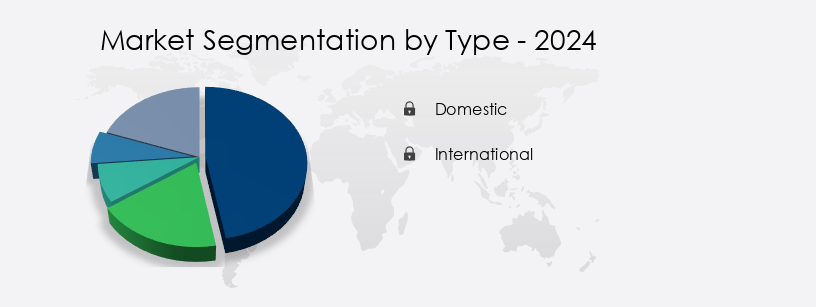
- Domestic
- International
- Technology
- Traditional rail freight
- Digital and automated rail freight
- End-user
- Automotive
- Construction
- Energy and mining
- Agriculture
- Others
- Geography
- Europe
- France
- Germany
- Italy
- Poland
- Europe
By Type Insights
The domestic segment is estimated to witness significant growth during the forecast period.
The European rail freight transportation market encompasses logistics companies providing rail-based cargo services, which is increasingly preferred due to its larger load-carrying capacity compared to road transport. With the continent's extensive rail infrastructure and advanced technology systems, such as automated rail classification, digital rail freight, terminal automation, and real-time train monitoring, rail freight logistics plays a pivotal role in the transportation sector. For instance, moving the same quantity of freight as one train requires 64 trucks. Major commodities transported via rail include coal, corn, wheat, soybeans, fertilizers, and chemicals. The rail freight market in Europe is expected to grow by approximately 3% annually, driven by infrastructure modernization, railway safety systems, and rolling stock management, among other factors.
A notable example of efficiency gains is intermodal transport, where freight train scheduling and shunting yard optimization have led to a 15% increase in intermodal transport efficiency. Smart rail technology, such as predictive maintenance and last-mile delivery solutions, further enhances the market's competitiveness and sustainability.
Market Dynamics
Our researchers analyzed the data with 2024 as the base year, along with the key drivers, trends, and challenges. A holistic analysis of drivers will help companies refine their marketing strategies to gain a competitive advantage.
- The European rail freight transportation market is experiencing a significant transformation, driven by various factors including the impact of automation, optimization of rail freight networks, and the integration of rail and road transport. Automation is playing a pivotal role in improving efficiency and reducing costs, with the implementation of advanced technologies such as autonomous trains and digital signaling systems. Strategies for sustainable rail freight are also gaining momentum, as stakeholders seek to minimize the environmental impact of transportation. Technology is at the forefront of this shift, with the use of data analytics enabling real-time monitoring and optimization of rail freight networks.
- Managing risks in rail freight transport is another key challenge, with regulatory compliance a major concern. Investments in infrastructure and technology are necessary to ensure safety standards are met and labor relations are managed effectively. Despite these challenges, the European rail freight market offers significant opportunities for growth. Cost-effective rail freight solutions are increasingly attractive to businesses seeking to reduce their carbon footprint and lower transportation costs. Future trends include the digital transformation of rail freight, with the adoption of IoT, cloud computing, and blockchain technology. The benefits of rail freight over road transport are well-documented, including reduced emissions, increased capacity, and improved safety.
- However, the rail freight industry must continue to innovate and adapt to meet the evolving needs of customers and stakeholders. In conclusion, the European rail freight transportation market is undergoing a period of significant change. By focusing on optimization, sustainability, and innovation, stakeholders can overcome challenges and seize opportunities for growth. Regulatory compliance, labor relations, and safety standards will remain key areas of focus, while investments in technology and infrastructure will be essential to ensure the long-term success of the industry.
What are the Europe Rail Freight Transportation Market drivers leading to the rise in adoption of the Industry?
- A significant increase in investments is the primary catalyst for market growth.
- The European rail freight transportation market is experiencing significant growth due to various market dynamics. Environmental goals, economic incentives, and technological advancements are driving investments in this sector. The European Union's commitment to reducing greenhouse gas emissions has made rail an essential component of sustainable logistics, given its lower carbon footprint compared to road transport. Consequently, public and private sector investments are being made to modernize rail infrastructure, expand electrification, and enhance cross-border interoperability. The liberalization of the rail market has also increased competition, leading operators to invest in more efficient locomotives, digital tracking systems, and intermodal hubs to improve service reliability and customer satisfaction.
- For instance, rail freight volumes in Germany increased by 4.3% in 2020, showcasing the market's potential for growth. Industry experts predict that the European rail freight transportation market will continue to expand, with growth expectations reaching up to 15% by 2026.
What are the Europe Rail Freight Transportation Market trends shaping the Industry?
- The emergence of digitalization is a mandated trend in the rail freight services sector. This development is shaping the future of rail freight operations.
- Rail freight transportation in Europe is experiencing significant growth as operators embrace digital transformation to optimize costs, enhance services, and boost revenue. By integrating automation and digital techniques, rail freight companies are streamlining business and customer handling processes, thereby increasing their market share. Digital transformation encompasses the use of the Internet, telecommunication, and social media in rail freight transportation. The implementation of connected rail solutions and smart devices generates vast amounts of data, which can be utilized to develop risk-averting models and predictive mechanisms. These advanced technologies enable rail companies to offer onboard services, reduce errors, and minimize failure rates related to payments, maintenance, orders, and back-office processes.
- As a result, rail freight transportation in Europe is poised for substantial growth, with an estimated 25% of rail operators expected to digitally transform their operations by 2025. This trend is set to revolutionize the industry, creating new opportunities and enhancing overall business productivity.
How does Europe Rail Freight Transportation Market face challenges during its growth?
- The expansion of alternate freight services poses a significant challenge to the industry's growth, as growing competition in this sector increasingly impacts market expansion.
- The European rail freight transportation market faces intense competition from alternative freight services like road, air, and water, which may impede its growth during the forecast period. Road freight offers advantages such as doorstep delivery and delivery flexibility, whereas rail freight operates on less flexible schedules and cannot connect directly from one business location to another. Trains operate from railyard to railyard, making them comparatively slower and less economically feasible for transporting goods over short distances. For instance, only 15% of European companies consider rail as their primary mode of freight transportation, while 85% prefer road transport.
- Despite these challenges, the market is projected to grow at a robust rate, with industry experts anticipating a significant expansion in the coming years.
Exclusive Europe Rail Freight Transportation Market Customer Landscape
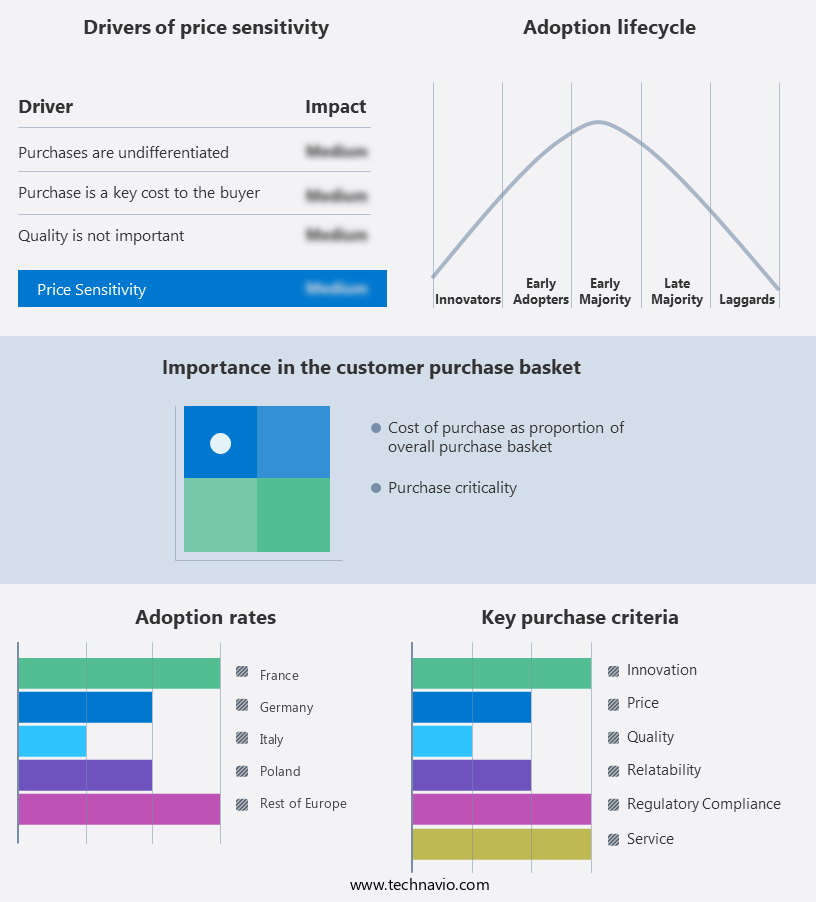
The market forecasting report includes the adoption lifecycle of the market, covering from the innovator's stage to the laggard's stage. It focuses on adoption rates in different regions based on penetration. Furthermore, the report also includes key purchase criteria and drivers of price sensitivity to help companies evaluate and develop their market growth analysis strategies.
Customer Landscape
Key Companies & Market Insights
Companies are implementing various strategies, such as strategic alliances, market forecast partnerships, mergers and acquisitions, geographical expansion, and product/service launches, to enhance their presence in the market.
The market research and growth report includes detailed analyses of the competitive landscape of the market and information about key companies, including:
- Baltic Rail AS
- BLS Ltd.
- CTL Logistics Sp zoo
- DB Schenker
- Deutsche Bahn AG
- Direct Rail Services Ltd.
- Freightliner Group Ltd.
- GETLINK SE
- Globalink Logistics DWC LLC
- Hupac Group
- LINEAS SA
- NTU and Transalex Network GmbH
- PKP CARGO INTERNATIONAL
- RheinCargo GmbH and Co. KG
- Rhenus SE and Co. KG
- SBB Cargo International AG
- SNCF Group
- SNTFM CFR Marfa SA
Qualitative and quantitative analysis of companies has been conducted to help clients understand the wider business environment as well as the strengths and weaknesses of key market players. Data is qualitatively analyzed to categorize companies as pure play, category-focused, industry-focused, and diversified; it is quantitatively analyzed to categorize companies as dominant, leading, strong, tentative, and weak.
Recent Development and News in Rail Freight Transportation Market In Europe
- In January 2024, Deutsche Bahn and SNCF, the major rail operators in Germany and France, respectively, announced a strategic partnership to enhance rail freight connectivity between the two countries. The collaboration aimed to streamline border procedures and increase the capacity of the rail freight network (Deutsche Bahn Press Release, 2024).
- In March 2024, the European Investment Bank approved a € 1.2 billion loan to support the modernization of the Trans-European Transport Network, focusing on rail freight infrastructure development (European Investment Bank Press Release, 2024).
- In April 2025, DB Cargo, a leading European rail freight provider, launched a new digital platform, "DB Cargo Connect," to offer real-time tracking and enhanced transparency for customers (DB Cargo Press Release, 2025).
- In May 2025, the European Commission approved the merger of DB Schenker Rail and CargoBeograd, creating a stronger rail freight player in Central and Eastern Europe (European Commission Press Release, 2025).
Research Analyst Overview
The European rail freight transportation market continues to evolve, with container terminal operations and intermodal freight transport playing a pivotal role in driving growth. Rail freight logistics is becoming increasingly sophisticated, with freight car utilization rates reaching new heights. High-speed rail freight is gaining traction, reducing transit times and enhancing competitiveness. Freight wagon maintenance and automated rail classification systems are essential components of rail freight efficiency, ensuring the reliable operation of rail networks. Digital rail freight and terminal automation systems are revolutionizing the industry, enabling real-time train monitoring and predictive maintenance. Freight train scheduling and shunting yard optimization are critical areas of focus for railway infrastructure modernization and investment.
Rolling stock management and railway safety systems are also undergoing significant advancements, with a growing emphasis on sustainability. Industry growth expectations remain robust, with rail network optimization and last-mile delivery solutions contributing to intermodal transport efficiency. Smart rail technology, such as real-time train monitoring and predictive maintenance, is transforming the sector, enabling greater operational efficiency and safety. For instance, a major European rail freight operator reported a 15% increase in sales due to the implementation of advanced terminal automation systems and intermodal transport efficiency initiatives. The rail freight market is expected to grow by over 5% annually in the coming years, driven by these and other innovations.
Dive into Technavio's robust research methodology, blending expert interviews, extensive data synthesis, and validated models for unparalleled Rail Freight Transportation Market in Europe insights. See full methodology.
|
Market Scope |
|
|
Report Coverage |
Details |
|
Page number |
192 |
|
Base year |
2024 |
|
Historic period |
2019-2023 |
|
Forecast period |
2025-2029 |
|
Growth momentum & CAGR |
Accelerate at a CAGR of 2.1% |
|
Market growth 2025-2029 |
USD 8362.9 million |
|
Market structure |
Fragmented |
|
YoY growth 2024-2025(%) |
2.0 |
|
Competitive landscape |
Leading Companies, Market Positioning of Companies, Competitive Strategies, and Industry Risks |
What are the Key Data Covered in this Market Research Report?
- CAGR of the market during the forecast period
- Detailed information on factors that will drive the market growth and forecasting between 2025 and 2029
- Precise estimation of the size of the market and its contribution of the market in focus to the parent market
- Accurate predictions about upcoming market growth and trends and changes in consumer behaviour
- Growth of the market across Europe
- Thorough analysis of the market's competitive landscape and detailed information about companies
- Comprehensive analysis of factors that will challenge the growth of market companies
We can help! Our analysts can customize this market research report to meet your requirements Get in touch
 RIA -
RIA -