


Potassium Chloride Market Size 2026-2030
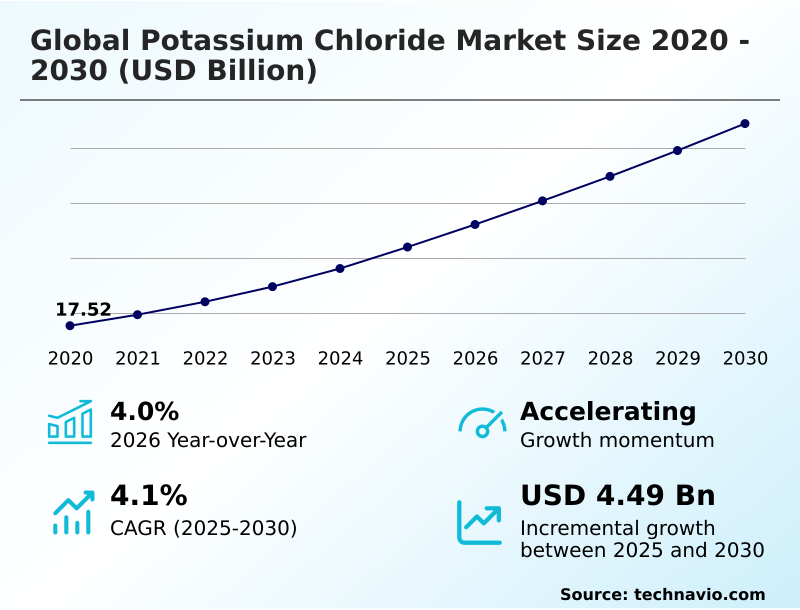
The potassium chloride market size is valued to increase by USD 4.49 billion, at a CAGR of 4.1% from 2025 to 2030. Surging global demand for high-yield agricultural inputs will drive the potassium chloride market.
Major Market Trends & Insights
- APAC dominated the market and accounted for a 36.9% growth during the forecast period.
- By Application - Fertilizer segment was valued at USD 14.71 billion in 2024
- By Grade Type - Technical grade segment accounted for the largest market revenue share in 2024
Market Size & Forecast
- Market Opportunities: USD 7.35 billion
- Market Future Opportunities: USD 4.49 billion
- CAGR from 2025 to 2030 : 4.1%
Market Summary
- The potassium chloride market is fundamentally driven by the agricultural sector's need to ensure food security for a growing global population. As muriate of potash, it is the primary source of potassium in NPK fertilizer blends, essential for soil nutrient replenishment and maximizing crop yields.
- Beyond agriculture, industrial-grade potassium chloride is critical in drilling mud formulations as a clay stabilizer and as a feedstock for potassium hydroxide production. The market is evolving with the adoption of precision agriculture, where soil testing analytics inform variable rate applications, improving nutrient use efficiency and preventing environmental runoff.
- A significant trend is the move toward sustainable mining practices, including solution mining and water recycling systems, driven by ESG criteria compliance. For instance, a fertilizer manufacturer could leverage different grades, from standard potash to soluble potash for fertigation systems, to create custom blends.
- This strategy allows them to manage agricultural input costs amid commodity price volatility while meeting diverse agronomic needs, from large-scale row crops to high-value horticulture requiring greenhouse-grade fertilizer. However, the market grapples with challenges like logistical bottlenecks and the impact of trade sanctions, which underscore the need for enhanced supply chain resiliency and domestic production investment.
What will be the Size of the Potassium Chloride Market during the forecast period?
Get Key Insights on Market Forecast (PDF) Request Free Sample
How is the Potassium Chloride Market Segmented?
The potassium chloride industry research report provides comprehensive data (region-wise segment analysis), with forecasts and estimates in "USD million" for the period 2026-2030, as well as historical data from 2020-2024 for the following segments.
- Application
- Fertilizer
- Industrial
- Pharmaceutical
- Others
- Grade type
- Technical grade
- Pharmaceutical grade
- Food grade
- Type
- Less than 99 percent purity
- Greater than 99 percent purity
- Geography
- APAC
- China
- India
- Indonesia
- North America
- US
- Canada
- Mexico
- Europe
- France
- Germany
- Italy
- South America
- Brazil
- Argentina
- Colombia
- Middle East and Africa
- Saudi Arabia
- UAE
- South Africa
- Rest of World (ROW)
- APAC
By Application Insights
The fertilizer segment is estimated to witness significant growth during the forecast period.
The fertilizer segment is central to the potassium chloride market, where the chemical, known as muriate of potash (MOP), is a primary component in NPK fertilizer blends.
Its application is vital for soil nutrient replenishment and enhancing agricultural productivity to meet global food demands. The use of granular potash and standard potash helps improve crop resilience against environmental stressors.
In response to rising demand from key agricultural regions, some producers have expanded granular potash capacity by 15% to better serve these markets. The continuous need for soil health improvement and crop yield maximization ensures sustained demand.
This is supported by agronomic best practices and balanced fertilization programs, which are critical for sustainable agriculture and mitigating agricultural input costs.
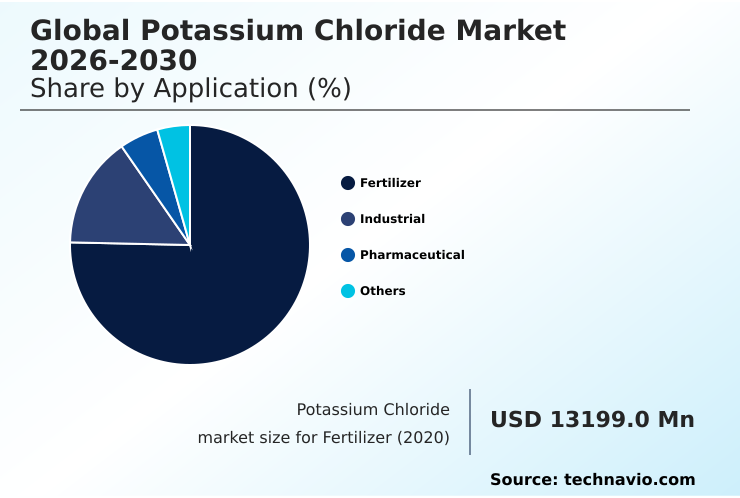
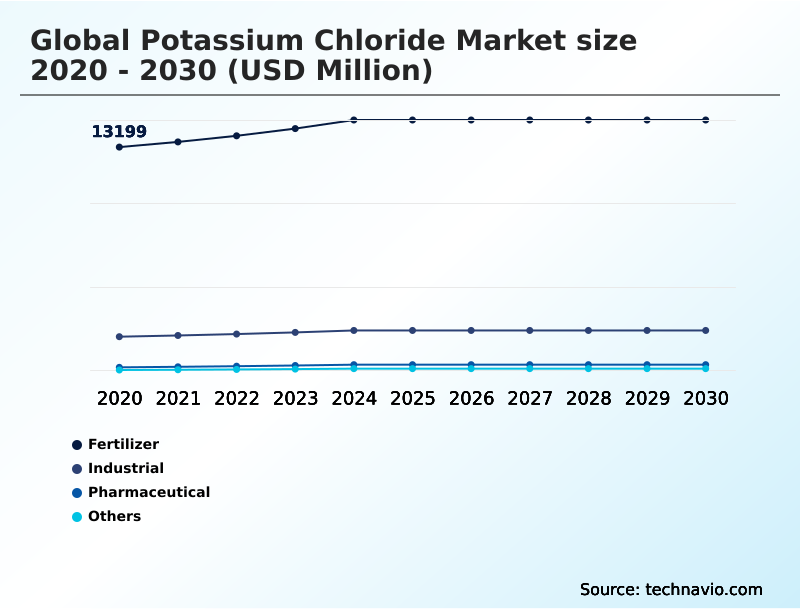
The Fertilizer segment was valued at USD 14.71 billion in 2024 and showed a gradual increase during the forecast period.
Regional Analysis
APAC is estimated to contribute 36.9% to the growth of the global market during the forecast period.Technavio’s analysts have elaborately explained the regional trends and drivers that shape the market during the forecast period.
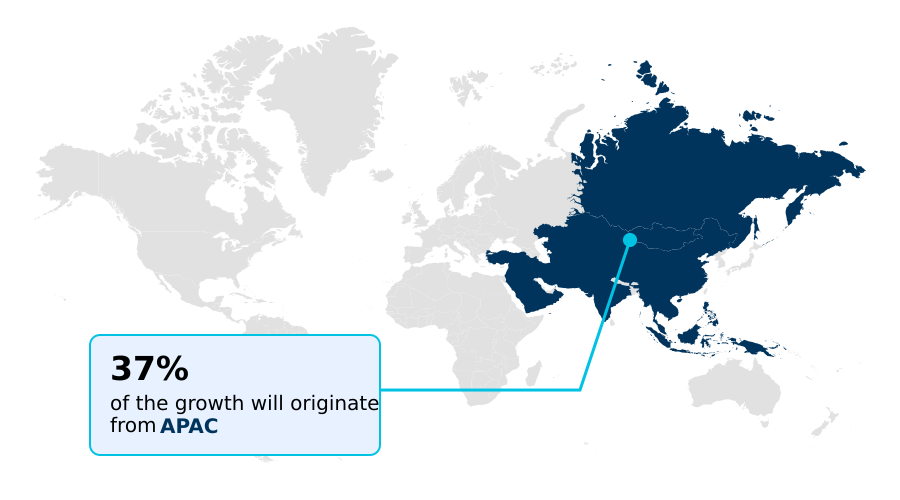
See How Potassium Chloride Market Demand is Rising in APAC Request Free Sample
The geographic landscape is dominated by key producing and consuming regions that dictate global trade flows.
APAC, accounting for over 36% of the market opportunity, is driven by the immense agricultural needs of China and India, where government-led food security initiatives and agricultural subsidy programs are common.
In North America, the adoption of advanced technologies has improved operational metrics; for example, precision agriculture has increased nutrient use efficiency by over 15% in the US Corn Belt.
South America, particularly Brazil, is a major import market where demand is tied to the expansion of soybean and corn cultivation.
Producers in the Middle East leverage solar evaporation for low-cost de-icing agent production, while Canadian miners utilize conventional shaft mining. This global interplay highlights the importance of resource sovereignty and the impact of currency exchange rate impact on market stability.
Market Dynamics
Our researchers analyzed the data with 2025 as the base year, along with the key drivers, trends, and challenges. A holistic analysis of drivers will help companies refine their marketing strategies to gain a competitive advantage.
- The global potassium chloride market demonstrates significant versatility across multiple sectors. In agriculture, the use of potassium chloride for palm oil cultivation and its impact of MOP on soybean yield are critical for global food supply, while improving crop drought resistance with potash is a key focus in climate-variable regions.
- The cost-benefit of granular vs standard potash is a constant calculation for blenders creating specific role of potassium chloride in NPK blends and potassium chloride in animal feed formulations. In the industrial space, its function as a potassium chloride as a clay stabilizer in drilling is indispensable for the energy sector.
- Meanwhile, technical grade potassium chloride for KOH production fuels further chemical manufacturing. The market also addresses specialized needs, from high-purity potassium chloride for pharmaceuticals used in managing hypokalemia with potassium chloride to the application of sodium reduction using food-grade potassium chloride in consumer goods.
- Environmental and operational considerations are also shaping the market, with a focus on mitigating the environmental impact of potash salt tailings and advancements in solution mining techniques for potash extraction, which can reduce operational costs by up to 25% compared to traditional methods.
- This efficiency impacts downstream applications, from using potassium chloride for road de-icing to its role in potassium chloride in water softener regeneration and in using potassium chloride in aluminum recycling.
- The complex potassium chloride supply chain from Canada, Brazilian dependency on potash imports, and the Indian nutrient based subsidy for potash, alongside the European farm to fork strategy for fertilizers, all highlight the market's intricate global dynamics.
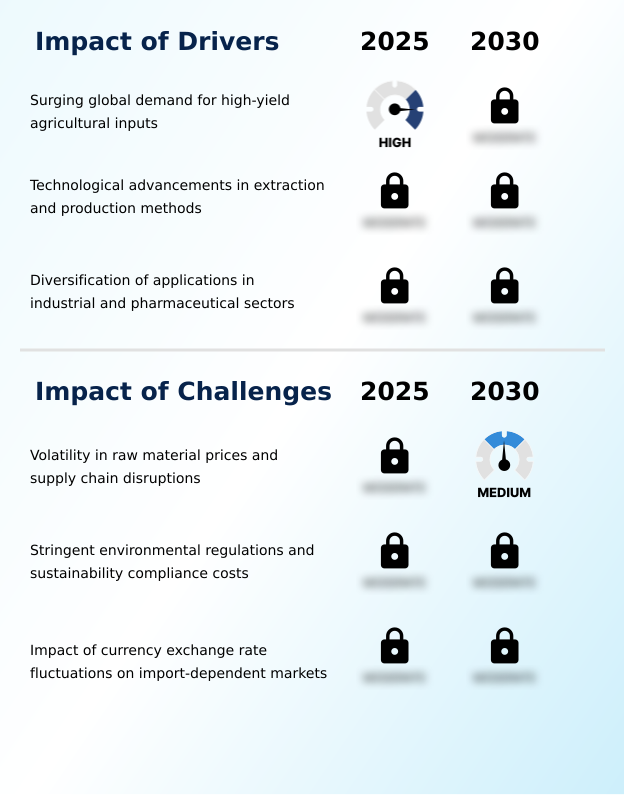
What are the key market drivers leading to the rise in the adoption of Potassium Chloride Industry?
- The surging global demand for high-yield agricultural inputs is a key driver propelling market growth.
- The primary market driver remains the relentless need for crop yield maximization to support global food security initiatives. The application of potassium chloride has been shown to boost agricultural productivity by over 10% in nutrient-deficient soils.
- Technological advancements are a powerful secondary driver, with the adoption of solution mining techniques improving resource recovery efficiency by 15% and lowering operational expenditures.
- On the farm, precision agriculture technology, informed by soil testing analytics, allows for variable rate application, optimizing soil nutrient replenishment.
- This focus on efficiency and productivity, from mine to field, underpins the market's structural demand and ongoing innovation in the context of ESG criteria compliance.
What are the market trends shaping the Potassium Chloride Industry?
- The intensification of global food security initiatives and the adoption of precision agriculture represent a significant upcoming market trend.
- A significant trend transforming the market is the strategic realignment of global supply chains to enhance supply chain resiliency. In response to geopolitical risk mitigation, importers are diversifying sources, a shift that has improved supply reliability by nearly 30% for some nations.
- This is complemented by an intensified focus on sustainable mining practices and the pursuit of green potash production, with leading producers achieving a 15% reduction in their carbon footprint through investments in water recycling systems and renewable energy. The industry is also seeing wider adoption of circular economy principles in mining waste management.
- Concurrently, the farm-to-fork strategy is driving demand for enhanced nutrient use efficiency, making this a pivotal time for the sector.
What challenges does the Potassium Chloride Industry face during its growth?
- Volatility in raw material prices and ongoing supply chain disruptions present a key challenge affecting the industry's growth.
- The market faces significant headwinds from commodity price volatility, where agricultural input costs can fluctuate by as much as 40% in a single season, directly impacting farm-gate price and profitability. This volatility is exacerbated by logistical bottleneck analysis, with disruptions capable of delaying shipments and increasing freight expenses.
- Furthermore, stringent regulations surrounding mining waste management and carbon emissions are increasing operational complexity, with compliance measures adding up to 20% to capital expenditure for new projects. Currency exchange rate impact remains a persistent challenge for import-dependent nations, where a strengthening USD can severely diminish purchasing power and affect agricultural subsidy programs, hindering access to essential nutrients.
Exclusive Technavio Analysis on Customer Landscape
The potassium chloride market forecasting report includes the adoption lifecycle of the market, covering from the innovator’s stage to the laggard’s stage. It focuses on adoption rates in different regions based on penetration. Furthermore, the potassium chloride market report also includes key purchase criteria and drivers of price sensitivity to help companies evaluate and develop their market growth analysis strategies.
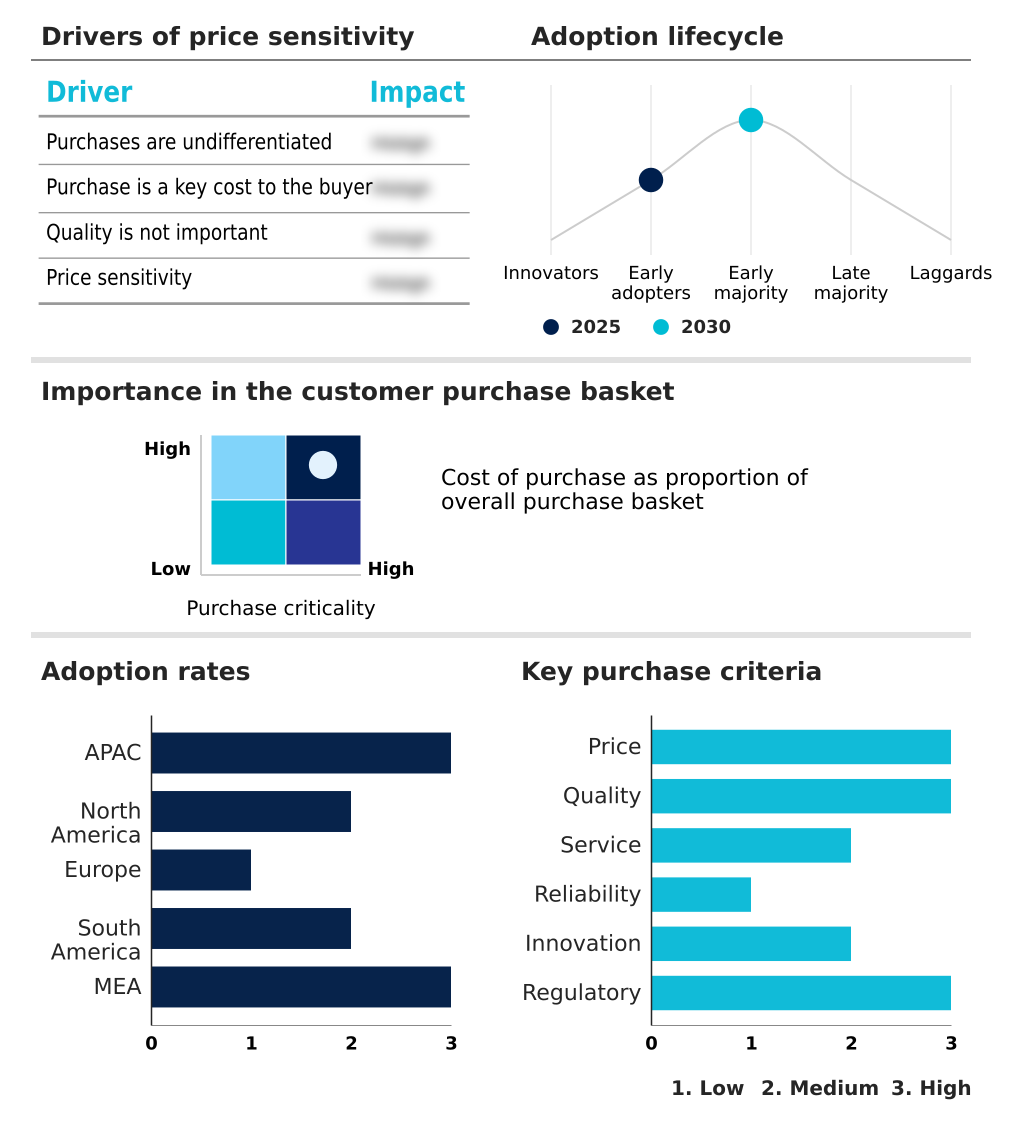
Customer Landscape of Potassium Chloride Industry
Competitive Landscape
Companies are implementing various strategies, such as strategic alliances, potassium chloride market forecast, partnerships, mergers and acquisitions, geographical expansion, and product/service launches, to enhance their presence in the industry.
Annexe Chem - Provides standard, fine, granular, and industrial grade potassium chloride, sourcing the mineral from Dead Sea brine for diverse market applications.
The industry research and growth report includes detailed analyses of the competitive landscape of the market and information about key companies, including:
- Annexe Chem
- Arab Potash Co. Plc
- Avantor Inc.
- Cargill Inc.
- Compass Minerals International Inc.
- Ennore India Chemical Int.
- EuroChem Group AG
- Haifa Negev technologies Ltd.
- Intrepid Potash Inc.
- Israel Chemicals Ltd.
- JSC Belarusian Potash Co.
- KS Aktiengesellschaft
- Nutrien Ltd.
- Qinghai Salt Lake Industry Co.,Ltd
- Sinofert Holdings Ltd.
- Spectrum Chemical Mfg. Corp.
- SQM S.A.
- The Mosaic Co.
- Upsher Smith Laboratories LLC
- Yara International ASA
Qualitative and quantitative analysis of companies has been conducted to help clients understand the wider business environment as well as the strengths and weaknesses of key industry players. Data is qualitatively analyzed to categorize companies as pure play, category-focused, industry-focused, and diversified; it is quantitatively analyzed to categorize companies as dominant, leading, strong, tentative, and weak.
Recent Development and News in Potassium chloride market
- In March 2025, Nutrien Ltd. announced the deployment of a proprietary autonomous mining system across its Saskatchewan operations, designed to increase ore recovery rates by fifteen percent.
- In February 2025, BHP Group announced the early completion of critical infrastructure at the Jansen Stage 2 project in Canada, confirming plans to accelerate production capacity by an additional two million tonnes annually to meet supply gaps.
- In February 2025, the European Commission introduced the updated Directive on Mining Waste Management, which enforces stricter limits on saline discharge into water bodies and mandates advanced tailings storage technologies.
- In March 2025, the government of Brazil announced a new strategic trade agreement framework with Canadian suppliers to stabilize potassium chloride import tariffs and secure long-term supply amid global volatility.
Dive into Technavio’s robust research methodology, blending expert interviews, extensive data synthesis, and validated models for unparalleled Potassium Chloride Market insights. See full methodology.
| Market Scope | |
|---|---|
| Page number | 296 |
| Base year | 2025 |
| Historic period | 2020-2024 |
| Forecast period | 2026-2030 |
| Growth momentum & CAGR | Accelerate at a CAGR of 4.1% |
| Market growth 2026-2030 | USD 4490.7 million |
| Market structure | Fragmented |
| YoY growth 2025-2026(%) | 4.0% |
| Key countries | China, India, Indonesia, Australia, Japan, South Korea, US, Canada, Mexico, France, Germany, Italy, Spain, UK, The Netherlands, Brazil, Argentina, Colombia, Saudi Arabia, UAE, South Africa, Israel and Turkey |
| Competitive landscape | Leading Companies, Market Positioning of Companies, Competitive Strategies, and Industry Risks |
Research Analyst Overview
- The potassium chloride market is evolving beyond a volume-driven commodity business into a more technically nuanced industry. While muriate of potash remains the cornerstone for broad-acre agriculture, significant value is now being created in specialized grades and applications. The demand for pharmaceutical-grade potassium chloride for hypokalemia treatment and as a sodium-free substitute in foods is growing steadily.
- In industrial settings, its roles in drilling mud formulation, potassium hydroxide production, and as a de-icing agent are well-established. A key shift is the focus on production efficiency and sustainability, with technologies like solution mining enabling some operators to increase ore recovery rates by up to 15%.
- This focus on efficiency extends to the field with products like slow-release fertilizer and controlled-release fertilizer, which optimize nutrient delivery. The market now encompasses a wide spectrum, from standard potash and agricultural lime to highly refined soluble potash for fertigation and hydroponic systems, reflecting a strategic move toward addressing specific end-user requirements with precision.
What are the Key Data Covered in this Potassium Chloride Market Research and Growth Report?
-
What is the expected growth of the Potassium Chloride Market between 2026 and 2030?
-
USD 4.49 billion, at a CAGR of 4.1%
-
-
What segmentation does the market report cover?
-
The report is segmented by Application (Fertilizer, Industrial, Pharmaceutical, and Others), Grade Type (Technical grade, Pharmaceutical grade, and Food grade), Type (Less than 99 percent purity, and Greater than 99 percent purity) and Geography (APAC, North America, Europe, South America, Middle East and Africa)
-
-
Which regions are analyzed in the report?
-
APAC, North America, Europe, South America and Middle East and Africa
-
-
What are the key growth drivers and market challenges?
-
Surging global demand for high-yield agricultural inputs, Volatility in raw material prices and supply chain disruptions
-
-
Who are the major players in the Potassium Chloride Market?
-
Annexe Chem, Arab Potash Co. Plc, Avantor Inc., Cargill Inc., Compass Minerals International Inc., Ennore India Chemical Int., EuroChem Group AG, Haifa Negev technologies Ltd., Intrepid Potash Inc., Israel Chemicals Ltd., JSC Belarusian Potash Co., KS Aktiengesellschaft, Nutrien Ltd., Qinghai Salt Lake Industry Co.,Ltd, Sinofert Holdings Ltd., Spectrum Chemical Mfg. Corp., SQM S.A., The Mosaic Co., Upsher Smith Laboratories LLC and Yara International ASA
-
Market Research Insights
- Market dynamics are shaped by a complex interplay of agricultural demand, geopolitical risk mitigation, and technological adoption. The push for supply chain resiliency has become paramount, with investments in domestic production infrastructure showing an ability to reduce dependency on foreign imports by up to 25% in certain scenarios.
- Concurrently, the implementation of precision agriculture technology allows for variable rate application of fertilizers, improving nutrient use efficiency by over 20% and minimizing environmental runoff. These advancements in soil nutrient management address farm-gate price pressures.
- Efforts to overcome logistical bottleneck analysis have led to infrastructure upgrades capable of decreasing transport-related delays by 15%, enhancing the reliability of supply chains from producers to end-users and supporting food security initiatives globally.
We can help! Our analysts can customize this potassium chloride market research report to meet your requirements.
 RIA -
RIA -