


Polybutadiene Rubber Market Size 2026-2030
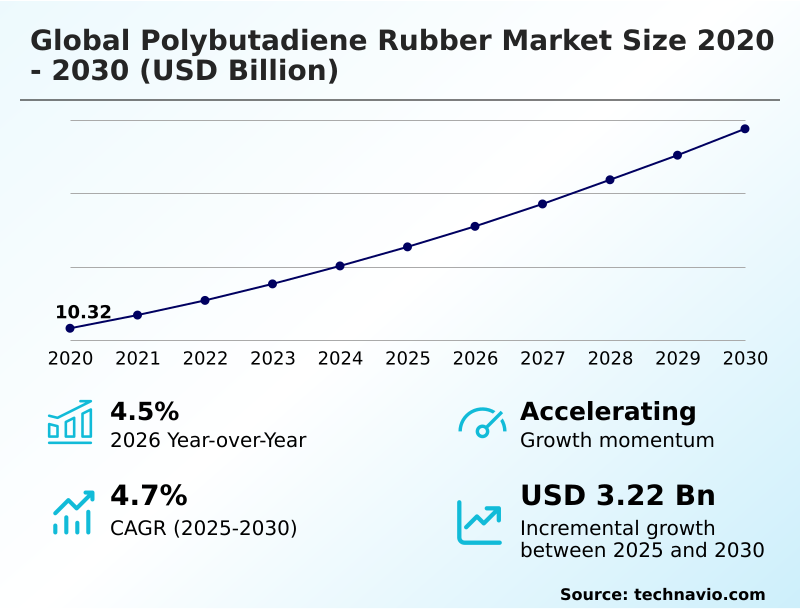
The polybutadiene rubber market size is valued to increase by USD 3.22 billion, at a CAGR of 4.7% from 2025 to 2030. Increasing demand from automotive industry will drive the polybutadiene rubber market.
Major Market Trends & Insights
- APAC dominated the market and accounted for a 58.5% growth during the forecast period.
- By Application - Tires segment was valued at USD 8.67 billion in 2024
- By End-user - Automotive segment accounted for the largest market revenue share in 2024
Market Size & Forecast
- Market Opportunities: USD 5.44 billion
- Market Future Opportunities: USD 3.22 billion
- CAGR from 2025 to 2030 : 4.7%
Market Summary
- The polybutadiene rubber market is characterized by its integral role in high-performance applications, primarily driven by the automotive sector's demand for durable and efficient tires. Market dynamics are shaped by a continuous push for innovation, such as the development of functionalized polybutadiene rubber and the adoption of green tire technology to meet stringent environmental standards.
- Another significant trend is the shift toward sustainable material sourcing, with research into bio-based isoprene and circular economy solutions gaining momentum. A key business scenario involves tire manufacturers balancing raw material volatility against the need to invest in advanced polymer science.
- These companies must navigate a complex feedstock supply chain, where the price of butadiene feedstock can fluctuate, impacting production costs. To remain competitive, they must optimize elastomer blending and leverage new polymer processing technology to create eco-friendly tires with low rolling resistance without sacrificing wear resistance or safety, aligning product development with both performance demands and corporate sustainability goals.
What will be the Size of the Polybutadiene Rubber Market during the forecast period?
Get Key Insights on Market Forecast (PDF) Request Free Sample
How is the Polybutadiene Rubber Market Segmented?
The polybutadiene rubber industry research report provides comprehensive data (region-wise segment analysis), with forecasts and estimates in "USD million" for the period 2026-2030, as well as historical data from 2020-2024 for the following segments.
- Application
- Tires
- Non tires
- End-user
- Automotive
- Construction
- Others
- Distribution channel
- Offline
- Online
- Geography
- APAC
- China
- Japan
- India
- North America
- US
- Canada
- Mexico
- Europe
- Germany
- UK
- France
- Middle East and Africa
- Saudi Arabia
- South Africa
- UAE
- South America
- Brazil
- Argentina
- Colombia
- Rest of World (ROW)
- APAC
By Application Insights
The tires segment is estimated to witness significant growth during the forecast period.
The tire segment, a cornerstone of the performance polymer market, accounts for approximately 70% of polybutadiene rubber consumption.
Its use is critical in automotive elastomer applications, specifically for formulating advanced tire tread compound materials that deliver superior abrasion resistance and low rolling resistance.
The ongoing tire manufacturing process innovation focuses on creating high-performance tires and eco-friendly tires by blending this high resilience elastomer with materials like styrene-butadiene rubber (SBR).
This segment's growth is tied to the demand for high-performance elastomers that pass rigorous elastomer property testing, ensuring optimal cold temperature performance and safety.
As vehicle specifications evolve, so does the need for these specialized rubber compounds, maintaining the segment's central role in the market.
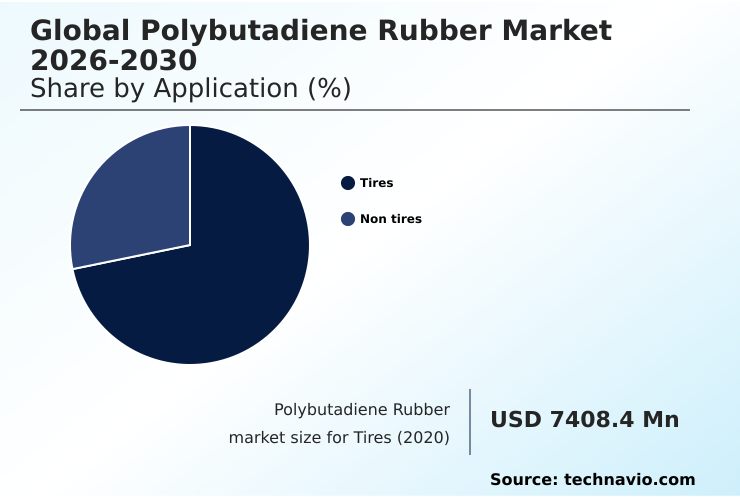
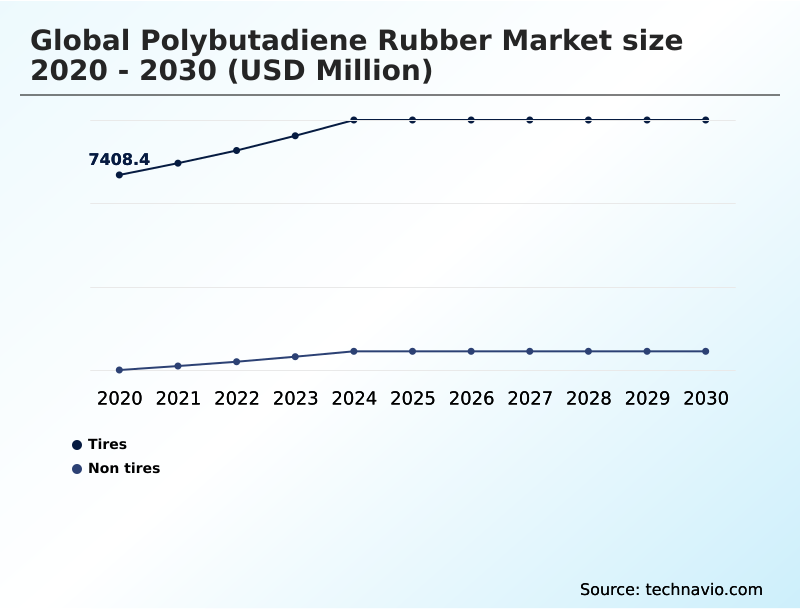
The Tires segment was valued at USD 8.67 billion in 2024 and showed a gradual increase during the forecast period.
Regional Analysis
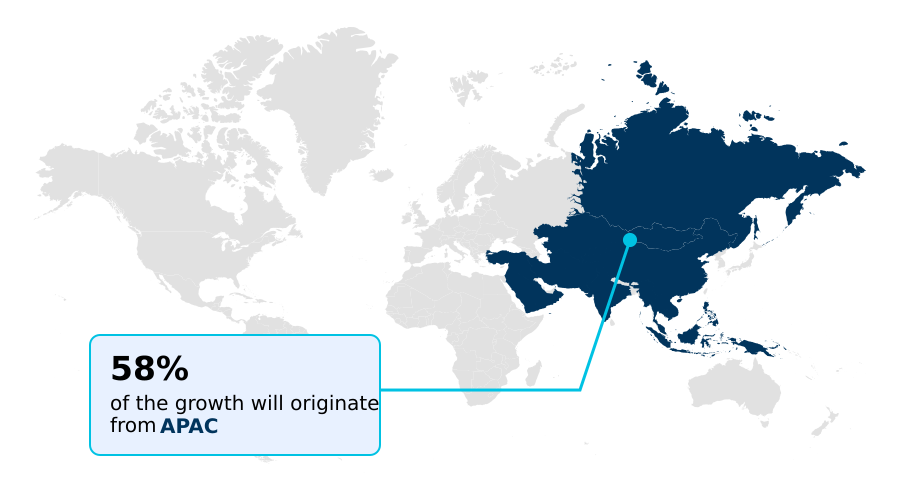
APAC is estimated to contribute 58.5% to the growth of the global market during the forecast period.Technavio’s analysts have elaborately explained the regional trends and drivers that shape the market during the forecast period.
See How Polybutadiene Rubber Market Demand is Rising in APAC Request Free Sample
The geographic landscape of the polybutadiene rubber market is dominated by the APAC region, which accounts for over 58% of incremental growth, driven by its massive automotive and industrial sectors.
This region is a production hub for high-cis polybutadiene and neodymium-catalyzed polybutadiene (Nd-PBR), with producers implementing advanced rubber compounding techniques to meet local demand.
In contrast, North America and Europe focus on high-value applications, using PBR as a crucial impact modifier and vibration damping material in specialized products. These mature markets emphasize innovation in synthetic rubber formulation and rubber recycling technology.
Investment in specialty chemical additives is enabling producers to enhance low temperature flexibility, with some achieving a 10% improvement in performance for advanced rubber compounds.
This regional specialization shapes the global supply chain, balancing high-volume production with demand for niche, high-performance materials like elastomers for EV tires.
Market Dynamics
Our researchers analyzed the data with 2025 as the base year, along with the key drivers, trends, and challenges. A holistic analysis of drivers will help companies refine their marketing strategies to gain a competitive advantage.
- Strategic decision-making in the polybutadiene rubber market is increasingly focused on specific high-value applications and material comparisons. The development of polybutadiene rubber for electric vehicle tires is a primary focus, as these applications require unique properties compared to conventional tires, making supply chain management for synthetic rubber approximately 20% more complex.
- Concurrently, innovation in using neodymium-catalyzed polybutadiene for green tires addresses the demand for sustainability and efficiency. The longstanding debate of comparing polybutadiene rubber vs natural rubber continues, with each material offering distinct advantages in performance and cost. A significant trend is the use of bio-isoprene as a polybutadiene rubber alternative, aligning with circular economy principles.
- Beyond tires, improving plastic toughness with polybutadiene rubber is critical for consumer electronics housing and other molded parts, particularly in the impact modification of HIPS with polybutadiene. Other key areas include developing polybutadiene rubber in high-performance footwear soles, where its rebound is essential, and its use as an asphalt modifier to enhance road durability.
- The inherent low temperature flexibility of polybutadiene rubber makes it ideal for components in harsh environments. Understanding the benefits of functionalized polybutadiene rubber is crucial for optimizing polybutadiene rubber in elastomer blends. The role of polybutadiene rubber in the circular economy, challenges in butadiene feedstock sourcing, and the regulatory impact on polybutadiene rubber production are key strategic considerations.
- Niche growth areas include polybutadiene rubber for industrial conveyor belts, leveraging its vibration damping properties of polybutadiene rubber and enhancing abrasion resistance in tire treads, and exploring polybutadiene rubber grades for medical devices.
What are the key market drivers leading to the rise in the adoption of Polybutadiene Rubber Industry?
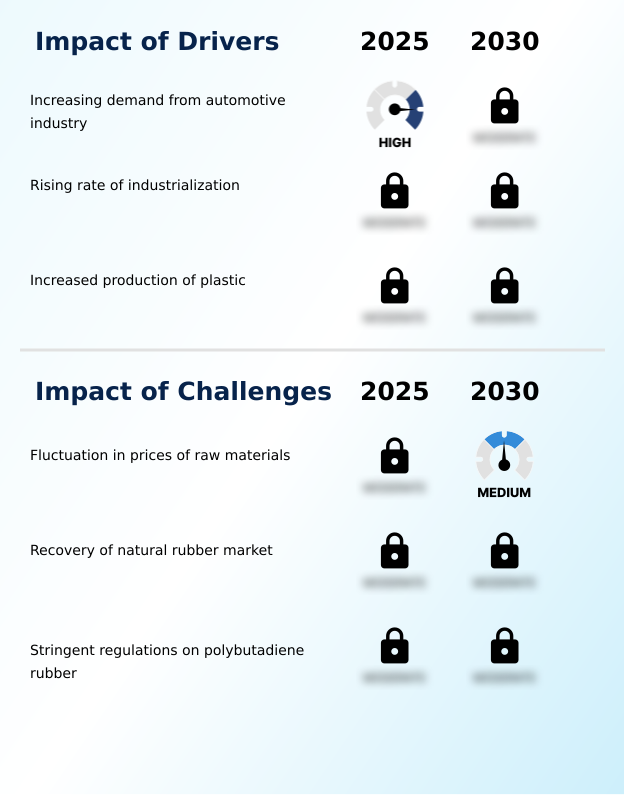
- The primary market driver is the increasing demand from the automotive industry, particularly for tire and non-tire applications.
- Market growth is fundamentally driven by robust demand from end-use industries. The automotive sector's need for high-performance elastomer for EV tires and conventional vehicles remains the primary catalyst.
- In plastics, PBR serves as a vital polymer modification agent for high-impact polystyrene (HIPS) and acrylonitrile-butadiene-styrene (ABS), improving the wear resistance of components in consumer goods manufacturing and industrial machinery components.
- The expansion of the construction material enhancement sector further fuels demand. Ongoing synthetic rubber production and the development of new thermoplastic elastomer grades are meeting the need for durable polymer materials across various applications.
- The use of PBR in tire sidewall compound formulations and other industrial rubber goods has demonstrated a 20% improvement in durability under stress testing. Innovations in vulcanizable plasticizers are also expanding the material's application scope.
What are the market trends shaping the Polybutadiene Rubber Industry?
- Innovation and product development are a key market trend, driven by the need for advanced materials that satisfy the rigorous performance requirements of modern applications.
- Market trends are centered on product innovation and sustainability, driven by advanced polymer science. The development of functionalized polybutadiene rubber through new solution polymerization techniques is enhancing synthetic rubber properties for specialized applications. A major push towards green tire technology is fueling research into bio-based feedstock, such as bio-based isoprene, and circular economy solutions that prioritize sustainable material sourcing.
- Polymer processing technology advancements are enabling the creation of durable polymer materials with improved performance, including lithium butadiene rubber. In one instance, the adoption of specialized catalyst systems has improved the consistency of asphalt modifier formulations by 15%.
- These trends underscore a market shift towards higher-value, eco-conscious products, with some manufacturers reporting a 10% increase in material lifespan for certain applications.
What challenges does the Polybutadiene Rubber Industry face during its growth?
- A key challenge affecting industry growth is the significant price fluctuation of essential raw materials, which creates market uncertainty.
- The market faces significant challenges rooted in supply chain and regulatory pressures. Persistent raw material volatility, especially concerning butadiene feedstock derived from ethylene steam cracking, creates considerable feedstock price fluctuation. This instability complicates production planning and has led to cost variations of up to 30% within a single quarter for some producers.
- The entire feedstock supply chain is vulnerable to geopolitical and operational disruptions, testing supply chain resilience. Additionally, rising regulatory compliance costs associated with emissions from petrochemical by-products are pressuring margins. These factors affect the economics of elastomer blending with materials like solution-styrene butadiene rubber and the production of polymer-modified bitumen (PMB).
- Navigating these challenges requires advanced risk management for chemical intermediates and sourcing strategies for heavy-duty applications.
Exclusive Technavio Analysis on Customer Landscape
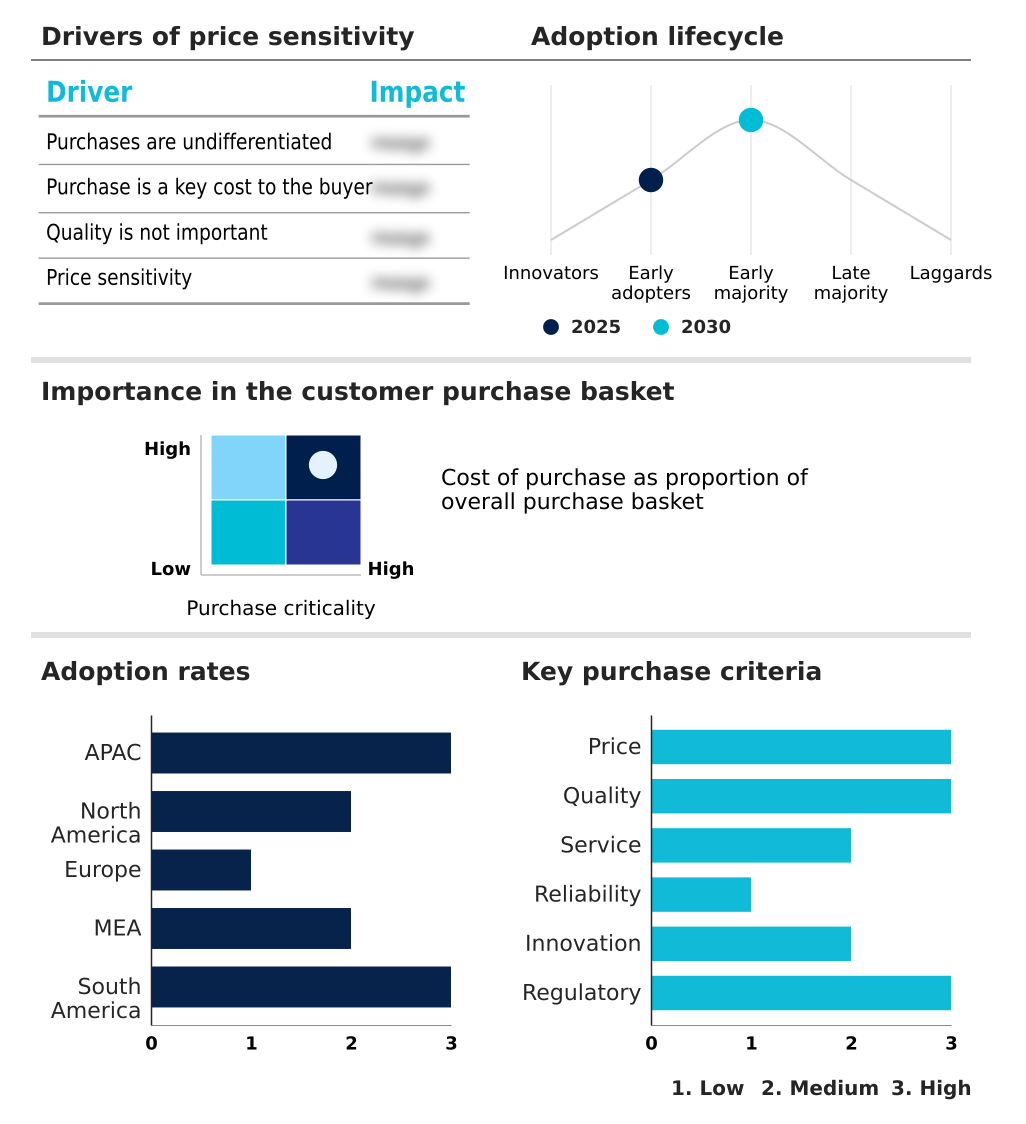
The polybutadiene rubber market forecasting report includes the adoption lifecycle of the market, covering from the innovator’s stage to the laggard’s stage. It focuses on adoption rates in different regions based on penetration. Furthermore, the polybutadiene rubber market report also includes key purchase criteria and drivers of price sensitivity to help companies evaluate and develop their market growth analysis strategies.
Customer Landscape of Polybutadiene Rubber Industry
Competitive Landscape
Companies are implementing various strategies, such as strategic alliances, polybutadiene rubber market forecast, partnerships, mergers and acquisitions, geographical expansion, and product/service launches, to enhance their presence in the industry.
ARLANXEO - Provides a portfolio of advanced polybutadiene rubber grades, driving innovation in elastomer technology for high-performance tire and industrial applications.
The industry research and growth report includes detailed analyses of the competitive landscape of the market and information about key companies, including:
- ARLANXEO
- China National Petroleum Corp.
- China Petrochemical Corp.
- Evonik Industries AG
- JSR Corp.
- Kumho Petrochemical Co. Ltd.
- KURARAY Co. Ltd.
- Lanxess AG
- LG Chem Ltd.
- Nippon Soda Co. Ltd.
- Reliance Industries Ltd.
- Saudi Basic Industries
- SIBUR International GmbH
- Synthomer Plc
- Synthos SA
- The Goodyear Tire and Rubber Co.
- Ube Corp.
- Versalis S.p.A
- Zeon Corp.
Qualitative and quantitative analysis of companies has been conducted to help clients understand the wider business environment as well as the strengths and weaknesses of key industry players. Data is qualitatively analyzed to categorize companies as pure play, category-focused, industry-focused, and diversified; it is quantitatively analyzed to categorize companies as dominant, leading, strong, tentative, and weak.
Recent Development and News in Polybutadiene rubber market
- In September 2024, ARLANXEO announced a strategic partnership with a leading EV tire manufacturer to co-develop next-generation functionalized polybutadiene rubber grades, aiming to produce tires with a 15% reduction in rolling resistance for extended battery range (Source: ARLANXEO Press Release).
- In November 2024, SABIC launched its new line of certified circular polybutadiene rubber, produced from advanced recycling of post-consumer plastic waste, offering a drop-in solution with a lower carbon footprint for tire and industrial applications (Source: SABIC Corporate News).
- In February 2025, Reliance Industries Ltd. confirmed the successful commissioning of its new 50,000 metric ton per annum neodymium-catalyzed polybutadiene rubber production line in India, primarily to meet rising demand from the domestic high-performance tire sector (Source: Reuters).
- In May 2025, Lanxess AG completed the acquisition of a European polymer technology startup for approximately EUR 80 million, gaining proprietary catalyst technology expected to enhance the abrasion resistance of its PBR grades by up to 20% (Source: Bloomberg).
Dive into Technavio’s robust research methodology, blending expert interviews, extensive data synthesis, and validated models for unparalleled Polybutadiene Rubber Market insights. See full methodology.
| Market Scope | |
|---|---|
| Page number | 291 |
| Base year | 2025 |
| Historic period | 2020-2024 |
| Forecast period | 2026-2030 |
| Growth momentum & CAGR | Accelerate at a CAGR of 4.7% |
| Market growth 2026-2030 | USD 3217.9 million |
| Market structure | Fragmented |
| YoY growth 2025-2026(%) | 4.5% |
| Key countries | China, Japan, India, South Korea, Indonesia, Australia, US, Canada, Mexico, Germany, UK, France, Italy, Spain, The Netherlands, Saudi Arabia, South Africa, UAE, Israel, Turkey, Brazil, Argentina and Colombia |
| Competitive landscape | Leading Companies, Market Positioning of Companies, Competitive Strategies, and Industry Risks |
Research Analyst Overview
- The polybutadiene rubber market is defined by continuous material science advancements and its critical role in industrial and automotive sectors. Key developments focus on enhancing synthetic rubber properties, such as abrasion resistance and low rolling resistance, through technologies like solution polymerization and the use of neodymium-catalyzed polybutadiene (Nd-PBR). High-cis polybutadiene remains a cornerstone for high-performance tires, including specialized eco-friendly tires.
- Boardroom decisions are increasingly influenced by sustainability mandates, compelling a strategic shift toward bio-based isoprene and a resilient feedstock supply chain. This requires significant R&D investment in functionalized polybutadiene rubber and advanced elastomer blending techniques. The use of PBR as an impact modifier for high-impact polystyrene (HIPS) and acrylonitrile-butadiene-styrene (ABS) is a major non-tire application.
- Innovations in solution-styrene butadiene rubber and lithium butadiene rubber are also notable. The industry contends with raw material volatility, particularly in butadiene feedstock from ethylene steam cracking. Recent adoption of new catalyst technology has reduced curing times by 10%, a tangible efficiency gain.
- The versatility of PBR is evident in its use as an asphalt modifier, in tire sidewall compound, industrial rubber goods, and as a polymer modification agent for thermoplastic elastomers, showcasing its wide-ranging industrial importance.
What are the Key Data Covered in this Polybutadiene Rubber Market Research and Growth Report?
-
What is the expected growth of the Polybutadiene Rubber Market between 2026 and 2030?
-
USD 3.22 billion, at a CAGR of 4.7%
-
-
What segmentation does the market report cover?
-
The report is segmented by Application (Tires, and Non tires), End-user (Automotive, Construction, and Others), Distribution Channel (Offline, and Online) and Geography (APAC, North America, Europe, Middle East and Africa, South America)
-
-
Which regions are analyzed in the report?
-
APAC, North America, Europe, Middle East and Africa and South America
-
-
What are the key growth drivers and market challenges?
-
Increasing demand from automotive industry, Fluctuation in prices of raw materials
-
-
Who are the major players in the Polybutadiene Rubber Market?
-
ARLANXEO, China National Petroleum Corp., China Petrochemical Corp., Evonik Industries AG, JSR Corp., Kumho Petrochemical Co. Ltd., KURARAY Co. Ltd., Lanxess AG, LG Chem Ltd., Nippon Soda Co. Ltd., Reliance Industries Ltd., Saudi Basic Industries, SIBUR International GmbH, Synthomer Plc, Synthos SA, The Goodyear Tire and Rubber Co., Ube Corp., Versalis S.p.A and Zeon Corp.
-
Market Research Insights
- The polybutadiene rubber market is shaped by intense industrial demand, where performance enhancements drive strategic decisions. The adoption of advanced rubber compounds has improved wear resistance in heavy-duty applications by over 15%, a critical factor for industrial machinery components. In construction material enhancement, polymer modification agents improve the durability of infrastructure assets, extending service life by up to 25%.
- Furthermore, innovations in synthetic rubber production have enabled the creation of specialized elastomers for EV tires, which now account for a growing share of the automotive segment. These shifts reflect a market where specialized catalyst systems and advanced polymer science are paramount, impacting everything from consumer goods manufacturing to the development of vulcanizable plasticizers and other durable polymer materials.
We can help! Our analysts can customize this polybutadiene rubber market research report to meet your requirements.
 RIA -
RIA -