


Peptide Synthesis Market Size 2026-2030
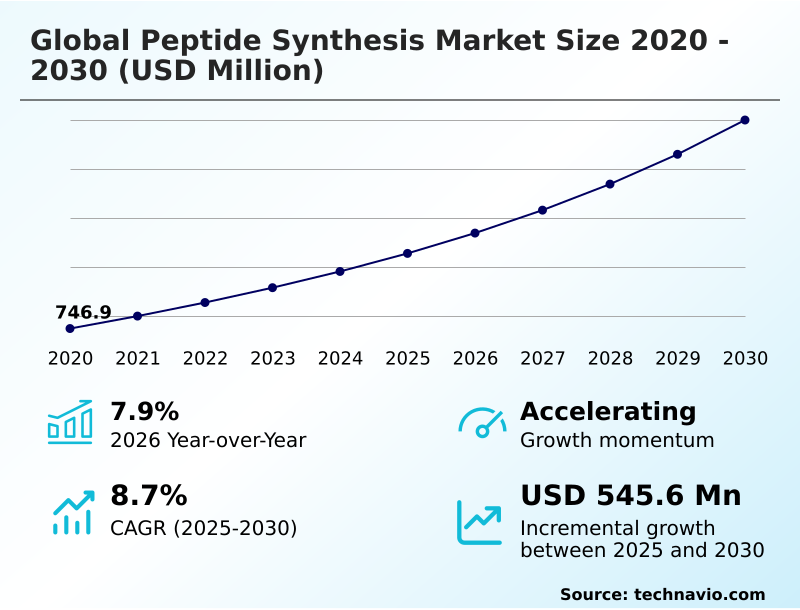
The peptide synthesis market size is valued to increase by USD 545.6 million, at a CAGR of 8.7% from 2025 to 2030. Industrialization of oral delivery systems and bioavailability optimization will drive the peptide synthesis market.
Major Market Trends & Insights
- North America dominated the market and accounted for a 36.6% growth during the forecast period.
- By Product - Consumables segment was valued at USD 477.2 million in 2024
- By Technique - Chemical segment accounted for the largest market revenue share in 2024
Market Size & Forecast
- Market Opportunities: USD 853 million
- Market Future Opportunities: USD 545.6 million
- CAGR from 2025 to 2030 : 8.7%
Market Summary
- The Peptide Synthesis Market is experiencing a significant growth phase, driven by the expanding therapeutic pipeline for peptides in oncology, metabolic diseases, and rare conditions. The high target specificity and favorable safety profiles of peptides make them a compelling alternative to traditional small molecules and complex biologics.
- Consequently, there is escalating demand for advanced manufacturing technologies, particularly those that support the production of long-chain, modified, and complex sequences. A key business scenario involves contract development and manufacturing organizations (CDMOs) adopting modular, automated synthesis platforms.
- This allows them to pivot quickly between producing small, high-purity batches for personalized neoantigen vaccines and scaling up production for blockbuster metabolic drugs, optimizing resource allocation and reducing time-to-market. At the same time, the industry grapples with the need for greener chemistry to mitigate the high solvent waste typical of large-scale synthesis, creating a dual focus on innovation and sustainability.
- The integration of AI in discovery and process optimization further accelerates development, positioning peptide synthesis as a cornerstone of modern biopharmaceutical innovation.
What will be the Size of the Peptide Synthesis Market during the forecast period?
Get Key Insights on Market Forecast (PDF) Request Free Sample
How is the Peptide Synthesis Market Segmented?
The peptide synthesis industry research report provides comprehensive data (region-wise segment analysis), with forecasts and estimates in "USD million" for the period 2026-2030, as well as historical data from 2020-2024 for the following segments.
- Product
- Consumables
- Equipment
- Services
- Technique
- Chemical
- Biological
- Application
- Therapeutic
- Diagnostic
- Research
- Geography
- North America
- US
- Canada
- Mexico
- Europe
- Germany
- UK
- France
- Asia
- Rest of World (ROW)
- North America
By Product Insights
The consumables segment is estimated to witness significant growth during the forecast period.
The consumables segment is foundational to the peptide synthesis market, supplying the essential chemical building blocks for amino acid chain assembly. This category includes high-purity protected amino acid derivatives, specialized solid-phase resins, and a range of peptide coupling agents.
Strategic focus has shifted toward developing green chemistry reagents to minimize the significant chemical waste historically associated with peptide production.
This trend supports sustainability goals, with some advanced solvent recovery architectures reclaiming up to 98% of chemicals used in washing and cleavage cycles.
As pharmaceutical firms advance from research to commercial manufacturing, the quality of these materials remains critical for ensuring the structural integrity and biological activity required for successful lead optimization services and final therapeutic products.
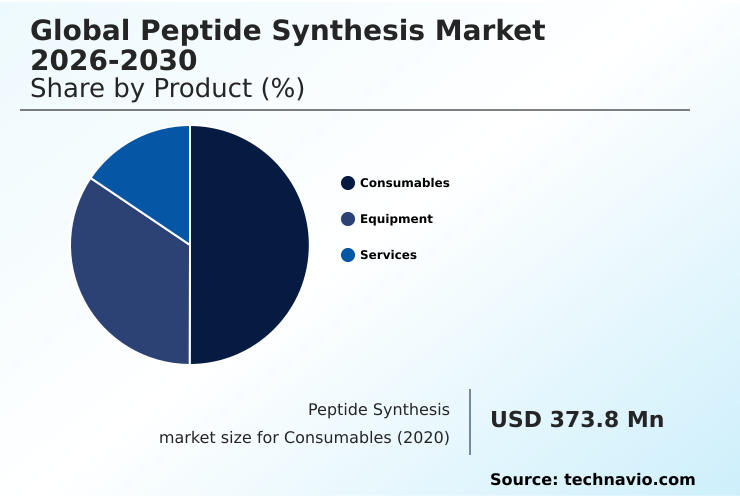
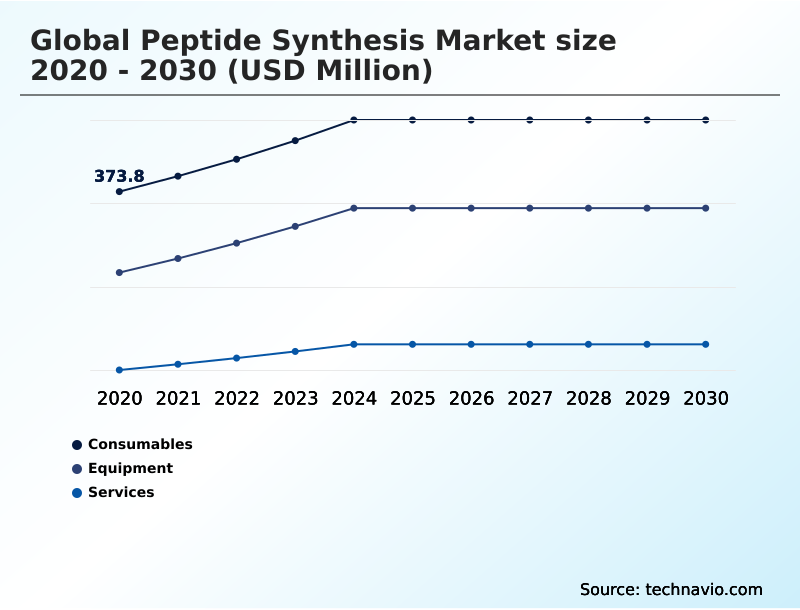
The Consumables segment was valued at USD 477.2 million in 2024 and showed a gradual increase during the forecast period.
Regional Analysis
North America is estimated to contribute 36.6% to the growth of the global market during the forecast period.Technavio’s analysts have elaborately explained the regional trends and drivers that shape the market during the forecast period.
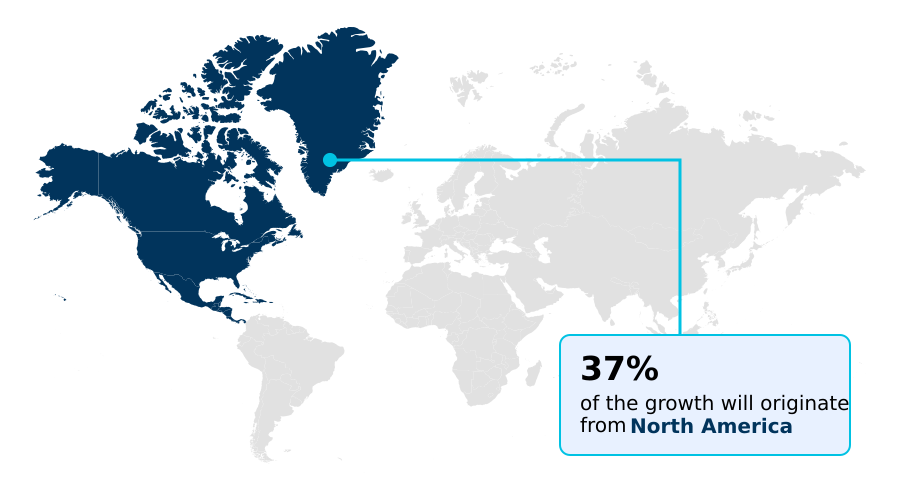
See How Peptide Synthesis Market Demand is Rising in North America Request Free Sample
The geographic landscape is defined by established hubs and rapidly emerging regions.
North America remains a dominant force, accounting for over a third of new market growth, driven by its dense concentration of pharmaceutical firms and a robust ecosystem for contract development and manufacturing.
This region pioneers the use of the latest automated peptide synthesizer technology for advanced therapeutic research. Concurrently, Asia is the fastest-growing market, with its expansion rate outpacing some mature regions by nearly 10%.
This growth is fueled by increasing investments in biotechnology infrastructure and the rise of cost-effective custom peptide synthesis providers.
Europe distinguishes itself through a strong focus on regulatory compliance and the adoption of sustainable practices, leveraging technologies like recombinant DNA technology.
The Rest of the World, including South America and the Middle East, shows increasing activity, with regional players investing in lyophilization services and building local manufacturing capabilities.
Market Dynamics
Our researchers analyzed the data with 2025 as the base year, along with the key drivers, trends, and challenges. A holistic analysis of drivers will help companies refine their marketing strategies to gain a competitive advantage.
- Strategic decision-making in the Global Peptide Synthesis Market 2026-2030 hinges on navigating the technical and economic trade-offs between different manufacturing strategies. The debate over solid phase vs liquid phase efficiency continues, with choices depending heavily on the target molecule's complexity and required production scale.
- As demand for long-chain therapeutics grows, an increasing number of manufacturers are evaluating the cost of automated peptide synthesizers against the operational gains they provide. For instance, investing in microwave synthesis for long sequences can reduce cycle times by over 75% compared to conventional methods, a critical metric for supply chain planning in competitive therapeutic areas.
- A comprehensive cost analysis of peptide synthesis services reveals that while initial capital outlay is high, integrated platforms that combine green chemistry in peptide manufacturing with advanced HPLC methods for peptide purification offer superior long-term ROI. Companies are increasingly focused on scaling GMP peptide production efficiently.
- This involves not only technology adoption but also sourcing high-quality coupling agents and implementing robust peptide impurity profiling techniques. As AI in therapeutic peptide discovery matures, the ability to rapidly translate digital designs into physically stable products through optimized peptide lyophilization and techniques for reducing hydrophobic peptide aggregation will define market leadership.
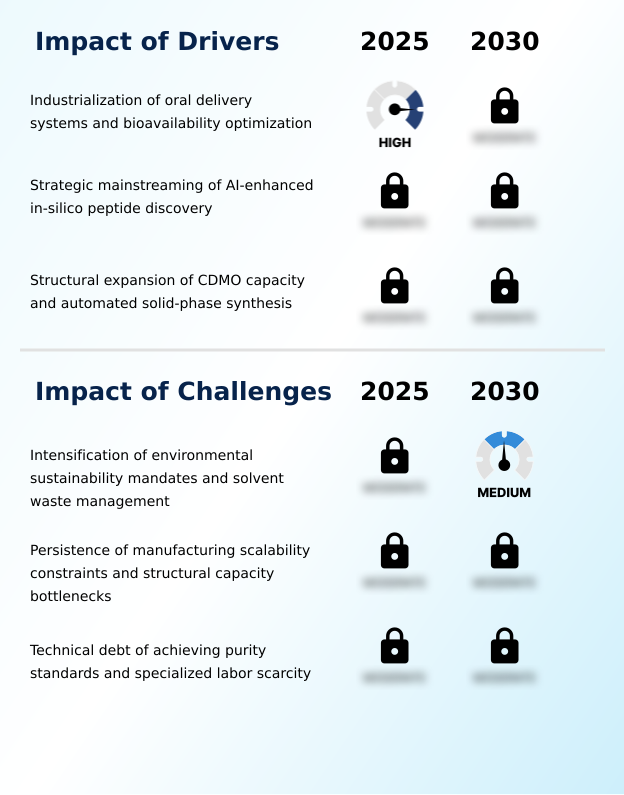
What are the key market drivers leading to the rise in the adoption of Peptide Synthesis Industry?
- A key market driver is the industrialization of oral delivery systems and the optimization of bioavailability for peptide-based therapeutics.
- Market growth is fundamentally driven by the clinical success of peptide-based therapeutics and the technological advancements enabling their production. The unprecedented demand for glucagon-like peptide-1 agonists for metabolic diseases has spurred significant investment in therapeutic peptide manufacturing capacity.
- Innovations in bioavailability enhancement and permeation enhancers are making oral peptide delivery viable, expanding market potential. Concurrently, AI-powered in-silico discovery platforms are revolutionizing drug design, allowing for rapid binding affinity prediction and metabolic stability analysis before synthesis.
- These platforms accelerate the creation of candidates with unnatural amino acids, with some achieving a 30% higher success rate in preclinical validation.
- This synergy between clinical need and technological capability is fueling the expansion of GMP peptide production and peptide API manufacturing worldwide.
What are the market trends shaping the Peptide Synthesis Industry?
- The integration of automated continuous flow synthesis and high-throughput assembly platforms is a transformative trend. This shift addresses the need for enhanced purity and efficiency in next-generation peptide manufacturing.
- Key trends are reshaping the manufacturing landscape, driven by a demand for greater precision and speed. The adoption of continuous-flow chemistry and high-throughput assembly is becoming standard, enabling more consistent quality and scalability than traditional batch methods. These automated platforms, often integrating microwave-assisted peptide synthesis, can accelerate peptide library screening processes by over 70%.
- This technological shift facilitates the exploration of novel therapeutics, including complex macrocyclic peptides and products from cell-free synthesis methods. The integration of automated robotic workstations and sophisticated sequence optimization algorithms further refines the discovery-to-production workflow, reducing manual errors and shortening development cycles significantly. This move towards automation is pivotal for realizing the potential of personalized medicine and high-volume therapeutic production.
What challenges does the Peptide Synthesis Industry face during its growth?
- The intensification of environmental sustainability mandates and the need for effective solvent waste management present a primary challenge for the industry.
- The industry faces significant challenges related to sustainability and manufacturing scalability. The high solvent consumption inherent in traditional synthesis methods leads to a high process mass intensity, with waste generation sometimes exceeding product output by a factor of 100.
- This prompts a critical need for process mass intensity reduction through innovations like solvent recovery architectures, which can cut waste by up to 95%. However, scaling large-scale GMP production to meet demand for blockbuster drugs presents a bottleneck, as maintaining crude purity assessment standards during downstream processing becomes increasingly complex.
- Issues like peptide aggregation can lead to significant yield loss, adding to costs and timelines, while the technical complexity of achieving high-purity output requires specialized expertise that remains scarce.
Exclusive Technavio Analysis on Customer Landscape
The peptide synthesis market forecasting report includes the adoption lifecycle of the market, covering from the innovator’s stage to the laggard’s stage. It focuses on adoption rates in different regions based on penetration. Furthermore, the peptide synthesis market report also includes key purchase criteria and drivers of price sensitivity to help companies evaluate and develop their market growth analysis strategies.
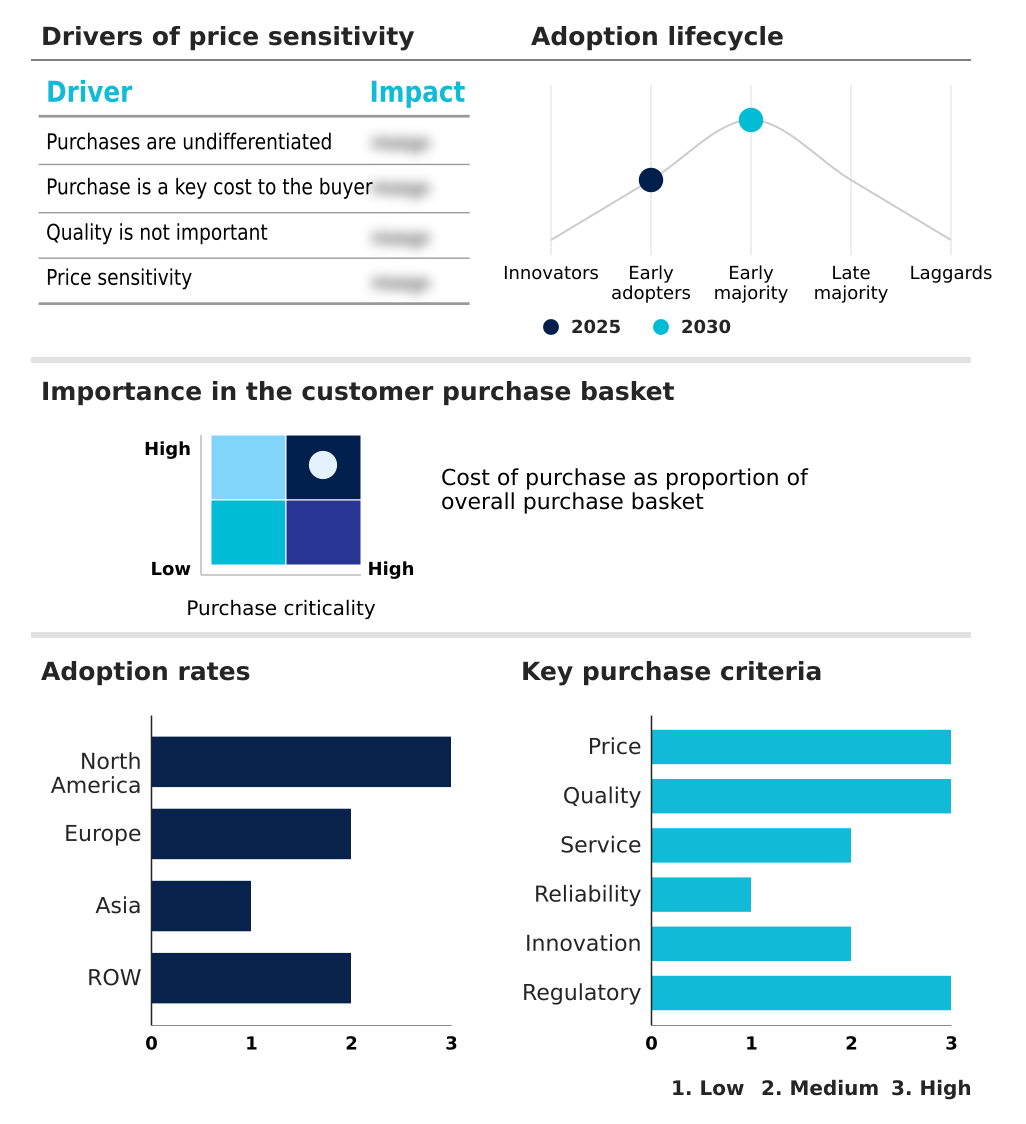
Customer Landscape of Peptide Synthesis Industry
Competitive Landscape
Companies are implementing various strategies, such as strategic alliances, peptide synthesis market forecast, partnerships, mergers and acquisitions, geographical expansion, and product/service launches, to enhance their presence in the industry.
Agilent Technologies Inc. - Key market offerings center on custom synthesis of complex peptides, including GMP-grade materials for therapeutic, library, and modified peptide applications, driving pharmaceutical and biotech research.
The industry research and growth report includes detailed analyses of the competitive landscape of the market and information about key companies, including:
- Agilent Technologies Inc.
- AmbioPharm Inc.
- AnaSpec Inc.
- Bachem AG
- Bio Synthesis Inc
- Biomatik Corp.
- Biosynth Ltd.
- CEM Corp.
- ChinaPeptides Co. Ltd.
- Corden Pharma Intl. GmbH
- CPC Scientific Inc.
- GenScript Biotech Corp.
- GL Biochem
- JPT Peptide Technologies GmbH
- LifeTein LLC.
- PolyPeptide Group
- Proteo Genix
- RS Synthesis
- Sigma Aldrich Chemicals Ltd.
- Thermo Fisher Scientific Inc.
Qualitative and quantitative analysis of companies has been conducted to help clients understand the wider business environment as well as the strengths and weaknesses of key industry players. Data is qualitatively analyzed to categorize companies as pure play, category-focused, industry-focused, and diversified; it is quantitatively analyzed to categorize companies as dominant, leading, strong, tentative, and weak.
Recent Development and News in Peptide synthesis market
- In May 2025, Bachem announced a multi-site investment strategy to expand its production footprint in Bubendorf, Switzerland, and Vista, California, addressing the growing demand for large-scale peptide manufacturing.
- In March 2025, Eli Lilly and Company announced an investment exceeding USD 6 billion to build a new active drug ingredient manufacturing facility in Huntsville, Alabama, boosting its capacity for synthetic peptides and small molecules.
- In January 2025, EUROAPI entered a strategic collaboration with StrainChem, gaining exclusive access to a sustainable liquid phase peptide synthesis technology to improve the environmental footprint of peptide manufacturing.
- In November 2024, Pinnacle Medicines confirmed an USD 89 million Series B funding round to advance its proprietary AI-driven platform, which is designed to rationally engineer oral peptide therapeutics.
Dive into Technavio’s robust research methodology, blending expert interviews, extensive data synthesis, and validated models for unparalleled Peptide Synthesis Market insights. See full methodology.
| Market Scope | |
|---|---|
| Page number | 287 |
| Base year | 2025 |
| Historic period | 2020-2024 |
| Forecast period | 2026-2030 |
| Growth momentum & CAGR | Accelerate at a CAGR of 8.7% |
| Market growth 2026-2030 | USD 545.6 million |
| Market structure | Fragmented |
| YoY growth 2025-2026(%) | 7.9% |
| Key countries | US, Canada, Mexico, Germany, UK, France, Italy, Spain, Switzerland, India, China, Japan, South Korea, Singapore, Indonesia, Brazil, South Africa, UAE, Saudi Arabia, Argentina, Israel, Turkey and Chile |
| Competitive landscape | Leading Companies, Market Positioning of Companies, Competitive Strategies, and Industry Risks |
Research Analyst Overview
- The Peptide Synthesis Market is undergoing a critical transformation as boardroom decisions increasingly prioritize sustainable and efficient manufacturing. The industry is moving beyond traditional batch methods, embracing a sophisticated toolkit where solid-phase peptide synthesis, liquid-phase peptide synthesis, and hybrid peptide synthesis are selected based on project scale and complexity.
- Technological advancements like microwave-assisted peptide synthesis and continuous-flow chemistry, powered by the automated peptide synthesizer, are now standard for high-throughput assembly. A key strategic focus is solvent consumption reduction, driven by green chemistry reagents and process analytical technology to monitor everything from peptide cleavage and deprotection to downstream processing.
- For therapeutic peptide manufacturing, achieving high crude purity assessment is paramount, demanding advanced peptide purification techniques like high-performance liquid chromatography and mass spectrometry to avoid issues such as peptide aggregation. This is especially vital for complex modalities like peptide-drug conjugates, macrocyclic peptides, and neoantigen peptide vaccines.
- Firms offering custom peptide synthesis and gmp peptide production must master the use of diverse amino acid derivatives, solid-phase resins, resin linkers, and peptide coupling agents, including those for incorporating unnatural amino acids.
- Success now depends on the entire workflow, from in-silico peptide design and peptide sequencing through solution phase synthesis, fragment condensation, and final lyophilization services, culminating in compliant peptide api manufacturing.
What are the Key Data Covered in this Peptide Synthesis Market Research and Growth Report?
-
What is the expected growth of the Peptide Synthesis Market between 2026 and 2030?
-
USD 545.6 million, at a CAGR of 8.7%
-
-
What segmentation does the market report cover?
-
The report is segmented by Product (Consumables, Equipment, and Services), Technique (Chemical, and Biological), Application (Therapeutic, Diagnostic, and Research) and Geography (North America, Europe, Asia, Rest of World (ROW))
-
-
Which regions are analyzed in the report?
-
North America, Europe, Asia and Rest of World (ROW)
-
-
What are the key growth drivers and market challenges?
-
Industrialization of oral delivery systems and bioavailability optimization, Intensification of environmental sustainability mandates and solvent waste management
-
-
Who are the major players in the Peptide Synthesis Market?
-
Agilent Technologies Inc., AmbioPharm Inc., AnaSpec Inc., Bachem AG, Bio Synthesis Inc, Biomatik Corp., Biosynth Ltd., CEM Corp., ChinaPeptides Co. Ltd., Corden Pharma Intl. GmbH, CPC Scientific Inc., GenScript Biotech Corp., GL Biochem, JPT Peptide Technologies GmbH, LifeTein LLC., PolyPeptide Group, Proteo Genix, RS Synthesis, Sigma Aldrich Chemicals Ltd. and Thermo Fisher Scientific Inc.
-
Market Research Insights
- Market dynamics are shaped by a push for greater manufacturing efficiency and therapeutic innovation. The adoption of advanced synthesis platforms has been shown to compress reaction times by over 80%, a critical factor in accelerating drug discovery timelines.
- At the same time, the implementation of sophisticated solvent recovery architectures enables the recapture of up to 98% of chemical waste, aligning production with sustainability mandates and significantly reducing operational expenditures. This dual focus on speed and eco-efficiency is crucial as demand for complex molecules like glucagon-like peptide-1 agonists and other peptide-based biomarkers intensifies.
- Firms are leveraging in-silico discovery platforms and sequence optimization algorithms to design novel candidates, while contract development and manufacturing partners provide the scalable infrastructure necessary to bring these innovations to market, reflecting a highly interconnected and technology-driven ecosystem.
We can help! Our analysts can customize this peptide synthesis market research report to meet your requirements.
 RIA -
RIA -