


Patch-based Wound Healing Market Size 2026-2030
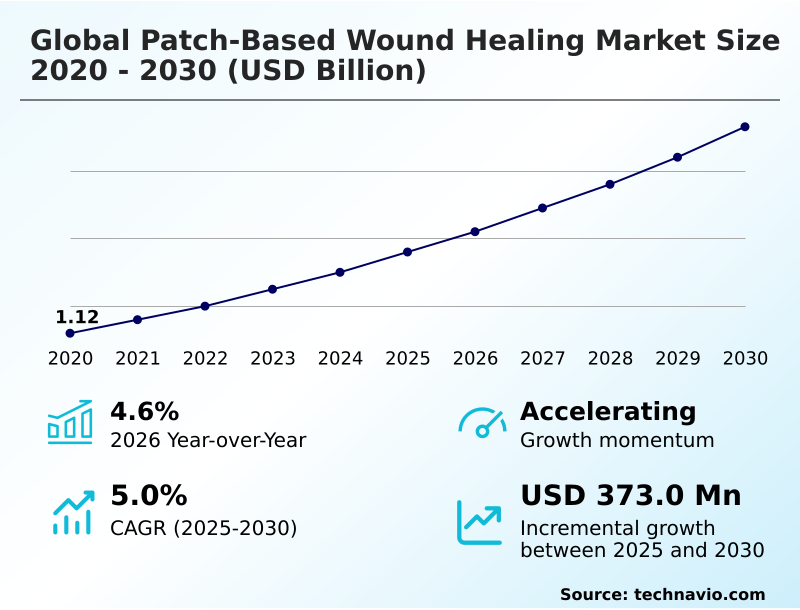
The patch-based wound healing market size is valued to increase by USD 373 million, at a CAGR of 5% from 2025 to 2030. Growing need for advanced wound care solutions will drive the patch-based wound healing market.
Major Market Trends & Insights
- North America dominated the market and accounted for a 40.9% growth during the forecast period.
- By Application - Acute wounds segment was valued at USD 744 million in 2024
- By End-user - Hospitals segment accounted for the largest market revenue share in 2024
Market Size & Forecast
- Market Opportunities: USD 613.9 million
- Market Future Opportunities: USD 373 million
- CAGR from 2025 to 2030 : 5%
Market Summary
- The patch-based wound healing market is undergoing significant transformation, driven by a global increase in chronic wounds such as diabetic ulcers and pressure injuries, particularly among aging populations. There is a clear market shift from passive dressings to active therapeutic systems that facilitate tissue regeneration.
- Innovations in material science are central to this evolution, with materials like hydrogels, hydrocolloids, and alginates being developed for their superior moisture management and antimicrobial properties. A key business scenario involves hospitals integrating these advanced patches to improve operational efficiency by reducing patient recovery times and lowering the incidence of costly readmissions due to infection.
- The development of the smart bandage, which incorporates sensors for real-time monitoring, represents a major technological leap, enabling more effective and personalized care. However, the high cost of these advanced technologies and issues with reimbursement continue to limit their widespread adoption, particularly in healthcare systems with constrained budgets.
- The market's trajectory is toward creating more effective, data-driven solutions that balance clinical efficacy with economic viability.
What will be the Size of the Patch-based Wound Healing Market during the forecast period?
Get Key Insights on Market Forecast (PDF) Request Free Sample
How is the Patch-based Wound Healing Market Segmented?
The patch-based wound healing industry research report provides comprehensive data (region-wise segment analysis), with forecasts and estimates in "USD million" for the period 2026-2030, as well as historical data from 2020-2024 for the following segments.
- Application
- Acute wounds
- Chronic wounds
- End-user
- Hospitals
- Clinics
- Home healthcare
- Ambulatory surgical centers (ASCs)
- Formulation
- Collagen
- Silver-based patches
- Hydrogel
- Povidone-iodine
- Others
- Geography
- North America
- US
- Canada
- Mexico
- Europe
- Germany
- UK
- France
- Asia
- Rest of World (ROW)
- North America
By Application Insights
The acute wounds segment is estimated to witness significant growth during the forecast period.
The acute wounds segment is defined by the clinical imperative for rapid healing in settings like surgical incisions and trauma. Innovations are centered on advanced solutions that go beyond simple coverage, focusing on active acute wound management to accelerate recovery.
Technologies employing extracellular matrix mimicry and hydrogel dermal regeneration are gaining prominence for their ability to support tissue integration. For instance, new collagen-based dermal matrices aim to reduce post-operative recovery times by up to 20%.
Hemostatic patches and silver-infused dressings are crucial for controlling bleeding and ensuring surgical site infection prevention.
The core objective is maintaining optimal wound moisture balance to speed up the re-epithelialization process and ensure effective wound bed preparation, thereby enhancing patient outcomes and patient discomfort minimization, backed by strong clinical efficacy data.
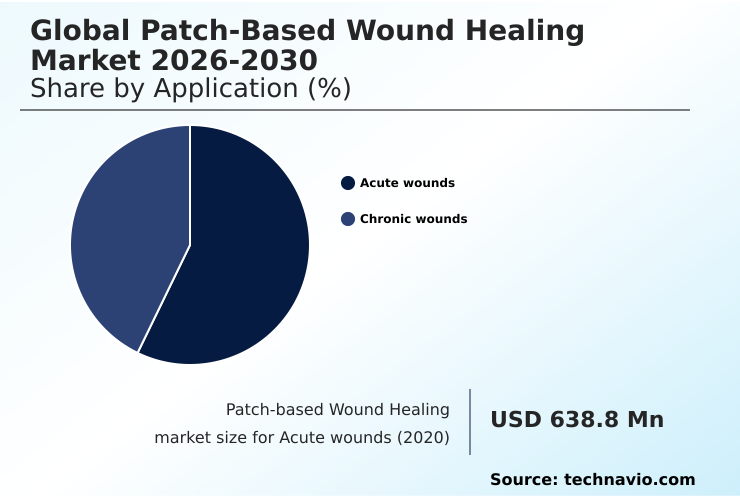
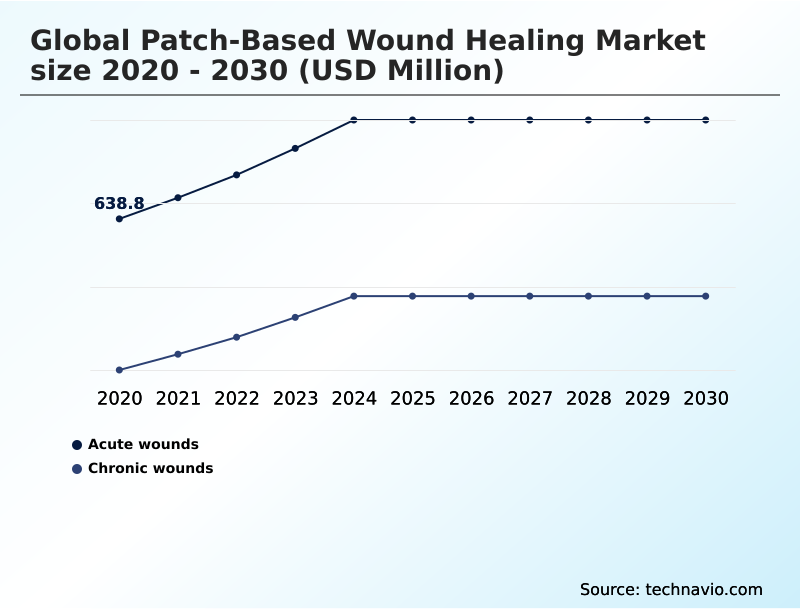
The Acute wounds segment was valued at USD 744 million in 2024 and showed a gradual increase during the forecast period.
Regional Analysis
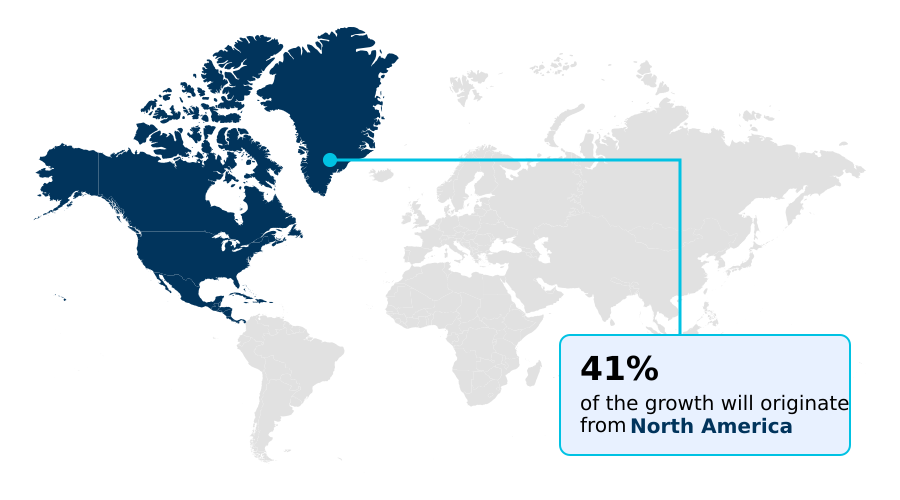
North America is estimated to contribute 40.9% to the growth of the global market during the forecast period.Technavio’s analysts have elaborately explained the regional trends and drivers that shape the market during the forecast period.
See How Patch-based Wound Healing Market Demand is Rising in North America Request Free Sample
North America dominates the market, contributing over 40% of the incremental growth, driven by advanced healthcare infrastructure and high prevalence of chronic conditions.
The region leads in adopting advanced technologies for chronic wound healing, particularly for diabetic foot ulcer treatment and venous leg ulcer care. In Europe, the focus is on pressure injury management within aging populations.
Asia is emerging as a high-growth region due to rising healthcare investments and awareness of advanced wound closure techniques. The adoption of negative pressure wound therapy and the platelet-rich-plasma system is increasing globally.
In leading markets, the use of a collagen-based dermal matrix has been shown to improve granulation tissue formation rates by 15% compared to traditional methods, reflecting a push toward evidence-based regenerative medicine in dermatology supported by strong clinical efficacy data.
Market Dynamics
Our researchers analyzed the data with 2025 as the base year, along with the key drivers, trends, and challenges. A holistic analysis of drivers will help companies refine their marketing strategies to gain a competitive advantage.
- The strategic focus within the patch-based wound healing market is increasingly on specialized applications and evidence-based outcomes. For instance, the development of advanced dressings for diabetic foot ulcers and the use of a collagen patch for venous leg ulcers are now standard practice in specialized clinics.
- The choice of a hydrogel dressing for burn wound care versus an antimicrobial patch for surgical site infections highlights the move toward targeted therapies. A smart patch for chronic wound monitoring provides crucial data that informs treatment decisions, while negative pressure therapy for deep wounds offers a solution for more complex cases.
- The application of a bioactive dressing for tissue regeneration is a cornerstone of modern wound management. In emergency settings, a hemostatic patch for traumatic bleeding control can be life-saving.
- For infected wounds, a silver dressing for infected wound management is often the first line of defense, whereas an alginate dressing for high exudate wounds is critical for maintaining a balanced wound environment.
- The emphasis on dressing for pressure injury prevention in long-term care facilities has demonstrated a reduction in incidence rates by over 20% compared to facilities without a formal prevention protocol, significantly impacting operational planning and patient care budgets. This specialization extends to wound care in ambulatory surgical centers and the growing segment of patch-based solutions for home healthcare.
- Innovations in patch technologies for pediatric wound care address the unique needs of younger patients. Ultimately, the cost-effectiveness of advanced wound patches is validated by outcomes like reducing dressing change frequency and improving patient compliance with patches, while regulatory pathways for biologic wound patches and techniques for minimizing scar formation with patches continue to shape the industry.
- The development of advanced patches for geriatric skin tears addresses a key vulnerability in the elderly population.
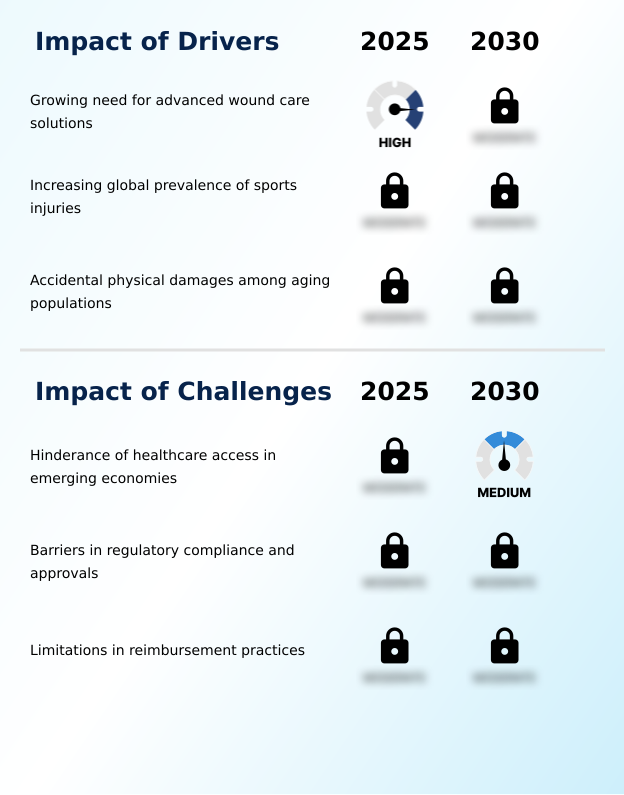
What are the key market drivers leading to the rise in the adoption of Patch-based Wound Healing Industry?
- The increasing demand for advanced wound care solutions to effectively manage complex and chronic wounds serves as a primary driver for the market.
- The market is driven by a rising need for advanced wound care solutions that offer superior clinical outcomes over traditional methods. Products like hydrocolloid dressings, antimicrobial dressings, and alginate-based products are widely adopted for creating optimal healing environments.
- The integration of advanced wound bioactives has improved healing progress monitoring, with some smart technologies reducing the need for clinical visits by up to 25%.
- Cellular and tissue-based products that focus on matrix metalloproteinase regulation are becoming essential, especially in outpatient wound care services. Innovations such as the nitric oxide-generating dressing enable targeted therapy delivery, improving treatment efficacy.
- This shift toward cost-effective wound management is also boosting demand for high-performance ambulatory surgical center supplies.
What are the market trends shaping the Patch-based Wound Healing Industry?
- The global expansion of hospitals and surgical centers is creating a substantial demand for patch-based wound healing products. This growth is driven by the pressing need for effective wound management solutions in newly established healthcare facilities.
- A key trend is the expansion of specialized surgical centers, which fuels demand for innovative advanced wound dressings and skin graft alternatives. These facilities are adopting patient-centric care models that prioritize infection risk reduction and improved outcomes, driving the uptake of bioactive dressings and smart wound patches.
- The focus on hospital-acquired infection control has led to a 15% increase in the adoption of solutions like chitosan-based hemostatic patches in high-risk procedures. As investments in healthcare infrastructure grow, so does the need for effective exudate management solutions and tissue regeneration technology, particularly for complex cases like burn wound treatment.
- This shift supports the development of personalized wound treatment strategies and provides better management for non-healing wound solutions.
What challenges does the Patch-based Wound Healing Industry face during its growth?
- Limited access to healthcare infrastructure and services in emerging economies poses a significant challenge to the adoption of advanced wound care products, thereby constraining market growth.
- Significant challenges restrain market growth, including stringent medical device regulatory compliance and reimbursement practice limitations, which slow the adoption of novel therapies. For instance, the complex approval pathway for gene-corrected cell therapy and scaffold-based tissue engineering creates high entry barriers. Issues with supply chain resilience for specialized materials used in transdermal patch production and biodegradable polymer scaffolds can disrupt availability.
- Furthermore, the high cost of advanced skin substitutes and antimicrobial peptide coatings makes them inaccessible in markets with limited healthcare funding. While home healthcare wound solutions are growing, their effectiveness can be limited without proper infrastructure for technologies like controlled drug delivery systems that aid in biofilm formation disruption and patient discomfort minimization.
Exclusive Technavio Analysis on Customer Landscape
The patch-based wound healing market forecasting report includes the adoption lifecycle of the market, covering from the innovator’s stage to the laggard’s stage. It focuses on adoption rates in different regions based on penetration. Furthermore, the patch-based wound healing market report also includes key purchase criteria and drivers of price sensitivity to help companies evaluate and develop their market growth analysis strategies.
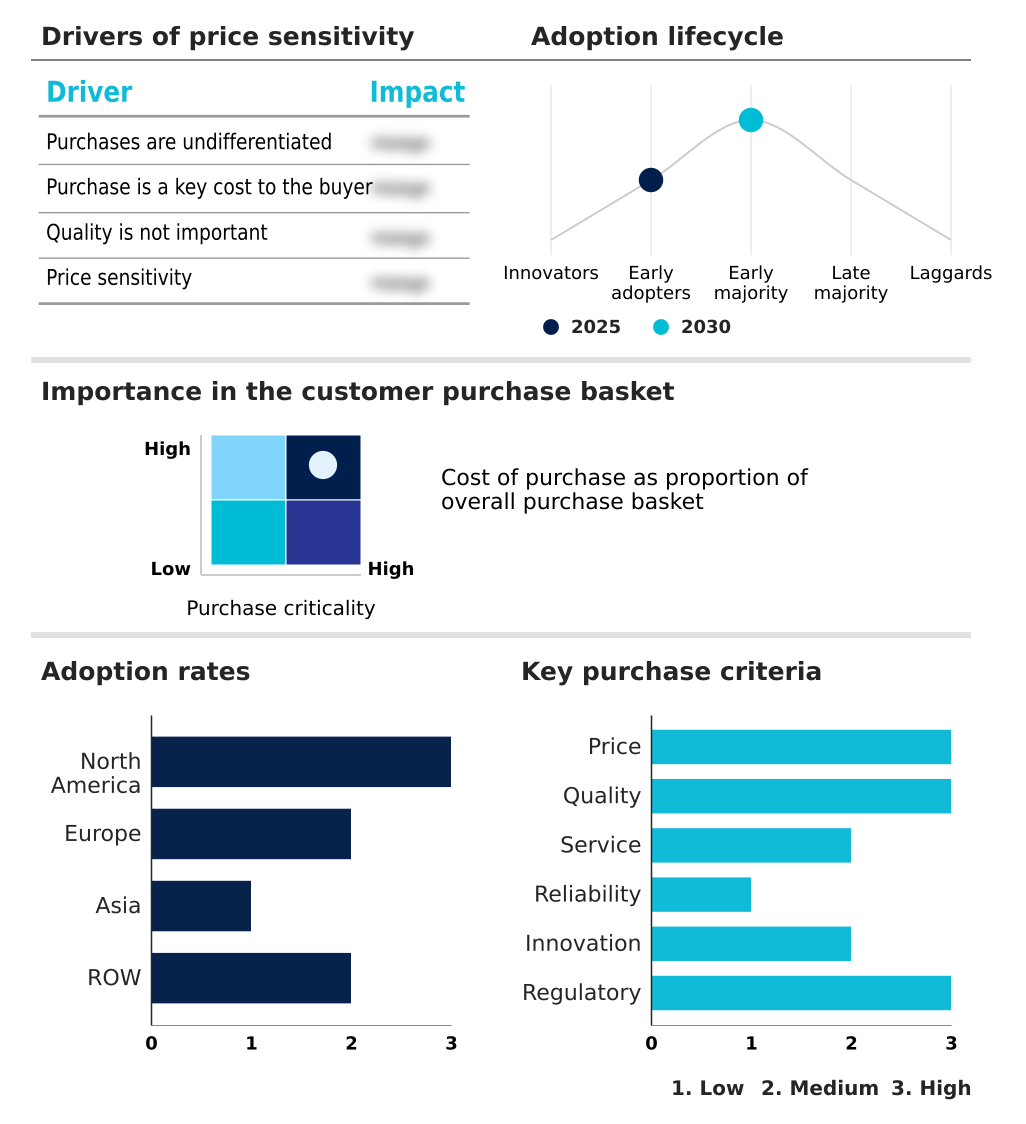
Customer Landscape of Patch-based Wound Healing Industry
Competitive Landscape
Companies are implementing various strategies, such as strategic alliances, patch-based wound healing market forecast, partnerships, mergers and acquisitions, geographical expansion, and product/service launches, to enhance their presence in the industry.
3M Co. - Key offerings feature advanced dressings, including hydrocolloid and antimicrobial patches, designed for the effective management of various acute and chronic wound types.
The industry research and growth report includes detailed analyses of the competitive landscape of the market and information about key companies, including:
- 3M Co.
- Advancis Medical
- Axio Biosolutions Pvt. Ltd.
- B.Braun SE
- CliniMed Ltd.
- Coloplast AS
- ConvaTec Group Plc
- Essity AB
- Harro Hofliger GmbH
- Healogics LLC
- Integra LifeSciences Corp.
- Lohmann and Rauscher GmbH
- Medipurpose Pvt. Ltd.
- Medline Industries LP
- Ostomed Ltd.
- Paul Hartmann AG
- Richardson Healthcare Inc.
- Smith and Nephew plc
Qualitative and quantitative analysis of companies has been conducted to help clients understand the wider business environment as well as the strengths and weaknesses of key industry players. Data is qualitatively analyzed to categorize companies as pure play, category-focused, industry-focused, and diversified; it is quantitatively analyzed to categorize companies as dominant, leading, strong, tentative, and weak.
Recent Development and News in Patch-based wound healing market
- In February 2025, Biomiq Inc. launched PureGel, a hydrogel based on nanotechnology, intended for extended delivery of hypochlorous acid to burns and wounds.
- In March 2025, Fesarius Therapeutics received 510(k) clearance from the US FDA for its DermiSphere Hydrogel Dermal Regeneration Template, a collagen-based matrix aimed at surgical and reconstructive wound applications.
- In April 2025, Convatec Group Plc secured regulatory approval for ConvaNiox, a novel nitric oxide-generating dressing, and outlined plans for an initial market launch focusing on diabetic foot ulcers.
- In May 2025, 3M introduced Fibracol Plus, a hybrid dressing that combines collagen and alginate to manage exudate in pressure ulcers and surgical wounds while promoting tissue healing.
Dive into Technavio’s robust research methodology, blending expert interviews, extensive data synthesis, and validated models for unparalleled Patch-based Wound Healing Market insights. See full methodology.
| Market Scope | |
|---|---|
| Page number | 294 |
| Base year | 2025 |
| Historic period | 2020-2024 |
| Forecast period | 2026-2030 |
| Growth momentum & CAGR | Accelerate at a CAGR of 5% |
| Market growth 2026-2030 | USD 373.0 million |
| Market structure | Fragmented |
| YoY growth 2025-2026(%) | 4.6% |
| Key countries | US, Canada, Mexico, Germany, UK, France, Italy, The Netherlands, Russia, Spain, China, Japan, India, South Korea, Indonesia, Thailand, Singapore, Australia, UAE, Brazil, South Africa, Saudi Arabia and Turkey |
| Competitive landscape | Leading Companies, Market Positioning of Companies, Competitive Strategies, and Industry Risks |
Research Analyst Overview
- The patch-based wound healing market is characterized by a rapid evolution from passive coverings to active therapeutic platforms. Innovations in advanced wound care solutions such as bioactive dressings and smart wound patches are redefining treatment protocols for both acute and chronic wounds.
- The integration of tissue regeneration technology and cellular and tissue-based products is becoming a key differentiator, with a focus on matrix metalloproteinase regulation to restart healing in stalled wounds. A critical boardroom consideration is the strategic investment in R&D for proprietary technologies like nitric oxide-generating dressings and gene-corrected cell therapy.
- These advanced therapies, while costly, can secure a competitive advantage, especially as clinical data demonstrates their ability to reduce healing times. For example, some collagen-based dermal matrix products have been shown to accelerate wound closure by over 25% compared to traditional dressings.
- The market is also seeing advancements in exudate management solutions and hydrogel dermal regeneration, driven by the need to manage complex injuries such as diabetic foot ulcers and venous leg ulcers.
What are the Key Data Covered in this Patch-based Wound Healing Market Research and Growth Report?
-
What is the expected growth of the Patch-based Wound Healing Market between 2026 and 2030?
-
USD 373 million, at a CAGR of 5%
-
-
What segmentation does the market report cover?
-
The report is segmented by Application (Acute wounds, and Chronic wounds), End-user (Hospitals, Clinics, Home healthcare, and Ambulatory surgical centers (ASCs)), Formulation (Collagen, Silver-based patches, Povidone-iodine, Hydrogel, and Others) and Geography (North America, Europe, Asia, Rest of World (ROW))
-
-
Which regions are analyzed in the report?
-
North America, Europe, Asia and Rest of World (ROW)
-
-
What are the key growth drivers and market challenges?
-
Growing need for advanced wound care solutions, Hinderance of healthcare access in emerging economies
-
-
Who are the major players in the Patch-based Wound Healing Market?
-
3M Co., Advancis Medical, Axio Biosolutions Pvt. Ltd., B.Braun SE, CliniMed Ltd., Coloplast AS, ConvaTec Group Plc, Essity AB, Harro Hofliger GmbH, Healogics LLC, Integra LifeSciences Corp., Lohmann and Rauscher GmbH, Medipurpose Pvt. Ltd., Medline Industries LP, Ostomed Ltd., Paul Hartmann AG, Richardson Healthcare Inc. and Smith and Nephew plc
-
Market Research Insights
- Market dynamics are shaped by a strong focus on cost-effective wound management and improved clinical outcomes. The adoption of advanced wound dressings in hospitals has been linked to a 15% reduction in hospital-acquired infection control failures, directly impacting patient safety and operational costs.
- The shift toward outpatient wound care services and home healthcare wound solutions is driving demand for user-friendly products. Innovations in advanced wound bioactives and regenerative medicine in dermatology are enabling more personalized wound treatment strategies.
- This is particularly relevant for non-healing wound solutions, where integrated systems for healing progress monitoring have shown the potential to improve wound closure techniques and accelerate recovery by up to 30%. The emphasis on clinical efficacy data and medical device regulatory compliance remains critical for market access and sustained growth.
We can help! Our analysts can customize this patch-based wound healing market research report to meet your requirements.