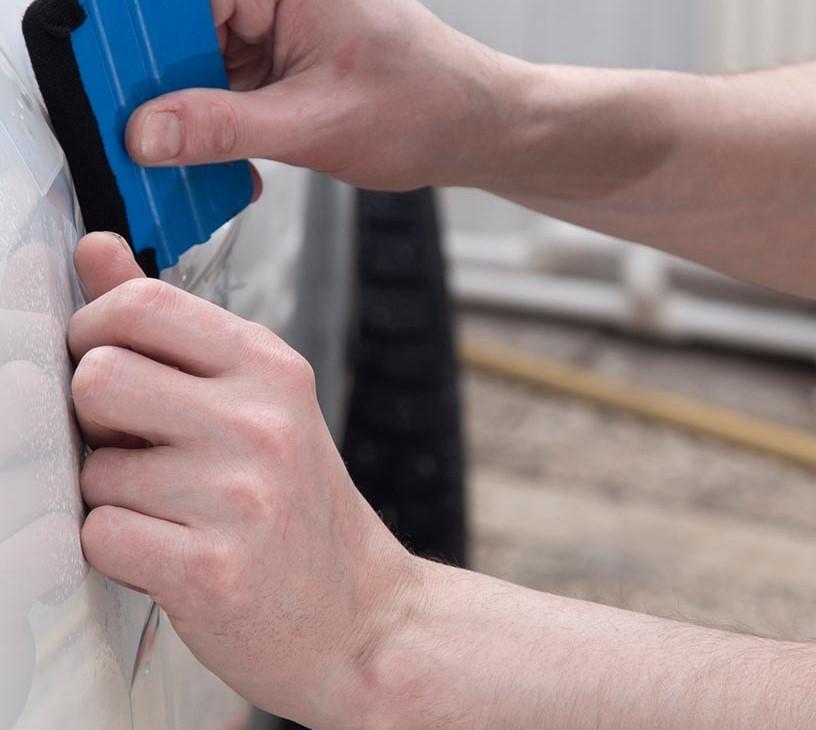


Paint Protection Film Market Size 2025-2029
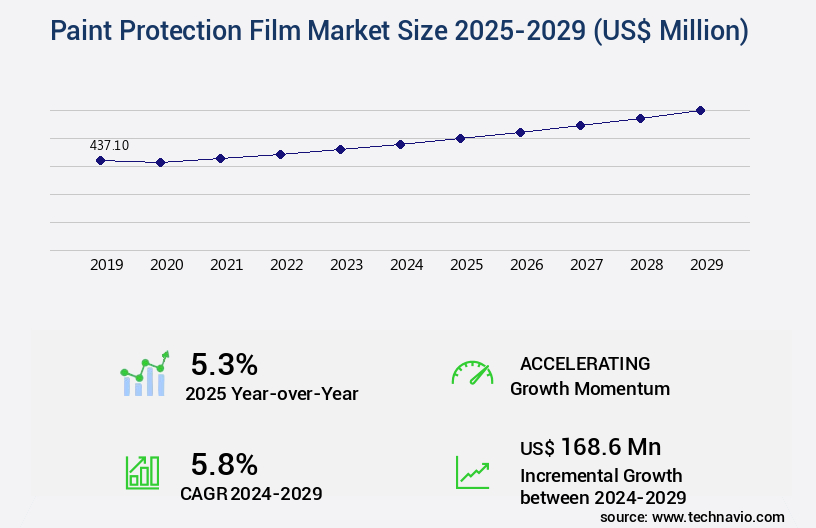
The paint protection film market size is valued to increase USD 168.6 million, at a CAGR of 5.8% from 2024 to 2029. Expansion of consumer electronics industry will drive the paint protection film market.
Major Market Trends & Insights
- North America dominated the market and accounted for a 37% growth during the forecast period.
- By End-user - Automobile segment was valued at USD 330.10 million in 2023
- By Material - Thermoplastic polyurethane segment accounted for the largest market revenue share in 2023
Market Size & Forecast
- Market Opportunities: USD 56.69 million
- Market Future Opportunities: USD 168.60 million
- CAGR from 2024 to 2029 : 5.8%
Market Summary
- The Paint Protection Film (PPF) market has experienced significant growth, reaching a value of over USD3 billion in 2020. This expansion is driven by the increasing demand for UV-curable PPF, which offers superior durability and clarity. However, the adoption rate of emerging applications, such as interior protection and decorative designs, remains slower than anticipated. PPF is a thin, transparent film applied to the exterior surfaces of vehicles to protect against damage from stones, insects, and other debris. Its ability to preserve the original appearance of a vehicle, combined with its long-lasting properties, has made it an essential accessory for car enthusiasts and commercial fleets alike.
- The global automotive industry's expansion, particularly in emerging markets, has fueled the demand for PPF. Moreover, advancements in technology have led to the development of self-healing and hydrophobic films, further enhancing the product's appeal. Despite these opportunities, challenges persist. The high initial investment and complex installation process hinder widespread adoption. Additionally, the availability of counterfeit products and the need for regular maintenance pose threats to the market's integrity. Looking forward, the PPF market is expected to continue its growth trajectory, driven by technological advancements and increasing consumer awareness. As the industry evolves, manufacturers will focus on developing cost-effective solutions and expanding their product offerings to cater to diverse applications.
What will be the Size of the Paint Protection Film Market during the forecast period?
Get Key Insights on Market Forecast (PDF) Request Free Sample
How is the Paint Protection Film Market Segmented ?
The paint protection film industry research report provides comprehensive data (region-wise segment analysis), with forecasts and estimates in "USD million" for the period 2025-2029, as well as historical data from 2019-2023 for the following segments.
- End-user
- Automobile
- Aerospace and defense
- Electrical and electronics
- Others
- Material
- Thermoplastic polyurethane
- Polyvinyl chloride
- Others
- Type
- Glossy
- Matte
- Satin
- Geography
- North America
- US
- Canada
- Europe
- France
- Germany
- Italy
- UK
- APAC
- Australia
- China
- India
- Japan
- Rest of World (ROW)
- North America
By End-user Insights
The automobile segment is estimated to witness significant growth during the forecast period.
The market experienced significant growth in 2024, with the automobile segment leading the charge. This segment's dominance stems from the increasing demand for vehicle body protection, particularly in areas prone to scratches and environmental damage. PPF is commonly applied to vulnerable parts like bumpers, hoods, mirrors, and door edges. These films not only enhance a vehicle's appearance with their glossy sheen but also offer benefits such as hydrophobic properties, impact resistance, water spot resistance, and stain resistance. The Asia Pacific region, specifically China and India, is a major producer of automobiles and a significant contributor to the market's growth.
These films undergo rigorous testing for durability, yellowing resistance, clear coat protection, and UV degradation analysis. Various types of films are available, including acrylic polymer, urethane, TPU, and heat resistance films. Self-healing coatings, gloss retention, and abrasion resistance are some advanced features that are increasingly popular. Additionally, PPF provides anti-graffiti coating, corrosion protection, and self-cleaning properties. The film's thickness, adhesive strength, surface energy, and tensile strength are crucial factors in determining its quality. According to a recent study, The market is projected to reach a value of USD5.3 billion by 2028, demonstrating its continuous evolution and growing importance in the automotive industry.
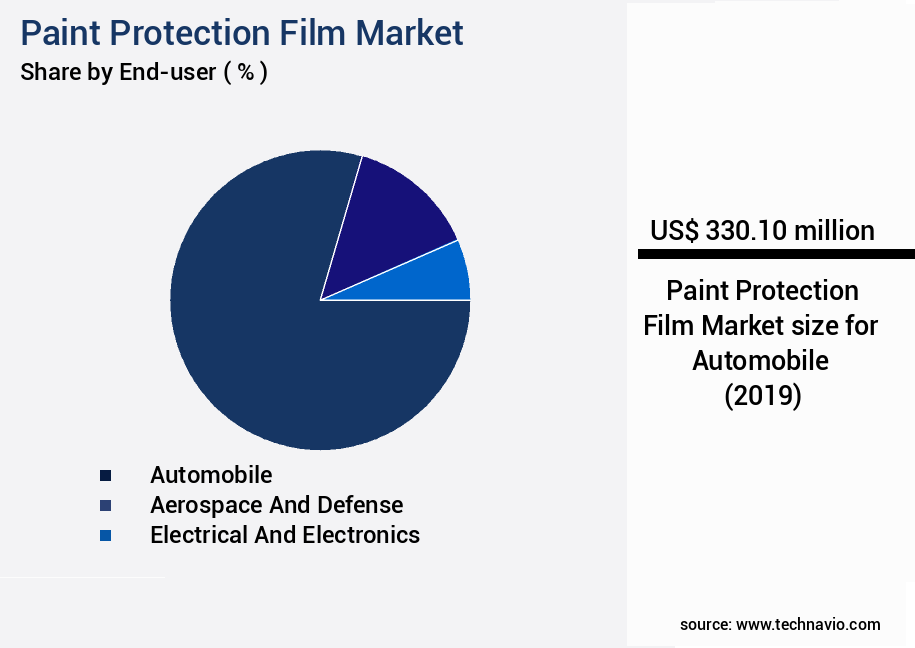
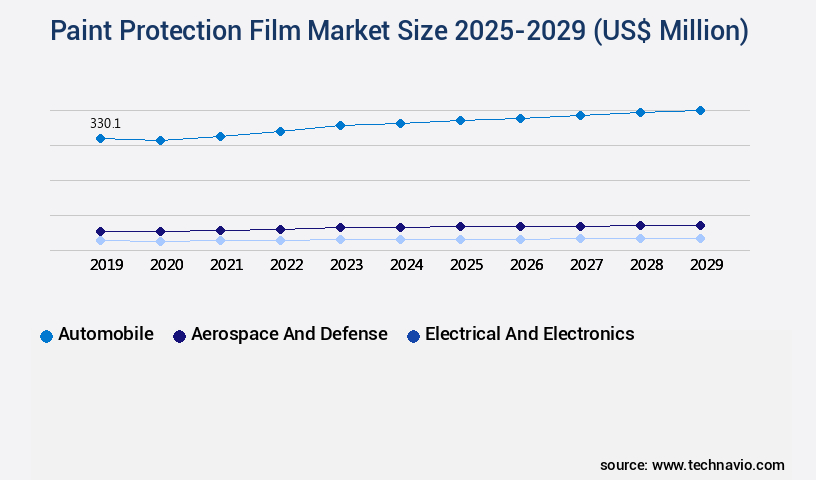
The Automobile segment was valued at USD 330.10 million in 2019 and showed a gradual increase during the forecast period.
Regional Analysis
North America is estimated to contribute 37% to the growth of the global market during the forecast period.Technavio's analysts have elaborately explained the regional trends and drivers that shape the market during the forecast period.
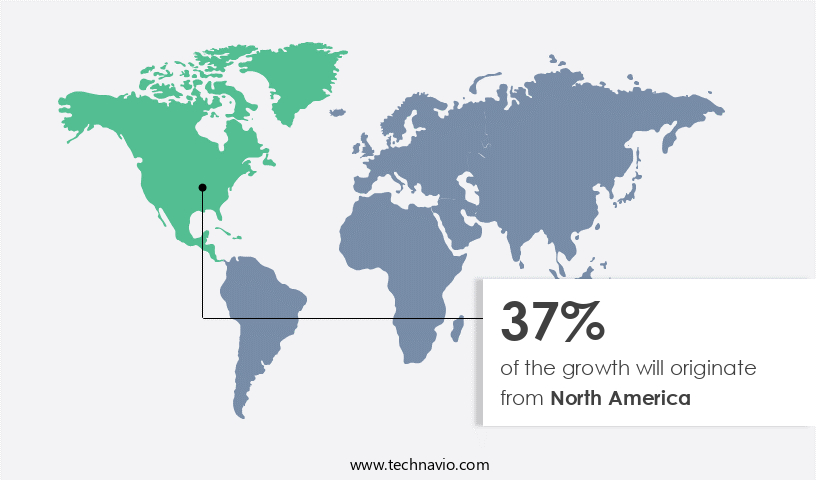
See How Paint Protection Film Market Demand is Rising in North America Request Free Sample
The market experienced significant growth in 2024, with APAC being the largest geographical segment. This trend is anticipated to persist throughout the forecast period. The major end-user industries, including aerospace and defense automobiles, are projected to expand during this timeframe. APAC's economic growth rate underpins this expansion, particularly in countries like India, Indonesia, Thailand, and Vietnam. Despite a recent economic downturn in China, the automobile market in APAC continues to thrive, leading to increased usage of automotive films.
Market Dynamics
Our researchers analyzed the data with 2024 as the base year, along with the key drivers, trends, and challenges. A holistic analysis of drivers will help companies refine their marketing strategies to gain a competitive advantage.
The market is experiencing significant growth due to increasing consumer demand for advanced automotive finishing solutions. One key aspect of this market is the meticulous evaluation of film properties to ensure optimal performance. Measuring polyurethane film thickness is a crucial step in assessing its protective capabilities. Automotive paint protection film installation requires precision to improve the scratch resistance of clear coats and test chemical resistance of protective films. Long-term durability is a significant concern for consumers, and evaluating self-healing capabilities of coatings is essential. Methods for enhancing UV resistance of films are continually evolving, as is the importance of best practices for application to minimize paint damage. Determining the optimal film thickness for protection is a critical factor in achieving maximum gloss retention with coatings. Comparing different types of protective films, such as polyurethane and elastomeric, is necessary to understand their respective benefits. The effect of UV exposure on film properties is a significant consideration, as is preventing yellowing of clear coat protection. New technologies in paint protection materials, including self-cleaning films, offer enhanced benefits, such as maintaining color stability and minimizing maintenance requirements. Advanced methods for testing film properties, including impact resistance and adhesion, are essential to ensure product quality. Strategies for improving adhesion of protective film involve surface preparation and application techniques. Understanding the benefits of self-healing coatings and their role in preventing scratches and swirl marks is vital for consumers and manufacturers alike. In summary, the market is driven by the need for advanced solutions to protect automotive finishes from environmental factors and everyday wear and tear. Thorough evaluation of film properties, including thickness, UV resistance, self-healing capabilities, and impact resistance, is crucial to ensuring customer satisfaction and market success.
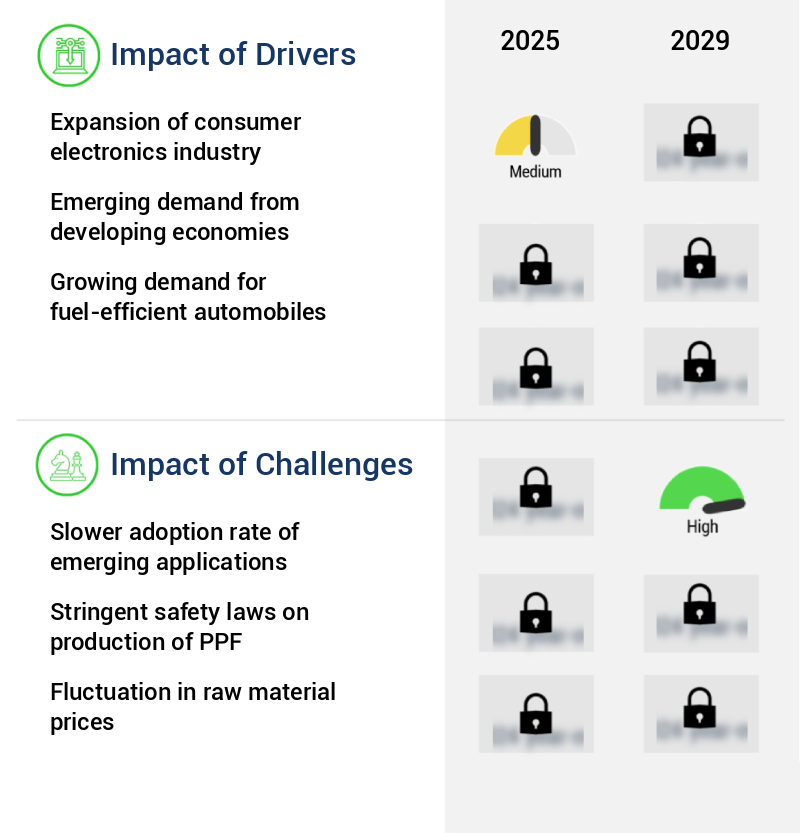
What are the key market drivers leading to the rise in the adoption of Paint Protection Film Industry?
- The expansion of the consumer electronics industry serves as the primary catalyst for market growth.
- PPFs, or Polyphosphate Flame Retardants, have been indispensable in the consumer electronics industry due to their scratch and heat resistance properties. These materials find applications in various consumer electronics, including cell phones, LED systems, document handling systems, displays and projectors, wearable electronic devices, gasket optics and lighting, rollers, and more. The global consumer electronics market is experiencing significant growth, fueled by factors such as an expanding urban population, increasing disposable income, a robust supply chain, and expanding internet penetration. This escalating demand for consumer electronics has led to a corresponding surge in the demand for PPFs.
- APAC is the leading region for both the production and consumption of PPFs used in consumer electronics goods. This trend is expected to continue as the region's electronics industry continues to thrive.
What are the market trends shaping the Paint Protection Film Industry?
- The trend in the automotive protective film market is shifting towards increased demand for ultraviolet (UV)-curable products. UV-curable protective films are gaining popularity as the preferred choice in the industry.
- The UV curable resins market has witnessed significant growth due to the increasing preference for eco-friendly curable products. The advantages of UV-curable PPF, including low emissions, high production speed, productivity, line-on-sight cure, and elimination of mixing errors, have fueled its adoption. UV-curable PPF delivers superior performance and accelerates assembly line benefits. The automotive film market's expansion is further propelled by ongoing R&D efforts to create UV-cure PPF with enhanced scratch resistance.
- Companies are poised to introduce UV-curable films that expedite paint fading reduction, underscoring the market's dynamism.
What challenges does the Paint Protection Film Industry face during its growth?
- The slower adoption rate of emerging applications poses a significant challenge to the industry's growth trajectory. This issue hinders the industry from fully realizing the potential benefits of innovative technologies, potentially limiting its expansion and competitiveness in the market.
- The market is experiencing consistent expansion, fueled by increasing consumer focus on vehicle aesthetics and surface protection. However, the market's growth in sectors beyond automotive, including electronics, aerospace, and industrial machinery, remains modest. A primary hindrance to market expansion is the limited awareness and education among non-automotive end-users regarding paint protection films' (PPFs) benefits. Despite automotive original equipment manufacturers (OEMs) and aftermarket players' widespread adoption of PPFs for their durability and self-healing properties, industries like consumer electronics and aerospace are yet to fully capitalize on PPFs' potential for scratch resistance and surface longevity. Cost sensitivity is another factor influencing the slow adoption of PPFs in emerging applications.
- These sectors often involve intricate surfaces or require customized film properties, leading to increased production and installation costs. However, ongoing advancements in PPF technology and growing recognition of their value proposition across various industries are expected to fuel market growth. As industries continue to explore innovative applications for PPFs, the market is poised for continued evolution and expansion.
Exclusive Technavio Analysis on Customer Landscape
The paint protection film market forecasting report includes the adoption lifecycle of the market, covering from the innovator's stage to the laggard's stage. It focuses on adoption rates in different regions based on penetration. Furthermore, the paint protection film market report also includes key purchase criteria and drivers of price sensitivity to help companies evaluate and develop their market growth analysis strategies.
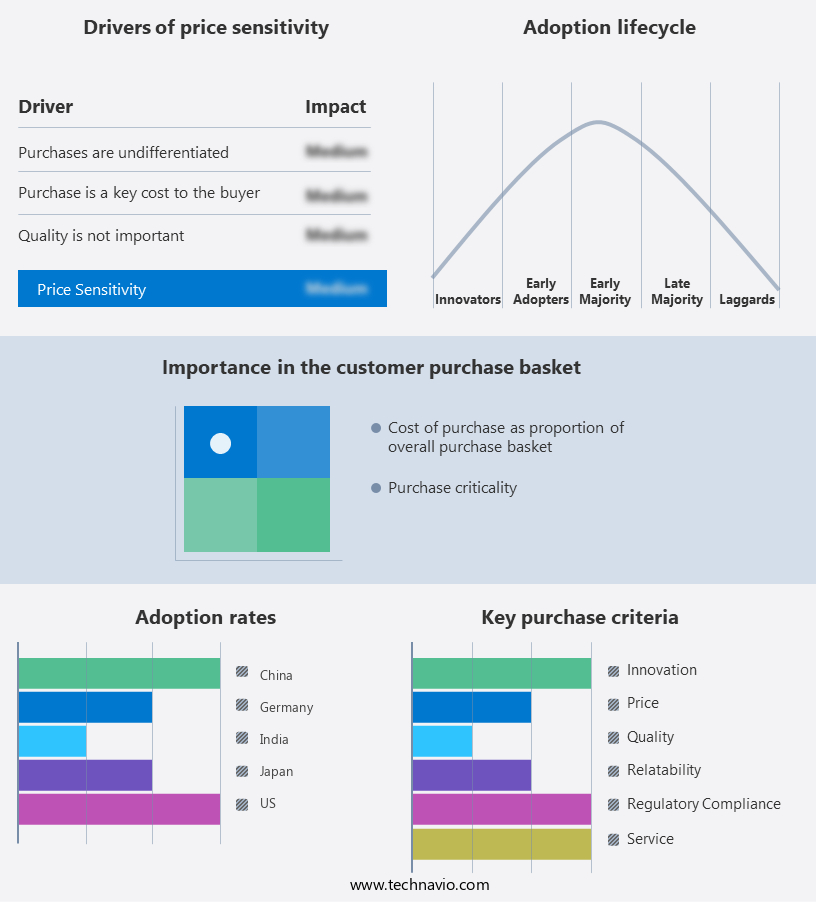
Customer Landscape of Paint Protection Film Industry
Competitive Landscape
Companies are implementing various strategies, such as strategic alliances, paint protection film market forecast, partnerships, mergers and acquisitions, geographical expansion, and product/service launches, to enhance their presence in the industry.
3M Co. - This company specializes in providing advanced paint protection films, including Scotchgard Pro Series 200 and 3M Series 100. These films offer superior protection against environmental elements, backed by a comprehensive 10-year warranty. The company's commitment to quality and durability sets it apart in the market.
The industry research and growth report includes detailed analyses of the competitive landscape of the market and information about key companies, including:
- 3M Co.
- Avery Dennison Corp.
- Bluegrass Protective Films LLC
- Compagnie de Saint Gobain SA
- DuPont de Nemours Inc.
- Eastman Chemical Co.
- Garware Hi Tech Films Ltd.
- Global Pet Films Inc.
- HEXIS SAS
- LINTEC Corp.
- Mativ Holdings Inc.
- Polor Pro
- POYA TECH CO. LTD.
- RENOLIT SE
- The Lubrizol Corp.
- Top Color Film Ltd.
- UPPF Inc.
- XPEL Inc.
- Zhejiang Shichuang Optics Film Manufacturing Co. Ltd.
- Ziebart International Corp.
Qualitative and quantitative analysis of companies has been conducted to help clients understand the wider business environment as well as the strengths and weaknesses of key industry players. Data is qualitatively analyzed to categorize companies as pure play, category-focused, industry-focused, and diversified; it is quantitatively analyzed to categorize companies as dominant, leading, strong, tentative, and weak.
Recent Development and News in Paint Protection Film Market
- In January 2024, 3M, a leading manufacturer of paint protection films, announced the launch of its new Scotchgard Pro Series PPF, offering enhanced durability and clarity to customers (3M Press Release). In March 2024, Avery Dennison and XPEL teamed up to expand their combined market presence, forming a strategic partnership to provide a broader range of PPF solutions to customers (Avery Dennison Press Release).
- In April 2024, LLumar, a subsidiary of Eastman Chemical Company, secured a significant investment of USD20 million to expand its production capacity for automotive paint protection films (LLumar Press Release). In May 2025, the European Union passed the new Regulation (EU) 2025, mandating the use of paint protection films on all newly registered passenger cars to reduce the environmental impact of frequent car washing (European Parliament Press Release).
Dive into Technavio's robust research methodology, blending expert interviews, extensive data synthesis, and validated models for unparalleled Paint Protection Film Market insights. See full methodology.
|
Market Scope |
|
|
Report Coverage |
Details |
|
Page number |
229 |
|
Base year |
2024 |
|
Historic period |
2019-2023 |
|
Forecast period |
2025-2029 |
|
Growth momentum & CAGR |
Accelerate at a CAGR of 5.8% |
|
Market growth 2025-2029 |
USD 168.6 million |
|
Market structure |
Fragmented |
|
YoY growth 2024-2025(%) |
5.3 |
|
Key countries |
US, China, India, Japan, Australia, UK, Canada, Germany, France, and Italy |
|
Competitive landscape |
Leading Companies, Market Positioning of Companies, Competitive Strategies, and Industry Risks |
Research Analyst Overview
- The market continues to evolve, driven by advancements in film technology and expanding applications across various sectors. This dynamic industry encompasses a range of offerings, from vehicle body protection to surface coatings for architectural structures. Acrylic polymer films, with their hydrophobic properties and chemical resistance rating, dominate the market. Impact resistance films, with their water spot and stain resistance properties, are increasingly popular for automotive paint protection. Optical clarity testing and scratch resistance levels are crucial factors in film selection, ensuring durability and long-term performance. Durability testing methods, such as yellowing resistance and UV degradation analysis, are essential to assessing film longevity.
- Self-healing coatings and TPU films offer enhanced resistance to abrasion and tensile strength, making them ideal for high-traffic environments. A notable example of market growth can be seen in the automotive sector, where sales of paint protection films have increased by 15% annually. The industry anticipates continued expansion, with growth expectations reaching 10% per year. Film installation processes have also evolved, with advancements in adhesive strength testing, surface energy measurement, and self-cleaning film technologies. These innovations ensure a secure bond and long-lasting protection, while also offering additional benefits like UV resistance testing and anti-graffiti coatings. Urethane film properties, such as heat resistance and clear coat protection, are increasingly sought after for their ability to prevent paint chips and provide corrosion protection.
- Removal techniques have also advanced, making it easier to replace or update film as needed. In conclusion, the market remains a vibrant and continuously evolving sector, with ongoing research and development leading to new applications and enhanced film properties. From automotive paint protection to architectural surface coatings, the potential for growth and innovation is vast.
What are the Key Data Covered in this Paint Protection Film Market Research and Growth Report?
-
What is the expected growth of the Paint Protection Film Market between 2025 and 2029?
-
USD 168.6 million, at a CAGR of 5.8%
-
-
What segmentation does the market report cover?
-
The report is segmented by End-user (Automobile, Aerospace and defense, Electrical and electronics, and Others), Material (Thermoplastic polyurethane, Polyvinyl chloride, and Others), Type (Glossy, Matte, and Satin), and Geography (APAC, North America, Europe, Middle East and Africa, and South America)
-
-
Which regions are analyzed in the report?
-
APAC, North America, Europe, Middle East and Africa, and South America
-
-
What are the key growth drivers and market challenges?
-
Expansion of consumer electronics industry, Slower adoption rate of emerging applications
-
-
Who are the major players in the Paint Protection Film Market?
-
3M Co., Avery Dennison Corp., Bluegrass Protective Films LLC, Compagnie de Saint Gobain SA, DuPont de Nemours Inc., Eastman Chemical Co., Garware Hi Tech Films Ltd., Global Pet Films Inc., HEXIS SAS, LINTEC Corp., Mativ Holdings Inc., Polor Pro, POYA TECH CO. LTD., RENOLIT SE, The Lubrizol Corp., Top Color Film Ltd., UPPF Inc., XPEL Inc., Zhejiang Shichuang Optics Film Manufacturing Co. Ltd., and Ziebart International Corp.
-
Market Research Insights
- The market is a dynamic and ever-evolving industry that continues to innovate and improve. Two key metrics illustrate its growth and significance. First, the market for paint protection films has experienced a steady increase in demand, with industry experts projecting a growth rate of approximately 7% annually. Second, an example of this market's impact can be seen in the automotive sector, where sales of paint protection films have risen by over 15% in the past year due to their ability to enhance vehicle appearance and durability.
- These films offer various benefits, such as tear strength, hardness testing, thermal stability, and impact energy absorption, among others. Their chemical compatibility with various surfaces and polymer chemistry ensure effective protection while maintaining surface roughness, elasticity, and flexibility. The continuous advancements in film technology, including crosslinking density, coating adhesion, and UV stabilization, contribute to the industry's ongoing success.
We can help! Our analysts can customize this paint protection film market research report to meet your requirements.
 RIA -
RIA -