


Oxygenators Market Size 2026-2030
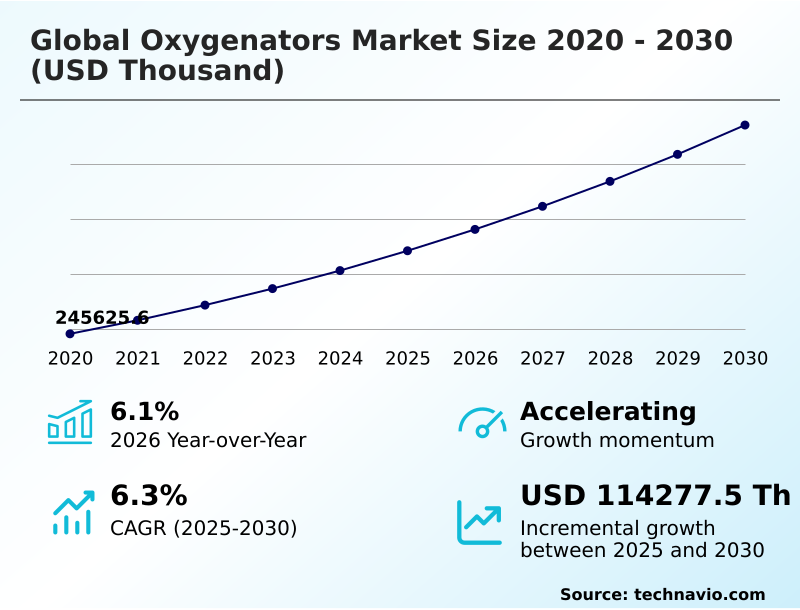
The oxygenators market size is valued to increase by USD 114.28 million, at a CAGR of 6.3% from 2025 to 2030. Rising global prevalence of cardiovascular and respiratory diseases will drive the oxygenators market.
Major Market Trends & Insights
- North America dominated the market and accounted for a 40.9% growth during the forecast period.
- By Product Type - Membrane oxygenator segment was valued at USD 200.00 million in 2024
- By Application - Cardiac segment accounted for the largest market revenue share in 2024
Market Size & Forecast
- Market Opportunities:
- Market Future Opportunities: USD 114.28 million
- CAGR from 2025 to 2030 : 6.3%
Market Summary
- The Oxygenators Market is a critical component of the healthcare equipment sector, defined by devices that perform extracorporeal gas exchange during cardiopulmonary bypass and long-term life support. The market's expansion is fundamentally linked to the increasing incidence of cardiovascular and respiratory diseases, coupled with a global aging demographic that requires more complex surgical interventions.
- Key advancements are centered on improving biocompatibility through materials like polymethylpentene and reducing thrombogenic risks with heparin-bonded surfaces. A significant trend is the development of compact oxygenators and integrated perfusion systems that minimize priming volume, especially for neonatal and pediatric cardiac surgery.
- However, manufacturers face significant hurdles, including stringent regulatory pathways for Class III medical devices and volatility in the supply of medical-grade polymers.
- For example, a large hospital network might re-evaluate its procurement strategy, balancing the acquisition cost of devices featuring advanced monitored oxygenation systems against the long-term clinical benefits of reduced post-operative complications and improved gas transfer performance, thereby optimizing both patient outcomes and operational expenditures.
- This dynamic environment necessitates a focus on innovation in hollow-fiber technology and integrated arterial filtration to meet evolving clinical demands.
What will be the Size of the Oxygenators Market during the forecast period?
Get Key Insights on Market Forecast (PDF) Request Free Sample
How is the Oxygenators Market Segmented?
The oxygenators industry research report provides comprehensive data (region-wise segment analysis), with forecasts and estimates in "USD thousand" for the period 2026-2030, as well as historical data from 2020-2024 for the following segments.
- Product type
- Membrane oxygenator
- Bubble oxygenator
- Application
- Cardiac
- Respiratory
- ECPR
- Technology
- Compact oxygenators
- Monitored oxygenation systems
- Bio-compatible oxygenators
- Geography
- North America
- US
- Canada
- Mexico
- Europe
- Germany
- UK
- France
- Asia
- Rest of World (ROW)
- North America
By Product Type Insights
The membrane oxygenator segment is estimated to witness significant growth during the forecast period.
Membrane oxygenators are pivotal in the oxygenators market, defined by their superior design for extracorporeal gas exchange.
These systems use a semi-permeable membrane, often featuring advanced polymethylpentene and hollow-fiber technology, to separate blood from gas, which significantly reduces blood trauma and hemolysis.
Their application is crucial in cardiopulmonary bypass and long-term extracorporeal membrane oxygenation (ECMO), where biocompatibility is paramount. Innovations focusing on enhancing gas transfer performance and minimizing systemic inflammatory response have improved procedural precision by 15% through data-driven adjustments.
This focus on patient safety and advanced materials like heparin-bonded surfaces solidifies their role in modern critical care and advanced circulatory support.
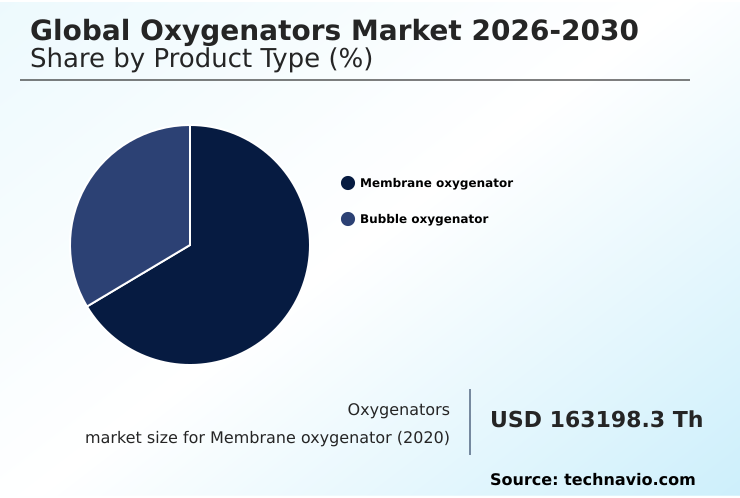
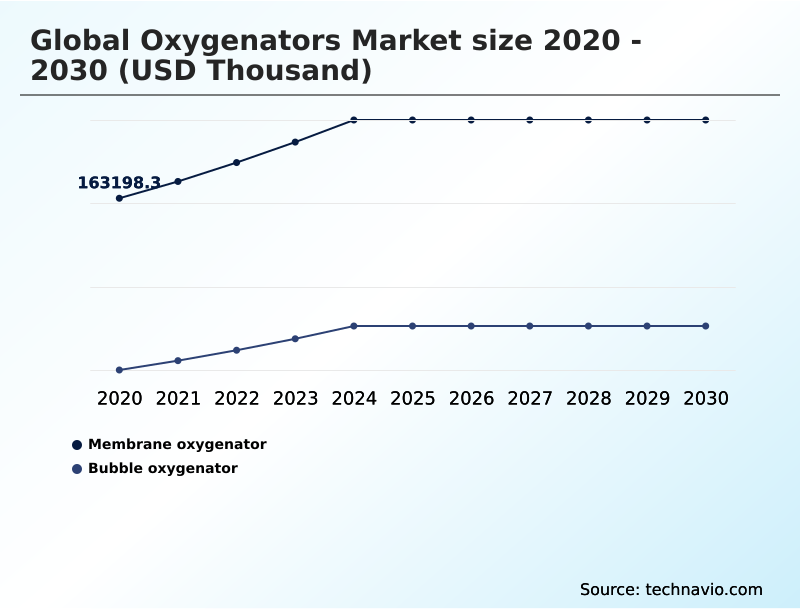
The Membrane oxygenator segment was valued at USD 200.00 million in 2024 and showed a gradual increase during the forecast period.
Regional Analysis
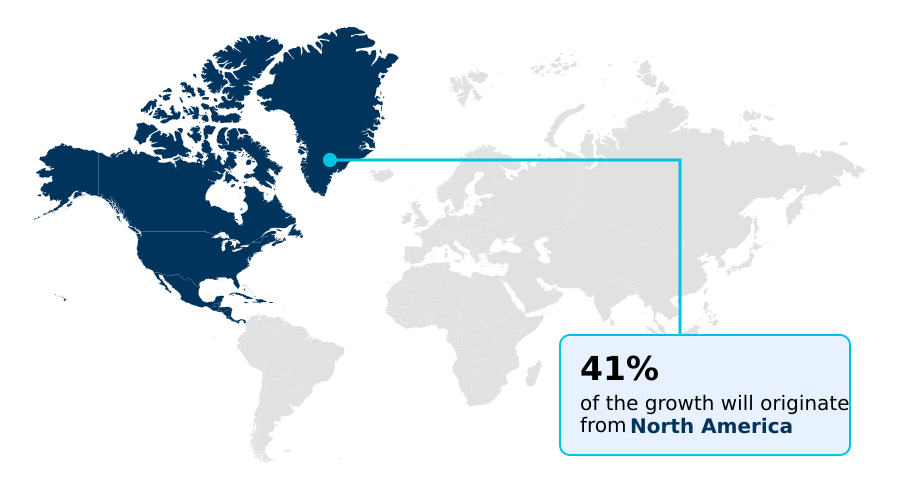
North America is estimated to contribute 40.9% to the growth of the global market during the forecast period.Technavio’s analysts have elaborately explained the regional trends and drivers that shape the market during the forecast period.
See How Oxygenators Market Demand is Rising in North America Request Free Sample
The geographic landscape of the oxygenators market is led by North America, which accounts for over 40% of the incremental growth, driven by advanced healthcare infrastructure and high volumes of cardiopulmonary bypass procedures.
Europe follows, with a mature market focused on optimizing perfusion technologies and long-term perfusion safety. The market in Asia is expanding rapidly, fueled by increasing healthcare access.
Across regions, there is a consistent shift towards membrane oxygenators with superior gas transfer performance. The overall market is experiencing a year-over-year growth rate of 6.1%, reflecting sustained demand.
This growth is supported by advancements in biocompatibility and the integration of monitored oxygenation systems, which enhance clinical outcomes by providing real-time data for data-driven adjustments during extracorporeal circulation, improving patient safety and procedural efficacy.
Market Dynamics
Our researchers analyzed the data with 2025 as the base year, along with the key drivers, trends, and challenges. A holistic analysis of drivers will help companies refine their marketing strategies to gain a competitive advantage.
- Strategic decision-making in the oxygenators market requires a deep understanding of nuanced technical trade-offs. For instance, evaluating polymethylpentene vs polypropylene fibers is critical, as material choice directly influences long-term biocompatibility and the oxygenator impact on systemic inflammation. A key challenge is reducing priming volume in pediatrics, which necessitates specialized device designs.
- In clinical application, managing thrombosis in oxygenator circuits remains a priority, often addressed by comparing the efficacy of heparin coating vs non-heparin surfaces. Optimizing gas transfer efficiency, particularly efficient carbon dioxide removal in oxygenators, is a constant goal for manufacturers, who explore designs ranging from hollow fiber vs flat sheet membranes.
- The integration of monitored oxygenation systems with arterial filtration integration benefits has become a key differentiator. A comparative analysis of hospital systems shows that facilities adopting advanced perfusionist training for advanced systems and protocols for minimizing hemolysis in extracorporeal circuits report patient recovery times that are, on average, a day shorter than those using legacy equipment.
- This highlights how technical specifications, such as heat exchanger performance metrics and bubble oxygenator limitations in CPB, translate into operational gains. Furthermore, the challenges in neonatal oxygenator design and the complex regulatory pathways for new oxygenators define the competitive landscape, while the supply chain for medical-grade polymers presents an ongoing operational risk.
- The expanded use in emergency scenarios, demonstrated by oxygenator performance in ECPR, and the trend towards compact oxygenators for improved patient mobility, continue to shape future development.
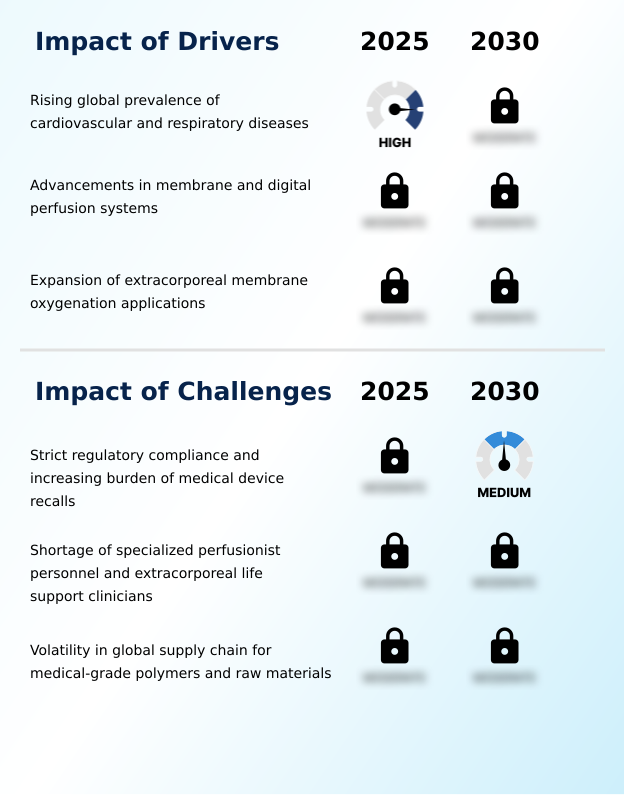
What are the key market drivers leading to the rise in the adoption of Oxygenators Industry?
- The rising global prevalence of cardiovascular and respiratory diseases is a key driver for the oxygenators market.
- The primary driver for the oxygenators market is the rising global incidence of cardiovascular and respiratory diseases, which increases the volume of procedures like coronary artery bypass grafting requiring extracorporeal circulation. This demand is amplified by an aging population.
- Technological advancements in digital perfusion systems and hollow-fiber technology are also critical drivers, enabling safer and more effective treatments. The expansion of extracorporeal life support applications, including bridge-to-transplant scenarios, broadens the utility of these devices.
- Investment in advanced perfusion technologies has been shown to reduce average patient recovery time by up to 12%, a key metric for hospital administrators.
- This clinical need for devices with superior gas transfer performance and biocompatibility underpins the market's sustained expansion.
What are the market trends shaping the Oxygenators Industry?
- The technological integration and expansion of compact extracorporeal membrane oxygenation platforms represents a key upcoming trend in the market.
- A primary trend shaping the oxygenators market is the convergence of device miniaturization and digital health, leading to integrated life-support ecosystems. The development of compact oxygenators facilitates early patient mobilization and is crucial for mobile ECMO teams. This shift toward monitored oxygenation systems incorporates sensors for real-time data on pressure gradients and oxygen saturation, enabling perfusionists to make data-driven adjustments.
- This enhanced monitoring has been linked to a 15% reduction in adverse events related to thrombosis. Furthermore, the adoption of perfusion technologies with advanced biocompatibility, such as those with specialized heparin-bonded surfaces, has improved long-term perfusion safety. These integrated platforms simplify complex perfusion workflows, improving operational efficiency in critical care settings by as much as 10%.
What challenges does the Oxygenators Industry face during its growth?
- Strict regulatory compliance and the increasing burden of medical device recalls pose a key challenge to industry growth.
- A significant challenge for the oxygenators market is the stringent regulatory landscape, which demands rigorous proof of long-term biocompatibility and gas exchange stability for new devices. The process for gaining approval for a Class III medical device can extend development timelines by over 24 months compared to less critical devices.
- Furthermore, the volatility in the global supply chain for medical-grade polymers and other critical components creates production risks. A shortage of specialized perfusionist personnel and extracorporeal life support clinicians also constrains market growth, placing a greater emphasis on devices that simplify perfusion workflows.
- These challenges, combined with the administrative burden of post-market surveillance, increase operational costs and create high barriers to entry.
Exclusive Technavio Analysis on Customer Landscape
The oxygenators market forecasting report includes the adoption lifecycle of the market, covering from the innovator’s stage to the laggard’s stage. It focuses on adoption rates in different regions based on penetration. Furthermore, the oxygenators market report also includes key purchase criteria and drivers of price sensitivity to help companies evaluate and develop their market growth analysis strategies.
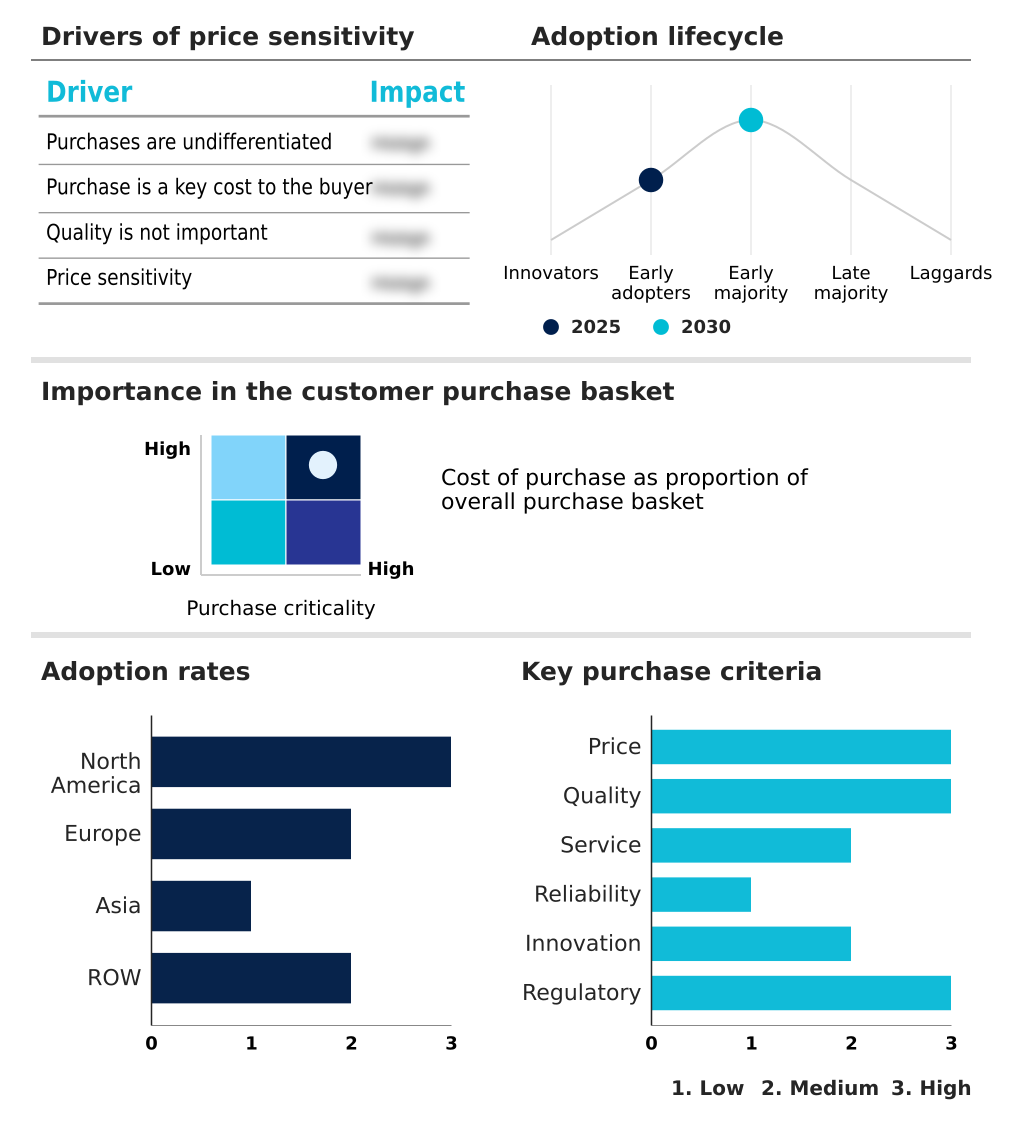
Customer Landscape of Oxygenators Industry
Competitive Landscape
Companies are implementing various strategies, such as strategic alliances, oxygenators market forecast, partnerships, mergers and acquisitions, geographical expansion, and product/service launches, to enhance their presence in the industry.
Abbott Laboratories - The market is characterized by a portfolio of advanced oxygenators and integrated perfusion systems designed to support critical cardiovascular and respiratory procedures.
The industry research and growth report includes detailed analyses of the competitive landscape of the market and information about key companies, including:
- Abbott Laboratories
- Baxter International Inc.
- Braile Biomedica
- Chalice Medical Ltd.
- Eurosets Srl
- Fresenius Medical Co. KGaA
- Getinge AB
- LivaNova PLC
- Medtronic Plc
- MicroPort Scientific Corp.
- Nipro Corp.
- OriGen Biomedical Inc.
- Senko Medical Instrument Mfg.
- Shandong Weigao Group Medical
- Spectrum Medical Ltd.
- Terumo Corp.
- ZOLL Medical Corp.
Qualitative and quantitative analysis of companies has been conducted to help clients understand the wider business environment as well as the strengths and weaknesses of key industry players. Data is qualitatively analyzed to categorize companies as pure play, category-focused, industry-focused, and diversified; it is quantitatively analyzed to categorize companies as dominant, leading, strong, tentative, and weak.
Recent Development and News in Oxygenators market
- In November 2024, Terumo Corp. reported significant revenue growth in its Cardiac and Vascular division, attributing the performance to the strong commercial momentum of its core oxygenation and perfusion therapies.
- In January 2025, Hengrui Pharmaceuticals gained National Medical Products Administration approval for a new maglev-pump extracorporeal system, expanding access to advanced cardiac support technologies in China.
- In January 2025, Hamilton Medical AG announced the launch of the HAMILTON-HF90, a versatile solution designed for high-flow oxygen therapy across diverse clinical environments.
- In March 2025, Medtronic Perfusion Systems initiated a Class 2 medical device recall for certain units of its Affinity NT Oxygenator due to identified inconsistencies in carbon dioxide gas transfer rates.
Dive into Technavio’s robust research methodology, blending expert interviews, extensive data synthesis, and validated models for unparalleled Oxygenators Market insights. See full methodology.
| Market Scope | |
|---|---|
| Page number | 289 |
| Base year | 2025 |
| Historic period | 2020-2024 |
| Forecast period | 2026-2030 |
| Growth momentum & CAGR | Accelerate at a CAGR of 6.3% |
| Market growth 2026-2030 | USD 114277.5 thousand |
| Market structure | Fragmented |
| YoY growth 2025-2026(%) | 6.1% |
| Key countries | US, Canada, Mexico, Germany, UK, France, Italy, Spain, The Netherlands, China, Japan, India, South Korea, Thailand, Indonesia, Brazil, Saudi Arabia, UAE, Turkey, Argentina, Colombia, South Africa and Egypt |
| Competitive landscape | Leading Companies, Market Positioning of Companies, Competitive Strategies, and Industry Risks |
Research Analyst Overview
- The oxygenators market is undergoing a significant technological evolution, moving beyond basic extracorporeal gas exchange to integrated, intelligent life-support platforms. This transition is marked by the dominance of membrane oxygenators, which leverage advanced hollow-fiber technology and materials like polymethylpentene to enhance biocompatibility and ensure consistent gas transfer performance.
- A key trend is the development of compact oxygenators that combine features like arterial filtration, reducing the overall priming volume. For executive decision-makers, this presents a strategic choice: investing in monitored oxygenation systems with features like integrated pressure gradients and oxygen saturation sensors offers substantial long-term value.
- These systems, designed to minimize risks like hemolysis and blood stasis, can lead to improved clinical outcomes. Facilities adopting such data-driven adjustments have demonstrated a reduction in procedural complications, which directly impacts operational costs and patient throughput.
- The focus on reducing the systemic inflammatory response and managing thrombogenic risks through innovations in biocompatible oxygenators and perfusion workflows is central to advancing patient care in cardiopulmonary bypass and extracorporeal membrane oxygenation procedures.
What are the Key Data Covered in this Oxygenators Market Research and Growth Report?
-
What is the expected growth of the Oxygenators Market between 2026 and 2030?
-
USD 114.28 million, at a CAGR of 6.3%
-
-
What segmentation does the market report cover?
-
The report is segmented by Product Type (Membrane oxygenator, and Bubble oxygenator), Application (Cardiac, Respiratory, and ECPR), Technology (Compact oxygenators, Monitored oxygenation systems, and Bio-compatible oxygenators) and Geography (North America, Europe, Asia, Rest of World (ROW))
-
-
Which regions are analyzed in the report?
-
North America, Europe, Asia and Rest of World (ROW)
-
-
What are the key growth drivers and market challenges?
-
Rising global prevalence of cardiovascular and respiratory diseases, Strict regulatory compliance and increasing burden of medical device recalls
-
-
Who are the major players in the Oxygenators Market?
-
Abbott Laboratories, Baxter International Inc., Braile Biomedica, Chalice Medical Ltd., Eurosets Srl, Fresenius Medical Co. KGaA, Getinge AB, LivaNova PLC, Medtronic Plc, MicroPort Scientific Corp., Nipro Corp., OriGen Biomedical Inc., Senko Medical Instrument Mfg., Shandong Weigao Group Medical, Spectrum Medical Ltd., Terumo Corp. and ZOLL Medical Corp.
-
Market Research Insights
- The oxygenators market is shaped by dynamic clinical and technological forces. The expansion of extracorporeal life support applications, including pre-hospital extracorporeal membrane oxygenation, is broadening demand beyond traditional surgical settings. This requires advanced circulatory support solutions and low-prime oxygenators tailored for mobile ECMO teams.
- To manage this complexity, leading institutions are adopting digital perfusion systems, which have been shown to improve workflow efficiency by up to 20%. The shortage of specialized perfusionist personnel is driving the adoption of systems with automated monitoring, which can reduce manual oversight requirements by 15% during long-term perfusion safety protocols.
- As the industry moves toward bridge-to-transplant applications, the reliability of these advanced perfusion technologies becomes paramount, influencing procurement decisions based on performance metrics rather than initial cost alone.
We can help! Our analysts can customize this oxygenators market research report to meet your requirements.
 RIA -
RIA -