

US Online Fashion Retail Market Analysis, Size, and Forecast 2025-2029

US Online Fashion Retail Market Analysis, Size, and Forecast 2025-2029

Published: Feb 2025 175 Pages SKU: IRTNTR72649

Market Overview at a Glance

$303.9 B
Market Opportunity
15.6%
CAGR
14.5
YoY growth 2024-2025(%)

US Online Fashion Retail Market Size 2025-2029 

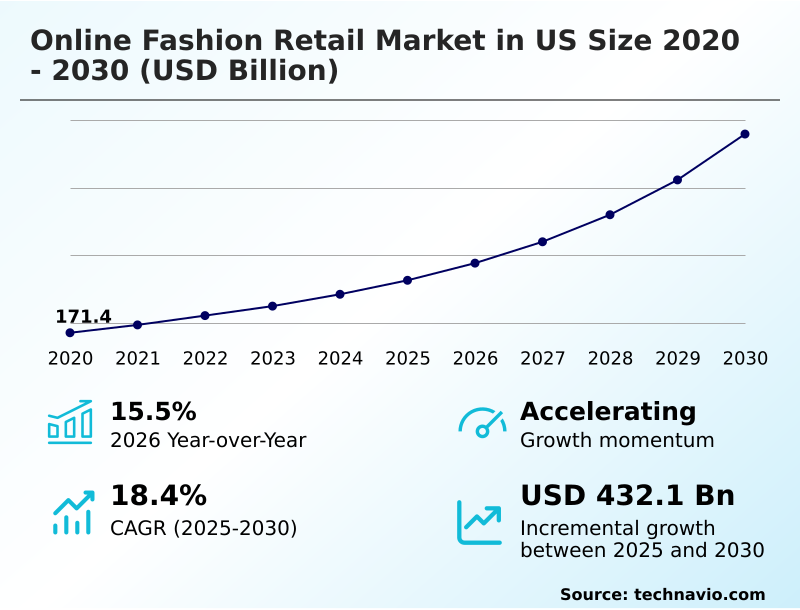
The us online fashion retail market size is forecast to increase by USD 303.9 billion at a CAGR of 15.6% between 2024 and 2029.

  • The Online Fashion Retail Market in the US is experiencing significant growth, driven by the rising trend of online shopping and the increasing popularity of sports apparel and footwear. Consumers are increasingly turning to the convenience and accessibility of online platforms to meet their fashion needs. The sports apparel and footwear industry's growth is further fueling market expansion, as consumers seek out the latest trends and styles in athletic wear. However, this market is not without challenges. Security and privacy concerns related to consumer data have emerged as a significant obstacle.
  • With the increasing amount of personal information being shared online, retailers must prioritize data protection and privacy to maintain consumer trust. Failure to do so could result in reputational damage and lost sales. Retailers must invest in robust cybersecurity measures and transparent data handling practices to mitigate these risks and capitalize on the market's potential.

What will be the size of the US Online Fashion Retail Market during the forecast period?
 

Online Fashion Retail Market in US Size

 Explore in-depth regional segment analysis with market size data - historical 2019-2023 and forecasts 2025-2029 - in the full report.  
Request Free Sample


  • In the dynamic US online fashion retail market, high-end fashion brands are embracing e-commerce optimization, leveraging data analytics tools to personalize shopping experiences and boost sales. Blockchain technology is revolutionizing the industry by ensuring supply chain transparency and ethical production, resonating with consumers' growing demand for sustainable sourcing. Resale platforms and second-hand clothing are gaining traction, as unisex fashion and body positivity continue to influence purchasing decisions. Performance marketing, affiliate marketing, and social commerce are key strategies driving growth, with fashion photography and fashion blogging shaping consumer trends.
  • Brands prioritize customer data privacy while implementing customer loyalty programs and subscription services. Trend analysis, size inclusivity, and fashion forecasting are essential components of successful digital marketing automation. Luxury goods and vintage fashion are thriving, with mobile wallet integration streamlining transactions. Omnichannel retail, fashion journalism, fashion styling, and live streaming are shaping the future of the industry.

How is this market segmented?

The market research report provides comprehensive data (region-wise segment analysis), with forecasts and estimates in "USD billion" for the period 2025-2029, as well as historical data from 2019-2023 for the following segments.

  • End-user
    • Women
    • Men
    • Kids
  • Product
    • Apparel
    • Footwears
    • Bags and accessories
  • Type
    • Mass market
    • Premium
    • Luxury
  • Platform
    • Mobile Apps
    • Web Portals
  • Price Range
    • Economy
    • Mid-Range
    • Premium
  • Geography
    • North America
      • US

By End-user Insights

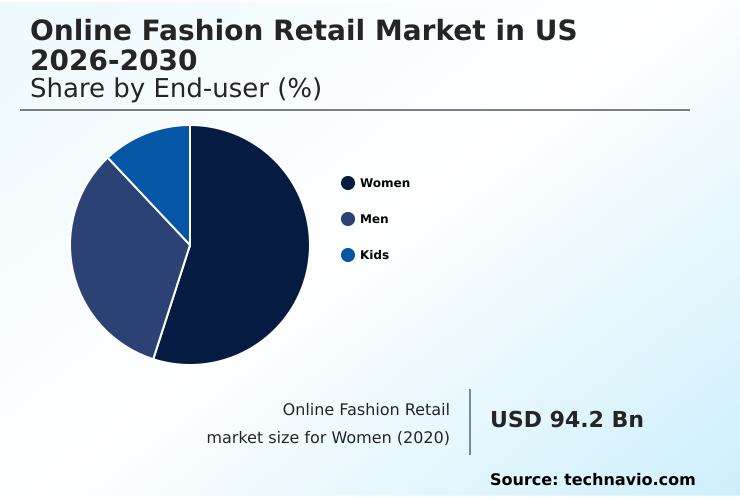
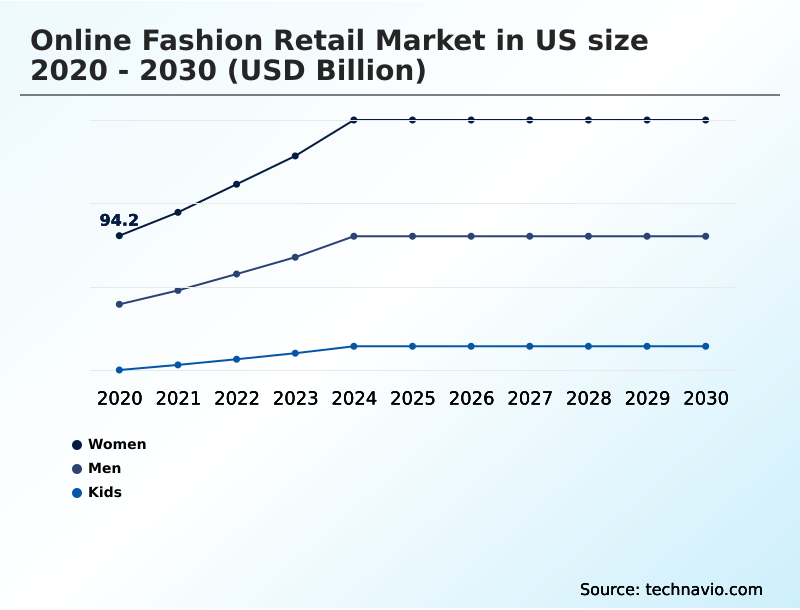
The women segment is estimated to witness significant growth during the forecast period.

The online fashion retail market in the US is experiencing significant growth, driven by several key trends and factors. Product reviews and customer satisfaction play a crucial role in influencing purchasing decisions, with consumers relying on authentic feedback to make informed choices. Influencer marketing is also a major force, as fashion influencers and celebrities shape trends and promote products through social media channels. Virtual reality and augmented reality technologies are transforming the shopping experience, allowing customers to virtually try on clothes and visualize how they would look. Big data and recommendation algorithms are being leveraged to personalize shopping experiences, while trend forecasting ensures that retailers stay ahead of the curve.

Content marketing, machine learning, and data analytics are essential tools for fashion brands, helping them to understand customer preferences and tailor their offerings accordingly. Textile suppliers and apparel manufacturers are integrating sustainable practices to cater to the growing demand for eco-friendly fashion. Mobile commerce and mobile app development are critical for reaching customers on the go, with mobile responsiveness and user interface design key considerations. Conversion rate optimization, data security, and payment gateways are essential for ensuring a seamless shopping experience. Customer service, inventory management, order fulfillment, and shipping logistics are all crucial components of a successful online fashion retail business.

Social media marketing, email marketing, and fashion designers collaborations are effective strategies for reaching and engaging customers. Size and fit, fast fashion, and formal wear are popular categories, with quality control and brand loyalty key differentiators. E-commerce platforms and online marketplaces offer convenience and accessibility, while email automation and virtual try-on technology enhance the shopping experience. Fraud detection and returns processing are important for managing risk and maintaining customer satisfaction. Personalization engines and fashion styling tools help retailers to offer tailored recommendations and create engaging shopping experiences. Overall, the online fashion retail market in the US is dynamic and evolving, with a focus on innovation, customer experience, and sustainability.


Online Fashion Retail Market in US Share by End-user

Request Free Sample


The Women segment was valued at  USD 83.10 billion in 2019 and showed a gradual increase during the forecast period.
Market Dynamics

Our researchers analyzed the data with 2024 as the base year, along with the key drivers, trends, and challenges. A holistic analysis of drivers will help companies refine their marketing strategies to gain a competitive advantage.

What are the US Online Fashion Retail Market market drivers leading to the rise in adoption of the Industry?

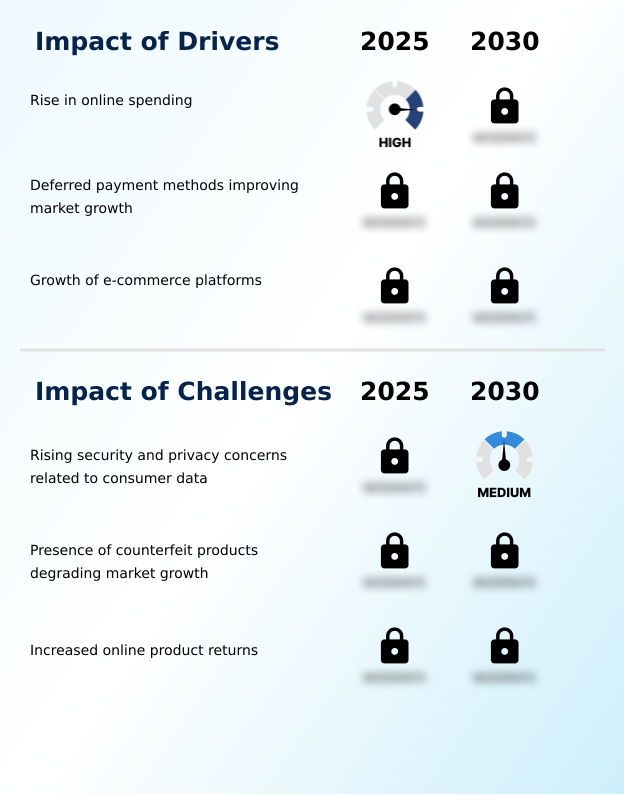
  • The significant increase in online spending serves as the primary growth catalyst for the market. 

  • Online retail in the US is experiencing significant growth, with the average transaction value and the number of online transactions increasing. The convenience and time-saving benefits of shopping online, coupled with a vast selection of products, are driving this trend. E-retailers prioritize consumer security through secure payment systems, free deliveries, and enhanced online customer service. These factors contribute to the growing preference for online shopping channels. Product reviews play a crucial role in consumer decision-making, and influencer marketing is an effective strategy to boost sales. Virtual reality (VR) technology and artificial intelligence (AI) are revolutionizing the online shopping experience, offering immersive and harmonious interactions.
  • Big data and recommendation algorithms enable trend forecasting and personalized shopping experiences. Content marketing and user interface (UI) design are essential elements of successful e-commerce platforms. Mobile responsiveness is a must-have feature for reaching consumers on-the-go. Conversion rate optimization is a continuous process to improve online sales. Textile suppliers and other business partners collaborate with e-retailers to ensure a seamless supply chain and customer satisfaction. In conclusion, the online retail market in the US is dynamic and evolving, with e-retailers focusing on enhancing the shopping experience through various strategies. These include product reviews, influencer marketing, VR, big data, recommendation algorithms, trend forecasting, content marketing, AI, textile suppliers, and customer satisfaction.
  • The commitment to mobile responsiveness, UI design, and conversion rate optimization further strengthens the online retail landscape.

What are the US Online Fashion Retail Market market trends shaping the Industry?

  • The online sports apparel and footwear industry is experiencing significant growth, making it a prominent market trend. As a professional virtual assistant, I can provide you with up-to-date and comprehensive information on this expanding sector.

  • E-commerce platforms have revolutionized the way consumers shop for sportswear in the US, offering unparalleled convenience and access to a vast selection of brands. Unlike traditional retail stores, e-commerce enables customers to place orders at any time, with options for same-day delivery and pre-paid scheduling. The rise of fast-fashion footwear and athletic footwear brands has fueled significant growth in this market. Security is a top priority for online fashion retailers, ensuring data protection through secure payment gateways and robust infrastructure. Inventory management systems help maintain stock levels and prevent overselling, while mobile app development caters to the growing number of mobile shoppers.
  • Social media marketing and email campaigns are essential tools for reaching and engaging customers, while virtual try-on technology and machine learning algorithms enhance the shopping experience. Sustainable fashion initiatives and shipping logistics are also critical considerations for brands seeking to differentiate themselves and meet evolving consumer expectations. Data analytics plays a crucial role in understanding customer behavior and preferences, enabling targeted marketing and personalized recommendations.

How does US Online Fashion Retail Market market faces challenges face during its growth?

  • The expansion of the industry is significantly influenced by the escalating security and privacy concerns surrounding consumer data, necessitating robust solutions to mitigate risks and protect information. 

  • The online fashion retail market in the US is experiencing significant growth, driven by various factors. Social media integration and mobile commerce (m-commerce) have become essential channels for fashion brands to reach consumers. Online marketplaces, such as Amazon and Walmart, dominate the industry, offering a wide range of products from apparel manufacturers and fashion designers. However, challenges persist in this market. Consumers' concern for size and fit accuracy, a common issue with online shopping, can lead to returns and dissatisfaction. Fast fashion's emphasis on quality control is crucial to maintain customer trust. Payment security is another critical aspect, with consumers demanding robust and secure platforms for transactions.
  • Augmented reality (AR) technology is increasingly being used to enhance the online shopping experience, allowing customers to virtually try on clothes and accessories. Email automation is also a popular strategy for brands to engage with their customers and promote their products. Despite these advancements, privacy and data security remain significant concerns. Consumers are wary of sharing their personal information, especially for marketing purposes. Brands must prioritize transparency and clear communication regarding data usage to build trust and foster long-term relationships. In conclusion, the online fashion retail market in the US continues to evolve, with technology playing a significant role in enhancing the shopping experience.
  • However, addressing consumer concerns around data privacy, size and fit accuracy, and payment security will be crucial for market growth.

Exclusive US Online Fashion Retail Market Customer Landscape

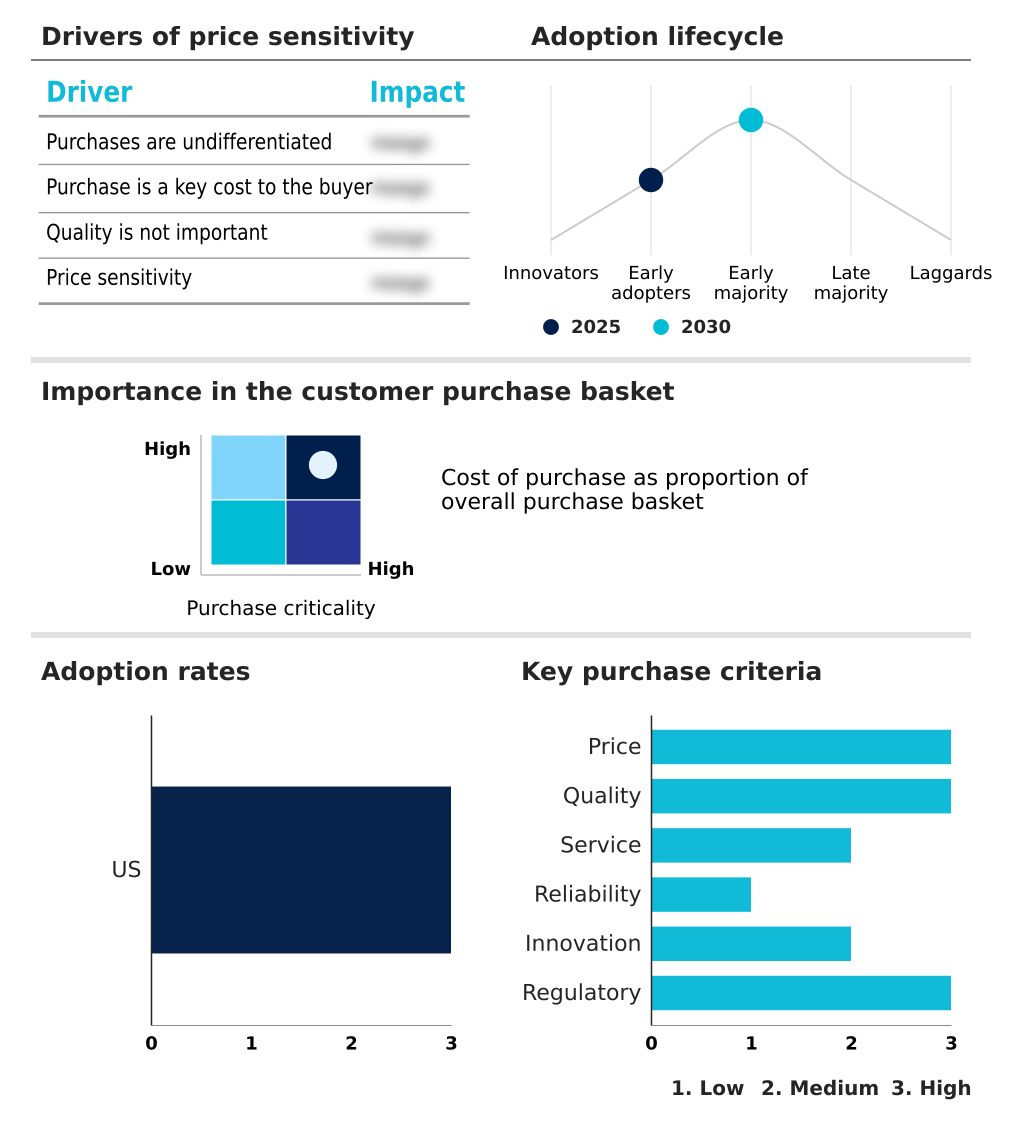
The market forecasting report includes the adoption lifecycle of the market, covering from the innovator’s stage to the laggard’s stage. It focuses on adoption rates in different regions based on penetration. Furthermore, the report also includes key purchase criteria and drivers of price sensitivity to help companies evaluate and develop their market growth analysis strategies.
Online Fashion Retail Market in US Share by Geography

 Customer Landscape

Key Companies & Market Insights

Companies are implementing various strategies, such as strategic alliances, market forecast partnerships, mergers and acquisitions, geographical expansion, and product/service launches, to enhance their presence in the market.

The market research and growth report includes detailed analyses of the competitive landscape of the market and information about key companies, including:

  • Amazon.com Inc.
  • ASOS Plc
  • Boohoo Group Plc
  • Etsy Inc.
  • Everlane Inc.
  • Farfetch Limited
  • Gap Inc.
  • H&M Hennes & Mauritz AB
  • Macy's Inc.
  • Nordstrom Inc.
  • Revolve Group Inc.
  • Saks Fifth Avenue (Hudson's Bay Company)
  • Shein
  • Stitch Fix Inc.
  • Target Corporation
  • The TJX Companies Inc.
  • Urban Outfitters Inc.
  • Walmart Inc.
  • Zappos.com Inc.
  • Zulily LLC

Qualitative and quantitative analysis of companies has been conducted to help clients understand the wider business environment as well as the strengths and weaknesses of key market players. Data is qualitatively analyzed to categorize companies as pure play, category-focused, industry-focused, and diversified; it is quantitatively analyzed to categorize companies as dominant, leading, strong, tentative, and weak.

Recent Development and News in Online Fashion Retail Market In US

  • In February 2023, Amazon Fashion announced the launch of its new sustainable clothing line, "Lakefront," exclusively for its Prime members. This move signifies a growing trend towards eco-conscious fashion in the US online retail market (Amazon PR).
  • In May 2024, Walmart and TikTok entered into a strategic partnership, allowing Walmart to sell products directly on the popular social media platform. This collaboration marks a significant shift in the way online fashion retailers reach younger consumers (Walmart PR).
  • In October 2024, The North Face, a leading outdoor brand, was acquired by the online retail giant, ThredUp. The acquisition aims to expand ThredUp's inventory and strengthen its position in the secondhand fashion market (ThredUp PR).
  • In January 2025, Target unveiled its new same-day delivery service for online fashion purchases, further enhancing the shopping experience for customers and increasing competition in the US online fashion retail market (Target PR).

Research Analyst Overview

The online fashion retail market in the US continues to evolve, with dynamic market activities shaping its landscape. Seamless integration of entities such as payment gateways, customer service, inventory management, mobile app development, data analytics, social media marketing, order fulfillment, sustainable fashion, email marketing, virtual try-on technology, machine learning, and shipping logistics are essential components of this ever-changing industry. Payment security and user interface are paramount in ensuring customer satisfaction. Mobile responsiveness and app development cater to the growing trend of mobile commerce. Data analytics and machine learning enable trend forecasting and personalized recommendations, enhancing user experience.

Social media marketing and integration are vital for brand visibility and customer engagement. Order fulfillment and returns processing streamline operations, while sustainable fashion and size and fit solutions cater to evolving consumer preferences. Virtual try-on technology and augmented reality offer innovative solutions for product photography and fashion styling. E-commerce platforms prioritize conversion rate optimization and brand loyalty through email automation and customer segmentation. Payment security, fraud detection, and quality control ensure trust and reliability, while shipping logistics and fast fashion cater to the demand for quick delivery and affordable prices. The industry's continuous dynamism reflects the ongoing unfolding of market activities and evolving patterns.

Dive into Technavio’s robust research methodology, blending expert interviews, extensive data synthesis, and validated models for unparalleled Online Fashion Retail Market in US insights. See full methodology.

Market Scope

Report Coverage

Details

Page number

175

Base year

2024

Historic period

2019-2023

Forecast period

2025-2029

Growth momentum & CAGR

Accelerate at a CAGR of 15.6%

Market growth 2025-2029

USD 303.9 billion

Market structure

Fragmented

YoY growth 2024-2025(%)

14.5

Competitive landscape

Leading Companies, Market Positioning of Companies, Competitive Strategies, and Industry Risks

Request Free Sample

What are the Key Data Covered in this Market Research Report?

  • CAGR of the market during the forecast period
  • Detailed information on factors that will drive the market growth and forecasting between 2025 and 2029
  • Precise estimation of the size of the market  and its contribution of the market in focus to the parent market
  • Accurate predictions about upcoming market growth and trends and changes in consumer behaviour
  • Growth of the market across US
  • Thorough analysis of the market’s competitive landscape and detailed information about companies
  • Comprehensive analysis of factors that will challenge the growth of market companies

We can help! Our analysts can customize this market research report to meet your requirements Get in touch


1 Executive Summary

  • 1.1 Market overview
    • Executive Summary - Chart on Market Overview
    • Executive Summary - Data Table on Market Overview
    • Executive Summary - Chart on Country Market Characteristics
    • Executive Summary - Chart on Market Segmentation by End-user
    • Executive Summary - Chart on Market Segmentation by Product
    • Executive Summary - Chart on Market Segmentation by Type
    • Executive Summary - Chart on Company Market Positioning

2 Technavio Analysis

  • 2.1 Analysis of price sensitivity, lifecycle, customer purchase basket, adoption rates, and purchase criteria
    • Analysis of price sensitivity, lifecycle, customer purchase basket, adoption rates, and purchase criteria
  • 2.2 Criticality of inputs and Factors of differentiation
    • Overview on criticality of inputs and factors of differentiation
  • 2.3 Factors of disruption
    • Overview on factors of disruption
  • 2.4 Impact of drivers and challenges
    • Impact of drivers and challenges in 2024 and 2029

3 Market Landscape

  • 3.1 Market ecosystem
    • Parent Market
    • Data Table on - Parent Market
  • 3.2 Market characteristics
    • Market characteristics analysis
  • 3.3 Value chain analysis
    • Value chain analysis

4 Market Sizing

  • 4.1 Market definition
    • Offerings of companies included in the market definition
  • 4.2 Market segment analysis
    • Market segments
  • 4.3 Market size 2024
    • 4.4 Market outlook: Forecast for 2024-2029
      • Chart on US - Market size and forecast 2024-2029 ($ billion)
      • Data Table on US - Market size and forecast 2024-2029 ($ billion)
      • Chart on US: Year-over-year growth 2024-2029 (%)
      • Data Table on US: Year-over-year growth 2024-2029 (%)

    5 Historic Market Size

    • 5.1 Online Fashion Retail Market in US 2019 - 2023
      • Historic Market Size - Data Table on Online Fashion Retail Market in US 2019 - 2023 ($ billion)
    • 5.2 End-user segment analysis 2019 - 2023
      • Historic Market Size - End-user Segment 2019 - 2023 ($ billion)
    • 5.3 Product segment analysis 2019 - 2023
      • Historic Market Size - Product Segment 2019 - 2023 ($ billion)
    • 5.4 Type segment analysis 2019 - 2023
      • Historic Market Size - Type Segment 2019 - 2023 ($ billion)

    6 Qualitative Analysis

    • 6.1 Impact of AI on the Online Fashion Retail Market in US

      7 Five Forces Analysis

      • 7.1 Five forces summary
        • Five forces analysis - Comparison between 2024 and 2029
      • 7.2 Bargaining power of buyers
        • Bargaining power of buyers - Impact of key factors 2024 and 2029
      • 7.3 Bargaining power of suppliers
        • Bargaining power of suppliers - Impact of key factors in 2024 and 2029
      • 7.4 Threat of new entrants
        • Threat of new entrants - Impact of key factors in 2024 and 2029
      • 7.5 Threat of substitutes
        • Threat of substitutes - Impact of key factors in 2024 and 2029
      • 7.6 Threat of rivalry
        • Threat of rivalry - Impact of key factors in 2024 and 2029
      • 7.7 Market condition
        • Chart on Market condition - Five forces 2024 and 2029

      8 Market Segmentation by End-user

      • 8.1 Market segments
        • Chart on End-user - Market share (2024-2029) (%)
        • Data Table on End-user - Market share (2024-2029) (%)
      • 8.2 Comparison by End-user
        • Chart on Comparison by End-user
        • Data Table on Comparison by End-user
      • 8.3 Women - Market size and forecast (2024-2029)
        • Chart on Women - Market size and forecast (2024-2029) ($ billion)
        • Data Table on Women - Market size and forecast (2024-2029) ($ billion)
        • Chart on Women - Year-over-year growth (2024-2029) (%)
        • Data Table on Women - Year-over-year growth (2024-2029) (%)
      • 8.4 Men - Market size and forecast (2024-2029)
        • Chart on Men - Market size and forecast (2024-2029) ($ billion)
        • Data Table on Men - Market size and forecast (2024-2029) ($ billion)
        • Chart on Men - Year-over-year growth (2024-2029) (%)
        • Data Table on Men - Year-over-year growth (2024-2029) (%)
      • 8.5 Kids - Market size and forecast (2024-2029)
        • Chart on Kids - Market size and forecast (2024-2029) ($ billion)
        • Data Table on Kids - Market size and forecast (2024-2029) ($ billion)
        • Chart on Kids - Year-over-year growth (2024-2029) (%)
        • Data Table on Kids - Year-over-year growth (2024-2029) (%)
      • 8.6 Market opportunity by End-user
        • Market opportunity by End-user ($ billion)
        • Data Table on Market opportunity by End-user ($ billion)

      9 Market Segmentation by Product

      • 9.1 Market segments
        • Chart on Product - Market share (2024-2029) (%)
        • Data Table on Product - Market share (2024-2029) (%)
      • 9.2 Comparison by Product
        • Chart on Comparison by Product
        • Data Table on Comparison by Product
      • 9.3 Apparel - Market size and forecast (2024-2029)
        • Chart on Apparel - Market size and forecast (2024-2029) ($ billion)
        • Data Table on Apparel - Market size and forecast (2024-2029) ($ billion)
        • Chart on Apparel - Year-over-year growth (2024-2029) (%)
        • Data Table on Apparel - Year-over-year growth (2024-2029) (%)
      • 9.4 Footwears - Market size and forecast (2024-2029)
        • Chart on Footwears - Market size and forecast (2024-2029) ($ billion)
        • Data Table on Footwears - Market size and forecast (2024-2029) ($ billion)
        • Chart on Footwears - Year-over-year growth (2024-2029) (%)
        • Data Table on Footwears - Year-over-year growth (2024-2029) (%)
      • 9.5 Bags and accessories - Market size and forecast (2024-2029)
        • Chart on Bags and accessories - Market size and forecast (2024-2029) ($ billion)
        • Data Table on Bags and accessories - Market size and forecast (2024-2029) ($ billion)
        • Chart on Bags and accessories - Year-over-year growth (2024-2029) (%)
        • Data Table on Bags and accessories - Year-over-year growth (2024-2029) (%)
      • 9.6 Market opportunity by Product
        • Market opportunity by Product ($ billion)
        • Data Table on Market opportunity by Product ($ billion)

      10 Market Segmentation by Type

      • 10.1 Market segments
        • Chart on Type - Market share (2024-2029) (%)
        • Data Table on Type - Market share (2024-2029) (%)
      • 10.2 Comparison by Type
        • Chart on Comparison by Type
        • Data Table on Comparison by Type
      • 10.3 Mass market - Market size and forecast (2024-2029)
        • Chart on Mass market - Market size and forecast (2024-2029) ($ billion)
        • Data Table on Mass market - Market size and forecast (2024-2029) ($ billion)
        • Chart on Mass market - Year-over-year growth (2024-2029) (%)
        • Data Table on Mass market - Year-over-year growth (2024-2029) (%)
      • 10.4 Premium - Market size and forecast (2024-2029)
        • Chart on Premium - Market size and forecast (2024-2029) ($ billion)
        • Data Table on Premium - Market size and forecast (2024-2029) ($ billion)
        • Chart on Premium - Year-over-year growth (2024-2029) (%)
        • Data Table on Premium - Year-over-year growth (2024-2029) (%)
      • 10.5 Luxury - Market size and forecast (2024-2029)
        • Chart on Luxury - Market size and forecast (2024-2029) ($ billion)
        • Data Table on Luxury - Market size and forecast (2024-2029) ($ billion)
        • Chart on Luxury - Year-over-year growth (2024-2029) (%)
        • Data Table on Luxury - Year-over-year growth (2024-2029) (%)
      • 10.6 Market opportunity by Type
        • Market opportunity by Type ($ billion)
        • Data Table on Market opportunity by Type ($ billion)

      11 Market Segmentation by Platform

      • 11.1 Market segments
        • Chart on Platform - Market share (2024-2029) (%)
        • Data Table on Platform - Market share (2024-2029) (%)
      • 11.2 Comparison by Platform
        • Chart on Comparison by Platform
        • Data Table on Comparison by Platform
      • 11.3 Mobile Apps - Market size and forecast (2024-2029)
        • Chart on Mobile Apps - Market size and forecast (2024-2029) ($ billion)
        • Data Table on Mobile Apps - Market size and forecast (2024-2029) ($ billion)
        • Chart on Mobile Apps - Year-over-year growth (2024-2029) (%)
        • Data Table on Mobile Apps - Year-over-year growth (2024-2029) (%)
      • 11.4 Web Portals - Market size and forecast (2024-2029)
        • Chart on Web Portals - Market size and forecast (2024-2029) ($ billion)
        • Data Table on Web Portals - Market size and forecast (2024-2029) ($ billion)
        • Chart on Web Portals - Year-over-year growth (2024-2029) (%)
        • Data Table on Web Portals - Year-over-year growth (2024-2029) (%)
      • 11.5 Market opportunity by Platform
        • Market opportunity by Platform ($ billion)
        • Data Table on Market opportunity by Platform ($ billion)

      12 Market Segmentation by Price Range

      • 12.1 Market segments
        • Chart on Price Range - Market share (2024-2029) (%)
        • Data Table on Price Range - Market share (2024-2029) (%)
      • 12.2 Comparison by Price Range
        • Chart on Comparison by Price Range
        • Data Table on Comparison by Price Range
      • 12.3 Economy - Market size and forecast (2024-2029)
        • Chart on Economy - Market size and forecast (2024-2029) ($ billion)
        • Data Table on Economy - Market size and forecast (2024-2029) ($ billion)
        • Chart on Economy - Year-over-year growth (2024-2029) (%)
        • Data Table on Economy - Year-over-year growth (2024-2029) (%)
      • 12.4 Mid-Range - Market size and forecast (2024-2029)
        • Chart on Mid-Range - Market size and forecast (2024-2029) ($ billion)
        • Data Table on Mid-Range - Market size and forecast (2024-2029) ($ billion)
        • Chart on Mid-Range - Year-over-year growth (2024-2029) (%)
        • Data Table on Mid-Range - Year-over-year growth (2024-2029) (%)
      • 12.5 Premium - Market size and forecast (2024-2029)
        • Chart on Premium - Market size and forecast (2024-2029) ($ billion)
        • Data Table on Premium - Market size and forecast (2024-2029) ($ billion)
        • Chart on Premium - Year-over-year growth (2024-2029) (%)
        • Data Table on Premium - Year-over-year growth (2024-2029) (%)
      • 12.6 Market opportunity by Price Range
        • Market opportunity by Price Range ($ billion)
        • Data Table on Market opportunity by Price Range ($ billion)

      13 Customer Landscape

      • 13.1 Customer landscape overview
        • Analysis of price sensitivity, lifecycle, customer purchase basket, adoption rates, and purchase criteria

      14 Drivers, Challenges, and Opportunity/Restraints

      • 14.1 Market drivers
        • 14.2 Market challenges
          • 14.3 Impact of drivers and challenges
            • Impact of drivers and challenges in 2024 and 2029
          • 14.4 Market opportunities/restraints

            15 Competitive Landscape

            • 15.1 Overview
              • 15.2 Competitive Landscape
                • Overview on criticality of inputs and factors of differentiation
              • 15.3 Landscape disruption
                • Overview on factors of disruption
              • 15.4 Industry risks
                • Impact of key risks on business

              16 Competitive Analysis

              • 16.1 Companies profiled
                • Companies covered
              • 16.2 Market positioning of companies
                • Matrix on companies position and classification
              • 16.3 Amazon.com Inc.
                • Amazon.com Inc. - Overview
                • Amazon.com Inc. - Product / Service
                • Amazon.com Inc. - Key offerings
              • 16.4 ASOS Plc
                • ASOS Plc - Overview
                • ASOS Plc - Product / Service
                • ASOS Plc - Key offerings
              • 16.5 Boohoo Group Plc
                • Boohoo Group Plc - Overview
                • Boohoo Group Plc - Product / Service
                • Boohoo Group Plc - Key offerings
              • 16.6 Etsy Inc.
                • Etsy Inc. - Overview
                • Etsy Inc. - Product / Service
                • Etsy Inc. - Key offerings
              • 16.7 Everlane Inc.
                • Everlane Inc. - Overview
                • Everlane Inc. - Product / Service
                • Everlane Inc. - Key offerings
              • 16.8 Farfetch Limited
                • Farfetch Limited - Overview
                • Farfetch Limited - Product / Service
                • Farfetch Limited - Key offerings
              • 16.9 Gap Inc.
                • Gap Inc. - Overview
                • Gap Inc. - Product / Service
                • Gap Inc. - Key offerings
              • 16.10 H&M Hennes & Mauritz AB
                • H&M Hennes & Mauritz AB - Overview
                • H&M Hennes & Mauritz AB - Product / Service
                • H&M Hennes & Mauritz AB - Key offerings
              • 16.11 Macy’s Inc.
                • Macy’s Inc. - Overview
                • Macy’s Inc. - Product / Service
                • Macy’s Inc. - Key offerings
              • 16.12 Nordstrom Inc.
                • Nordstrom Inc. - Overview
                • Nordstrom Inc. - Product / Service
                • Nordstrom Inc. - Key offerings
              • 16.13 Revolve Group Inc.
                • Revolve Group Inc. - Overview
                • Revolve Group Inc. - Product / Service
                • Revolve Group Inc. - Key offerings
              • 16.14 Saks Fifth Avenue (Hudson’s Bay Company)
                • Saks Fifth Avenue (Hudson’s Bay Company) - Overview
                • Saks Fifth Avenue (Hudson’s Bay Company) - Product / Service
                • Saks Fifth Avenue (Hudson’s Bay Company) - Key offerings
              • 16.15 Shein
                • Shein - Overview
                • Shein - Product / Service
                • Shein - Key offerings
              • 16.16 Stitch Fix Inc.
                • Stitch Fix Inc. - Overview
                • Stitch Fix Inc. - Product / Service
                • Stitch Fix Inc. - Key offerings
              • 16.17 Target Corporation
                • Target Corporation - Overview
                • Target Corporation - Product / Service
                • Target Corporation - Key offerings
              • 16.18 The TJX Companies Inc.
                • The TJX Companies Inc. - Overview
                • The TJX Companies Inc. - Product / Service
                • The TJX Companies Inc. - Key offerings
              • 16.19 Urban Outfitters Inc.
                • Urban Outfitters Inc. - Overview
                • Urban Outfitters Inc. - Product / Service
                • Urban Outfitters Inc. - Key offerings
              • 16.20 Walmart Inc.
                • Walmart Inc. - Overview
                • Walmart Inc. - Product / Service
                • Walmart Inc. - Key offerings
              • 16.21 Zappos.com Inc.
                • Zappos.com Inc. - Overview
                • Zappos.com Inc. - Product / Service
                • Zappos.com Inc. - Key offerings
              • 16.22 Zulily LLC
                • Zulily LLC - Overview
                • Zulily LLC - Product / Service
                • Zulily LLC - Key offerings
              • 16.23 Adidas AG
                • Adidas AG - Overview
                • Adidas AG - Product / Service
                • Adidas AG - Key offerings
              • 16.24 Amazon.com Inc.
                • Amazon.com Inc. - Overview
                • Amazon.com Inc. - Product / Service
                • Amazon.com Inc. - Key offerings
              • 16.25 ASOS Plc
                • ASOS Plc - Overview
                • ASOS Plc - Product / Service
                • ASOS Plc - Key offerings
              • 16.26 Backcountry.com LLC
                • Backcountry.com LLC - Overview
                • Backcountry.com LLC - Product / Service
                • Backcountry.com LLC - Key offerings
              • 16.27 Costco Wholesale Corp.
                • Costco Wholesale Corp. - Overview
                • Costco Wholesale Corp. - Product / Service
                • Costco Wholesale Corp. - Key offerings
              • 16.28 Forever21 Inc.
                • Forever21 Inc. - Overview
                • Forever21 Inc. - Product / Service
                • Forever21 Inc. - Key offerings
              • 16.29 Frasers Group plc
                • Frasers Group plc - Overview
                • Frasers Group plc - Product / Service
                • Frasers Group plc - Key offerings
              • 16.30 Industria de Diseno Textil SA
                • Industria de Diseno Textil SA - Overview
                • Industria de Diseno Textil SA - Product / Service
                • Industria de Diseno Textil SA - Key offerings
              • 16.31 Nike Inc.
                • Nike Inc. - Overview
                • Nike Inc. - Product / Service
                • Nike Inc. - Key offerings
              • 16.32 Nordstrom Inc.
                • Nordstrom Inc. - Overview
                • Nordstrom Inc. - Product / Service
                • Nordstrom Inc. - Key offerings
              • 16.33 Penney OpCo LLC
                • Penney OpCo LLC - Overview
                • Penney OpCo LLC - Product / Service
                • Penney OpCo LLC - Key offerings
              • 16.34 PVH Corp.
                • PVH Corp. - Overview
                • PVH Corp. - Product / Service
                • PVH Corp. - Key offerings
              • 16.35 Ralph Lauren Corp.
                • Ralph Lauren Corp. - Overview
                • Ralph Lauren Corp. - Product / Service
                • Ralph Lauren Corp. - Key offerings
              • 16.36 The Gap Inc.
                • The Gap Inc. - Overview
                • The Gap Inc. - Product / Service
                • The Gap Inc. - Key offerings
              • 16.37 Under Armour Inc.
                • Under Armour Inc. - Overview
                • Under Armour Inc. - Product / Service
                • Under Armour Inc. - Key offerings

              17 Appendix

              • 17.1 Scope of the report
                • 17.2 Inclusions and exclusions checklist
                  • Inclusions checklist
                  • Exclusions checklist
                • 17.3 Currency conversion rates for US$
                  • Currency conversion rates for US$
                • 17.4 Research methodology
                  • Research methodology
                • 17.5 Data procurement
                  • Information sources
                • 17.6 Data validation
                  • Data validation
                • 17.7 Validation techniques employed for market sizing
                  • Validation techniques employed for market sizing
                • 17.8 Data synthesis
                  • Data synthesis
                • 17.9 360 degree market analysis
                  • 360 degree market analysis
                • 17.10 List of abbreviations
                  • List of abbreviations

                Research Methodology

                Technavio presents a detailed picture of the market by way of study, synthesis, and summation of data from multiple sources. The analysts have presented the various facets of the market with a particular focus on identifying the key industry influencers. The data thus presented is comprehensive, reliable, and the result of extensive research, both primary and secondary.

                INFORMATION SOURCES

                Primary sources

                • Manufacturers and suppliers
                • Channel partners
                • Industry experts
                • Strategic decision makers

                Secondary sources

                • Industry journals and periodicals
                • Government data
                • Financial reports of key industry players
                • Historical data
                • Press releases

                DATA ANALYSIS

                Data Synthesis

                • Collation of data
                • Estimation of key figures
                • Analysis of derived insights

                Data Validation

                • Triangulation with data models
                • Reference against proprietary databases
                • Corroboration with industry experts

                REPORT WRITING

                Qualitative

                • Market drivers
                • Market challenges
                • Market trends
                • Five forces analysis

                Quantitative

                • Market size and forecast
                • Market segmentation
                • Geographical insights
                • Competitive landscape

                Interested in this report?

                Get your sample now to see our research methodology and insights!

                Download Now

                Frequently Asked Questions

                Online Fashion Retail market growth will increase by $ 303.9 bn during 2025-2029.

                The Online Fashion Retail market is expected to grow at a CAGR of 15.6% during 2025-2029.

                Online Fashion Retail market is segmented by End-user( Women, Men, Kids) Product( Apparel, Footwears, Bags and accessories) Type( Mass market, Premium, Luxury)

                Amazon.com Inc., ASOS Plc, Boohoo Group Plc, Etsy Inc., Everlane Inc., Farfetch Limited, Gap Inc., H&M Hennes & Mauritz AB, Macy’s Inc., Nordstrom Inc., Revolve Group Inc., Saks Fifth Avenue (Hudson’s Bay Company), Shein, Stitch Fix Inc., Target Corporation, The TJX Companies Inc., Urban Outfitters Inc., Walmart Inc., Zappos.com Inc., Zulily LLC are a few of the key vendors in the Online Fashion Retail market.

                North America will register the highest growth rate of 100% among the other regions. Therefore, the Online Fashion Retail market in North America is expected to garner significant business opportunities for the vendors during the forecast period.

                US

                • Rise in online spendingThe average amount of money spent online per transaction and the number of transactions that take place online are on the rise in the US. The ease and time-saving features of online shopping and the wide range of products available on online retail platforms are additional factors that favor the rising use of online retail channels. These factors are encouraging more consumers to buy things online rather than in a physical store. With e-retailers providing more security features for online payments is the driving factor this market.
                • free deliveries is the driving factor this market.
                • improved online customer service is the driving factor this market.
                • and customer-friendly is the driving factor this market.
                • easy-to-navigate shopping websites is the driving factor this market.
                • a growing number of consumers are likely to use these portals during the forecast period.The increasing spending of consumers has driven the growth of the online fashion retail market in US. Consumers in the US are increasingly spending on fashion products such as apparel is the driving factor this market.
                • footwear is the driving factor this market.
                • and accessories is the driving factor this market.
                • among others.  Online fashion retail market in US is heavily influenced by heavy discounts and end-of-season sales. For example is the driving factor this market.
                • Black Friday is one of the busiest shopping days of the year. In the US is the driving factor this market.
                • Black Friday marks the start of the Christmas shopping season. Best omni-channel retailers such as Gap is the driving factor this market.
                • M and S is the driving factor this market.
                • and others offer great deals on clothing that can be purchased online. Thus is the driving factor this market.
                • the rise in the online spending of consumers and the growing online sales by fashion retailers will contribute to the growth of the market during the forecast period. is the driving factor this market.

                The Online Fashion Retail market vendors should focus on grabbing business opportunities from the Women segment as it accounted for the largest market share in the base year.