

Oil Condition Monitoring Market Analysis North America, Europe, APAC, Middle East and Africa, South America - US, China, Germany, UK, India, Canada, Japan, France, South Korea, Italy - Size and Forecast 2025-2029

Oil Condition Monitoring Market Analysis North America, Europe, APAC, Middle East and Africa, South America - US, China, Germany, UK, India, Canada, Japan, France, South Korea, Italy - Size and Forecast 2025-2029

Published: Feb 2025 214 Pages SKU: IRTNTR80583

Market Overview at a Glance

$498.4 Mn
Market Opportunity
6.2%
CAGR
5.9
YoY growth 2024-2025(%)

Oil Condition Monitoring Market Size 2025-2029

The oil condition monitoring market size is forecast to increase by USD 498.4 million, at a CAGR of 6.2% between 2024 and 2029.

  • The market is experiencing significant growth due to the increasing demand for predictive maintenance in various industries. This proactive approach to maintenance enables organizations to identify and address potential equipment issues before they escalate into costly breakdowns. Moreover, the introduction of advanced oil condition monitoring technologies, such as sensors and analytics software, is facilitating real-time monitoring and predictive analysis, further boosting market growth. However, the market faces a notable challenge: the lack of a skilled workforce capable of effectively implementing and utilizing these technologies. As the market continues to evolve, companies must invest in training and development programs to ensure they have the necessary expertise in-house.
  • Failure to do so may result in suboptimal system performance and missed opportunities for cost savings and operational efficiency. Additionally, the high initial investment costs associated with implementing oil condition monitoring systems can be a barrier to entry for smaller organizations. Nevertheless, the long-term benefits, including reduced maintenance costs, increased equipment uptime, and improved safety, make it a worthwhile investment for businesses seeking to optimize their operations and remain competitive in their respective industries.

What will be the Size of the Oil Condition Monitoring Market during the forecast period?
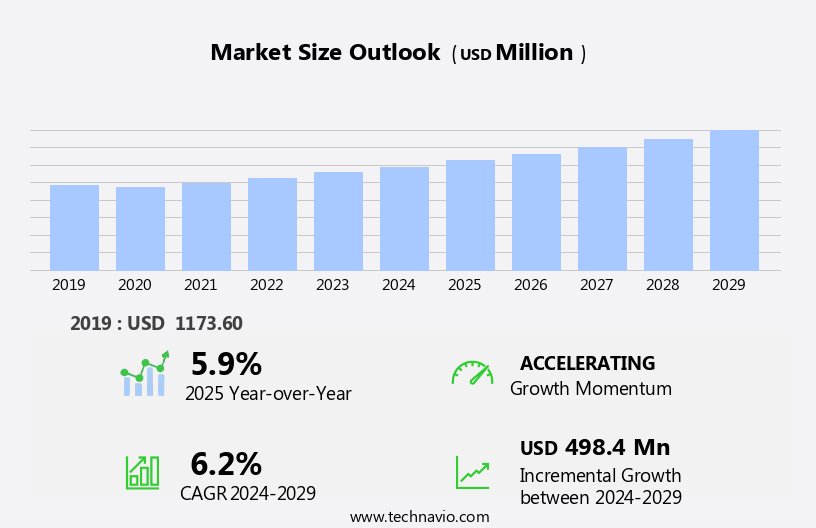
Oil Condition Monitoring Market Size

 Request Free Sample

The market continues to evolve, driven by the need for machinery reliability and asset management in various sectors, including heavy equipment, chemical processing, power generation, and oil & gas. Real-time monitoring of equipment lubrication and oil degradation is crucial for cost reduction and operational efficiency. Technologies such as wear debris analysis, hydraulic systems, infrared spectroscopy, and failure prevention are integral to this process. Artificial intelligence and machine learning are increasingly being adopted for data analytics, enabling automated reporting and predictive maintenance. Remote monitoring and component life cycle assessment are also gaining traction, allowing for real-time identification of fluid contamination, additive depletion, and other issues.

Oil recycling and oil change management are essential components of the market, with data acquisition and ultrasonic testing playing a key role in optimizing maintenance and reducing downtime. Sensor technology and lubricant performance analysis are also critical for ensuring the health of rotating machinery and engines. Water content, spectrometric analysis, fuel dilution, and acoustic emission monitoring are additional techniques used to improve reliability and prevent failures. Cloud computing enables the collection and analysis of vast amounts of data, further enhancing the capabilities of oil condition monitoring systems. In the ever-changing landscape of industrial equipment maintenance, oil analysis, oil sampling, and condition-based maintenance are key strategies for optimizing performance and reducing operational costs. The market continues to unfold, with new technologies and applications emerging to meet the evolving needs of businesses.

How is this Oil Condition Monitoring Industry segmented?

The oil condition monitoring industry research report provides comprehensive data (region-wise segment analysis), with forecasts and estimates in "USD million" for the period 2025-2029, as well as historical data from 2019-2023 for the following segments.

  • Type
    • On-site
    • Off-site
  • End-user
    • Transportation
    • Industrial
    • Power generation
    • Mining
    • Oil and gas
  • Geography
    • North America
      • US
      • Canada
    • Europe
      • France
      • Germany
      • Italy
      • UK
    • APAC
      • China
      • India
      • Japan
      • South Korea
    • Rest of World (ROW)

By Type Insights

The on-site segment is estimated to witness significant growth during the forecast period.

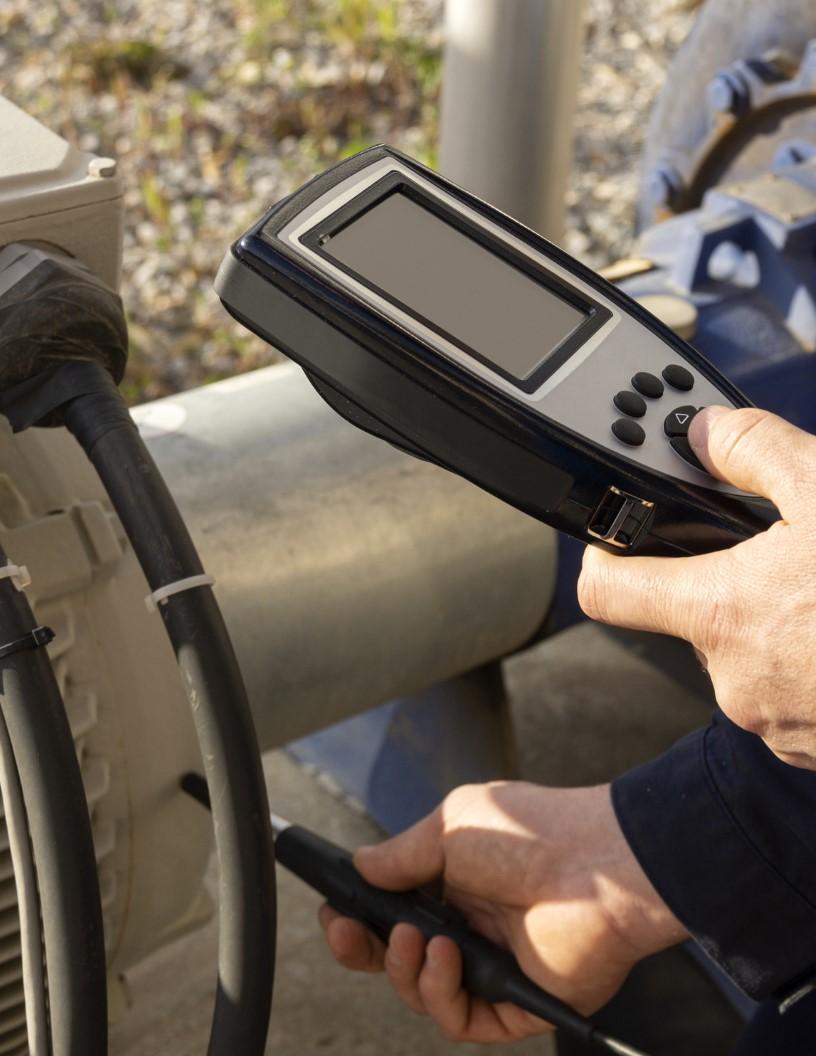
On-site oil condition monitoring is a critical aspect of machinery reliability and asset management in various industries, including heavy equipment, oil & gas, power generation, and chemical processing. This approach utilizes IoT-based sensors, portable testing kits, and in-line analyzers to provide real-time insights into oil quality, enabling proactive maintenance and minimizing downtime. Real-time monitoring allows for the early detection of fluid contamination, oil degradation, additive depletion, and other anomalies, which can lead to costly equipment failures. Continuous data acquisition through on-site monitoring also facilitates condition-based maintenance, optimizing maintenance schedules and reducing operational inefficiencies. In the context of heavy equipment, on-site oil analysis is essential for industries where equipment failure can result in significant downtime and financial losses.

For instance, in power generation, real-time monitoring of oil quality in turbines and generators can prevent catastrophic failures, ensuring reliable power supply and minimizing maintenance costs. Moreover, on-site oil condition monitoring is cost-effective for high-value assets, as it eliminates the need for frequent oil sampling and sending samples to external laboratories. This is particularly beneficial for industries such as aerospace and automotive, where the cost of downtime is substantial. Advanced technologies like vibration monitoring, acoustic emission, wear debris analysis, and machine learning algorithms are integrated into on-site oil condition monitoring systems to enhance their capabilities. These technologies enable the detection of subtle changes in oil quality and machine performance, facilitating predictive maintenance and extending component life cycles.

Cloud computing and automated reporting further streamline the oil condition monitoring process, allowing for centralized data management and real-time access to critical information. This enables organizations to make informed decisions regarding maintenance, optimize operational efficiency, and reduce costs.
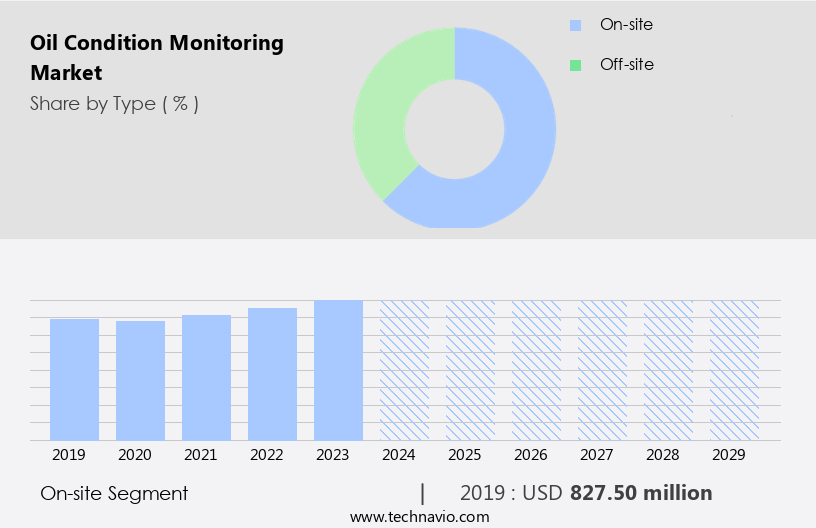
Oil Condition Monitoring Market Size

Request Free Sample

The On-site segment was valued at USD 827.50 million in 2019 and showed a gradual increase during the forecast period.

Regional Analysis

North America is estimated to contribute 34% to the growth of the global market during the forecast period.Technavio's analysts have elaborately explained the regional trends and drivers that shape the market during the forecast period.
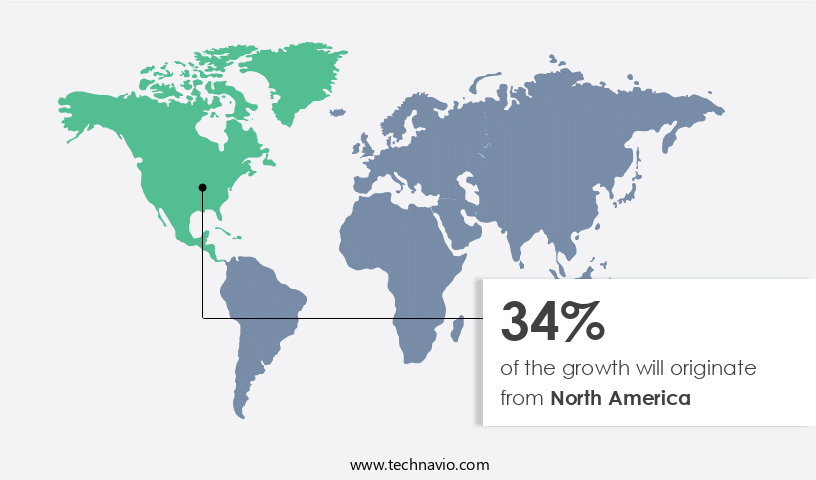
Oil Condition Monitoring Market Share by Geography

 Request Free Sample

The market in North America is experiencing significant growth, driven by the increasing demand for machinery reliability and asset management in sectors such as oil and gas, automotive, aerospace, and mining. In 2023, the US witnessed a surge in oil and natural gas production, averaging 13.3 million barrels per day for oil and 128.8 billion cubic feet per day for natural gas. This growth is attributed to advancements in technology, particularly in the Permian region, leading to enhanced well-level productivity. To maintain the optimal performance and longevity of critical equipment in this expanding production environment, oil condition monitoring solutions are increasingly being adopted.

These solutions enable real-time monitoring of fluid contamination, oil degradation, and additive depletion, among other factors, to prevent failures and minimize production losses. Data analytics plays a crucial role in this process, with machine learning and artificial intelligence enabling predictive maintenance and condition-based maintenance strategies. Oil recycling and filtration systems are also gaining popularity as part of comprehensive oil management strategies, reducing costs and improving operational efficiency. Sensor technology, including vibration monitoring, acoustic emission, and wear debris analysis, is used to detect early signs of component failure and optimize maintenance schedules. Hydraulic systems, engines, and rotating machinery are among the industrial equipment benefiting from these advanced monitoring and analysis techniques.

Power generation and chemical processing industries are also adopting oil condition monitoring to ensure the reliability and efficiency of their operations. Cloud computing and automated reporting enable remote monitoring and real-time data access, while ultrasonic testing and spectrometric analysis provide valuable insights into fluid properties and contaminant levels. Infrared spectroscopy and particle counting are additional tools used to assess engine health and lubricant performance, respectively. Overall, the market in North America is expected to continue growing as industries seek to prevent downtime, reduce costs, and improve operational efficiency through advanced monitoring and analysis of their critical equipment.

Market Dynamics

Our researchers analyzed the data with 2024 as the base year, along with the key drivers, trends, and challenges. A holistic analysis of drivers will help companies refine their marketing strategies to gain a competitive advantage.

What are the key market drivers leading to the rise in the adoption of Oil Condition Monitoring Industry?

  • The increasing necessity for predictive maintenance is the primary factor fueling market growth. The market is experiencing significant growth due to the increasing adoption of predictive maintenance (PdM) strategies in various industries, including oil & gas, power generation, and manufacturing. Predictive maintenance utilizes advanced technologies such as data analytics, machine learning, and real-time monitoring to evaluate the health of industrial equipment by analyzing oil samples. This approach enables businesses to detect early signs of wear, contamination, or failure in machinery lubricants, allowing them to optimize maintenance schedules, reduce unplanned downtime, and achieve substantial cost savings. Industries are shifting from reactive and preventive maintenance models towards predictive maintenance strategies, as the latter offers numerous benefits, including improved reliability, operational efficiency, and reduced maintenance costs.
  • Predictive maintenance employs various techniques such as data acquisition, vibration monitoring, acoustic emission, and automated reporting to monitor oil degradation and additive depletion in real-time. Additionally, cloud computing technology facilitates the collection, storage, and analysis of vast amounts of data, making predictive maintenance more accessible and cost-effective. By implementing oil condition monitoring systems, businesses can anticipate potential breakdowns, minimize maintenance costs, and enhance overall operational efficiency. The market is expected to continue growing as more industries embrace predictive maintenance and seek to optimize their maintenance strategies.

What are the market trends shaping the Oil Condition Monitoring Industry?

  • The introduction of new products is a current market trend. Professionals in various industries are continually innovating and launching new items to meet consumer demands and stay competitive.
  • The market is experiencing growth due to the adoption of advanced technologies that enhance equipment performance and reliability. Companies are developing innovative solutions for real-time analysis of oil conditions, enabling proactive maintenance strategies. In March 2024, CM Technologies (CMT) introduced an advanced oil condition monitoring system, the WBS IR Analyser, which utilizes infrared spectroscopy to assess key parameters such as base number, soot, water content, and fuel dilution in cylinder and system oils. This technology offers instant and reliable results without requiring expensive reagents, making it a cost-effective solution for monitoring oil conditions. Wear debris analysis, a crucial aspect of oil condition monitoring, is also gaining popularity due to its ability to predict component life cycle and prevent failures.
  • Machine learning and artificial intelligence are being integrated into these solutions to provide predictive maintenance capabilities. Spectrometric analysis is another technique used for oil condition monitoring, providing insights into the chemical composition of the oil, enabling early detection of contamination and potential failures. Remote monitoring capabilities are also becoming increasingly important, allowing operators to monitor oil conditions from anywhere, reducing downtime and maintenance costs.

What challenges does the Oil Condition Monitoring Industry face during its growth?

  • The insufficient supply of skilled labor represents a significant obstacle to the expansion and growth of the industry. 
  • The market encounters a substantial challenge due to the scarcity of skilled labor for interpreting data and implementing predictive maintenance strategies. IoT and AI-driven oil condition monitoring solutions generate vast amounts of data, yet the absence of proficient professionals to analyze this information and make informed decisions limits their effectiveness. In 2024, around 75% of employers globally reported vacancy filling difficulties, with the US experiencing a 70% labor shortage. This labor shortage impacts various industries, including those heavily relying on oil condition monitoring technologies. The intricacy of interpreting oil condition monitoring data necessitates specialized knowledge and expertise, which is currently in limited supply.
  • Ultrasonic testing, oil analysis, oil sampling, condition-based maintenance, sensor technology, lubricant performance, oil filtration, and particle counting are integral components of oil condition monitoring. Addressing the labor shortage through training and education initiatives could enhance the market's potential for downtime reduction and optimized lubricant performance.

Exclusive Customer Landscape

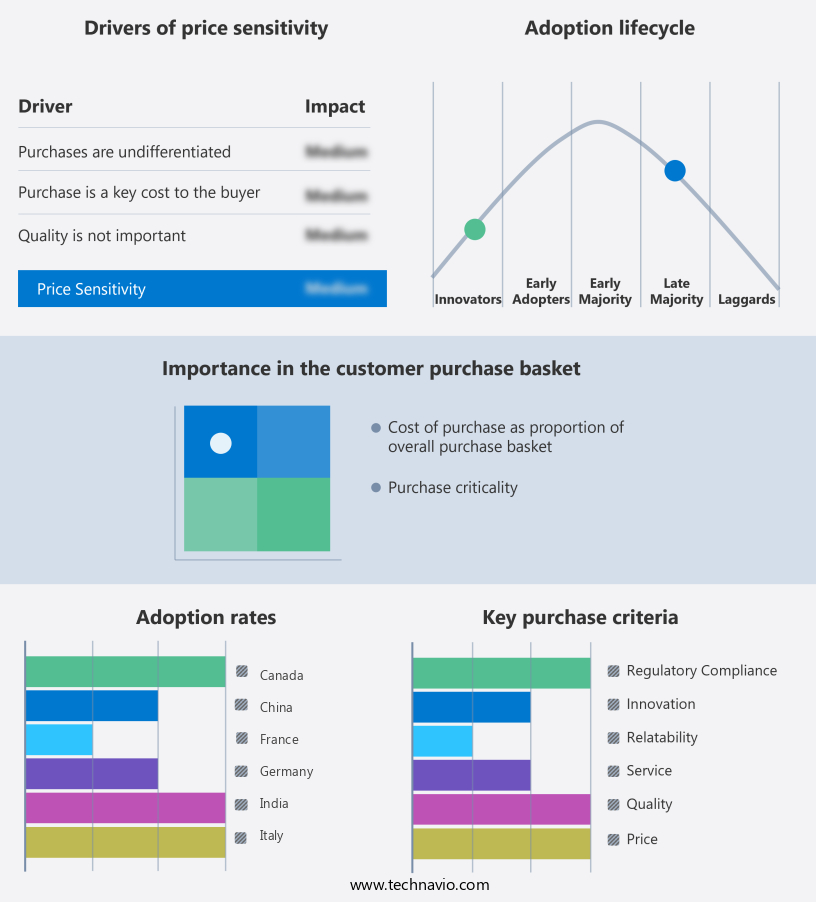
The oil condition monitoring market forecasting report includes the adoption lifecycle of the market, covering from the innovator's stage to the laggard's stage. It focuses on adoption rates in different regions based on penetration. Furthermore, the oil condition monitoring market report also includes key purchase criteria and drivers of price sensitivity to help companies evaluate and develop their market growth analysis strategies.
Oil Condition Monitoring Market Share by Geography

 Customer Landscape

Key Companies & Market Insights

Companies are implementing various strategies, such as strategic alliances, oil condition monitoring market forecast, partnerships, mergers and acquisitions, geographical expansion, and product/service launches, to enhance their presence in the industry.

Atlaslab - The company specializes in oil condition monitoring solutions, providing advanced programs to optimize fluid performance and streamline maintenance.

The industry research and growth report includes detailed analyses of the competitive landscape of the market and information about key companies, including:

  • Atlaslab
  • BP Plc
  • Bureau Veritas SA
  • Chevron Corp.
  • Eaton Corp. plc
  • eralytics GmbH
  • General Electric Co.
  • Intertek Group Plc
  • KROHNE Messtechnik GmbH
  • MAN Energy Solutions SE
  • Minimac Systems Pvt. Ltd.
  • Parker Hannifin Corp.
  • SGS SA
  • Shell plc
  • Tan Delta Systems PLC
  • Techenomics International
  • TotalEnergies SE
  • TUV NORD GROUP
  • Veritas Petroleum Services
  • Vickers Oils

Qualitative and quantitative analysis of companies has been conducted to help clients understand the wider business environment as well as the strengths and weaknesses of key industry players. Data is qualitatively analyzed to categorize companies as pure play, category-focused, industry-focused, and diversified; it is quantitatively analyzed to categorize companies as dominant, leading, strong, tentative, and weak.

Recent Development and News in Oil Condition Monitoring Market

  • In January 2023, Schneider Electric, a global energy management and automation company, announced the launch of its new EcoStruxure Oil & Gas Asset Intelligence solution, which includes oil condition monitoring capabilities. This innovative offering aims to help oil and gas companies optimize their operations by predicting equipment failures and reducing maintenance costs (Schneider Electric Press Release, 2023).
  • In March 2024, Siemens Energy and Baker Hughes, two leading energy technology providers, formed a strategic partnership to integrate Siemens Energy's SinoFuel Oil Condition Monitoring System with Baker Hughes' digital oilfield solutions. This collaboration is expected to enhance the efficiency and reliability of oil and gas production processes (Baker Hughes Press Release, 2024).
  • In July 2024, Emerson, a technology and engineering company, completed the acquisition of AspenTech, a leading software company specializing in process optimization and asset performance management. This acquisition is expected to strengthen Emerson's position in the market and expand its offerings to include advanced analytics and machine learning capabilities (Emerson Press Release, 2024).
  •  

Research Analyst Overview

  • The market encompasses various technologies and approaches to ensure optimal operational performance and equipment life extension. Key components include vibration signature analysis, particle size distribution, oil quality monitoring, and wear metal analysis. Condition-based maintenance programs employ data-driven maintenance strategies, such as advanced analytics and predictive maintenance, to minimize downtime and reduce costs. Oil life management and contamination control are essential for preventing oil degradation products and ensuring lubricant chemistry remains effective.
  • Acoustic emission monitoring, oil additives, and machine health monitoring further enhance maintenance strategies. Big data analytics, digital twin, remote asset management, and predictive analytics facilitate operational performance optimization and maintenance scheduling. By integrating these technologies, businesses can effectively manage their assets and extend equipment life.

Dive into Technavio's robust research methodology, blending expert interviews, extensive data synthesis, and validated models for unparalleled Oil Condition Monitoring Market insights. See full methodology.

Market Scope

Report Coverage

Details

Page number

214

Base year

2024

Historic period

2019-2023

Forecast period

2025-2029

Growth momentum & CAGR

Accelerate at a CAGR of 6.2%

Market growth 2025-2029

USD 498.4 million

Market structure

Fragmented

YoY growth 2024-2025(%)

5.9

Key countries

US, China, Germany, UK, India, Canada, Japan, France, South Korea, and Italy

Competitive landscape

Leading Companies, Market Positioning of Companies, Competitive Strategies, and Industry Risks

Request Free Sample

What are the Key Data Covered in this Oil Condition Monitoring Market Research and Growth Report?

  • CAGR of the Oil Condition Monitoring industry during the forecast period
  • Detailed information on factors that will drive the growth and forecasting between 2025 and 2029
  • Precise estimation of the size of the market and its contribution of the industry in focus to the parent market
  • Accurate predictions about upcoming growth and trends and changes in consumer behaviour
  • Growth of the market across North America, Europe, APAC, Middle East and Africa, and South America
  • Thorough analysis of the market's competitive landscape and detailed information about companies
  • Comprehensive analysis of factors that will challenge the oil condition monitoring market growth of industry companies

We can help! Our analysts can customize this oil condition monitoring market research report to meet your requirements.

Get in touch

1 Executive Summary

  • 1.1 Market overview
    • Executive Summary - Chart on Market Overview
    • Executive Summary - Data Table on Market Overview
    • Executive Summary - Chart on Global Market Characteristics
    • Executive Summary - Chart on Market by Geography
    • Executive Summary - Chart on Market Segmentation by Type
    • Executive Summary - Chart on Market Segmentation by End-user
    • Executive Summary - Chart on Incremental Growth
    • Executive Summary - Data Table on Incremental Growth
    • Executive Summary - Chart on Company Market Positioning

2 Technavio Analysis

  • 2.1 Analysis of price sensitivity, lifecycle, customer purchase basket, adoption rates, and purchase criteria
    • Analysis of price sensitivity, lifecycle, customer purchase basket, adoption rates, and purchase criteria
  • 2.2 Criticality of inputs and Factors of differentiation
    • Overview on criticality of inputs and factors of differentiation
  • 2.3 Factors of disruption
    • Overview on factors of disruption
  • 2.4 Impact of drivers and challenges
    • Impact of drivers and challenges in 2024 and 2029

3 Market Landscape

  • 3.1 Market ecosystem
    • Parent Market
    • Data Table on - Parent Market
  • 3.2 Market characteristics
    • Market characteristics analysis
  • 3.3 Value chain analysis
    • Value chain analysis

4 Market Sizing

  • 4.1 Market definition
    • Offerings of companies included in the market definition
  • 4.2 Market segment analysis
    • Market segments
  • 4.3 Market size 2024
    • 4.4 Market outlook: Forecast for 2024-2029
      • Chart on Global - Market size and forecast 2024-2029 ($ million)
      • Data Table on Global - Market size and forecast 2024-2029 ($ million)
      • Chart on Global Market: Year-over-year growth 2024-2029 (%)
      • Data Table on Global Market: Year-over-year growth 2024-2029 (%)

    5 Historic Market Size

    • 5.1 Global Oil Condition Monitoring Market 2019 - 2023
      • Historic Market Size - Data Table on Global Oil Condition Monitoring Market 2019 - 2023 ($ million)
    • 5.2 Type segment analysis 2019 - 2023
      • Historic Market Size - Type Segment 2019 - 2023 ($ million)
    • 5.3 End-user segment analysis 2019 - 2023
      • Historic Market Size - End-user Segment 2019 - 2023 ($ million)
    • 5.4 Geography segment analysis 2019 - 2023
      • Historic Market Size - Geography Segment 2019 - 2023 ($ million)
    • 5.5 Country segment analysis 2019 - 2023
      • Historic Market Size - Country Segment 2019 - 2023 ($ million)

    6 Qualitative Analysis

    • 6.1 Impact of AI on Global Oil Condition Monitoring Market

      7 Five Forces Analysis

      • 7.1 Five forces summary
        • Five forces analysis - Comparison between 2024 and 2029
      • 7.2 Bargaining power of buyers
        • Bargaining power of buyers - Impact of key factors 2024 and 2029
      • 7.3 Bargaining power of suppliers
        • Bargaining power of suppliers - Impact of key factors in 2024 and 2029
      • 7.4 Threat of new entrants
        • Threat of new entrants - Impact of key factors in 2024 and 2029
      • 7.5 Threat of substitutes
        • Threat of substitutes - Impact of key factors in 2024 and 2029
      • 7.6 Threat of rivalry
        • Threat of rivalry - Impact of key factors in 2024 and 2029
      • 7.7 Market condition
        • Chart on Market condition - Five forces 2024 and 2029

      8 Market Segmentation by Type

      • 8.1 Market segments
        • Chart on Type - Market share 2024-2029 (%)
        • Data Table on Type - Market share 2024-2029 (%)
      • 8.2 Comparison by Type
        • Chart on Comparison by Type
        • Data Table on Comparison by Type
      • 8.3 On-site - Market size and forecast 2024-2029
        • Chart on On-site - Market size and forecast 2024-2029 ($ million)
        • Data Table on On-site - Market size and forecast 2024-2029 ($ million)
        • Chart on On-site - Year-over-year growth 2024-2029 (%)
        • Data Table on On-site - Year-over-year growth 2024-2029 (%)
      • 8.4 Off-site - Market size and forecast 2024-2029
        • Chart on Off-site - Market size and forecast 2024-2029 ($ million)
        • Data Table on Off-site - Market size and forecast 2024-2029 ($ million)
        • Chart on Off-site - Year-over-year growth 2024-2029 (%)
        • Data Table on Off-site - Year-over-year growth 2024-2029 (%)
      • 8.5 Market opportunity by Type
        • Market opportunity by Type ($ million)
        • Data Table on Market opportunity by Type ($ million)

      9 Market Segmentation by End-user

      • 9.1 Market segments
        • Chart on End-user - Market share 2024-2029 (%)
        • Data Table on End-user - Market share 2024-2029 (%)
      • 9.2 Comparison by End-user
        • Chart on Comparison by End-user
        • Data Table on Comparison by End-user
      • 9.3 Transportation - Market size and forecast 2024-2029
        • Chart on Transportation - Market size and forecast 2024-2029 ($ million)
        • Data Table on Transportation - Market size and forecast 2024-2029 ($ million)
        • Chart on Transportation - Year-over-year growth 2024-2029 (%)
        • Data Table on Transportation - Year-over-year growth 2024-2029 (%)
      • 9.4 Industrial - Market size and forecast 2024-2029
        • Chart on Industrial - Market size and forecast 2024-2029 ($ million)
        • Data Table on Industrial - Market size and forecast 2024-2029 ($ million)
        • Chart on Industrial - Year-over-year growth 2024-2029 (%)
        • Data Table on Industrial - Year-over-year growth 2024-2029 (%)
      • 9.5 Power generation - Market size and forecast 2024-2029
        • Chart on Power generation - Market size and forecast 2024-2029 ($ million)
        • Data Table on Power generation - Market size and forecast 2024-2029 ($ million)
        • Chart on Power generation - Year-over-year growth 2024-2029 (%)
        • Data Table on Power generation - Year-over-year growth 2024-2029 (%)
      • 9.6 Mining - Market size and forecast 2024-2029
        • Chart on Mining - Market size and forecast 2024-2029 ($ million)
        • Data Table on Mining - Market size and forecast 2024-2029 ($ million)
        • Chart on Mining - Year-over-year growth 2024-2029 (%)
        • Data Table on Mining - Year-over-year growth 2024-2029 (%)
      • 9.7 Oil and gas - Market size and forecast 2024-2029
        • Chart on Oil and gas - Market size and forecast 2024-2029 ($ million)
        • Data Table on Oil and gas - Market size and forecast 2024-2029 ($ million)
        • Chart on Oil and gas - Year-over-year growth 2024-2029 (%)
        • Data Table on Oil and gas - Year-over-year growth 2024-2029 (%)
      • 9.8 Market opportunity by End-user
        • Market opportunity by End-user ($ million)
        • Data Table on Market opportunity by End-user ($ million)

      10 Customer Landscape

      • 10.1 Customer landscape overview
        • Analysis of price sensitivity, lifecycle, customer purchase basket, adoption rates, and purchase criteria

      11 Geographic Landscape

      • 11.1 Geographic segmentation
        • Chart on Market share by geography 2024-2029 (%)
        • Data Table on Market share by geography 2024-2029 (%)
      • 11.2 Geographic comparison
        • Chart on Geographic comparison
        • Data Table on Geographic comparison
      • 11.3 North America - Market size and forecast 2024-2029
        • Chart on North America - Market size and forecast 2024-2029 ($ million)
        • Data Table on North America - Market size and forecast 2024-2029 ($ million)
        • Chart on North America - Year-over-year growth 2024-2029 (%)
        • Data Table on North America - Year-over-year growth 2024-2029 (%)
      • 11.4 Europe - Market size and forecast 2024-2029
        • Chart on Europe - Market size and forecast 2024-2029 ($ million)
        • Data Table on Europe - Market size and forecast 2024-2029 ($ million)
        • Chart on Europe - Year-over-year growth 2024-2029 (%)
        • Data Table on Europe - Year-over-year growth 2024-2029 (%)
      • 11.5 APAC - Market size and forecast 2024-2029
        • Chart on APAC - Market size and forecast 2024-2029 ($ million)
        • Data Table on APAC - Market size and forecast 2024-2029 ($ million)
        • Chart on APAC - Year-over-year growth 2024-2029 (%)
        • Data Table on APAC - Year-over-year growth 2024-2029 (%)
      • 11.6 Middle East and Africa - Market size and forecast 2024-2029
        • Chart on Middle East and Africa - Market size and forecast 2024-2029 ($ million)
        • Data Table on Middle East and Africa - Market size and forecast 2024-2029 ($ million)
        • Chart on Middle East and Africa - Year-over-year growth 2024-2029 (%)
        • Data Table on Middle East and Africa - Year-over-year growth 2024-2029 (%)
      • 11.7 South America - Market size and forecast 2024-2029
        • Chart on South America - Market size and forecast 2024-2029 ($ million)
        • Data Table on South America - Market size and forecast 2024-2029 ($ million)
        • Chart on South America - Year-over-year growth 2024-2029 (%)
        • Data Table on South America - Year-over-year growth 2024-2029 (%)
      • 11.8 US - Market size and forecast 2024-2029
        • Chart on US - Market size and forecast 2024-2029 ($ million)
        • Data Table on US - Market size and forecast 2024-2029 ($ million)
        • Chart on US - Year-over-year growth 2024-2029 (%)
        • Data Table on US - Year-over-year growth 2024-2029 (%)
      • 11.9 China - Market size and forecast 2024-2029
        • Chart on China - Market size and forecast 2024-2029 ($ million)
        • Data Table on China - Market size and forecast 2024-2029 ($ million)
        • Chart on China - Year-over-year growth 2024-2029 (%)
        • Data Table on China - Year-over-year growth 2024-2029 (%)
      • 11.10 Germany - Market size and forecast 2024-2029
        • Chart on Germany - Market size and forecast 2024-2029 ($ million)
        • Data Table on Germany - Market size and forecast 2024-2029 ($ million)
        • Chart on Germany - Year-over-year growth 2024-2029 (%)
        • Data Table on Germany - Year-over-year growth 2024-2029 (%)
      • 11.11 India - Market size and forecast 2024-2029
        • Chart on India - Market size and forecast 2024-2029 ($ million)
        • Data Table on India - Market size and forecast 2024-2029 ($ million)
        • Chart on India - Year-over-year growth 2024-2029 (%)
        • Data Table on India - Year-over-year growth 2024-2029 (%)
      • 11.12 UK - Market size and forecast 2024-2029
        • Chart on UK - Market size and forecast 2024-2029 ($ million)
        • Data Table on UK - Market size and forecast 2024-2029 ($ million)
        • Chart on UK - Year-over-year growth 2024-2029 (%)
        • Data Table on UK - Year-over-year growth 2024-2029 (%)
      • 11.13 Canada - Market size and forecast 2024-2029
        • Chart on Canada - Market size and forecast 2024-2029 ($ million)
        • Data Table on Canada - Market size and forecast 2024-2029 ($ million)
        • Chart on Canada - Year-over-year growth 2024-2029 (%)
        • Data Table on Canada - Year-over-year growth 2024-2029 (%)
      • 11.14 Japan - Market size and forecast 2024-2029
        • Chart on Japan - Market size and forecast 2024-2029 ($ million)
        • Data Table on Japan - Market size and forecast 2024-2029 ($ million)
        • Chart on Japan - Year-over-year growth 2024-2029 (%)
        • Data Table on Japan - Year-over-year growth 2024-2029 (%)
      • 11.15 France - Market size and forecast 2024-2029
        • Chart on France - Market size and forecast 2024-2029 ($ million)
        • Data Table on France - Market size and forecast 2024-2029 ($ million)
        • Chart on France - Year-over-year growth 2024-2029 (%)
        • Data Table on France - Year-over-year growth 2024-2029 (%)
      • 11.16 South Korea - Market size and forecast 2024-2029
        • Chart on South Korea - Market size and forecast 2024-2029 ($ million)
        • Data Table on South Korea - Market size and forecast 2024-2029 ($ million)
        • Chart on South Korea - Year-over-year growth 2024-2029 (%)
        • Data Table on South Korea - Year-over-year growth 2024-2029 (%)
      • 11.17 Italy - Market size and forecast 2024-2029
        • Chart on Italy - Market size and forecast 2024-2029 ($ million)
        • Data Table on Italy - Market size and forecast 2024-2029 ($ million)
        • Chart on Italy - Year-over-year growth 2024-2029 (%)
        • Data Table on Italy - Year-over-year growth 2024-2029 (%)
      • 11.18 Market opportunity by geography
        • Market opportunity by geography ($ million)
        • Data Tables on Market opportunity by geography ($ million)

      12 Drivers, Challenges, and Opportunity/Restraints

      • 12.1 Market drivers
        • 12.2 Market challenges
          • 12.3 Impact of drivers and challenges
            • Impact of drivers and challenges in 2024 and 2029
          • 12.4 Market opportunities/restraints

            13 Competitive Landscape

            • 13.1 Overview
              • 13.2 Competitive Landscape
                • Overview on criticality of inputs and factors of differentiation
              • 13.3 Landscape disruption
                • Overview on factors of disruption
              • 13.4 Industry risks
                • Impact of key risks on business

              14 Competitive Analysis

              • 14.1 Companies profiled
                • Companies covered
              • 14.2 Company ranking index
                • Company ranking index
              • 14.3 Market positioning of companies
                • Matrix on companies position and classification
              • 14.4 BP Plc
                • BP Plc - Overview
                • BP Plc - Business segments
                • BP Plc - Key news
                • BP Plc - Key offerings
                • BP Plc - Segment focus
                • SWOT
              • 14.5 Bureau Veritas SA
                • Bureau Veritas SA - Overview
                • Bureau Veritas SA - Business segments
                • Bureau Veritas SA - Key offerings
                • Bureau Veritas SA - Segment focus
                • SWOT
              • 14.6 Chevron Corp.
                • Chevron Corp. - Overview
                • Chevron Corp. - Business segments
                • Chevron Corp. - Key news
                • Chevron Corp. - Key offerings
                • Chevron Corp. - Segment focus
                • SWOT
              • 14.7 Eaton Corp. plc
                • Eaton Corp. plc - Overview
                • Eaton Corp. plc - Business segments
                • Eaton Corp. plc - Key news
                • Eaton Corp. plc - Key offerings
                • Eaton Corp. plc - Segment focus
                • SWOT
              • 14.8 eralytics GmbH
                • eralytics GmbH - Overview
                • eralytics GmbH - Product / Service
                • eralytics GmbH - Key offerings
                • SWOT
              • 14.9 General Electric Co.
                • General Electric Co. - Overview
                • General Electric Co. - Business segments
                • General Electric Co. - Key news
                • General Electric Co. - Key offerings
                • General Electric Co. - Segment focus
                • SWOT
              • 14.10 Intertek Group Plc
                • Intertek Group Plc - Overview
                • Intertek Group Plc - Business segments
                • Intertek Group Plc - Key offerings
                • Intertek Group Plc - Segment focus
                • SWOT
              • 14.11 MAN Energy Solutions SE
                • MAN Energy Solutions SE - Overview
                • MAN Energy Solutions SE - Product / Service
                • MAN Energy Solutions SE - Key offerings
                • SWOT
              • 14.12 Minimac Systems Pvt. Ltd.
                • Minimac Systems Pvt. Ltd. - Overview
                • Minimac Systems Pvt. Ltd. - Product / Service
                • Minimac Systems Pvt. Ltd. - Key offerings
                • SWOT
              • 14.13 Parker Hannifin Corp.
                • Parker Hannifin Corp. - Overview
                • Parker Hannifin Corp. - Business segments
                • Parker Hannifin Corp. - Key news
                • Parker Hannifin Corp. - Key offerings
                • Parker Hannifin Corp. - Segment focus
                • SWOT
              • 14.14 SGS SA
                • SGS SA - Overview
                • SGS SA - Business segments
                • SGS SA - Key offerings
                • SGS SA - Segment focus
                • SWOT
              • 14.15 Shell plc
                • Shell plc - Overview
                • Shell plc - Business segments
                • Shell plc - Key news
                • Shell plc - Key offerings
                • Shell plc - Segment focus
                • SWOT
              • 14.16 Tan Delta Systems PLC
                • Tan Delta Systems PLC - Overview
                • Tan Delta Systems PLC - Product / Service
                • Tan Delta Systems PLC - Key offerings
                • SWOT
              • 14.17 Techenomics International
                • Techenomics International - Overview
                • Techenomics International - Product / Service
                • Techenomics International - Key offerings
                • SWOT
              • 14.18 TotalEnergies SE
                • TotalEnergies SE - Overview
                • TotalEnergies SE - Business segments
                • TotalEnergies SE - Key news
                • TotalEnergies SE - Key offerings
                • TotalEnergies SE - Segment focus
                • SWOT

              15 Appendix

              • 15.1 Scope of the report
                • 15.2 Inclusions and exclusions checklist
                  • Inclusions checklist
                  • Exclusions checklist
                • 15.3 Currency conversion rates for US$
                  • Currency conversion rates for US$
                • 15.4 Research methodology
                  • Research methodology
                • 15.5 Data procurement
                  • Information sources
                • 15.6 Data validation
                  • Data validation
                • 15.7 Validation techniques employed for market sizing
                  • Validation techniques employed for market sizing
                • 15.8 Data synthesis
                  • Data synthesis
                • 15.9 360 degree market analysis
                  • 360 degree market analysis
                • 15.10 List of abbreviations
                  • List of abbreviations

                Research Methodology

                Technavio presents a detailed picture of the market by way of study, synthesis, and summation of data from multiple sources. The analysts have presented the various facets of the market with a particular focus on identifying the key industry influencers. The data thus presented is comprehensive, reliable, and the result of extensive research, both primary and secondary.

                INFORMATION SOURCES

                Primary sources

                • Manufacturers and suppliers
                • Channel partners
                • Industry experts
                • Strategic decision makers

                Secondary sources

                • Industry journals and periodicals
                • Government data
                • Financial reports of key industry players
                • Historical data
                • Press releases

                DATA ANALYSIS

                Data Synthesis

                • Collation of data
                • Estimation of key figures
                • Analysis of derived insights

                Data Validation

                • Triangulation with data models
                • Reference against proprietary databases
                • Corroboration with industry experts

                REPORT WRITING

                Qualitative

                • Market drivers
                • Market challenges
                • Market trends
                • Five forces analysis

                Quantitative

                • Market size and forecast
                • Market segmentation
                • Geographical insights
                • Competitive landscape

                Interested in this report?

                Get your sample now to see our research methodology and insights!

                Download Now

                Frequently Asked Questions

                Oil Condition Monitoring market growth will increase by $ 498.4 mn during 2025-2029.

                The Oil Condition Monitoring market is expected to grow at a CAGR of 6.2% during 2025-2029.

                Oil Condition Monitoring market is segmented by Type( On-site, Off-site) End-user( Transportation, Industrial, Power generation, Mining, Oil and gas)

                Atlaslab, BP Plc, Bureau Veritas SA, Chevron Corp., Eaton Corp. plc, eralytics GmbH, General Electric Co., Intertek Group Plc, KROHNE Messtechnik GmbH, MAN Energy Solutions SE, Minimac Systems Pvt. Ltd., Parker Hannifin Corp., SGS SA, Shell plc, Tan Delta Systems PLC, Techenomics International, TotalEnergies SE, TUV NORD GROUP, Veritas Petroleum Services, Vickers Oils are a few of the key vendors in the Oil Condition Monitoring market.

                North America will register the highest growth rate of 34% among the other regions. Therefore, the Oil Condition Monitoring market in North America is expected to garner significant business opportunities for the vendors during the forecast period.

                US, China, Germany, UK, India, Canada, Japan, France, South Korea, Italy

                • Growing demand for predictive maintenanceThe increasing adoption of predictive maintenance (PdM) is a significant driver of growth in the global oil condition monitoring market. Predictive maintenance utilizes data analytics is the driving factor this market.
                • machine learning is the driving factor this market.
                • and real-time monitoring to evaluate the health of industrial equipment. This approach allows businesses to detect early signs of wear is the driving factor this market.
                • contamination is the driving factor this market.
                • or failure in machinery lubricants. By analyzing oil samples is the driving factor this market.
                • OCM helps industries anticipate potential breakdowns is the driving factor this market.
                • optimize maintenance schedules is the driving factor this market.
                • and reduce unplanned downtime is the driving factor this market.
                • leading to substantial cost savings.Industries such as automotive is the driving factor this market.
                • manufacturing is the driving factor this market.
                • energy is the driving factor this market.
                • aerospace is the driving factor this market.
                • and transportation are transitioning from traditional reactive and preventive maintenance models to predictive maintenance strategies. Reactive maintenance is the driving factor this market.
                • which involves repairing equipment only after failure is the driving factor this market.
                • often results in higher costs and operational disruptions. Preventive maintenance is the driving factor this market.
                • although structured is the driving factor this market.
                • relies on predefined schedules that may not always reflect the actual condition of machinery. In contrast is the driving factor this market.
                • predictive maintenance enables condition-based interventions is the driving factor this market.
                • ensuring that maintenance is performed only when necessary. This approach extends equipment lifespan and enhances efficiency.The demand for PdM is further driven by advancements in Industry 4.0 is the driving factor this market.
                • including the integration of IoT sensors is the driving factor this market.
                • AI-driven analytics is the driving factor this market.
                • and cloud computing. These technologies facilitate real-time oil analysis is the driving factor this market.
                • allowing businesses to monitor lubricant health remotely and receive automated alerts when oil degradation or contamination reaches critical levels. This level of automation improves operational efficiency is the driving factor this market.
                • reduces human intervention is the driving factor this market.
                • and enhances decision-making for maintenance teams.Moreover is the driving factor this market.
                • the growing emphasis on sustainability and regulatory compliance is encouraging industries to adopt predictive maintenance practices. Efficient oil monitoring reduces unnecessary oil changes is the driving factor this market.
                • minimizes waste is the driving factor this market.
                • and ensures compliance with environmental and safety standards. As industries continue to invest in digital transformation and smart maintenance solutions is the driving factor this market.
                • the demand for predictive maintenance and OCM technologies is expected to increase is the driving factor this market.
                • driving sustained market growth.In summary is the driving factor this market.
                • the shift toward predictive maintenance is a key driver for the global oil condition monitoring market is the driving factor this market.
                • offering significant benefits in terms of cost savings is the driving factor this market.
                • operational efficiency is the driving factor this market.
                • and compliance with sustainability standards. is the driving factor this market.

                The Oil Condition Monitoring market vendors should focus on grabbing business opportunities from the On-site segment as it accounted for the largest market share in the base year.