



Neurophotonics Market Size 2025-2029
The neurophotonics market size is forecast to increase by USD 1.72 billion, at a CAGR of 12.6% between 2024 and 2029.
- The market is poised for significant growth, driven by the increasing prevalence of neurological disorders. Neurological conditions, such as Alzheimer's disease, Parkinson's disease, and epilepsy, are on the rise, necessitating advanced diagnostic and therapeutic solutions. Neurophotonics, with its ability to provide real-time, non-invasive imaging and stimulation of neural tissue, offers immense potential in addressing these unmet medical needs. Wearable sensors and photonics integrated circuits facilitate real-time monitoring of cognitive function and neurological disorders. However, the market faces challenges in its adoption. A significant obstacle is the lack of awareness and understanding of neurological disorders, which hampers the identification and diagnosis of these conditions at an early stage. This, in turn, hinders the market growth.
- Additionally, the complex nature of neurophotonics technology and the high costs associated with its development and implementation pose further challenges. Companies seeking to capitalize on the opportunities in this market must focus on raising awareness, collaborating with healthcare providers, and investing in research and development to overcome these challenges and bring affordable, effective neurophotonics solutions to market. The increasing funding for research and development in the market will be one of the latest trends that will gain traction in the interventional neurophotonics market.
What will be the Size of the Neurophotonics Market during the forecast period?
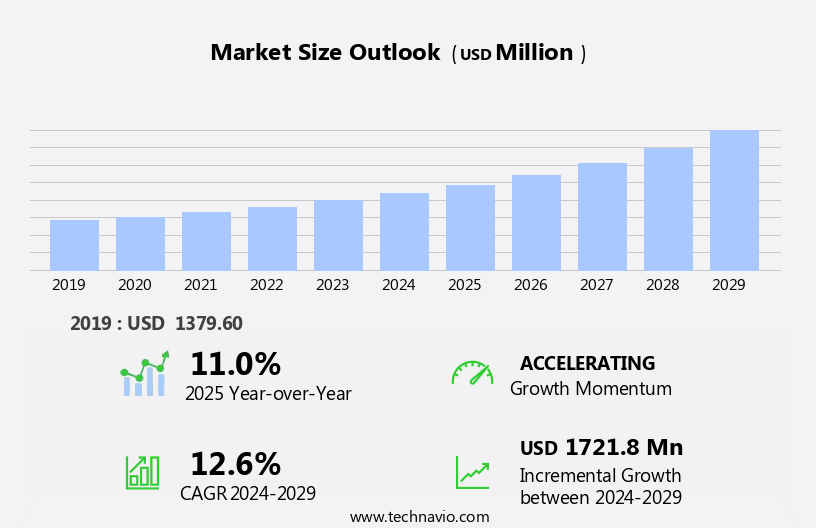
Explore in-depth regional segment analysis with market size data - historical 2019-2023 and forecasts 2025-2029 - in the full report.
Request Free Sample
- Neurophotonics, the intersection of neuroscience and photonics, is experiencing significant advancements in various applications, from stem cell therapy to functional neuroimaging. Three-dimensional reconstruction and data visualization are revolutionizing the field, enabling precise analysis of complex neurological structures. Gene editing and microscopy automation are enhancing research in neuroscience, while pattern recognition and image segmentation improve diagnostic accuracy. Biocompatible materials and smart implants are paving the way for personalized medicine and precision treatments. Light sheet tomography and holographic microscopy offer new insights into brain development, while big data analytics and data mining uncover hidden correlations in neurological research.
- Optical tweezers and cloud computing enable advanced research in neuroscience, pushing the boundaries of our understanding of the brain. Neurophotonics is transforming healthcare, offering innovative solutions for the diagnosis, treatment, and monitoring of neurological conditions.
How is this Neurophotonics Industry segmented?
The neurophotonics industry research report provides comprehensive data (region-wise segment analysis), with forecasts and estimates in "USD million" for the period 2025-2029, as well as historical data from 2019-2023 for the following segments.
- Application
- Research
- Therapeutics
- Type
- Microscopy
- Spectroscopy
- Multimodal
- End-user
- Academic and research institutes
- Hospitals and clinics
- Pharmaceutical and biotechnology
- Neurotechnology startups
- Geography
- North America
- US
- Canada
- Mexico
- Europe
- France
- Germany
- Italy
- UK
- APAC
- China
- India
- Japan
- Rest of World (ROW)
- North America
By Application Insights
The research segment is estimated to witness significant growth during the forecast period. The market is experiencing significant growth due to advancements in optical technologies and their applications in neurosciences. The research segment dominates the market, driven by the exploration of brain functions and structures using various imaging modalities. These modalities include optical coherence tomography, confocal microscopy, super-resolution microscopy, and multiphoton microscopy, among others. Neuroimaging technologies offer benefits such as high imaging speed, temporal resolution, and improved image quality, enabling the study of neural activity mapping, hemodynamics, and neurovascular communication. Neurophotonics also plays a crucial role in drug discovery and medical diagnostics, with applications in near-infrared spectroscopy, photoacoustic imaging, and optical microfluidics.
Artificial intelligence, machine learning, and computational modeling are integral to data analysis and signal processing, enhancing the market's potential. Brain imaging, brain-computer interfaces, and clinical translation are other significant areas of market adoption. Despite the progress, challenges persist, including imaging artifacts, ethical considerations, and regulatory approvals. Neurophotonics devices, such as optical sensors and silicon photonics, are essential in addressing these challenges and improving the overall market. The integration of advanced technologies like deep learning and light sheet microscopy further expands the market's scope, offering new possibilities for neuroscience research and biomedical engineering.
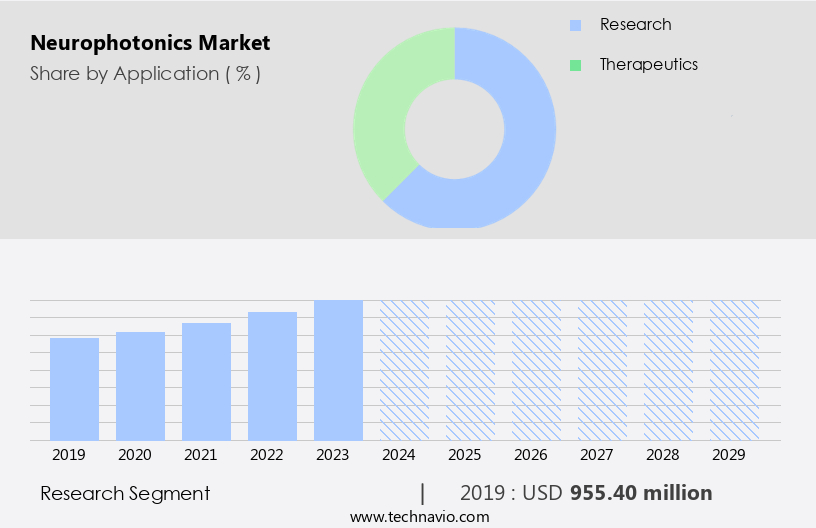
The Research segment was valued at USD 955.40 billion in 2019 and showed a gradual increase during the forecast period.
Regional Analysis
North America is estimated to contribute 42% to the growth of the global market during the forecast period. Technavio's analysts have elaborately explained the regional trends and drivers that shape the market during the forecast period.
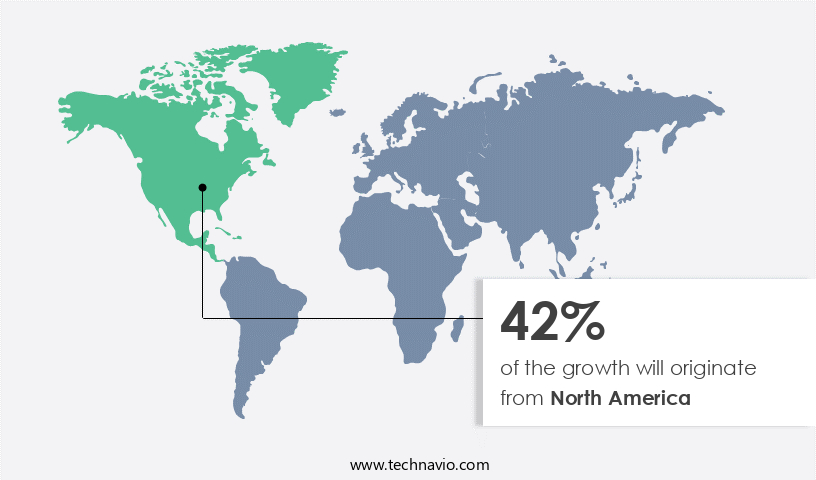
The market in North America is experiencing significant growth, driven by the presence of numerous research laboratories and a high focus on advanced medical technology. This region holds the largest market share due to increased surgical procedures, government funding for R&D, and an aging population. In the US, the medical device industry is renowned for producing superior quality products through substantial research investments. Initiatives like BRAIN 2025 aim to provide experimental access to various brain cell types, further fueling market expansion. Neuroscience research is a key application area, with imaging modalities such as optical coherence tomography (OCT), super-resolution microscopy, and confocal microscopy driving innovation.
Optical sensors, image processing, and artificial intelligence are essential components, enhancing temporal resolution, spatial resolution, and depth penetration. Neurophotonics devices, including optical fibers, silicon photonics, and brain-computer interfaces, are transforming brain imaging techniques, enabling real-time neural activity mapping and clinical translation. Market adoption is further boosted by the integration of machine learning and deep learning algorithms, improving data analysis and signal processing. Despite these advancements, ethical considerations and regulatory approvals remain crucial, ensuring image quality and patient safety. Near-infrared spectroscopy, photoacoustic imaging, and light sheet microscopy are additional imaging modalities expanding the market scope. Drug discovery and medical diagnostics are significant applications, with neurophotonics offering enhanced field of view and improved sensitivity.
Market Dynamics
Our researchers analyzed the data with 2024 as the base year, along with the key drivers, trends, and challenges. A holistic analysis of drivers will help companies refine their marketing strategies to gain a competitive advantage.
What are the Neurophotonics market drivers leading to the rise in the adoption of Industry?
- The rising incidence of neurological disorders serves as the primary catalyst for market growth in this sector. Neurological disorders are a significant global health concern, contributing to a rising demand for advanced diagnostic and therapeutic solutions. The increasing prevalence of neurological disorders, including genetic disorders, congenital anomalies, infections, lifestyle or environmental health problems, and injuries, is driving the growth of the market. Neurophotonics, which encompasses various imaging modalities such as optical coherence tomography (OCT), super-resolution microscopy, and near-infrared spectroscopy, plays a crucial role in the diagnosis and treatment of neurological conditions. The market's expansion is further fueled by the need for faster imaging speeds, higher temporal resolution, and more precise image processing capabilities.
- Optical sensors and optical stimulation techniques are essential components of neurophotonics, enabling the development of innovative diagnostic and therapeutic tools. The market's adoption is expected to continue growing due to the potential of neurophotonics to provide non-invasive, real-time, and cost-effective solutions for neurological disorders. The market's dynamics are influenced by advancements in technology, regulatory approvals, and increasing research and development investments.
What are the Neurophotonics market trends shaping the Industry?
- Neurophotonics is emerging as the next significant market trend in the field of neuroscience. This advanced technology utilizes light to interact with neurons and brain tissues, offering promising opportunities for research and diagnostic applications. Neurophotonics, the intersection of neuroscience research and optical technologies, is experiencing significant growth. This field bridges the gap between fundamental research and clinical applications, offering promising advancements in understanding brain functions and improving patient care. Two areas of potential expansion include managing chronic pain and interventional neuroimmunology. These domains encompass both basic research and clinical demands, providing ample opportunities for innovation. Artificial intelligence and deep learning are increasingly being integrated into neurophotonics devices, enhancing their capabilities in brain imaging through techniques such as multiphoton microscopy and photoacoustic imaging.
- Neurophotonics is a burgeoning field that has gained significant attention from various sectors, including academia, industry, government, and healthcare, worldwide. The integration of neurophotonics with brain-computer interfaces holds immense potential for clinical translation and revolutionizing the diagnosis and treatment of neurological disorders.
How does Neurophotonics market face challenges during its growth?
- The lack of awareness and understanding about neurological disorders poses a significant challenge to the industry's growth trajectory. Neurophotonics, the intersection of neuroscience and optics, is a promising field that holds significant potential for advancing our understanding of neurological disorders. Optical microfluidics and machine learning are key technologies driving innovation in this area. Optical microfluidics enables the manipulation of fluids at the microscale using light, while machine learning facilitates data analysis and pattern recognition. Two-photon microscopy and neural activity mapping are essential applications of neurophotonics, offering high spatial resolution and the ability to observe neural activity in real-time. Silicon photonics and optical fibers are enabling technologies, providing the necessary infrastructure for transmitting and manipulating light. Light scattering, a fundamental property of biological tissues, poses a challenge for achieving high spatial resolution.
- However, advancements in confocal microscopy and other imaging techniques continue to address this issue. As neurological disorders remain poorly understood, the importance of neurophotonics in improving our knowledge and developing effective care management strategies cannot be overstated.
Exclusive Customer Landscape
The neurophotonics market forecasting report includes the adoption lifecycle of the market, covering from the innovator's stage to the laggard's stage. It focuses on adoption rates in different regions based on penetration. Furthermore, the neurophotonics market report also includes key purchase criteria and drivers of price sensitivity to help companies evaluate and develop their market growth analysis strategies.
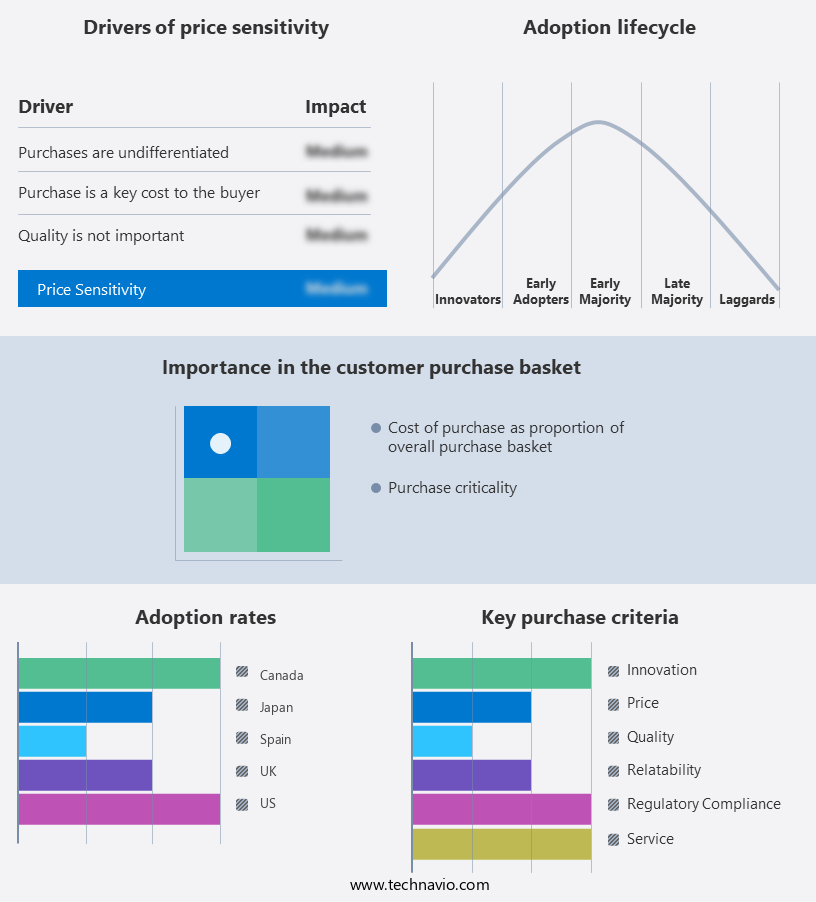
Customer Landscape
Key Companies & Market Insights
Companies are implementing various strategies, such as strategic alliances, neurophotonics market forecast, partnerships, mergers and acquisitions, geographical expansion, and product/service launches, to enhance their presence in the industry.
Artinis Medical Systems - The company specializes in neurophotonics technology, providing innovative solutions for brain imaging.
The industry research and growth report includes detailed analyses of the competitive landscape of the market and information about key companies, including:
- Artinis Medical Systems
- Cairn Research Ltd.
- Carl Zeiss AG
- Femtonics Ltd.
- Hemophotonics S.L.
- Hitachi Ltd.
- HORIBA Ltd.
- Inscopix Inc.
- Intelligent Imaging Innovations Inc.
- ISS Inc.
- Leica Microsystems
- Nanoscope Technologies LLC
- NIRx Medical Technologies LLC
- Thermo Fisher Scientific Inc.
- Vielight Inc.
Qualitative and quantitative analysis of companies has been conducted to help clients understand the wider business environment as well as the strengths and weaknesses of key industry players. Data is qualitatively analyzed to categorize companies as pure play, category-focused, industry-focused, and diversified; it is quantitatively analyzed to categorize companies as dominant, leading, strong, tentative, and weak.
Recent Development and News in Neurophotonics Market
- In February 2023, Thales and CEA-Leti announced the successful demonstration of a neurophotonics-based biosensor for the early detection of Alzheimer's disease. This technological advancement marks a significant step forward in the application of neurophotonics in healthcare (Thales Press Release, 2023).
- In May 2024, Intel and Google formed a strategic partnership to collaborate on the development of advanced neurophotonics technologies. The collaboration aims to accelerate research in the field and bring neurophotonics-based solutions closer to commercialization (Intel Newsroom, 2024).
- In September 2024, Lumibird, a leading neurophotonics company, secured a USD 30 million Series C funding round. The investment will be used to expand production capacity and accelerate the commercialization of their neurophotonics products (Lumibird Press Release, 2024).
Research Analyst Overview
Neurophotonics, a multidisciplinary field that combines optics and neuroscience, continues to evolve as researchers and industry professionals seek to advance imaging technologies for various applications in neuroscience research and biomedical engineering. The market dynamics of neurophotonics are characterized by continuous innovation and unfolding patterns, with key areas of focus including optical microfluidics, machine learning, two-photon microscopy, neural activity mapping, silicon photonics, optical fibers, data analysis, confocal microscopy, light scattering, and spatial resolution. Optical microfluidics enables the manipulation of fluids at the microscale using light, offering potential applications in drug discovery and biomedical research. Machine learning algorithms are increasingly being integrated into neurophotonics to enhance image processing and analysis, improving temporal resolution and reducing imaging artifacts.
Two-photon microscopy and neural activity mapping are essential tools for studying neural activity in living organisms, providing high spatial and temporal resolution. Silicon photonics and optical fibers offer advantages in terms of depth penetration and signal processing, making them valuable components in neurophotonics devices. Data analysis plays a crucial role in neurophotonics, with deep learning algorithms being employed to extract meaningful information from complex imaging data. Confocal microscopy and light scattering techniques are used to improve image quality and spatial resolution, while clinical translation and regulatory approvals are important considerations for the commercialization of neurophotonics technologies.
The ongoing development of neurophotonics is driven by the need for advanced imaging modalities in neuroscience research and biomedical engineering. The field is continually pushing the boundaries of what is possible in terms of imaging speed, depth penetration, field of view, and image quality, with ethical considerations and regulatory approvals playing a critical role in ensuring the responsible and effective application of these technologies.
Dive into Technavio's strong research methodology, blending expert interviews, extensive data synthesis, and validated models for unparalleled Neurophotonics Market insights. See full methodology.
|
Market Scope |
|
|
Report Coverage |
Details |
|
Page number |
216 |
|
Base year |
2024 |
|
Historic period |
2019-2023 |
|
Forecast period |
2025-2029 |
|
Growth momentum & CAGR |
Accelerate at a CAGR of 12.6% |
|
Market growth 2025-2029 |
USD 1.72 billion |
|
Market structure |
Fragmented |
|
YoY growth 2024-2025(%) |
11.0 |
|
Key countries |
US, Germany, Canada, China, UK, France, Italy, Mexico, Japan, and India |
|
Competitive landscape |
Leading Companies, Market Positioning of Companies, Competitive Strategies, and Industry Risks |
What are the Key Data Covered in this Neurophotonics Market Research and Growth Report?
- CAGR of the Neurophotonics industry during the forecast period
- Detailed information on factors that will drive the growth and forecasting between 2025 and 2029
- Precise estimation of the size of the market and its contribution of the industry in focus to the parent market
- Accurate predictions about upcoming growth and trends and changes in consumer behaviour
- Growth of the market across North America, Europe, Asia, and Rest of World (ROW)
- Thorough analysis of the market's competitive landscape and detailed information about companies
- Comprehensive analysis of factors that will challenge the neurophotonics market growth of industry companies
We can help! Our analysts can customize this neurophotonics market research report to meet your requirements.
 RIA -
RIA -