


Nanobatteries Market Size 2026-2030
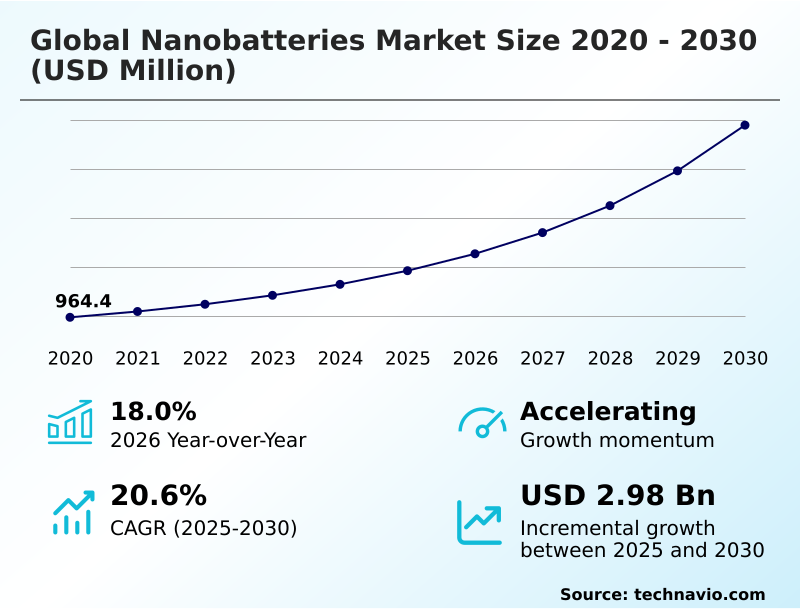
The nanobatteries market size is valued to increase by USD 2.98 billion, at a CAGR of 20.6% from 2025 to 2030. Fast charging and high power will drive the nanobatteries market.
Major Market Trends & Insights
- North America dominated the market and accounted for a 38.4% growth during the forecast period.
- By Technology - Nanophosphate segment was valued at USD 863.4 million in 2024
- By Type - Lithium nanobatteries segment accounted for the largest market revenue share in 2024
Market Size & Forecast
- Market Opportunities: USD 3.93 billion
- Market Future Opportunities: USD 2.98 billion
- CAGR from 2025 to 2030 : 20.6%
Market Summary
- The nanobatteries market is foundational to the global transition toward advanced energy storage, serving as a critical enabler for electric transportation, grid modernization, and high-performance electronics. Market momentum is sustained by the persistent need for solutions offering fast charging and high power density, which address the core limitations of conventional batteries.
- An escalating trend is the integration of these technologies into electric vehicles and a new generation of consumer devices that demand slimmer profiles and longer operational lives. These advancements are essential for achieving breakthroughs in both performance and design.
- However, the industry grapples with the high costs of production tied to intricate nanoscale fabrication processes and the use of rare precursor materials.
- For instance, a key operational challenge for manufacturers is managing a complex global supply chain to secure a stable, cost-effective supply of these specialized materials, which is essential for maintaining production continuity and competitive pricing in a rapidly expanding market.
What will be the Size of the Nanobatteries Market during the forecast period?
Get Key Insights on Market Forecast (PDF) Request Free Sample
How is the Nanobatteries Market Segmented?
The nanobatteries industry research report provides comprehensive data (region-wise segment analysis), with forecasts and estimates in "USD million" for the period 2026-2030, as well as historical data from 2020-2024 for the following segments.
- Technology
- Nanophosphate
- Nanopore
- Lithium-ion
- Type
- Lithium nanobatteries
- Graphene nanobatteries
- Others
- Application
- Consumer electronics
- Electric vehicles
- Renewable energy storage and grid solutions
- Geography
- North America
- US
- Canada
- Mexico
- Europe
- Germany
- France
- UK
- APAC
- China
- Japan
- South Korea
- Middle East and Africa
- South Africa
- UAE
- Saudi Arabia
- South America
- Brazil
- Argentina
- Rest of World (ROW)
- North America
By Technology Insights
The nanophosphate segment is estimated to witness significant growth during the forecast period.
The nanophosphate segment is critical to market expansion, leveraging advanced lithium iron phosphate chemistries. These nanophosphate cathodes are engineered for superior thermal management and exceptional abuse tolerance, making them ideal for high-power applications where safety is paramount.
The technology delivers high power density and an extended cycle life, with systems retaining over 80% capacity after thousands of cycles. Integrated with advanced battery management, these batteries optimize performance in demanding environments like grid-scale systems and electric vehicles.
Unlike some lithium nanobatteries or graphene nanobatteries, their stability reduces fire risks in high-capacity battery packs and pouch cells, driving adoption in the broader energy storage system landscape.
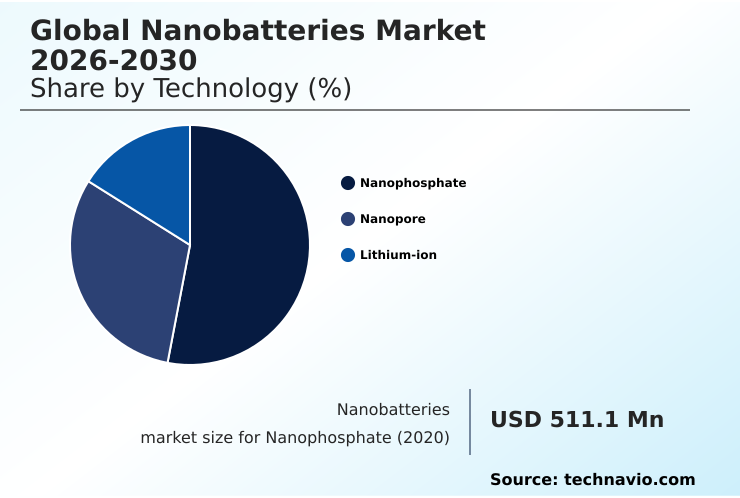
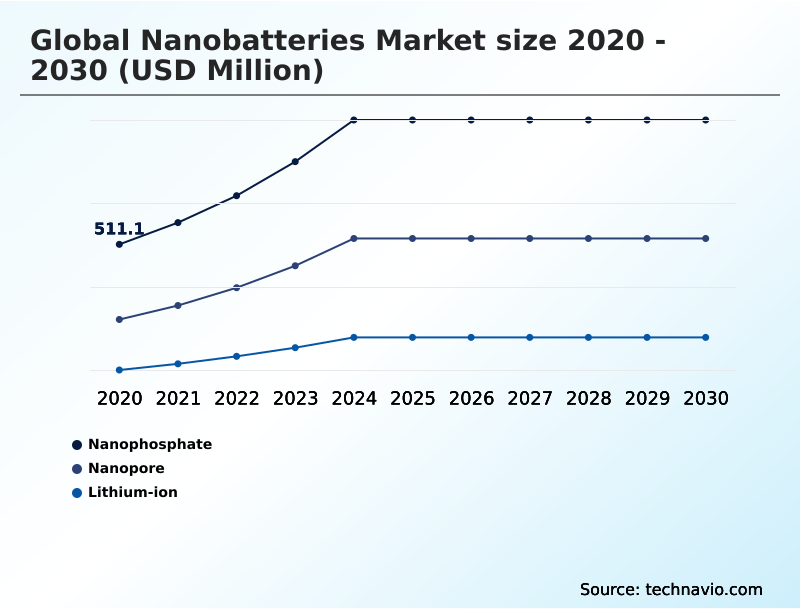
The Nanophosphate segment was valued at USD 863.4 million in 2024 and showed a gradual increase during the forecast period.
Regional Analysis
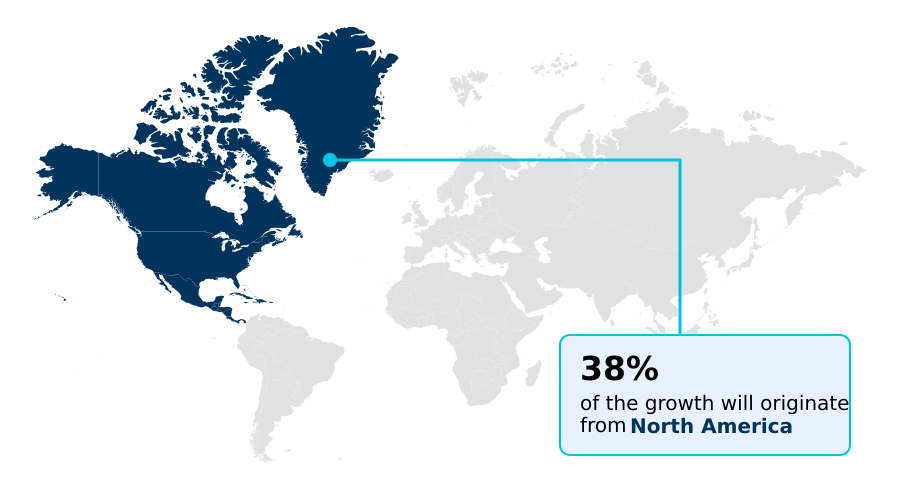
North America is estimated to contribute 38.4% to the growth of the global market during the forecast period.Technavio’s analysts have elaborately explained the regional trends and drivers that shape the market during the forecast period.
See How Nanobatteries Market Demand is Rising in North America Request Free Sample
North America and APAC are key regions shaping the market landscape, with North America representing 38% of the growth opportunity, driven by electrification and grid modernization.
This region focuses on advanced nanomaterials and silicon-dominant anode materials to boost lithium-ion battery performance. Meanwhile, APAC is the fastest-growing region, capitalizing on its manufacturing strength to produce nano-engineered electrodes and 4680 cylindrical cells at scale.
The regional push for cobalt-free chemistries is driving innovation in materials like nanophosphate cathodes to achieve high coulombic efficiency and improve volumetric energy density.
This geographic dynamism, with each region specializing in different aspects of the value chain, is accelerating market expansion globally.
Market Dynamics
Our researchers analyzed the data with 2025 as the base year, along with the key drivers, trends, and challenges. A holistic analysis of drivers will help companies refine their marketing strategies to gain a competitive advantage.
- The global push for enhanced nanobatteries for electric vehicle range is accelerating research into silicon anode nanobattery performance metrics and compelling advancements in nanobattery thermal management solutions.
- As high power density nanobattery applications expand beyond automotive into aerospace and drone applications, the focus on safety intensifies, highlighting solid-state nanobattery safety advantages and driving innovation in dendrite formation suppression in lithium nanobatteries. The development of fast charging nanobattery for consumer electronics continues to be a major driver, pushing for volumetric efficiency gains in silicon nanobatteries.
- Simultaneously, nanobattery applications in grid storage demand improvements in nanobattery cycle life extension techniques and unique chemistries, such as those seen in graphene nanobattery energy density improvements and cobalt-free nanobattery chemistry development. Addressing these diverse requirements hinges on overcoming manufacturing hurdles.
- The industry is focused on nanobattery production cost reduction strategies, which include nanoscale fabrication process yield optimization and scaling techniques like atomic layer deposition for nanobattery electrodes.
- The impact of gigafactory investments on nanobatteries is significant, but managing the complex supply chain for nanobattery precursor materials remains a critical operational challenge, with some firms reporting up to 15% fewer safety incidents through better integration of advanced battery management for nanobatteries compared to legacy systems.
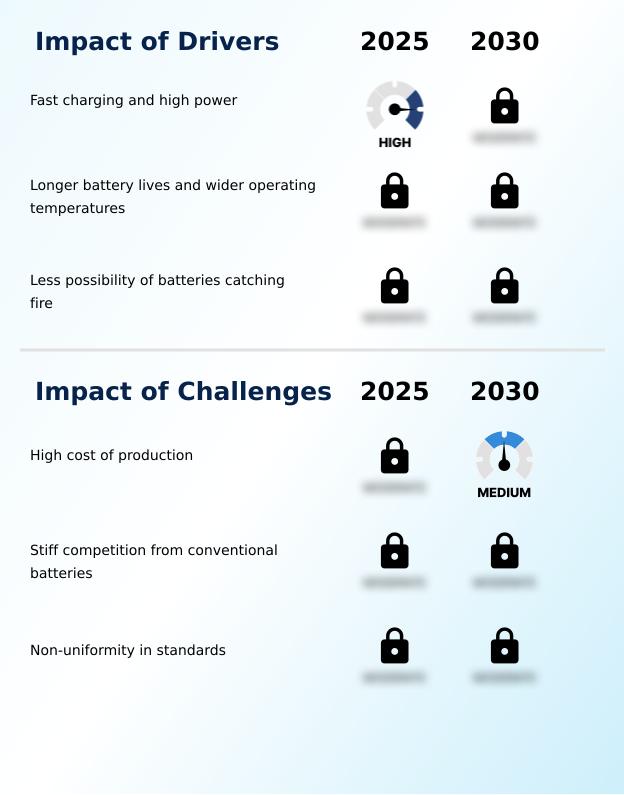
What are the key market drivers leading to the rise in the adoption of Nanobatteries Industry?
- Fast charging capabilities and high-power delivery are key drivers accelerating the adoption of advanced nanobattery technologies across the electric vehicle, consumer electronics, and industrial sectors.
- The market is significantly driven by demand for extreme fast charging and high power capabilities. Advanced nanoscale architectures featuring innovative nanoscale components facilitate unprecedented ion diffusion rates, enabling charge times of under 10 minutes.
- Technologies like carbon silicon anodes and lithium titanate nanostructured batteries are central to these ultra-fast charging solutions. This performance is crucial for electric vehicles and high-voltage storage infrastructure.
- Further advancements in dendrite formation suppression enhance the safety and longevity of prismatic battery cells.
- The market benefits from materials like SCC55 silicon-carbon composite and developments in nanopore technology, which contribute to higher efficiency and low self-discharge rates, addressing critical needs across industrial and consumer applications.
What are the market trends shaping the Nanobatteries Industry?
- The rapid development of electrified luxury vehicles, which demand premium performance exceeding standard EV capabilities, is a significant market trend. This is accelerating demand for advanced, high-density battery solutions.
- Market expansion is fueled by the development of electrified luxury vehicles, which integrate nanostructured cells to achieve exceptional performance. These vehicles leverage nanostructured lithium structures and advanced silicon-lithium composites to attain high energy density levels exceeding 400 Wh/kg, enabling longer ranges. Innovations in nanostructured electrolytes and fast-charging battery technology support rapid power replenishment without causing thermal throttling.
- This allows for smaller, lighter batteries that fit into unique and flexible form factors. As the industry moves toward a next-generation silicon anode and even anode-free solid-state cells, a focus on high-nickel chemistries and advancements in semiconductor fabrication are enabling new capabilities and designs.
What challenges does the Nanobatteries Industry face during its growth?
- The high cost of production, stemming from complex nanoscale fabrication processes and specialized precursor materials, remains a primary challenge restraining widespread market commercialization.
- A primary challenge facing the market is the high cost associated with intricate nanoscale fabrication processes. Techniques such as atomic layer deposition and chemical vapor deposition are essential for creating uniform nanostructures but elevate production expenses, as seen in SiMaxx cell manufacturing.
- The production of materials like the silicon-carbon composite involves high-purity vapor deposition and energy-intensive carbonization, further adding to costs. While gigafactory investments are necessary for scale, achieving cost-parity with conventional batteries remains difficult. Developing cost-effective methods for producing silicon nanowire electrode structures and scaling up all-solid-state nanobatteries are key hurdles to overcome for widespread adoption, including for micro-power sources.
Exclusive Technavio Analysis on Customer Landscape
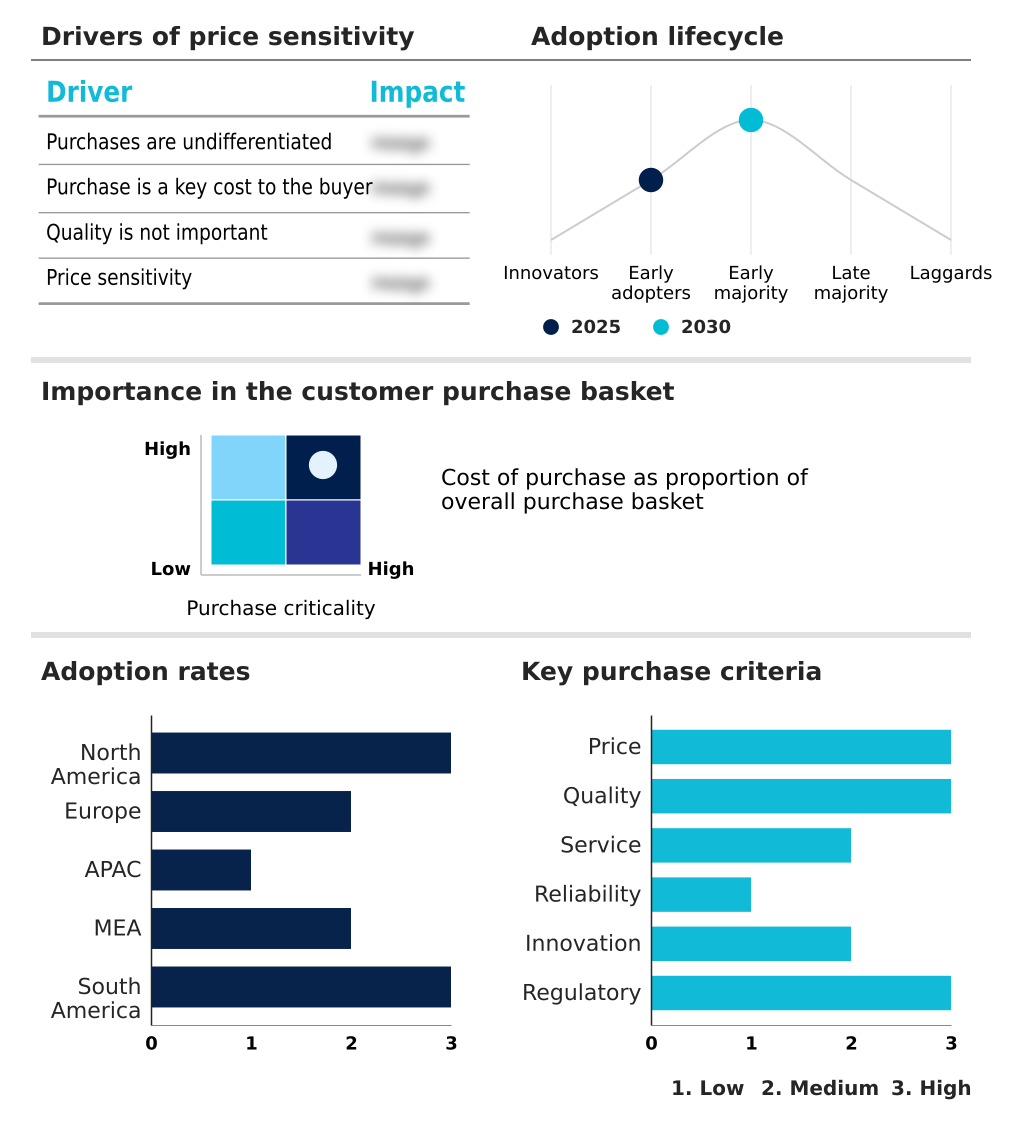
The nanobatteries market forecasting report includes the adoption lifecycle of the market, covering from the innovator’s stage to the laggard’s stage. It focuses on adoption rates in different regions based on penetration. Furthermore, the nanobatteries market report also includes key purchase criteria and drivers of price sensitivity to help companies evaluate and develop their market growth analysis strategies.
Customer Landscape of Nanobatteries Industry
Competitive Landscape
Companies are implementing various strategies, such as strategic alliances, nanobatteries market forecast, partnerships, mergers and acquisitions, geographical expansion, and product/service launches, to enhance their presence in the industry.
6K Inc. - The vendor focuses on developing advanced materials into products that advance key industries such as manufacturing, renewable energy, aerospace, and consumer electronics.
The industry research and growth report includes detailed analyses of the competitive landscape of the market and information about key companies, including:
- 6K Inc.
- A123 Systems LLC
- Altairnano
- Group14 Technologies
- HPQ Silicon Inc.
- LG Energy Solution Ltd.
- Nanoramic Laboratories
- Panasonic Holdings Corp.
- Samsung SDI Co. Ltd.
- Sila Nanotechnologies Inc.
- StoreDot.
- Toshiba Corp.
Qualitative and quantitative analysis of companies has been conducted to help clients understand the wider business environment as well as the strengths and weaknesses of key industry players. Data is qualitatively analyzed to categorize companies as pure play, category-focused, industry-focused, and diversified; it is quantitatively analyzed to categorize companies as dominant, leading, strong, tentative, and weak.
Recent Development and News in Nanobatteries market
- In August, 2024, Group14 Technologies discussed cost challenges for its SCC55 silicon-carbon composite, revealing partnerships to halve capital outlays and achieve aggressive cost targets within two years.
- In January, 2025, Samsung SDI disclosed new investment plans to expand electric vehicle battery production capacity in Hungary, Europe, reinforcing its role as a key regional supplier.
- In March, 2025, Amprius Technologies announced the shipment of its new 6.3 Ah 21700 SiCore cell to a Fortune 500 light electric vehicle customer, marking a key commercial milestone.
- In April, 2025, Amprius launched its SiMaxx 450 Wh/kg cells tailored for drones, providing a significant boost to market demand in the unmanned aerial vehicle sector.
Dive into Technavio’s robust research methodology, blending expert interviews, extensive data synthesis, and validated models for unparalleled Nanobatteries Market insights. See full methodology.
| Market Scope | |
|---|---|
| Page number | 282 |
| Base year | 2025 |
| Historic period | 2020-2024 |
| Forecast period | 2026-2030 |
| Growth momentum & CAGR | Accelerate at a CAGR of 20.6% |
| Market growth 2026-2030 | USD 2977.2 million |
| Market structure | Concentrated |
| YoY growth 2025-2026(%) | 18.0% |
| Key countries | US, Canada, Mexico, Germany, France, UK, The Netherlands, Spain, Italy, China, Japan, South Korea, India, Australia, Indonesia, South Africa, UAE, Saudi Arabia, Egypt, Turkey, Brazil, Chile and Argentina |
| Competitive landscape | Leading Companies, Market Positioning of Companies, Competitive Strategies, and Industry Risks |
Research Analyst Overview
- The nanobatteries market is rapidly evolving from a research-intensive field to a commercially vital industry, driven by the imperative for high energy density and an extended cycle life. Innovations in nanoscale fabrication, including atomic layer deposition and chemical vapor deposition, are enabling superior thermal management and high coulombic efficiency in next-generation cells.
- The development of advanced nanomaterials such as silicon anode materials, carbon silicon anodes, and silicon-carbon composites is pushing the boundaries of lithium-ion battery performance. Boardroom decisions are increasingly influenced by the need to secure supply chains for these materials while investing in cobalt-free and high-nickel chemistries to meet ESG mandates.
- Technologies ranging from nanophosphate cathodes and lithium titanate nanostructured batteries to all-solid-state nanobatteries with nanostructured electrolytes are becoming critical differentiators. As firms work on dendrite formation suppression and nano-engineered electrodes, they are targeting manufacturing cost reductions of over 30% through automation, essential for making silicon nanowire electrode and prismatic battery cells commercially viable.
What are the Key Data Covered in this Nanobatteries Market Research and Growth Report?
-
What is the expected growth of the Nanobatteries Market between 2026 and 2030?
-
USD 2.98 billion, at a CAGR of 20.6%
-
-
What segmentation does the market report cover?
-
The report is segmented by Technology (Nanophosphate, Nanopore, and Lithium-ion), Type (Lithium nanobatteries, Graphene nanobatteries, and Others), Application (Consumer electronics, Electric vehicles, and Renewable energy storage and grid solutions) and Geography (North America, Europe, APAC, Middle East and Africa, South America)
-
-
Which regions are analyzed in the report?
-
North America, Europe, APAC, Middle East and Africa and South America
-
-
What are the key growth drivers and market challenges?
-
Fast charging and high power, High cost of production
-
-
Who are the major players in the Nanobatteries Market?
-
6K Inc., A123 Systems LLC, Altairnano, Group14 Technologies, HPQ Silicon Inc., LG Energy Solution Ltd., Nanoramic Laboratories, Panasonic Holdings Corp., Samsung SDI Co. Ltd., Sila Nanotechnologies Inc., StoreDot. and Toshiba Corp.
-
Market Research Insights
- The nanobatteries market is defined by a structural tension between tightening supply chains for advanced nanomaterials and surging demand from global electrification initiatives. This dynamic is creating significant volatility, as production yields for nanoscale components struggle to keep pace with consumption from EV and grid storage sectors.
- Some advanced cell manufacturing expenses run 40% above conventional battery costs, creating significant margin pressure. In response, leading firms are implementing multi-year roadmaps targeting cost reductions of over 30% through automated deposition lines and process optimizations aimed at achieving yield enhancements above 90%.
- This focus on manufacturing efficiency is critical for navigating a landscape where feedstock availability, not just production capacity, dictates market growth.
We can help! Our analysts can customize this nanobatteries market research report to meet your requirements.
 RIA -
RIA -