



Mutual Funds Market Size 2026-2030
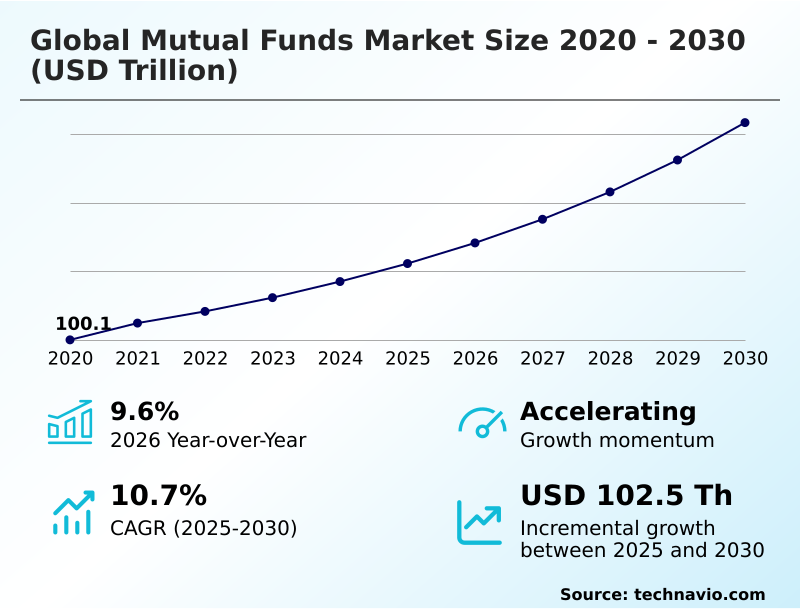
The mutual funds market size is valued to increase by USD 102.5 trillion, at a CAGR of 10.7% from 2025 to 2030. Greater demand for retirement-focused investment solutions will drive the mutual funds market.
Major Market Trends & Insights
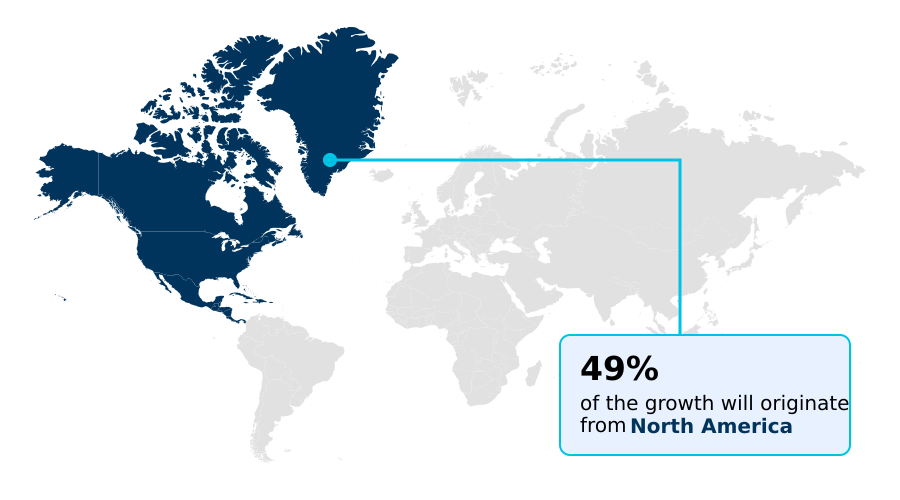
- North America dominated the market and accounted for a 48.6% growth during the forecast period.
- By Type - Stock funds segment was valued at USD 80 trillion in 2024
- By Distribution Channel - Advice channel segment accounted for the largest market revenue share in 2024
Market Size & Forecast
- Market Opportunities:
- Market Future Opportunities: USD 102.5 trillion
- CAGR from 2025 to 2030 : 10.7%
Market Summary
- The mutual funds market is undergoing a significant transformation, driven by the dual forces of technological innovation and evolving investor preferences. The integration of AI-driven fund management is no longer a niche concept but a core component of modern asset allocation models, enabling more sophisticated risk-adjusted returns and alpha generation strategies.
- This technological shift is democratizing access to complex investment vehicles through digital investment platforms, which offer lower expense ratios and greater transparency.
- For instance, asset managers are now utilizing AI to analyze vast datasets for securities selection, allowing them to construct customized portfolio solutions that align with specific ESG criteria or thematic goals, a process that has enhanced portfolio diversification efficiency.
- At the same time, the industry grapples with challenges such as intense fee compression and the need to provide tangible value beyond what passive indexing strategies can offer. Navigating regulatory frameworks while managing market volatility hedging remains a critical operational focus for firms seeking to maintain investor trust and sustainable growth.
What will be the Size of the Mutual Funds Market during the forecast period?
Get Key Insights on Market Forecast (PDF) Request Free Sample
How is the Mutual Funds Market Segmented?
The mutual funds industry research report provides comprehensive data (region-wise segment analysis), with forecasts and estimates in "USD trillion" for the period 2026-2030, as well as historical data from 2020-2024 for the following segments.
- Type
- Stock funds
- Bond funds
- Money market funds
- Hybrid funds
- Distribution channel
- Advice channel
- Retirement plan channel
- Institutional channel
- Direct channel
- Supermarket channel
- Product type
- Active mutual funds
- Passive mutual funds
- Geography
- North America
- US
- Canada
- Mexico
- Europe
- Germany
- France
- UK
- APAC
- China
- India
- Japan
- South America
- Brazil
- Argentina
- Middle East and Africa
- Saudi Arabia
- UAE
- South Africa
- Rest of World (ROW)
- North America
By Type Insights
The stock funds segment is estimated to witness significant growth during the forecast period.
The stock funds segment serves as a primary driver for capital appreciation, with a notable strategic pivot from broad benchmark index tracking toward specialized thematic investment vehicles.
While passive indexing strategies continue to gain assets, a resurgence in active fund management is evident, where managers leverage quantitative analysis models and behavioral finance insights to navigate market complexities.
Retail participation remains strong, often facilitated by systematic investment plans (SIP), while institutional investors explore sophisticated direct indexing platforms.
Equity fund management is increasingly influenced by investor sentiment analysis, with approximately 47% of assets in the North American market concentrated in equity-based products, reflecting a sustained focus on ESG-integrated equity funds for long-term growth.
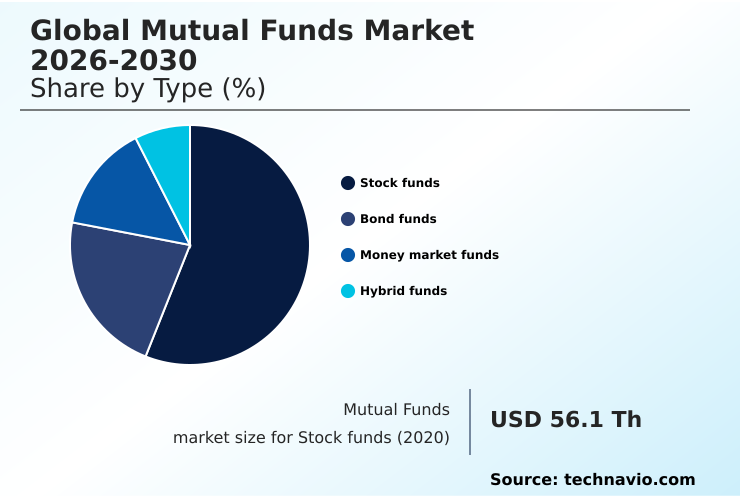
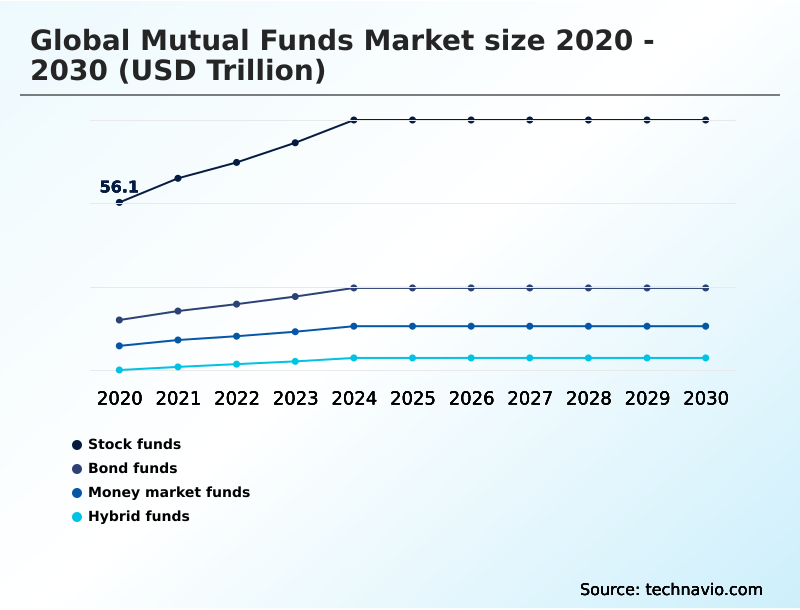
The Stock funds segment was valued at USD 80 trillion in 2024 and showed a gradual increase during the forecast period.
Regional Analysis
North America is estimated to contribute 48.6% to the growth of the global market during the forecast period.Technavio’s analysts have elaborately explained the regional trends and drivers that shape the market during the forecast period.
See How Mutual Funds Market Demand is Rising in North America Request Free Sample
The geographic landscape of the market is defined by mature economies seeking efficiency and emerging markets driving growth.
North America, commanding over half of global assets, is a hub for innovation in tax efficiency strategies and multi-asset income funds, driven by sophisticated institutional demand.
In Europe, a stringent focus on regulatory compliance frameworks shapes product development, particularly for cross-border fund distribution. The APAC region is the fastest-growing market, with a surge in demand for international equity funds and portfolio diversification.
Adoption of unified digital platforms in this region has improved operational efficiency, reducing client onboarding times by over 40%.
In South America and the Middle East, the focus is on developing robust custodial services and fund accounting standards to attract foreign investment in high-yield fixed income and alternative investment funds, supported by evolving asset allocation models.
Market Dynamics
Our researchers analyzed the data with 2025 as the base year, along with the key drivers, trends, and challenges. A holistic analysis of drivers will help companies refine their marketing strategies to gain a competitive advantage.
- The strategic discourse within the global mutual funds market is increasingly focused on the future of tokenized investment funds and how to navigate capital gains in managed accounts. The long-standing debate over active versus passive fund performance metrics continues, but the conversation is evolving due to the profound impact of AI on active fund management.
- For institutional and retail clients alike, effective retirement planning using target-date funds remains a cornerstone, yet there is a growing need for strategies capable of managing market volatility with hybrid funds. The role of ETFs in modern investment portfolios is expanding beyond simple index tracking to include complex active strategies.
- Firms leveraging AI for securities selection have reported decision-making speeds more than twice as fast as traditional methods, enhancing their ability to optimize expense ratios in passive funds and implement superior capital appreciation strategies in growth funds.
- This technological edge is also crucial for assessing risk-adjusted returns in high-yield bond funds and understanding the complex tax implications of mutual fund distributions. As ESG criteria integration in equity funds becomes standard, the industry also confronts the challenges of cross-border fund distribution and potential liquidity challenges in alternative investment funds.
- The design of fee structures in direct indexing platforms and the portfolio diversification with international equities are central to competitive positioning, alongside adapting to regulatory changes affecting money market funds and the behavioral finance impact on retail investors. Ultimately, success depends on using quantitative models for securities selection while addressing the impact of interest rate changes on bond funds.
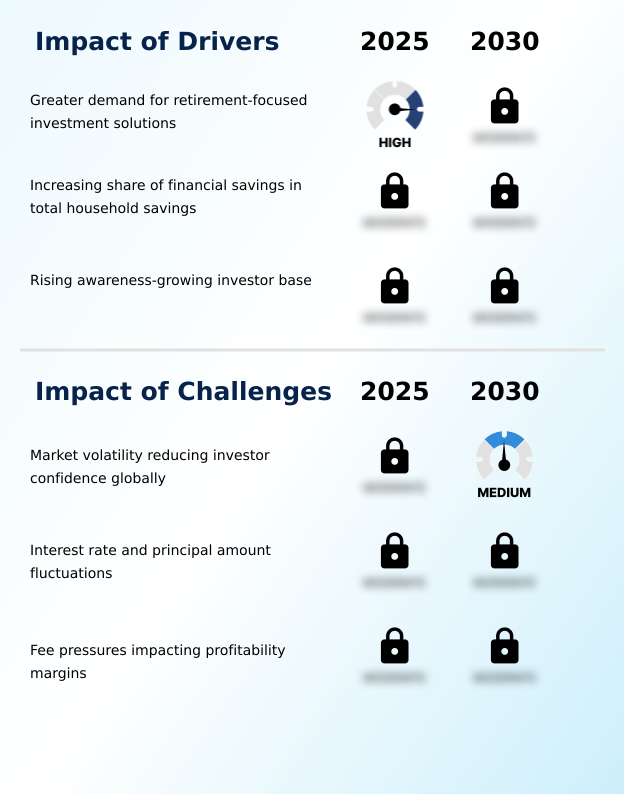
What are the key market drivers leading to the rise in the adoption of Mutual Funds Industry?
- A greater demand for retirement-focused investment solutions is a key driver propelling the market forward.
- The primary driver for market expansion is the global imperative for long-term savings, particularly for retirement investment solutions.
- The growth of digital investment platforms and robo-advisory services has democratized access to professionally managed funds, with adoption rates among investors under 40 increasing by 35% in the last two years.
- This trend supports the fund sachetization movement in emerging markets, making it easier for new investors to participate. Demand for target-date fund performance is high, as these products align with an outcome-oriented investing mindset.
- Institutional investment consulting is also evolving, focusing on complex fund of funds (FoF) structures that adhere to strict fiduciary duty standards.
- The growth in assets under management (AUM) is directly tied to these accessible fund distribution channels, which now account for over 60% of new retail inflows.
What are the market trends shaping the Mutual Funds Industry?
- The increasing adoption of inflation-indexed funds signals a significant market trend. This shift highlights a growing investor focus on safeguarding long-term purchasing power amid economic uncertainty.
- Key market trends are centered on technological integration and the demand for sophisticated risk management. The rise of AI-driven fund management is enabling more dynamic portfolio rebalancing and securities selection processes, with some platforms improving forecast accuracy for market movements by up to 15%.
- This has led to the emergence of innovative products like tokenized money market funds, which promise to enhance liquidity management and reduce transaction friction. Simultaneously, heightened economic uncertainty is fueling demand for inflation-indexed securities and advanced hedging strategies.
- Holistic wealth management is evolving with regulatory technology (regtech) solutions that ensure financial data interoperability, a crucial step for providing compliant, cross-border advice. This technology has helped firms reduce compliance reporting errors by 25%, allowing them to focus on developing smart beta ETFs and alternative liquidity solutions.
What challenges does the Mutual Funds Industry face during its growth?
- Market volatility, which reduces investor confidence globally, presents a key challenge to the industry's growth.
- The market faces persistent challenges from fee compression impact and market volatility, which directly affect profitability and investor confidence. The pressure to lower the total expense ratio (TER) has squeezed margins, with average fees on active equity funds declining by 15% over the past five years. This forces firms toward aggressive expense ratio optimization.
- Market volatility hedging has become critical, as sudden downturns can trigger significant outflows and create unrealized capital gains issues, complicating capital gains burden reduction for investors. Navigating geopolitical risk mitigation and fluctuating rules from bodies like the securities and exchange commission (SEC) adds another layer of complexity.
- To remain competitive, firms are exploring higher-margin areas like private credit exposure, but this introduces new challenges related to risk-adjusted returns and active management performance evaluation.
Exclusive Technavio Analysis on Customer Landscape
The mutual funds market forecasting report includes the adoption lifecycle of the market, covering from the innovator’s stage to the laggard’s stage. It focuses on adoption rates in different regions based on penetration. Furthermore, the mutual funds market report also includes key purchase criteria and drivers of price sensitivity to help companies evaluate and develop their market growth analysis strategies.
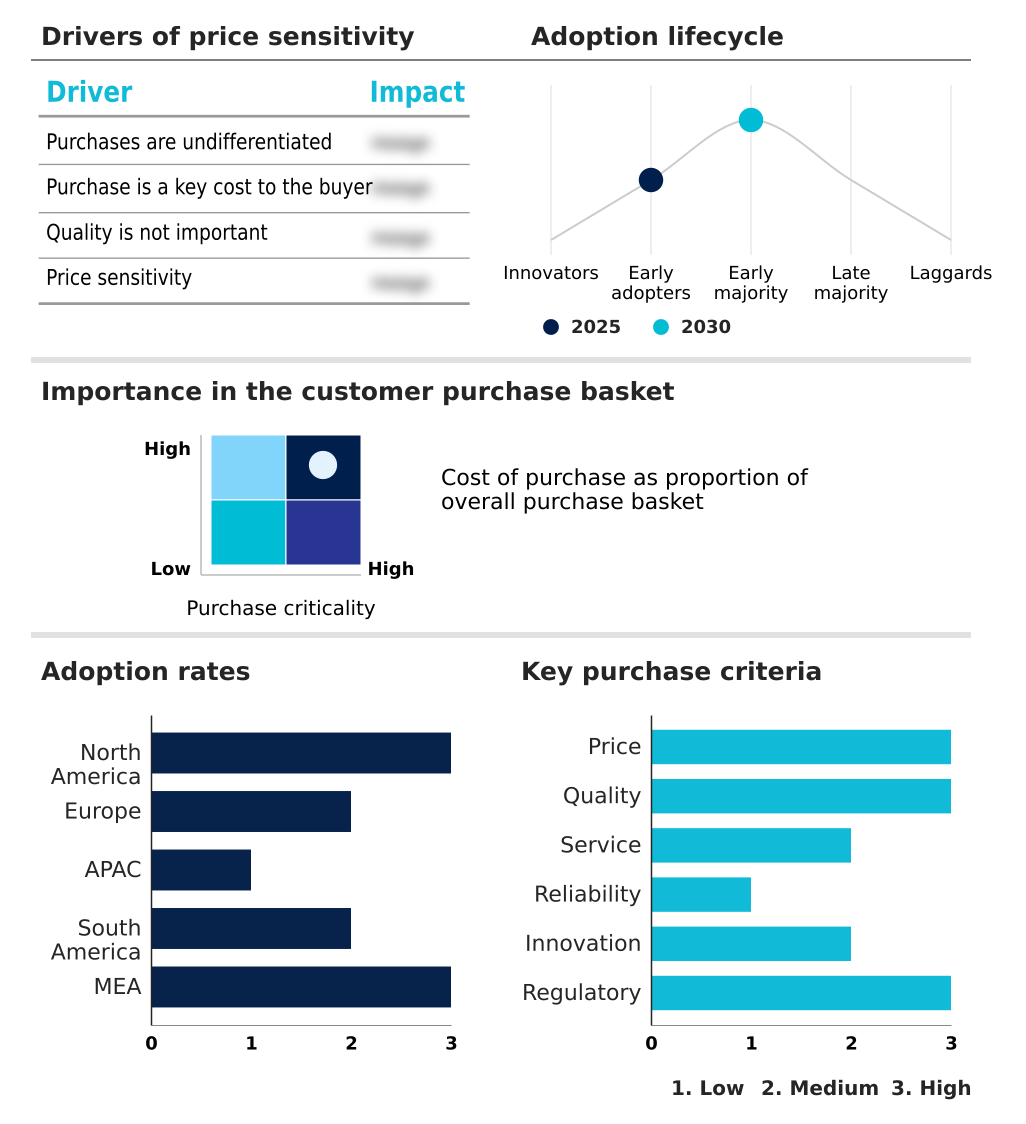
Customer Landscape of Mutual Funds Industry
Competitive Landscape
Companies are implementing various strategies, such as strategic alliances, mutual funds market forecast, partnerships, mergers and acquisitions, geographical expansion, and product/service launches, to enhance their presence in the industry.
Aditya Birla Management Corp. - Delivers a diversified range of investment solutions, including equity, debt, and hybrid funds, designed for long-term wealth creation across various investor risk profiles.
The industry research and growth report includes detailed analyses of the competitive landscape of the market and information about key companies, including:
- Aditya Birla Management Corp.
- Amundi Group
- Axis Asset Management Co. Ltd.
- Bank of New York Mellon Corp.
- Baroda BNP Paribas Mutual Fund
- BlackRock Inc.
- Canara Robeco Asset Mngt. Co.
- DSP Asset Managers Pvt. Ltd.
- Edelweiss Asset Management Ltd.
- FMR LLC
- ICICI Asset Management Co.
- JPMorgan Chase and Co.
- Northern Trust Corp.
- PIMCO
- State Street Corp.
- The Capital Group Companies Inc.
- The Charles Schwab Corp.
- The Vanguard Group Inc.
Qualitative and quantitative analysis of companies has been conducted to help clients understand the wider business environment as well as the strengths and weaknesses of key industry players. Data is qualitatively analyzed to categorize companies as pure play, category-focused, industry-focused, and diversified; it is quantitatively analyzed to categorize companies as dominant, leading, strong, tentative, and weak.
Recent Development and News in Mutual funds market
- In September 2024, BlackRock announced the launch of a new suite of actively managed thematic ETFs focused on decentralized finance and blockchain technology, aiming to capture growth in the burgeoning digital asset space.
- In November 2024, The Vanguard Group finalized a strategic partnership with a leading AI-driven fintech firm to integrate advanced predictive analytics and robo-advisory services into its digital retirement planning platform for retail investors.
- In February 2025, a major regulatory body in Europe issued a directive standardizing ESG disclosure requirements for all asset managers, mandating clear reporting on sustainability metrics and climate-related risks across fund portfolios.
- In May 2025, JPMorgan Chase and Co. completed its acquisition of a specialized private credit asset manager, a move designed to expand its offerings in alternative investments and provide clients with greater access to non-traditional yield sources.
Dive into Technavio’s robust research methodology, blending expert interviews, extensive data synthesis, and validated models for unparalleled Mutual Funds Market insights. See full methodology.
| Market Scope | |
|---|---|
| Page number | 291 |
| Base year | 2025 |
| Historic period | 2020-2024 |
| Forecast period | 2026-2030 |
| Growth momentum & CAGR | Accelerate at a CAGR of 10.7% |
| Market growth 2026-2030 | USD 102.5 trillion |
| Market structure | Fragmented |
| YoY growth 2025-2026(%) | 9.6% |
| Key countries | US, Canada, Mexico, Germany, France, UK, Italy, The Netherlands, Spain, China, India, Japan, Australia, South Korea, Indonesia, Brazil, Argentina, Chile, Saudi Arabia, UAE, South Africa, Israel and Turkey |
| Competitive landscape | Leading Companies, Market Positioning of Companies, Competitive Strategies, and Industry Risks |
Research Analyst Overview
- The mutual funds market is advancing beyond traditional asset management, with a strategic focus on integrating technology to enhance performance and distribution. Core boardroom decisions now revolve around balancing investment in quantitative analysis models and AI-driven fund management against the need for rigorous expense ratio optimization.
- The adoption of exchange-traded fund (ETF) share classes is reshaping fund distribution channels, while systematic investment plans (SIP) continue to broaden the retail investor base. Alpha generation strategies are increasingly reliant on sophisticated securities selection processes that leverage behavioral finance insights for benchmark index tracking. This shift demands robust liquidity management and market volatility hedging techniques.
- At an operational level, seamless fund accounting, transfer agency services, and custodial services are critical for maintaining regulatory compliance frameworks. Asset allocation models are evolving to incorporate high-yield fixed income and alternative investment funds, pushing the boundaries of portfolio diversification.
- Firms that have fully integrated AI-powered portfolio rebalancing tools have achieved a 20% reduction in tracking error against their investment mandate.
- This technological integration is crucial for everything from fund of funds (FoF) construction and share class hedging to managing capital gains distribution and securities lending programs, ultimately defining active management performance in a competitive landscape dominated by passive indexing strategies and a constant drive for capital appreciation within money market instruments and equity fund management, all while managing assets under management (AUM) and the total expense ratio (TER).
What are the Key Data Covered in this Mutual Funds Market Research and Growth Report?
-
What is the expected growth of the Mutual Funds Market between 2026 and 2030?
-
USD 102.5 trillion, at a CAGR of 10.7%
-
-
What segmentation does the market report cover?
-
The report is segmented by Type (Stock funds, Bond funds, Money market funds, and Hybrid funds), Distribution Channel (Advice channel, Retirement plan channel, Institutional channel, Direct channel, and Supermarket channel), Product Type (Active mutual funds, and Passive mutual funds) and Geography (North America, Europe, APAC, South America, Middle East and Africa)
-
-
Which regions are analyzed in the report?
-
North America, Europe, APAC, South America and Middle East and Africa
-
-
What are the key growth drivers and market challenges?
-
Greater demand for retirement-focused investment solutions, Market volatility reducing investor confidence globally
-
-
Who are the major players in the Mutual Funds Market?
-
Aditya Birla Management Corp., Amundi Group, Axis Asset Management Co. Ltd., Bank of New York Mellon Corp., Baroda BNP Paribas Mutual Fund, BlackRock Inc., Canara Robeco Asset Mngt. Co., DSP Asset Managers Pvt. Ltd., Edelweiss Asset Management Ltd., FMR LLC, ICICI Asset Management Co., JPMorgan Chase and Co., Northern Trust Corp., PIMCO, State Street Corp., The Capital Group Companies Inc., The Charles Schwab Corp. and The Vanguard Group Inc.
-
Market Research Insights
- The market's dynamics are increasingly shaped by a flight to efficiency and personalization, with passive investment strategies gaining favor and driving significant fee compression impact. This shift compels providers to innovate, with digital investment platforms that feature robo-advisory services demonstrating a 30% higher engagement rate among millennial investors compared to traditional advisory channels.
- The focus on outcome-oriented investing is pushing the development of multi-asset income funds and thematic investment vehicles. Furthermore, the adoption of tax efficiency strategies is critical, as platforms offering automated tax-loss harvesting can improve after-tax returns by over 1.5% annually for high-net-worth clients.
- This environment fosters fund sachetization to attract new retail segments while pushing institutional investment consulting toward more complex alternative liquidity solutions and private credit exposure.
We can help! Our analysts can customize this mutual funds market research report to meet your requirements.
 RIA -
RIA -