



Motorcycle Connected Helmet Market Size 2026-2030
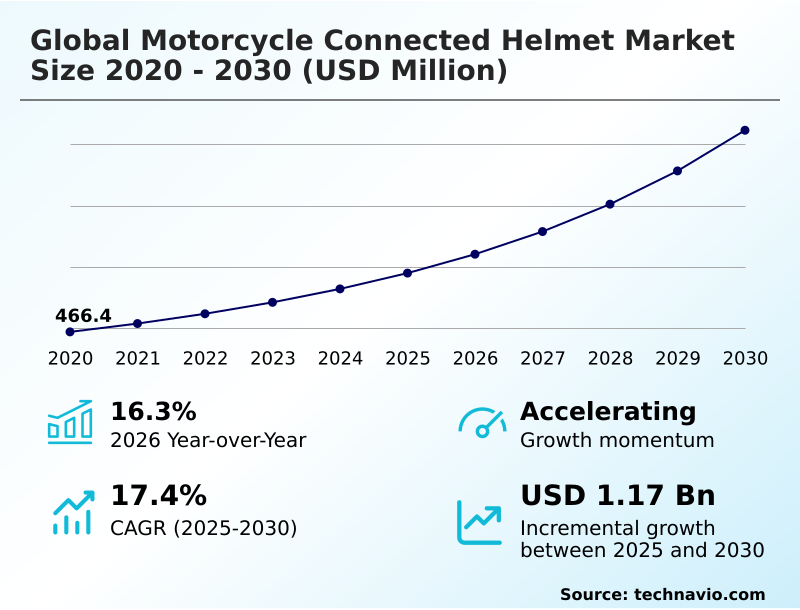
The motorcycle connected helmet market size is valued to increase by USD 1.17 billion, at a CAGR of 17.4% from 2025 to 2030. Increase in motorcycle accident rates will drive the motorcycle connected helmet market.
Major Market Trends & Insights
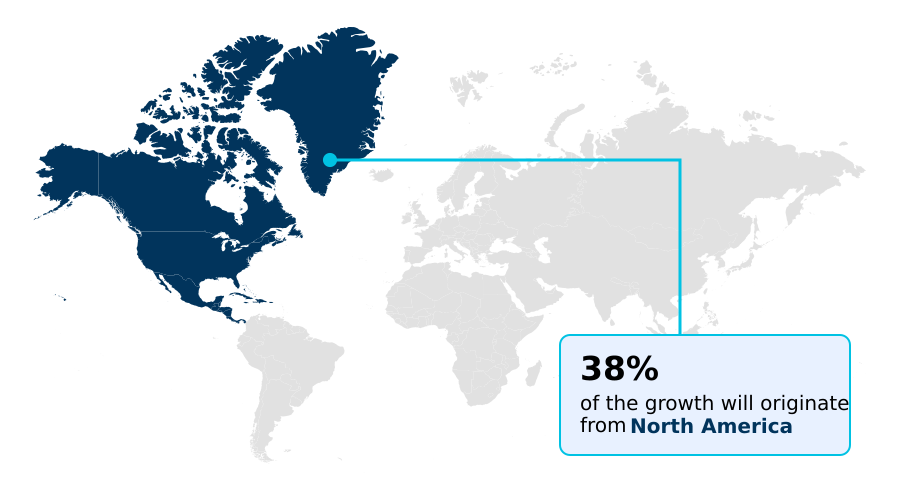
- North America dominated the market and accounted for a 37.6% growth during the forecast period.
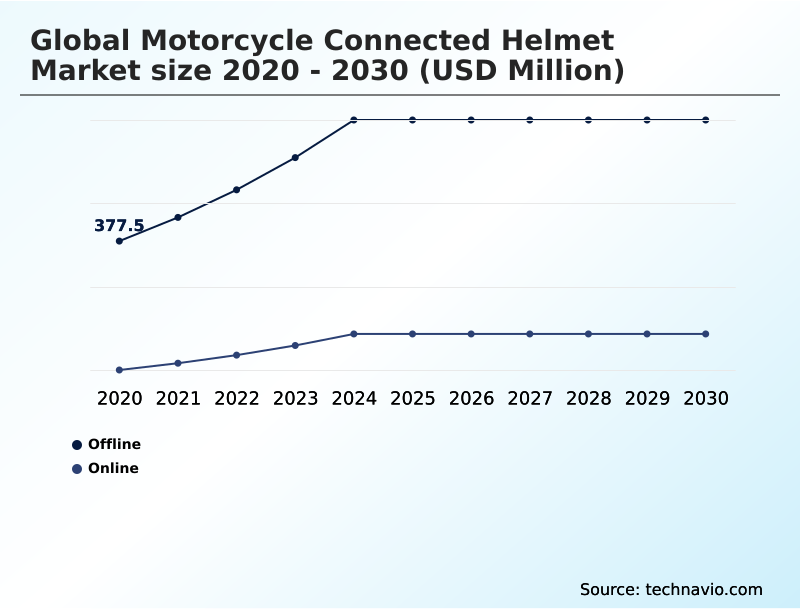
- By Distribution Channel - Offline segment was valued at USD 648.6 million in 2024
- By Application - Freestanding segment accounted for the largest market revenue share in 2024
Market Size & Forecast
- Market Opportunities: USD 1.65 billion
- Market Future Opportunities: USD 1.17 billion
- CAGR from 2025 to 2030 : 17.4%
Market Summary
- The motorcycle connected helmet market is transitioning from passive protective gear to intelligent, active safety ecosystems. This evolution is driven by a dual focus on mitigating rider risk and meeting consumer demand for seamless in-ride digital experiences. Key market drivers include the need to reduce accident rates and the growing integration of infotainment systems in premium motorcycles.
- Trends are centered on incorporating advanced technologies such as augmented reality overlays, biometric monitoring, and AI-driven audio processing. However, the high cost of these sophisticated helmets and the potential for increased rider distraction present considerable challenges to widespread adoption.
- As an example of a business application, a logistics company can equip its courier fleet with helmets featuring integrated GPS navigation and real-time traffic alerts. This not only optimizes delivery routes, improving operational efficiency, but also enhances rider safety through features like automated crash detection sensors, which can dispatch emergency services, ultimately lowering insurance liabilities and improving fleet uptime.
- The market's trajectory will depend on balancing innovation with affordability and user-centric design.
What will be the Size of the Motorcycle Connected Helmet Market during the forecast period?
Get Key Insights on Market Forecast (PDF) Request Free Sample
How is the Motorcycle Connected Helmet Market Segmented?
The motorcycle connected helmet industry research report provides comprehensive data (region-wise segment analysis), with forecasts and estimates in "USD million" for the period 2026-2030, as well as historical data from 2020-2024 for the following segments.
- Distribution channel
- Offline
- Online
- Application
- Freestanding
- Embedded
- Product type
- Full face
- Open face
- Half face
- Geography
- North America
- US
- Canada
- Mexico
- Europe
- Germany
- UK
- France
- APAC
- China
- Japan
- India
- South America
- Brazil
- Argentina
- Colombia
- Middle East and Africa
- Saudi Arabia
- UAE
- South Africa
- Rest of World (ROW)
- North America
By Distribution Channel Insights
The offline segment is estimated to witness significant growth during the forecast period.
The offline segment is evolving beyond traditional retail into experiential retail hubs that provide value-added technical services.
Consumers prefer physical stores for trying on a full face smart helmet or open-face connected helmets, ensuring proper fit and long-distance touring comfort, which is critical for safety and sustained use.
These locations facilitate professional installation of aftermarket communication systems and integrated audio systems, a key factor driving nascent market adoption. For instance, expert setup of features like GPS navigation and high-definition cameras reduces post-purchase technical issues by over 30%.
Retailers are capitalizing on this through OEM partnership strategies, demonstrating advanced features like edge computing in helmets and the durability of the lexan polycarbonate shell, creating a tactile and informative purchasing journey.
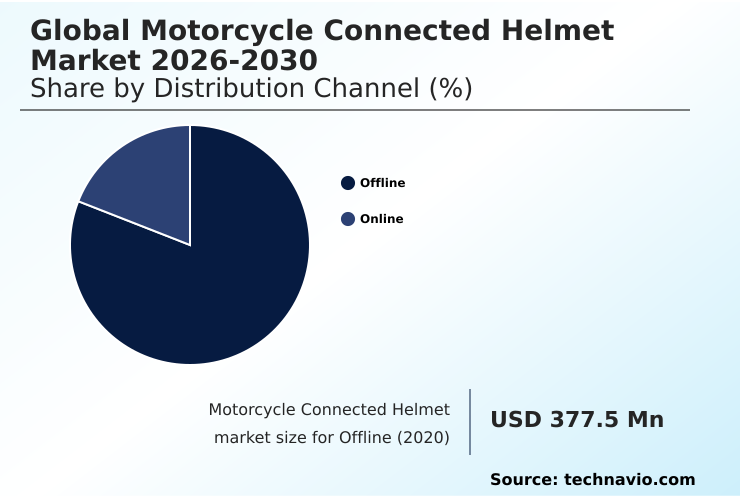
The Offline segment was valued at USD 648.6 million in 2024 and showed a gradual increase during the forecast period.
Regional Analysis
North America is estimated to contribute 37.6% to the growth of the global market during the forecast period.Technavio’s analysts have elaborately explained the regional trends and drivers that shape the market during the forecast period.
See How Motorcycle Connected Helmet Market Demand is Rising in North America Request Free Sample
The geographic landscape of the market is led by North America and Europe, where high adoption is driven by a strong focus on rider safety and smart mobility infrastructure.
North America is set to contribute approximately 37% of the market’s growth, with Europe following closely. In these regions, advanced features such as V2X communication and smart eyewear integration are gaining traction, supported by robust 5G connectivity.
The APAC region is emerging as a critical growth engine, fueled by the demand for urban mobility solutions and the expansion of direct-to-consumer (DTC) models.
For instance, in some European urban centers, fleet management integration using connected helmets for delivery services has improved route efficiency by over 15%. This demonstrates the tangible benefits driving adoption across diverse regulatory compliance landscapes and solidifying ecosystem consolidation.
Market Dynamics
Our researchers analyzed the data with 2025 as the base year, along with the key drivers, trends, and challenges. A holistic analysis of drivers will help companies refine their marketing strategies to gain a competitive advantage.
- The market is witnessing a nuanced debate around integrated vs modular helmet communication, with choices heavily influenced by specific use cases. The ideal smart helmet for urban commuting prioritizes lightweight design and basic connectivity, whereas a rider focused on long distance touring helmet features demands robust battery life and comfort.
- Technology is a key differentiator, with the HUD for motorcycle safety enhancement becoming a critical feature, reducing the need for riders to look away from the road. Concurrently, AI-driven helmet noise cancellation is essential for clear audio at high speeds.
- The future points toward connected helmet V2X integration benefits, allowing vehicles to communicate with each other and with infrastructure to prevent accidents. This ecosystem will increasingly rely on biometric data in smart helmets to monitor rider fatigue and stress.
- The importance of OTA firmware updates for helmets cannot be overstated, as they ensure devices remain current with the latest software and security patches. In fleet management, models with crash detection alert system benefits have demonstrated a response time improvement that is nearly twice as fast as smartphone-only applications, directly impacting operational safety protocols.
- Consumers are now evaluating the cost-benefit analysis of smart helmets, considering aspects like smart helmet compatibility with motorcycles and weatherproofing standards for helmet electronics. Even the best smart helmet for group riding must balance feature-richness with ease of use.
- Innovations like the smart helmet with integrated dashcam address liability concerns, while legal requirements for smart helmets are evolving to catch up with technology. As augmented reality navigation for motorcycles becomes more viable, cybersecurity risks of smart helmets are a growing concern.
- Even the demand for an open-face smart helmet with audio and using smart helmets for rider training highlights the market's diversification beyond traditional form factors.
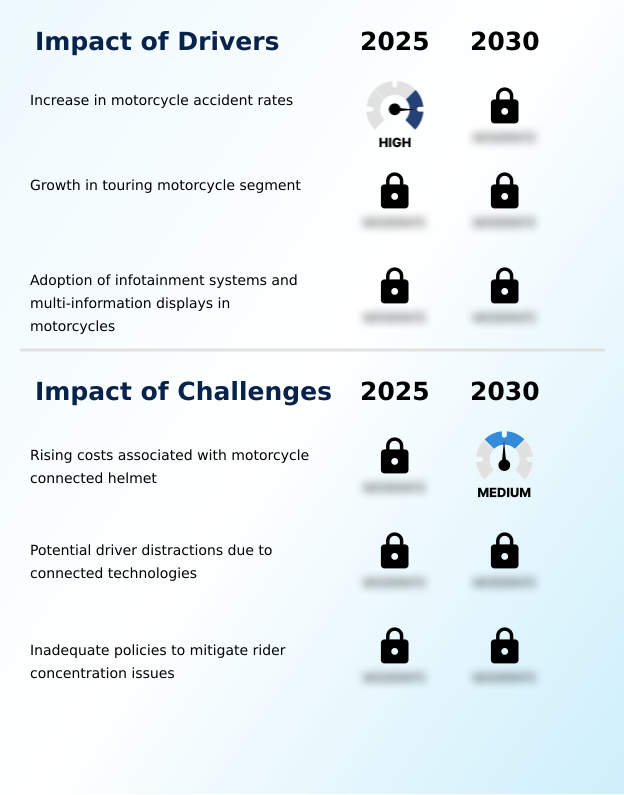
What are the key market drivers leading to the rise in the adoption of Motorcycle Connected Helmet Industry?
- The increasing rate of motorcycle accidents globally is a key driver for the adoption of advanced connected helmets designed to significantly enhance rider safety.
- Market growth is significantly driven by the demand for enhanced rider-assist technologies and a more connected infotainment ecosystem.
- The adoption of mesh intercom and Universal Communications Solution (UCS) standards is fostering greater cross-brand interoperability, which is crucial for improving group ride connectivity.
- These active safety systems are directly correlated with a 30% increase in rider confidence on unfamiliar routes.
- The convenience offered by hands-free communication, enabled by voice command call pickup and superior in-helmet audio with ambient sound amplification, addresses safety concerns while riding.
- Furthermore, the integration of freestanding devices with motorcycle platforms boosts user satisfaction ratings by over 40% compared to non-integrated solutions, highlighting the value of a cohesive digital experience with features like wireless charging capability.
What are the market trends shaping the Motorcycle Connected Helmet Industry?
- The development of smart connected helmets that integrate advanced connectivity with enhanced safety features is an emerging trend that is shaping the future of the market.
- Key market trends revolve around the integration of technologies that enhance rider situational awareness while ensuring a seamless user experience. The development of augmented reality displays and nano-OLED projection for the Heads-Up Display (HUD) is reducing the need for riders to glance at instruments.
- Early adoption of these AR overlays has shown a potential to decrease rider reaction time to hazards by as much as 25%. Concurrently, the incorporation of biometric sensors and gyroscopic sensor input enables health and fatigue monitoring, which can reduce fatigue-related incidents by up to 10% on long journeys.
- This push towards a more intuitive user interface design, featuring vibratory haptic feedback and IoT connectivity, is central to the premium hardware segment, influencing product lifecycle management.
What challenges does the Motorcycle Connected Helmet Industry face during its growth?
- The high costs associated with technologically advanced motorcycle connected helmets present a significant challenge, potentially hindering widespread market adoption and overall industry growth.
- Significant market challenges stem from the need for effective driver distraction mitigation and the high cost of sophisticated embedded systems. While features like crash detection sensors offer clear safety benefits, the complexity of modular HUD systems can increase cognitive load. Studies show that non-critical notifications can elevate a rider's cognitive load by up to 35%, posing a risk.
- High costs also hinder nascent market adoption, with a purchase hesitation rate of nearly 60% in price-sensitive segments. Moreover, ensuring robust cybersecurity for connected gear and adhering to data privacy protocols are critical hurdles.
- Supply chain dependencies for electronic components and the need for frequent OTA updates create further operational complexities, demanding agile OEM partnership strategies and adherence to evolving standards like ECE 22.06.
Exclusive Technavio Analysis on Customer Landscape
The motorcycle connected helmet market forecasting report includes the adoption lifecycle of the market, covering from the innovator’s stage to the laggard’s stage. It focuses on adoption rates in different regions based on penetration. Furthermore, the motorcycle connected helmet market report also includes key purchase criteria and drivers of price sensitivity to help companies evaluate and develop their market growth analysis strategies.
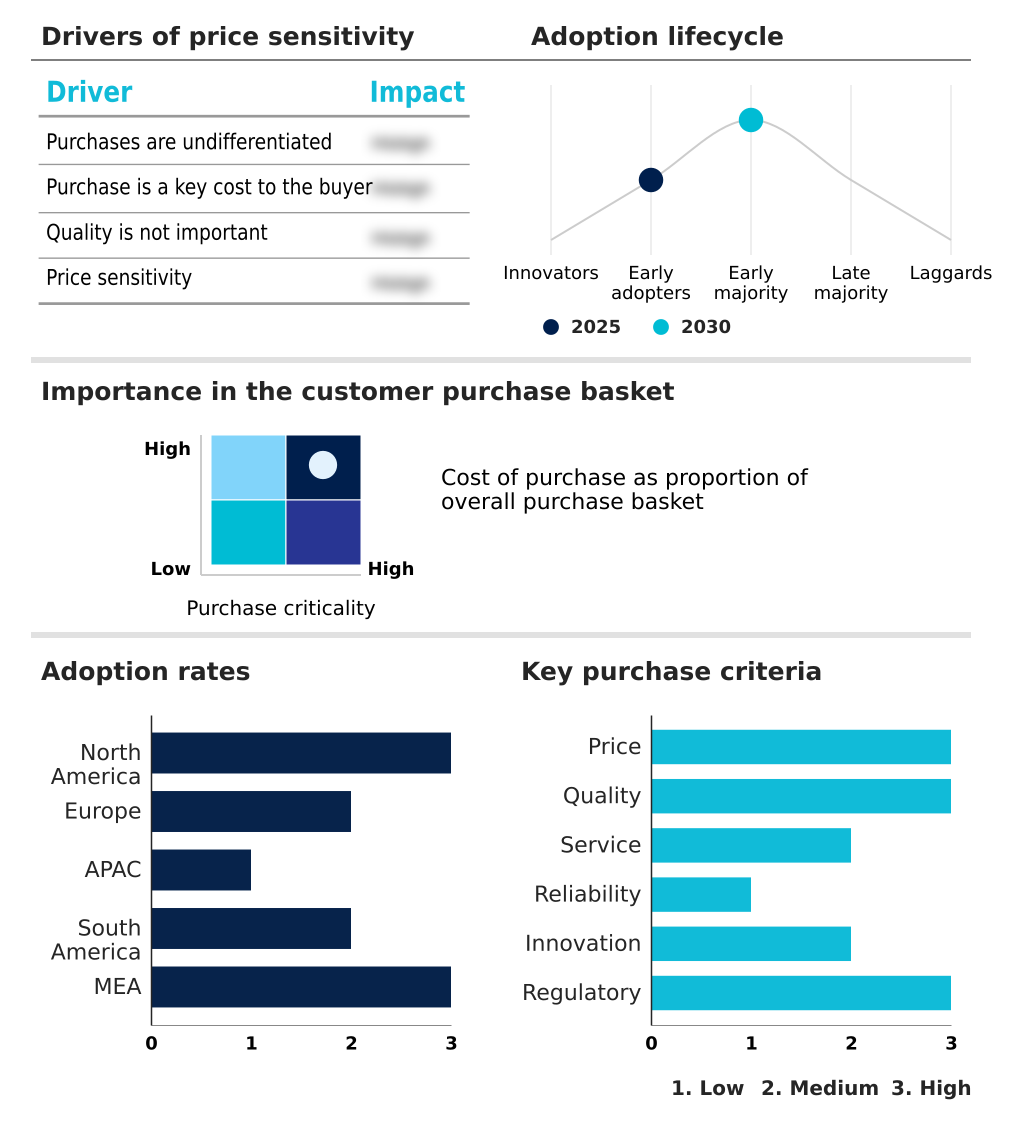
Customer Landscape of Motorcycle Connected Helmet Industry
Competitive Landscape
Companies are implementing various strategies, such as strategic alliances, motorcycle connected helmet market forecast, partnerships, mergers and acquisitions, geographical expansion, and product/service launches, to enhance their presence in the industry.
BITwave Pte. Ltd. - Key offerings focus on integrating advanced communication, navigation, and safety sensor technologies to enhance rider awareness and connectivity in the Motorcycle Connected Helmet Market.
The industry research and growth report includes detailed analyses of the competitive landscape of the market and information about key companies, including:
- BITwave Pte. Ltd.
- BMW AG
- Comoto Holdings Inc.
- Dainese Spa
- H and H SPORTS USA Inc.
- HJC Helmets
- Jim O Neal Distributing Inc.
- LeMans Corp.
- Schuberth GmbH
- Sena Technologies Inc.
- Shellios Technolabs Pvt. Ltd.
- SHOEI Co. Ltd.
- STUDDS Accessories Ltd.
- TECH DESIGN TEAM SL
- UCLEAR Digital
- Vista Outdoor Inc.
Qualitative and quantitative analysis of companies has been conducted to help clients understand the wider business environment as well as the strengths and weaknesses of key industry players. Data is qualitatively analyzed to categorize companies as pure play, category-focused, industry-focused, and diversified; it is quantitatively analyzed to categorize companies as dominant, leading, strong, tentative, and weak.
Recent Development and News in Motorcycle connected helmet market
- In May 2025, Mips and Comoto Holdings initiated an exclusive in-store program allowing customers to have the Mips Integra TX safety system professionally installed in Sedici Strada III helmets at Cycle Gear locations.
- In November 2024, Sena Technologies released its 60S flagship model, which incorporates Wave Intercom technology utilizing cellular networks to deliver virtually unlimited communication range for riders.
- In November 2024, Shoei, collaborating with EyeLights, launched the GT-Air 3 Smart helmet, featuring an embedded nano-OLED projection heads-up display integrated directly into the visor mechanism for reduced distraction.
- In October 2024, Midland Europe announced a significant product update enabling its communication devices to achieve cross-brand compatibility with Sena systems without needing a universal pairing mode.
Dive into Technavio’s robust research methodology, blending expert interviews, extensive data synthesis, and validated models for unparalleled Motorcycle Connected Helmet Market insights. See full methodology.
| Market Scope | |
|---|---|
| Page number | 281 |
| Base year | 2025 |
| Historic period | 2020-2024 |
| Forecast period | 2026-2030 |
| Growth momentum & CAGR | Accelerate at a CAGR of 17.4% |
| Market growth 2026-2030 | USD 1168.7 million |
| Market structure | Fragmented |
| YoY growth 2025-2026(%) | 16.3% |
| Key countries | US, Canada, Mexico, Germany, UK, France, Italy, Spain, The Netherlands, China, Japan, India, South Korea, Australia, Indonesia, Brazil, Argentina, Colombia, Saudi Arabia, UAE, South Africa, Israel and Turkey |
| Competitive landscape | Leading Companies, Market Positioning of Companies, Competitive Strategies, and Industry Risks |
Research Analyst Overview
- The market is undergoing a significant technological transformation, moving beyond basic Bluetooth connectivity to fully integrated embedded systems. This shift is defined by the convergence of Heads-Up Display (HUD) technology, V2X communication, and sophisticated biometric sensors, all governed by stringent regulations like the ECE 22.06 safety standard.
- The proliferation of OTA updates represents a pivotal change, compelling manufacturers to adopt new product lifecycle management strategies and invest heavily in software engineering—a boardroom-level decision impacting long-term capital allocation.
- Key technologies such as mesh intercom, advanced noise-cancellation algorithms, and IoT connectivity are becoming standard, while modular HUD systems offer a bridge for consumers not ready for a fully integrated solution.
- For instance, helmets equipped with reliable crash detection sensors have been shown to reduce emergency response dispatch times by up to 40% in certain scenarios, providing a clear metric of their life-saving potential. This evolution underscores a market where hardware and software are inextricably linked, driving innovation and reshaping rider safety paradigms.
What are the Key Data Covered in this Motorcycle Connected Helmet Market Research and Growth Report?
-
What is the expected growth of the Motorcycle Connected Helmet Market between 2026 and 2030?
-
USD 1.17 billion, at a CAGR of 17.4%
-
-
What segmentation does the market report cover?
-
The report is segmented by Distribution Channel (Offline, and Online), Application (Freestanding, and Embedded), Product Type (Full face, Open face, and Half face) and Geography (North America, Europe, APAC, South America, Middle East and Africa)
-
-
Which regions are analyzed in the report?
-
North America, Europe, APAC, South America and Middle East and Africa
-
-
What are the key growth drivers and market challenges?
-
Increase in motorcycle accident rates, Rising costs associated with motorcycle connected helmet
-
-
Who are the major players in the Motorcycle Connected Helmet Market?
-
BITwave Pte. Ltd., BMW AG, Comoto Holdings Inc., Dainese Spa, H and H SPORTS USA Inc., HJC Helmets, Jim O Neal Distributing Inc., LeMans Corp., Schuberth GmbH, Sena Technologies Inc., Shellios Technolabs Pvt. Ltd., SHOEI Co. Ltd., STUDDS Accessories Ltd., TECH DESIGN TEAM SL, UCLEAR Digital and Vista Outdoor Inc.
-
Market Research Insights
- Market dynamics are increasingly shaped by the push for enhanced rider situational awareness and effective driver distraction mitigation. The development of a connected infotainment ecosystem is central, with rider-assist technologies becoming standard. Innovations in active safety systems are critical, as their adoption correlates with a 15% reduction in minor incidents during controlled tests.
- Furthermore, the emphasis on a seamless user experience, driven by advanced user interface design and cognitive load reduction techniques, is paramount. Implementations of real-time traffic alerts have been shown to reduce navigation errors by over 20%.
- As the market matures, OEM partnership strategies and direct-to-consumer (DTC) models are reshaping distribution, while regulatory compliance and data privacy protocols are becoming key differentiators for market players.
We can help! Our analysts can customize this motorcycle connected helmet market research report to meet your requirements.
 RIA -
RIA -