
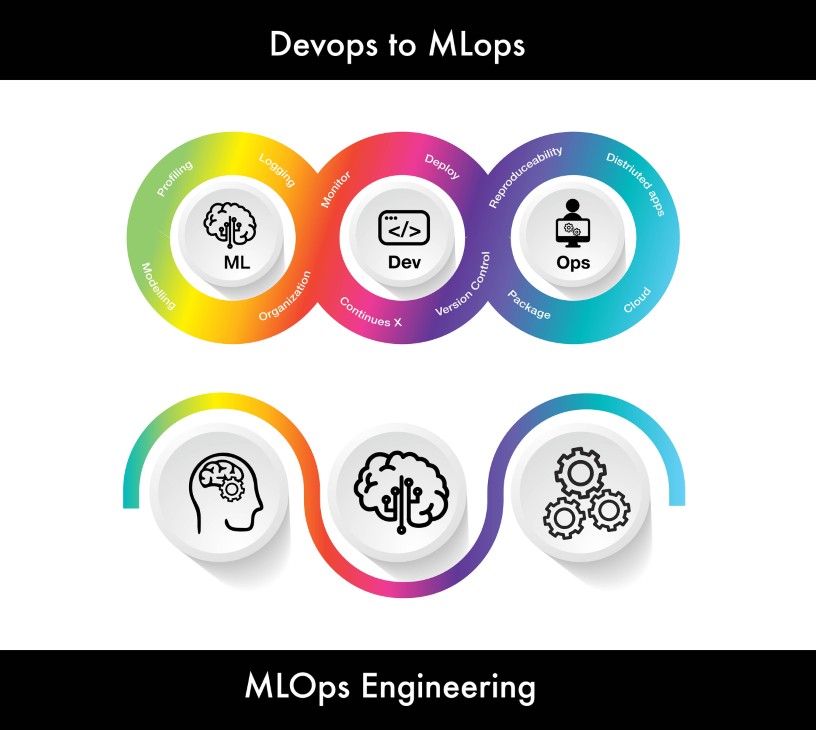


Mlops Market Size 2026-2030
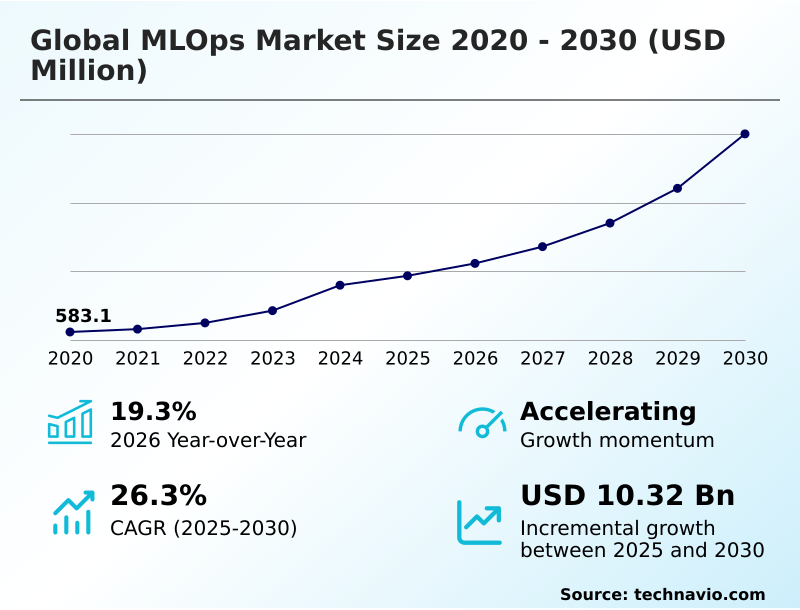
The mlops market size is valued to increase by USD 10.32 billion, at a CAGR of 26.3% from 2025 to 2030. Strategic proliferation of generative AI and large language model operations will drive the mlops market.
Major Market Trends & Insights
- Europe dominated the market and accounted for a 37.1% growth during the forecast period.
- By Component - Platform segment was valued at USD 2.72 billion in 2024
- By Deployment - Cloud segment accounted for the largest market revenue share in 2024
Market Size & Forecast
- Market Opportunities: USD 14.41 billion
- Market Future Opportunities: USD 10.32 billion
- CAGR from 2025 to 2030 : 26.3%
Market Summary
- The MLOps market is defined by the critical need to bridge the gap between model development and operational deployment, addressing persistent challenges such as data drift and the lack of reproducibility. As organizations integrate machine learning into mission-critical functions, MLOps platforms have become essential for ensuring the reliability and governance of automated decision-making systems.
- The market is also being reshaped by the rise of generative AI, which necessitates specialized frameworks like LLMOps to manage prompt engineering and vector database orchestration at scale. For instance, a retail company might use MLOps for real-time operational intelligence in its supply chain, relying on automated model deployment and monitoring to predict demand fluctuations and prevent stockouts.
- This transition is further supported by the increasing adoption of automated model monitoring and explainability tools, which allow businesses to meet tightening global regulatory standards for algorithmic transparency. However, the technical complexity of these systems and a persistent talent gap remain significant considerations for enterprises seeking to implement these advanced capabilities.
What will be the Size of the Mlops Market during the forecast period?
Get Key Insights on Market Forecast (PDF) Request Free Sample
How is the Mlops Market Segmented?
The mlops industry research report provides comprehensive data (region-wise segment analysis), with forecasts and estimates in "USD million" for the period 2026-2030, as well as historical data from 2020-2024 for the following segments.
- Component
- Platform
- Service
- Deployment
- Cloud
- On-premises
- Hybrid
- Business segment
- Large enterprises
- SMBs
- End-user
- BFSI
- Healthcare
- Retail and e-commerce
- Geography
- North America
- US
- Canada
- Mexico
- Europe
- Germany
- UK
- France
- APAC
- China
- Japan
- India
- South America
- Brazil
- Argentina
- Middle East and Africa
- Saudi Arabia
- UAE
- South Africa
- Rest of World (ROW)
- North America
By Component Insights
The platform segment is estimated to witness significant growth during the forecast period.
The platform segment provides the foundational infrastructure for the global MLOps market, consolidating tools into a unified workspace for model lifecycle management.
These platforms facilitate version control for data, code, and prompt versioning, ensuring reproducibility across diverse computing environments and enabling seamless collaboration.
In the current market, these systems are evolving to include specialized modules for large language model operations and retrieval-augmented generation.
The integration of self-healing pipelines and automated drift detection within these platforms is reducing the manual burden of model maintenance by over 40%, ensuring that production models remain accurate.
As enterprise AI initiatives mature, the demand for robust, compliant, and scalable MLOps platforms with features like model monitoring and ethical AI auditing remains a primary driver of market growth, especially in highly regulated sectors.
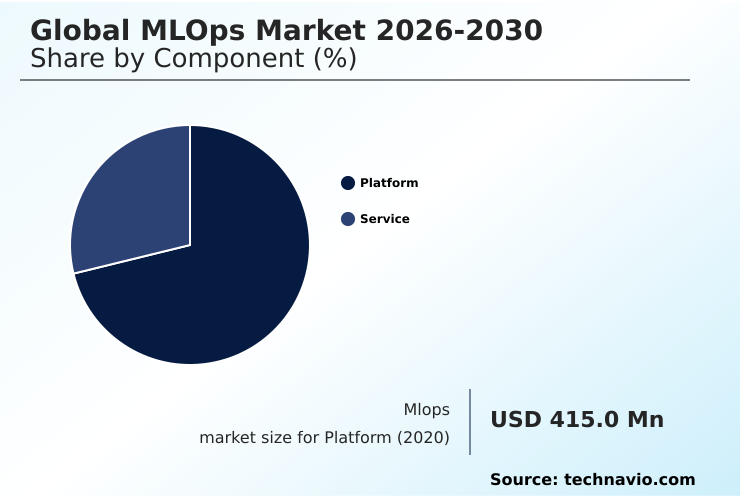
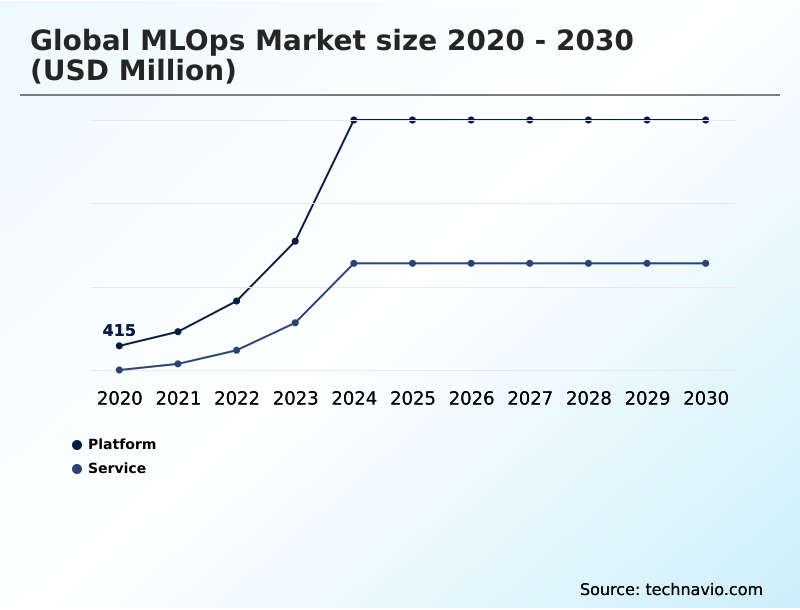
The Platform segment was valued at USD 2.72 billion in 2024 and showed a gradual increase during the forecast period.
Regional Analysis
Europe is estimated to contribute 37.1% to the growth of the global market during the forecast period.Technavio’s analysts have elaborately explained the regional trends and drivers that shape the market during the forecast period.
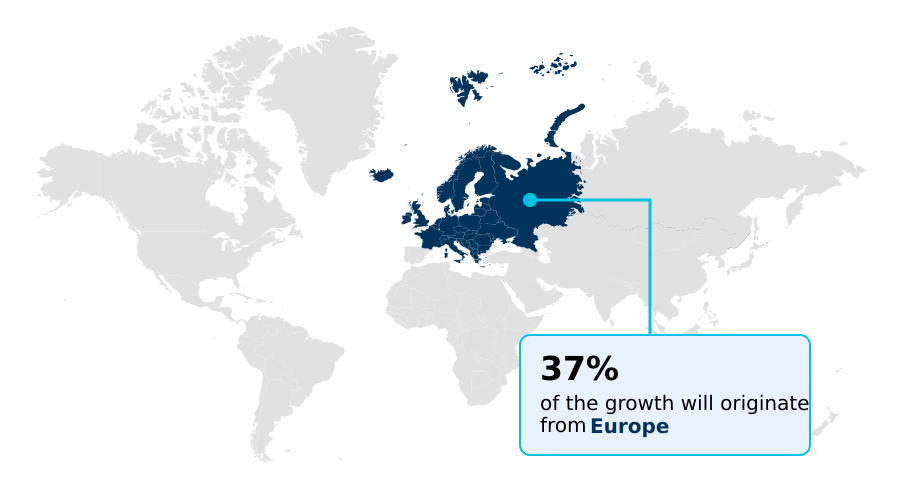
See How Mlops Market Demand is Rising in Europe Request Free Sample
The MLOps market exhibits distinct regional characteristics, with North America driving innovation in generative AI and LLMOps.
In contrast, Europe leads in automated AI governance and policy-as-code governance, spurred by regulations that have helped firms reduce audit failures by up to 40% through compliance automation integrated directly into the CI/CD pipeline.
The APAC region is a significant growth engine, spearheading edge-AI deployment in smart manufacturing and leveraging no-code MLOps to enhance production line efficiency by 15%.
This global distribution highlights a market where advanced MLOps platforms manage complex challenges like data poisoning, while emerging economies adopt low-code frameworks and no-code frameworks to overcome the talent gap and accelerate digital transformation.
The focus across all regions is on achieving real-time operational intelligence and frictionless deployment.
Market Dynamics
Our researchers analyzed the data with 2025 as the base year, along with the key drivers, trends, and challenges. A holistic analysis of drivers will help companies refine their marketing strategies to gain a competitive advantage.
- Successfully navigating the MLOps landscape requires moving beyond basic model serving to address the intricacies of modern AI. This involves managing compound LLM orchestration complexity and implementing LLMOps for generative AI systems, which are becoming standard enterprise requirements. A critical component is automating AI governance for regulatory compliance while simultaneously ensuring model fairness and explainability.
- To maintain system integrity, organizations must focus on mitigating security vulnerabilities in automated pipelines and integrating security into the MLOps lifecycle. On the efficiency front, optimizing CI/CD pipelines for machine learning is essential for building reproducible machine learning workflows and streamlining model deployment and monitoring.
- The growing adoption of edge devices necessitates a clear strategy for MLOps for real-time edge AI intelligence. Enterprises that formalize strategies for managing model drift and decay and focus on evaluating MLOps tools for enterprise needs report a deployment success rate more than double that of firms taking an ad-hoc approach.
- This success is contingent on choosing the right MLOps platform and developing robust governance frameworks for large language models. Ultimately, scaling MLOps practices across the enterprise and monitoring ML models in production environments are key to automating the machine learning lifecycle and addressing talent scarcity in MLOps teams.
- Best practices for MLOps at scale and effective cost management strategies for MLOps are no longer optional but are fundamental to achieving sustainable AI-driven value.
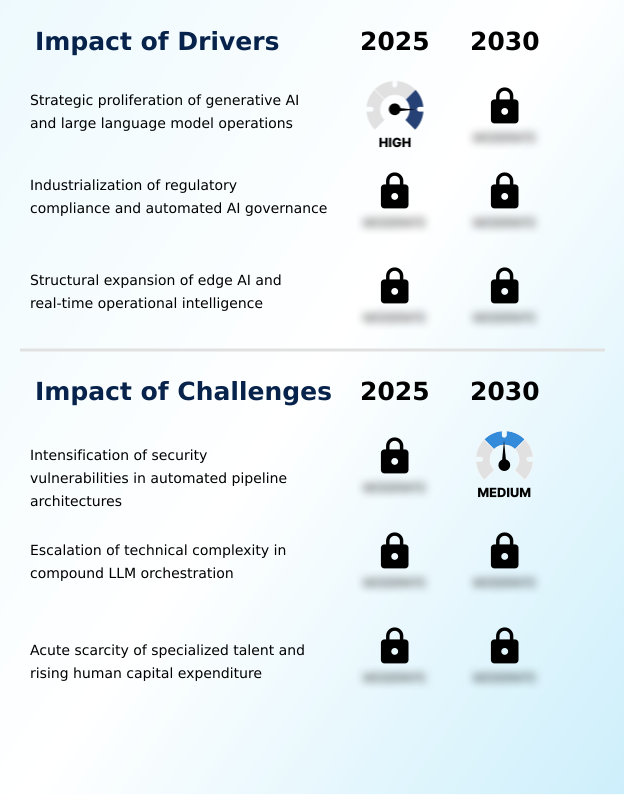
What are the key market drivers leading to the rise in the adoption of Mlops Industry?
- A key market driver is the strategic proliferation of generative AI, creating a subsequent demand for large language model operations.
- The MLOps market is propelled by three core drivers: the proliferation of generative AI, stringent regulatory frameworks, and the expansion of edge computing. The demand for generative AI necessitates robust LLMOps for managing foundation models and achieving operational efficiency.
- Simultaneously, regulations are pushing organizations to adopt automated AI governance and ensure end-to-end auditability, with automated tools cutting compliance-related costs by 15%. This drive for compliance automation is reshaping the CI/CD for ML.
- The strategic evolution toward edge AI and the need for real-time operational intelligence further fuel growth.
- By using MLOps with model compression, companies have reduced inference latency by over 70% in critical IoT applications, enabling predictive maintenance and remote patient monitoring with improved data privacy and inference acceleration.
What are the market trends shaping the Mlops Industry?
- The market is experiencing a structural shift toward the institutionalization of Large Language Model Operations. This includes the orchestration of compound artificial intelligence systems.
- Key trends in the MLOps market are centered on managing complexity and democratizing access. The institutionalization of LLMOps is driving a pivot toward integrated platforms capable of handling compound AI system orchestration and the intricacies of large language models. The adoption of low-code frameworks has accelerated project delivery, with some teams reporting a 50% reduction in time-to-market for new models.
- This is complemented by the proliferation of sovereign AI platforms and policy-as-code governance to meet stringent data privacy and regulatory compliance demands. Integrated platforms that monitor hallucination metrics and perform bias detection have helped organizations reduce erroneous outputs by up to 25% in customer-facing generative applications, enhancing trust and system-level engineering.
- This focus on AI governance and production-grade AI is critical for operational efficiency.
What challenges does the Mlops Industry face during its growth?
- The intensification of security vulnerabilities within automated pipeline architectures presents a significant challenge to market growth.
- The primary challenges in the MLOps market are escalating security threats, technical complexity, and a severe talent gap. The move toward full automation has created vulnerabilities, with the lack of robust MLSecOps leading to model performance degradation of up to 30% in simulated adversarial attacks involving data poisoning.
- The shift to orchestrating compound systems using large language models introduces operational friction, including managing train-serve skew and data drift, which strains engineering capacity. The most significant bottleneck remains the acute scarcity of specialized talent, where project delays attributed to staffing shortages increased by 45% year-over-year.
- This human capital expenditure, combined with the difficulty of achieving model explainability and effective data versioning, constrains large-scale adoption.
Exclusive Technavio Analysis on Customer Landscape
The mlops market forecasting report includes the adoption lifecycle of the market, covering from the innovator’s stage to the laggard’s stage. It focuses on adoption rates in different regions based on penetration. Furthermore, the mlops market report also includes key purchase criteria and drivers of price sensitivity to help companies evaluate and develop their market growth analysis strategies.
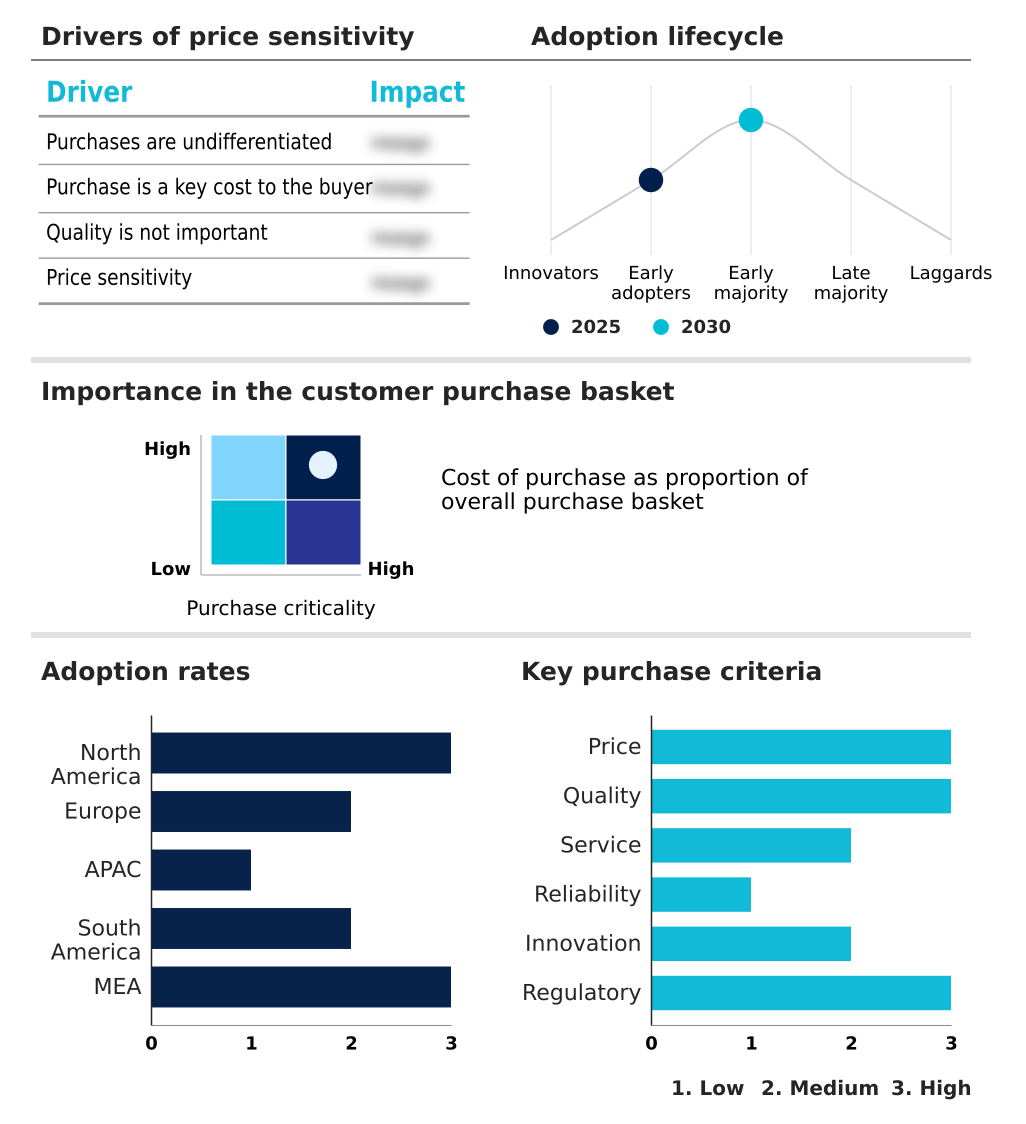
Customer Landscape of Mlops Industry
Competitive Landscape
Companies are implementing various strategies, such as strategic alliances, mlops market forecast, partnerships, mergers and acquisitions, geographical expansion, and product/service launches, to enhance their presence in the industry.
Alteryx Inc. - Provides cloud analytics and machine learning solutions for automated model deployment, monitoring, and end-to-end lifecycle management.
The industry research and growth report includes detailed analyses of the competitive landscape of the market and information about key companies, including:
- Alteryx Inc.
- Amazon.com Inc.
- Cloudera Inc.
- Comet ML Inc.
- Databricks Inc.
- Dataiku Inc.
- DataRobot Inc.
- Domino Data Lab Inc.
- Fiddler AI
- Google LLC
- H2O.ai Inc.
- Hewlett Packard Enterprise Co.
- IBM Corp.
- Microsoft Corp.
- Neptune Labs Inc.
- SAS Institute Inc.
- Seldon Technologies
- Snowflake Inc.
- Teradata Corp.
- Valohai Oy
- Weights and Biases Inc.
Qualitative and quantitative analysis of companies has been conducted to help clients understand the wider business environment as well as the strengths and weaknesses of key industry players. Data is qualitatively analyzed to categorize companies as pure play, category-focused, industry-focused, and diversified; it is quantitatively analyzed to categorize companies as dominant, leading, strong, tentative, and weak.
Recent Development and News in Mlops market
- In April 2025, Onc.AI announced the use of a high-performance MLOps platform to accelerate cancer biomarker development, reportedly doubling model training speeds while maintaining strict clinical compliance.
- In September 2024, a leading financial services firm announced a strategic partnership with a sovereign AI platform provider to deploy policy-as-code governance across its machine learning lifecycle, ensuring compliance with emerging data residency laws.
- In November 2024, a major cloud provider launched a new suite of LLMOps tools designed to manage compound AI systems, offering specialized observability for token consumption and hallucination metrics.
- In May 2025, a prominent industrial automation company unveiled a new edge-AI deployment framework, enabling low-code management of distributed models for real-time operational intelligence in smart factories.
Dive into Technavio’s robust research methodology, blending expert interviews, extensive data synthesis, and validated models for unparalleled Mlops Market insights. See full methodology.
| Market Scope | |
|---|---|
| Page number | 309 |
| Base year | 2025 |
| Historic period | 2020-2024 |
| Forecast period | 2026-2030 |
| Growth momentum & CAGR | Accelerate at a CAGR of 26.3% |
| Market growth 2026-2030 | USD 10321.1 million |
| Market structure | Fragmented |
| YoY growth 2025-2026(%) | 19.3% |
| Key countries | US, Canada, Mexico, Germany, UK, France, Italy, Spain, The Netherlands, China, Japan, India, South Korea, Australia, Indonesia, Brazil, Argentina, Chile, Saudi Arabia, UAE, South Africa, Israel and Turkey |
| Competitive landscape | Leading Companies, Market Positioning of Companies, Competitive Strategies, and Industry Risks |
Research Analyst Overview
- The MLOps market is rapidly maturing from a niche discipline to a core enterprise capability, focusing on the industrialization of AI. The rise of sovereign AI platforms and policy-as-code governance has become a strategic boardroom imperative, directly impacting risk management and global market access.
- This trend is driven by the need to manage complex technologies, including generative AI, LLMOps, and compound AI system orchestration using vector databases and retrieval-augmented generation. Operational focus is on managing the entire model lifecycle management process, from prompt versioning and token cost management to monitoring hallucination metrics and implementing model compression for agentic AI architectures.
- Enterprises that have operationalized automated AI governance within their CI/CD pipeline have demonstrated a 60% faster response time to regulatory inquiries. This involves leveraging model registries, ensuring data lineage, and implementing MLSecOps to counter cybersecurity threats like data poisoning and model inversion. The goal is to address train-serve skew, model decay, and data drift through robust systems.
What are the Key Data Covered in this Mlops Market Research and Growth Report?
-
What is the expected growth of the Mlops Market between 2026 and 2030?
-
USD 10.32 billion, at a CAGR of 26.3%
-
-
What segmentation does the market report cover?
-
The report is segmented by Component (Platform, and Service), Deployment (Cloud, On-premises, and Hybrid), Business Segment (Large enterprises, and SMBs), End-user (BFSI, Healthcare, and Retail and e-commerce) and Geography (North America, Europe, APAC, South America, Middle East and Africa)
-
-
Which regions are analyzed in the report?
-
North America, Europe, APAC, South America and Middle East and Africa
-
-
What are the key growth drivers and market challenges?
-
Strategic proliferation of generative AI and large language model operations, Intensification of security vulnerabilities in automated pipeline architectures
-
-
Who are the major players in the Mlops Market?
-
Alteryx Inc., Amazon.com Inc., Cloudera Inc., Comet ML Inc., Databricks Inc., Dataiku Inc., DataRobot Inc., Domino Data Lab Inc., Fiddler AI, Google LLC, H2O.ai Inc., Hewlett Packard Enterprise Co., IBM Corp., Microsoft Corp., Neptune Labs Inc., SAS Institute Inc., Seldon Technologies, Snowflake Inc., Teradata Corp., Valohai Oy and Weights and Biases Inc.
-
Market Research Insights
- The MLOps market dynamic is defined by a shift from experimental pilots to scalable, production-grade AI ecosystems that prioritize operational efficiency and risk mitigation. Organizations implementing automated AI governance and leveraging CI/CD for ML have seen up to a 30% reduction in compliance reporting times, demonstrating a clear return on investment.
- The adoption of MLOps for predictive maintenance in industrial settings has led to a 20% decrease in unplanned equipment downtime. This move toward system-level engineering demands greater observability and end-to-end auditability to manage model performance and ensure data privacy.
- Firms that fully embrace AI lifecycle management report a deployment cycle that is twice as fast compared to organizations with siloed data science and IT teams, underscoring the competitive advantage of integrated operational frameworks.
We can help! Our analysts can customize this mlops market research report to meet your requirements.
 RIA -
RIA -