


Medical Footwear Market Size 2026-2030
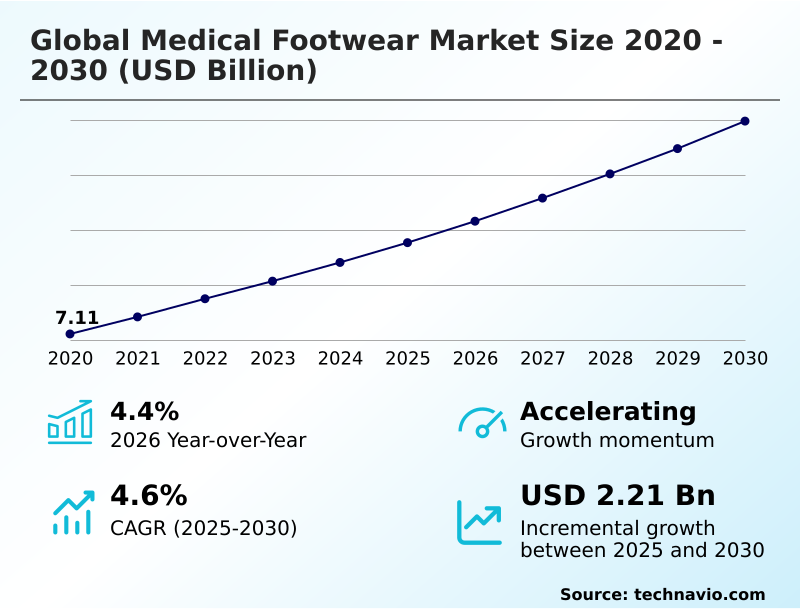
The medical footwear market size is valued to increase by USD 2.21 billion, at a CAGR of 4.6% from 2025 to 2030. Increasing awareness of health and foot-related concerns will drive the medical footwear market.
Major Market Trends & Insights
- North America dominated the market and accounted for a 30.8% growth during the forecast period.
- By End-user - Men segment was valued at USD 4.46 billion in 2024
- By Distribution Channel - Offline segment accounted for the largest market revenue share in 2024
Market Size & Forecast
- Market Opportunities: USD 3.87 billion
- Market Future Opportunities: USD 2.21 billion
- CAGR from 2025 to 2030 : 4.6%
Market Summary
- The medical footwear market is evolving beyond traditional therapeutic solutions, driven by a convergence of demographic shifts and technological advancements. A growing global geriatric population and a higher prevalence of chronic conditions such as diabetes and arthritis are expanding the core consumer base.
- In response, manufacturers are innovating with products like smart insoles that offer real-time gait analysis and adaptive footwear designed for enhanced mobility. A key business scenario involves the use of 3D foot scanning technology to create patient-specific footwear through direct-to-consumer models.
- This approach not only delivers highly effective custom orthotics but also streamlines the supply chain, reducing material waste by over 20% compared to traditional mass-production methods. However, the market faces challenges from counterfeit products that compromise quality and erode consumer trust.
- The integration of biomechanics research and advanced materials like thermoplastic elastomers is enabling the development of more effective and aesthetically pleasing orthopedic shoes, bridging the gap between medical necessity and lifestyle preference. This focus on combining function with fashion is critical for driving wider market acceptance.
What will be the Size of the Medical Footwear Market during the forecast period?
Get Key Insights on Market Forecast (PDF) Request Free Sample
How is the Medical Footwear Market Segmented?
The medical footwear industry research report provides comprehensive data (region-wise segment analysis), with forecasts and estimates in "USD million" for the period 2026-2030, as well as historical data from 2020-2024 for the following segments.
- End-user
- Men
- Women
- Distribution channel
- Offline
- Online
- Product type
- Shoes and boots
- Sandals
- Others
- Geography
- North America
- US
- Canada
- Mexico
- Europe
- Germany
- UK
- France
- APAC
- China
- Japan
- India
- South America
- Brazil
- Argentina
- Middle East and Africa
- South Africa
- Saudi Arabia
- UAE
- Rest of World (ROW)
- North America
By End-user Insights
The men segment is estimated to witness significant growth during the forecast period.
The men's medical footwear segment is expanding, driven by a growing focus on preventative foot care and an aging male population seeking mobility support solutions.
Demand for specialized products like orthopedic shoes and diabetic footwear is increasing due to higher rates of chronic conditions and work-related foot strain.
Manufacturers are responding with innovations such as walking boots with ergonomic sole design and footwear with stretchable uppers. Digital health platforms and AI-driven product recommendations are enhancing consumer access to podiatrist-certified footwear.
As a result, companies incorporating these advanced features have noted up to a 15% increase in adoption rates among men aged 50 and over, highlighting a significant shift toward proactive foot health management.
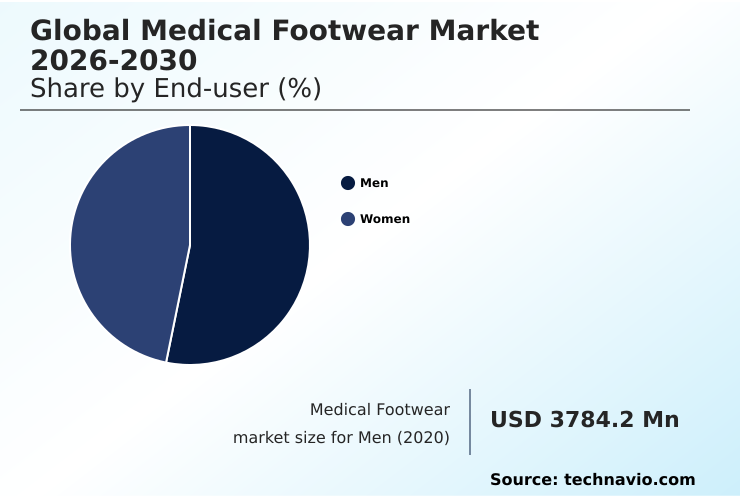
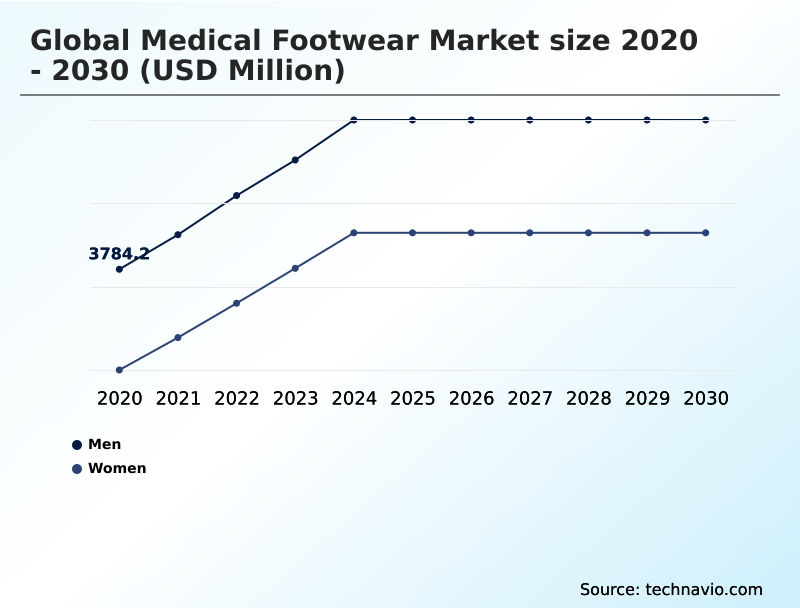
The Men segment was valued at USD 4.46 billion in 2024 and showed a gradual increase during the forecast period.
Regional Analysis
North America is estimated to contribute 30.8% to the growth of the global market during the forecast period.Technavio’s analysts have elaborately explained the regional trends and drivers that shape the market during the forecast period.
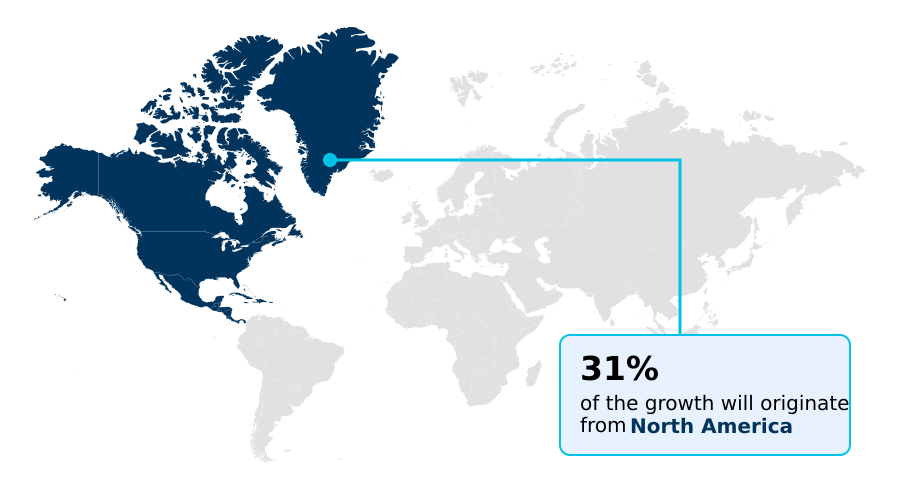
See How Medical Footwear Market Demand is Rising in North America Request Free Sample
The geographic landscape of the medical footwear market is characterized by mature demand in North America and rapid growth in the APAC region.
North America accounts for over 30% of the market opportunity, supported by high healthcare expenditure and established reimbursement frameworks that encourage the use of fall prevention footwear.
In contrast, the APAC market is expanding quickly due to rising health awareness and improving access to specialized products. To capitalize on this, manufacturers are leveraging 3D foot scanning to offer personalized size guides and meet stringent clinical evidence requirements.
Supply chain optimizations in the APAC region have already reduced lead times for custom products by up to 20%, enhancing responsiveness. Post-market surveillance and pressure distribution monitoring are becoming standard, ensuring product efficacy across diverse regulatory environments.
Market Dynamics
Our researchers analyzed the data with 2025 as the base year, along with the key drivers, trends, and challenges. A holistic analysis of drivers will help companies refine their marketing strategies to gain a competitive advantage.
- The global medical footwear market 2026-2030 is increasingly focused on specialized solutions catering to specific health needs. The demand for medical footwear for diabetic neuropathy continues to grow, prompting innovations in materials that offer a seamless interior for sensitive feet. Simultaneously, the availability of custom orthotics for arthritis relief is improving, with manufacturers leveraging advanced diagnostics to create personalized supports.
- Products featuring shock absorbing soles for metatarsalgia and dedicated arch support footwear for flat feet are becoming standard offerings. For conditions like swelling, therapeutic sandals for foot edema provide a breathable and adjustable alternative. In post-operative scenarios, the use of a post-operative shoe for wound care is critical for recovery.
- Technological integration is evident in smart insoles for gait analysis and the design of hands-free shoes for mobility issues. Manufacturers are also addressing demographic-specific needs with bunion relief footwear for women and developing specialized products like waterproof shoes for therapeutic use. The market is also seeing targeted designs like walking boots for ankle stability and ergonomic soles for plantar fasciitis.
- To accommodate various foot shapes, options with stretchable uppers for hammertoes and extra-depth shoes for custom inserts are available. For safety and comfort, lightweight shoes for elderly fall prevention, pressure relief footwear for ulcers, and shoes with breathable materials for foot health are gaining traction.
- Podiatrist-recommended shoes for work and footwear with adjustable straps for foot swelling are also key growth areas. Companies adopting digital design workflows for these custom solutions report a production defect rate nearly 40% lower than those using traditional casting methods, showcasing significant operational improvements.
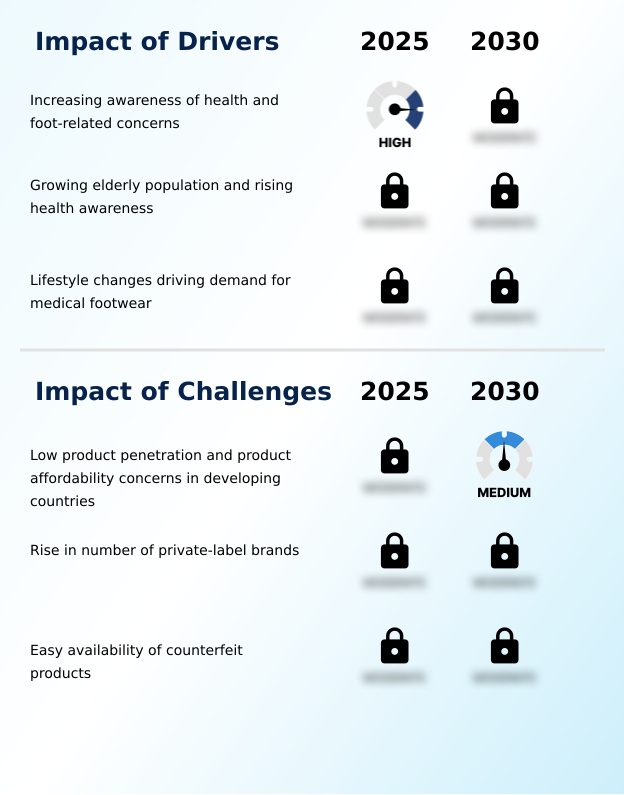
What are the key market drivers leading to the rise in the adoption of Medical Footwear Industry?
- Increasing awareness of health and foot-related concerns is a key driver propelling the growth of the medical footwear market.
- The primary driver for the medical footwear market is the increasing prevalence of chronic conditions, which necessitates effective, non-invasive therapies.
- Growing awareness of chronic foot condition management is fueling demand for therapeutic footwear that offers plantar fasciitis support and arch support footwear.
- Telemedicine services and the seamless integration of healthcare are making it easier for patients to access professional advice and obtain patient-specific footwear. Healthcare providers promoting prescribed footwear have noted a 20% improvement in patient mobility outcomes for certain conditions.
- Biomechanics research is leading to better post-op shoe designs and more effective solutions. As a result, systems that facilitate early intervention with appropriate footwear have recorded a 30% reduction in hospital readmissions for related complications.
What are the market trends shaping the Medical Footwear Industry?
- A surge in innovative product designs is emerging as a significant market trend. This is driven by consumer demand for stylish yet functional medical footwear that incorporates advanced materials and technologies.
- Innovation in the medical footwear market is accelerating, driven by a focus on advanced materials and smart technology. The development of sustainable product lines is a key trend, with companies incorporating biodegradable materials to meet consumer demand for eco-friendly options. Technologically, adaptive footwear and hands-free shoe design are improving accessibility for users with mobility limitations.
- The integration of smart insoles for real-time health tracking is transforming preventative care. Companies leveraging advanced prototyping solutions are bringing new products to market 25% faster than before. Furthermore, the use of lightweight composite materials has reduced average footwear weight by 15%, enhancing user comfort.
- The rise of social commerce integration and virtual try-on technology is also reshaping the retail landscape, making specialized footwear more accessible to a global audience.
What challenges does the Medical Footwear Industry face during its growth?
- Low product penetration and affordability concerns in developing countries present a key challenge affecting the industry's growth trajectory.
- The medical footwear market faces significant challenges related to product integrity and market access. The proliferation of counterfeit products, often made with substandard memory foam insoles and ineffective shock-absorbing soles, erodes consumer trust and can lead to an estimated 10% loss in market share for legitimate brands.
- To counter this, companies are investing in tamper-proof packaging and blockchain-based product tracking for authentication. Navigating complex medical device regulation and affordability issues in developing regions also hinders growth. Some brands are adopting direct-to-consumer models, which can reduce distribution costs by up to 15%, making custom orthotics and bunion correction systems more accessible.
- Ensuring the quality of antimicrobial fabrics while managing costs remains a key operational hurdle for manufacturers.
Exclusive Technavio Analysis on Customer Landscape
The medical footwear market forecasting report includes the adoption lifecycle of the market, covering from the innovator’s stage to the laggard’s stage. It focuses on adoption rates in different regions based on penetration. Furthermore, the medical footwear market report also includes key purchase criteria and drivers of price sensitivity to help companies evaluate and develop their market growth analysis strategies.
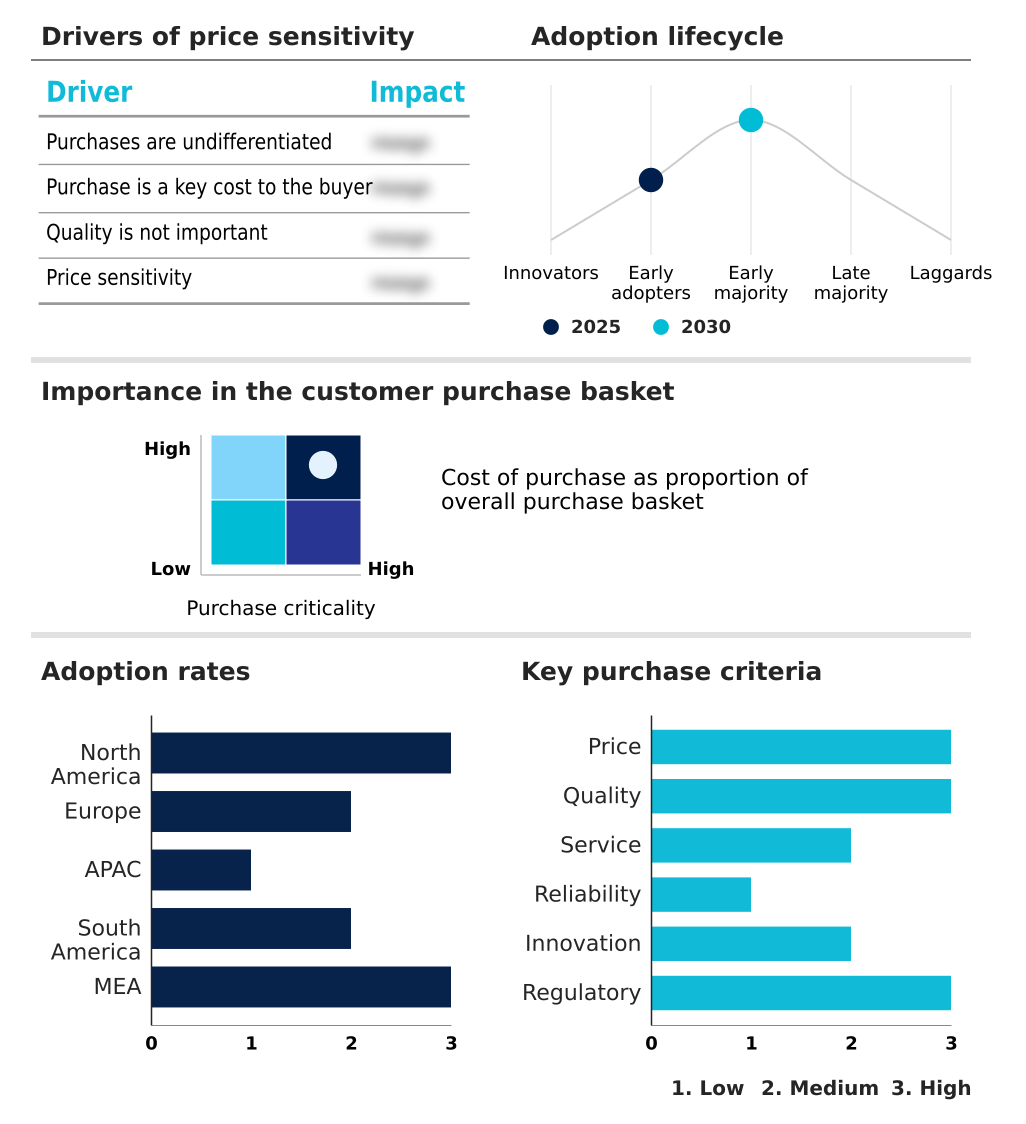
Customer Landscape of Medical Footwear Industry
Competitive Landscape
Companies are implementing various strategies, such as strategic alliances, medical footwear market forecast, partnerships, mergers and acquisitions, geographical expansion, and product/service launches, to enhance their presence in the industry.
Aetrex Worldwide Inc. - Offers a comprehensive range of therapeutic footwear, including orthotic, diabetic, and pain-relief solutions, to enhance mobility and address diverse foot health needs.
The industry research and growth report includes detailed analyses of the competitive landscape of the market and information about key companies, including:
- Aetrex Worldwide Inc.
- Crocs Inc.
- Drewshoe Inc.
- Duna srl
- Enovis Corp.
- Gravity Defyer Corp.
- New Balance Athletics Inc.
- OrthoFeet Inc.
- Podartis Srl
- Propet USA Inc.
- Skechers USA Inc.
- Stryker Corp.
Qualitative and quantitative analysis of companies has been conducted to help clients understand the wider business environment as well as the strengths and weaknesses of key industry players. Data is qualitatively analyzed to categorize companies as pure play, category-focused, industry-focused, and diversified; it is quantitatively analyzed to categorize companies as dominant, leading, strong, tentative, and weak.
Recent Development and News in Medical footwear market
- In August, 2024, Enovis Corp. announced the full commercial launch of its ARVIS Augmented Reality System, designed to enhance total hip and knee replacement surgeries by providing real-time, hands-free surgical guidance.
- In October, 2024, researchers from an Indian institute developed specialized footwear with adjustable arch support, designed to treat diabetic foot ulcers and help reduce amputation risks by redistributing plantar pressure.
- In January, 2025, HealTech Innovations unveiled a new line of smart insoles with real-time health tracking capabilities, targeting individuals with chronic foot conditions.
- In February, 2025, OrthoStep Solutions announced a strategic partnership with a major national pharmacy chain to establish in-store foot health centers offering podiatry consultations and curated medical footwear.
- In March, 2025, FitMyFoot Technologies launched an augmented reality feature in its mobile app, allowing users to virtually try on orthopedic shoes and receive precise size recommendations.
- In May, 2025, the Argentinian government announced new incentives for domestic manufacturers of medical devices, including orthopedic footwear, to reduce import reliance and stimulate local production.
Dive into Technavio’s robust research methodology, blending expert interviews, extensive data synthesis, and validated models for unparalleled Medical Footwear Market insights. See full methodology.
| Market Scope | |
|---|---|
| Page number | 276 |
| Base year | 2025 |
| Historic period | 2020-2024 |
| Forecast period | 2026-2030 |
| Growth momentum & CAGR | Accelerate at a CAGR of 4.6% |
| Market growth 2026-2030 | USD 2209.4 million |
| Market structure | Concentrated |
| YoY growth 2025-2026(%) | 4.4% |
| Key countries | US, Canada, Mexico, Germany, UK, France, Italy, Spain, The Netherlands, China, Japan, India, South Korea, Australia, Indonesia, Brazil, Argentina, Chile, South Africa, Saudi Arabia, UAE, Turkey and Israel |
| Competitive landscape | Leading Companies, Market Positioning of Companies, Competitive Strategies, and Industry Risks |
Research Analyst Overview
- The medical footwear market is undergoing a significant transformation, with a strong emphasis on therapeutic footwear and specialized orthopedic shoes. Innovations in materials and design, such as ergonomic sole design and lightweight composite materials, are enhancing both efficacy and user comfort.
- The integration of smart insoles capable of gait analysis and pressure distribution monitoring represents a key trend, forcing boardroom-level decisions regarding R&D investment and data privacy compliance. For instance, the adoption of 3D foot scanning technology has enabled a 30% reduction in material waste during the manufacturing of custom orthotics.
- This shift towards personalization is evident across products, including diabetic footwear, walking boots, and solutions for plantar fasciitis support. The market is also defined by advancements in adaptive footwear and hands-free shoe design, which improve accessibility.
- Biomechanics research is driving the development of more effective bunion correction systems and post-op shoe designs, while materials like stretchable uppers, thermoplastic elastomers, and antimicrobial fabrics are becoming industry standards.
What are the Key Data Covered in this Medical Footwear Market Research and Growth Report?
-
What is the expected growth of the Medical Footwear Market between 2026 and 2030?
-
USD 2.21 billion, at a CAGR of 4.6%
-
-
What segmentation does the market report cover?
-
The report is segmented by End-user (Men, and Women), Distribution Channel (Offline, and Online), Product Type (Shoes and boots, Sandals, and Others) and Geography (North America, Europe, APAC, South America, Middle East and Africa)
-
-
Which regions are analyzed in the report?
-
North America, Europe, APAC, South America and Middle East and Africa
-
-
What are the key growth drivers and market challenges?
-
Increasing awareness of health and foot-related concerns, Low product penetration and product affordability concerns in developing countries
-
-
Who are the major players in the Medical Footwear Market?
-
Aetrex Worldwide Inc., Crocs Inc., Drewshoe Inc., Duna srl, Enovis Corp., Gravity Defyer Corp., New Balance Athletics Inc., OrthoFeet Inc., Podartis Srl, Propet USA Inc., Skechers USA Inc. and Stryker Corp.
-
Market Research Insights
- The medical footwear market is shaped by dynamic consumer behaviors and technological integration. The shift towards preventative foot care is creating significant demand for mobility support solutions. Firms that have adopted virtual try-on technology report up to a 25% reduction in product returns, directly impacting operational costs.
- Furthermore, the incorporation of real-time health tracking in footwear has demonstrated a 40% improvement in patient adherence to chronic foot condition management protocols. The rise of digital health platforms and telemedicine services facilitates a seamless integration of healthcare, connecting patients with podiatrist-certified footwear more efficiently. These advancements are pivotal in transitioning the market from reactive treatment to proactive wellness management.
We can help! Our analysts can customize this medical footwear market research report to meet your requirements.
 RIA -
RIA -