
Luxury Cosmetics Market Analysis, Size, and Forecast 2025-2029: North America (US and Canada), Europe (France, Germany, and UK), APAC (Australia, China, India, Japan, and South Korea), and Rest of World (ROW)

Luxury Cosmetics Market Analysis, Size, and Forecast 2025-2029:
North America (US and Canada), Europe (France, Germany, and UK), APAC (Australia, China, India, Japan, and South Korea), and Rest of World (ROW)

Published: Jul 2025 209 Pages SKU: IRTNTR73738

Market Overview at a Glance

$28.74 B
Market Opportunity
7.5%
CAGR
6.8
YoY growth 2024-2025(%)

Luxury Cosmetics Market Size 2025-2029

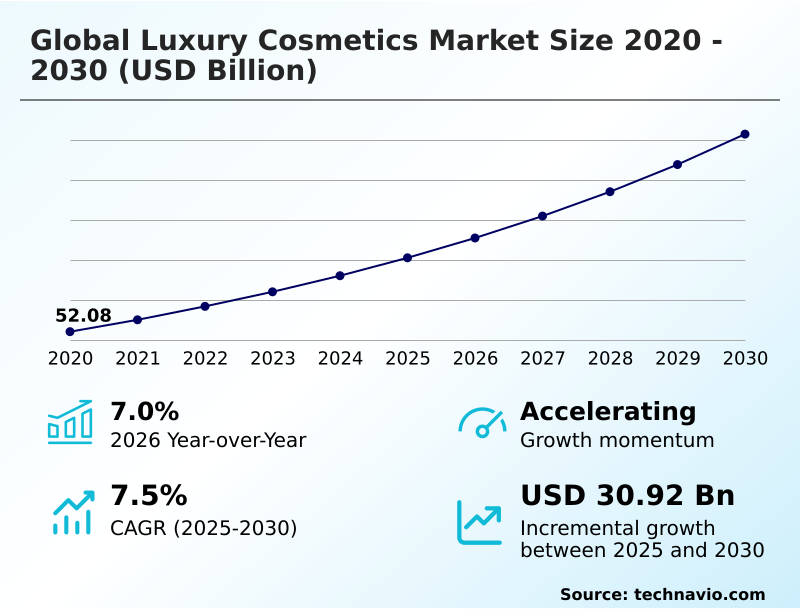
The luxury cosmetics market size is forecast to increase by USD 28.74 billion, at a CAGR of 7.5% between 2024 and 2029.

  • The market is witnessing significant growth, driven primarily by the increasing demand for high-end skincare products. Consumers are increasingly seeking premium skincare solutions as they prioritize self-care and wellness. This trend is observed across all age groups, with a notable rise among millennials and Gen Z. Another key driver in the market is the rise of online retailing. However, this trend also presents challenges for luxury brands seeking to maintain their exclusivity and brand image. Despite the market's growth, there remains significant untapped potential in major parts of developing regions.
  • Luxury brands face challenges in penetrating these markets due to high price points and cultural preferences. As consumers in these regions continue to evolve their beauty habits and seek out premium offerings, there is a significant opportunity for luxury brands to establish a presence and capture market share. The convenience and accessibility offered by e-commerce platforms have made luxury cosmetics more accessible to consumers in remote areas and those with busy lifestyles.  To capitalize on these opportunities, luxury cosmetics companies must focus on building brand awareness and trust in developing markets. This can be achieved through targeted marketing campaigns, strategic partnerships, and collaborations.

What will be the Size of the Luxury Cosmetics Market during the forecast period?
Luxury Cosmetics Market Size

Explore in-depth regional segment analysis with market size data - historical 2019-2023 and forecasts 2025-2029 - in the full report.  
Request Free Sample

The market continues to evolve, driven by advancements in skincare technology and consumer preferences. Innovations in skin hydration technology and advanced skincare ingredients, such as ceramide skin repair and collagen synthesis stimulation, are revolutionizing the industry. Nanoparticle drug delivery and cosmetic peptide synthesis are also gaining traction, offering enhanced efficacy and improved absorption. Oil control ingredients and hypoallergenic cosmetics cater to consumers seeking solutions for various skin concerns. Packaging material selection plays a crucial role in maintaining product integrity and sustainability. Blemish control formulations and sensory evaluation methods are essential in creating high-end cosmetic offerings. Skin microbiome analysis and tone-enhancing cosmetic compounds are emerging trends, addressing the unique needs of individual skin types.

Lactic acid and glycolic acid are popular exfoliants, offering effective skincare solutions. Cosmetic color stability and dermatological ingredient efficacy are critical factors in the development of anti-aging skincare formulations. UV protection technology remains a priority, with sunscreen innovations continuing to advance. Sustainable cosmetic packaging and texture modification techniques are key considerations for luxury brands, appealing to consumers who prioritize eco-friendly practices and personalized experiences. Liposomal encapsulation technology and hyaluronic acid crosslinking are just a few examples of the cutting-edge techniques used to create premium cosmetic offerings. The market's continuous dynamism is reflected in the ongoing research and development of non-comedogenic formulations, fragrance formulation process, and skin elasticity improvement techniques.

Nail polish and hair styling products cater to the complete beauty routine, as retail distribution channels expand to include luxury travel retail. Pore minimizing ingredients and wrinkle reduction techniques are also in high demand, as consumers seek to enhance their overall appearance. Luxury skincare brands are constantly pushing the boundaries of innovation, incorporating the latest advancements in skincare technology and natural cosmetic preservatives, antioxidant cosmetic benefits, and antimicrobial agents. The market's evolving patterns underscore the importance of staying informed and adaptable in this ever-changing landscape. Additionally, companies must navigate the challenges of online retailing by maintaining their brand image and providing a seamless online shopping experience.

How is this Luxury Cosmetics Industry segmented?

The luxury cosmetics industry research report provides comprehensive data (region-wise segment analysis), with forecasts and estimates in "USD million" for the period 2025-2029, as well as historical data from 2019-2023 for the following segments.

  • Type
    • Organic
    • Conventional
  • Product Type
    • Skincare
    • Makeup
    • Fragrance
    • Haircare
    • Bodycare
  • Distribution Channel
    • Offline
    • Online
  • Geography
    • North America
      • US
      • Canada
    • Europe
      • France
      • Germany
      • UK
    • APAC
      • Australia
      • China
      • India
      • Japan
      • South Korea
    • Rest of World (ROW)

By Type Insights

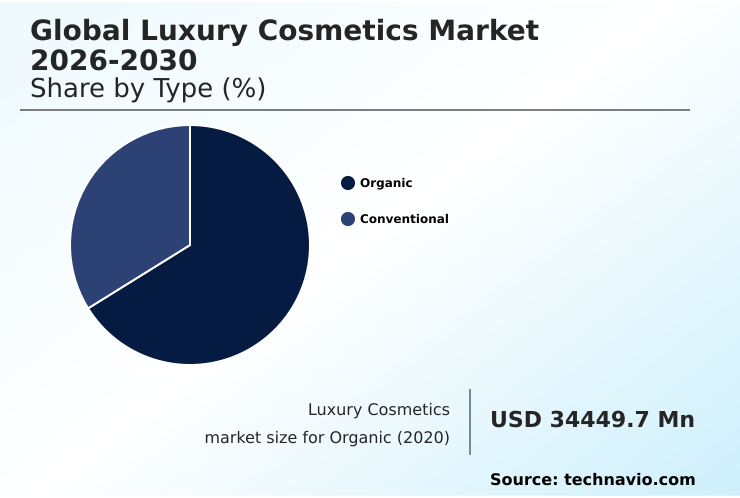
The Organic segment is estimated to witness significant growth during the forecast period. In the market, consumers are increasingly seeking skincare solutions with advanced ingredients and technology. Skin hydration technology, such as nanoparticle drug delivery and ceramide skin repair, are gaining traction for their ability to improve skin elasticity and barrier function. Advanced skincare ingredients, including cosmetic peptide synthesis and antioxidant cosmetic benefits, are being integrated into formulations for their anti-aging properties and ability to stimulate collagen synthesis. Natural cosmetic preservatives, derived from botanical sources, are replacing synthetic preservatives to ensure dermatological ingredient efficacy and cater to the demand for hypoallergenic cosmetics.

Fragrance formulation processes are being optimized to cater to individual preferences and sensitivities, while skin microbiome analysis is used to create blemish control formulations that work in harmony with the skin. Texture modification techniques, such as emulsion stability testing and liposomal encapsulation technology, ensure cosmetic color stability and improve the overall sensory experience. High-end cosmetic formulations are incorporating pore minimizing ingredients, such as hyaluronic acid crosslinking, for a more refined appearance. Sustainable cosmetic packaging and sensory evaluation methods are also becoming essential considerations for luxury brands. Non-comedogenic formulations, free of oil control ingredients, are increasingly popular for those with oily or acne-prone skin.

For instance, emulsion stability testing ensures the long-term stability of cosmetic products, while pore minimizing ingredients and wrinkle reduction techniques cater to the growing demand for anti-aging products. Tone-enhancing cosmetic compounds, such as retinol delivery systems, are being used to even out skin tone and reduce the appearance of wrinkles. The market is evolving to meet the demands of consumers for effective, natural, and sustainable skincare solutions. From advanced skincare technology to natural ingredients, the focus is on creating high-performing, sensory-rich formulations that cater to individual preferences and skin types.

Luxury Cosmetics Market Size

Request Free Sample

The Organic segment was valued at USD 36.3 billion in 2019 and showed a gradual increase during the forecast period.
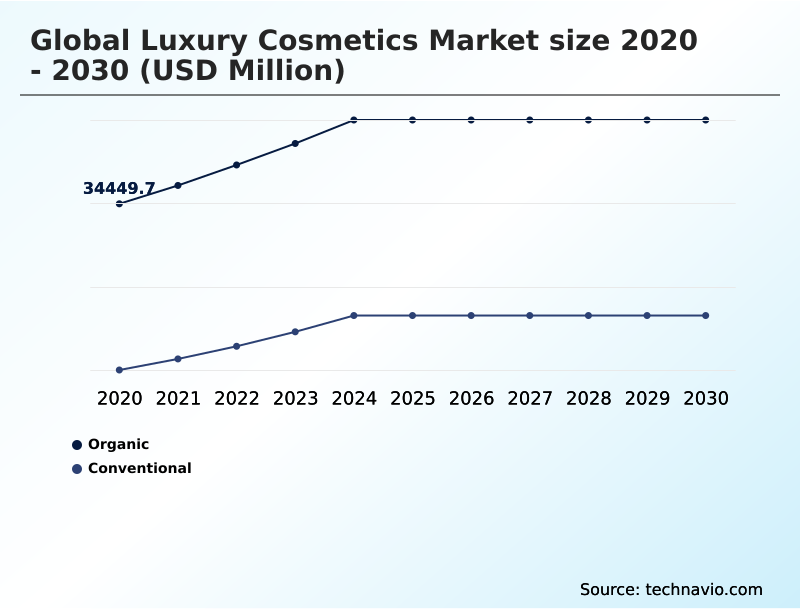
The Luxury Cosmetics Market is innovating rapidly, blending science, sophistication, and strategy to meet evolving consumer demands. At its heart lies advanced product formulation design, where aesthetics meet efficacy in elegant packaging. Brands increasingly focus on cost-effective formulation strategies to balance premium quality with profitability. Signature luxury cosmetic texture silky, weightless, or velvety sets products apart on shelves and skin. Agile supply chain management ensures timely global launches and sustainable sourcing. New novel cosmetic delivery systems, such as microencapsulation and transdermal carriers, boost active ingredient performance. Rigorous cosmetic stability study guarantee longevity and product safety. Backed by real-time market trend prediction, companies tailor innovations to forecasted preferences, fueling growth in the competitive luxury beauty space.

Regional Analysis

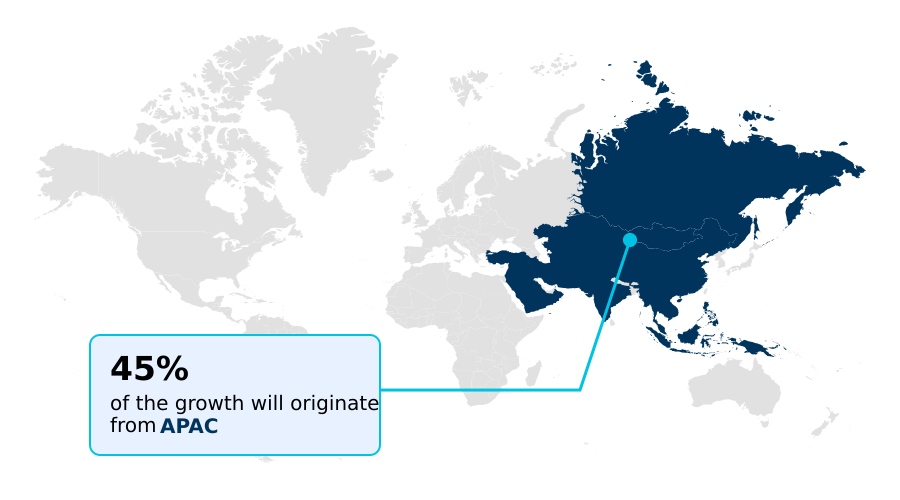
APAC is estimated to contribute 50% to the growth of the global market during the forecast period. Technavio’s analysts have elaborately explained the regional trends and drivers that shape the market during the forecast period.
Luxury Cosmetics Market Share by Geography

 Request Free Sample

In the Asia Pacific (APAC) region, the market experiences significant growth, primarily driven by the increasing popularity of skincare, hair care, baby care, sun care, deodorants, and fragrances. The market's expansion is fueled by the widespread availability of online shopping platforms and advanced technology adoption. The skincare segment, in particular, contributes significantly to the market's total revenue. Companies' increasing presence in the region further propels market growth. For example, Ananya Birla's launch of LOVETC, a premium cosmetics brand under Birla Cosmetics, in India in April 2025, underscores this trend. Advanced skincare ingredients, such as peptides and antioxidants, nanoparticle drug delivery, and natural preservatives, are increasingly incorporated into luxury cosmetic formulations to cater to consumers' evolving preferences.

Skin microbiome analysis, ceramide skin repair, and collagen synthesis stimulation are among the latest trends in anti-aging skincare formulations. High-end cosmetic brands invest in research and development to create non-comedogenic, sensory-pleasing, and sustainable formulations with improved texture, emulsion stability, and pore minimizing properties. Additionally, hypoallergenic cosmetics, oil control ingredients, and wrinkle reduction techniques cater to diverse consumer needs. Liposomal encapsulation technology and hyaluronic acid crosslinking are used to enhance ingredient efficacy and cosmetic color stability. The market's future direction is towards formulations that cater to individual skin types and concerns, offering customized solutions.

Market Dynamics

Our researchers analyzed the data with 2024 as the base year, along with the key drivers, trends, and challenges. A holistic analysis of drivers will help companies refine their marketing strategies to gain a competitive advantage.

What are the key market drivers leading to the rise in the adoption of Luxury Cosmetics Industry?

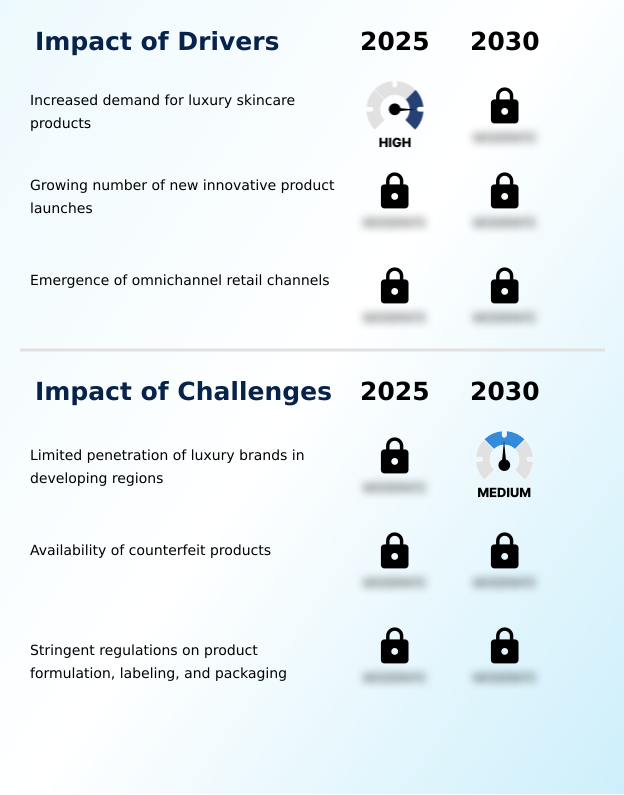
  • The significant rise in consumer preference for high-end skincare items serves as the primary catalyst for the market's growth. Luxury skincare products have gained significant traction in the market, with consumers willing to invest in premium treatments for various skincare concerns. These high-end offerings, priced above traditional skincare products, contain advanced tone-enhancing cosmetic compounds, ensuring color stability and dermatological ingredient efficacy. These strategies have contributed to the expansion of the luxury skincare market, making it an attractive investment opportunity for businesses.
  • Ceramide skin repair and anti-aging skincare formulations are popular choices, as are skin brightening agents and retinol delivery systems that improve skin elasticity and strengthen the skin barrier function. The global market for luxury cosmetics has witnessed growth due to increasing consumer awareness and disposable income. Consumers are more conscious of their skincare needs, such as aging spots, acne, and pigmentation, leading to a higher demand for luxury skincare products. 

What are the market trends shaping the Luxury Cosmetics Industry?

  • The trend toward increased online retailing is a significant development in the market. This shift reflects consumers' growing preference for convenient and contactless shopping experiences. The market experiences continuous growth due to several factors. Consumers' increasing preference for cosmetics with advanced technologies, such as UV protection and collagen synthesis stimulation, fuels market expansion. Additionally, the demand for oil control ingredients and hypoallergenic cosmetics caters to various consumer needs.
  • Moreover, there is a rising trend towards sustainable cosmetic packaging, which is gaining traction in the industry. These dynamics are propelling the market forward, with companies launching blemish control formulations and innovative products on both offline and online platforms, including Sephora and Nykaa E-Retail Pvt. Ltd's e-commerce sites. In the realm of product development, companies employ sensory evaluation methods and texture modification techniques to enhance consumer experience. The increasing use of anti-inflammatory agents, essential oils, peptide complexes, and antioxidant properties in cosmetic products appeals to consumers seeking high-quality, effective skincare solutions.

What challenges does the Luxury Cosmetics Industry face during its growth?

  • The absence of luxury brand penetration in significant areas of developing regions poses a significant challenge to the industry's growth trajectory. In the market, strategic distribution is a crucial factor for success. Luxury beauty products, such as face oils, are primarily sold in specialty beauty retail stores, department stores, and through select e-retailers. These channels hold significant importance due to the high-end nature of these products. The penetration of these retail formats is highest in developed nations and major cities, including New York City, San Francisco, Chicago, and Los Angeles in the US, London, Manchester, Bristol, Liverpool, and Leeds in the UK, Shanghai and Beijing in China, Tokyo and Osaka in Japan, Curitiba, Salvador, Rio de Janeiro, and Sao Paulo in Brazil, and Berlin and Hamburg in Germany.
  • Emulsion stability testing and the use of pore minimizing ingredients, high-end cosmetic formulations, and wrinkle reduction techniques are essential for luxury skincare products. Advanced technologies, such as liposomal encapsulation and hyaluronic acid crosslinking, enhance the efficacy of these ingredients. Manufacturers focus on research and development to create innovative formulations that cater to the evolving consumer preferences. The market is dynamic, with constant innovation and consumer trends driving growth. Companies invest in R&D to create formulations with the latest ingredients and technologies.

Exclusive Customer Landscape

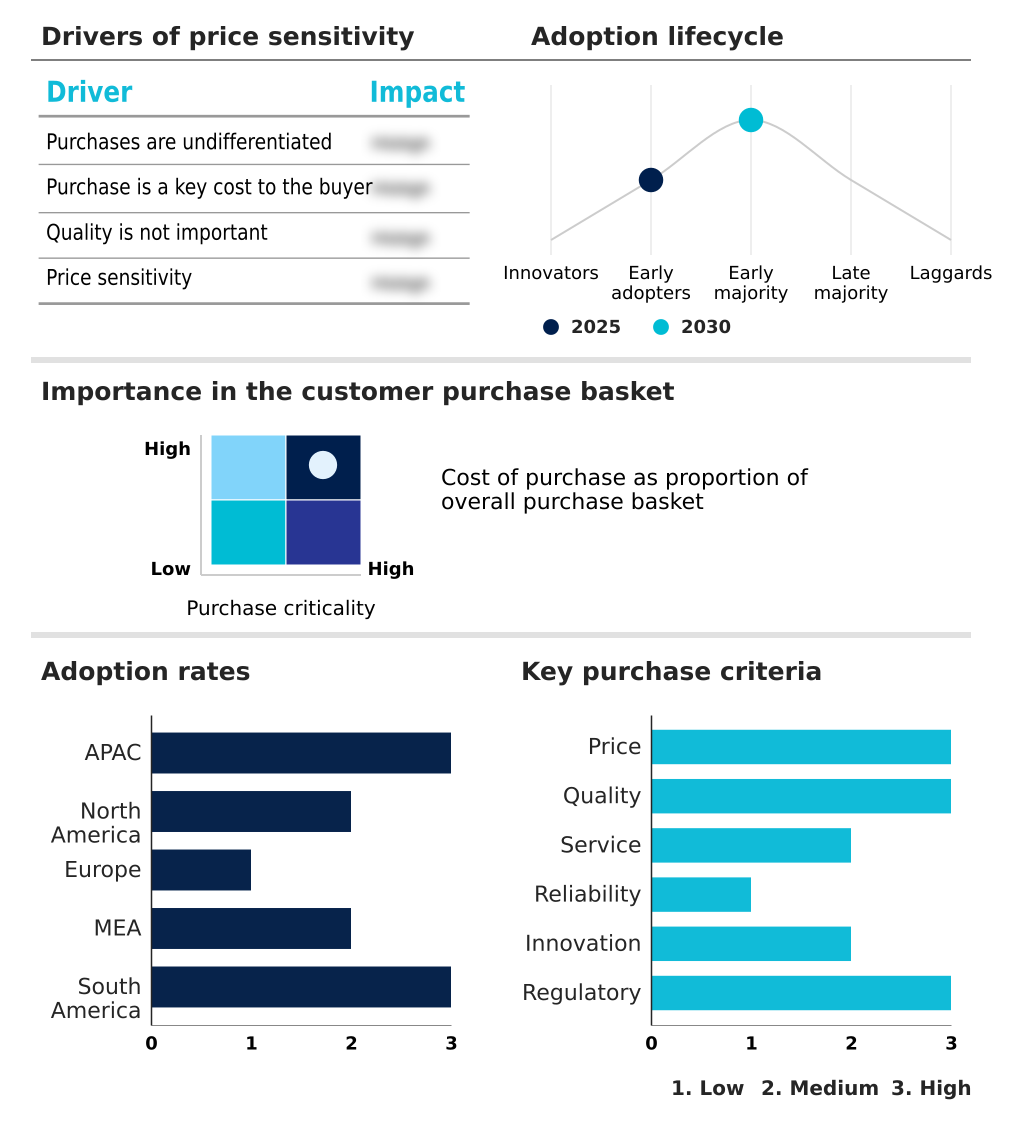
The luxury cosmetics market forecasting report includes the adoption lifecycle of the market, covering from the innovator’s stage to the laggard’s stage. It focuses on adoption rates in different regions based on penetration. Furthermore, the luxury cosmetics market report also includes key purchase criteria and drivers of price sensitivity to help companies evaluate and develop their market growth analysis strategies.
Luxury Cosmetics Market Share by Geography

 Customer Landscape

Key Companies & Market Insights

Companies are implementing various strategies, such as strategic alliances, luxury cosmetics market forecast, partnerships, mergers and acquisitions, geographical expansion, and product/service launches, to enhance their presence in the industry.

Avon Products Inc. - The company specializes in luxury cosmetics, providing premium makeup collections and skincare products designed for discerning customers who prioritize quality, sophistication, and elegance in their beauty regimen.

The industry research and growth report includes detailed analyses of the competitive landscape of the market and information about key companies, including:

  • Avon Products Inc.
  • Chanel Ltd.
  • Christian Dior SE
  • Coty Inc.
  • Kao Corp.
  • Kose Corp.
  • La Mer Technology Inc.
  • Laura Mercier US Buyer LLC
  • LOreal SA
  • LVMH Moet Hennessy Louis Vuitton SE
  • Oriflame Cosmetics S.A.
  • Pat McGrath
  • PUIG S.L.
  • Ralph Lauren Corp.
  • Revlon Inc.
  • Shiseido Co. Ltd.
  • The Estee Lauder Co. Inc.
  • Unilever PLC

Qualitative and quantitative analysis of companies has been conducted to help clients understand the wider business environment as well as the strengths and weaknesses of key industry players. Data is qualitatively analyzed to categorize companies as pure play, category-focused, industry-focused, and diversified; it is quantitatively analyzed to categorize companies as dominant, leading, strong, tentative, and weak.

Recent Development and News in Luxury Cosmetics Market

  • In January 2024, Estée Lauder Companies announced the acquisition of Deciem, a Canadian skincare brand, for a reported USD 2.2 billion. This strategic move expanded Estée Lauder's portfolio, catering to the growing demand for niche and affordable luxury brands (BusinessWire).
  • In March 2024, LVMH Moët Hennessy Fashion & Leather Goods, the luxury goods division of LVMH, signed a partnership with TikTok to launch a series of branded effects and filters for luxury cosmetics brands, including Fenty Beauty, Givenchy, and Dior (Reuters).
  • In April 2025, Shiseido Company, Limited, a leading Japanese cosmetics manufacturer, opened its first flagship store in New York City, marking the brand's significant expansion into the North American market (Shiseido Press Release).
  • In May 2025, Coty Inc. completed the acquisition of 60% of Kylie Jenner's Kylie Cosmetics for approximately USD 600 million, strengthening Coty's presence in the lucrative celebrity makeup market (BusinessWire).

Research Analyst Overview

In the market, allergen identification methods and clinical trial methodology are crucial for ensuring ingredient safety evaluation and regulatory compliance issues. Advanced formulation science plays a pivotal role in designing cost-effective formulations with premium cosmetic fragrance and novel delivery systems. Skin penetration enhancement and active ingredient delivery are key focus areas for cosmetic efficacy testing and personalized skincare regimes. Sustainability certifications and natural ingredient extraction are essential trends in the market, as consumers increasingly demand eco-friendly and natural products. Manufacturing process optimization and packaging design innovation are also critical for maintaining quality control procedures and enhancing consumer perception studies.

Advanced anti-aging research and dermatological testing protocols are driving the market trend towards skincare efficacy biomarkers and skin irritation assessment. Ingredient sourcing strategies and cosmetic stability studies are essential for ensuring the safety and effectiveness of luxury cosmetics. Regulatory compliance issues and consumer preference research continue to shape the market landscape, with a focus on transparency and innovation. Additionally, the use of advanced technologies, such as liposomal encapsulation and hyaluronic acid crosslinking, improves the efficacy of these products. The market is driven by consumer preferences for high-performance, innovative products. Strategic distribution through specialty retailers, department stores, and e-retailers remains a key focus for manufacturers. Advanced technologies and research and development efforts enable companies to create effective, luxurious formulations that cater to the evolving consumer needs.

Dive into Technavio’s robust research methodology, blending expert interviews, extensive data synthesis, and validated models for unparalleled Luxury Cosmetics Market insights. See full methodology.

Market Scope

Report Coverage

Details

Page number

209

Base year

2024

Historic period

2019-2023

Forecast period

2025-2029

Growth momentum & CAGR

Accelerate at a CAGR of 7.5%

Market growth 2025-2029

USD 28.74 billion

Market structure

Fragmented

YoY growth 2024-2025(%)

6.8

Key countries

US, China, Japan, South Korea, France, Germany, Canada, India, UK, and Australia

Competitive landscape

Leading Companies, Market Positioning of Companies, Competitive Strategies, and Industry Risks

Request Free Sample

What are the Key Data Covered in this Luxury Cosmetics Market Research and Growth Report?

  • CAGR of the Luxury Cosmetics industry during the forecast period
  • Detailed information on factors that will drive the growth and forecasting between 2025 and 2029
  • Precise estimation of the size of the market and its contribution of the industry in focus to the parent market
  • Accurate predictions about upcoming growth and trends and changes in consumer behaviour
  • Growth of the market across APAC, North America, Europe, Middle East and Africa, and South America
  • Thorough analysis of the market’s competitive landscape and detailed information about companies
  • Comprehensive analysis of factors that will challenge the luxury cosmetics market growth of industry companies

We can help! Our analysts can customize this luxury cosmetics market research report to meet your requirements.

Get in touch

1 Executive Summary

  • 1.1 Market overview
    • Executive Summary - Chart on Market Overview
    • Executive Summary - Data Table on Market Overview
    • Executive Summary - Chart on Global Market Characteristics
    • Executive Summary - Chart on Market by Geography
    • Executive Summary - Chart on Market Segmentation by Type
    • Executive Summary - Chart on Market Segmentation by Product Type
    • Executive Summary - Chart on Market Segmentation by Distribution Channel
    • Executive Summary - Chart on Incremental Growth
    • Executive Summary - Data Table on Incremental Growth
    • Executive Summary - Chart on Company Market Positioning

2 Technavio Analysis

  • 2.1 Analysis of price sensitivity, lifecycle, customer purchase basket, adoption rates, and purchase criteria
    • Analysis of price sensitivity, lifecycle, customer purchase basket, adoption rates, and purchase criteria
  • 2.2 Criticality of inputs and Factors of differentiation
    • Overview on criticality of inputs and factors of differentiation
  • 2.3 Factors of disruption
    • Overview on factors of disruption
  • 2.4 Impact of drivers and challenges
    • Impact of drivers and challenges in 2024 and 2029

3 Market Landscape

  • 3.1 Market ecosystem
    • Parent Market
    • Data Table on - Parent Market
  • 3.2 Market characteristics
    • Market characteristics analysis
  • 3.3 Value chain analysis
    • Value chain analysis

4 Market Sizing

  • 4.1 Market definition
    • Offerings of companies included in the market definition
  • 4.2 Market segment analysis
    • Market segments
  • 4.3 Market size 2024
    • 4.4 Market outlook: Forecast for 2024-2029
      • Chart on Global - Market size and forecast 2024-2029 ($ million)
      • Data Table on Global - Market size and forecast 2024-2029 ($ million)
      • Chart on Global Market: Year-over-year growth 2024-2029 (%)
      • Data Table on Global Market: Year-over-year growth 2024-2029 (%)

    5 Historic Market Size

    • 5.1 Global Luxury Cosmetics Market 2019 - 2023
      • Historic Market Size - Data Table on Global Luxury Cosmetics Market 2019 - 2023 ($ million)
    • 5.2 Type segment analysis 2019 - 2023
      • Historic Market Size - Type Segment 2019 - 2023 ($ million)
    • 5.3 Product Type segment analysis 2019 - 2023
      • Historic Market Size - Product Type Segment 2019 - 2023 ($ million)
    • 5.4 Distribution Channel segment analysis 2019 - 2023
      • Historic Market Size - Distribution Channel Segment 2019 - 2023 ($ million)
    • 5.5 Geography segment analysis 2019 - 2023
      • Historic Market Size - Geography Segment 2019 - 2023 ($ million)
    • 5.6 Country segment analysis 2019 - 2023
      • Historic Market Size - Country Segment 2019 - 2023 ($ million)

    6 Qualitative Analysis

    • 6.1 The impact of AI in the global luxury cosmetics market

      7 Five Forces Analysis

      • 7.1 Five forces summary
        • Five forces analysis - Comparison between 2024 and 2029
      • 7.2 Bargaining power of buyers
        • Bargaining power of buyers - Impact of key factors 2024 and 2029
      • 7.3 Bargaining power of suppliers
        • Bargaining power of suppliers - Impact of key factors in 2024 and 2029
      • 7.4 Threat of new entrants
        • Threat of new entrants - Impact of key factors in 2024 and 2029
      • 7.5 Threat of substitutes
        • Threat of substitutes - Impact of key factors in 2024 and 2029
      • 7.6 Threat of rivalry
        • Threat of rivalry - Impact of key factors in 2024 and 2029
      • 7.7 Market condition
        • Chart on Market condition - Five forces 2024 and 2029

      8 Market Segmentation by Type

      • 8.1 Market segments
        • Chart on Type - Market share 2024-2029 (%)
        • Data Table on Type - Market share 2024-2029 (%)
      • 8.2 Comparison by Type
        • Chart on Comparison by Type
        • Data Table on Comparison by Type
      • 8.3 Organic - Market size and forecast 2024-2029
        • Chart on Organic - Market size and forecast 2024-2029 ($ million)
        • Data Table on Organic - Market size and forecast 2024-2029 ($ million)
        • Chart on Organic - Year-over-year growth 2024-2029 (%)
        • Data Table on Organic - Year-over-year growth 2024-2029 (%)
      • 8.4 Conventional - Market size and forecast 2024-2029
        • Chart on Conventional - Market size and forecast 2024-2029 ($ million)
        • Data Table on Conventional - Market size and forecast 2024-2029 ($ million)
        • Chart on Conventional - Year-over-year growth 2024-2029 (%)
        • Data Table on Conventional - Year-over-year growth 2024-2029 (%)
      • 8.5 Market opportunity by Type
        • Market opportunity by Type ($ million)
        • Data Table on Market opportunity by Type ($ million)

      9 Market Segmentation by Product Type

      • 9.1 Market segments
        • Chart on Product Type - Market share 2024-2029 (%)
        • Data Table on Product Type - Market share 2024-2029 (%)
      • 9.2 Comparison by Product Type
        • Chart on Comparison by Product Type
        • Data Table on Comparison by Product Type
      • 9.3 Skincare - Market size and forecast 2024-2029
        • Chart on Skincare - Market size and forecast 2024-2029 ($ million)
        • Data Table on Skincare - Market size and forecast 2024-2029 ($ million)
        • Chart on Skincare - Year-over-year growth 2024-2029 (%)
        • Data Table on Skincare - Year-over-year growth 2024-2029 (%)
      • 9.4 Makeup - Market size and forecast 2024-2029
        • Chart on Makeup - Market size and forecast 2024-2029 ($ million)
        • Data Table on Makeup - Market size and forecast 2024-2029 ($ million)
        • Chart on Makeup - Year-over-year growth 2024-2029 (%)
        • Data Table on Makeup - Year-over-year growth 2024-2029 (%)
      • 9.5 Fragrance - Market size and forecast 2024-2029
        • Chart on Fragrance - Market size and forecast 2024-2029 ($ million)
        • Data Table on Fragrance - Market size and forecast 2024-2029 ($ million)
        • Chart on Fragrance - Year-over-year growth 2024-2029 (%)
        • Data Table on Fragrance - Year-over-year growth 2024-2029 (%)
      • 9.6 Haircare - Market size and forecast 2024-2029
        • Chart on Haircare - Market size and forecast 2024-2029 ($ million)
        • Data Table on Haircare - Market size and forecast 2024-2029 ($ million)
        • Chart on Haircare - Year-over-year growth 2024-2029 (%)
        • Data Table on Haircare - Year-over-year growth 2024-2029 (%)
      • 9.7 Bodycare - Market size and forecast 2024-2029
        • Chart on Bodycare - Market size and forecast 2024-2029 ($ million)
        • Data Table on Bodycare - Market size and forecast 2024-2029 ($ million)
        • Chart on Bodycare - Year-over-year growth 2024-2029 (%)
        • Data Table on Bodycare - Year-over-year growth 2024-2029 (%)
      • 9.8 Market opportunity by Product Type
        • Market opportunity by Product Type ($ million)
        • Data Table on Market opportunity by Product Type ($ million)

      10 Market Segmentation by Distribution Channel

      • 10.1 Market segments
        • Chart on Distribution Channel - Market share 2024-2029 (%)
        • Data Table on Distribution Channel - Market share 2024-2029 (%)
      • 10.2 Comparison by Distribution Channel
        • Chart on Comparison by Distribution Channel
        • Data Table on Comparison by Distribution Channel
      • 10.3 Offline - Market size and forecast 2024-2029
        • Chart on Offline - Market size and forecast 2024-2029 ($ million)
        • Data Table on Offline - Market size and forecast 2024-2029 ($ million)
        • Chart on Offline - Year-over-year growth 2024-2029 (%)
        • Data Table on Offline - Year-over-year growth 2024-2029 (%)
      • 10.4 Online - Market size and forecast 2024-2029
        • Chart on Online - Market size and forecast 2024-2029 ($ million)
        • Data Table on Online - Market size and forecast 2024-2029 ($ million)
        • Chart on Online - Year-over-year growth 2024-2029 (%)
        • Data Table on Online - Year-over-year growth 2024-2029 (%)
      • 10.5 Market opportunity by Distribution Channel
        • Market opportunity by Distribution Channel ($ million)
        • Data Table on Market opportunity by Distribution Channel ($ million)

      11 Customer Landscape

      • 11.1 Customer landscape overview
        • Analysis of price sensitivity, lifecycle, customer purchase basket, adoption rates, and purchase criteria

      12 Geographic Landscape

      • 12.1 Geographic segmentation
        • Chart on Market share by geography 2024-2029 (%)
        • Data Table on Market share by geography 2024-2029 (%)
      • 12.2 Geographic comparison
        • Chart on Geographic comparison
        • Data Table on Geographic comparison
      • 12.3 APAC - Market size and forecast 2024-2029
        • Chart on APAC - Market size and forecast 2024-2029 ($ million)
        • Data Table on APAC - Market size and forecast 2024-2029 ($ million)
        • Chart on APAC - Year-over-year growth 2024-2029 (%)
        • Data Table on APAC - Year-over-year growth 2024-2029 (%)
      • 12.4 North America - Market size and forecast 2024-2029
        • Chart on North America - Market size and forecast 2024-2029 ($ million)
        • Data Table on North America - Market size and forecast 2024-2029 ($ million)
        • Chart on North America - Year-over-year growth 2024-2029 (%)
        • Data Table on North America - Year-over-year growth 2024-2029 (%)
      • 12.5 Europe - Market size and forecast 2024-2029
        • Chart on Europe - Market size and forecast 2024-2029 ($ million)
        • Data Table on Europe - Market size and forecast 2024-2029 ($ million)
        • Chart on Europe - Year-over-year growth 2024-2029 (%)
        • Data Table on Europe - Year-over-year growth 2024-2029 (%)
      • 12.6 Middle East and Africa - Market size and forecast 2024-2029
        • Chart on Middle East and Africa - Market size and forecast 2024-2029 ($ million)
        • Data Table on Middle East and Africa - Market size and forecast 2024-2029 ($ million)
        • Chart on Middle East and Africa - Year-over-year growth 2024-2029 (%)
        • Data Table on Middle East and Africa - Year-over-year growth 2024-2029 (%)
      • 12.7 South America - Market size and forecast 2024-2029
        • Chart on South America - Market size and forecast 2024-2029 ($ million)
        • Data Table on South America - Market size and forecast 2024-2029 ($ million)
        • Chart on South America - Year-over-year growth 2024-2029 (%)
        • Data Table on South America - Year-over-year growth 2024-2029 (%)
      • 12.8 US - Market size and forecast 2024-2029
        • Chart on US - Market size and forecast 2024-2029 ($ million)
        • Data Table on US - Market size and forecast 2024-2029 ($ million)
        • Chart on US - Year-over-year growth 2024-2029 (%)
        • Data Table on US - Year-over-year growth 2024-2029 (%)
      • 12.9 China - Market size and forecast 2024-2029
        • Chart on China - Market size and forecast 2024-2029 ($ million)
        • Data Table on China - Market size and forecast 2024-2029 ($ million)
        • Chart on China - Year-over-year growth 2024-2029 (%)
        • Data Table on China - Year-over-year growth 2024-2029 (%)
      • 12.10 Japan - Market size and forecast 2024-2029
        • Chart on Japan - Market size and forecast 2024-2029 ($ million)
        • Data Table on Japan - Market size and forecast 2024-2029 ($ million)
        • Chart on Japan - Year-over-year growth 2024-2029 (%)
        • Data Table on Japan - Year-over-year growth 2024-2029 (%)
      • 12.11 South Korea - Market size and forecast 2024-2029
        • Chart on South Korea - Market size and forecast 2024-2029 ($ million)
        • Data Table on South Korea - Market size and forecast 2024-2029 ($ million)
        • Chart on South Korea - Year-over-year growth 2024-2029 (%)
        • Data Table on South Korea - Year-over-year growth 2024-2029 (%)
      • 12.12 France - Market size and forecast 2024-2029
        • Chart on France - Market size and forecast 2024-2029 ($ million)
        • Data Table on France - Market size and forecast 2024-2029 ($ million)
        • Chart on France - Year-over-year growth 2024-2029 (%)
        • Data Table on France - Year-over-year growth 2024-2029 (%)
      • 12.13 Canada - Market size and forecast 2024-2029
        • Chart on Canada - Market size and forecast 2024-2029 ($ million)
        • Data Table on Canada - Market size and forecast 2024-2029 ($ million)
        • Chart on Canada - Year-over-year growth 2024-2029 (%)
        • Data Table on Canada - Year-over-year growth 2024-2029 (%)
      • 12.14 Germany - Market size and forecast 2024-2029
        • Chart on Germany - Market size and forecast 2024-2029 ($ million)
        • Data Table on Germany - Market size and forecast 2024-2029 ($ million)
        • Chart on Germany - Year-over-year growth 2024-2029 (%)
        • Data Table on Germany - Year-over-year growth 2024-2029 (%)
      • 12.15 India - Market size and forecast 2024-2029
        • Chart on India - Market size and forecast 2024-2029 ($ million)
        • Data Table on India - Market size and forecast 2024-2029 ($ million)
        • Chart on India - Year-over-year growth 2024-2029 (%)
        • Data Table on India - Year-over-year growth 2024-2029 (%)
      • 12.16 UK - Market size and forecast 2024-2029
        • Chart on UK - Market size and forecast 2024-2029 ($ million)
        • Data Table on UK - Market size and forecast 2024-2029 ($ million)
        • Chart on UK - Year-over-year growth 2024-2029 (%)
        • Data Table on UK - Year-over-year growth 2024-2029 (%)
      • 12.17 Australia - Market size and forecast 2024-2029
        • Chart on Australia - Market size and forecast 2024-2029 ($ million)
        • Data Table on Australia - Market size and forecast 2024-2029 ($ million)
        • Chart on Australia - Year-over-year growth 2024-2029 (%)
        • Data Table on Australia - Year-over-year growth 2024-2029 (%)
      • 12.18 Market opportunity by geography
        • Market opportunity by geography ($ million)
        • Data Tables on Market opportunity by geography ($ million)

      13 Drivers, Challenges, and Opportunity/Restraints

      • 13.1 Market drivers
        • 13.2 Market challenges
          • 13.3 Impact of drivers and challenges
            • Impact of drivers and challenges in 2024 and 2029
          • 13.4 Market opportunities/restraints

            14 Competitive Landscape

            • 14.1 Overview
              • 14.2 Competitive Landscape
                • Overview on criticality of inputs and factors of differentiation
              • 14.3 Landscape disruption
                • Overview on factors of disruption
              • 14.4 Industry risks
                • Impact of key risks on business

              15 Competitive Analysis

              • 15.1 Companies profiled
                • Companies covered
              • 15.2 Company ranking index
                • Company ranking index
              • 15.3 Market positioning of companies
                • Matrix on companies position and classification
              • 15.4 Avon Products Inc.
                • Avon Products Inc. - Overview
                • Avon Products Inc. - Product / Service
                • Avon Products Inc. - Key offerings
                • SWOT
              • 15.5 Chanel Ltd.
                • Chanel Ltd. - Overview
                • Chanel Ltd. - Product / Service
                • Chanel Ltd. - Key offerings
                • SWOT
              • 15.6 Christian Dior SE
                • Christian Dior SE - Overview
                • Christian Dior SE - Product / Service
                • Christian Dior SE - Key offerings
                • SWOT
              • 15.7 Coty Inc.
                • Coty Inc. - Overview
                • Coty Inc. - Business segments
                • Coty Inc. - Key news
                • Coty Inc. - Key offerings
                • Coty Inc. - Segment focus
                • SWOT
              • 15.8 Kao Corp.
                • Kao Corp. - Overview
                • Kao Corp. - Business segments
                • Kao Corp. - Key news
                • Kao Corp. - Key offerings
                • Kao Corp. - Segment focus
                • SWOT
              • 15.9 Kose Corp.
                • Kose Corp. - Overview
                • Kose Corp. - Product / Service
                • Kose Corp. - Key offerings
                • SWOT
              • 15.10 Laura Mercier US Buyer LLC
                • Laura Mercier US Buyer LLC - Overview
                • Laura Mercier US Buyer LLC - Product / Service
                • Laura Mercier US Buyer LLC - Key offerings
                • SWOT
              • 15.11 LOreal SA
                • LOreal SA - Overview
                • LOreal SA - Business segments
                • LOreal SA - Key news
                • LOreal SA - Key offerings
                • LOreal SA - Segment focus
                • SWOT
              • 15.12 LVMH Moet Hennessy Louis Vuitton SE
                • LVMH Moet Hennessy Louis Vuitton SE - Overview
                • LVMH Moet Hennessy Louis Vuitton SE - Business segments
                • LVMH Moet Hennessy Louis Vuitton SE - Key news
                • LVMH Moet Hennessy Louis Vuitton SE - Key offerings
                • LVMH Moet Hennessy Louis Vuitton SE - Segment focus
                • SWOT
              • 15.13 Oriflame Cosmetics S.A.
                • Oriflame Cosmetics S.A. - Overview
                • Oriflame Cosmetics S.A. - Product / Service
                • Oriflame Cosmetics S.A. - Key offerings
                • SWOT
              • 15.14 PUIG S.L.
                • PUIG S.L. - Overview
                • PUIG S.L. - Product / Service
                • PUIG S.L. - Key offerings
                • SWOT
              • 15.15 Revlon Inc.
                • Revlon Inc. - Overview
                • Revlon Inc. - Business segments
                • Revlon Inc. - Key offerings
                • Revlon Inc. - Segment focus
                • SWOT
              • 15.16 Shiseido Co. Ltd.
                • Shiseido Co. Ltd. - Overview
                • Shiseido Co. Ltd. - Business segments
                • Shiseido Co. Ltd. - Key news
                • Shiseido Co. Ltd. - Key offerings
                • Shiseido Co. Ltd. - Segment focus
                • SWOT
              • 15.17 The Estee Lauder Co. Inc.
                • The Estee Lauder Co. Inc. - Overview
                • The Estee Lauder Co. Inc. - Product / Service
                • The Estee Lauder Co. Inc. - Key news
                • The Estee Lauder Co. Inc. - Key offerings
                • SWOT
              • 15.18 Unilever PLC
                • Unilever PLC - Overview
                • Unilever PLC - Business segments
                • Unilever PLC - Key offerings
                • Unilever PLC - Segment focus
                • SWOT

              16 Appendix

              • 16.1 Scope of the report
                • 16.2 Inclusions and exclusions checklist
                  • Inclusions checklist
                  • Exclusions checklist
                • 16.3 Currency conversion rates for US$
                  • Currency conversion rates for US$
                • 16.4 Research methodology
                  • Research methodology
                • 16.5 Data procurement
                  • Information sources
                • 16.6 Data validation
                  • Data validation
                • 16.7 Validation techniques employed for market sizing
                  • Validation techniques employed for market sizing
                • 16.8 Data synthesis
                  • Data synthesis
                • 16.9 360 degree market analysis
                  • 360 degree market analysis
                • 16.10 List of abbreviations
                  • List of abbreviations

                Research Methodology

                Technavio presents a detailed picture of the market by way of study, synthesis, and summation of data from multiple sources. The analysts have presented the various facets of the market with a particular focus on identifying the key industry influencers. The data thus presented is comprehensive, reliable, and the result of extensive research, both primary and secondary.

                INFORMATION SOURCES

                Primary sources

                • Manufacturers and suppliers
                • Channel partners
                • Industry experts
                • Strategic decision makers

                Secondary sources

                • Industry journals and periodicals
                • Government data
                • Financial reports of key industry players
                • Historical data
                • Press releases

                DATA ANALYSIS

                Data Synthesis

                • Collation of data
                • Estimation of key figures
                • Analysis of derived insights

                Data Validation

                • Triangulation with data models
                • Reference against proprietary databases
                • Corroboration with industry experts

                REPORT WRITING

                Qualitative

                • Market drivers
                • Market challenges
                • Market trends
                • Five forces analysis

                Quantitative

                • Market size and forecast
                • Market segmentation
                • Geographical insights
                • Competitive landscape

                Interested in this report?

                Get your sample now to see our research methodology and insights!

                Download Now

                Frequently Asked Questions

                Luxury Cosmetics market growth will increase by $ 28743.8 mn during 2025-2029.

                The Luxury Cosmetics market is expected to grow at a CAGR of 7.5% during 2025-2029.

                Luxury Cosmetics market is segmented by Type( Organic, Conventional) Product Type( Skincare, Makeup, Fragrance, Haircare, Bodycare) Distribution Channel( Offline, Online)

                Avon Products Inc., Chanel Ltd., Christian Dior SE, Coty Inc., Kao Corp., Kose Corp., La Mer Technology Inc., Laura Mercier US Buyer LLC, LOreal SA, LVMH Moet Hennessy Louis Vuitton SE, Oriflame Cosmetics S.A., Pat McGrath, PUIG S.L., Ralph Lauren Corp., Revlon Inc., Shiseido Co. Ltd., The Estee Lauder Co. Inc., Unilever PLC are a few of the key vendors in the Luxury Cosmetics market.

                APAC will register the highest growth rate of 50% among the other regions. Therefore, the Luxury Cosmetics market in APAC is expected to garner significant business opportunities for the vendors during the forecast period.

                US, China, Japan, South Korea, France, Germany, Canada, India, UK, Australia

                • Increased demand for luxury skincare productsSelected professional skincare product manufacturers provide innovative is the driving factor this market.
                • professional treatments to their customers is the driving factor this market.
                • followed by giving them luxury products that are costlier than regular skincare products. Consumers are more aware of skincare concerns like aging spots is the driving factor this market.
                • acne is the driving factor this market.
                • and pigmentation and is the driving factor this market.
                • hence is the driving factor this market.
                • are ready to pay for luxury skincare products. Innovative skincare products have the right combination of superior-quality ingredients is the driving factor this market.
                • a factor that leads to product premiumization. With rising disposable income is the driving factor this market.
                • consumers do not mind spending more on luxury products is the driving factor this market.
                • which has led to increased demand for luxury cosmetics is the driving factor this market.
                • especially skincare products. Also is the driving factor this market.
                • companies in global luxury cosmetics have been adopting strategies to expand luxury skincare products. Skincare companies invest in innovative ingredients and technologies that would positively affect the health and appearance of the customers skin. Consumers is the driving factor this market.
                • especially the aging population is the driving factor this market.
                • increasingly look for methods and products to maintain and improve their appearance and look youthful. Earlier is the driving factor this market.
                • antiaging creams were used to temporarily plump up the skin to reduce the appearance of fine lines and wrinkles. But presently is the driving factor this market.
                • advancements in technology have increased the number of advanced and value-added antiaging products in the market is the driving factor this market.
                • thereby playing a vital role in the growth of the global luxury cosmetics market. The market also has products that contain ingredients to treat fine lines and wrinkles for consumers with oily and sensitive skin. Thus is the driving factor this market.
                • the increased demand for luxury skincare products fuels the growth of the global luxury cosmetics market during the forecast period. is the driving factor this market.

                The Luxury Cosmetics market vendors should focus on grabbing business opportunities from the Organic segment as it accounted for the largest market share in the base year.