

LNG Infrastructure Market Analysis North America, APAC, Europe, Middle East and Africa, South America - US, China, Japan, India, Russia, Canada, Germany, United Arab Emirates, Saudi Arabia, Brazil - Size and Forecast 2024-2028

LNG Infrastructure Market Analysis North America, APAC, Europe, Middle East and Africa, South America - US, China, Japan, India, Russia, Canada, Germany, United Arab Emirates, Saudi Arabia, Brazil - Size and Forecast 2024-2028

Published: Nov 2024 162 Pages SKU: IRTNTR72180

Market Overview at a Glance

$4.67 B
Market Opportunity
6%
CAGR
5.6
YoY growth 2023-2024(%)

LNG Infrastructure Market Size 2024-2028

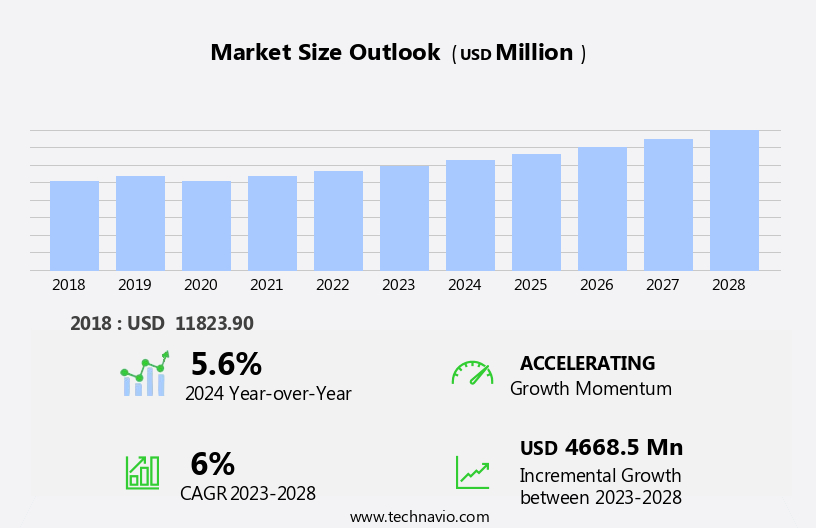
The lng infrastructure market size is forecast to increase by USD 4.67 billion, at a CAGR of 6% between 2023 and 2028.

  • The market is experiencing significant growth, driven primarily by the increasing demand for cleaner fuels and the expanding need for LNG bunkering. This shift towards cleaner energy sources is a global trend, with numerous industries and countries recognizing the environmental benefits of natural gas over traditional fossil fuels. Additionally, the market is influenced by the volatility of global oil and gas prices, which can impact the profitability of LNG projects and the competitiveness of natural gas as a fuel source. Despite these opportunities, challenges persist. One major obstacle is the high capital intensity of LNG infrastructure projects, which can deter potential investors and limit the market's growth rate.
  • Another challenge is the complex and evolving regulatory landscape, which can create uncertainty and hinder the expansion of the market. Companies seeking to capitalize on the opportunities in the market must navigate these challenges effectively, focusing on cost efficiency, regulatory compliance, and strategic partnerships to remain competitive.

What will be the Size of the LNG Infrastructure Market during the forecast period?
LNG Infrastructure Market Size

Explore in-depth regional segment analysis with market size data - historical 2018-2022 and forecasts 2024-2028 - in the full report.  
Request Free Sample

The market continues to evolve, driven by the increasing demand for cleaner energy sources and the need for reliable energy supply in various sectors. Small-scale LNG solutions, such as peak shaving facilities, are gaining traction as they offer flexibility in meeting energy demands during peak hours. Cryogenic pipeline systems and LNG import terminals are essential components of the LNG infrastructure, ensuring the efficient delivery of LNG to consumers. LNG infrastructure investment remains a priority, with ongoing efforts to optimize the liquefaction process and improve safety regulations. Vaporization efficiency and methane emissions reduction are key focus areas, with advancements in vaporization technologies and gas turbine efficiency leading to significant improvements.

LNG bunkering infrastructure and distribution networks are expanding, enabling the use of LNG as a fuel in various industries. Despite the challenges posed by LNG transportation costs and price volatility, the industry is expected to grow at a robust rate. Regasification plant capacity is increasing, with regasification efficiency and process control becoming critical factors in ensuring optimal performance. Export terminals and cryogenic pump technology are essential for the efficient handling and transportation of LNG. LNG metering systems and quality control are crucial for maintaining the integrity of the LNG supply chain. Regasification plants and liquefaction plants are undergoing capacity expansions to meet the growing demand for LNG.

Pipeline integrity management and regasification efficiency are also key considerations for LNG infrastructure providers. For instance, a leading energy company reported a 15% increase in LNG sales due to the optimization of its regasification plant capacity and efficiency. The global LNG market is projected to grow by over 5% annually, driven by the increasing demand for cleaner energy sources and the expansion of LNG infrastructure.

How is this LNG Infrastructure Industry segmented?

The lng infrastructure industry research report provides comprehensive data (region-wise segment analysis), with forecasts and estimates in "USD million" for the period 2024-2028, as well as historical data from 2018-2022 for the following segments.

  • Type
    • Liquefaction terminal
    • Regasification terminal
  • Geography
    • North America
      • US
      • Canada
    • Europe
      • Germany
      • Russia
    • APAC
      • China
      • India
      • Japan
    • South America
      • Brazil
    • Rest of World (ROW)

By Type Insights

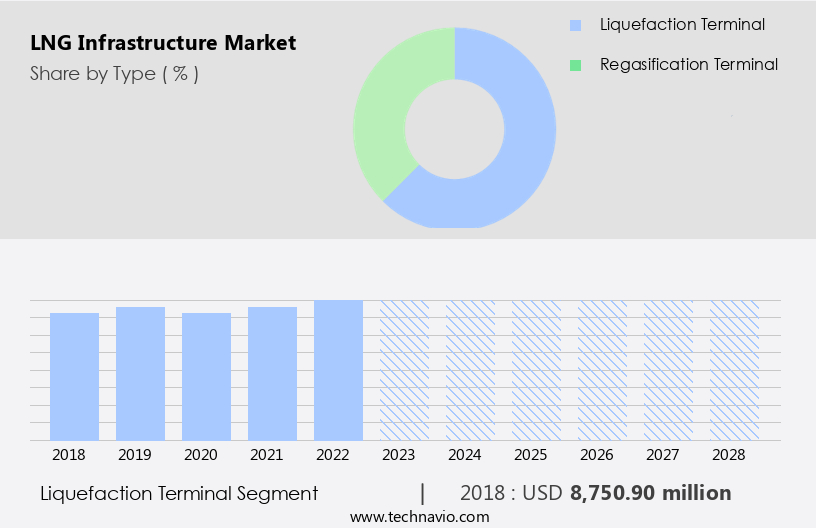
The liquefaction terminal segment is estimated to witness significant growth during the forecast period.

LNG infrastructure is a critical component of the global energy market, encompassing various elements from production to distribution. Small-scale LNG solutions and peak shaving facilities are gaining traction as businesses seek flexible and efficient energy options. Cryogenic pipeline systems transport LNG through insulated pipes, maintaining low temperatures to prevent vaporization. LNG import terminals serve as key hubs for LNG transportation, with regasification plants converting the liquefied gas back into its gaseous state. Liquefaction process optimization and infrastructure investment are essential for enhancing efficiency and reducing methane emissions. Safety regulations ensure secure handling and transportation of LNG, while vaporization technologies and gas turbine efficiency improve energy utilization.

LNG bunkering infrastructure is expanding to facilitate the use of LNG as a marine fuel. Environmental impact assessments and distribution networks are crucial for minimizing the environmental footprint of LNG. Price volatility is a significant challenge, with regasification plant capacity and export terminals influencing supply and demand dynamics. Cryogenic pump technology and metering systems ensure accurate LNG measurement, while quality control and storage technologies maintain the integrity of the gas. Pipeline integrity management and regasification efficiency are vital for optimizing operations, with regasification process control and peak demand management ensuring efficient energy delivery. LNG carrier scheduling and truck transportation are essential for seamless LNG transportation, with increasing demand driving the need for advanced logistical solutions.

According to recent industry reports, the global LNG market is projected to grow by over 5% annually, driven by the increasing adoption of cleaner fuels and expanding energy demands. For instance, a major European utility company reported a 20% increase in LNG sales in the last fiscal year, highlighting the market's growing significance.
LNG Infrastructure Market Size

Request Free Sample

The Liquefaction terminal segment was valued at USD 8.75 billion in 2018 and showed a gradual increase during the forecast period.

Regional Analysis

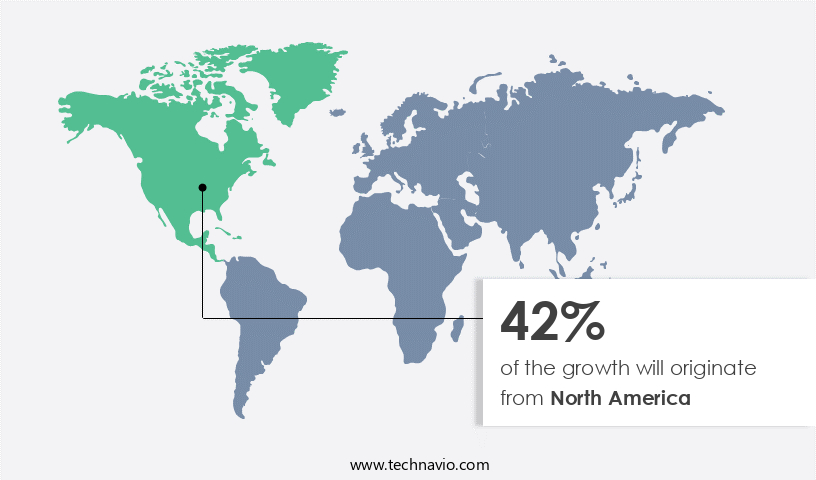
North America is estimated to contribute 42% to the growth of the global market during the forecast period. Technavio's analysts have elaborately explained the regional trends and drivers that shape the market during the forecast period.
LNG Infrastructure Market Share by Geography

 Request Free Sample

The US market is experiencing significant growth due to the shift from coal to gas in the power generation sector and competitive natural gas prices for industrial applications. The shale revolution in the US, with the Marcellus and Utica shale basins undergoing continuous developments, has made the country a major contributor to global natural gas output. LNG infrastructure investments include small-scale solutions, peak shaving facilities, and cryogenic pipeline systems, which optimize liquefaction processes and improve vaporization efficiency. Safety regulations ensure the safe handling and transportation of LNG, while methane emissions reduction technologies minimize environmental impact. LNG fuel infrastructure, including regasification plants and storage technologies, enables efficient gas turbine operation and peak demand management.

The industry is expected to grow by over 5% annually, with LNG export terminals and cryogenic pump technology playing crucial roles in the market. Regasification plant capacity expansions and regasification process control advancements enhance overall efficiency. LNG carrier scheduling and truck transportation ensure reliable distribution networks, mitigating price volatility. Environmental impact assessments and pipeline integrity management are essential considerations for the industry's sustainable growth.

Market Dynamics

Our researchers analyzed the data with 2023 as the base year, along with the key drivers, trends, and challenges. A holistic analysis of drivers will help companies refine their marketing strategies to gain a competitive advantage.

The market is experiencing significant growth as the world transitions to cleaner energy sources. Optimization of LNG regasification plant designs is a key focus area, with cryogenic pipeline integrity monitoring systems ensuring safe and efficient operations. Boil-off gas recovery and utilization, as well as efficient LNG vaporization system designs, are essential for minimizing operational costs. LNG terminal automation and control systems, coupled with LNG supply chain risk management strategies, enable seamless operations and reduce the impact of supply disruptions. Small-scale LNG liquefaction plant technologies offer flexibility in meeting diverse energy demands, while LNG storage tank thermal insulation optimization ensures minimal energy loss and maximum capacity utilization. Bunkering infrastructure development strategies and LNG carrier scheduling and optimization algorithms are crucial for efficient LNG transportation. LNG facility safety and environmental compliance, methane emissions monitoring and reduction technologies, and LNG pipeline construction and maintenance best practices are essential for ensuring sustainability and minimizing environmental impact. The market's economic analysis and investment considerations are critical in ensuring the viability of LNG as a competitive energy source. LNG transportation cost reduction strategies, LNG distribution network planning and management, and optimization of LNG liquefaction plant operations are all essential components of a successful LNG business model. Moreover, the development of LNG infrastructure plays a significant role in enhancing energy security by diversifying energy sources and reducing dependence on traditional fossil fuels. As the market continues to evolve, it is essential to stay abreast of the latest advancements and best practices to maximize returns and minimize risks.

What are the key market drivers leading to the rise in the adoption of LNG Infrastructure Industry?

  • The surge in consumer preference for cleaner fuel sources is the primary market catalyst. 
  • The global energy landscape is undergoing significant shifts as the world population is projected to reach 10 billion by 2050, leading to a 30% increase in energy demand by 2040, according to the International Energy Agency (IEA). Traditional energy sources like oil and coal have dominated the energy mix, contributing to a substantial rise in carbon dioxide (CO2) and other greenhouse gas emissions. In 2023, global energy-related CO2 emissions grew by 1%. To mitigate the environmental impact, there is a growing emphasis on cleaner energy sources, leading to a surge in the market. For instance, the use of LNG as a marine fuel has increased by 35% in 2020 compared to the previous year.
  • The IEA anticipates that LNG will account for 15% of the global gas demand by 2025. This trend signifies a promising future for the market, offering a viable solution to meet the increasing energy demand while reducing carbon emissions.

What are the market trends shaping the LNG Infrastructure Industry?

  • The growing demand for liquefied natural gas (LNG) bunkering represents an emerging market trend. LNG bunkering, or the supply of LNG as fuel to ships, is gaining increasing importance in the maritime industry.
  • The market is witnessing significant growth due to the increasing demand for environmentally sustainable marine fuels. LNG bunkering, the practice of providing LNG fuel to ships, is gaining popularity as a solution to reduce emissions from shipping activities. According to the International Energy Agency (IEA), heavy fuel oil (HFO) accounted for 79% of the fuel mix in marine bunkers in 2020. However, the International Maritime Organization (IMO) has proposed a regulation that would limit the sulfur content in marine fuel to 0%, which is expected to drive the adoption of LNG as a marine fuel. In 2020, the LNG bunkering market was estimated to be worth a significant percentage of the global energy market.
  • Looking forward, the market is projected to grow at a robust rate, with LNG expected to capture a larger share of the marine fuel market in the coming years. The increasing number of LNG bunkering facilities being developed at ports worldwide is further fueling the market growth.

What challenges does the LNG Infrastructure Industry face during its growth?

  • The volatile nature of global oil and gas prices poses a significant challenge to the industry's growth trajectory. 
  • The market has experienced significant volatility due to fluctuations in crude oil prices since 2014. For instance, Japan, a major importer of oil, saw a crude oil import cost of USD 104.16 per barrel in 2014. However, the price dropped to USD 54.42 per barrel in 2017 before rising to USD 76.49 per barrel in September 2018. More recently, prices reached USD 69.08/barrel in May 2021, only to increase further to USD 74/barrel in December 2021. These price reductions have negatively impacted the profit margins of companies in the upstream oil and gas sector, making it challenging to attract substantial investments.
  • As a result, the industry has missed out on significant market potential. According to the International Energy Agency, the LNG market is expected to grow by over 5% per year between 2022 and 2026.

Exclusive Customer Landscape

The LNG infrastructure market forecasting report includes the adoption lifecycle of the market, covering from the innovator's stage to the laggard's stage. It focuses on adoption rates in different regions based on penetration. Furthermore, the LNG infrastructure market report also includes key purchase criteria and drivers of price sensitivity to help companies evaluate and develop their market growth analysis strategies.
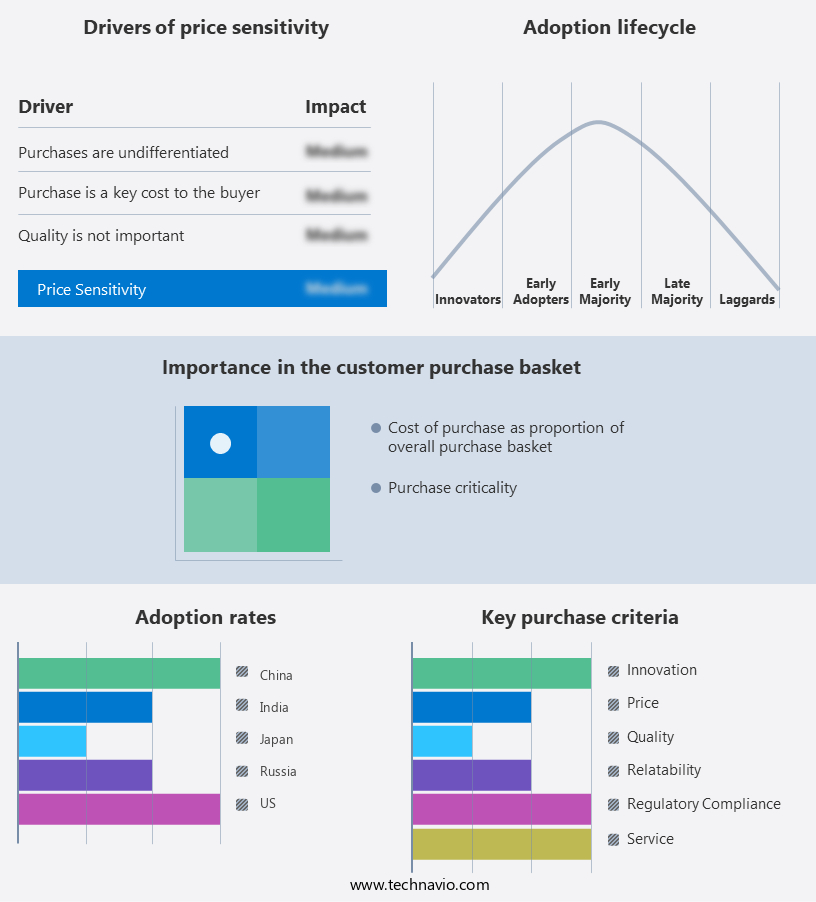
LNG Infrastructure Market Share by Geography

 Customer Landscape

Key Companies & Market Insights

Companies are implementing various strategies, such as strategic alliances, lng infrastructure market forecast, partnerships, mergers and acquisitions, geographical expansion, and product/service launches, to enhance their presence in the industry.

Bechtel Corp. - Bechtel Corporation is a leading global provider of integrated LNG infrastructure solutions. 

The industry research and growth report includes detailed analyses of the competitive landscape of the market and information about key companies, including:

  • Bechtel Corp.
  • Cheniere Energy Inc.
  • Chevron Corp.
  • Chiyoda Corp.
  • Exxon Mobil Corp.
  • Fluor Corp.
  • Gazprom Nedra LLC
  • INPEX Corp.
  • JGC Holdings Corp.
  • John Wood Group PLC
  • McDermott International Ltd.
  • NextDecade Corp.
  • Occidental Petroleum Corp.
  • PAO NOVATEK
  • PETRONAS Chemicals Group Berhad
  • Shell plc
  • Saipem S.p.A.
  • Sempra Energy
  • Steelhead LNG Corp.

Qualitative and quantitative analysis of companies has been conducted to help clients understand the wider business environment as well as the strengths and weaknesses of key industry players. Data is qualitatively analyzed to categorize companies as pure play, category-focused, industry-focused, and diversified; it is quantitatively analyzed to categorize companies as dominant, leading, strong, tentative, and weak.

Recent Development and News in LNG Infrastructure Market

  • In January 2024, Shell and Qatar Petroleum announced a strategic partnership to develop a new LNG liquefaction train in Qatar, expanding the Ras Laffan Industrial City's production capacity by 6.4 million metric tons per annum (mtpa) (Shell press release, 2024).
  • In March 2024, Tellurian Inc. secured a significant investment of USD 1.5 billion from TotalEnergies to support the development of its Driftwood LNG project in Louisiana, USA (TotalEnergies press release, 2024).
  • In May 2024, the European Commission approved the Nord Stream 2 pipeline project, allowing the construction of the 1,222-kilometer pipeline from Russia to Germany to proceed (European Commission press release, 2024).
  • In April 2025, Siemens Energy and Baker Hughes announced a collaboration to develop a new, more efficient LNG liquefaction technology, combining Siemens Energy's expertise in power generation and Baker Hughes' experience in gas processing (Siemens Energy press release, 2025).

Research Analyst Overview

  • The market continues to evolve, with ongoing activities shaping its landscape. LNG facility automation and terminal automation are increasingly prioritized to enhance efficiency and reduce operational costs. Environmental regulations compliance is a significant focus, driving the adoption of risk assessment methodologies and methane slip reduction technologies. LNG transportation optimization and pipeline integrity are essential aspects of infrastructure development, with safety protocols and pipeline construction adhering to stringent standards. One example of market dynamics at play is the implementation of advanced regasification unit design and LNG custody transfer technologies, resulting in a 10% increase in regasification capacity for a major European terminal.
  • Industry growth is expected to reach 5% annually, with a strong emphasis on energy efficiency improvements, LNG infrastructure planning, and terminal expansion. Additionally, ongoing efforts in LNG pipeline construction, infrastructure maintenance, and upgrades prioritize pipeline safety standards and LNG distribution management. Cryogenic equipment maintenance and LNG infrastructure upgrades are crucial for ensuring optimal LNG storage and capacity expansion.

Dive into Technavio's robust research methodology, blending expert interviews, extensive data synthesis, and validated models for unparalleled LNG Infrastructure Market insights. See full methodology.

Market Scope

Report Coverage

Details

Page number

162

Base year

2023

Historic period

2018-2022

Forecast period

2024-2028

Growth momentum & CAGR

Accelerate at a CAGR of 6%

Market growth 2024-2028

USD 4668.5 million

Market structure

Fragmented

YoY growth 2023-2024(%)

5.6

Key countries

US, China, Japan, India, Russia, Canada, Germany, United Arab Emirates, Saudi Arabia, and Brazil

Competitive landscape

Leading Companies, Market Positioning of Companies, Competitive Strategies, and Industry Risks

Request Free Sample

What are the Key Data Covered in this LNG Infrastructure Market Research and Growth Report?

  • CAGR of the LNG Infrastructure industry during the forecast period
  • Detailed information on factors that will drive the growth and forecasting between 2024 and 2028
  • Precise estimation of the size of the market and its contribution of the industry in focus to the parent market
  • Accurate predictions about upcoming growth and trends and changes in consumer behaviour
  • Growth of the market across North America, APAC, Europe, Middle East and Africa, and South America
  • Thorough analysis of the market's competitive landscape and detailed information about companies
  • Comprehensive analysis of factors that will challenge the lng infrastructure market growth of industry companies

We can help! Our analysts can customize this lng infrastructure market research report to meet your requirements.

Get in touch

1 Executive Summary

  • 1.1 Market overview
    • Executive Summary - Chart on Market Overview
    • Executive Summary - Data Table on Market Overview
    • Executive Summary - Chart on Global Market Characteristics
    • Executive Summary - Chart on Market by Geography
    • Executive Summary - Chart on Market Segmentation by Type
    • Executive Summary - Chart on Incremental Growth
    • Executive Summary - Data Table on Incremental Growth
    • Executive Summary - Chart on Company Market Positioning

2 Technavio Analysis

  • 2.1 Analysis of price sensitivity, lifecycle, customer purchase basket, adoption rates, and purchase criteria
    • Analysis of price sensitivity, lifecycle, customer purchase basket, adoption rates, and purchase criteria
  • 2.2 Criticality of inputs and Factors of differentiation
    • Overview on criticality of inputs and factors of differentiation
  • 2.3 Factors of disruption
    • Overview on factors of disruption
  • 2.4 Impact of drivers and challenges
    • Impact of drivers and challenges in 2023 and 2028

3 Market Landscape

  • 3.1 Market ecosystem
    • Parent Market
    • Data Table on - Parent Market
  • 3.2 Market characteristics
    • Market characteristics analysis
  • 3.3 Value chain analysis
    • Value Chain Analysis

4 Market Sizing

  • 4.1 Market definition
    • Offerings of companies included in the market definition
  • 4.2 Market segment analysis
    • Market segments
  • 4.3 Market size 2023
    • 4.4 Market outlook: Forecast for 2023-2028
      • Chart on Global - Market size and forecast 2023-2028 ($ million)
      • Data Table on Global - Market size and forecast 2023-2028 ($ million)
      • Chart on Global Market: Year-over-year growth 2023-2028 (%)
      • Data Table on Global Market: Year-over-year growth 2023-2028 (%)

    5 Historic Market Size

    • 5.1 Global LNG Infrastructure Market 2018 - 2022
      • Historic Market Size - Data Table on Global LNG Infrastructure Market 2018 - 2022 ($ million)
    • 5.2 Type segment analysis 2018 - 2022
      • Historic Market Size - Type Segment 2018 - 2022 ($ million)
    • 5.3 Geography segment analysis 2018 - 2022
      • Historic Market Size - Geography Segment 2018 - 2022 ($ million)
    • 5.4 Country segment analysis 2018 - 2022
      • Historic Market Size - Country Segment 2018 - 2022 ($ million)

    6 Five Forces Analysis

    • 6.1 Five forces summary
      • Five forces analysis - Comparison between 2023 and 2028
    • 6.2 Bargaining power of buyers
      • Bargaining power of buyers - Impact of key factors 2023 and 2028
    • 6.3 Bargaining power of suppliers
      • Bargaining power of suppliers - Impact of key factors in 2023 and 2028
    • 6.4 Threat of new entrants
      • Threat of new entrants - Impact of key factors in 2023 and 2028
    • 6.5 Threat of substitutes
      • Threat of substitutes - Impact of key factors in 2023 and 2028
    • 6.6 Threat of rivalry
      • Threat of rivalry - Impact of key factors in 2023 and 2028
    • 6.7 Market condition
      • Chart on Market condition - Five forces 2023 and 2028

    7 Market Segmentation by Type

    • 7.1 Market segments
      • Chart on Type - Market share 2023-2028 (%)
      • Data Table on Type - Market share 2023-2028 (%)
    • 7.2 Comparison by Type
      • Chart on Comparison by Type
      • Data Table on Comparison by Type
    • 7.3 Liquefaction terminal - Market size and forecast 2023-2028
      • Chart on Liquefaction terminal - Market size and forecast 2023-2028 ($ million)
      • Data Table on Liquefaction terminal - Market size and forecast 2023-2028 ($ million)
      • Chart on Liquefaction terminal - Year-over-year growth 2023-2028 (%)
      • Data Table on Liquefaction terminal - Year-over-year growth 2023-2028 (%)
    • 7.4 Regasification terminal - Market size and forecast 2023-2028
      • Chart on Regasification terminal - Market size and forecast 2023-2028 ($ million)
      • Data Table on Regasification terminal - Market size and forecast 2023-2028 ($ million)
      • Chart on Regasification terminal - Year-over-year growth 2023-2028 (%)
      • Data Table on Regasification terminal - Year-over-year growth 2023-2028 (%)
    • 7.5 Market opportunity by Type
      • Market opportunity by Type ($ million)
      • Data Table on Market opportunity by Type ($ million)

    8 Customer Landscape

    • 8.1 Customer landscape overview
      • Analysis of price sensitivity, lifecycle, customer purchase basket, adoption rates, and purchase criteria

    9 Geographic Landscape

    • 9.1 Geographic segmentation
      • Chart on Market share by geography 2023-2028 (%)
      • Data Table on Market share by geography 2023-2028 (%)
    • 9.2 Geographic comparison
      • Chart on Geographic comparison
      • Data Table on Geographic comparison
    • 9.3 North America - Market size and forecast 2023-2028
      • Chart on North America - Market size and forecast 2023-2028 ($ million)
      • Data Table on North America - Market size and forecast 2023-2028 ($ million)
      • Chart on North America - Year-over-year growth 2023-2028 (%)
      • Data Table on North America - Year-over-year growth 2023-2028 (%)
    • 9.4 APAC - Market size and forecast 2023-2028
      • Chart on APAC - Market size and forecast 2023-2028 ($ million)
      • Data Table on APAC - Market size and forecast 2023-2028 ($ million)
      • Chart on APAC - Year-over-year growth 2023-2028 (%)
      • Data Table on APAC - Year-over-year growth 2023-2028 (%)
    • 9.5 Europe - Market size and forecast 2023-2028
      • Chart on Europe - Market size and forecast 2023-2028 ($ million)
      • Data Table on Europe - Market size and forecast 2023-2028 ($ million)
      • Chart on Europe - Year-over-year growth 2023-2028 (%)
      • Data Table on Europe - Year-over-year growth 2023-2028 (%)
    • 9.6 Middle East and Africa - Market size and forecast 2023-2028
      • Chart on Middle East and Africa - Market size and forecast 2023-2028 ($ million)
      • Data Table on Middle East and Africa - Market size and forecast 2023-2028 ($ million)
      • Chart on Middle East and Africa - Year-over-year growth 2023-2028 (%)
      • Data Table on Middle East and Africa - Year-over-year growth 2023-2028 (%)
    • 9.7 South America - Market size and forecast 2023-2028
      • Chart on South America - Market size and forecast 2023-2028 ($ million)
      • Data Table on South America - Market size and forecast 2023-2028 ($ million)
      • Chart on South America - Year-over-year growth 2023-2028 (%)
      • Data Table on South America - Year-over-year growth 2023-2028 (%)
    • 9.8 US - Market size and forecast 2023-2028
      • Chart on US - Market size and forecast 2023-2028 ($ million)
      • Data Table on US - Market size and forecast 2023-2028 ($ million)
      • Chart on US - Year-over-year growth 2023-2028 (%)
      • Data Table on US - Year-over-year growth 2023-2028 (%)
    • 9.9 China - Market size and forecast 2023-2028
      • Chart on China - Market size and forecast 2023-2028 ($ million)
      • Data Table on China - Market size and forecast 2023-2028 ($ million)
      • Chart on China - Year-over-year growth 2023-2028 (%)
      • Data Table on China - Year-over-year growth 2023-2028 (%)
    • 9.10 Japan - Market size and forecast 2023-2028
      • Chart on Japan - Market size and forecast 2023-2028 ($ million)
      • Data Table on Japan - Market size and forecast 2023-2028 ($ million)
      • Chart on Japan - Year-over-year growth 2023-2028 (%)
      • Data Table on Japan - Year-over-year growth 2023-2028 (%)
    • 9.11 India - Market size and forecast 2023-2028
      • Chart on India - Market size and forecast 2023-2028 ($ million)
      • Data Table on India - Market size and forecast 2023-2028 ($ million)
      • Chart on India - Year-over-year growth 2023-2028 (%)
      • Data Table on India - Year-over-year growth 2023-2028 (%)
    • 9.12 Russia - Market size and forecast 2023-2028
      • Chart on Russia - Market size and forecast 2023-2028 ($ million)
      • Data Table on Russia - Market size and forecast 2023-2028 ($ million)
      • Chart on Russia - Year-over-year growth 2023-2028 (%)
      • Data Table on Russia - Year-over-year growth 2023-2028 (%)
    • 9.13 Canada - Market size and forecast 2023-2028
      • Chart on Canada - Market size and forecast 2023-2028 ($ million)
      • Data Table on Canada - Market size and forecast 2023-2028 ($ million)
      • Chart on Canada - Year-over-year growth 2023-2028 (%)
      • Data Table on Canada - Year-over-year growth 2023-2028 (%)
    • 9.14 Germany - Market size and forecast 2023-2028
      • Chart on Germany - Market size and forecast 2023-2028 ($ million)
      • Data Table on Germany - Market size and forecast 2023-2028 ($ million)
      • Chart on Germany - Year-over-year growth 2023-2028 (%)
      • Data Table on Germany - Year-over-year growth 2023-2028 (%)
    • 9.15 United Arab Emirates - Market size and forecast 2023-2028
      • Chart on United Arab Emirates - Market size and forecast 2023-2028 ($ million)
      • Data Table on United Arab Emirates - Market size and forecast 2023-2028 ($ million)
      • Chart on United Arab Emirates - Year-over-year growth 2023-2028 (%)
      • Data Table on United Arab Emirates - Year-over-year growth 2023-2028 (%)
    • 9.16 Saudi Arabia - Market size and forecast 2023-2028
      • Chart on Saudi Arabia - Market size and forecast 2023-2028 ($ million)
      • Data Table on Saudi Arabia - Market size and forecast 2023-2028 ($ million)
      • Chart on Saudi Arabia - Year-over-year growth 2023-2028 (%)
      • Data Table on Saudi Arabia - Year-over-year growth 2023-2028 (%)
    • 9.17 Brazil - Market size and forecast 2023-2028
      • Chart on Brazil - Market size and forecast 2023-2028 ($ million)
      • Data Table on Brazil - Market size and forecast 2023-2028 ($ million)
      • Chart on Brazil - Year-over-year growth 2023-2028 (%)
      • Data Table on Brazil - Year-over-year growth 2023-2028 (%)
    • 9.18 Market opportunity by geography
      • Market opportunity by geography ($ million)
      • Data Tables on Market opportunity by geography ($ million)

    10 Drivers, Challenges, and Opportunity/Restraints

    • 10.1 Market drivers
      • 10.2 Market challenges
        • 10.3 Impact of drivers and challenges
          • Impact of drivers and challenges in 2023 and 2028
        • 10.4 Market opportunities/restraints

          11 Competitive Landscape

          • 11.1 Overview
            • 11.2 Competitive Landscape
              • Overview on criticality of inputs and factors of differentiation
            • 11.3 Landscape disruption
              • Overview on factors of disruption
            • 11.4 Industry risks
              • Impact of key risks on business

            12 Competitive Analysis

            • 12.1 Companies profiled
              • Companies covered
            • 12.2 Company ranking index
              • Company ranking index
            • 12.3 Market positioning of companies
              • Matrix on companies position and classification
            • 12.4 Bechtel Corp.
              • Bechtel Corp. - Overview
              • Bechtel Corp. - Product / Service
              • Bechtel Corp. - Key news
              • Bechtel Corp. - Key offerings
              • SWOT
            • 12.5 Chiyoda Corp.
              • Chiyoda Corp. - Overview
              • Chiyoda Corp. - Business segments
              • Chiyoda Corp. - Key news
              • Chiyoda Corp. - Key offerings
              • Chiyoda Corp. - Segment focus
              • SWOT
            • 12.6 Exxon Mobil Corp.
              • Exxon Mobil Corp. - Overview
              • Exxon Mobil Corp. - Business segments
              • Exxon Mobil Corp. - Key news
              • Exxon Mobil Corp. - Key offerings
              • Exxon Mobil Corp. - Segment focus
              • SWOT
            • 12.7 Fluor Corp.
              • Fluor Corp. - Overview
              • Fluor Corp. - Business segments
              • Fluor Corp. - Key news
              • Fluor Corp. - Key offerings
              • Fluor Corp. - Segment focus
              • SWOT
            • 12.8 JGC Holdings Corp.
              • JGC Holdings Corp. - Overview
              • JGC Holdings Corp. - Business segments
              • JGC Holdings Corp. - Key offerings
              • JGC Holdings Corp. - Segment focus
              • SWOT
            • 12.9 John Wood Group PLC
              • John Wood Group PLC - Overview
              • John Wood Group PLC - Business segments
              • John Wood Group PLC - Key offerings
              • John Wood Group PLC - Segment focus
              • SWOT
            • 12.10 McDermott International Ltd.
              • McDermott International Ltd. - Overview
              • McDermott International Ltd. - Product / Service
              • McDermott International Ltd. - Key news
              • McDermott International Ltd. - Key offerings
              • SWOT
            • 12.11 Shell plc
              • Shell plc - Overview
              • Shell plc - Business segments
              • Shell plc - Key news
              • Shell plc - Key offerings
              • Shell plc - Segment focus
              • SWOT
            • 12.12 Saipem S.p.A.
              • Saipem S.p.A. - Overview
              • Saipem S.p.A. - Business segments
              • Saipem S.p.A. - Key offerings
              • Saipem S.p.A. - Segment focus
              • SWOT
            • 12.13 Sempra Energy
              • Sempra Energy - Overview
              • Sempra Energy - Product / Service
              • Sempra Energy - Key offerings
              • SWOT

            13 Appendix

            • 13.1 Scope of the report
              • 13.2 Inclusions and exclusions checklist
                • Inclusions checklist
                • Exclusions checklist
              • 13.3 Currency conversion rates for US$
                • Currency conversion rates for US$
              • 13.4 Research methodology
                • Research methodology
              • 13.5 Data procurement
                • Information sources
              • 13.6 Data validation
                • Data validation
              • 13.7 Validation techniques employed for market sizing
                • Validation techniques employed for market sizing
              • 13.8 Data synthesis
                • Data synthesis
              • 13.9 360 degree market analysis
                • 360 degree market analysis
              • 13.10 List of abbreviations
                • List of abbreviations

              Research Methodology

              Technavio presents a detailed picture of the market by way of study, synthesis, and summation of data from multiple sources. The analysts have presented the various facets of the market with a particular focus on identifying the key industry influencers. The data thus presented is comprehensive, reliable, and the result of extensive research, both primary and secondary.

              INFORMATION SOURCES

              Primary sources

              • Manufacturers and suppliers
              • Channel partners
              • Industry experts
              • Strategic decision makers

              Secondary sources

              • Industry journals and periodicals
              • Government data
              • Financial reports of key industry players
              • Historical data
              • Press releases

              DATA ANALYSIS

              Data Synthesis

              • Collation of data
              • Estimation of key figures
              • Analysis of derived insights

              Data Validation

              • Triangulation with data models
              • Reference against proprietary databases
              • Corroboration with industry experts

              REPORT WRITING

              Qualitative

              • Market drivers
              • Market challenges
              • Market trends
              • Five forces analysis

              Quantitative

              • Market size and forecast
              • Market segmentation
              • Geographical insights
              • Competitive landscape

              Interested in this report?

              Get your sample now to see our research methodology and insights!

              Download Now

              Frequently Asked Questions

              LNG Infrastructure market growth will increase by $ 4668.5 mn during 2024-2028.

              The LNG Infrastructure market is expected to grow at a CAGR of 6% during 2024-2028.

              LNG Infrastructure market is segmented by Type( Liquefaction terminal, Regasification terminal)

              Bechtel Corp., Cheniere Energy Inc., Chevron Corp., Chiyoda Corp., Exxon Mobil Corp., Fluor Corp., Gazprom Nedra LLC, INPEX Corp., JGC Holdings Corp., John Wood Group PLC, McDermott International Ltd., NextDecade Corp., Occidental Petroleum Corp., PAO NOVATEK, PETRONAS Chemicals Group Berhad, Shell plc, Saipem S.p.A., Sempra Energy, Steelhead LNG Corp. are a few of the key vendors in the LNG Infrastructure market.

              North America will register the highest growth rate of 42% among the other regions. Therefore, the LNG Infrastructure market in North America is expected to garner significant business opportunities for the vendors during the forecast period.

              US, China, Japan, India, Russia, Canada, Germany, United Arab Emirates, Saudi Arabia, Brazil

              • Rise in demand for cleaner fuelsAccording to the World Bank is the driving factor this market.
              • by 2050 is the driving factor this market.
              • the global population is expected to rise to 10 billion. Additionally is the driving factor this market.
              • as per the IEA is the driving factor this market.
              • the demand for energy is expected to increase by 30% in 2040 over that of 2015 due to the global population growth and industrial development in emerging economies such as China and India.Oil and coal were the major sources of energy to meet the demand in residential is the driving factor this market.
              • commercial is the driving factor this market.
              • industrial is the driving factor this market.
              • and transportation applications is the driving factor this market.
              • which resulted in a significant increase in the emissions of carbon dioxide (CO2) and other GHGs. According to the IEA is the driving factor this market.
              • in 2023 is the driving factor this market.
              • global energy-related CO2 emissions increased by 1.1% after witnessing consecutive years of decline in CO2 emissions globally in 2022.Various regulations are being enforced globally to reduce emissions. For instance is the driving factor this market.
              • the Climate Change Act is the driving factor this market.
              • which was introduced in 2008 in the EU is the driving factor this market.
              • aims at reducing carbon emissions. This act aims to reduce GHG emissions by 80% by 2050 over the GHG emissions levels in 1990.The popularity of natural gas is growing as concerns over environmental pollution also increase. Natural gas is regarded as the cleanest fossil fuel compared with other fossil fuels as it releases the lowest amount of CO2 on combustion is the driving factor this market.
              • thereby having the smallest environmental impact among fossil fuels. Thus is the driving factor this market.
              • globally is the driving factor this market.
              • the demand for natural gas is increasing to meet the growing demand for energy.The environmental advantages of natural gas are leading to its increasing use in place of coal in various applications. As a result is the driving factor this market.
              • coal-fired power plants are being replaced with gas-fired power plants in China is the driving factor this market.
              • mainly to improve air quality. Similarly is the driving factor this market.
              • in the US is the driving factor this market.
              • natural gas is less expensive than other fuels such as coal. Hence is the driving factor this market.
              • the use of natural gas has led to a significant reduction in carbon emissions. According to the US EIA is the driving factor this market.
              • natural gas-fired power plants accounted for 40% of the total production of electricity in the US in 2020 is the driving factor this market.
              • which is expected to reach 43% by 2025. Hence is the driving factor this market.
              • the demand for natural gas is expected to increase owing to the demand for cleaner fuels is the driving factor this market.
              • which is the driving factor this market.
              • in turn is the driving factor this market.
              • will positively impact the growth of the global LNG infrastructure market during the forecast period. is the driving factor this market.

              The LNG Infrastructure market vendors should focus on grabbing business opportunities from the Liquefaction terminal segment as it accounted for the largest market share in the base year.