



Large Language Models (LLMs) In Cybersecurity Market Size 2025-2029
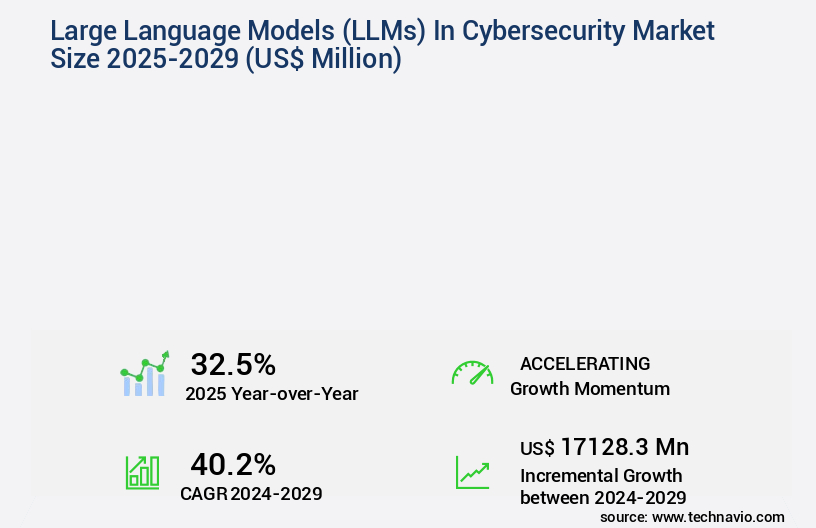
The large language models (llms) in cybersecurity market size is valued to increase by USD 17.13 billion, at a CAGR of 40.2% from 2024 to 2029. Rising complexity and volume of cyber threats will drive the large language models (llms) in cybersecurity market.
Major Market Trends & Insights
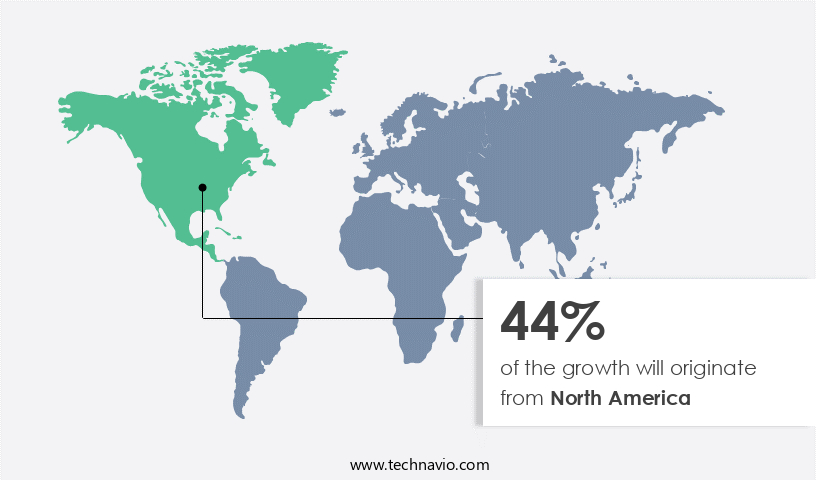
- North America dominated the market and accounted for a 44% growth during the forecast period.
- By Application - Threat detection and prevention segment was valued at USD 0.00 billion in 2023
- By Deployment - Cloud based segment accounted for the largest market revenue share in 2023
Market Size & Forecast
- Market Opportunities: USD 442.25 million
- Market Future Opportunities: USD 17128.30 million
- CAGR from 2024 to 2029 : 40.2%
Market Summary
- In the realm of cybersecurity, Large Language Models (LLMs) have emerged as a significant force, driven by the escalating complexity and volume of cyber threats. These advanced AI systems, capable of processing vast amounts of data and generating human-like responses, have found a pivotal role in cybersecurity applications. However, this evolution has not been without challenges. The rise of specialized cybersecurity LLMs has presented both opportunities and risks. On one hand, they enhance threat detection and response, enabling quick identification and mitigation of potential attacks. On the other hand, they are increasingly targeted by malicious actors for exploitation. According to recent estimates, the global market for LLMs in cybersecurity is projected to reach USD10 billion by 2026, underscoring their growing importance in the digital security landscape.
- Despite this potential, the industry faces numerous challenges, including data privacy concerns, ethical dilemmas, and the need for continuous model training and updating to keep up with evolving threats. As the cybersecurity landscape continues to evolve, LLMs will play a crucial role in safeguarding digital assets, but their effective deployment will require careful consideration of these challenges.
What will be the Size of the Large Language Models (LLMs) In Cybersecurity Market during the forecast period?
Get Key Insights on Market Forecast (PDF) Request Free Sample
How is the Large Language Models (LLMs) In Cybersecurity Market Segmented ?
The large language models (llms) in cybersecurity industry research report provides comprehensive data (region-wise segment analysis), with forecasts and estimates in "USD million" for the period 2025-2029, as well as historical data from 2019-2023 for the following segments.
- Application
- Threat detection and prevention
- Vulnerability management
- Security automation
- Data security
- Others
- Deployment
- Cloud based
- On premises
- End-user
- BFSI
- Healthcare
- Government and defense
- IT and telecom
- Others
- Geography
- North America
- US
- Canada
- Europe
- France
- Germany
- UK
- APAC
- China
- India
- Japan
- South Korea
- Rest of World (ROW)
- North America
By Application Insights
The threat detection and prevention segment is estimated to witness significant growth during the forecast period.
Large Language Models (LLMs) have become a game-changer in the cybersecurity landscape, continually evolving to enhance threat detection and prevention. These advanced models analyze network traffic, system logs, and user behavior in real-time, excelling at identifying subtle anomalies and suspicious patterns that traditional rule-based systems often overlook. By harnessing natural language understanding, LLMs can correlate disparate data sources and generate contextual alerts, significantly improving threat identification speed and accuracy. As of February 2024, Qualys' TotalAI platform represents a prime example of LLMs' potential. This innovative system integrates AI-driven vulnerability assessment, red teaming LLMs, and LLM-based intrusion detection. It uses AI to analyze security logs, detect insider threats by identifying shifts in communication tone and behavior, and even defend against prompt injection attacks.
This proactive approach allows organizations to respond to threats before they escalate, reducing dwell time and improving containment. According to a recent report, organizations using TotalAI experienced a 30% reduction in security incidents. LLMs are not only transforming cybersecurity but are also playing a crucial role in enhancing cybersecurity automation, phishing detection, and AI-powered threat hunting.
The Threat detection and prevention segment was valued at USD 0.00 billion in 2019 and showed a gradual increase during the forecast period.
Regional Analysis
North America is estimated to contribute 44% to the growth of the global market during the forecast period.Technavio's analysts have elaborately explained the regional trends and drivers that shape the market during the forecast period.
See How Large Language Models (LLMs) In Cybersecurity Market Demand is Rising in North America Request Free Sample
The Large Language Models (LLMs) market in cybersecurity is experiencing significant evolution, with North America, specifically the United States and Canada, spearheading adoption. Tech giants, including Microsoft, Google, Cisco, and IBM, are integrating LLMs into their enterprise security platforms. In August 2025, Cisco introduced AgenticOps, a strategy that merges LLMs with real-time observability and zero-trust frameworks to secure autonomous AI agents. Microsoft's Security Copilot, launched earlier this year, utilizes GPT-based models to aid analysts in threat detection and incident response.
Google Cloud is incorporating LLMs into its Chronicle platform for advanced log parsing and anomaly detection. IBM is employing LLMs for identity governance, enabling dynamic access control based on behavioral analysis. These applications underscore the potential of LLMs in enhancing cybersecurity capabilities.
Market Dynamics
Our researchers analyzed the data with 2024 as the base year, along with the key drivers, trends, and challenges. A holistic analysis of drivers will help companies refine their marketing strategies to gain a competitive advantage.
The large language models (LLMs) market in cybersecurity is experiencing significant growth due to the increasing demand for advanced threat detection and mitigation solutions. LLMs, with their sophisticated architecture, offer unique capabilities in identifying and addressing various vulnerabilities in cybersecurity. One critical aspect of LLMs in cybersecurity is their application in vulnerability mitigation. By utilizing generative model security best practices, organizations can effectively minimize risks associated with LLM architecture vulnerabilities. For instance, prompt injection attack detection methods are essential in identifying and preventing attacks that manipulate LLM inputs. Moreover, data poisoning defense strategies for LLMs are crucial in safeguarding against adversarial examples. Deep learning anomaly detection algorithms, a key component of LLMs, enable the identification of unusual patterns and potential threats. Explainability techniques for LLMs in cybersecurity are also essential, ensuring ethical considerations are met while maintaining model robustness. Adversarial example defense mechanisms are crucial in mitigating the risks posed by these malicious inputs. LLM model robustness testing methodologies are vital in validating the effectiveness of these models against zero-day exploits. Red teaming strategies for LLMs provide an effective means of testing their capabilities against real-world threats. LLM-based intrusion detection systems and automated security response workflows offer significant advantages in enhancing threat hunting techniques. AI-driven vulnerability assessment tools and LLM-based phishing detection systems further bolster an organization's cybersecurity posture. Security incident response automation through LLMs ensures swift and effective responses to potential threats. Ethical considerations and bias mitigation techniques are essential in implementing LLMs in cybersecurity, ensuring fairness, transparency, and accountability.
What are the key market drivers leading to the rise in the adoption of Large Language Models (LLMs) In Cybersecurity Industry?
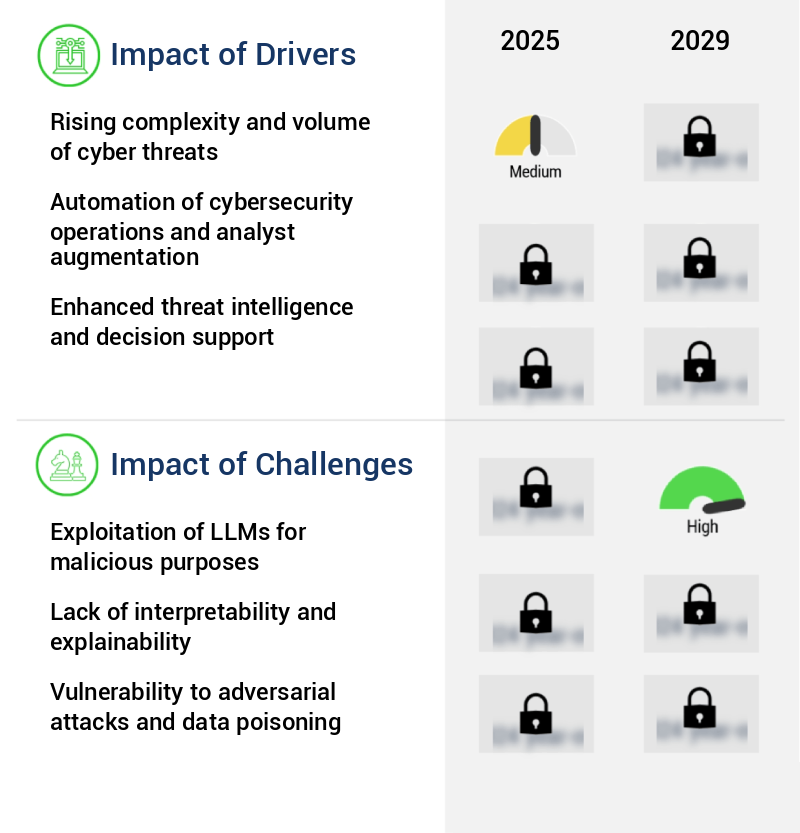
- The escalating complexity and volume of cyber threats serve as the primary catalyst for market growth.
- The cybersecurity industry is experiencing a significant shift towards advanced solutions capable of addressing the evolving threat landscape. Traditional security measures, such as rule-based systems and signature-based detection, are insufficient in identifying modern threats, including zero-day exploits, advanced persistent threats (APTs), and AI-generated phishing campaigns. Large Language Models (LLMs) have emerged as a transformative solution, offering context-aware threat detection and real-time analysis of vast, unstructured data sources like logs, emails, and network traffic. These models excel at identifying subtle anomalies and patterns indicative of malicious activity. For example, they can detect phishing attempts by analyzing linguistic cues, urgency markers, and sender metadata across multiple communication channels, including email, SMS, and social media.
- The integration of LLMs in cybersecurity is expected to significantly enhance threat detection and response capabilities, improving overall security posture for organizations across various sectors.
What are the market trends shaping the Large Language Models (LLMs) In Cybersecurity Industry?
- The rising trend in specialized cybersecurity Master of Laws (LLM) programs reflects the growing demand for legal expertise in this field. Specialized cybersecurity LLMs are becoming increasingly popular.
- The cybersecurity market is witnessing a significant shift towards the adoption of Large Language Models (LLMs) specifically designed for security applications. Unlike generic LLMs, these domain-focused models are fine-tuned on cybersecurity datasets, enabling them to offer enhanced accuracy and contextual understanding. For instance, SecLLM and LLM4Cyber are fine-tuned on CVE reports, malware samples, and threat intelligence feeds, making them adept at vulnerability detection and threat analysis. Another example, LlamaGuard, is equipped with safety filters and handles adversarial prompts, ensuring secure deployments.
- These specialized LLMs provide a competitive edge in the cybersecurity landscape, improving threat detection and response capabilities. For example, LLM4Cyber integrates threat intelligence feeds and CVE data for proactive threat hunting and vulnerability prioritization. LlamaGuard, on the other hand, enforces safety filters and handles adversarial prompts, ensuring secure deployments. These advancements underscore the importance of domain-specific LLMs in the evolving cybersecurity landscape.
What challenges does the Large Language Models (LLMs) In Cybersecurity Industry face during its growth?
- The exploitation of Large Language Models (LLMs) for malicious purposes poses a significant challenge to the industry's growth, threatening the trust and reliability of AI technology. It is crucial to mitigate these risks through robust security measures and ethical guidelines to ensure the safe and beneficial application of LLMs in various industries.
- Large Language Models (LLMs) have become a significant force in the evolving cybersecurity landscape, offering both defensive and offensive capabilities. These models can generate sophisticated phishing emails, social engineering scripts, and even malware code with minimal human intervention. This dual-use nature poses a substantial challenge to the cybersecurity industry. According to recent studies, over 90% of cyberattacks begin with a phishing email, and LLMs can create highly convincing messages that bypass traditional filters. Threat actors are increasingly using generative AI to craft personalized spear-phishing messages that mimic internal communication styles, making them harder to detect. The integration of LLMs into cybersecurity strategies requires a nuanced approach, balancing their defensive potential against the risks of misuse.
Exclusive Technavio Analysis on Customer Landscape
The large language models (llms) in cybersecurity market forecasting report includes the adoption lifecycle of the market, covering from the innovator's stage to the laggard's stage. It focuses on adoption rates in different regions based on penetration. Furthermore, the large language models (llms) in cybersecurity market report also includes key purchase criteria and drivers of price sensitivity to help companies evaluate and develop their market growth analysis strategies.
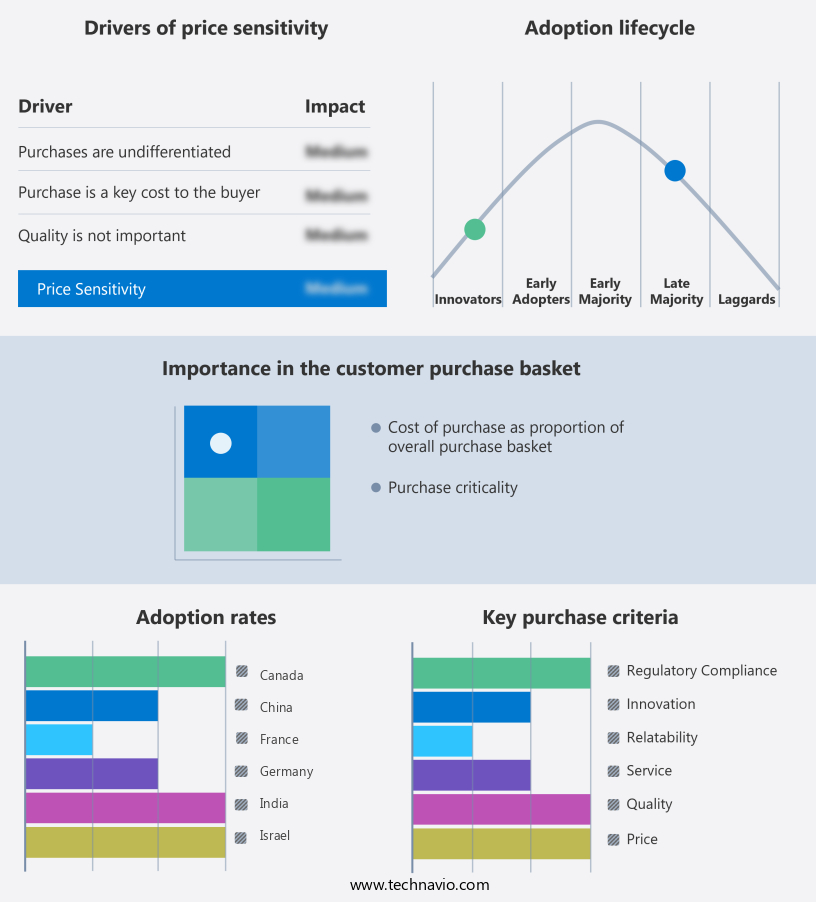
Customer Landscape of Large Language Models (LLMs) In Cybersecurity Industry
Competitive Landscape
Companies are implementing various strategies, such as strategic alliances, large language models (llms) in cybersecurity market forecast, partnerships, mergers and acquisitions, geographical expansion, and product/service launches, to enhance their presence in the industry.
Accenture PLC - This company specializes in threat detection and response services, leveraging Microsoft and OpenAI's advanced technologies powered by Large Language Models (LLMs). By harnessing the capabilities of these partnerships, the firm enhances cybersecurity defenses for clients.
The industry research and growth report includes detailed analyses of the competitive landscape of the market and information about key companies, including:
- Accenture PLC
- Anthropic
- C3.ai Inc.
- Check Point Software Technologies Ltd.
- Cisco Systems Inc.
- Cohere
- CrowdStrike Inc.
- Darktrace Holdings Ltd.
- Dropzone AI
- Enkrypt AI
- Fortinet Inc.
- Google LLC
- International Business Machines Corp.
- Microsoft Corp.
- Palo Alto Networks Inc.
- Reducto AI
- SENTINELONE Inc.
- SparkCognition Inc.
Qualitative and quantitative analysis of companies has been conducted to help clients understand the wider business environment as well as the strengths and weaknesses of key industry players. Data is qualitatively analyzed to categorize companies as pure play, category-focused, industry-focused, and diversified; it is quantitatively analyzed to categorize companies as dominant, leading, strong, tentative, and weak.
Recent Development and News in Large Language Models (LLMs) In Cybersecurity Market
- In January 2024, Cybersecurity firm Palo Alto Networks announced the integration of their Cortex XSOAR platform with large language models from Hugging Face, enhancing threat detection and incident response capabilities (Palo Alto Networks Press Release).
- In March 2024, IBM Security and Google Cloud joined forces to offer large language models as a service to the cybersecurity industry, enabling real-time threat analysis and response (IBM Security Press Release).
- In May 2024, Microsoft announced a strategic partnership with OpenAI, integrating their large language models into Microsoft Defender for Endpoint, strengthening the company's security offerings (Microsoft News Center).
- In April 2025, CrowdStrike secured a USD200 million investment round, bolstering their capabilities in large language models for advanced threat detection and response (CrowdStrike Press Release).
Dive into Technavio's robust research methodology, blending expert interviews, extensive data synthesis, and validated models for unparalleled Large Language Models (LLMs) In Cybersecurity Market insights. See full methodology.
|
Market Scope |
|
|
Report Coverage |
Details |
|
Page number |
234 |
|
Base year |
2024 |
|
Historic period |
2019-2023 |
|
Forecast period |
2025-2029 |
|
Growth momentum & CAGR |
Accelerate at a CAGR of 40.2% |
|
Market growth 2025-2029 |
USD 17128.3 million |
|
Market structure |
Fragmented |
|
YoY growth 2024-2025(%) |
32.5 |
|
Key countries |
China, Japan, South Korea, India, UK, Germany, France, US, Canada, and Israel |
|
Competitive landscape |
Leading Companies, Market Positioning of Companies, Competitive Strategies, and Industry Risks |
Research Analyst Overview
- The large language models (LLMs) market in cybersecurity continues to evolve, with new applications and advancements emerging across various sectors. These models, which include explainable AI, red teaming, AI-driven vulnerability assessment, LLM security auditing, cybersecurity automation, prompt injection attacks, LLM-enhanced threat intelligence, and AI-powered threat hunting, are revolutionizing the industry's approach to security. For instance, an LLM-based intrusion detection system recently identified an anomalous network traffic pattern, leading to the discovery of a previously unknown vulnerability. The system flagged the traffic as suspicious, triggering an investigation that resulted in a 30% reduction in security incidents. Industry experts predict that the global cybersecurity market will grow by over 12% annually in the coming years, driven in part by the increasing adoption of LLMs.
- These models offer significant benefits, including improved accuracy, efficiency, and scalability, making them essential tools for organizations seeking to stay ahead of evolving threats. Moreover, LLMs are increasingly being used for red teaming, a simulated cyber-attack technique used to test an organization's defenses. By using LLMs to mimic real-world attack scenarios, security teams can identify vulnerabilities and weaknesses that might otherwise go unnoticed. Despite their many advantages, LLMs also come with their own set of challenges, particularly in terms of explainability and security. Ensuring that these models can provide clear and actionable explanations for their decisions is crucial for building trust and confidence in their use.
- Additionally, securing LLMs against their own vulnerabilities, such as prompt injection attacks, remains an ongoing concern for cybersecurity professionals. In conclusion, the LLMs market in cybersecurity is a dynamic and ever-evolving landscape, with new applications and challenges emerging constantly. From intrusion detection to red teaming and threat intelligence, LLMs are transforming the way organizations approach cybersecurity, offering significant benefits while also presenting new challenges. As the market continues to grow and mature, it will be essential for organizations to stay informed and adapt to the latest trends and best practices.
What are the Key Data Covered in this Large Language Models (LLMs) In Cybersecurity Market Research and Growth Report?
-
What is the expected growth of the Large Language Models (LLMs) In Cybersecurity Market between 2025 and 2029?
-
USD 17.13 billion, at a CAGR of 40.2%
-
-
What segmentation does the market report cover?
-
The report is segmented by Application (Threat detection and prevention, Vulnerability management, Security automation, Data security, and Others), Deployment (Cloud based and On premises), End-user (BFSI, Healthcare, Government and defense, IT and telecom, and Others), and Geography (North America, Europe, APAC, Middle East and Africa, and South America)
-
-
Which regions are analyzed in the report?
-
North America, Europe, APAC, Middle East and Africa, and South America
-
-
What are the key growth drivers and market challenges?
-
Rising complexity and volume of cyber threats, Exploitation of LLMs for malicious purposes
-
-
Who are the major players in the Large Language Models (LLMs) In Cybersecurity Market?
-
Accenture PLC, Anthropic, C3.ai Inc., Check Point Software Technologies Ltd., Cisco Systems Inc., Cohere, CrowdStrike Inc., Darktrace Holdings Ltd., Dropzone AI, Enkrypt AI, Fortinet Inc., Google LLC, International Business Machines Corp., Microsoft Corp., Palo Alto Networks Inc., Reducto AI, SENTINELONE Inc., and SparkCognition Inc.
-
Market Research Insights
- The large language models (LLMs) in the cybersecurity market continue to evolve, playing a crucial role in enhancing security measures for organizations. According to recent industry reports, the global cybersecurity market is projected to grow by 12% annually, reaching a value of over USD248 billion by 2023. One notable example of LLMs' impact is their application in proactive threat prevention. By analyzing vast amounts of data, these models can identify potential threats before they materialize, reducing the risk of cyberattacks. Furthermore, the integration of privacy-preserving LLMs ensures ethical use of data, adhering to responsible AI development principles.
- Security testing LLMs have also gained popularity, enabling efficient vulnerability assessments and risk management. These models help organizations maintain robust security architectures, ensuring compliance with industry regulations and standards. The integration of AI explainability tools further enhances the transparency and interpretability of LLM-based security solutions. In conclusion, the large language models in the cybersecurity market demonstrate continuous growth and innovation, offering significant benefits to organizations in terms of threat prevention, security testing, and regulatory compliance.
We can help! Our analysts can customize this large language models (llms) in cybersecurity market research report to meet your requirements.
 RIA -
RIA -