


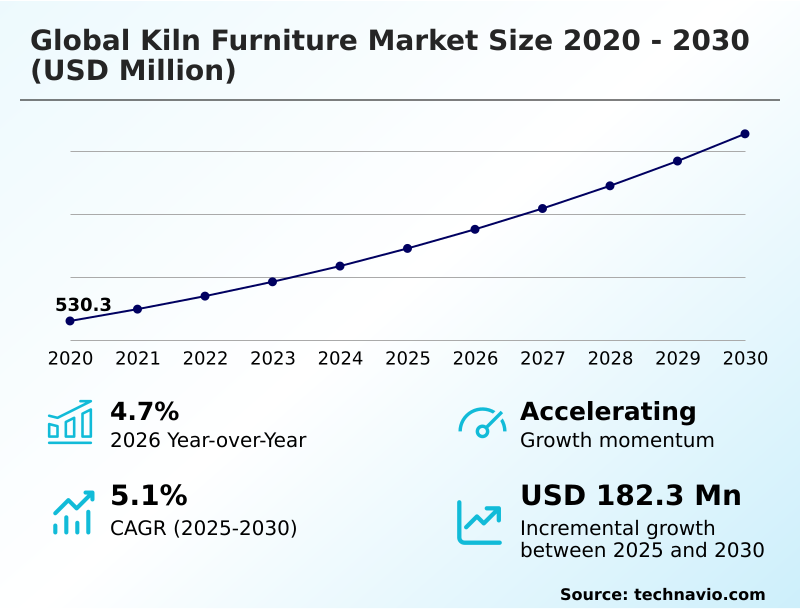
Kiln Furniture Market Size 2026-2030
The kiln furniture market size is valued to increase by USD 182.3 million, at a CAGR of 5.1% from 2025 to 2030. Increasing adoption of ceramic products in residential and commercial decor will drive the kiln furniture market.
Major Market Trends & Insights
- North America dominated the market and accounted for a 38.9% growth during the forecast period.
- By Application - Ceramic industry segment was valued at USD 259 million in 2024
- By Distribution Channel - Offline segment accounted for the largest market revenue share in 2024
Market Size & Forecast
- Market Opportunities: USD 297.7 million
- Market Future Opportunities: USD 182.3 million
- CAGR from 2025 to 2030 : 5.1%
Market Summary
- The kiln furniture market is undergoing a significant transformation driven by dual pressures from high-tech manufacturing expansion and industrial decarbonization goals. A key driver is the rising demand from sectors like electric vehicle battery production and semiconductor fabrication, which require advanced components like high-purity setters for semiconductor firing and specialized refractory saggars.
- This necessitates materials with exceptional thermal shock resistance and chemical inertness to ensure high yields. A major trend is the focus on lightweight kiln furniture energy savings, with manufacturers adopting low thermal mass refractory supports to reduce energy consumption and shorten firing cycle times.
- For instance, a facility optimizing its industrial kiln operations with lightweight kiln furniture can reduce energy costs by over 15% per cycle. However, the industry faces challenges from volatile raw material prices for refractory ceramics and the high capital expenditure for adopting automated kiln furniture systems.
- Balancing the need for high-performance, custom kiln furniture for medical implants or aerospace parts with production costs remains a central strategic consideration for market participants.
What will be the Size of the Kiln Furniture Market during the forecast period?
Get Key Insights on Market Forecast (PDF) Request Free Sample
How is the Kiln Furniture Market Segmented?
The kiln furniture industry research report provides comprehensive data (region-wise segment analysis), with forecasts and estimates in "USD million" for the period 2026-2030, as well as historical data from 2020-2024 for the following segments.
- Application
- Ceramic industry
- Electronics industry
- Automotive
- Others
- Distribution channel
- Offline
- Online
- Product type
- Shelves
- Posts and pillars
- Tubes and setters
- Others
- Geography
- North America
- US
- Canada
- Mexico
- Europe
- Germany
- UK
- France
- APAC
- China
- Japan
- India
- South America
- Brazil
- Argentina
- Colombia
- Middle East and Africa
- Saudi Arabia
- UAE
- South Africa
- Rest of World (ROW)
- North America
By Application Insights
The ceramic industry segment is estimated to witness significant growth during the forecast period.
The ceramic industry segment remains the largest consumer, driven by the need for durable advanced refractory materials.
Products like silicon carbide kiln furniture are favored for their superior thermal shock resistance and high-modulus of rupture, crucial for demanding industrial kiln operations. The segment is also seeing increased use of high-purity zirconia in applications requiring zero-contamination environments.
Effective thermal processing of materials relies on precise thermal uniformity control, a factor that has led to a 20% reduction in product defects for adopters of advanced systems.
This emphasis on quality aligns with industrial energy efficiency mandates and enhances refractory lifecycle management, supporting overall supply chain security.
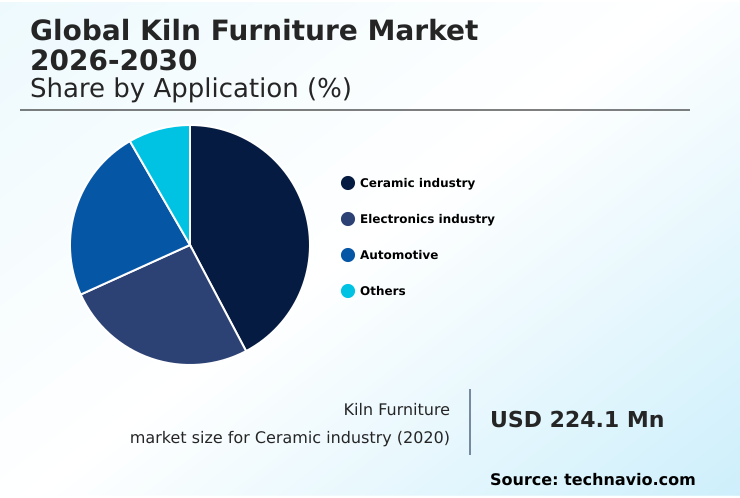
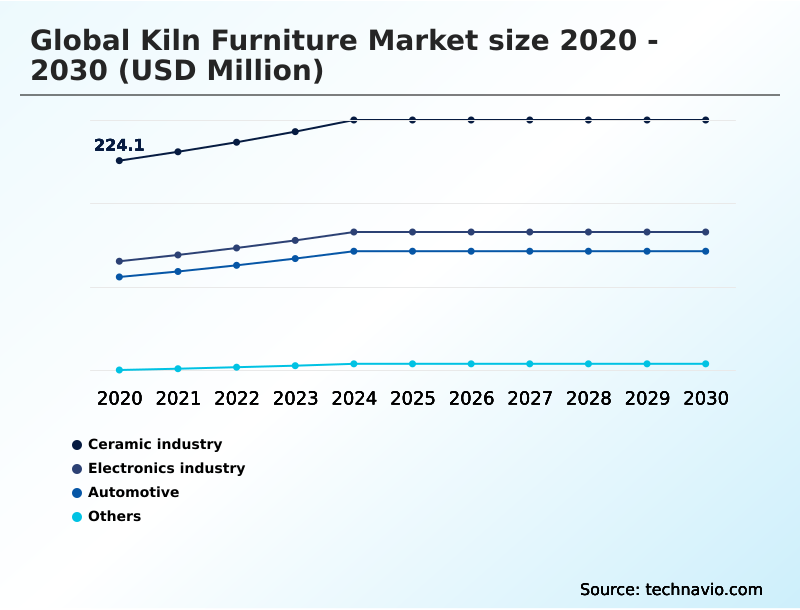
The Ceramic industry segment was valued at USD 259 million in 2024 and showed a gradual increase during the forecast period.
Regional Analysis
North America is estimated to contribute 38.9% to the growth of the global market during the forecast period.Technavio’s analysts have elaborately explained the regional trends and drivers that shape the market during the forecast period.
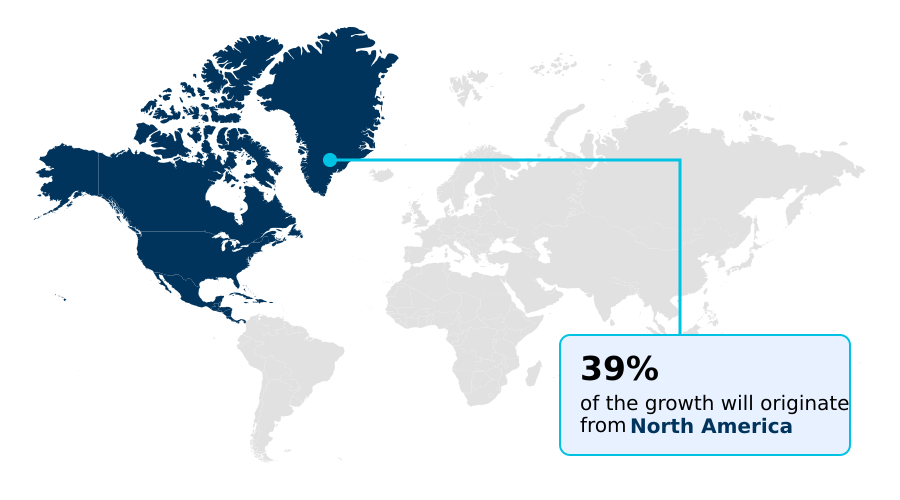
See How Kiln Furniture Market Demand is Rising in North America Request Free Sample
The geographic landscape is shifting, with North America and APAC emerging as key growth centers. In APAC, massive ceramic industry applications drive demand for structural kiln furniture and innovations in kiln car construction, improving load-bearing efficiency.
The region accounts for over 45% of global tile production. In North America, the focus is on kiln fleet modernization for high-tech sectors, including precision glass processing and high-temperature superalloy processing.
This requires high-purity alumina components and advanced designs like hollow-section posts to optimize the payload-to-furniture ratio.
Such firing process optimization enhances output in critical areas like advanced chip packaging and other industrial firing processes, with some facilities reporting a 15% reduction in cycle times.
Market Dynamics
Our researchers analyzed the data with 2025 as the base year, along with the key drivers, trends, and challenges. A holistic analysis of drivers will help companies refine their marketing strategies to gain a competitive advantage.
- Strategic decision-making in the market is increasingly focused on specialized applications and operational efficiency. The process of optimizing kiln furniture for battery materials, for instance, has become a critical competitive differentiator, particularly with the rise of kiln furniture for solid-state battery manufacturing.
- Companies are evaluating cordierite vs silicon carbide cost-benefit to achieve lightweight kiln furniture energy savings and reducing firing cycle times with low-mass furniture. The goal is to improve the payload-to-furniture ratio in kilns, a key metric for automation in kiln loading and unloading.
- In high-tech sectors, the demand for high-purity setters for semiconductor firing and advanced ceramics for aerospace components is driving innovation. Similarly, the healthcare industry requires custom kiln furniture for medical implants and zirconia furniture for dental ceramic firing, where managing thermal shock in ceramic production is paramount.
- The sustainability agenda is also pushing new frontiers, with research into refractory materials for hydrogen-based steelmaking and refractory solutions for direct lithium extraction. Effective lifecycle management of kiln consumables and a focus on sustainable materials in kiln furniture design are becoming standard.
- This has led some firms to standardize on high-strength posts for automated stacking and nitride-bonded SiC for precision firing to improve controlling thermal uniformity in large kilns, which can reduce product rejection rates by more than 10% compared to legacy systems. This is particularly crucial for kiln furniture for large format tile production.
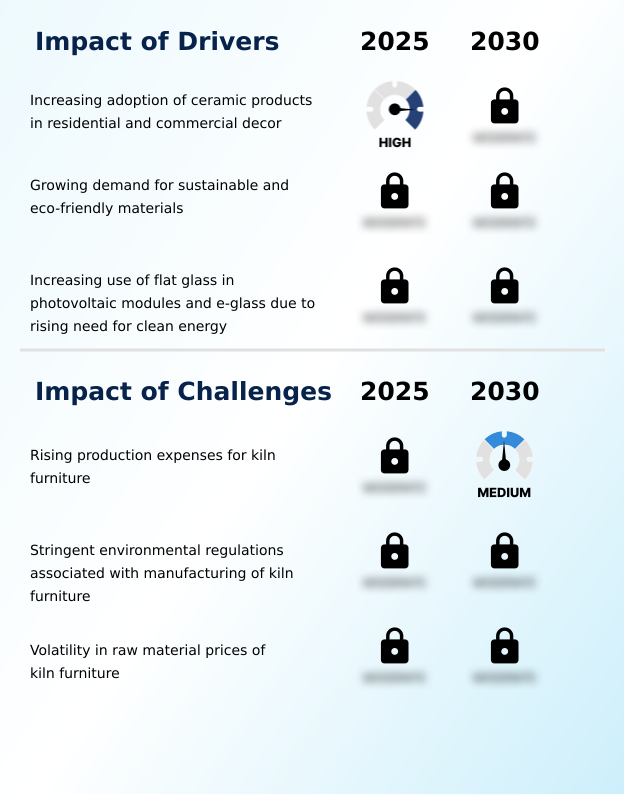
What are the key market drivers leading to the rise in the adoption of Kiln Furniture Industry?
- The growing adoption of ceramic products in residential and commercial decor is a key driver for the market's growth.
- The push for industrial decarbonization is a primary market driver, compelling the adoption of green manufacturing solutions and innovative kiln firing technologies.
- Industries are increasingly utilizing low thermal mass refractory supports and materials like recrystallized silicon carbide to reduce energy consumption during high-temperature sintering processes, achieving energy savings of over 20%.
- The expansion of automated kiln furniture systems with features like interlocking post designs supports automated handling systems and enhances operational efficiency.
- Furthermore, demand is surging for specialized components like direct lithium extraction ceramics and those used for cathode active material calcination, which must exhibit superior hot strength retention. These trends align with circular economy principles, promoting sustainability across manufacturing.
What are the market trends shaping the Kiln Furniture Industry?
- The increasing demand for advanced ceramics is a significant upcoming trend. This is expected to influence industrial manufacturing processes by requiring materials with superior performance in extreme conditions.
- Technological advancements are reshaping the industry, with a strong focus on advanced material sciences and thermal management strategies. The adoption of advanced technical ceramics, such as nitride-bonded silicon carbide and ceramic matrix composites, is accelerating to meet demands for higher performance.
- Innovations in lightweight kiln furniture and ceramic rollers and setters are enabling fast-firing cycles, which improves throughput by up to 25%. Manufacturers are also developing custom-engineered ceramic plates from materials like high-purity fused silica to maintain stability under precise kiln atmosphere controls.
- This shift enhances the performance of kiln consumables and addresses supply chain security by extending component lifecycles, reducing replacement frequency by 15%.
What challenges does the Kiln Furniture Industry face during its growth?
- Rising production expenses for kiln furniture represent a primary challenge, potentially affecting the industry's growth prospects.
- Volatility in raw material pricing presents a significant challenge, impacting the cost of refractory ceramics and essential refractory binders and additives. This creates production hurdles for standard products like cordierite kiln furniture, mullite batts, and refractory saggars. While demand for energy-efficient kiln designs and reusable kiln furniture systems is high, manufacturers face a 10% rise in input costs, squeezing margins.
- Adhering to stringent material purity standards and meeting complex dimensional stability requirements for custom refractory shapes becomes more difficult. Even with advancements in cordierite-mullite compositions and refractory waste recycling initiatives, ensuring consistent refractory product durability remains a primary concern for operators.
Exclusive Technavio Analysis on Customer Landscape
The kiln furniture market forecasting report includes the adoption lifecycle of the market, covering from the innovator’s stage to the laggard’s stage. It focuses on adoption rates in different regions based on penetration. Furthermore, the kiln furniture market report also includes key purchase criteria and drivers of price sensitivity to help companies evaluate and develop their market growth analysis strategies.
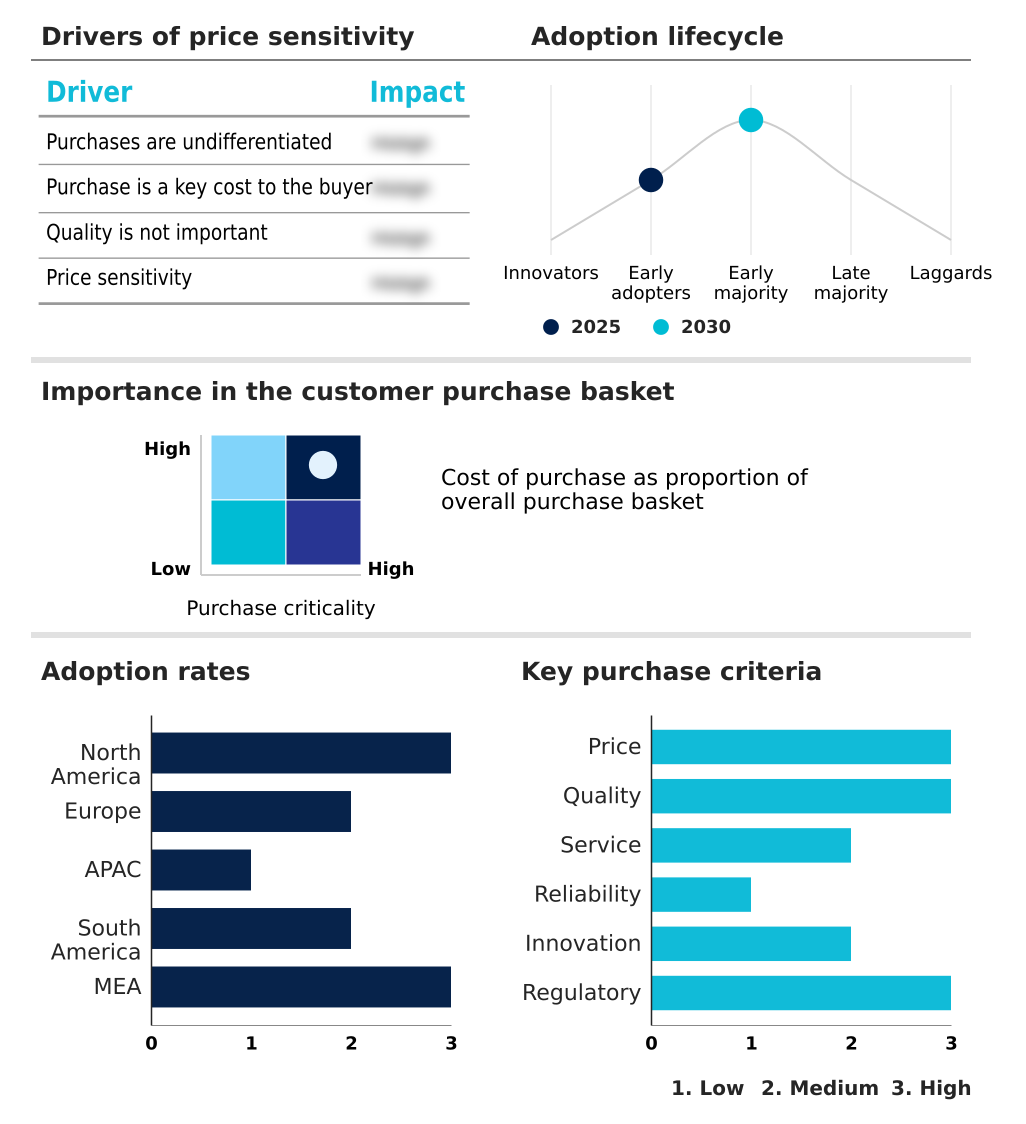
Customer Landscape of Kiln Furniture Industry
Competitive Landscape
Companies are implementing various strategies, such as strategic alliances, kiln furniture market forecast, partnerships, mergers and acquisitions, geographical expansion, and product/service launches, to enhance their presence in the industry.
Anderman and Co. Ltd. - Delivers high-performance refractory solutions, including custom-engineered ceramic components, designed for enhanced thermal stability and durability in demanding industrial firing processes.
The industry research and growth report includes detailed analyses of the competitive landscape of the market and information about key companies, including:
- Anderman and Co. Ltd.
- Applied Ceramics
- Compagnie de Saint Gobain SA
- Duratec Technical Co. Ltd.
- Imerys S.A.
- IPS Ceramics Ltd.
- NGK Insulators Ltd.
- Potclays Ltd.
- Refratechnik Holding
- Resco Products Inc.
- Schunk GmbH
- Shandong Robert New Co. Ltd.
- Silcarb Recrystallized Pvt. Ltd.
- Steuler Holding GmbH
- TechCeramic Co. Ltd.
- The Pottery Supply House
Qualitative and quantitative analysis of companies has been conducted to help clients understand the wider business environment as well as the strengths and weaknesses of key industry players. Data is qualitatively analyzed to categorize companies as pure play, category-focused, industry-focused, and diversified; it is quantitatively analyzed to categorize companies as dominant, leading, strong, tentative, and weak.
Recent Development and News in Kiln furniture market
- In April, 2025, Toyota commenced commercial production at its new battery manufacturing plant in North Carolina, increasing demand for high-purity saggars and setters for thermal processing of battery materials.
- In May, 2025, Saint-Gobain Performance Ceramics and Refractories showcased its advanced range of saggers and rollers designed for lithium-ion battery cathode active material processing at a major industry event.
- In January, 2025, Kyocera Corp. announced a strategic initiative to divest non-core businesses to focus resources on its semiconductor-related operations, driving demand for high-precision kiln furniture.
- In November, 2025, Saint-Gobain Ceramics announced a strategic partnership with Eurodia Industrie to deliver integrated material solutions for Direct Lithium Extraction (DLE), utilizing durable ceramic filtration and thermal processing units.
Dive into Technavio’s robust research methodology, blending expert interviews, extensive data synthesis, and validated models for unparalleled Kiln Furniture Market insights. See full methodology.
| Market Scope | |
|---|---|
| Page number | 290 |
| Base year | 2025 |
| Historic period | 2020-2024 |
| Forecast period | 2026-2030 |
| Growth momentum & CAGR | Accelerate at a CAGR of 5.1% |
| Market growth 2026-2030 | USD 182.3 million |
| Market structure | Fragmented |
| YoY growth 2025-2026(%) | 4.7% |
| Key countries | US, Canada, Mexico, Germany, UK, France, Italy, The Netherlands, Spain, China, Japan, India, South Korea, Australia, Indonesia, Brazil, Argentina, Colombia, Saudi Arabia, UAE, South Africa, Israel and Turkey |
| Competitive landscape | Leading Companies, Market Positioning of Companies, Competitive Strategies, and Industry Risks |
Research Analyst Overview
- The market is characterized by a rapid evolution in material science, with advanced technical ceramics becoming standard. Innovations in cordierite kiln furniture and silicon carbide kiln furniture are driven by the need for superior thermal shock resistance and hot strength retention.
- We see a pivot toward specialized materials like high-purity alumina, recrystallized silicon carbide, and nitride-bonded silicon carbide, especially for high-temperature sintering and precision glass processing. The adoption of low thermal mass refractory supports and lightweight kiln furniture is critical for creating energy-efficient kiln designs. In fact, some operators have achieved a 15% reduction in cycle times.
- Key components like refractory saggars, mullite batts, and ceramic rollers and setters are being redesigned, alongside interlocking post designs and hollow-section posts for automated kiln furniture systems. This optimization of kiln car construction and structural kiln furniture is essential.
- The development of ceramic matrix composites, high-purity fused silica, and high-purity zirconia supports demanding applications like direct lithium extraction ceramics and high-temperature superalloy processing, ensuring precise thermal uniformity control in industrial kiln operations and improving load-bearing efficiency.
- The market for cordierite-mullite compositions, custom-engineered ceramic plates, advanced refractory materials, and refractory binders and additives is also expanding to support this complex thermal processing of materials.
What are the Key Data Covered in this Kiln Furniture Market Research and Growth Report?
-
What is the expected growth of the Kiln Furniture Market between 2026 and 2030?
-
USD 182.3 million, at a CAGR of 5.1%
-
-
What segmentation does the market report cover?
-
The report is segmented by Application (Ceramic industry, Electronics industry, Automotive, and Others), Distribution Channel (Offline, and Online), Product Type (Shelves, Posts and pillars, Tubes and setters, and Others) and Geography (North America, Europe, APAC, South America, Middle East and Africa)
-
-
Which regions are analyzed in the report?
-
North America, Europe, APAC, South America and Middle East and Africa
-
-
What are the key growth drivers and market challenges?
-
Increasing adoption of ceramic products in residential and commercial decor, Rising production expenses for kiln furniture
-
-
Who are the major players in the Kiln Furniture Market?
-
Anderman and Co. Ltd., Applied Ceramics, Compagnie de Saint Gobain SA, Duratec Technical Co. Ltd., Imerys S.A., IPS Ceramics Ltd., NGK Insulators Ltd., Potclays Ltd., Refratechnik Holding, Resco Products Inc., Schunk GmbH, Shandong Robert New Co. Ltd., Silcarb Recrystallized Pvt. Ltd., Steuler Holding GmbH, TechCeramic Co. Ltd. and The Pottery Supply House
-
Market Research Insights
- The market's dynamics are shaped by a strategic focus on enhancing refractory product durability and optimizing firing process optimization. The adoption of advanced thermal management strategies has enabled some manufacturers to reduce energy consumption by up to 20%, directly improving operational margins.
- Furthermore, the implementation of proactive refractory lifecycle management programs has extended the service life of kiln consumables by 30%, minimizing downtime. As industries pivot toward green manufacturing solutions, the demand for reusable kiln furniture systems grows.
- This shift supports industrial energy efficiency mandates and strengthens supply chain security by reducing dependence on new raw materials, aligning with broader industrial decarbonization objectives.
We can help! Our analysts can customize this kiln furniture market research report to meet your requirements.