



Infrastructure As A Service (IaaS) Market Size 2025-2029
The infrastructure as a service (IaaS) market size is forecast to increase by USD 424.6 billion at a CAGR of 33% between 2024 and 2029.
- The market is experiencing significant growth, driven primarily by the shift from capital expenditure (CAPEX) to operational expenditure (OPEX) models and the increasing demand for cloud-based applications. This transition allows businesses to reduce upfront costs and invest in core competencies, while IaaS providers manage their IT infrastructure. However, the market faces challenges, including regulatory hurdles impacting adoption in certain industries and supply chain inconsistencies that can temper growth potential. Additionally, the rise of cloud computing has led to an increased focus on data security, as the number of data breaches continues to grow. This trend is driven by the flexibility and cost savings offered by cloud computing services, which enable businesses to manage their IT spending more efficiently.
- Companies seeking to capitalize on market opportunities must prioritize regulatory compliance and invest in robust security measures to mitigate risks and maintain customer trust. Navigating these challenges effectively will require strategic planning and a deep understanding of the evolving IaaS landscape.
What will be the Size of the Infrastructure As A Service (IaaS) Market during the forecast period?
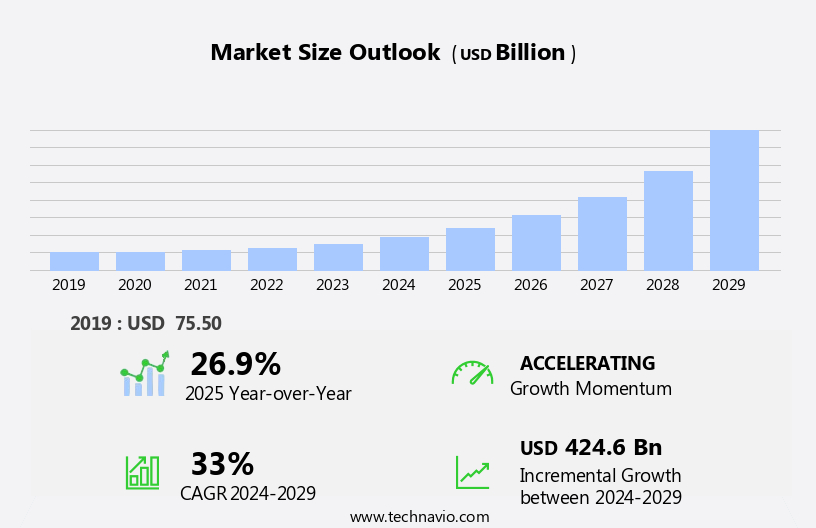
- In the dynamic cloud market, businesses increasingly adopt and deploy cloud infrastructure to optimize operations and reduce costs. Cloud infrastructure architecture evolves, with a focus on security, automation, and orchestration. Cloud infrastructure providers offer various solutions, including serverless platforms and container orchestration, to cater to diverse business needs. Cloud infrastructure management platforms enable monitoring, capacity planning, and cost management, ensuring optimal performance and efficiency. Cloud infrastructure trends include the integration of data governance and the future adoption of advanced technologies like artificial intelligence and machine learning. The increasing digitization of industries, such as IT & telecom and retail & e-commerce, is driving the demand for flexible and scalable IT infrastructure.
- Cloud infrastructure deployment and optimization remain key priorities for businesses, necessitating robust infrastructure design and provisioning strategies. Cloud service providers continue to innovate, offering automation tools and infrastructure services to streamline deployment and management. The cloud infrastructure landscape is constantly evolving, requiring businesses to stay informed and adapt to emerging trends and best practices. Simultaneously, hybrid cloud models, which combine both public and private cloud solutions, offer a balance between cost savings and security.
How is this Infrastructure As A Service (IaaS) Industry segmented?
The infrastructure as a service (IaaS) industry research report provides comprehensive data (region-wise segment analysis), with forecasts and estimates in "USD billion" for the period 2025-2029, as well as historical data from 2019-2023 for the following segments.
- Deployment
- Public cloud
- Private cloud
- Hybrid cloud
- End-user
- Large enterprises
- SMEs
- Application
- Managed hosting
- Storage as a service
- Disaster recovery as a service
- Compute as a service
- Others
- Geography
- North America
- US
- Canada
- Europe
- France
- Germany
- UK
- APAC
- China
- India
- Japan
- South Korea
- Rest of World (ROW)
- North America
By Deployment Insights
The public cloud segment is estimated to witness significant growth during the forecast period. The market is experiencing significant growth as businesses increasingly adopt cloud-based solutions for their IT needs. IaaS offerings, such as data warehousing, cloud transformation, and cloud security services, enable businesses to store, process, and secure their data in a flexible and scalable manner. Cloud analytics and machine learning capabilities offer valuable insights from big data, while hybrid cloud deployments provide the benefits of both on-premises infrastructure and cloud computing. Managed services, including network services and disaster recovery, ensure high availability and business continuity. Security services protect against cyber threats, while serverless computing and edge computing offer efficient and cost-effective solutions for running applications. Data security remains a top priority, with IaaS providers implementing advanced security measures to protect against cyberattacks and data breaches.
Virtual machines and infrastructure automation streamline IT operations, and private and public cloud options cater to various business requirements. Cloud adoption continues to grow due to its ability to support digital transformation, application modernization, and enterprise applications. Platform-as-a-Service (PaaS) and Software-as-a-Service (SaaS) offerings further extend the capabilities of IaaS, enabling businesses to build, deploy, and manage their applications in a cloud environment. Infrastructure cost optimization is a key consideration, with businesses seeking to maximize their return on investment. Cloud governance and multi-cloud strategies ensure compliance and efficient management of multiple cloud environments. API management and agile infrastructure enable seamless integration and rapid development. Data security remains a top priority, with IaaS providers implementing advanced security measures to protect against cyberattacks and data breaches.
The future of IaaS lies in its ability to support emerging technologies such as artificial intelligence, high availability, and cloud-enabled services. Infrastructure modernization and business intelligence applications further expand the potential of IaaS, making it an essential component of any IT strategy.
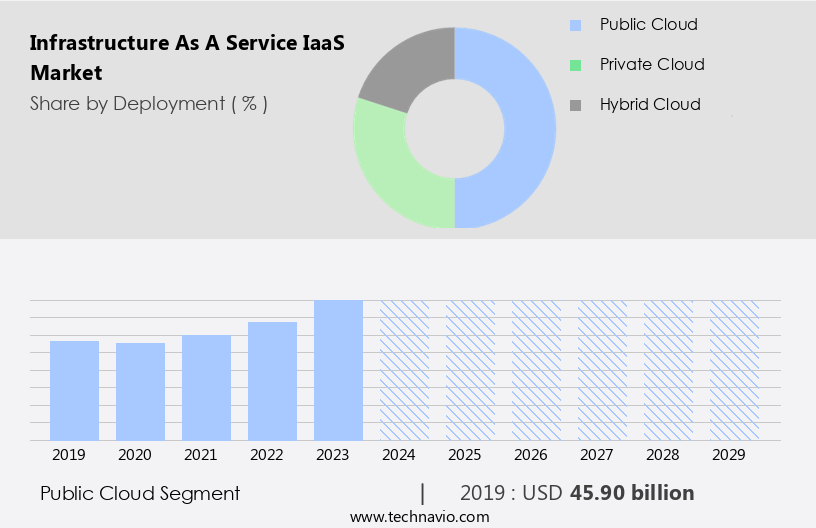
The Public cloud segment was valued at USD 45.90 billion in 2019 and showed a gradual increase during the forecast period. On-premises infrastructure is increasingly being replaced by cloud-native solutions, with hybrid cloud deployments gaining popularity for their ability to combine the benefits of both public and private clouds. Managed services, network services, and infrastructure automation further enhance the value proposition of IaaS. Businesses are modernizing their IT infrastructure through application modernization, enterprise applications, and cloud migration, while adopting multi-cloud strategies and api management for optimal flexibility and cost optimization. Infrastructure governance and cloud cost optimization are essential considerations for businesses to effectively manage their IaaS environments. Serverless computing, edge computing, and virtual machines are additional IaaS offerings catering to various use cases.
Regional Analysis
North America is estimated to contribute 36% to the growth of the global market during the forecast period. Technavio's analysts have elaborately explained the regional trends and drivers that shape the market during the forecast period.
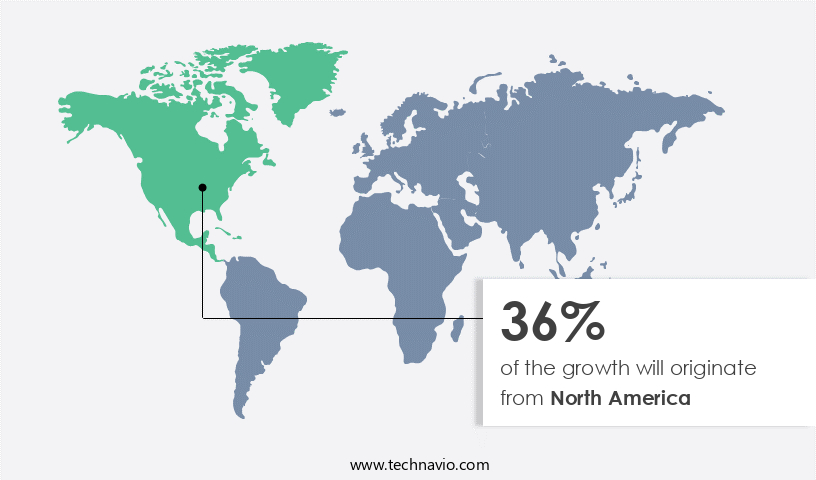
The market is witnessing significant growth, particularly in North America, which held the largest share in 2023. The in demand for cloud computing services, including data warehousing, cloud transformation, and cloud-based services, is driving the need for data centers and storage spaces. IaaS offers users the flexibility to scale compute resources as required, making it an attractive option for startups, small and medium enterprises, and businesses with temporary or experimental workloads. Cloud security, high availability, and disaster recovery solutions are crucial components of IaaS offerings, ensuring data privacy and business continuity. Cloud analytics, machine learning, and artificial intelligence are also integrated into IaaS platforms, enabling advanced data processing and insights. Overall, the IaaS market is evolving to meet the diverse needs of businesses, from data-intensive workloads to agile infrastructure and digital transformation initiatives.
Market Dynamics
Our researchers analyzed the data with 2024 as the base year, along with the key drivers, trends, and challenges. A holistic analysis of drivers will help companies refine their marketing strategies to gain a competitive advantage.
What are the Infrastructure As A Service (IaaS) market drivers leading to the rise in the adoption of Industry?
- Transitioning from a capital expenditure (CAPEX) model to an operational expenditure (OPEX) model is a significant market trend, as businesses increasingly seek to reduce upfront costs and shift to more flexible, pay-as-you-go spending models. This shift allows organizations to allocate resources more efficiently, respond more quickly to changing business needs, and improve overall financial agility. IaaS, or Infrastructure as a Service, is experiencing significant growth in various industries due to the shift from capital expenditure (CAPEX) to operational expenditure (OPEX) models. IaaS solutions offer a pay-per-use pricing structure, allowing clients to pay only for the resources they consume. This flexibility is a major advantage, enabling businesses to customize their infrastructure according to their unique requirements. Industrial clients can choose from a range of IaaS offerings, including data warehousing, cloud transformation, cloud security, cloud analytics, and managed services, among others. These services can help businesses optimize their IT budgets and improve operational efficiency.
- One of the primary benefits of IaaS is the elimination of upfront costs associated with on-premises infrastructure. With IaaS, there is no need for large capital investments in hardware, software, or data centers. Instead, businesses can access compute resources on demand, making it an affordable solution for enterprises. Moreover, IaaS solutions provide enhanced security features, ensuring data protection and compliance with industry regulations. Cloud-native services and cloud-based analytics are also gaining popularity, enabling businesses to process big data and gain valuable insights in real-time. Overall, IaaS is transforming the way businesses manage their IT infrastructure, offering flexibility, affordability, and scalability.
What are the Infrastructure As A Service (IaaS) market trends shaping the Industry?
- The increasing demand for cloud-based applications represents a significant market trend in the technology industry. Cloud applications offer numerous benefits, including scalability, flexibility, and cost savings, making them an attractive option for businesses and individuals alike. The market is witnessing significant growth due to the increasing adoption of cloud computing by organizations of all sizes. IaaS offers network services, virtual machines (VMs), storage services, and other IT infrastructure components over the internet, enabling businesses to reduce capital expenditures (CAPEX) and operate more efficiently. Hybrid cloud deployment is a popular trend, allowing companies to combine the benefits of on-premises and cloud environments. IaaS solutions provide disaster recovery capabilities, ensuring business continuity in case of unexpected downtime. Security services are also a crucial aspect, ensuring data privacy and protection. Moreover, the rise of serverless computing and edge computing is driving the market, as businesses seek to optimize their IT infrastructure and improve application performance.
- Cloud monitoring and IT modernization are other key drivers, as organizations aim to streamline their operations and enhance their digital capabilities. Software-as-a-Service (SaaS) and other cloud-based applications are increasingly being adopted, further fueling the demand for IaaS. Overall, the flexibility, scalability, and cost savings offered by IaaS make it an attractive option for businesses looking to modernize their IT infrastructure.
How does Infrastructure As A Service (IaaS) market faces challenges face during its growth?
- The escalating number of data breaches poses a significant threat to industry expansion, necessitating heightened security measures and robust response strategies. The market is experiencing significant growth in the application software industry due to the increasing demand for flexible, high availability, and agile infrastructure solutions. IaaS enables businesses to automate their infrastructure, deploy machine learning (ML) and artificial intelligence (AI) applications, and implement multi-cloud strategies with API management. However, this market faces significant challenges, particularly in ensuring cloud governance and security. Data breaches, caused by vulnerabilities such as XSS, XSRF, and SQL injections, pose a serious threat to customer data in a shared database infrastructure.
- To mitigate these risks, businesses must prioritize security measures, including encryption, access control, and regular vulnerability assessments. Furthermore, the adoption of IaaS is a crucial aspect of digital transformation, enabling application modernization and the integration of advanced technologies like ML and AI.
Exclusive Customer Landscape
The infrastructure as a service (IaaS) market forecasting report includes the adoption lifecycle of the market, covering from the innovator's stage to the laggard's stage. It focuses on adoption rates in different regions based on penetration. Furthermore, the infrastructure as a service (IaaS) market report also includes key purchase criteria and drivers of price sensitivity to help companies evaluate and develop their market growth analysis strategies.
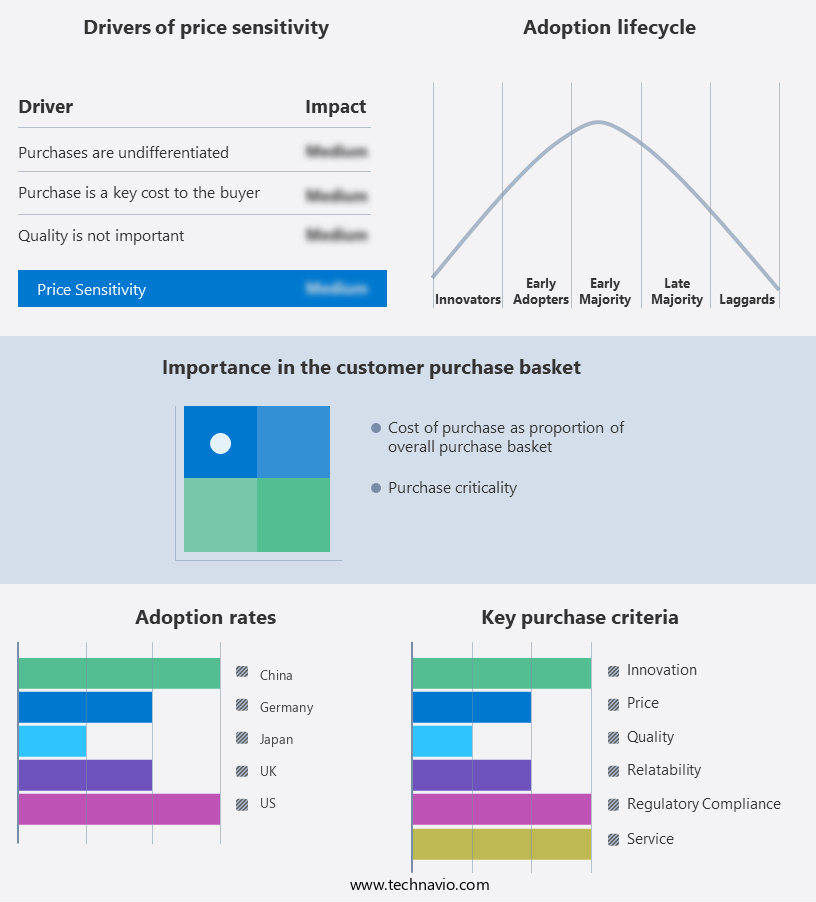
Customer Landscape
Key Companies & Market Insights
Companies are implementing various strategies, such as strategic alliances, infrastructure as a service (IaaS) market forecast, partnerships, mergers and acquisitions, geographical expansion, and product/service launches, to enhance their presence in the industry.
11 11 Systems Inc. - The company delivers Infrastructure-as-a-Service solutions, encompassing 11 11 IaaS. This service empowers businesses by providing essential IT infrastructure components on-demand, enabling them to focus on core operations.
The industry research and growth report includes detailed analyses of the competitive landscape of the market and information about key companies, including:
- 11 11 Systems Inc.
- Akamai Technologies Inc.
- Alibaba Group Holding Ltd.
- Alphabet Inc.
- Amazon.com Inc.
- AT and T Inc.
- Cisco Systems Inc.
- Datacom Group Ltd.
- Dell Technologies Inc.
- DigitalOcean Holdings Inc.
- Fujitsu Ltd.
- HCL Technologies Ltd.
- Hewlett Packard Enterprise Co.
- International Business Machines Corp.
- Microsoft Corp.
- Nippon Telegraph and Telephone Corp.
- Oracle Corp.
- Rackspace Technology Inc.
- Redcentric plc
- VMware Inc.
Qualitative and quantitative analysis of companies has been conducted to help clients understand the wider business environment as well as the strengths and weaknesses of key industry players. Data is qualitatively analyzed to categorize companies as pure play, category-focused, industry-focused, and diversified; it is quantitatively analyzed to categorize companies as dominant, leading, strong, tentative, and weak.
Recent Development and News in Infrastructure As A Service (IaaS) Market
- In the realm of Infrastructure as a Service (IaaS), the technology landscape has witnessed several pivotal developments during the years 2024 and 2025. Here are the most significant shifts:
- 1. In February 2024, Amazon Web Services (AWS) announced the launch of its new IaaS offering, "Outposts," which allows businesses to run AWS services on-premises, extending the cloud experience to their own data centers (Amazon Web Services, 2024). This strategic move enabled AWS to cater to the growing demand for hybrid cloud solutions.
- 2. Microsoft Azure and Google Cloud Platform (GCP) formed a strategic partnership in May 2024, allowing Azure customers to easily migrate and run their workloads on GCP (Microsoft, 2024). This collaboration aimed to provide more flexibility and choice for businesses in their cloud journey.
- 3. IBM secured a strategic acquisition of Red Hat in October 2024 for approximately USD34 billion (IBM, 2024). This acquisition significantly expanded IBM's IaaS offerings, particularly in the open-source space, and positioned IBM as a major player in the cloud market.
- 4. In January 2025, Alibaba Cloud, the cloud computing arm of Alibaba Group, announced the opening of its first data center in the United States, marking its entry into the North American market (Alibaba Group, 2025). This expansion allowed Alibaba Cloud to cater to the growing demand for cloud services in the region and compete with major global players.
Research Analyst Overview
Infrastructure as a Service (IaaS) continues to be a dynamic and evolving market, with various sectors adopting this technology to meet their unique business needs. IaaS offers a range of services, including network services, hybrid cloud deployment, disaster recovery, security services, serverless computing, edge computing, virtual machines (VMs), data privacy, cloud monitoring, IT modernization, storage services, and Software-as-a-Service (SaaS). Network services enable organizations to build and manage their network infrastructure in the cloud, ensuring high availability and scalability. Hybrid cloud deployment allows businesses to combine on-premises infrastructure with cloud-based services, providing flexibility and cost savings. Disaster recovery solutions offer businesses the ability to quickly recover from unexpected disruptions, while security services ensure data privacy and protection.
Serverless computing and edge computing are gaining popularity, with serverless computing allowing businesses to build and run applications without managing the underlying infrastructure, and edge computing bringing computation and data storage closer to the source of data. VM services offer businesses the ability to run their applications in a virtualized environment, while cloud monitoring helps organizations optimize their cloud usage and ensure performance. IT modernization and cloud adoption are driving the demand for IaaS, with businesses looking to transform their enterprise applications and adopt a multi-cloud strategy. Cloud cost optimization and cloud governance are also becoming essential, as organizations look to manage their cloud spend and ensure compliance. However, the increasing use of AI and big data in various industries is also driving the demand for IaaS.
The integration of machine learning (ML) and artificial intelligence (AI) into IaaS is also a significant trend, with businesses leveraging these technologies for data analytics and automation. Flexible infrastructure and API management are other important aspects of IaaS, enabling businesses to quickly and easily deploy and manage their applications. The continuous unfolding of market activities in the IaaS market underscores its importance in today's digital transformation landscape. Businesses across various sectors are adopting IaaS to modernize their infrastructure, optimize costs, and enhance their overall IT capabilities.
The Infrastructure As A Service (IaaS) Market is evolving rapidly, driven by advancements in cloud orchestration and cloud automation tools that streamline operations. The rise of the serverless platform enhances scalability, while cloud management platforms improve efficiency. Businesses prioritize cloud data governance and cloud cost management for regulatory compliance and financial optimization. Effective cloud performance management and cloud capacity planning ensure robust service delivery. Key areas like cloud infrastructure monitoring and cloud infrastructure security safeguard digital assets. Innovations in cloud infrastructure optimization, cloud infrastructure design, and cloud infrastructure provisioning support agile deployment. The focus on cloud infrastructure automation, cloud infrastructure services, and cloud infrastructure solutions accelerates cloud infrastructure adoption, shaping the cloud infrastructure future and defining the cloud infrastructure roadmap for sustainable growth.
Dive into Technavio's robust research methodology, blending expert interviews, extensive data synthesis, and validated models for unparalleled Infrastructure As A Service (IaaS) Market insights. See full methodology.
|
Market Scope |
|
|
Report Coverage |
Details |
|
Page number |
237 |
|
Base year |
2024 |
|
Historic period |
2019-2023 |
|
Forecast period |
2025-2029 |
|
Growth momentum & CAGR |
Accelerate at a CAGR of 33% |
|
Market growth 2025-2029 |
USD 424.6 billion |
|
Market structure |
Fragmented |
|
YoY growth 2024-2025(%) |
26.9 |
|
Key countries |
US, China, Japan, Canada, Germany, India, UK, Saudi Arabia, South Korea, and France |
|
Competitive landscape |
Leading Companies, Market Positioning of Companies, Competitive Strategies, and Industry Risks |
What are the Key Data Covered in this Infrastructure As A Service (IaaS) Market Research and Growth Report?
- CAGR of the Infrastructure As A Service (IaaS) industry during the forecast period
- Detailed information on factors that will drive the growth and forecasting between 2025 and 2029
- Precise estimation of the size of the market and its contribution of the industry in focus to the parent market
- Accurate predictions about upcoming growth and trends and changes in consumer behaviour
- Growth of the market across North America, APAC, Europe, South America, and Middle East and Africa
- Thorough analysis of the market's competitive landscape and detailed information about companies
- Comprehensive analysis of factors that will challenge the infrastructure as a service (IaaS) market growth of industry companies
We can help! Our analysts can customize this infrastructure as a service (IaaS) market research report to meet your requirements.
 RIA -
RIA -