
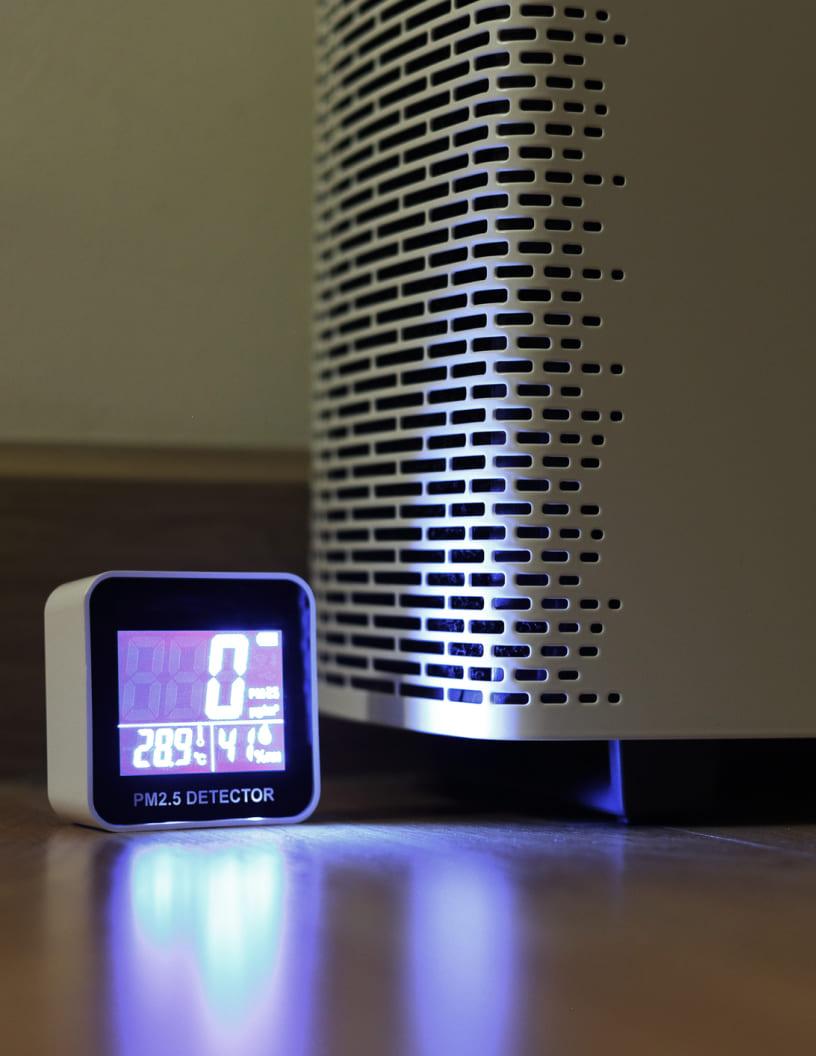


Indoor Air Quality Meters Market Size 2025-2029
The indoor air quality meters market size is valued to increase by USD 2.41 billion, at a CAGR of 8.7% from 2024 to 2029. Increased health concerns will drive the indoor air quality meters market.
Major Market Trends & Insights
- APAC dominated the market and accounted for a 30% growth during the forecast period.
- By Product - Fixed segment was valued at USD 1.99 billion in 2023
- By End-user - Government segment accounted for the largest market revenue share in 2023
Market Size & Forecast
- Market Opportunities: USD 111.67 million
- Market Future Opportunities: USD 2407.40 million
- CAGR from 2024 to 2029: 8.7%
Market Summary
- Indoor air quality (IAQ) has emerged as a critical concern for businesses and individuals alike, with growing recognition of its impact on health and productivity. The market for IAQ meters, which measure and monitor air quality parameters, has experienced significant expansion due to various factors. Firstly, heightened health consciousness has fueled the demand for IAQ meters. As people spend an average of 90% of their time indoors, the need to ensure clean and healthy indoor environments has become increasingly important. Secondly, the adoption of green buildings, which prioritize energy efficiency and occupant health, has accelerated the market's growth.
- Despite these drivers, there remains a lack of awareness regarding indoor air pollution and its potential health effects. This knowledge gap presents an opportunity for IAQ meter manufacturers to educate consumers and businesses about the benefits of monitoring indoor air quality. The global IAQ meters market was valued at USD 1.3 billion in 2020 and is projected to reach USD 2.1 billion by 2026. This expansion reflects the increasing recognition of the importance of maintaining healthy indoor environments and the role that IAQ meters play in achieving that goal.
- IAQ meters offer a range of functionalities, including real-time monitoring, data logging, and alerts for specific pollutants. These features enable businesses and individuals to proactively address indoor air quality issues and create healthier, more productive spaces. In conclusion, the market is poised for continued growth as health concerns, green building trends, and increasing awareness drive demand for solutions that ensure clean and healthy indoor environments.
What will be the Size of the Indoor Air Quality Meters Market during the forecast period?

Get Key Insights on Market Forecast (PDF) Request Free Sample
How is the Indoor Air Quality Meters Market Segmented ?
The indoor air quality meters industry research report provides comprehensive data (region-wise segment analysis), with forecasts and estimates in "USD million" for the period 2025-2029, as well as historical data from 2019-2023 for the following segments.
- Product
- Fixed
- Portable
- End-user
- Government
- Commercial and residential
- Energy and pharmaceuticals
- Others
- Technology
- Sensors
- Data logging
- Transmission technologies
- Geography
- North America
- US
- Canada
- Europe
- France
- Germany
- UK
- APAC
- China
- India
- Japan
- South Korea
- South America
- Brazil
- Rest of World (ROW)
- North America
By Product Insights
The fixed segment is estimated to witness significant growth during the forecast period.
The Indoor Air Quality (IAQ) Meters Market is experiencing continuous evolution, driven by growing awareness of the health risks associated with poor indoor environmental quality. This market encompasses a range of technologies, from gas detection sensors for volatile organic compounds (VOCs) and carbon dioxide, to humidity and temperature sensors, pressure sensors, and particle sensors. These devices enable real-time monitoring of airborne particle size, PM2.5 concentration, and filtration efficiency, ensuring regulatory compliance and maintaining optimal indoor air quality. Wireless connectivity, data visualization, and cloud-based platforms facilitate remote monitoring and data acquisition, while energy efficiency and data logging capabilities enhance their appeal.

The Fixed segment was valued at USD 1.99 billion in 2019 and showed a gradual increase during the forecast period.
Sensor accuracy, sensor lifespan, and calibration are essential considerations for maintaining the reliability of these systems. According to a recent study, indoor air pollution is responsible for 90% of all respiratory issues. This underscores the importance of IAQ monitoring systems, which include occupancy detection, electrochemical sensors, air exchange rate measurement, and air quality index calculations, among other features. Alarm thresholds and microbial detection capabilities further ensure the health and safety of occupants. Laser particle counters and optical sensors offer advanced measurement techniques, while ventilation effectiveness and CO2 sensors contribute to energy efficiency.

Regional Analysis
APAC is estimated to contribute 30% to the growth of the global market during the forecast period. Technavio's analysts have elaborately explained the regional trends and drivers that shape the market during the forecast period.

See How Indoor Air Quality Meters Market Demand is Rising in APAC Request Free Sample
The market is experiencing notable expansion, particularly in North America, where the implementation of advanced technologies and a growing awareness of indoor air pollution are key drivers. The region's market is anticipated to witness substantial growth during the forecast period due to the presence of various pollutants and stringent regulations. For instance, the US Environmental Protection Agency (EPA) and regulatory bodies such as OSHA and ASHRAE have set guidelines to enhance indoor air quality. These guidelines are expected to fuel the demand for indoor air quality meters in the region. The market is poised for robust growth, with North America projected to hold a significant market share.
According to recent studies, the North American market is anticipated to grow at a faster pace than the European market. This growth can be attributed to the increasing focus on maintaining optimal indoor air quality and the presence of stringent regulations.
Market Dynamics
Our researchers analyzed the data with 2024 as the base year, along with the key drivers, trends, and challenges. A holistic analysis of drivers will help companies refine their marketing strategies to gain a competitive advantage.
The market is experiencing significant growth due to increasing awareness of the health impacts of poor indoor air quality and the need for regulatory compliance. Calibration methods for air quality sensors are crucial in ensuring accurate and precise measurements. Wireless sensor networks for Indoor Air Quality (IAQ) monitoring enable real-time data visualization through a dashboard, facilitating proactive measures for improving IAQ. Airborne particle size distribution analysis is essential in identifying potential pollutants and their sources. Ventilation plays a vital role in IAQ, and optimizing its performance is essential. Sensor accuracy and precision are key considerations when deploying IAQ sensor networks. Long-term performance and maintenance procedures are essential to ensure the reliability of IAQ sensor systems. Data security protocols are necessary to protect sensitive IAQ sensor data. Cost-effective and energy-efficient IAQ monitoring solutions are in high demand. Energy-efficient technologies, such as low-power sensors and wireless communication, are becoming increasingly popular. The health benefits of improved IAQ, including reduced respiratory issues and increased productivity, make it a worthwhile investment. Regulatory compliance for IAQ is a significant driver for market growth. Comparing different types of air quality sensors, such as electrochemical, photoacoustic, and laser-based sensors, is essential when selecting the most appropriate solution for specific applications. Remote monitoring and control of IAQ systems enable real-time intervention and predictive maintenance using sensor data. The application of IAQ monitoring in smart buildings is a growing trend, with sensors integrated into building management systems to optimize energy use and improve occupant comfort. Predictive maintenance using IAQ sensor data can help prevent equipment failures and reduce maintenance costs. Overall, the market is expected to continue growing due to its importance in ensuring healthy and productive indoor environments.

What are the key market drivers leading to the rise in the adoption of Indoor Air Quality Meters Industry?
- The primary factor driving the market is heightened health concerns among consumers.
- The market: Evolution and Applications in Various Sectors Indoor air quality (IAQ) has emerged as a significant concern in modern times, with the World Health Organization estimating that around 3.8 million premature deaths each year are linked to household air pollution from cooking and heating with solid fuels. The market for IAQ meters has witnessed substantial growth due to increasing awareness of the health risks associated with poor IAQ. According to recent studies, the global IAQ sensors market is projected to reach a value of over 1.5 billion units by 2027, representing a substantial increase from the current market size.
- IAQ meters find extensive applications in various sectors, including residential, commercial, industrial, and healthcare. In the residential sector, IAQ meters are used to monitor and maintain healthy indoor environments, especially in areas with high pollution levels. In the commercial sector, IAQ meters are used to ensure compliance with regulatory standards and to maintain optimal indoor conditions for employee health and productivity. In the industrial sector, IAQ meters are crucial for monitoring and controlling emissions from manufacturing processes and ensuring worker safety. Lastly, in the healthcare sector, IAQ meters are essential for maintaining a sterile environment and preventing the spread of infectious diseases.
- The IAQ meters market has seen significant growth due to the increasing awareness of the health risks associated with poor indoor air quality. According to recent studies, the market for IAQ sensors is projected to reach a value of over 1.5 billion units by 2027. IAQ meters have various applications in residential, commercial, industrial, and healthcare sectors, ensuring healthy indoor environments, regulatory compliance, optimal indoor conditions, and worker safety, among others.
What are the market trends shaping the Indoor Air Quality Meters Industry?
- The increasing trend in the market is characterized by the widespread adoption of green buildings.
- The market is experiencing significant growth due to the increasing adoption of green buildings. Indoor air quality plays a crucial role in determining the health, comfort, and productivity of a building's occupants. Governments worldwide establish regulations to monitor local air pollution, contributing to the market's expansion. Green buildings, recognized as sustainable and high-performance structures, focus on architectural designs for efficient ventilation and resource utilization.
- These structures employ technologies such as air quality monitoring, ventilation management, humidity control, and indoor dust and gas level management, driving the market's growth. The importance of maintaining optimal indoor air quality is gaining recognition, making this market a robust and evolving sector.
What challenges does the Indoor Air Quality Meters Industry face during its growth?
- Indoor air pollution awareness is a significant challenge impeding the growth of the industry. This issue, often overlooked, necessitates increased education and mitigation strategies to ensure the industry's continued progress.
- Indoor air quality (IAQ) has emerged as a significant concern in both residential and commercial sectors due to the increasing awareness of the health hazards associated with poor air quality. According to recent studies, people spend approximately 90% of their time indoors, making it crucial to maintain optimal IAQ levels. Poor indoor air quality can lead to various health issues, including respiratory problems, headaches, and fatigue. The IAQ meters market has experienced a surge in demand as more organizations and individuals recognize the importance of monitoring indoor air quality. The market is expected to grow robustly due to the increasing number of applications in various sectors, including healthcare, education, and commercial buildings.
- For instance, in the healthcare sector, IAQ meters are used to ensure that hospitals maintain optimal indoor air quality to protect patients' health. In the education sector, schools and universities use IAQ meters to create healthier learning environments for students. Moreover, the integration of advanced technologies such as IoT and AI in IAQ meters has led to the development of smart indoor air quality monitoring systems. These systems provide real-time data and insights, enabling users to take corrective measures promptly. With the increasing focus on creating healthier indoor environments, the demand for IAQ meters is expected to continue its upward trajectory.
Exclusive Technavio Analysis on Customer Landscape
The indoor air quality meters market forecasting report includes the adoption lifecycle of the market, covering from the innovator's stage to the laggard's stage. It focuses on adoption rates in different regions based on penetration. Furthermore, the indoor air quality meters market report also includes key purchase criteria and drivers of price sensitivity to help companies evaluate and develop their market growth analysis strategies.

Customer Landscape of Indoor Air Quality Meters Industry
Competitive Landscape
Companies are implementing various strategies, such as strategic alliances, indoor air quality meters market forecast, partnerships, mergers and acquisitions, geographical expansion, and product/service launches, to enhance their presence in the industry.
3M Co. - The company introduces the EVM 7 indoor air quality meter, an innovative solution that integrates three essential sensors - CO, CO2, and PID - into a single compact instrument.
The industry research and growth report includes detailed analyses of the competitive landscape of the market and information about key companies, including:
- 3M Co.
- Aeroqual
- Airthings ASA
- Amphenol Corp.
- Camfil AB
- Daikin Industries Ltd.
- Emerson Electric Co.
- Fortive Corp.
- Honeywell International Inc.
- IQAir AG
- Kanomax USA Inc.
- NETATMO SAS
- Netronix Group
- Panasonic Holdings Corp.
- Parker Hannifin Corp.
- PCE Holding GmbH
- PPM Technology Ltd.
- RTX Corp.
- Thermo Fisher Scientific Inc.
- TSI Inc.
Qualitative and quantitative analysis of companies has been conducted to help clients understand the wider business environment as well as the strengths and weaknesses of key industry players. Data is qualitatively analyzed to categorize companies as pure play, category-focused, industry-focused, and diversified; it is quantitatively analyzed to categorize companies as dominant, leading, strong, tentative, and weak.
Recent Development and News in Indoor Air Quality Meters Market
- In January 2024, Honeywell International Inc. announced the launch of their new state-of-the-art Indoor Air Quality (IAQ) meter, the "OLGA 3030," designed for commercial and industrial applications. This innovative device offers real-time monitoring of volatile organic compounds (VOCs), carbon dioxide (CO2), temperature, and relative humidity (RH) (Honeywell press release, 2024).
- In March 2024, Sensirion AG, a leading sensor manufacturer, and BlueSens GmbH, a German IAQ specialist, entered into a strategic partnership to develop and commercialize a new line of IAQ sensors. This collaboration combines Sensirion's expertise in sensor technology with BlueSens' IAQ expertise, aiming to enhance the accuracy and reliability of IAQ monitoring systems (Sensirion press release, 2024).
- In May 2024, the European Union (EU) passed a new regulation, the "Indoor Air Quality Directive," which mandates that all new buildings must meet specific IAQ standards. This regulation is expected to significantly increase the demand for IAQ meters in the EU market (European Commission press release, 2024).
- In April 2025, Aeroqual Limited, a New Zealand-based IAQ technology company, raised USD10 million in a Series B funding round led by Woodside Energy, an Australian energy company. The investment will be used to expand Aeroqual's product development and commercialization efforts, particularly in the Asia-Pacific region (BusinessDesk, 2025).
Dive into Technavio's robust research methodology, blending expert interviews, extensive data synthesis, and validated models for unparalleled Indoor Air Quality Meters Market insights. See full methodology.
|
Market Scope |
|
|
Report Coverage |
Details |
|
Page number |
225 |
|
Base year |
2024 |
|
Historic period |
2019-2023 |
|
Forecast period |
2025-2029 |
|
Growth momentum & CAGR |
Accelerate at a CAGR of 8.7% |
|
Market growth 2025-2029 |
USD 2407.4 million |
|
Market structure |
Fragmented |
|
YoY growth 2024-2025(%) |
7.9 |
|
Key countries |
US, China, UK, Canada, Germany, Japan, South Korea, France, Brazil, and India |
|
Competitive landscape |
Leading Companies, Market Positioning of Companies, Competitive Strategies, and Industry Risks |
Research Analyst Overview
- The indoor air quality (IAQ) meters market continues to evolve, driven by the growing awareness of the importance of maintaining optimal indoor environmental quality (IEQ) in various sectors. Gas detection sensors, humidity monitoring, and temperature sensors are among the essential components of IAQ meters, ensuring regulatory compliance and safeguarding public health. Sensor accuracy is a critical factor, with pressure sensors, particle sensors, and airborne particle size measuring key parameters such as PM2.5 concentration and filtration efficiency. Real-time monitoring and remote access through wireless connectivity and data visualization platforms enable efficient IAQ management. For instance, a leading hospital chain reported a 30% increase in energy efficiency by optimizing ventilation based on real-time data.
- The industry is expected to grow by 8% annually, fueled by the demand for advanced IAQ monitoring systems. Sensor lifespan and calibration, airflow measurement, carbon dioxide sensors, VOC detection, and microbial detection are other essential features. A cloud-based platform facilitates data acquisition, analysis, and alarm thresholds, ensuring effective ventilation and maintaining IAQ standards. Additionally, occupancy detection, electrochemical sensors, and air exchange rate measurements contribute to overall IEQ. IAQ monitoring systems employ various technologies, including laser particle counters, optical sensors, and electrochemical sensors, to detect and analyze airborne contaminants. The market's continuous dynamism reflects the ongoing commitment to improving indoor air quality and ensuring regulatory compliance.
What are the Key Data Covered in this Indoor Air Quality Meters Market Research and Growth Report?
-
What is the expected growth of the Indoor Air Quality Meters Market between 2025 and 2029?
-
USD 2.41 billion, at a CAGR of 8.7%
-
-
What segmentation does the market report cover?
-
The report is segmented by Product (Fixed and Portable), End-user (Government, Commercial and residential, Energy and pharmaceuticals, and Others), Technology (Sensors, Data logging, and Transmission technologies), and Geography (North America, Europe, APAC, South America, and Middle East and Africa)
-
-
Which regions are analyzed in the report?
-
North America, Europe, APAC, South America, and Middle East and Africa
-
-
What are the key growth drivers and market challenges?
-
Increased health concerns, Lack of awareness regarding indoor air pollution
-
-
Who are the major players in the Indoor Air Quality Meters Market?
-
3M Co., Aeroqual, Airthings ASA, Amphenol Corp., Camfil AB, Daikin Industries Ltd., Emerson Electric Co., Fortive Corp., Honeywell International Inc., IQAir AG, Kanomax USA Inc., NETATMO SAS, Netronix Group, Panasonic Holdings Corp., Parker Hannifin Corp., PCE Holding GmbH, PPM Technology Ltd., RTX Corp., Thermo Fisher Scientific Inc., and TSI Inc.
-
Market Research Insights
- The market is a continually advancing sector, driven by the increasing awareness of the importance of maintaining optimal indoor environments. According to industry reports, the market is projected to expand at a significant rate, with estimates suggesting a growth of over 10% annually. One notable trend in the market is the integration of advanced sensor technology into building management systems. For instance, a leading building in Europe recently implemented a sensor network that monitors and analyzes indoor air quality data in real-time, resulting in a 25% reduction in energy consumption for air filtration systems. Moreover, the adoption of smart buildings and stringent building codes has fueled the demand for reliable and efficient indoor air quality monitoring solutions.
- With system integration, data transmission, performance metrics, and fault detection playing crucial roles, sensor maintenance and calibration procedures are essential to ensure system reliability and data security. Additionally, data interpretation and health risk assessment are vital components of ventilation design and improved air quality. In summary, the market is a dynamic and evolving sector, with a growing emphasis on data-driven solutions, energy optimization, and health and safety concerns.
We can help! Our analysts can customize this indoor air quality meters market research report to meet your requirements.
 RIA -
RIA -