

Home Textile Retail Market Analysis APAC, North America, Europe, Middle East and Africa, South America - US, China, India, Japan, Canada, South Korea, Germany, UK, France, Italy - Size and Forecast 2025-2029

Home Textile Retail Market Analysis APAC, North America, Europe, Middle East and Africa, South America - US, China, India, Japan, Canada, South Korea, Germany, UK, France, Italy - Size and Forecast 2025-2029

Published: Jan 2025 206 Pages SKU: IRTNTR40639

Market Overview at a Glance

$74.7 B
Market Opportunity
6.6%
CAGR
6.0
YoY growth 2024-2025(%)

Home Textile Retail Market Size 2025-2029 

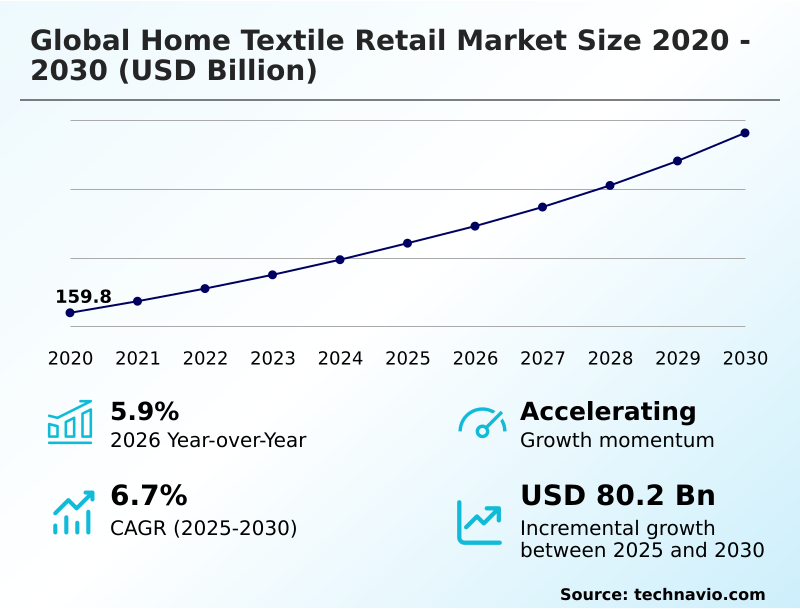
The home textile retail market size is forecast to increase by USD 74.7 billion, at a CAGR of 6.6% between 2024 and 2029.

  • The market is experiencing significant growth, driven by key trends such as innovation and portfolio extension leading to premiumization. companies are expanding their distribution channels to cater to the increasing consumer demand. However, the market is also facing challenges, including the volatility of raw material prices. These price fluctuations can impact the profitability of retail vendors and manufacturers. To remain competitive, companies are focusing on product innovation and diversification, as well as implementing cost-effective sourcing strategies. Additionally, the use of sustainable fabrics and eco-friendly materials is gaining popularity among consumers, making it essential for retailers to adapt to this trend. Overall, the market is expected to continue its growth trajectory, with companies leveraging these trends and addressing challenges to capitalize on the opportunities presented.

What will be the Size of the Home Textile Retail Market During the Forecast Period?

Home Textile Retail Market Size

 Request Free Sample

  • The market encompasses a wide range of products, including bed linen, bath linen, kitchen linen, upholstery, and floor coverings, catering to modern homes and homeowners seeking to enhance their interior design and house decoration. The real estate industry plays a significant role in driving demand for home textiles, as affluent consumers and millennials increasingly prioritize personalized, internationally inspired designs for their living spaces.
  • The home textile industry offers various product categories, from furnishing fabrics to eco-friendly and synthetic fiber options, woven, knitted, or crocheted. Specialty stores and foreign brands dominate the organized retail sector, while e-commerce platforms continue to gain popularity. Eco-friendly and blend fiber products are emerging trends, reflecting consumers' growing awareness of sustainability and unique textures. Overall, the home textile market is a dynamic and evolving industry that caters to diverse consumer preferences and housing trends.

How is this Home Textile Retail Industry segmented and which is the largest segment?

The home textile retail industry research report provides comprehensive data (region-wise segment analysis), with forecasts and estimates in "USD billion" for the period 2025-2029, as well as historical data from 2019-2023 for the following segments.

  • Distribution Channel
    • Offline
    • Online
  • Product
    • BBO
    • Bed linen
    • Carpets and rugs
    • Upholstery
    • Others
  • Geography
    • APAC
      • China
      • India
      • Japan
      • South Korea
    • North America
      • Canada
      • US
    • Europe
      • Germany
      • UK
      • France
      • Italy
    • Middle East and Africa
    • South America

By Distribution Channel Insights

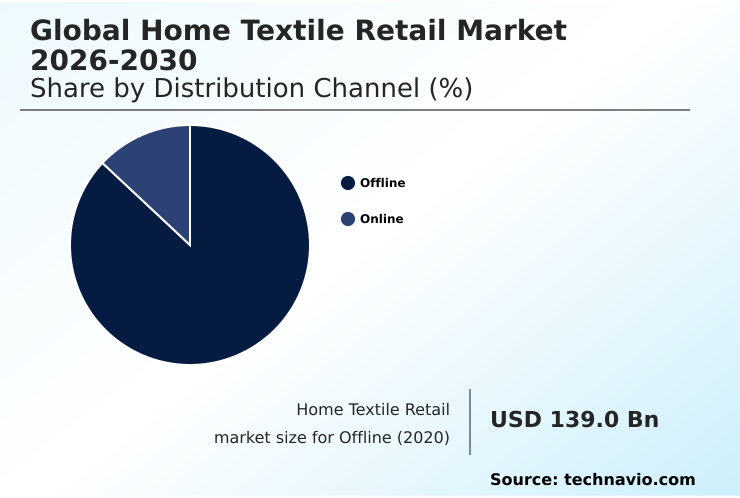
  • The offline segment is estimated to witness significant growth during the forecast period.

Home textile products, including bath linens, kitchen linens, bed linens, and bedspreads, as well as curtains, are predominantly sold through offline distribution channels. Retail formats, such as specialty stores, hypermarkets, department stores, convenience stores, supermarkets, and warehouse clubs, dominate the global market. Consumers seek personalized home textile products, leading to increased demand. These retail channels generate a substantial portion of the market revenue. The offline distribution channel holds a significant market share, with retail formats being the primary contributors.

Home Textile Retail Market Size

Get a glance at the  Home Textile Retail Industry report of share of various segments Request Free Sample

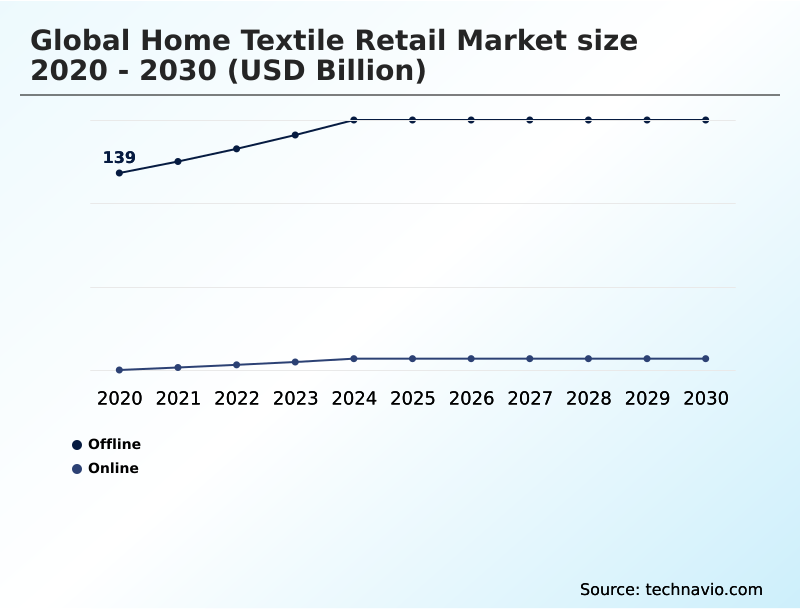
The offline segment was valued at USD 145.90 billion in 2019 and showed a gradual increase during the forecast period.
Regional Analysis

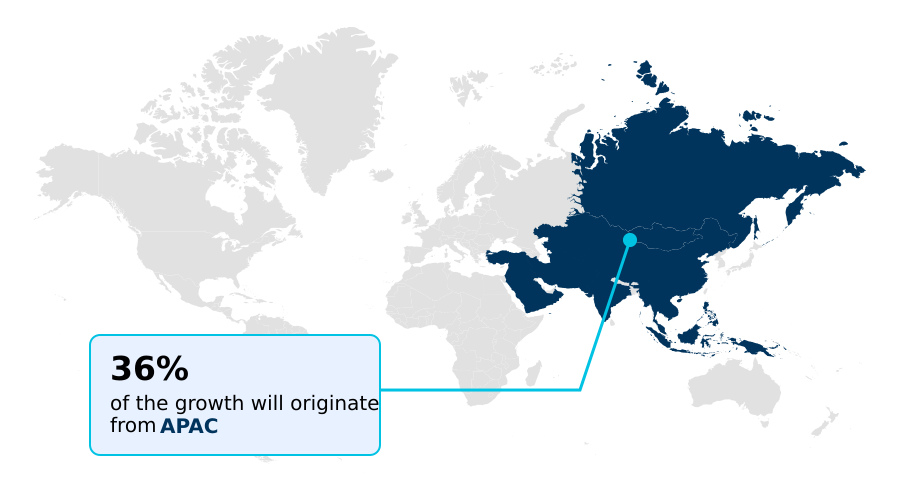
  • APAC is estimated to contribute 35% to the growth of the global market during the forecast period.

Technavio's analysts have elaborately explained the regional trends and drivers that shape the market during the forecast period.
Home Textile Retail Market Share by Geography

For more insights on the market share of various regions, Request Free Sample

The Asia Pacific region presents a substantial opportunity for international home textile brands to expand their reach in emerging economies, with China, Japan, and India leading the market. China, known for its export of home textiles, is driven by factors such as urbanization, increasing disposable income, and rising fashion consciousness towards home decoration. Urbanization and growing affluence in India and Japan are also contributing to the growth of the market in these countries. Additionally, markets in Thailand, Vietnam, South Korea, Indonesia, and Australia are significant contributors to the APAC home textile market. The region's home textile industry encompasses a wide range of products, including furnishing fabrics, bed linen, traditional blankets, and insulation materials.

In addition, key materials include higher twist yarns, wool, acrylic, polyester, nylon-based blends, and recycled cotton scraps and lyocell fibers. The market caters to various sectors, including housing, hospitality, healthcare, and exports, as well as tourist destinations and smart homes. E-commerce platforms have become a popular channel for retailing home textiles, catering to the millennial age group and DIY activities. The market offers a diverse range of styles, from timeless patterns and luxurious textures to classic color palettes and vintage aesthetics.

Market Dynamics

Our home textile retail market researchers analyzed the data with 2024 as the base year, along with the key drivers, trends, and challenges. A holistic analysis of drivers will help companies refine their marketing strategies to gain a competitive advantage.

What are the key market drivers leading to the rise in the adoption of the Home Textile Retail Industry?

Innovation and portfolio extension leading to premiumization is the key driver of the market.

  • In the international market, modern homes seek out high-quality, innovative home textiles that enhance interior design and house decoration. Homeowners with affluent tastes prefer designs that align with the real estate industry's trends, such as classic color palettes, timeless patterns, and luxurious textures. Furnishing fabrics, including soft twist yarns and higher twist yarns in wool, acrylic, polyester, nylon based blends, and thermal blankets, cater to various consumer preferences. Curtains, blinds, shades, soundproof curtains, and blackout curtains are popular choices for window treatments, while insulation products ensure energy efficiency. Modern furniture, lights, and rooms benefit from home textiles, creating a cohesive and functional living space.
  • The luxury fabric market and bedroom linen market have seen significant growth, with a focus on organic and sustainable products. Recycled cotton scraps and lyocell fibers are increasingly used in home textiles, appealing to eco-conscious consumers. Specialty stores, organized retail, and foreign brands dominate the market, while third-party sellers and importers/exporters cater to niche markets. The home décor industry, including tourist destinations, hospitals, smart homes, and transportation hubs like malls, airports, and movie theatres, presents ample opportunities for growth. The home textile industry includes product categories such as bed linen, bath linen, kitchen linen, upholstery, floor covering, and household textiles.
  • The market is driven by the demand for functional and decorative products, catering to single person households, DIY activities, nuclear families, childless households, and residential construction activities. E-commerce platforms and the e-commerce sector, including smartphones and online retailing, have significantly impacted the market. The millennial age group is a key demographic, favoring eco-friendly products and synthetic fibers.

What are the market trends shaping the Home Textile Retail Industry?

Distribution channel expansion strategy by vendors is the upcoming market trend.

  • The market encompasses a wide range of products, including furnishing fabrics for modern homes, bed linen, bathroom linen, kitchen linen, upholstery, floor covering, and more. Homeowners seek unique designs for interior decoration and house decoration, often influenced by international taste and trends. The real estate industry plays a significant role in the market, as modern furniture, lights, and rooms require accompanying textiles. Timeless patterns and luxurious textures, such as classic color palettes and vintage aesthetics, remain popular. The Luxury Fabric Market and Traditional Blankets segments cater to affluent consumers, offering soft twist yarns, higher twist yarns, and various fibers like wool, acrylic, polyester, nylon based blends, and thermal blankets.
  • Curtains, blinds, shades, soundproof curtains, and blackout curtains are essential functional products. The market also includes insulation products and sustainable products like recycled cotton scraps and lyocell fibers. The home textile industry is expanding its reach through various channels, including transportation hubs like malls, airports, movie theatres, hospitals, and smart homes. E-commerce platforms are increasingly popular for selling home textile products. The global B2C e-commerce industry's growth is expected to continue during the forecast period, providing opportunities for home textile retailers. Single person households, DIY activities, nuclear families, and childless households contribute to the market's demand.

What challenges does the Home Textile Retail Industry face during its growth?

The volatility of raw material prices is a key challenge affecting the industry growth.

  • The market encompasses a wide range of products including furnishing fabrics for modern homes, bed linen, bath linen, kitchen linen, upholstery, floor covering, and specialty stores offering foreign brands. Affluent consumers seek designs that align with their interior decor and house decoration, often influenced by international taste and classic color palettes. Modern furniture, lights, and rooms are adorned with timeless patterns and luxurious textures. The real estate industry plays a significant role in the home textile market, with housing, hospitality, healthcare, and exports to the tourism industry driving demand. The luxury fabric market, including thermal blankets, curtains, blinds, shades, soundproof curtains, and blackout curtains, caters to various consumer needs.
  • However, rising raw material prices, primarily for cotton, wool, acrylic, polyester, nylon-based blends, and synthetic fibers, pose challenges for companies. These increased costs result in higher prices for consumers, limiting purchases. Unusual weather conditions, such as heavy snow, rain, storms, hurricanes, floods, tornadoes, or extended periods of unseasonable temperatures, further impact raw material availability and prices. Innovations in home textile sales include e-commerce platforms, recycled cotton scraps, lyocell fibers, and recycled materials, as well as third-party sellers, importers, and exporters.
  • Smart homes, transportation hubs like malls, airports, and movie theaters, and various industries such as healthcare, hospitality, and housing, continue to fuel demand for home textile products. The millennial age group, DIY activities, and nuclear, single person, and childless households contribute to the growth of the household textile market. Functional and decorative products, natural and man-made fibers, and insulation products cater to various consumer preferences. The e-commerce sector, including smartphones and online retailing, offers convenience and accessibility for consumers.

Exclusive Customer Landscape

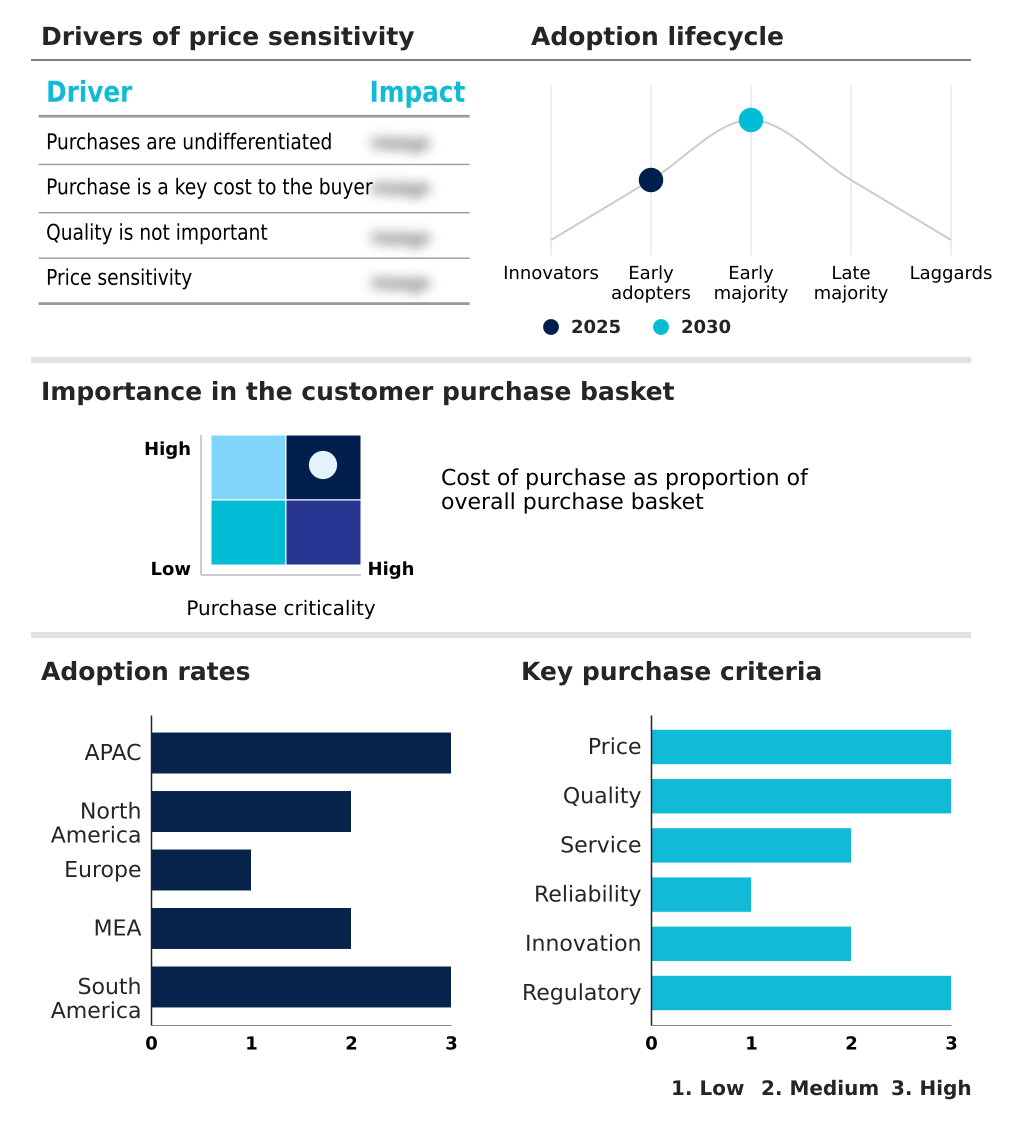
The home textile retail market forecasting report includes the adoption lifecycle of the market, covering from the innovator's stage to the laggard's stage. It focuses on adoption rates in different regions based on penetration. Furthermore, the home textile retail market report also includes key purchase criteria and drivers of price sensitivity to help companies evaluate and develop their market growth analysis strategies.
Home Textile Retail Market Share by Geography

 Customer Landscape

Key Companies & Market Insights

Companies are implementing various strategies, such as strategic alliances, home textile retail market forecast, partnerships, mergers and acquisitions, geographical expansion, and product/service launches, to enhance their presence in the industry.

Amazon.com Inc. - The company offers home textile products under the brand name Solimo such as Solimo Natural Bounty 144 TC 100 percent Cotton Double Bedsheet with Two Pillow Covers.

The industry research and growth report includes detailed analyses of the competitive landscape of the market and information about key companies, including:

  • Ashley Global Retail LLC
  • Bed Bath and Beyond Inc.
  • Industria de Diseno Textil SA
  • Inter IKEA Holding BV
  • Kohls Inc
  • Lowes Co. Inc.
  • Macys Inc.
  • Ralph Lauren Corp.
  • Restoration Hardware Inc.
  • Springs Global
  • Steinhoff International Holdings NV
  • The Home Depot Inc.
  • The Kroger Co.
  • The Novogratz
  • The TJX Companies Inc.
  • Trident Ltd.
  • Walmart Inc.
  • Wayfair Inc.
  • Welspun India Ltd.

Qualitative and quantitative analysis of companies has been conducted to help clients understand the wider business environment as well as the strengths and weaknesses of key industry players. Data is qualitatively analyzed to categorize companies as pure play, category-focused, industry-focused, and diversified; it is quantitatively analyzed to categorize companies as dominant, leading, strong, tentative, and weak.

Research Analyst Overview

The market encompasses a vast array of products designed to enhance the interior of living spaces. These textiles, which include fabrics for bed linen, bath linen, kitchen linen, upholstery, floor coverings, and various decorative items, serve both functional and aesthetic purposes. In modern homes, homeowners seek to create inviting and stylish environments, leading to a growing demand for innovative designs and high-quality textiles. Interior design trends continue to evolve, with an emphasis on timeless patterns, luxurious textures, and classic color palettes. Modern furniture, lights, and wall colors all influence the selection of home textiles. Vintage aesthetics and sustainable materials, such as recycled cotton scraps and lyocell fibers, have gained popularity among affluent consumers, reflecting international taste and a growing focus on eco-friendly products.

Further, the home textile industry caters to various sectors, including housing, hospitality, healthcare, and exports. This diverse market includes specialized stores, foreign brands, and organized retail outlets. The real estate industry plays a significant role in driving demand for home textiles, particularly in new residential construction activities and renovations. In the realm of functional products, insulation blankets, soundproof curtains, and blackout curtains have become essential for maintaining comfortable living conditions. Meanwhile, decorative products, such as curtains, blinds, and shades, serve to enhance the aesthetic appeal of rooms. The home textile industry has witnessed significant growth in the e-commerce sector, with platforms like smartphones and online retailing making it easier for consumers to access a wide range of products from the comfort of their homes.

Moreover, this trend has led to increased competition among retailers, necessitating innovative marketing strategies and product offerings. The home textile market comprises a diverse range of fibers, including natural fibers like cotton and man-made fibers like wool, acrylic, polyester, nylon-based blends, and synthetic fibers. The choice of fiber depends on various factors, including cost, durability, and environmental impact. The luxury fabric market, including traditional blankets and soft twist yarns, caters to consumers seeking high-end, premium products. Higher twist yarns and wool are popular choices for these items due to their superior texture and insulation properties.

Home Textile Retail Market Scope

Report Coverage

Details

Page number

206

Base year

2024

Historic period

2019-2023

Forecast period

2025-2029

Growth momentum & CAGR

Accelerate at a CAGR of 6.6%

Market Growth 2025-2029

USD 74.7 billion

Market structure

Fragmented

YoY growth 2024-2025(%)

6.0

Key countries

US, China, India, Japan, Canada, South Korea, Germany, UK, France, and Italy

Competitive landscape

Leading Companies, Market Positioning of Companies, Competitive Strategies, and Industry Risks

Request Free Sample

What are the Key Data Covered in this Home Textile Retail Market Research and Growth Report?

  • CAGR of the Home Textile Retail industry during the forecast period
  • Detailed information on factors that will drive the Home Textile Retail Market growth and forecasting between 2025 and 2029
  • Precise estimation of the size of the market and its contribution of the industry in focus to the parent market
  • Accurate predictions about upcoming growth and trends and changes in consumer behaviour
  • Growth of the market across APAC, North America, Europe, Middle East and Africa, and South America
  • Thorough analysis of the market's competitive landscape and detailed information about companies
  • Comprehensive analysis of factors that will challenge the home textile retail market growth of industry companies

We can help! Our analysts can customize this home textile retail market research report to meet your requirements.

Get in touch

1 Executive Summary

  • 1.1 Market overview
    • Executive Summary - Chart on Market Overview
    • Executive Summary - Data Table on Market Overview
    • Executive Summary - Chart on Global Market Characteristics
    • Executive Summary - Chart on Market by Geography
    • Executive Summary - Chart on Market Segmentation by Distribution Channel
    • Executive Summary - Chart on Market Segmentation by Product
    • Executive Summary - Chart on Incremental Growth
    • Executive Summary - Data Table on Incremental Growth
    • Executive Summary - Chart on Company Market Positioning

2 Technavio Analysis

  • 2.1 Analysis of price sensitivity, lifecycle, customer purchase basket, adoption rates, and purchase criteria
    • Analysis of price sensitivity, lifecycle, customer purchase basket, adoption rates, and purchase criteria
  • 2.2 Criticality of inputs and Factors of differentiation
    • Overview on criticality of inputs and factors of differentiation
  • 2.3 Factors of disruption
    • Overview on factors of disruption
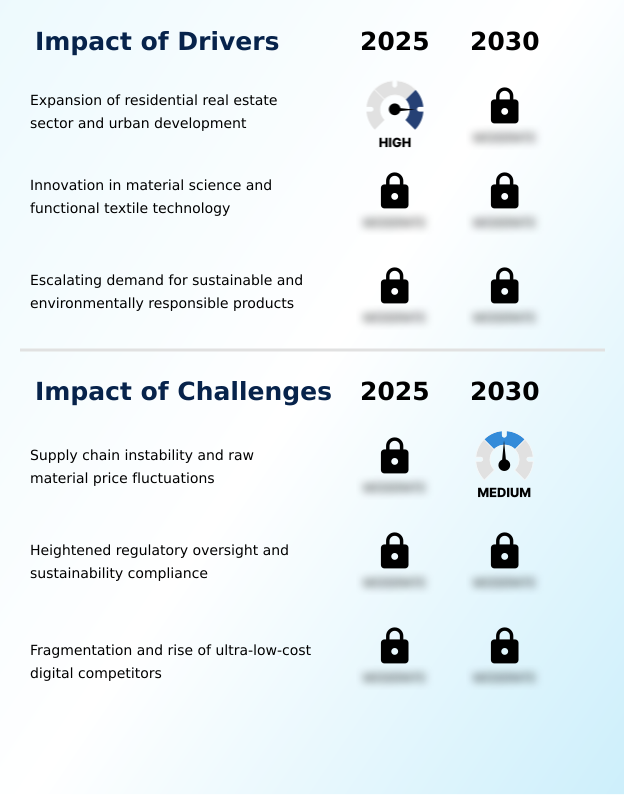
  • 2.4 Impact of drivers and challenges
    • Impact of drivers and challenges in 2024 and 2029

3 Market Landscape

  • 3.1 Market ecosystem
    • Parent Market
    • Data Table on - Parent Market
  • 3.2 Market characteristics
    • Market characteristics analysis
  • 3.3 Value chain analysis
    • Value chain analysis

4 Market Sizing

  • 4.1 Market definition
    • Offerings of companies included in the market definition
  • 4.2 Market segment analysis
    • Market segments
  • 4.3 Market size 2024
    • 4.4 Market outlook: Forecast for 2024-2029
      • Chart on Global - Market size and forecast 2024-2029 ($ billion)
      • Data Table on Global - Market size and forecast 2024-2029 ($ billion)
      • Chart on Global Market: Year-over-year growth 2024-2029 (%)
      • Data Table on Global Market: Year-over-year growth 2024-2029 (%)

    5 Historic Market Size

    • 5.1 Global Home Textile Retail Market 2019 - 2023
      • Historic Market Size - Data Table on Global Home Textile Retail Market 2019 - 2023 ($ billion)
    • 5.2 Distribution Channel segment analysis 2019 - 2023
      • Historic Market Size - Distribution Channel Segment 2019 - 2023 ($ billion)
    • 5.3 Product segment analysis 2019 - 2023
      • Historic Market Size - Product Segment 2019 - 2023 ($ billion)
    • 5.4 Geography segment analysis 2019 - 2023
      • Historic Market Size - Geography Segment 2019 - 2023 ($ billion)
    • 5.5 Country segment analysis 2019 - 2023
      • Historic Market Size - Country Segment 2019 - 2023 ($ billion)

    6 Qualitative Analysis

    • 6.1 The AI impact on global home textile retail market

      7 Five Forces Analysis

      • 7.1 Five forces summary
        • Five forces analysis - Comparison between 2024 and 2029
      • 7.2 Bargaining power of buyers
        • Bargaining power of buyers - Impact of key factors 2024 and 2029
      • 7.3 Bargaining power of suppliers
        • Bargaining power of suppliers - Impact of key factors in 2024 and 2029
      • 7.4 Threat of new entrants
        • Threat of new entrants - Impact of key factors in 2024 and 2029
      • 7.5 Threat of substitutes
        • Threat of substitutes - Impact of key factors in 2024 and 2029
      • 7.6 Threat of rivalry
        • Threat of rivalry - Impact of key factors in 2024 and 2029
      • 7.7 Market condition
        • Chart on Market condition - Five forces 2024 and 2029

      8 Market Segmentation by Distribution Channel

      • 8.1 Market segments
        • Chart on Distribution Channel - Market share 2024-2029 (%)
        • Data Table on Distribution Channel - Market share 2024-2029 (%)
      • 8.2 Comparison by Distribution Channel
        • Chart on Comparison by Distribution Channel
        • Data Table on Comparison by Distribution Channel
      • 8.3 Offline - Market size and forecast 2024-2029
        • Chart on Offline - Market size and forecast 2024-2029 ($ billion)
        • Data Table on Offline - Market size and forecast 2024-2029 ($ billion)
        • Chart on Offline - Year-over-year growth 2024-2029 (%)
        • Data Table on Offline - Year-over-year growth 2024-2029 (%)
      • 8.4 Online - Market size and forecast 2024-2029
        • Chart on Online - Market size and forecast 2024-2029 ($ billion)
        • Data Table on Online - Market size and forecast 2024-2029 ($ billion)
        • Chart on Online - Year-over-year growth 2024-2029 (%)
        • Data Table on Online - Year-over-year growth 2024-2029 (%)
      • 8.5 Market opportunity by Distribution Channel
        • Market opportunity by Distribution Channel ($ billion)
        • Data Table on Market opportunity by Distribution Channel ($ billion)

      9 Market Segmentation by Product

      • 9.1 Market segments
        • Chart on Product - Market share 2024-2029 (%)
        • Data Table on Product - Market share 2024-2029 (%)
      • 9.2 Comparison by Product
        • Chart on Comparison by Product
        • Data Table on Comparison by Product
      • 9.3 BBO - Market size and forecast 2024-2029
        • Chart on BBO - Market size and forecast 2024-2029 ($ billion)
        • Data Table on BBO - Market size and forecast 2024-2029 ($ billion)
        • Chart on BBO - Year-over-year growth 2024-2029 (%)
        • Data Table on BBO - Year-over-year growth 2024-2029 (%)
      • 9.4 Bed linen - Market size and forecast 2024-2029
        • Chart on Bed linen - Market size and forecast 2024-2029 ($ billion)
        • Data Table on Bed linen - Market size and forecast 2024-2029 ($ billion)
        • Chart on Bed linen - Year-over-year growth 2024-2029 (%)
        • Data Table on Bed linen - Year-over-year growth 2024-2029 (%)
      • 9.5 Carpets and rugs - Market size and forecast 2024-2029
        • Chart on Carpets and rugs - Market size and forecast 2024-2029 ($ billion)
        • Data Table on Carpets and rugs - Market size and forecast 2024-2029 ($ billion)
        • Chart on Carpets and rugs - Year-over-year growth 2024-2029 (%)
        • Data Table on Carpets and rugs - Year-over-year growth 2024-2029 (%)
      • 9.6 Upholstery - Market size and forecast 2024-2029
        • Chart on Upholstery - Market size and forecast 2024-2029 ($ billion)
        • Data Table on Upholstery - Market size and forecast 2024-2029 ($ billion)
        • Chart on Upholstery - Year-over-year growth 2024-2029 (%)
        • Data Table on Upholstery - Year-over-year growth 2024-2029 (%)
      • 9.7 Others - Market size and forecast 2024-2029
        • Chart on Others - Market size and forecast 2024-2029 ($ billion)
        • Data Table on Others - Market size and forecast 2024-2029 ($ billion)
        • Chart on Others - Year-over-year growth 2024-2029 (%)
        • Data Table on Others - Year-over-year growth 2024-2029 (%)
      • 9.8 Market opportunity by Product
        • Market opportunity by Product ($ billion)
        • Data Table on Market opportunity by Product ($ billion)

      10 Customer Landscape

      • 10.1 Customer landscape overview
        • Analysis of price sensitivity, lifecycle, customer purchase basket, adoption rates, and purchase criteria

      11 Geographic Landscape

      • 11.1 Geographic segmentation
        • Chart on Market share by geography 2024-2029 (%)
        • Data Table on Market share by geography 2024-2029 (%)
      • 11.2 Geographic comparison
        • Chart on Geographic comparison
        • Data Table on Geographic comparison
      • 11.3 APAC - Market size and forecast 2024-2029
        • Chart on APAC - Market size and forecast 2024-2029 ($ billion)
        • Data Table on APAC - Market size and forecast 2024-2029 ($ billion)
        • Chart on APAC - Year-over-year growth 2024-2029 (%)
        • Data Table on APAC - Year-over-year growth 2024-2029 (%)
      • 11.4 North America - Market size and forecast 2024-2029
        • Chart on North America - Market size and forecast 2024-2029 ($ billion)
        • Data Table on North America - Market size and forecast 2024-2029 ($ billion)
        • Chart on North America - Year-over-year growth 2024-2029 (%)
        • Data Table on North America - Year-over-year growth 2024-2029 (%)
      • 11.5 Europe - Market size and forecast 2024-2029
        • Chart on Europe - Market size and forecast 2024-2029 ($ billion)
        • Data Table on Europe - Market size and forecast 2024-2029 ($ billion)
        • Chart on Europe - Year-over-year growth 2024-2029 (%)
        • Data Table on Europe - Year-over-year growth 2024-2029 (%)
      • 11.6 Middle East and Africa - Market size and forecast 2024-2029
        • Chart on Middle East and Africa - Market size and forecast 2024-2029 ($ billion)
        • Data Table on Middle East and Africa - Market size and forecast 2024-2029 ($ billion)
        • Chart on Middle East and Africa - Year-over-year growth 2024-2029 (%)
        • Data Table on Middle East and Africa - Year-over-year growth 2024-2029 (%)
      • 11.7 South America - Market size and forecast 2024-2029
        • Chart on South America - Market size and forecast 2024-2029 ($ billion)
        • Data Table on South America - Market size and forecast 2024-2029 ($ billion)
        • Chart on South America - Year-over-year growth 2024-2029 (%)
        • Data Table on South America - Year-over-year growth 2024-2029 (%)
      • 11.8 US - Market size and forecast 2024-2029
        • Chart on US - Market size and forecast 2024-2029 ($ billion)
        • Data Table on US - Market size and forecast 2024-2029 ($ billion)
        • Chart on US - Year-over-year growth 2024-2029 (%)
        • Data Table on US - Year-over-year growth 2024-2029 (%)
      • 11.9 China - Market size and forecast 2024-2029
        • Chart on China - Market size and forecast 2024-2029 ($ billion)
        • Data Table on China - Market size and forecast 2024-2029 ($ billion)
        • Chart on China - Year-over-year growth 2024-2029 (%)
        • Data Table on China - Year-over-year growth 2024-2029 (%)
      • 11.10 India - Market size and forecast 2024-2029
        • Chart on India - Market size and forecast 2024-2029 ($ billion)
        • Data Table on India - Market size and forecast 2024-2029 ($ billion)
        • Chart on India - Year-over-year growth 2024-2029 (%)
        • Data Table on India - Year-over-year growth 2024-2029 (%)
      • 11.11 Japan - Market size and forecast 2024-2029
        • Chart on Japan - Market size and forecast 2024-2029 ($ billion)
        • Data Table on Japan - Market size and forecast 2024-2029 ($ billion)
        • Chart on Japan - Year-over-year growth 2024-2029 (%)
        • Data Table on Japan - Year-over-year growth 2024-2029 (%)
      • 11.12 Canada - Market size and forecast 2024-2029
        • Chart on Canada - Market size and forecast 2024-2029 ($ billion)
        • Data Table on Canada - Market size and forecast 2024-2029 ($ billion)
        • Chart on Canada - Year-over-year growth 2024-2029 (%)
        • Data Table on Canada - Year-over-year growth 2024-2029 (%)
      • 11.13 South Korea - Market size and forecast 2024-2029
        • Chart on South Korea - Market size and forecast 2024-2029 ($ billion)
        • Data Table on South Korea - Market size and forecast 2024-2029 ($ billion)
        • Chart on South Korea - Year-over-year growth 2024-2029 (%)
        • Data Table on South Korea - Year-over-year growth 2024-2029 (%)
      • 11.14 Germany - Market size and forecast 2024-2029
        • Chart on Germany - Market size and forecast 2024-2029 ($ billion)
        • Data Table on Germany - Market size and forecast 2024-2029 ($ billion)
        • Chart on Germany - Year-over-year growth 2024-2029 (%)
        • Data Table on Germany - Year-over-year growth 2024-2029 (%)
      • 11.15 UK - Market size and forecast 2024-2029
        • Chart on UK - Market size and forecast 2024-2029 ($ billion)
        • Data Table on UK - Market size and forecast 2024-2029 ($ billion)
        • Chart on UK - Year-over-year growth 2024-2029 (%)
        • Data Table on UK - Year-over-year growth 2024-2029 (%)
      • 11.16 France - Market size and forecast 2024-2029
        • Chart on France - Market size and forecast 2024-2029 ($ billion)
        • Data Table on France - Market size and forecast 2024-2029 ($ billion)
        • Chart on France - Year-over-year growth 2024-2029 (%)
        • Data Table on France - Year-over-year growth 2024-2029 (%)
      • 11.17 Italy - Market size and forecast 2024-2029
        • Chart on Italy - Market size and forecast 2024-2029 ($ billion)
        • Data Table on Italy - Market size and forecast 2024-2029 ($ billion)
        • Chart on Italy - Year-over-year growth 2024-2029 (%)
        • Data Table on Italy - Year-over-year growth 2024-2029 (%)
      • 11.18 Market opportunity by geography
        • Market opportunity by geography ($ billion)
        • Data Tables on Market opportunity by geography ($ billion)

      12 Drivers, Challenges, and Opportunity/Restraints

      • 12.1 Market drivers
        • 12.2 Market challenges
          • 12.3 Impact of drivers and challenges
            • Impact of drivers and challenges in 2024 and 2029
          • 12.4 Market opportunities/restraints

            13 Competitive Landscape

            • 13.1 Overview
              • 13.2 Competitive Landscape
                • Overview on criticality of inputs and factors of differentiation
              • 13.3 Landscape disruption
                • Overview on factors of disruption
              • 13.4 Industry risks
                • Impact of key risks on business

              14 Competitive Analysis

              • 14.1 Companies profiled
                • Companies covered
              • 14.2 Company ranking index
                • Company ranking index
              • 14.3 Market positioning of companies
                • Matrix on companies position and classification
              • 14.4 Amazon.com Inc.
                • Amazon.com Inc. - Overview
                • Amazon.com Inc. - Business segments
                • Amazon.com Inc. - Key news
                • Amazon.com Inc. - Key offerings
                • Amazon.com Inc. - Segment focus
                • SWOT
              • 14.5 Industria de Diseno Textil SA
                • Industria de Diseno Textil SA - Overview
                • Industria de Diseno Textil SA - Business segments
                • Industria de Diseno Textil SA - Key news
                • Industria de Diseno Textil SA - Key offerings
                • Industria de Diseno Textil SA - Segment focus
                • SWOT
              • 14.6 Inter IKEA Holding BV
                • Inter IKEA Holding BV - Overview
                • Inter IKEA Holding BV - Product / Service
                • Inter IKEA Holding BV - Key news
                • Inter IKEA Holding BV - Key offerings
                • SWOT
              • 14.7 Kohls Inc
                • Kohls Inc - Overview
                • Kohls Inc - Product / Service
                • Kohls Inc - Key news
                • Kohls Inc - Key offerings
                • SWOT
              • 14.8 Lowes Co. Inc.
                • Lowes Co. Inc. - Overview
                • Lowes Co. Inc. - Product / Service
                • Lowes Co. Inc. - Key news
                • Lowes Co. Inc. - Key offerings
                • SWOT
              • 14.9 Ralph Lauren Corp.
                • Ralph Lauren Corp. - Overview
                • Ralph Lauren Corp. - Business segments
                • Ralph Lauren Corp. - Key news
                • Ralph Lauren Corp. - Key offerings
                • Ralph Lauren Corp. - Segment focus
                • SWOT
              • 14.10 Restoration Hardware Inc.
                • Restoration Hardware Inc. - Overview
                • Restoration Hardware Inc. - Business segments
                • Restoration Hardware Inc. - Key offerings
                • Restoration Hardware Inc. - Segment focus
                • SWOT
              • 14.11 Springs Global
                • Springs Global - Overview
                • Springs Global - Business segments
                • Springs Global - Key offerings
                • Springs Global - Segment focus
                • SWOT
              • 14.12 The Home Depot Inc.
                • The Home Depot Inc. - Overview
                • The Home Depot Inc. - Business segments
                • The Home Depot Inc. - Key offerings
                • The Home Depot Inc. - Segment focus
                • SWOT
              • 14.13 The Kroger Co.
                • The Kroger Co. - Overview
                • The Kroger Co. - Product / Service
                • The Kroger Co. - Key news
                • The Kroger Co. - Key offerings
                • SWOT
              • 14.14 The Novogratz
                • The Novogratz - Overview
                • The Novogratz - Product / Service
                • The Novogratz - Key offerings
                • SWOT
              • 14.15 Trident Ltd.
                • Trident Ltd. - Overview
                • Trident Ltd. - Business segments
                • Trident Ltd. - Key offerings
                • Trident Ltd. - Segment focus
                • SWOT
              • 14.16 Walmart Inc.
                • Walmart Inc. - Overview
                • Walmart Inc. - Business segments
                • Walmart Inc. - Key news
                • Walmart Inc. - Key offerings
                • Walmart Inc. - Segment focus
                • SWOT
              • 14.17 Wayfair Inc.
                • Wayfair Inc. - Overview
                • Wayfair Inc. - Business segments
                • Wayfair Inc. - Key news
                • Wayfair Inc. - Key offerings
                • Wayfair Inc. - Segment focus
                • SWOT
              • 14.18 Welspun India Ltd.
                • Welspun India Ltd. - Overview
                • Welspun India Ltd. - Business segments
                • Welspun India Ltd. - Key offerings
                • Welspun India Ltd. - Segment focus
                • SWOT

              15 Appendix

              • 15.1 Scope of the report
                • 15.2 Inclusions and exclusions checklist
                  • Inclusions checklist
                  • Exclusions checklist
                • 15.3 Currency conversion rates for US$
                  • Currency conversion rates for US$
                • 15.4 Research methodology
                  • Research methodology
                • 15.5 Data procurement
                  • Information sources
                • 15.6 Data validation
                  • Data validation
                • 15.7 Validation techniques employed for market sizing
                  • Validation techniques employed for market sizing
                • 15.8 Data synthesis
                  • Data synthesis
                • 15.9 360 degree market analysis
                  • 360 degree market analysis
                • 15.10 List of abbreviations
                  • List of abbreviations

                Research Methodology

                Technavio presents a detailed picture of the market by way of study, synthesis, and summation of data from multiple sources. The analysts have presented the various facets of the market with a particular focus on identifying the key industry influencers. The data thus presented is comprehensive, reliable, and the result of extensive research, both primary and secondary.

                INFORMATION SOURCES

                Primary sources

                • Manufacturers and suppliers
                • Channel partners
                • Industry experts
                • Strategic decision makers

                Secondary sources

                • Industry journals and periodicals
                • Government data
                • Financial reports of key industry players
                • Historical data
                • Press releases

                DATA ANALYSIS

                Data Synthesis

                • Collation of data
                • Estimation of key figures
                • Analysis of derived insights

                Data Validation

                • Triangulation with data models
                • Reference against proprietary databases
                • Corroboration with industry experts

                REPORT WRITING

                Qualitative

                • Market drivers
                • Market challenges
                • Market trends
                • Five forces analysis

                Quantitative

                • Market size and forecast
                • Market segmentation
                • Geographical insights
                • Competitive landscape

                Interested in this report?

                Get your sample now to see our research methodology and insights!

                Download Now

                Frequently Asked Questions

                Home Textile Retail market growth will increase by $ 74.7 bn during 2025-2029.

                The Home Textile Retail market is expected to grow at a CAGR of 6.6% during 2025-2029.

                Home Textile Retail market is segmented by Distribution Channel( Offline, Online, carpets and rugs, upholstery, others) Product( BBO, Bed linen, Carpets and rugs, Upholstery, Others)

                Amazon.com Inc., Ashley Global Retail LLC, Bed Bath and Beyond Inc., Industria de Diseno Textil SA, Inter IKEA Holding BV, Kohls Inc, Lowes Co. Inc., Macys Inc., Ralph Lauren Corp., Restoration Hardware Inc., Springs Global, Steinhoff International Holdings NV, The Home Depot Inc., The Kroger Co., The Novogratz, The TJX Companies Inc., Trident Ltd., Walmart Inc., Wayfair Inc., Welspun India Ltd. are a few of the key vendors in the Home Textile Retail market.

                APAC will register the highest growth rate of 35% among the other regions. Therefore, the Home Textile Retail market in APAC is expected to garner significant business opportunities for the vendors during the forecast period.

                US, China, India, Japan, Canada, South Korea, Germany, UK, France, Italy

                • Innovation and portfolio extension leading to premiumizationIn the global home textile retail market is the driving factor this market.
                • home textile products with innovative features is the driving factor this market.
                • utility is the driving factor this market.
                • and designs are relatively high-priced than other types of regular home textile products. The superior-quality is the driving factor this market.
                • comfortable is the driving factor this market.
                • and innovative home textiles are in high demand among customers worldwide. Moreover is the driving factor this market.
                • portfolio extension by the vendors in the global home textile retail market will result in product premiumization. Vendors strategize to differentiate themselves from other competitors and manufacture home textile products with unique designs is the driving factor this market.
                • styles is the driving factor this market.
                • quality is the driving factor this market.
                • and prices. For instance is the driving factor this market.
                • carpets give warmth and comfort to the users but also attract dirt and emanate bad odor due to microbial growth on them. The innovative carpets produced by the players these days can counteract microbial growth to prevent bad odors. Such carpets can be easily washed is the driving factor this market.
                • and cleaning the carpets does not minimize their odor-reducing properties. Nowadays is the driving factor this market.
                • carpets have built-in microband antimicrobial technology that provides 24/7 protection against the growth of odor and stain causing bacteria is the driving factor this market.
                • mildew is the driving factor this market.
                • and mold. Microband antimicrobial product protection provides regular antimicrobial cleaning action to keep the carpets fresher and cleaner between cleanings.Such products are relatively higher-priced due to additional features and the use of advanced and superior quality material. The innovative features in home textile products may propel the growth of the global home textile retail market during the forecast period. With the use of advanced technology is the driving factor this market.
                • vendors can extend their product lines and develop premium home textile products. These factors will positively impact the growth of the global home textile retail market during the forecast period. is the driving factor this market.

                The Home Textile Retail market vendors should focus on grabbing business opportunities from the Offline segment as it accounted for the largest market share in the base year.