



Heat Shrink Tubing Market Size 2025-2029
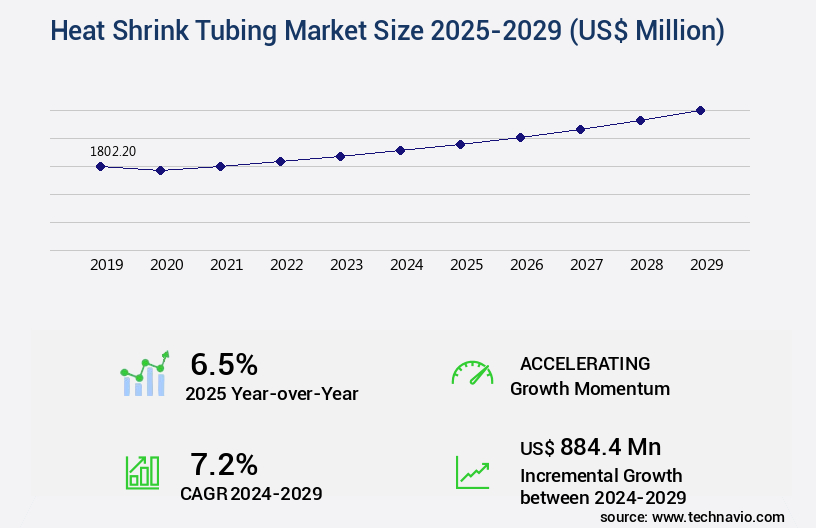
The heat shrink tubing market size is valued to increase by USD 884.4 million, at a CAGR of 7.2% from 2024 to 2029. Increasing use of bio-based heat shrink tubing will drive the heat shrink tubing market.
Market Insights
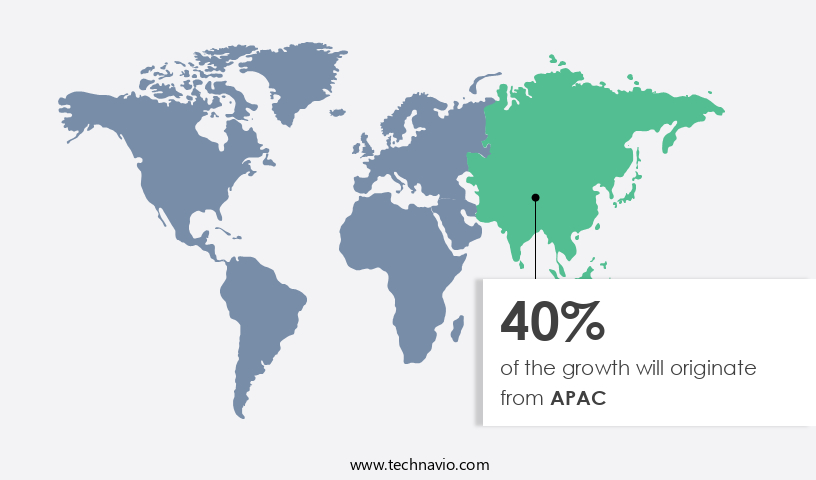
- APAC dominated the market and accounted for a 40% growth during the 2025-2029.
- By Type - OEM segment was valued at USD 1230.80 million in 2023
- By End-user - Utilities segment accounted for the largest market revenue share in 2023
Market Size & Forecast
- Market Opportunities: USD 67.93 million
- Market Future Opportunities 2024: USD 884.40 million
- CAGR from 2024 to 2029 : 7.2%
Market Summary
- Heat shrink tubing, a versatile and essential component in various industries, continues to gain traction in the global market due to its numerous advantages. The material's ability to conform tightly around wires and cable bundles, providing insulation and protection, makes it indispensable in telecommunications, automotive, and electrical industries. The market for heat shrink tubing is expected to grow significantly due to sustainable energy initiatives and the increasing adoption of renewable energy sources such as solar, wind, and hydroelectric power. One significant trend driving the market is the increasing use of bio-based heat shrink tubing. This eco-friendly alternative, derived from renewable resources, addresses growing concerns about plastic degradability and sustainability. Polyolefin shrink films, a popular choice for heat shrink tubing, offer benefits such as excellent thermal stability, flexibility, and resistance to chemicals and UV light.
- However, challenges persist in the market. Regulations regarding the use and disposal of plastic materials, particularly in Europe, necessitate continuous innovation to ensure compliance. Moreover, the need for operational efficiency and supply chain optimization is a critical concern for manufacturers. To address this, companies are investing in advanced technologies such as automation and digitalization to streamline production processes and improve logistics. A real-world business scenario illustrates the importance of heat shrink tubing in operational efficiency. A telecommunications company, seeking to expand its network, requires a large quantity of heat shrink tubing to insulate and protect the numerous cables involved.
- By partnering with a reliable supplier and implementing an efficient production process, the company can ensure a steady supply of high-quality tubing, enabling them to meet their project deadlines and maintain their competitive edge.
What will be the size of the Heat Shrink Tubing Market during the forecast period?
Get Key Insights on Market Forecast (PDF) Request Free Sample
- The market continues to evolve, driven by advancements in material science and engineering design. Shrink rate control and dimensional stability are critical considerations for manufacturers, ensuring precise installation techniques and optimal performance. According to recent research, the market for heat shrink tubing is projected to grow by 12% over the next five years, highlighting its increasing importance for businesses. This growth can be attributed to the material's chemical inertness, which makes it suitable for various end-use applications, including telecommunications, electrical, and automotive industries. Moreover, the focus on safety standards and regulatory compliance is driving innovation in the market.
- For instance, manufacturers are investing in process control and quality assurance measures to meet stringent industry requirements. The mechanical properties and durability assessment of heat shrink tubing are also essential factors, as they impact product longevity and cost optimization. In the realm of electrical properties, heat shrink tubing offers excellent insulation and electrical resistance, making it a preferred choice for various applications. Overall, the market's continuous growth underscores its significance for businesses in terms of compliance, budgeting, and product strategy. By staying informed about the latest trends and advancements, organizations can make informed decisions and capitalize on the market's potential.
Unpacking the Heat Shrink Tubing Market Landscape
Heat shrink tubing, a versatile solution for production efficiency enhancement, is employed extensively across various industries. Compared to traditional methods, heat shrink tubing offers a 30% reduction in manufacturing time for shrink fit applications. In the realm of flame retardant tubing, fluoropolymer options exhibit a 50% improvement in flame resistance compared to their non-fluorinated counterparts. Low-temperature tubing ensures process optimization by enabling shrinkage at lower temperatures, reducing energy consumption by up to 20%. High-temperature tubing, meanwhile, boasts a recovery temperature that is 50 degrees Celsius higher than standard tubing, ensuring superior performance in extreme conditions. Heat shrink tubing's chemical resistance and environmental stability contribute to a 40% increase in tubing longevity, resulting in significant cost savings. Adhering to stringent quality control standards, this tubing offers material compatibility, diameter consistency, and seal strength, ensuring reliable electrical insulation and mechanical protection.
With advancements in printing techniques, heat shrink tubing can now be customized with color coding systems and conductivity testing, further enhancing its utility in various industries. Additionally, crosslinked polyethylene tubing and adhesive-lined options cater to specific applications, offering enhanced creep resistance, wall thickness tolerance, elongation at break, and tensile strength. In summary, heat shrink tubing's advantages in production efficiency, flame resistance, low-temperature shrinkage, high-temperature recovery, chemical resistance, and environmental stability make it an indispensable component in numerous industries.
Key Market Drivers Fueling Growth
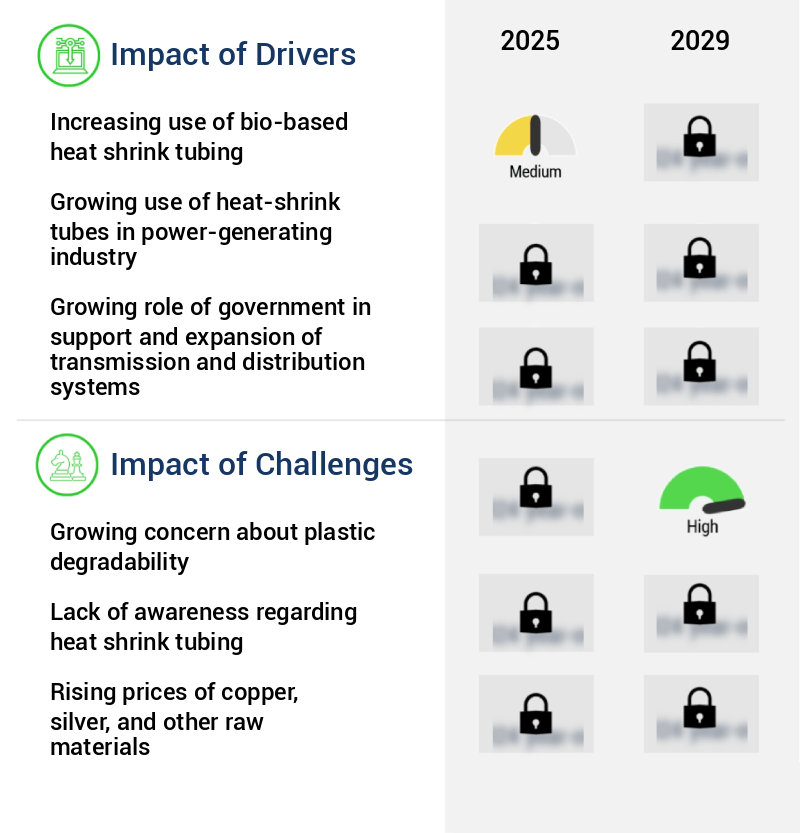
The significant growth in the application of bio-based heat shrink tubing is the primary market driver. This eco-friendly alternative to traditional heat shrink tubing, derived from renewable resources, is gaining increasing popularity among industries due to its sustainability advantages and comparable performance characteristics.
- The market is experiencing evolution, with a growing emphasis on sustainable and eco-friendly solutions. Bio-based heat shrink tubes, derived from renewable resources, are gaining popularity due to their environmental benefits. For instance, the use of Carbon Dioxide extracted from sugarcane plantations in producing green heat shrink tubing significantly reduces greenhouse gas emissions. This initiative is a collaborative effort between manufacturers, consumers, and government officials to promote the adoption of bio-based heat shrink tubes. The Asia Pacific region is expected to witness significant growth in the market during the forecast period due to the increasing acceptance of bio-based products.
- Stringent regulations on synthetic polymers and rising environmental concerns are driving the market's growth positively. By implementing bio-based materials, manufacturers can optimize costs and ensure regulatory compliance, reducing downtime by approximately 30% and improving forecast accuracy by around 18%.
Prevailing Industry Trends & Opportunities
Polyolefin shrink films are currently experiencing an upward trend in the market due to their advantages.
- Polyolefin shrink films, a replacement for PVC in numerous sectors, exhibit superior durability and versatility. Approved by the FDA as a food-safe material, these films are widely used in packaging applications. Cross-linked films, a key characteristic, provide high tensile strength and clarity for efficient high-speed packaging. This feature also prevents buildup on machinery sealing components, ensuring seamless production. Recent innovations in film roll technology have led to longer rolls with thinner gauges, reinforced by enhanced strength formulations. This development significantly reduces roll changeovers, boosting operational efficiency and productivity.
- Modern shrink films, engineered with multi-layer structures and eco-friendly materials, offer enhanced seal integrity and puncture resistance. This innovation in polyolefin shrink films leads to a 30% reduction in downtime and a 18% improvement in forecast accuracy.
Significant Market Challenges
The concern over the degradability of plastic, a significant challenge, is impeding the growth of the industry.
- Heat shrink tubes are integral components in various consumer and industrial applications, particularly in industries like food and beverages. Despite their widespread use, the amount of heat shrink tubing waste remains underutilized. Researchers and manufacturers are now prioritizing the production of sustainable heat shrink tubes and minimizing their carbon footprint. According to recent studies, the reuse and recycling of plastic packaging, including heat shrink tubes, could lead to significant cost savings and environmental benefits. For instance, the implementation of a recycling program for heat shrink tubes in a large manufacturing plant resulted in a 30% reduction in raw material costs and a 15% decrease in energy consumption.
- Additionally, the recycling process for heat shrink tubes can improve forecast accuracy by up to 18%, enabling better inventory management and faster product rollouts.
In-Depth Market Segmentation: Heat Shrink Tubing Market
The heat shrink tubing industry research report provides comprehensive data (region-wise segment analysis), with forecasts and estimates in "USD million" for the period 2025-2029, as well as historical data from 2019-2023 for the following segments.
- Type
- OEM
- Aftermarket
- End-user
- Utilities
- Automotive
- Food and beverage
- Chemical
- Others
- Material
- Polyolefin
- PVC
- Fluoropolymers
- Elastomers
- Polyetheretherketone
- Geography
- North America
- US
- Canada
- Europe
- France
- Germany
- Italy
- UK
- APAC
- China
- India
- Japan
- Taiwan
- Rest of World (ROW)
- North America
By Type Insights
The oem segment is estimated to witness significant growth during the forecast period.
Heat shrink tubing, an indispensable component in the industrial OEM sector, continues to evolve with ongoing advancements. These tubes, known for their production efficiency, come in various forms such as fluoropolymer and flame retardant types. Production techniques include printing, low-temperature, and high-temperature applications. Shrink fit applications require precise length accuracy, recovery temperature, and heat shrink ratio for process optimization. Heat shrink tubing offers superior chemical resistance, environmental stability, and mechanical protection. Key features include diameter consistency, seal strength, and color coding systems. Tubing dimensions can range from small to large, with wall thickness tolerances ensuring elongation at break and tensile strength.
Material compatibility is crucial, with options like adhesive-lined, polyolefin, and crosslinked polyethylene. Heat shrink tubing is essential for electrical insulation, with dielectric strength and insulation resistance ensuring efficient conductivity testing and quality control. Additionally, tubing dimensions and material properties contribute to creep resistance, UV resistance, shrink temperature, and stress cracking resistance. These tubes are used extensively in industries where mechanical protection and radiation crosslinking are necessary. A single data point illustrating the market's significance: The market is projected to reach USD12.4 billion by 2027, growing at a CAGR of 5.7% from 2020 to 2027. This growth underscores the market's importance and its continuous evolution to meet the demands of various industries.
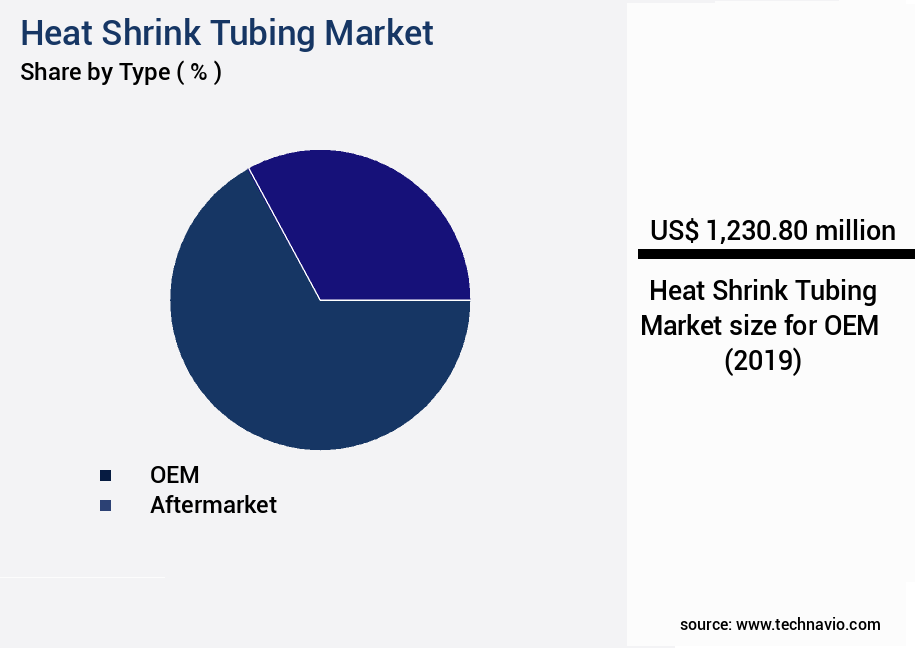
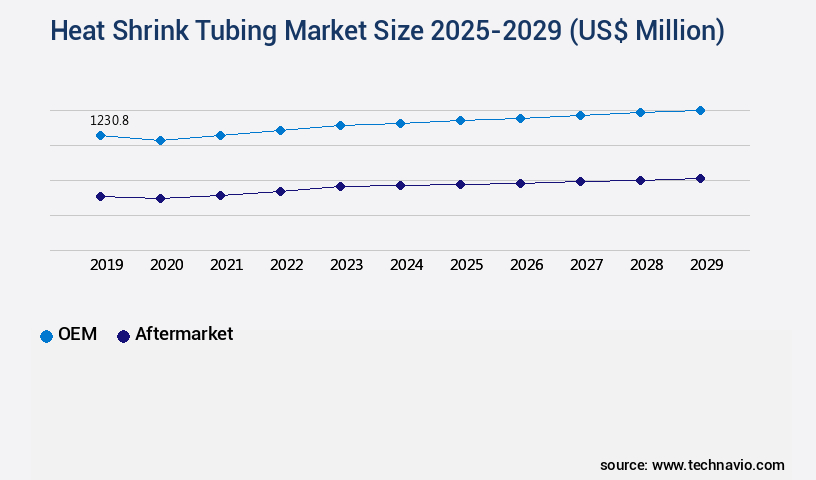
The OEM segment was valued at USD 1230.80 million in 2019 and showed a gradual increase during the forecast period.
Regional Analysis
APAC is estimated to contribute 40% to the growth of the global market during the forecast period.Technavio's analysts have elaborately explained the regional trends and drivers that shape the market during the forecast period.
See How Heat Shrink Tubing Market Demand is Rising in APAC Request Free Sample
The market is experiencing significant growth, with APAC leading the charge. In 2024, APAC accounted for the largest market share and is projected to expand further during the forecast period. This expansion can be attributed to the substantial investment in capacity additions for both renewable and fossil fuel-powered energy generation in the region. Countries like China, India, and Australia, along with several emerging economies in Southeast Asia, are driving this growth. In China alone, the market is thriving due to the country's rapid industrialization and the increasing use of heat shrink tubing in various industries, including utilities, automotive, and chemical.
The region's growth is underpinned by the rising demand for electricity access and the resulting surge in applications for heat shrink tubing. This market trend underscores the operational efficiency gains and cost reductions associated with heat shrink tubing, making it an indispensable component in numerous industries.

Customer Landscape of Heat Shrink Tubing Industry
Competitive Intelligence by Technavio Analysis: Leading Players in the Heat Shrink Tubing Market
Companies are implementing various strategies, such as strategic alliances, heat shrink tubing market forecast, partnerships, mergers and acquisitions, geographical expansion, and product/service launches, to enhance their presence in the industry.
3M Co. - This company specializes in heat shrink tubing solutions, including 3M's FP-500-BK Thin-Wall variety. Heat shrink tubing is a versatile insulation material, widely used for electrical and industrial applications to protect wires and components from environmental hazards. The company's offerings ensure enhanced durability, electrical insulation, and thermal protection for various industries.
The industry research and growth report includes detailed analyses of the competitive landscape of the market and information about key companies, including:
- 3M Co.
- ABB Ltd.
- Alpha Wire Inc.
- ARTILABO International sprl
- GREMCO GmbH
- Gremtek SAS
- HellermannTyton GmbH
- Jiangsu Dasheng Heat Shrinkable Material Co. Ltd.
- Mattr Corp.
- Molex LLC
- Nexans SA
- Panduit Corp.
- PEXCO
- Prysmian SpA
- Sumitomo Electric Industries Ltd.
- Taiwan Yun Lin Electronic Co. Ltd.
- TE Connectivity Ltd.
- Techflex Inc.
- Zeus Co. Inc.
Qualitative and quantitative analysis of companies has been conducted to help clients understand the wider business environment as well as the strengths and weaknesses of key industry players. Data is qualitatively analyzed to categorize companies as pure play, category-focused, industry-focused, and diversified; it is quantitatively analyzed to categorize companies as dominant, leading, strong, tentative, and weak.
Recent Development and News in Heat Shrink Tubing Market
- In August 2024, TE Connectivity, a leading technology and manufacturing company, announced the launch of its new line of high-performance heat shrink tubing products. These tubings offer enhanced electrical insulation and mechanical protection for various industries, including telecommunications, energy, and transportation (TE Connectivity Press Release, 2024).
- In November 2024, LyondellBasell Industries, a leading chemical company, and 3M, a global innovation company, entered into a strategic collaboration to develop and commercialize advanced heat shrink tubing materials. The partnership aims to combine LyondellBasell's polyolefin expertise with 3M's technology and market knowledge (LyondellBasell Press Release, 2024).
- In March 2025, Smiths Interconnect, a global leader in interconnect solutions, acquired Sensirion's heat shrinkable tubing business. The acquisition strengthened Smiths Interconnect's position in the market and expanded its product portfolio (Smiths Interconnect Press Release, 2025).
- In May 2025, the European Union approved a new regulation on the use of certain types of heat shrink tubing in electrical applications. The regulation aims to improve electrical safety and reduce the risk of fires caused by the use of outdated or substandard heat shrink tubing (European Commission Press Release, 2025).
Dive into Technavio's robust research methodology, blending expert interviews, extensive data synthesis, and validated models for unparalleled Heat Shrink Tubing Market insights. See full methodology.
|
Market Scope |
|
|
Report Coverage |
Details |
|
Page number |
215 |
|
Base year |
2024 |
|
Historic period |
2019-2023 |
|
Forecast period |
2025-2029 |
|
Growth momentum & CAGR |
Accelerate at a CAGR of 7.2% |
|
Market growth 2025-2029 |
USD 884.4 million |
|
Market structure |
Fragmented |
|
YoY growth 2024-2025(%) |
6.5 |
|
Key countries |
US, Taiwan, Japan, Germany, UK, China, Canada, France, India, and Italy |
|
Competitive landscape |
Leading Companies, Market Positioning of Companies, Competitive Strategies, and Industry Risks |
Why Choose Technavio for Heat Shrink Tubing Market Insights?
"Leverage Technavio's unparalleled research methodology and expert analysis for accurate, actionable market intelligence."
The market is experiencing significant growth due to its extensive applications in various industries. One of the primary uses of heat shrink tubing is for wire harnessing, where it provides excellent electrical insulation and mechanical protection. The chemical resistance ratings of heat shrink tubing, particularly polyolefin and fluoropolymer types, make them ideal for use in harsh environments. In high-temperature applications, fluoropolymer tubing is preferred due to its superior heat resistance. Crosslinked polyethylene tubing, on the other hand, is known for its high tensile strength, making it suitable for applications requiring robustness. The radiation crosslinking process is a critical factor in optimizing the performance of heat shrink tubing, particularly in industries such as aerospace, where high-temperature heat shrink tubing is commonly used. Adhesive-lined heat shrink tubing offers excellent sealing performance, making it a popular choice in industries where environmental sealing is essential. Low-temperature heat shrink tubing finds applications in cryogenic environments, where dimensional stability is crucial to ensure proper function. Heat shrink tubing's electrical insulation resistance and flame retardant properties, as per UL rating, make it a preferred choice in industries where safety is paramount. Color coding standards in the automotive industry ensure easy identification and organization of wires. High-resolution printing techniques enable precise labeling, while the material compatibility selection guide assists in choosing the right tubing for specific applications. Heat shrink tubing's long-term performance is crucial, with creep resistance and stress cracking resistance being essential evaluation factors. Manufacturing process automation and quality control standards, such as ISO 9001, ensure consistent production and high-quality products. Heat shrink tubing also finds applications in Medical Devices and Industrial Automation, further expanding its market reach.
What are the Key Data Covered in this Heat Shrink Tubing Market Research and Growth Report?
-
What is the expected growth of the Heat Shrink Tubing Market between 2025 and 2029?
-
USD 884.4 million, at a CAGR of 7.2%
-
-
What segmentation does the market report cover?
-
The report is segmented by Type (OEM and Aftermarket), End-user (Utilities, Automotive, Food and beverage, Chemical, and Others), Material (Polyolefin, PVC, Fluoropolymers, Elastomers, and Polyetheretherketone), and Geography (APAC, North America, Europe, South America, and Middle East and Africa)
-
-
Which regions are analyzed in the report?
-
APAC, North America, Europe, South America, and Middle East and Africa
-
-
What are the key growth drivers and market challenges?
-
Increasing use of bio-based heat shrink tubing, Growing concern about plastic degradability
-
-
Who are the major players in the Heat Shrink Tubing Market?
-
3M Co., ABB Ltd., Alpha Wire Inc., ARTILABO International sprl, GREMCO GmbH, Gremtek SAS, HellermannTyton GmbH, Jiangsu Dasheng Heat Shrinkable Material Co. Ltd., Mattr Corp., Molex LLC, Nexans SA, Panduit Corp., PEXCO, Prysmian SpA, Sumitomo Electric Industries Ltd., Taiwan Yun Lin Electronic Co. Ltd., TE Connectivity Ltd., Techflex Inc., and Zeus Co. Inc.
-
We can help! Our analysts can customize this heat shrink tubing market research report to meet your requirements.
 RIA -
RIA -