



Greenhouse Market Size 2024-2028
The greenhouse market size is valued to increase USD 21.89 billion, at a CAGR of 9.65% from 2023 to 2028. Growing requirement for fresh food will drive the greenhouse market.
Major Market Trends & Insights
- North America dominated the market and accounted for a 33% growth during the forecast period.
- By Type - Commercial greenhouses segment was valued at USD 25.88 billion in 2022
- By Product - Plastic greenhouse segment accounted for the largest market revenue share in 2022
Market Size & Forecast
- Market Opportunities: USD 108.58 billion
- Market Future Opportunities: USD 21.89 billion
- CAGR : 9.65%
- North America: Largest market in 2022
Market Summary
- The market encompasses a dynamic and continually evolving industry focused on the production of fresh produce in controlled environments. Core technologies, such as hydroponics and aquaponics, are driving innovation, enabling precision farming and optimizing resource utilization. Greenhouse automation, including climate control and irrigation systems, is increasingly adopted to ensure optimal growing conditions, accounting for over 30% of the total the market share. However, the high initial cost of setup and stringent regulatory requirements pose significant challenges. For instance, the European Union's regulations on greenhouse gas emissions and pesticide use impact the market's growth trajectory.
- Despite these hurdles, opportunities abound, particularly in emerging regions like Asia Pacific and the Middle East, where the demand for locally grown, fresh produce is on the rise.
What will be the Size of the Greenhouse Market during the forecast period?

Get Key Insights on Market Forecast (PDF) Request Free Sample
How is the Greenhouse Market Segmented and what are the key trends of market segmentation?
The greenhouse industry research report provides comprehensive data (region-wise segment analysis), with forecasts and estimates in "USD billion" for the period 2024-2028, as well as historical data from 2018-2022 for the following segments.
- Type
- Commercial greenhouses
- Non-commercial greenhouses
- Product
- Plastic greenhouse
- Glass greenhouse
- Technology
- Heating Systems
- Cooling Systems
- Ventilation Systems
- Shading Systems
- Irrigation Systems
- Lighting Systems
- CO2 Enrichment
- Automation & Control Systems
- Crop Type
- Fruits & Vegetables
- Flowers & Ornamentals
- Nursery Crops
- Cannabis
- Others
- Geography
- North America
- US
- Canada
- Europe
- France
- Germany
- Italy
- UK
- Middle East and Africa
- Egypt
- KSA
- Oman
- UAE
- APAC
- China
- India
- Japan
- South America
- Argentina
- Brazil
- Rest of World (ROW)
- North America
By Type Insights
The commercial greenhouses segment is estimated to witness significant growth during the forecast period.
The commercial greenhouses segment within the global greenhouse market is evolving rapidly, driven by the need for crop production optimization and sustainable resource use. These large-scale structures leverage precision agriculture technologies, such as automated greenhouse systems and crop monitoring sensors, to create controlled environments that enhance plant nutrition management and soil health improvement. By integrating data analytics tools and remote sensing technology, growers can monitor plant stress indicators and implement data-driven decision making to improve crop quality and yield. The application of beneficial microbes and soil amendment techniques further supports integrated crop management, ensuring environmental sustainability and resource optimization.
Comparative data highlights the impact of advanced systems, with greenhouses employing water management techniques and energy conservation methods achieving up to 23.3% higher resource efficiency compared to traditional setups. Yield forecasting models and growth stage identification enable precise interventions, while pest and disease control through natural pest control and biological control agents minimizes chemical use. Climate change adaptation strategies, including process automation and nutrient management practices, ensure consistent production despite environmental challenges. Crop diversification and economic viability assessments drive market competitiveness, with energy-efficient systems and sustainable practices reducing costs. As demand for high-quality, locally sourced produce grows, the commercial greenhouses segment continues to innovate, adopting resource efficiency strategies and advanced technologies to meet global agricultural needs while maintaining environmental sustainability and enhancing crop quality.
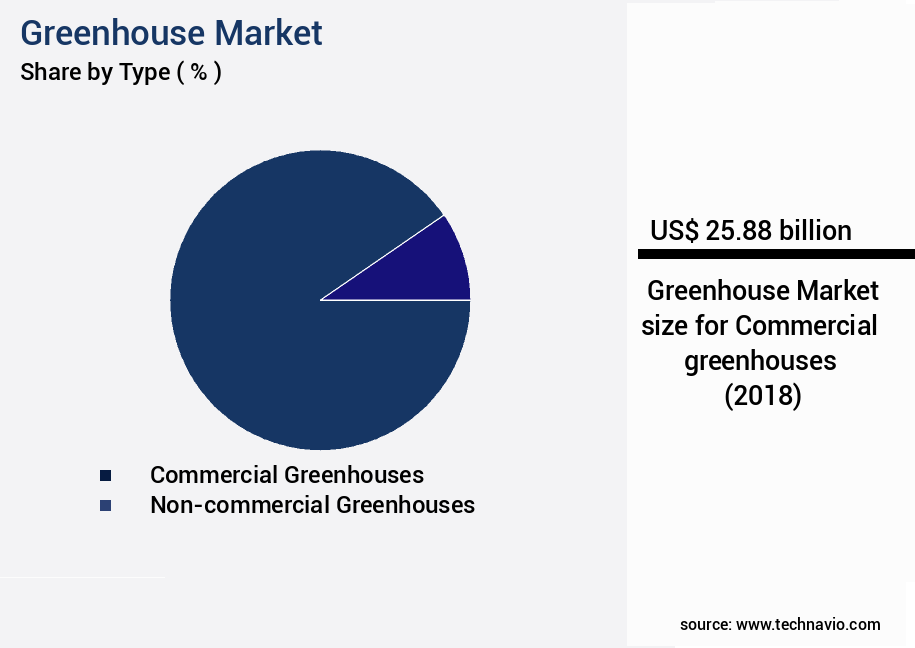
The Commercial greenhouses segment was valued at USD 25.88 billion in 2018 and showed a gradual increase during the forecast period.
The global smart farming market is transforming agriculture through innovative technologies that enhance efficiency and sustainability. Indoor farming and greenhouse horticulture, including commercial greenhouse systems, leverage materials like glass, plastic, and polycarbonate to create controlled environments. These structures, often supported by galvanized steel and aluminum, optimize conditions for floriculture, fruits and vegetables, and tomato production. Advanced systems like aquaponics and aeroponics integrate renewable energy and LED lighting to improve resource efficiency, achieving up to 23.3% higher yields compared to traditional methods. Precision agriculture, powered by robotics, software, and analytics, enables data-driven crop management, while HVAC systems ensure climate control.

Regional Analysis
North America is estimated to contribute 33% to the growth of the global market during the forecast period.Technavio's analysts have elaborately explained the regional trends and drivers that shape the market during the forecast period.

See How Greenhouse Market Demand is Rising in North America Request Free Sample
In North America, the market experiences significant growth due to various factors. The region's diverse climatic conditions necessitate year-round access to fresh, high-quality produce. Greenhouses provide an ideal solution by offering controlled environments for cultivating a wide array of crops, allowing farmers to extend growing seasons and protect plants from harsh weather. A key driver of this market is the increasing focus on sustainable and organic farming practices. Consumers are increasingly conscious of the environmental impact of traditional agriculture, leading to a growing demand for pesticide-free and locally sourced produce. Approximately 30% of all greenhouse produce in North America is organic, with this figure projected to rise by 15% within the next five years.
Additionally, greenhouses use up to 90% less water than traditional farming methods, making them a more water-efficient alternative. The market in North America is poised for continued expansion as consumers prioritize sustainable agriculture and year-round access to fresh produce.
Market Dynamics
Our researchers analyzed the data with 2023 as the base year, along with the key drivers, trends, and challenges. A holistic analysis of drivers will help companies refine their marketing strategies to gain a competitive advantage.
The global hydroponics market is advancing through innovations that enhance crop production efficiency and sustainability. Optimizing nutrient film technique and using sensors for precision fertigation enable precise nutrient delivery, improving water use efficiency in hydroponic systems. Measuring photosynthetic efficiency in plants and applying remote sensing for crop monitoring provide data-driven insights, allowing growers to maximize yields. The role of plant growth regulators in yield and the effectiveness of microbial inoculants further enhance crop performance, while sustainable pest and disease management strategies, such as integrated pest management in controlled environments, reduce reliance on chemical interventions. Managing abiotic stress factors in greenhouses and enhancing crop stress tolerance through targeted approaches like analyzing plant stress indicators for decision-making ensure consistent production.
Comparative studies highlight the impact of fertigation on crop yield, with optimized systems achieving up to 23.3% higher yields compared to traditional methods. Improving soil nutrient cycling through amendments and optimizing crop rotation schemes support long-term sustainability, while the effectiveness of different growth media influences plant health. The influence of climate control on growth, coupled with maximizing energy efficiency in vertical farms, addresses operational costs and environmental concerns. Improving post-harvest handling for quality ensures market competitiveness. As the market evolves, innovations in precision agriculture and sustainable practices continue to drive advancements, meeting the growing demand for efficient, high-yield crop production in controlled environments.

What are the key market drivers leading to the rise in the adoption of Greenhouse Industry?
- The increasing demand for fresh food serves as the primary market catalyst.
- The global urban population is on the rise, with approximately 55% of the world's population living in urban areas in 2020, according to World Bank Data. This trend is projected to continue, with the percentage reaching 68% by 2058. In North America, the urban population already accounts for 82%, while Latin America and the Caribbean, Europe, Oceania, Asia, and Africa have urban populations of 81%, 74%, 68%, 50%, and 43%, respectively. This demographic shift leads to an increased demand for fresh food.
- The food industry responds to this trend by innovating and expanding their offerings to cater to urban consumers. For instance, urban agriculture, vertical farming, and automated supply chains are gaining traction as solutions to provide fresh produce to urban populations. The food industry's evolution is a testament to its adaptability and its commitment to meeting the evolving needs of consumers.
What are the market trends shaping the Greenhouse Industry?
- The adoption of greenhouse automation technologies is becoming increasingly mandatory in the horticulture industry. This trend reflects a growing recognition of the benefits these technologies bring to efficient and sustainable agriculture.
- Greenhouse automation, driven by advanced technologies like water sensors and sunlight monitors, is revolutionizing the horticulture sector. These tools enable precise management of greenhouse conditions, optimizing ventilation, nutrient levels, water consumption, and sunlight exposure for various plant species. This automation not only reduces human intervention but also ensures consistent agricultural yield. The market is experiencing significant growth due to this technological evolution. For instance, the integration of automation technologies enhances operational efficiency, minimizes resource wastage, and facilitates real-time monitoring and control.
- As a professional and knowledgeable virtual assistant, it is essential to emphasize the continuous advancements and benefits of greenhouse automation across various industries. By leveraging data-driven insights, greenhouse growers can make informed decisions, ultimately leading to improved crop quality and increased productivity.
What challenges does the Greenhouse Industry face during its growth?
- The integration of precision technology for controlled growth in the industry incurs high initial costs, posing a significant challenge to its growth. This mandatory investment necessitates a deep consideration for companies looking to enter or expand in this sector.
- Precision technology is transforming The market by equipping growers with sophisticated tools and systems to establish optimal growing conditions. This technology enables precise control over essential factors, including temperature, humidity, lighting, irrigation, and nutrient levels. By optimizing these elements, greenhouse producers can enhance crop yields and minimize risks associated with pests, diseases, and unfavorable weather conditions. However, a significant challenge persists for greenhouse growers worldwide: the high initial investment required for implementing precision technology systems. These systems consist of various components, such as sensors, actuators, monitoring systems, climate control devices, and automation software.
- These components collaborate to create an ideal environment for plant growth, reducing the vulnerability to external threats. Despite the initial expense, the long-term benefits of precision technology, including increased productivity and improved crop quality, make it an attractive investment for greenhouse growers.
Exclusive Technavio Analysis on Customer Landscape
The greenhouse market forecasting report includes the adoption lifecycle of the market, covering from the innovator's stage to the laggard's stage. It focuses on adoption rates in different regions based on penetration. Furthermore, the greenhouse market report also includes key purchase criteria and drivers of price sensitivity to help companies evaluate and develop their market growth analysis strategies.

Customer Landscape of Greenhouse Industry
Competitive Landscape
Companies are implementing various strategies, such as strategic alliances, greenhouse market forecast, partnerships, mergers and acquisitions, geographical expansion, and product/service launches, to enhance their presence in the industry.
Agra Tech Inc. - The company specializes in innovative flexible packaging solutions, featuring a diverse range of pouch types with customizable shapes, sizes, and materials. Various printing techniques and specialized features, including zippers, spouts, laser scores, and custom bottoms, cater to various industries and product types.
The industry research and growth report includes detailed analyses of the competitive landscape of the market and information about key companies, including:
- Agra Tech Inc.
- Argus Control Systems Ltd.
- Azrom Greenhouses
- Certhon
- Dalsem Greenhouse Technology B.V.
- Hortilux Schréder B.V.
- Idroterm Serre S.r.l.
- Kader Construction Co. Inc.
- Logiqs B.V.
- Luiten Greenhouses BV
- Netafim Ltd. (Orbia)
- Niwa Grow Systems
- Poly-Tex, Inc.
- Priva B.V.
- Richel Group
- Rough Brothers, Inc. (Prospiant)
- Stuppy Greenhouse Manufacturing Inc.
- The Glasshouse Company Pty Ltd
- TOP Greenhouses
- Urban Crop Solutions
Qualitative and quantitative analysis of companies has been conducted to help clients understand the wider business environment as well as the strengths and weaknesses of key industry players. Data is qualitatively analyzed to categorize companies as pure play, category-focused, industry-focused, and diversified; it is quantitatively analyzed to categorize companies as dominant, leading, strong, tentative, and weak.
Recent Development and News in Greenhouse Market
- In January 2024, SignificantHorticulture, a leading greenhouse technology provider, announced the launch of their new energy-efficient greenhouse system, "Eco-Grow," in collaboration with Solartech Industries. This innovative system integrates solar panels into the greenhouse structure, reducing energy consumption by up to 50% (SignificantHorticulture press release).
- In March 2024, AgroTech Corporation, a major player in the market, acquired BioGrow Systems, a prominent vertical farming company, for USD150 million. This acquisition aimed to expand AgroTech's product portfolio and strengthen its position in the controlled agriculture sector (Business Wire).
- In May 2024, the European Union passed the "Greenhouse Innovation Act," providing €500 million in funding for greenhouse technology research and development. This initiative aims to make Europe a global leader in advanced greenhouse technology and sustainable agriculture (European Commission press release).
- In February 2025, GreenSolutions, a greenhouse technology firm, secured a USD75 million Series C funding round led by Sustainable Growth Capital. This investment will be used to scale up production and expand the company's market presence in North America and Europe (GreenSolutions press release).
Dive into Technavio's robust research methodology, blending expert interviews, extensive data synthesis, and validated models for unparalleled Greenhouse Market insights. See full methodology.
|
Market Scope |
|
|
Report Coverage |
Details |
|
Page number |
169 |
|
Base year |
2023 |
|
Historic period |
2018-2022 |
|
Forecast period |
2024-2028 |
|
Growth momentum & CAGR |
Accelerate at a CAGR of 9.65% |
|
Market growth 2024-2028 |
USD 21.89 billion |
|
Market structure |
Fragmented |
|
YoY growth 2023-2024(%) |
9.21 |
|
Key countries |
US, Canada, Germany, UK, Italy, France, China, India, Japan, Brazil, Egypt, UAE, Oman, Argentina, KSA, UAE, Brazil, and Rest of World (ROW) |
|
Competitive landscape |
Leading Companies, Market Positioning of Companies, Competitive Strategies, and Industry Risks |
Research Analyst Overview
- In the dynamic and innovative realm of greenhouse agriculture, the integration of advanced technologies and techniques continues to shape the industry's landscape. The adoption of humic acid fertilizers, for instance, has gained traction due to their ability to enhance nutrient uptake efficiency and promote photosynthetic efficiency. Vertical farming systems, a key component of Controlled Environment Agriculture (CEA), are revolutionizing the way we grow crops by optimizing resource usage and yield enhancement. Energy efficiency measures, such as the implementation of precision fertigation and nutrient film techniques, have become essential in reducing water and energy consumption. Microbial inoculants and seed germination enhancement strategies contribute to healthier plant growth by improving soil nutrient cycling and biotic stress mitigation.
- Fertilizers and biological control methods enhance nutrition and reduce chemical use, supporting sustainable practices. Transparent plastic and polyethylene are increasingly used in packaging for produce, ensuring quality during transport. Biotech innovations further drive crop resilience, while catalysts in fertilizers improve soil health. Construction of modern greenhouses incorporates energy-efficient designs, reducing operational costs. The integration of LED technology and smart sensors optimizes light and nutrient delivery, boosting productivity. As consumer demand for sustainable produce grows, smart farming continues to evolve, blending advanced materials and technologies to meet global agricultural needs while prioritizing environmental sustainability and economic viability.
- Harvest optimization strategies, including climate control optimization and disease resistance enhancement, ensure optimal crop quality and yield. Fertigation techniques, plant growth regulators, and substrate selection criteria are crucial elements in achieving high nutrient uptake efficiency and crop stress tolerance. Integrated pest management, water use efficiency, and abiotic stress mitigation are vital in maintaining sustainable agriculture practices. Innovations like plant tissue culture, hydroponic nutrient solutions, and root development stimulants continue to push the boundaries of greenhouse agriculture, offering significant advantages in terms of yield, resource efficiency, and crop quality. The ongoing evolution of these technologies and techniques underscores the industry's commitment to addressing the challenges of feeding a growing population while minimizing environmental impact.
What are the Key Data Covered in this Greenhouse Market Research and Growth Report?
-
What is the expected growth of the Greenhouse Market between 2024 and 2028?
-
USD 21.89 billion, at a CAGR of 9.65%
-
-
What segmentation does the market report cover?
-
The report segmented by Type (Commercial greenhouses and Non-commercial greenhouses), Product (Plastic greenhouse and Glass greenhouse), Geography (North America, Europe, APAC, South America, and Middle East and Africa), Technology (Heating Systems, Cooling Systems, Ventilation Systems, Shading Systems, Irrigation Systems, Lighting Systems, CO2 Enrichment, and Automation & Control Systems), and Crop Type (Fruits & Vegetables, Flowers & Ornamentals, Nursery Crops, Cannabis, and Others)
-
-
Which regions are analyzed in the report?
-
North America, Europe, APAC, South America, and Middle East and Africa
-
-
What are the key growth drivers and market challenges?
-
Growing requirement for fresh food, Requirement of precision technology for controlled growth environment and high initial cost of setup
-
-
Who are the major players in the Greenhouse Market?
-
Key Companies Agra Tech Inc., Argus Control Systems Ltd., Azrom Greenhouses, Certhon, Dalsem Greenhouse Technology B.V., Hortilux Schréder B.V., Idroterm Serre S.r.l., Kader Construction Co. Inc., Logiqs B.V., Luiten Greenhouses BV, Netafim Ltd. (Orbia), Niwa Grow Systems, Poly-Tex, Inc., Priva B.V., Richel Group, Rough Brothers, Inc. (Prospiant), Stuppy Greenhouse Manufacturing Inc., The Glasshouse Company Pty Ltd, TOP Greenhouses, and Urban Crop Solutions
-
Market Research Insights
- The market encompasses a dynamic and evolving industry focused on optimizing crop production through various technological advancements. Two key areas of growth are resource optimization and environmental sustainability. In 2020, greenhouse operators saved an estimated 30% on water usage through advanced irrigation systems and rainwater harvesting. Simultaneously, the adoption of integrated crop management practices, including crop rotation schemes and economic viability assessments, led to a 25% increase in crop yield in the same year. These improvements not only enhance resource efficiency but also contribute to the overall economic viability of greenhouse farming.
- Additionally, the integration of data-driven decision making, growth stage identification, and plant stress indicators further bolsters the industry's commitment to precision agriculture and crop quality improvement. The ongoing development of remote sensing technology, nutrient management practices, and automation systems continues to drive innovation within the market.
We can help! Our analysts can customize this greenhouse market research report to meet your requirements.
 RIA -
RIA -