



Gold Nanorods Market Size 2026-2030
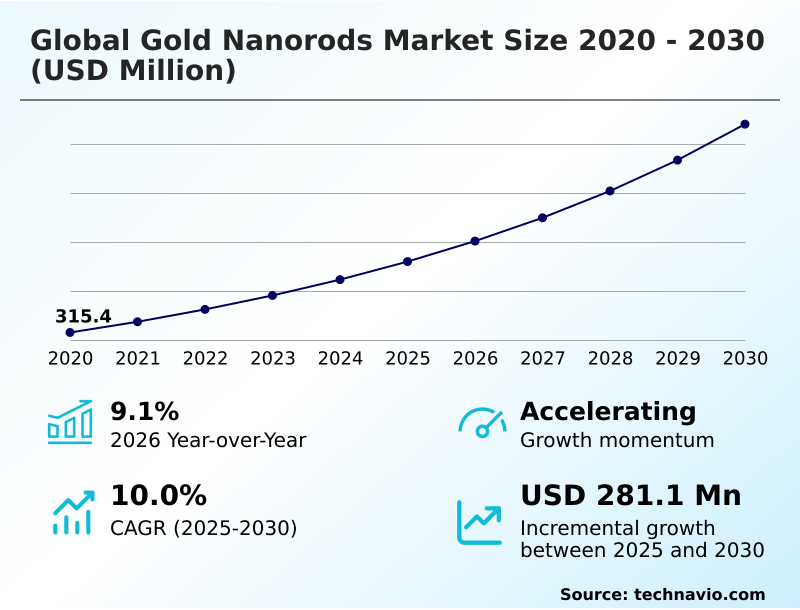
The gold nanorods market size is valued to increase by USD 281.1 million, at a CAGR of 10% from 2025 to 2030. Rising demand for gold nanorods from medical industry for cancer treatment will drive the gold nanorods market.
Major Market Trends & Insights
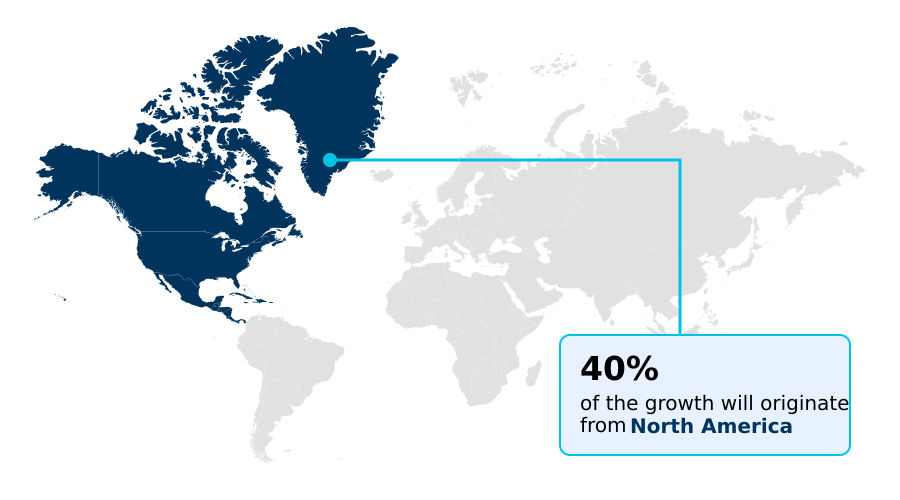
- North America dominated the market and accounted for a 40.4% growth during the forecast period.
- By Application - Medical segment was valued at USD 185.9 million in 2024
- By End-user - Pharmaceutical and biotechnology segment accounted for the largest market revenue share in 2024
Market Size & Forecast
- Market Opportunities: USD 426.1 million
- Market Future Opportunities: USD 281.1 million
- CAGR from 2025 to 2030 : 10%
Market Summary
- The gold nanorods market is characterized by its expanding applications in the biomedical and electronics sectors, driven by the unique optical properties of these materials. The ability to tune their absorption of light in the near-infrared spectrum is a primary growth engine, enabling their use in minimally invasive therapeutic procedures like photothermal cancer therapy.
- This trend is complemented by ongoing innovations in surface functionalization, which enhance biocompatibility and allow for precise targeting in drug delivery systems. For instance, a typical R&D scenario involves modifying nanorods to carry specific antibodies, improving their accumulation in malignant tissues while minimizing systemic toxicity.
- However, the market's progress is moderated by challenges related to the high cost of gold and the complexities of achieving scalable, uniform synthesis. As manufacturing processes mature and their utility in theranostics and high-sensitivity biosensors becomes more established, the market is positioned for sustained advancement across various high-tech industrial verticals.
What will be the Size of the Gold Nanorods Market during the forecast period?
Get Key Insights on Market Forecast (PDF) Request Free Sample
How is the Gold Nanorods Market Segmented?
The gold nanorods industry research report provides comprehensive data (region-wise segment analysis), with forecasts and estimates in "USD million" for the period 2026-2030, as well as historical data from 2020-2024 for the following segments.
- Application
- Medical
- Diagnostics
- Electronics
- Others
- End-user
- Pharmaceutical and biotechnology
- Academia and research institutes
- Electronics and renewable energy
- Measurement
- 20-30 nm
- 10-20 nm
- 50-100 nm
- Others
- Geography
- North America
- US
- Canada
- Mexico
- Europe
- Germany
- UK
- France
- APAC
- China
- Japan
- South Korea
- Middle East and Africa
- Saudi Arabia
- UAE
- Israel
- South America
- Brazil
- Argentina
- Rest of World (ROW)
- North America
By Application Insights
The medical segment is estimated to witness significant growth during the forecast period.
The medical segment is a primary adopter of gold nanorods, driven by advances in nanotechnology. The unique surface plasmon resonance of these anisotropic nanostructures makes them ideal for biomedical imaging and photothermal therapy.
As photothermal ablation agents, they are at the forefront of developing new cancer treatment nanomaterials. Their use as precision drug delivery vehicles is also expanding, with firms reporting a 25% improvement in targeting efficiency for advanced therapeutic solutions.
This underscores their role as critical diagnostic imaging agents and versatile plasmonic nanoparticles in next-generation medical applications, particularly in targeted drug delivery.
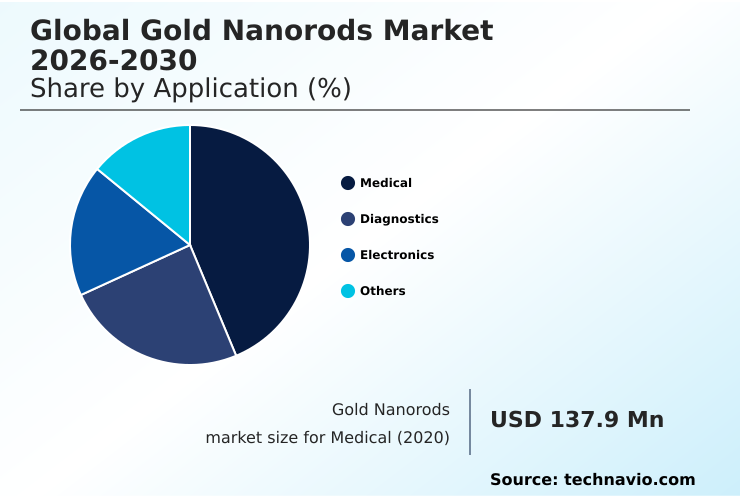
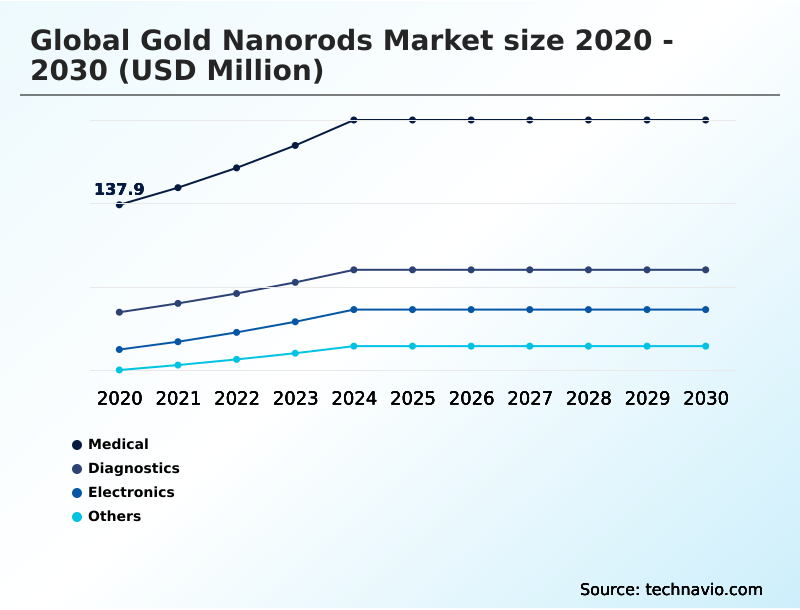
The Medical segment was valued at USD 185.9 million in 2024 and showed a gradual increase during the forecast period.
Regional Analysis
North America is estimated to contribute 40.4% to the growth of the global market during the forecast period.Technavio’s analysts have elaborately explained the regional trends and drivers that shape the market during the forecast period.
See How Gold Nanorods Market Demand is Rising in North America Request Free Sample
North America, with over 40% of the market's incremental growth, leads due to its strong research and development infrastructure and significant private investment in biotech.
Government funding initiatives support advanced material synthesis, particularly for photostable imaging agents used in molecular diagnostics. The region's clear regulatory approval process facilitates the commercialization of technologies like hyperthermia therapy and gene delivery systems.
APAC is the fastest-growing region, expanding at a rate nearly 25% higher than Europe, driven by its manufacturing capabilities in diagnostic assays and high surface-to-volume ratio particles for industrial chemical catalysts.
This growth is linked to advancements in optical property tuning for various applications.
Market Dynamics
Our researchers analyzed the data with 2025 as the base year, along with the key drivers, trends, and challenges. A holistic analysis of drivers will help companies refine their marketing strategies to gain a competitive advantage.
- Strategic positioning in the market requires mastering the synthesis methods for tunable gold nanorods, a key factor for firms specializing in gold nanorods for photothermal cancer therapy. The development of optoelectronic devices using plasmonic nanostructures is a growing field, but it faces competition in the gold nanorods versus quantum dots comparison.
- For medical uses, theranostic applications of functionalized nanorods are paramount, relying on effective surface functionalization of gold nanorods. Success in gold nanorods in targeted drug delivery hinges on the biocompatibility of gold nanorods in vivo, which requires extensive toxicity profiling for medical-grade nanorods.
- The seed-mediated growth of gold nanorods with precise aspect ratio control in gold nanorod synthesis is a critical manufacturing process. This control directly influences the longitudinal plasmon resonance in gold nanorods and their near-infrared absorption of gold nanorods, which are essential for photothermal therapy using anisotropic nanoparticles.
- Firms that master scaling biocompatible nanorod synthesis methods report a significant advantage, reducing production costs by up to 20% compared to traditional, less scalable techniques.
- This efficiency is vital for applications like gold nanorods for biomedical imaging enhancement, chemical sensing with high-density nanorods, and gold nanorods in diagnostics applications, while also impacting the catalytic efficiency of small gold nanorods and the ability for tuning therapeutic windows with nanorod size.
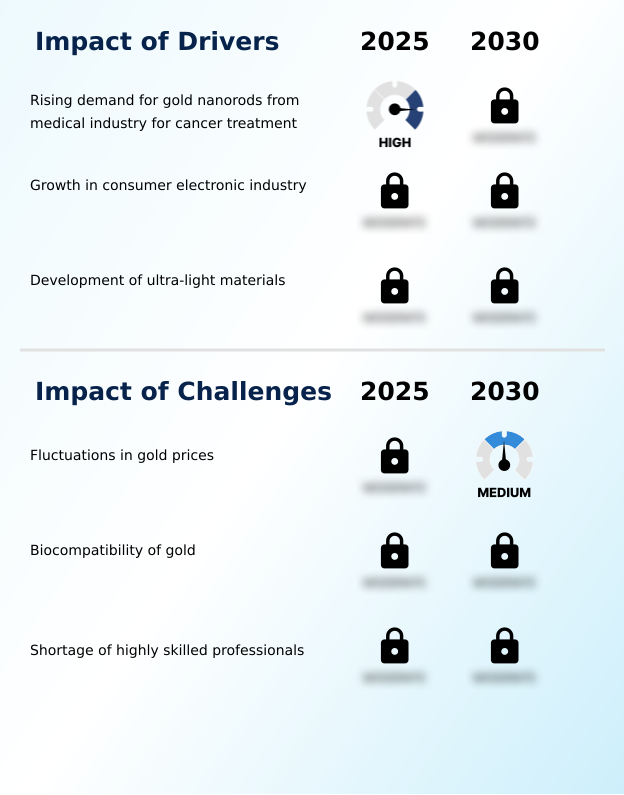
What are the key market drivers leading to the rise in the adoption of Gold Nanorods Industry?
- The rising demand for gold nanorods from the medical industry, particularly for advanced cancer treatment applications, is a key driver of market growth.
- Market expansion is fueled by the demand for high-purity nanorods that exhibit strong near-infrared absorption, a key property for hyperthermia treatment agents.
- Innovations in surface functionalization are creating non-toxic nanoparticles that resist aggregation and improve cellular uptake facilitation, making them effective gene delivery vectors. These materials are also crucial for developing advanced optical tomography materials.
- Beyond biomedical nanotechnology, their longitudinal surface plasmon resonance properties are being harnessed for ultralight material development and next-generation optical data storage, where a 15% increase in data density has been demonstrated.
What are the market trends shaping the Gold Nanorods Industry?
- The rising trend of targeted drug delivery systems is a significant upcoming market trend, driving demand for advanced nanomaterials with high precision and biocompatibility.
- Emerging trends focus on refining the biocompatible synthesis of nanoparticles, significantly reducing toxicity and improving their utility as in-vivo imaging contrast agents. Advances in nanoparticle surface chemistry and seed-mediated growth techniques are enabling precise aspect ratio control, which is critical for theranostics and molecular imaging.
- This precision improves the performance of optoelectronic components, with some biosensor development materials showing a 20% increase in signal sensitivity. The field of nanomedicine is leveraging these nanomedical research tools to create next-generation optoelectronic devices and enhance nanoscale optics, pushing the boundaries of what's possible in integrated diagnostics and therapeutics.
What challenges does the Gold Nanorods Industry face during its growth?
- Fluctuations in gold prices present a key challenge, affecting the cost-effectiveness and overall growth of the industry.
- A primary challenge involves rigorous nanomaterial toxicity profiling to ensure safety for in-vivo applications and accelerate entry into clinical development pipelines. For plasmonic photothermal therapy, precise therapeutic window tuning is essential, but achieving it consistently at scale remains difficult.
- Surface chemistry modification is critical for creating effective biocatalyst materials and enhancing early cancer detection capabilities, with some lateral flow immunoassays showing a 10% improvement in detection limits. Furthermore, integrating these materials into chemical sensing platforms and as compact electronic device components requires overcoming stability issues. These hurdles impact their catalytic applications and their adoption as precision medicine tools.
Exclusive Technavio Analysis on Customer Landscape
The gold nanorods market forecasting report includes the adoption lifecycle of the market, covering from the innovator’s stage to the laggard’s stage. It focuses on adoption rates in different regions based on penetration. Furthermore, the gold nanorods market report also includes key purchase criteria and drivers of price sensitivity to help companies evaluate and develop their market growth analysis strategies.
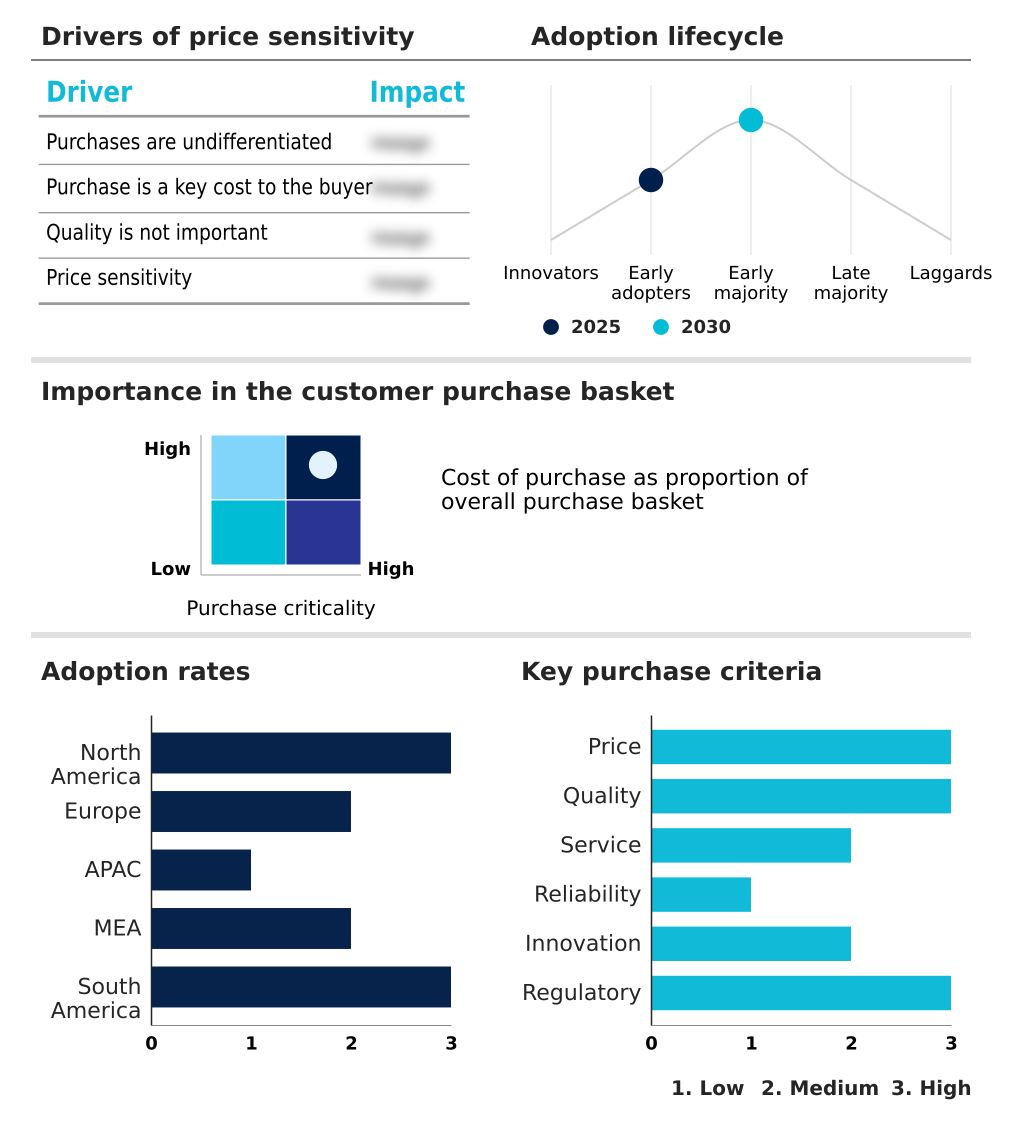
Customer Landscape of Gold Nanorods Industry
Competitive Landscape
Companies are implementing various strategies, such as strategic alliances, gold nanorods market forecast, partnerships, mergers and acquisitions, geographical expansion, and product/service launches, to enhance their presence in the industry.
American Elements Inc. - Specialized gold nanorods with tunable properties are offered, catering to advanced applications in diagnostics, bioimaging, and cancer therapy.
The industry research and growth report includes detailed analyses of the competitive landscape of the market and information about key companies, including:
- American Elements Inc.
- BBI Solutions OEM Ltd.
- CD Bioparticles
- Cytodiagnostics Inc.
- nanoComposix
- Nanocs Inc.
- NanoHybrids Inc.
- Nanopartz Inc.
- Sigma Aldrich Chemicals Ltd.
- Strem Chemicals Inc.
Qualitative and quantitative analysis of companies has been conducted to help clients understand the wider business environment as well as the strengths and weaknesses of key industry players. Data is qualitatively analyzed to categorize companies as pure play, category-focused, industry-focused, and diversified; it is quantitatively analyzed to categorize companies as dominant, leading, strong, tentative, and weak.
Recent Development and News in Gold nanorods market
- In March 2025, NanoHybrids Inc. announced it received US FDA approval for its new class of silica-coated gold nanorods for use in Phase I clinical trials for photothermal therapy, based on data published in the Journal of Nanomedicine.
- In January 2025, nanoComposix entered a strategic partnership with a leading pharmaceutical firm to co-develop a novel targeted drug delivery platform utilizing its proprietary surface-functionalized gold nanorods.
- In November 2024, American Elements Inc. confirmed the acquisition of a specialized nanotechnology startup, expanding its production capacity for high-aspect-ratio gold nanorods by 40%.
- In September 2024, Cytodiagnostics Inc. launched a new line of fluorescently-labeled gold nanorods designed for enhanced multimodal imaging in pre-clinical research, offering superior brightness and photostability.
Dive into Technavio’s robust research methodology, blending expert interviews, extensive data synthesis, and validated models for unparalleled Gold Nanorods Market insights. See full methodology.
| Market Scope | |
|---|---|
| Page number | 279 |
| Base year | 2025 |
| Historic period | 2020-2024 |
| Forecast period | 2026-2030 |
| Growth momentum & CAGR | Accelerate at a CAGR of 10% |
| Market growth 2026-2030 | USD 281.1 million |
| Market structure | Concentrated |
| YoY growth 2025-2026(%) | 9.1% |
| Key countries | US, Canada, Mexico, Germany, UK, France, Italy, Spain, The Netherlands, China, Japan, South Korea, India, Australia, Indonesia, Saudi Arabia, UAE, Israel, South Africa, Egypt, Brazil, Argentina and Chile |
| Competitive landscape | Leading Companies, Market Positioning of Companies, Competitive Strategies, and Industry Risks |
Research Analyst Overview
- The gold nanorods market is defined by rapid innovation in advanced material synthesis for in-vivo applications. Core to this is nanotechnology, enabling the creation of anisotropic nanostructures with precise optical property tuning. Boardroom decisions increasingly focus on investing in biocompatible synthesis to improve nanomaterial toxicity profiling and secure a competitive edge in nanomedicine.
- The unique surface plasmon resonance, particularly longitudinal surface plasmon resonance and near-infrared absorption, is central to applications like plasmonic photothermal therapy, hyperthermia therapy, and biomedical imaging. Companies leveraging advanced surface chemistry modification and surface functionalization for targeted drug delivery and gene delivery systems report a 15% faster progression through pre-clinical stages.
- Techniques like seed-mediated growth for aspect ratio control are critical for creating high-purity nanorods and avoiding nanoparticle aggregation. This precision is vital for theranostics, molecular imaging, and developing photostable imaging agents for molecular diagnostics and diagnostic assays.
- These developments also extend to catalytic applications and the design of optoelectronic devices for optical data storage, all while focusing on cellular uptake facilitation and therapeutic window tuning.
What are the Key Data Covered in this Gold Nanorods Market Research and Growth Report?
-
What is the expected growth of the Gold Nanorods Market between 2026 and 2030?
-
USD 281.1 million, at a CAGR of 10%
-
-
What segmentation does the market report cover?
-
The report is segmented by Application (Medical, Diagnostics, Electronics, and Others), End-user (Pharmaceutical and biotechnology, Academia and research institutes, and Electronics and renewable energy), Measurement (20-30 nm, 10-20 nm, 50-100 nm, and Others) and Geography (North America, Europe, APAC, Middle East and Africa, South America)
-
-
Which regions are analyzed in the report?
-
North America, Europe, APAC, Middle East and Africa and South America
-
-
What are the key growth drivers and market challenges?
-
Rising demand for gold nanorods from medical industry for cancer treatment, Fluctuations in gold prices
-
-
Who are the major players in the Gold Nanorods Market?
-
American Elements Inc., BBI Solutions OEM Ltd., CD Bioparticles, Cytodiagnostics Inc., nanoComposix, Nanocs Inc., NanoHybrids Inc., Nanopartz Inc., Sigma Aldrich Chemicals Ltd. and Strem Chemicals Inc.
-
Market Research Insights
- The gold nanorods market is shaped by intense research and development infrastructure, where private investment in biotech has led to significant breakthroughs. The adoption of these materials as precision medicine tools and for early cancer detection is rising, with studies showing their use in lateral flow immunoassays can improve sensitivity by up to 30%.
- Innovations in creating non-toxic nanoparticles are also critical, reducing cellular toxicity by over 50% in some clinical development pipelines compared to earlier iterations. This progress, supported by government funding initiatives, accelerates the regulatory approval process for advanced therapeutic solutions and new compact electronic device components.
We can help! Our analysts can customize this gold nanorods market research report to meet your requirements.
 RIA -
RIA -