
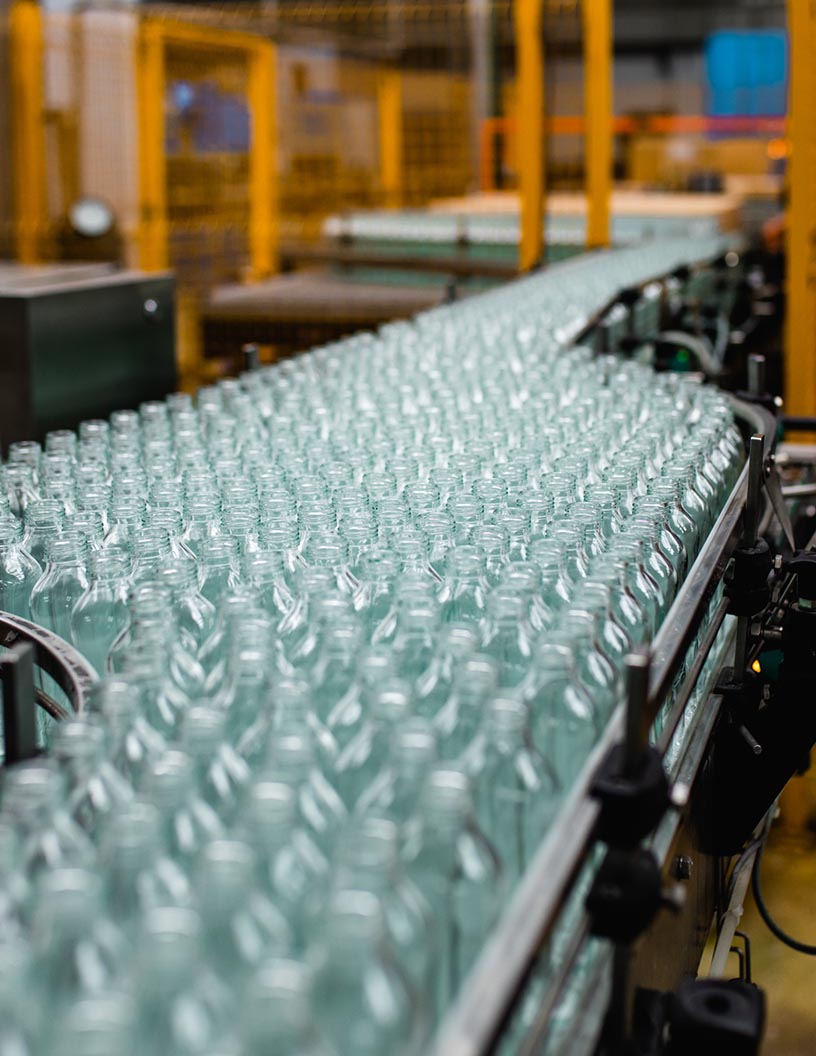


Americas Glass Packaging Market Size 2026-2030
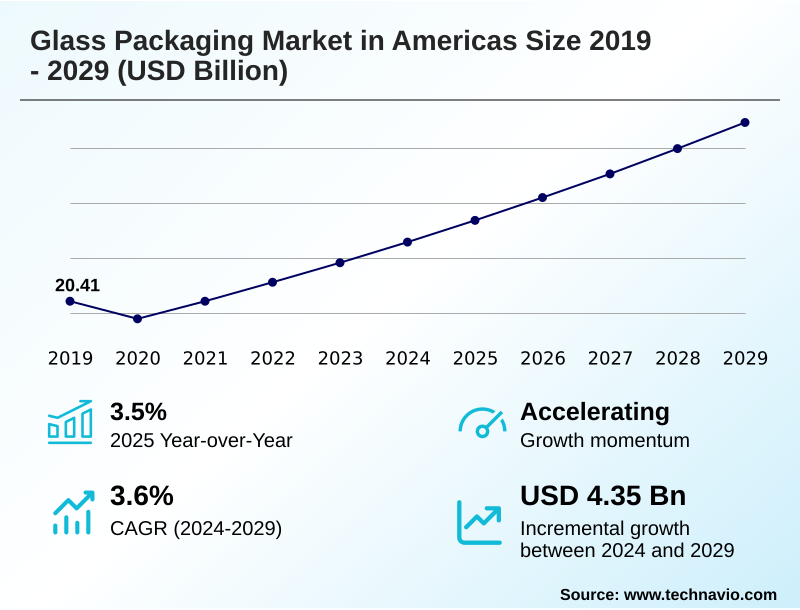
The americas glass packaging market size is valued to increase by USD 4.60 billion, at a CAGR of 3.7% from 2025 to 2030. Heightened consumer and regulatory focus on sustainability will drive the americas glass packaging market.
Major Market Trends & Insights
- By Application - Food and beverages segment was valued at USD 12.01 billion in 2024
- By Type - Soda lime glass segment accounted for the largest market revenue share in 2024
Market Size & Forecast
- Market Opportunities: USD 8.18 billion
- Market Future Opportunities: USD 4.60 billion
- CAGR from 2025 to 2030 : 3.7%
Market Summary
- The glass packaging market in Americas is characterized by its resilience, underpinned by strong consumer alignment with sustainability and product purity. Market dynamics are shaped by a pronounced shift away from single-use plastics, with brand owners leveraging glass's infinite recyclability to meet both regulatory mandates and corporate ESG goals.
- The material's inherent chemical inertness and impermeable barrier properties make it the preferred choice for preserving the flavor and integrity of products in the beverage, food, and pharmaceutical sectors.
- For instance, a premium organic juice company might choose borosilicate glass bottles not only to protect sensitive vitamins from ultraviolet light protection but also to communicate a brand message of health and quality, directly appealing to a health-conscious consumer base. This aligns the packaging choice with a brand differentiation strategy.
- Innovations in lightweighting technology and more efficient glass container manufacturing processes address logistical challenges, while the aesthetic appeal and container design versatility of glass continue to drive its adoption for premium and luxury goods, solidifying its position as a trusted and value-adding packaging medium. The push for closed-loop packaging systems further enhances its standing in a circular economy.
What will be the Size of the Americas Glass Packaging Market during the forecast period?
Get Key Insights on Market Forecast (PDF) Request Free Sample
How is the Americas Glass Packaging Market Segmented?
The americas glass packaging industry research report provides comprehensive data (region-wise segment analysis), with forecasts and estimates in "USD million" for the period 2026-2030, as well as historical data from 2020-2024 for the following segments.
- Application
- Food and beverages
- Pharmaceuticals
- Personal care
- Others
- Type
- Soda lime glass
- Borosilicate glass
- De-alkalized soda lime glass
- Product
- Bottles
- Jars and containers
- Vials
- Others
- Geography
- Americas
By Application Insights
The food and beverages segment is estimated to witness significant growth during the forecast period.
The food and beverages segment remains the cornerstone of the glass packaging market in Americas. The preference for soda lime glass is driven by the circular economy imperative and its role in sustainable packaging solutions.
For products like craft beverages and gourmet foods, the brand differentiation strategy leverages glass to signify quality.
The chemical inertness of borosilicate glass and de-alkalized soda lime glass is crucial for preserving taste, a key factor in consumer health and wellness.
Advanced techniques like lightweighting technology and the narrow neck press and blow process are being adopted to improve efficiency.
Consumer studies confirm this, indicating products in glass are perceived as 35% higher in quality, reinforcing the premiumization in food and beverage trend.
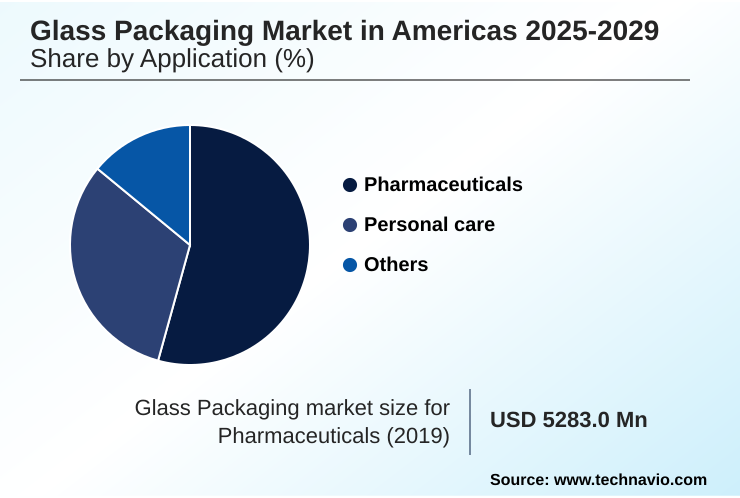
The Food and beverages segment was valued at USD 12.01 billion in 2024 and showed a gradual increase during the forecast period.
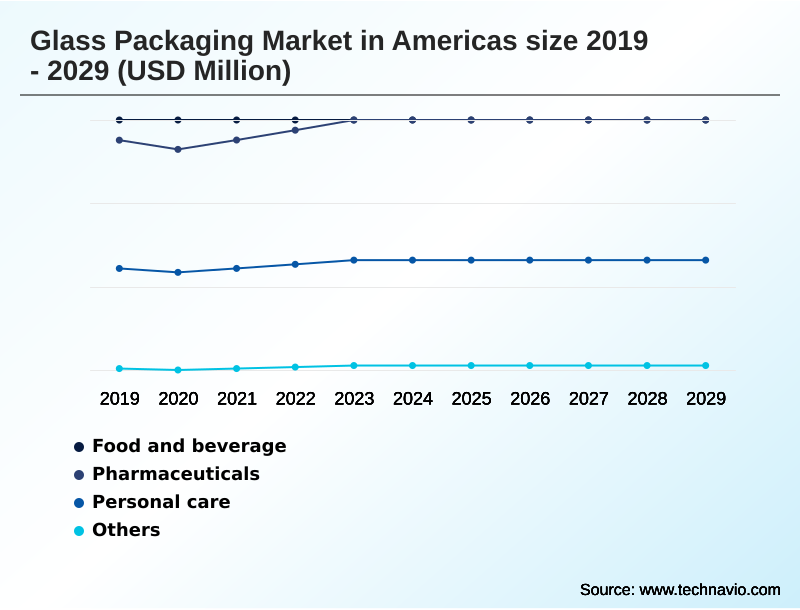
Market Dynamics
Our researchers analyzed the data with 2025 as the base year, along with the key drivers, trends, and challenges. A holistic analysis of drivers will help companies refine their marketing strategies to gain a competitive advantage.
- The strategic direction of the glass packaging market in Americas hinges on addressing several interconnected technical and economic factors. The sustainability of returnable glass bottle systems is a core focus, but its success depends on overcoming the challenges in single-stream glass recycling and improving post-consumer cullet collection rates.
- The impact of cullet purity on glass quality is significant; advanced optical sorting can yield purity levels over 15% higher than unsorted streams, directly influencing production efficiency. This push for quality is linked to advancements in production, where advanced furnace technology for energy efficiency is critical for reducing carbon emissions in glass manufacturing.
- The narrow neck press and blow process efficiency and the role of lightweighting in reducing transport costs are key to competing with lighter materials. The role of glass packaging in brand premiumization cannot be overstated, especially in the beverage sector. Here, lightweighting technology for carbonated beverage bottles balances sustainability with performance. For pharmaceuticals, the conversation centers on safety and stability.
- The use of borosilicate glass for parenteral drug packaging is standard for sensitive biologics, where enhancing hydrolytic stability of pharmaceutical vials is non-negotiable. This speaks to the broader consumer perception of glass vs plastic safety and the importance of the chemical inertness of glass in food preservation.
- Even the market drivers for de-alkalized soda lime glass are tied to finding a cost-effective yet stable solution for specific drug formulations.
- The industry must also master the supply chain logistics of glass packaging and adapt to the impact of epr schemes on glass industry regulations, making the economic viability of deposit-return schemes a subject of intense debate, while also managing technical aspects like how to mitigate thermal shock in glass container production.
- Finally, the growing use of direct-to-glass digital printing for customization signals a move towards more agile and market-responsive production models.
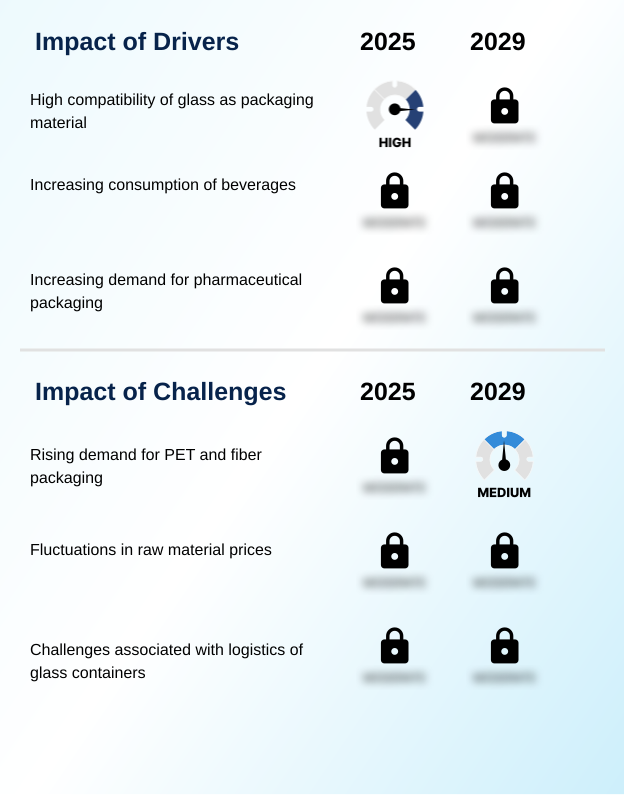
What are the key market drivers leading to the rise in the adoption of Americas Glass Packaging Industry?
- A heightened focus on sustainability from both consumers and regulatory bodies is a key driver for market growth.
- Market growth is significantly driven by strong consumer preference for glass, rooted in its perception as a safe and high-quality material.
- The container strength integrity and purity of pharmaceutical grade glass reinforce trust in sensitive applications, while its use as a single-use plastic alternative taps into environmental concerns.
- Resource conservation is a major factor, with lightweighting innovations in the glass forming process reducing material use by up to 15% without compromising durability.
- The energy-intensive melting process is being addressed through new technologies, crucial for managing the supply chain logistics of raw material inputs.
- This aligns with corporate goals for operational efficiency improvements, as well as the broader societal push for cleaner production methods.
What are the market trends shaping the Americas Glass Packaging Industry?
- The ascendancy of sustainability principles and the circular economy imperative are emerging as a defining market trend. This shift is reshaping industry priorities and influencing strategic decisions.
- A defining trend is the strategic use of glass for premium brand differentiation, leveraging its superior product preservation qualities and container design versatility. The material’s impermeable barrier properties and ability to offer ultraviolet light protection are key for shelf-life extension in both inert packaging material food and luxury personal care packaging.
- This is especially true for artisanal beverage containers, where custom design creates a premium feel. Firms adopting direct-to-glass digital printing have reported a 20% reduction in lead times for limited edition products.
- The push for sustainability is also a powerful force, as using glass is seen as a key component of effective packaging waste management, with some brands achieving a 90% collection rate in targeted closed-loop systems.
What challenges does the Americas Glass Packaging Industry face during its growth?
- Intense competition from alternative packaging materials presents a key challenge to the industry's growth trajectory.
- Key challenges persist, primarily from volatile energy costs associated with glass furnace decarbonization mandates. The industry's reliance on a stable cullet supply chain is hampered by inefficiencies in collection, where feedstock purity can be low. Investment in advanced optical sorting and deposit-return schemes is necessary for closed-loop recycling, but requires significant capital.
- Returnable glass bottle systems and custom-designed bottles face logistical hurdles. Furthermore, container lightweighting efforts must not compromise the integrity of the packaging, avoiding issues like glass delamination. Innovating through hot-end coating and cold-end coating can improve durability, but adds costs that must be managed to remain competitive against lighter, cheaper materials.
- Adopting new decorative techniques adds complexity, impacting overall production efficiency.
Exclusive Technavio Analysis on Customer Landscape
The americas glass packaging market forecasting report includes the adoption lifecycle of the market, covering from the innovator’s stage to the laggard’s stage. It focuses on adoption rates in different regions based on penetration. Furthermore, the americas glass packaging market report also includes key purchase criteria and drivers of price sensitivity to help companies evaluate and develop their market growth analysis strategies.
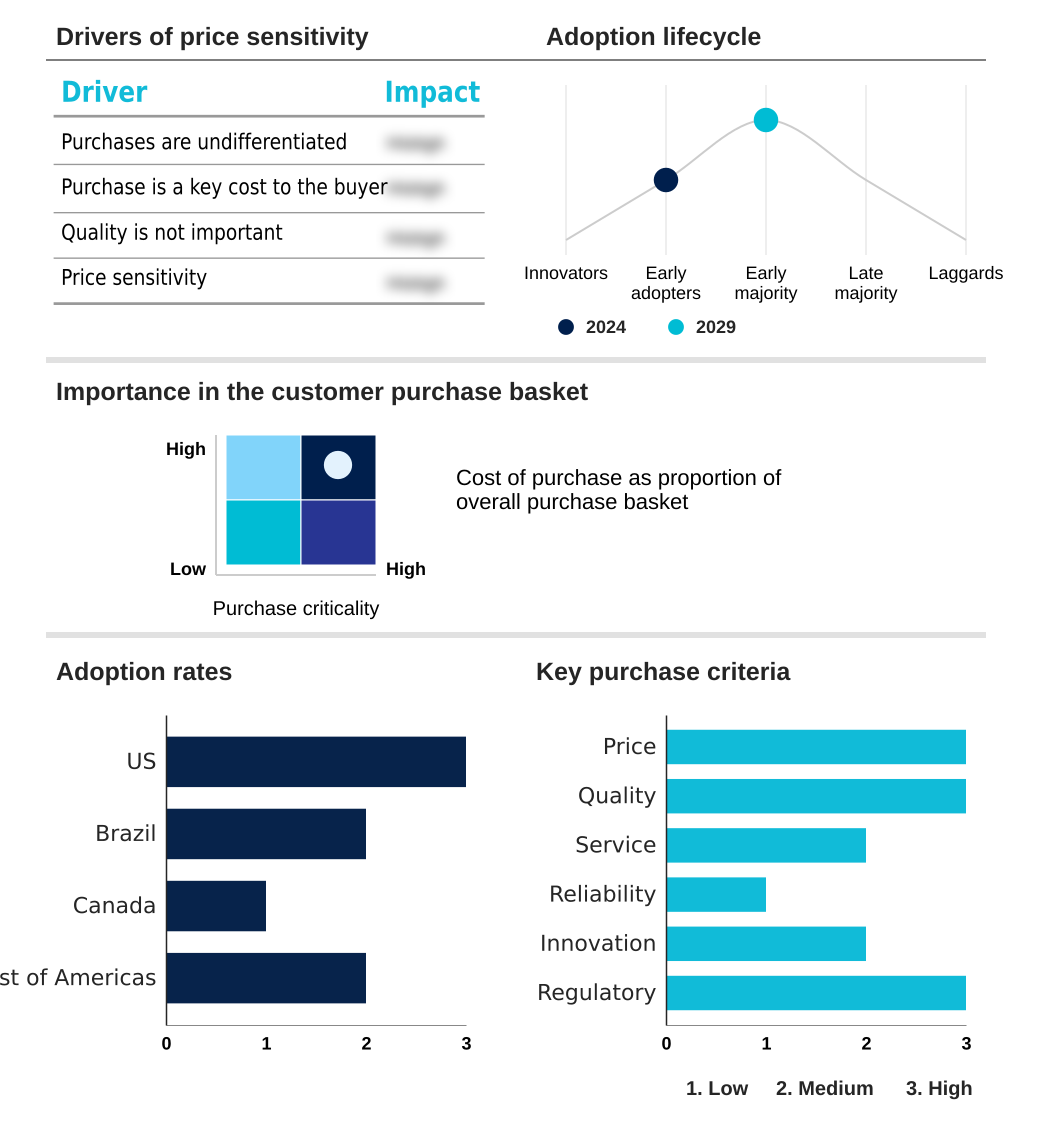
Customer Landscape of Americas Glass Packaging Industry
Competitive Landscape
Companies are implementing various strategies, such as strategic alliances, americas glass packaging market forecast, partnerships, mergers and acquisitions, geographical expansion, and product/service launches, to enhance their presence in the industry.
Ardagh Group SA - Providing infinitely recyclable glass and metal packaging solutions tailored for beverage and food brand owners.
The industry research and growth report includes detailed analyses of the competitive landscape of the market and information about key companies, including:
- Ardagh Group SA
- BA Glass BV
- Beatson Clark
- Berlin Packaging LLC
- Bormioli Rocco Spa
- Burch Bottle Packaging Inc.
- Calaso B.V.
- Gerresheimer AG
- Kaufman Container Co.
- M A Silva USA
- O I Glass Inc.
- O.Berk Co. LLC
- PGP Glass Pvt. Ltd.
- Verallia SA
- WestPack LLC
Qualitative and quantitative analysis of companies has been conducted to help clients understand the wider business environment as well as the strengths and weaknesses of key industry players. Data is qualitatively analyzed to categorize companies as pure play, category-focused, industry-focused, and diversified; it is quantitatively analyzed to categorize companies as dominant, leading, strong, tentative, and weak.
Recent Development and News in Americas glass packaging market
- In March, 2025, the Pan-American Beverage Alliance announced the Circular Glass Charter, a joint initiative pledging to achieve an average of 70% post-consumer recycled content in all member glass bottles by 2030.
- In October, 2025, the Brazilian government enacted the National Packaging Responsibility Act, imposing a significant eco-tax on single-use plastic packaging, thereby creating a strong financial incentive for companies to shift to materials like glass.
- In May, 2025, Gerresheimer AG broke ground on a new state-of-the-art production facility in North Carolina, dedicated to manufacturing borosilicate glass vials and syringes to support growing demand from North American biopharmaceutical companies.
- In September, 2025, Owens-Illinois (O-I) announced the successful deployment of its next-generation MAGMA melting technology at its facility in Brazil, designed to significantly reduce energy consumption and carbon emissions.
Dive into Technavio’s robust research methodology, blending expert interviews, extensive data synthesis, and validated models for unparalleled Americas Glass Packaging Market insights. See full methodology.
| Market Scope | |
|---|---|
| Page number | 212 |
| Base year | 2025 |
| Historic period | 2020-2024 |
| Forecast period | 2026-2030 |
| Growth momentum & CAGR | Accelerate at a CAGR of 3.7% |
| Market growth 2026-2030 | USD 4600.8 million |
| Market structure | Fragmented |
| YoY growth 2025-2026(%) | 3.5% |
| Key countries | US, Brazil, Canada and Rest of Americas |
| Competitive landscape | Leading Companies, Market Positioning of Companies, Competitive Strategies, and Industry Risks |
Research Analyst Overview
- The glass packaging market in Americas is advancing through innovations in material science and production. The use of soda lime glass, borosilicate glass, and de-alkalized soda lime glass is tailored to specific end-uses, from beverages to pharmaceuticals.
- Boardroom decisions are increasingly focused on capital investment in lightweighting technology and furnace technology to manage the energy-intensive melting process and reduce reliance on virgin raw material inputs. The entire glass forming process, including hot-end coating and cold-end coating, is being optimized.
- Adopting the narrow neck press and blow (NNPB) process can increase production speeds by over 15% compared to older methods. Key trends include enhancing cullet utilization to support bottle-to-bottle manufacturing and closed-loop packaging systems, which aligns with circular economy principles. Advanced optical sorting improves the quality of post-consumer recycled content.
- For brand owners, premium brand differentiation is achieved through custom-designed bottles that feature unique decorative techniques and superior container design versatility. The focus remains on ensuring product preservation qualities through chemical inertness, ultraviolet light protection, and impermeable barrier properties to prevent issues like glass delamination, all while maintaining container strength integrity through effective container lightweighting.
- The industry also relies on returnable glass bottle systems and direct-to-glass digital printing to meet market demands for both sustainability and customization in pharmaceutical grade glass and consumer goods.
What are the Key Data Covered in this Americas Glass Packaging Market Research and Growth Report?
-
What is the expected growth of the Americas Glass Packaging Market between 2026 and 2030?
-
USD 4.60 billion, at a CAGR of 3.7%
-
-
What segmentation does the market report cover?
-
The report is segmented by Application (Food and beverages, Pharmaceuticals, Personal care, and Others), Type (Soda lime glass, Borosilicate glass, and De-alkalized soda lime glass), Product (Bottles, Jars and containers, Vials, and Others) and Geography (Americas)
-
-
Which regions are analyzed in the report?
-
Americas
-
-
What are the key growth drivers and market challenges?
-
Heightened consumer and regulatory focus on sustainability, Intense competition from alternative packaging materials
-
-
Who are the major players in the Americas Glass Packaging Market?
-
Ardagh Group SA, BA Glass BV, Beatson Clark, Berlin Packaging LLC, Bormioli Rocco Spa, Burch Bottle Packaging Inc., Calaso B.V., Gerresheimer AG, Kaufman Container Co., M A Silva USA, O I Glass Inc., O.Berk Co. LLC, PGP Glass Pvt. Ltd., Verallia SA and WestPack LLC
-
Market Research Insights
- The glass packaging market in Americas is navigating a dynamic landscape shaped by a strong circular economy imperative and consumer demand for sustainable packaging solutions. A key brand differentiation strategy involves leveraging glass for premiumization in food and beverage categories, aligning with trends in consumer health and wellness. This is reinforced by tightening regulatory compliance standards, including extended producer responsibility schemes.
- Manufacturers are responding with advanced manufacturing processes and investments in recycling infrastructure development, achieving energy consumption reduction of up to 20% with new furnaces. This focus on carbon footprint mitigation and operational efficiency improvements enhances supply chain security. The use of inert packaging material is a cornerstone of food-grade packaging safety, especially as a single-use plastic alternative.
We can help! Our analysts can customize this americas glass packaging market research report to meet your requirements.
 RIA -
RIA -