


Glamping Market Size 2026-2030
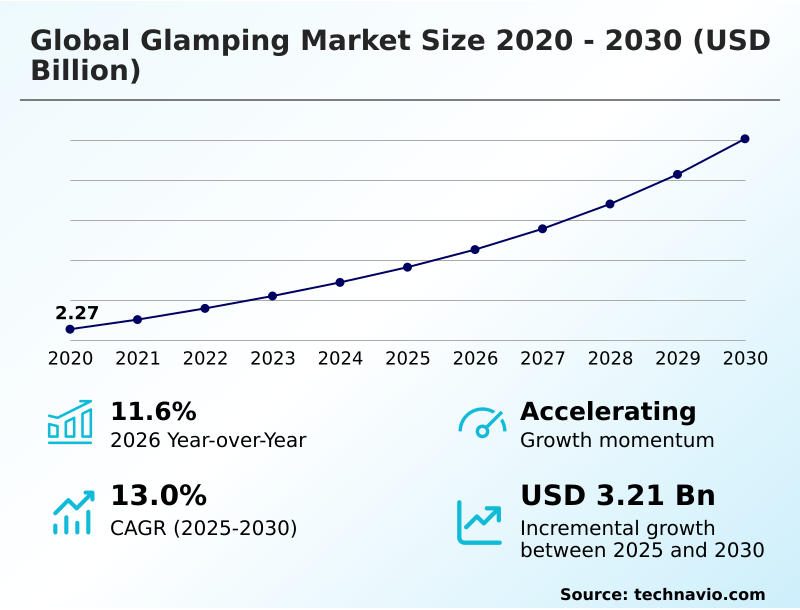
The glamping market size is valued to increase by USD 3.21 billion, at a CAGR of 13% from 2025 to 2030. Growing consumer preference for sustainable and eco-friendly tourism will drive the glamping market.
Major Market Trends & Insights
- North America dominated the market and accounted for a 51.1% growth during the forecast period.
- By Type - Cabins and pods segment was valued at USD 1.25 billion in 2024
- By Channel - Online segment accounted for the largest market revenue share in 2024
Market Size & Forecast
- Market Opportunities: USD 4.76 billion
- Market Future Opportunities: USD 3.21 billion
- CAGR from 2025 to 2030 : 13%
Market Summary
- The glamping market is defined by the fusion of outdoor immersion with high-end amenities, addressing a core consumer desire for experiential luxury without the hardships of traditional camping. This sector offers unique accommodations, from safari tents and yurts to elaborate treehouses, fundamentally reshaping the outdoor hospitality landscape.
- Key drivers include a strong consumer shift toward sustainable travel and nature-based tourism, along with the rise of the experience economy, where unique, shareable moments are prioritized over conventional hotel stays. However, operators face challenges with seasonality and complex land-use regulations.
- As a business scenario, a provider of boutique outdoor hospitality might implement a dynamic pricing algorithm that adjusts rates for its off-grid hospitality network based on weather forecasts and local events, successfully increasing shoulder-season occupancy.
- The industry's evolution is marked by a trend toward diversification, including adventure tourism and specialized eco-luxury retreats, making it a dynamic and growing segment of the broader leisure industry.
What will be the Size of the Glamping Market during the forecast period?
Get Key Insights on Market Forecast (PDF) Request Free Sample
How is the Glamping Market Segmented?
The glamping industry research report provides comprehensive data (region-wise segment analysis), with forecasts and estimates in "USD million" for the period 2026-2030, as well as historical data from 2020-2024 for the following segments.
- Type
- Cabins and pods
- Tents
- Yurts
- Others
- Channel
- Online
- Offline
- Age group
- 33 to 50 years
- 18 to 32 years
- 51 to 65 years
- Above 65 years
- Geography
- North America
- US
- Canada
- Mexico
- Europe
- UK
- Germany
- France
- APAC
- Australia
- China
- Japan
- South America
- Brazil
- Argentina
- Middle East and Africa
- Saudi Arabia
- UAE
- South Africa
- Rest of World (ROW)
- North America
By Type Insights
The cabins and pods segment is estimated to witness significant growth during the forecast period.
The cabins and pods segment represents a critical bridge between traditional hotels and outdoor experiences, offering robust, secure structures that ensure four-season adaptability.
This category includes diverse forms like eco-pods and geodesic domes, which appeal to consumers demanding comfort without sacrificing nature immersion.
The use of modular fabrication techniques is a key operational advantage, reducing on-site construction disruption by up to 40% and accelerating project timelines. As operators expand, the focus is on durable, low-impact accommodation that offers high returns.
Innovations such as thermal-glass igloos for winter viewing and retrofitted airstream hotels highlight the segment's versatility. These glamping pods are central to the strategy of glamping resorts aiming to provide unique accommodations with year-round revenue streams and sustainable lodging credentials.
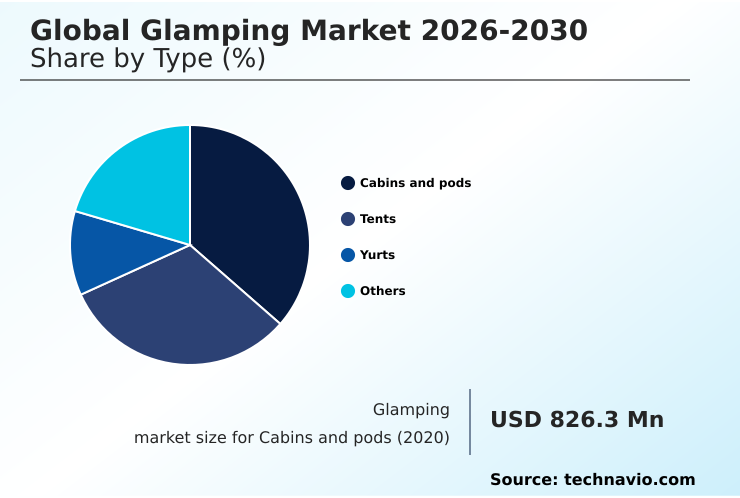
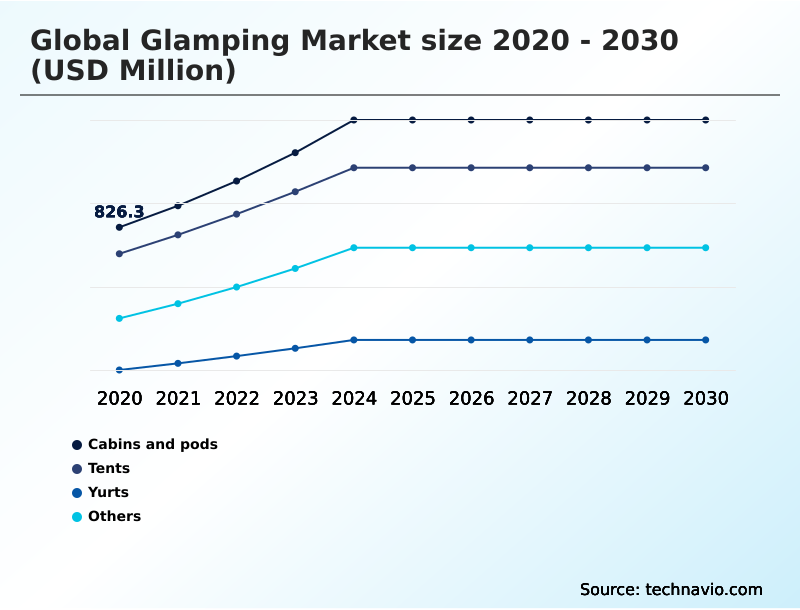
The Cabins and pods segment was valued at USD 1.25 billion in 2024 and showed a gradual increase during the forecast period.
Regional Analysis
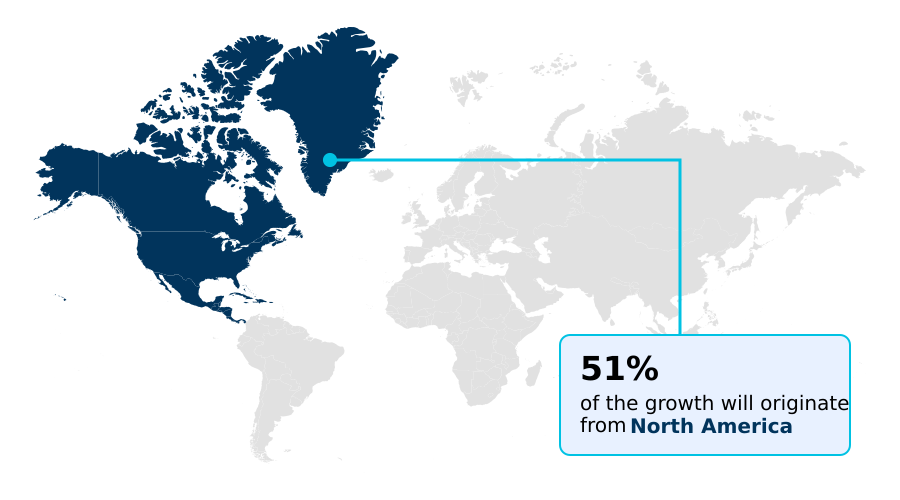
North America is estimated to contribute 51.1% to the growth of the global market during the forecast period.Technavio’s analysts have elaborately explained the regional trends and drivers that shape the market during the forecast period.
See How Glamping Market Demand is Rising in North America Request Free Sample
The market's geographic landscape is diverse, with North America representing a mature market that accounts for 51.1% of incremental growth, while the APAC region is expanding at the fastest rate of 13.9%.
In Europe, agritourism is a key focus, integrating glamping with rural economies. The Middle East is pioneering large-scale desert glamping projects, and APAC showcases innovation in bamboo architecture.
In Africa and Australia, bush luxury and safari lodges define the high-end segment.
A significant trend is the development of digital nomad infrastructure, which enables remote work accommodations and has been shown to increase mid-week occupancy by over 25% in certain locations.
This adaptability allows operators to cater to distinct regional demands, from culinary glamping and eco-tourism in developed regions to pop-up glamping villages for corporate retreats and wellness retreats in emerging markets.
Market Dynamics
Our researchers analyzed the data with 2025 as the base year, along with the key drivers, trends, and challenges. A holistic analysis of drivers will help companies refine their marketing strategies to gain a competitive advantage.
- The modern traveler increasingly seeks personalized and immersive experiences, fueling demand for luxury glamping with private hot tubs and all-inclusive glamping resorts for families. The strategic placement of glamping sites near national parks remains a cornerstone of the industry, offering unparalleled access to nature.
- For entrepreneurs, a solid glamping business plan for landowners is essential for navigating zoning laws and securing financing. The selection of the best glamping structures for high winds and other climate challenges is critical for operational continuity and guest safety.
- As the market matures, niche offerings are gaining traction, including astrotourism glamping in dark sky parks and culinary glamping farm-to-table experience concepts. The rise of the remote workforce has made digital nomad glamping with high-speed internet a highly profitable segment.
- Simultaneously, the corporate world is embracing corporate retreat glamping packages, while the wellness sector drives demand for wellness retreat glamping with yoga. Entrepreneurs exploring this space must weigh the cost of building a luxury safari tent against other structures and consider specialized models like how to start a pop-up glamping business.
- A key factor for long-term viability is resource management; operators that invest in off-grid glamping power and water solutions report operational cost savings nearly double those who rely on extending traditional utilities to remote sites.
- This focus on sustainability is evident in the growth of unique treehouse glamping getaways, regenerative tourism glamping projects, and Airstream glamping resorts in the US, differentiating them in a market where glamping vs traditional camping pros and cons are carefully weighed by consumers.
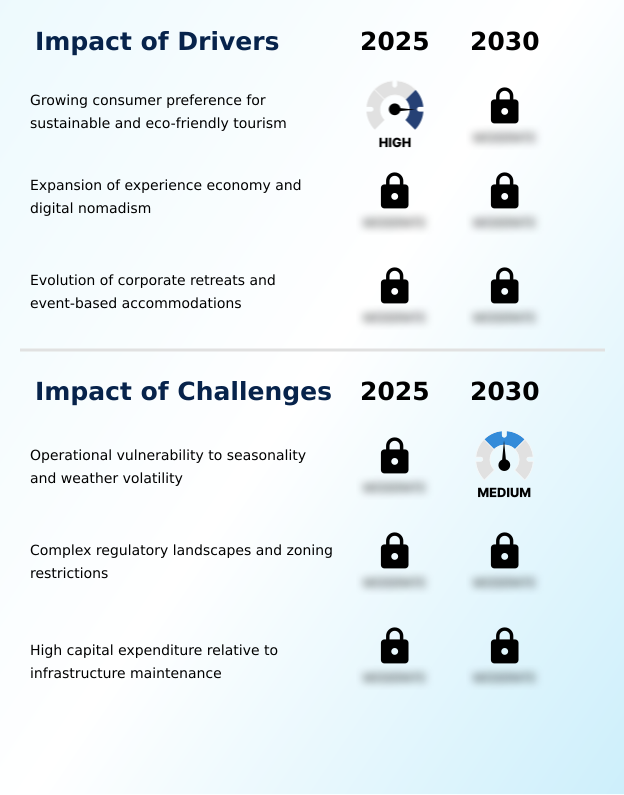
What are the key market drivers leading to the rise in the adoption of Glamping Industry?
- A growing consumer preference for sustainable and eco-friendly tourism is a key driver for market expansion.
- Market expansion is primarily driven by strong consumer demand for sustainable travel and unique, nature-based tourism experiences. This trend favors low-impact accommodation models over traditional hotels, with properties featuring certified composting waste systems noting higher booking conversion rates.
- The convergence of the experience economy and remote work has created a powerful new driver, positioning boutique outdoor hospitality providers to cater to digital nomads.
- Furthermore, the corporate sector's growing preference for immersive corporate retreats in natural settings has opened a high-value segment, with corporate packages yielding up to 40% higher revenue per guest.
- The events industry also leverages this trend, using pop-up glamping villages for festivals, which can increase an organizer's total profit by 15% by upgrading the attendee experience.
- This diversification transforms outdoor hospitality from a simple leisure activity into a versatile solution for work, events, and eco-luxury retreats.
What are the market trends shaping the Glamping Industry?
- A key market trend is the convergence of eco-luxury and regenerative tourism. This evolution moves beyond sustainability to practices that actively improve local ecosystems.
- Key market trends are moving beyond basic sustainability toward regenerative tourism, where operators actively enhance local ecosystems. This evolution is driven by consumer demand for experiential luxury with a positive impact. Investment is flowing into technologies enabling this shift, such as advanced satellite internet solutions that support 'work from nature' models and can boost off-season revenue by over 30%.
- Accommodation offerings are diversifying into thematic experiences like culinary glamping and astrotourism in dark sky parks. These niche offerings command premium pricing, often 25% higher than standard stays. Structural innovation is also critical, with thermal-glass igloos and insulated yurts enabling year-round operation in colder climates, transforming seasonal businesses into full-time operations.
- This convergence of eco-consciousness, technology, and unique experiences, seen in everything from treehouse hotels to Airstream hotels, is redefining regenerative travel and wellness retreats.
What challenges does the Glamping Industry face during its growth?
- Operational vulnerability to seasonality and weather volatility presents a key challenge affecting industry growth.
- A primary challenge is the market's vulnerability to seasonality, which can reduce potential operating days by over 50% in certain climates, severely impacting the return on high capex investments in structures like treehouses. Navigating complex zoning laws for sustainable lodging presents another significant hurdle, often delaying project timelines by 12-18 months.
- The high initial investment for luxury glamping resorts, especially for providing utilities in off-grid stays, remains a barrier. Maintenance costs for specialized structures such as geodesic domes and eco-pods are considerable, further pressuring operational budgets.
- Achieving true four-season adaptability in glamping pods without incurring unsustainable energy costs is a persistent operational challenge, hindering the ability to cater to year-round adventure tourism and consistent yurt camping experiences.
Exclusive Technavio Analysis on Customer Landscape
The glamping market forecasting report includes the adoption lifecycle of the market, covering from the innovator’s stage to the laggard’s stage. It focuses on adoption rates in different regions based on penetration. Furthermore, the glamping market report also includes key purchase criteria and drivers of price sensitivity to help companies evaluate and develop their market growth analysis strategies.
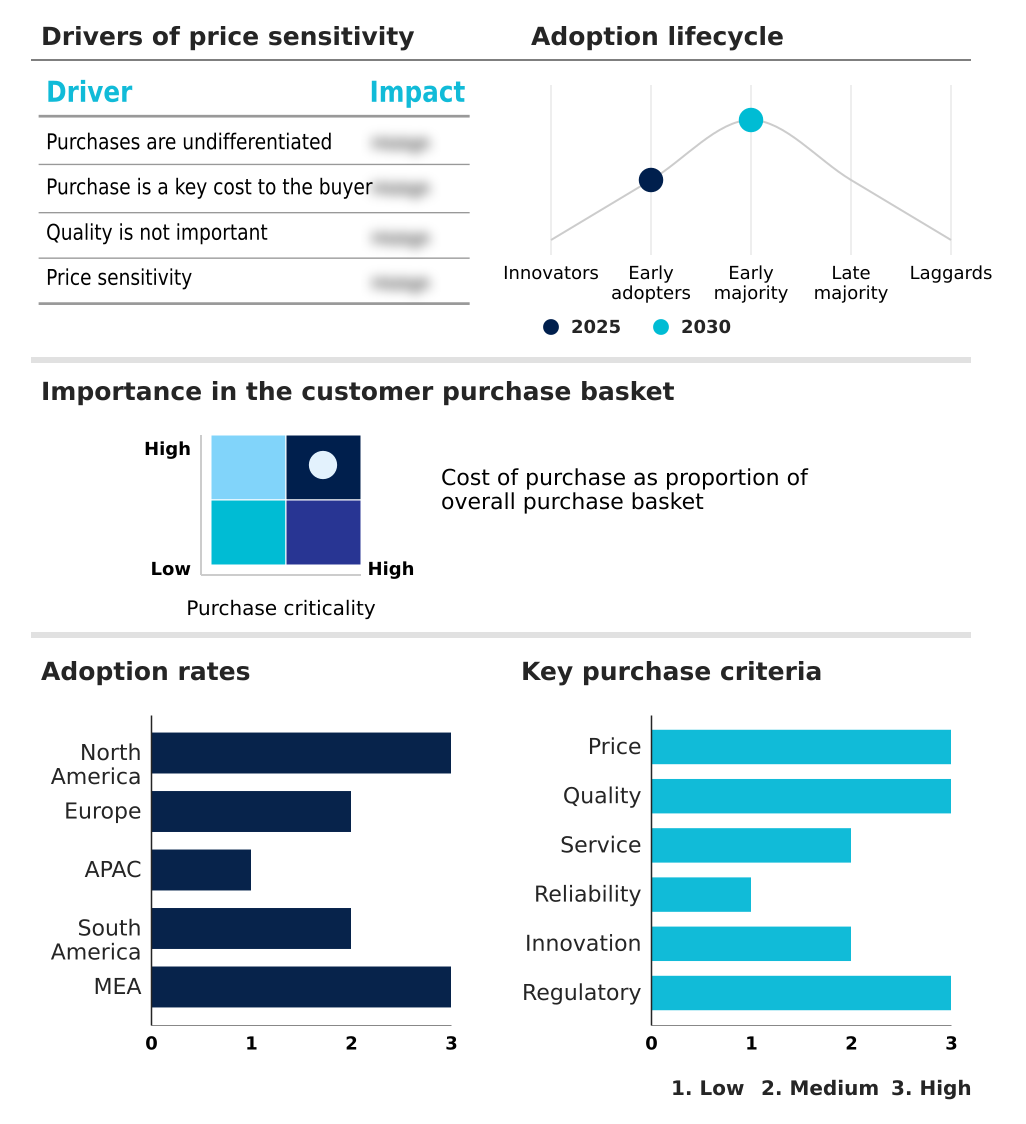
Customer Landscape of Glamping Industry
Competitive Landscape
Companies are implementing various strategies, such as strategic alliances, glamping market forecast, partnerships, mergers and acquisitions, geographical expansion, and product/service launches, to enhance their presence in the industry.
AutoCamp - Providers offer curated boutique outdoor hospitality, combining custom Airstreams, cabins, and luxury tents with scenic natural settings to meet demand for experiential travel.
The industry research and growth report includes detailed analyses of the competitive landscape of the market and information about key companies, including:
- AutoCamp
- Baillie Lodges
- Bushtec Safari
- Collective Retreats
- Concierge Camping
- Eco Structures
- Glampies
- Glamping Hub International Inc.
- Hilton Worldwide Holdings Inc.
- Hipcamp, Inc
- Hoshino Resorts
- Huttopia
- MakeMyTrip Ltd.
- Our Habitas
- PAWS UP RANCH, LLC
- Sawdays Canopy and Stars Ltd.
- The Glamping Orchard
- The Hidden Valley Resort
- The Kaizen Group
- Under Canvas
Qualitative and quantitative analysis of companies has been conducted to help clients understand the wider business environment as well as the strengths and weaknesses of key industry players. Data is qualitatively analyzed to categorize companies as pure play, category-focused, industry-focused, and diversified; it is quantitatively analyzed to categorize companies as dominant, leading, strong, tentative, and weak.
Recent Development and News in Glamping market
- In April 2025, AvantGlamp launched a new luxury glamping resort near the NEC Birmingham, expanding high-end accommodation options for event attendees in the UK.
- In May 2025, LuxeGlamp Eco-Resorts inaugurated its first international property, LuxeGlamp UAQ, in Umm Al Quwain, marking its entry into the United Arab Emirates market.
- In March 2025, Saudi Arabia's tourism authority announced a strategic initiative to develop luxury glamping as a key component of its national tourism strategy under Vision 2030.
- In December 2024, developers received final approval for a new luxury glamping resort planned on a 70-acre site in Clam Lake Township, Michigan, signaling continued investment in the US sector.
Dive into Technavio’s robust research methodology, blending expert interviews, extensive data synthesis, and validated models for unparalleled Glamping Market insights. See full methodology.
| Market Scope | |
|---|---|
| Page number | 294 |
| Base year | 2025 |
| Historic period | 2020-2024 |
| Forecast period | 2026-2030 |
| Growth momentum & CAGR | Accelerate at a CAGR of 13% |
| Market growth 2026-2030 | USD 3205.5 million |
| Market structure | Fragmented |
| YoY growth 2025-2026(%) | 11.6% |
| Key countries | US, Canada, Mexico, UK, Germany, France, Italy, Spain, The Netherlands, Australia, China, Japan, South Korea, India, Indonesia, Brazil, Argentina, Chile, Saudi Arabia, UAE, South Africa, Egypt and Turkey |
| Competitive landscape | Leading Companies, Market Positioning of Companies, Competitive Strategies, and Industry Risks |
Research Analyst Overview
- The glamping market reflects a definitive shift toward experiential luxury, where accommodation is an integral part of the travel narrative. This sector is characterized by a diverse array of structures, from classic safari tents, yurts, and eco-pods to highly engineered geodesic domes, treehouses, and even thermal-glass igloos, enabling four-season adaptability.
- The underlying business models are equally varied, encompassing off-grid hospitality, agritourism, and farm diversification. A critical boardroom-level consideration is the pivot to regenerative tourism, which compels a re-evaluation of capex to prioritize low-impact accommodation and sustainable technologies like composting waste systems. This strategic alignment with ESG principles is no longer optional.
- For instance, sites that have invested in robust satellite internet solutions to build out digital nomad infrastructure report mid-week revenue increases exceeding 20%.
- The market's dynamism is further evidenced by the growth of specialized niches such as culinary glamping, astrotourism, and pop-up glamping villages, alongside regional specializations like bamboo architecture in Asia, bush luxury in Australia, and large-scale desert glamping projects, all contributing to a vibrant boutique outdoor hospitality landscape.
What are the Key Data Covered in this Glamping Market Research and Growth Report?
-
What is the expected growth of the Glamping Market between 2026 and 2030?
-
USD 3.21 billion, at a CAGR of 13%
-
-
What segmentation does the market report cover?
-
The report is segmented by Type (Cabins and pods, Tents, Yurts, and Others), Channel (Online, and Offline), Age Group (33 to 50 years, 18 to 32 years, 51 to 65 years, and above 65 years) and Geography (North America, Europe, APAC, South America, Middle East and Africa)
-
-
Which regions are analyzed in the report?
-
North America, Europe, APAC, South America and Middle East and Africa
-
-
What are the key growth drivers and market challenges?
-
Growing consumer preference for sustainable and eco-friendly tourism, Operational vulnerability to seasonality and weather volatility
-
-
Who are the major players in the Glamping Market?
-
AutoCamp, Baillie Lodges, Bushtec Safari, Collective Retreats, Concierge Camping, Eco Structures, Glampies, Glamping Hub International Inc., Hilton Worldwide Holdings Inc., Hipcamp, Inc, Hoshino Resorts, Huttopia, MakeMyTrip Ltd., Our Habitas, PAWS UP RANCH, LLC, Sawdays Canopy and Stars Ltd., The Glamping Orchard, The Hidden Valley Resort, The Kaizen Group and Under Canvas
-
Market Research Insights
- The outdoor hospitality market is evolving rapidly, driven by consumer demand for experiential travel and unique accommodations. This has spurred growth in glamping resorts and specialized eco-luxury retreats that offer more than just a stay. Established safari lodges now compete with innovative treehouse hotels and modern glamping pods, diversifying the landscape of luxury camping.
- The integration of reliable remote work accommodations has boosted weekday occupancy, with some operators reporting a 30% increase in non-peak bookings. Demand for wellness retreats has also led to new service offerings. This strategic shift is reshaping investment, with a focus on sustainable lodging solutions that can reduce environmental impact by up to 50% compared to traditional hotel construction.
- Niche markets like adventure tourism and festival glamping further expand the consumer base, attracting new demographics to nature-based tourism.
We can help! Our analysts can customize this glamping market research report to meet your requirements.
 RIA -
RIA -