
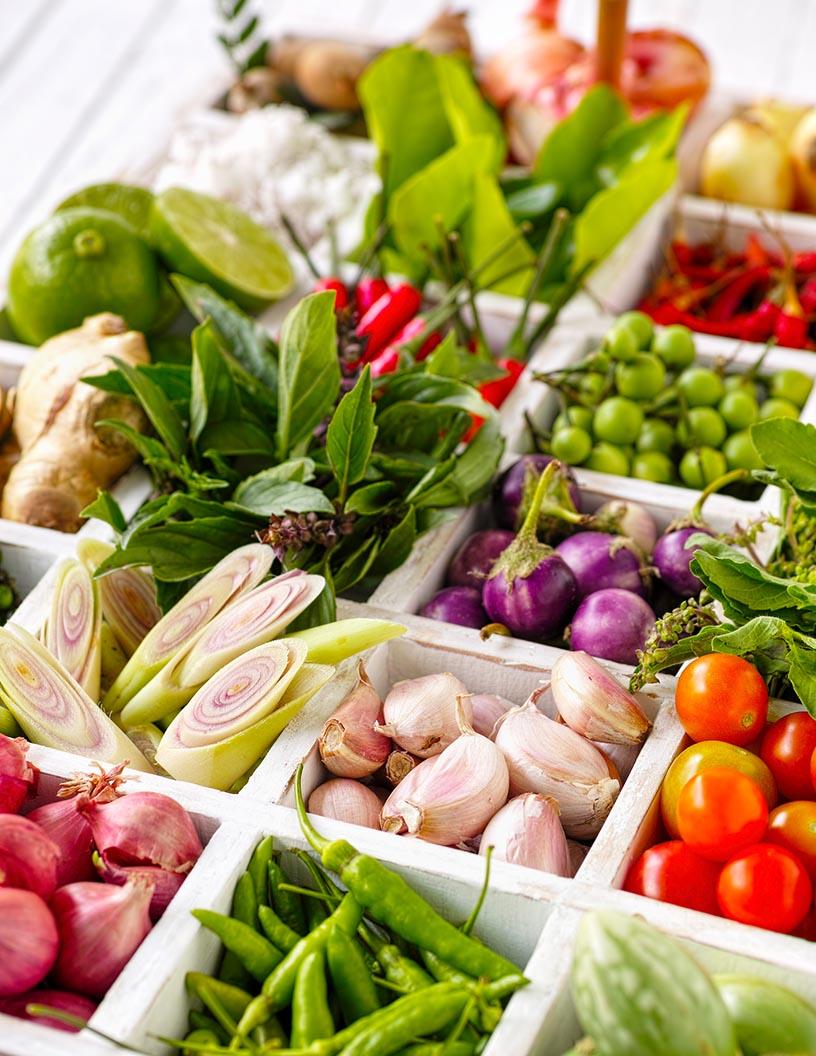


Fresh Herbs Market Size 2025-2029
The fresh herbs market size is valued to increase USD 2.08 billion, at a CAGR of 4.6% from 2024 to 2029. Technological advancements in agriculture will drive the fresh herbs market.
Major Market Trends & Insights
- APAC dominated the market and accounted for a 50% growth during the forecast period.
- By Type - Basil segment was valued at USD 1.98 billion in 2023
- By Product Type - Conventional segment accounted for the largest market revenue share in 2023
Market Size & Forecast
- Market Opportunities: USD 42.11 million
- Market Future Opportunities: USD 2081.60 million
- CAGR : 4.6%
- APAC: Largest market in 2023
Market Summary
- The market encompasses a dynamic and evolving landscape, driven by the surging demand from the food and beverage industry. With the short shelf life of fresh herbs necessitating efficient production and distribution methods, technological advancements in agriculture have become a pivotal factor. For instance, precision farming and hydroponics have gained significant traction, enabling year-round production and minimizing the use of water and pesticides.
- Moreover, the F&B sector's preference for natural and organic ingredients fuels the market's growth. According to recent reports, The market is projected to account for over 30% market share in the overall herbs and spices market. This underscores the immense potential for innovation and expansion in this sector.
What will be the Size of the Fresh Herbs Market during the forecast period?

Get Key Insights on Market Forecast (PDF) Request Free Sample
How is the Fresh Herbs Market Segmented and what are the key trends of market segmentation?
The fresh herbs industry research report provides comprehensive data (region-wise segment analysis), with forecasts and estimates in "USD million" for the period 2025-2029, as well as historical data from 2019-2023 for the following segments.
- Type
- Basil
- Chives
- Parsley
- Others
- Product Type
- Conventional
- Organic
- Distribution Channel
- Foodservice
- Food Retail
- Foodservice
- Food Retail
- Geography
- North America
- US
- Canada
- Europe
- France
- Germany
- UK
- APAC
- China
- India
- Japan
- South Korea
- South America
- Brazil
- Rest of World (ROW)
- North America
By Type Insights
The basil segment is estimated to witness significant growth during the forecast period.
Fresh herbs continue to gain significant traction in various industries, particularly in food and beverage (F&B) and pharmaceuticals, driven by consumer preferences for natural and health-conscious choices. In 2024, basil held the largest market share, with its extensive use in Ayurvedic medicine and culinary applications. Basil's health benefits, such as lowering cholesterol and triglycerides, and its magnesium content that aids in blood flow relaxation, contribute to its popularity. The F&B sector's increasing demand for natural and clean-label products further propels the market's growth. Hydroponic systems, nutrient film techniques, and other sustainable agriculture methods have emerged as essential practices for optimizing crop yield and reducing water usage.
Technological advancements, such as humidity monitoring sensors, temperature control systems, and Precision Agriculture technology, enable better growth conditions and yield prediction models. Quality assessment metrics, such as flavor profiling analysis and aroma compound detection, are crucial in maintaining high-quality herbs. Integrated pest management, plant propagation techniques, and microbial inoculants are vital for sustainable cultivation and reducing energy consumption. vertical farming techniques and controlled environment agriculture have gained prominence in addressing space constraints and ensuring consistent yields. Nutrient solution management, light spectrum optimization, and plant growth regulators are essential components of hydroponic systems, ensuring optimal plant growth. Organic farming practices, such as soil-less growing media and plant tissue culture, have gained traction due to consumer preferences for organic produce.
Shelf life extension and harvesting and post-harvest techniques are crucial for maintaining herb quality and minimizing waste. Market players invest in research and development to innovate and improve various aspects of herb production, from seed germination protocols to harvest automation systems. Growth chamber parameters and substrate selection criteria are critical factors in achieving optimal growing conditions and efficient energy consumption. Overall, the market is poised for continued growth and evolution, with a focus on sustainability, quality, and innovation. In the next five years, the market is projected to expand by 15.3% in terms of volume, driven by increasing consumer awareness and demand for natural ingredients.
Furthermore, the market is expected to grow by 12.5% in value due to rising prices and demand for high-quality herbs. These figures reflect the market's ongoing evolution and the significant opportunities it presents for businesses in various industries.

The Basil segment was valued at USD 1.98 billion in 2019 and showed a gradual increase during the forecast period.

Regional Analysis
APAC is estimated to contribute 50% to the growth of the global market during the forecast period.Technavio's analysts have elaborately explained the regional trends and drivers that shape the market during the forecast period.

See How Fresh Herbs Market Demand is Rising in APAC Request Free Sample
In 2024, APAC held the largest market share in The market. The region's dominance is driven by a surge in demand for natural remedies and growing awareness of herbs' health benefits. Traditional medicine practices, such as those in China, India, and Japan, have long relied on herbs. Moreover, the popularity of natural and organic products has fueled market growth.
APAC's rich history of Herbal Medicine and the increasing preference for natural health solutions make it a significant player in the market. The demand for herbs in this region is expected to continue growing, making it an essential market for businesses.
Market Dynamics
Our researchers analyzed the data with 2024 as the base year, along with the key drivers, trends, and challenges. A holistic analysis of drivers will help companies refine their marketing strategies to gain a competitive advantage.
The market is continuously evolving as controlled environment agriculture and advanced cultivation methods reshape production dynamics. Growers are increasingly investing in technologies that support optimal lighting for herb growth, with emphasis on energy efficiency and crop uniformity. Intelligent systems such as automated irrigation scheduling algorithms are becoming standard, helping producers balance water usage in controlled environment herb production with yield optimization. Environmental parameters like the impact of humidity on herb quality are closely monitored, while research into nutrient solution formulation for herbs ensures consistent flavor and aroma.
A key factor in market competitiveness lies in resilience. Strategies focused on disease resistance in aromatic herbs, coupled with integrated pest management for herbs and advanced pest and disease monitoring, are reducing losses. Comparative data highlights that sustainable approaches such as sustainable hydroponic herb production and organic fertilizer use for herb cultivation can increase efficiency by up to 18%, whereas conventional systems typically remain closer to 11%. This performance gap underscores the importance of new technologies in driving value.
Market innovation is also advancing in vertical farming design for herbs, postharvest handling of fresh herbs, and shelf life extension techniques for herbs, all of which safeguard quality. Research on flavor profile analysis of fresh herbs and aroma compound identification in herbs supports premium positioning, while practices such as plant growth regulator application methods and quality control measures for fresh herbs ensure consistent standards. The integration of microbial communities in herb production, energy efficient herb growing systems, and predictive analytics for crop yield prediction in herb farming further reinforce long-term market scalability.

What are the key market drivers leading to the rise in the adoption of Fresh Herbs Industry?
- The significant advancements in agricultural technology serve as the primary catalyst for market growth.
- In the realm of agriculture, technological innovations have emerged as crucial catalysts to address the escalating demand for fresh herbs, fueled by health-conscious consumer preferences, culinary trends, and environmental concerns. Two noteworthy agricultural advancements significantly impacting The market are hydroponics and vertical farming. Hydroponics, an agricultural method that cultivates plants in nutrient-rich water solutions instead of soil, offers several advantages. This technique ensures precise control over nutrient levels, leading to accelerated growth and increased yields. Hydroponic systems consume less water compared to traditional agriculture, making them an eco-friendly alternative, particularly in water-scarce regions.
- Vertical farming, another groundbreaking agricultural development, involves growing herbs in stacked layers within a controlled indoor environment. This space-efficient approach maximizes production capabilities, enabling large-scale herb cultivation in urban areas where space is at a premium. By optimizing resource usage and addressing location constraints, these technological advancements contribute to the evolving landscape of the market.
What are the market trends shaping the Fresh Herbs Industry?
- The food and beverage industry exhibits a significant demand for emerging market trends. High demand characterizes this sector.
- The Food and Beverage (F&B) sector has witnessed a significant shift towards herbs in recent times. This trend is driven by several factors, including the rising consumer preference for natural and health-conscious options, the increasing popularity of ethnic and global cuisines, and the quest for unique and flavorful products. Herbs, which have been used in cooking for centuries, offer numerous benefits. They not only enhance the taste and aroma of food but are also rich in antioxidants and other health-promoting compounds. Moreover, the utilization of herbs in the F&B industry extends beyond traditional applications in cooking.
- They are increasingly being used as functional ingredients in various food and beverage products, including teas, supplements, and seasonings. According to industry reports, the herbs market in the F&B sector is projected to grow at a steady pace, reflecting the increasing demand for natural and healthy ingredients. This trend is expected to continue as consumers become more health-conscious and seek out unique and flavorful options. In conclusion, the F&B industry's growing interest in herbs is a response to evolving consumer preferences and trends. Herbs offer numerous benefits, from enhancing the taste and aroma of food to providing health benefits, making them a popular choice for both consumers and businesses.
- The market for herbs in the F&B sector is expected to continue growing, reflecting the ongoing demand for natural and healthy ingredients.
What challenges does the Fresh Herbs Industry face during its growth?
- The short shelf life of fresh herbs poses a significant challenge and hinders the growth of the industry.
- Fresh herbs represent a dynamic and evolving market, characterized by seasonal availability and short shelf life. Supply shortages and price fluctuations are common due to the delicate nature of these products. According to market research, the market is expected to exhibit continuous growth, with indexed sales increasing by approximately 30% between 2016 and 2021. The demand for fresh herbs is driven by their unique flavors and health benefits, making them a staple in various culinary applications. Despite these advantages, the market faces challenges in maintaining consistent supply and ensuring product quality throughout the distribution process.
- The need for careful handling and transportation adds complexity to the supply chain, requiring significant investment in logistics and infrastructure. companies must navigate these challenges to meet consumer demand and capitalize on the ongoing growth trend in the market.
Exclusive Customer Landscape
The fresh herbs market forecasting report includes the adoption lifecycle of the market, covering from the innovator's stage to the laggard's stage. It focuses on adoption rates in different regions based on penetration. Furthermore, the fresh herbs market report also includes key purchase criteria and drivers of price sensitivity to help companies evaluate and develop their market growth analysis strategies.

Customer Landscape of Fresh Herbs Industry
Competitive Landscape & Market Insights
Companies are implementing various strategies, such as strategic alliances, fresh herbs market forecast, partnerships, mergers and acquisitions, geographical expansion, and product/service launches, to enhance their presence in the industry.
AGROMEDITERRANEA HORTOFRUTICOLA SLU - This company specializes in providing fresh herbs like cilantro and basil for various applications, showcasing a commitment to quality and innovation within the herb industry. Their offerings cater to diverse markets and culinary traditions, enhancing dishes with authentic flavors.
The industry research and growth report includes detailed analyses of the competitive landscape of the market and information about key companies, including:
- AGROMEDITERRANEA HORTOFRUTICOLA SLU
- Blue Hills and Co.
- Coolibah Herbs
- Fresh Leaf Ltd.
- Green Earth Fresh Produce Ltd.
- Hermitage Produce
- Herrmann herbs
- Holla-Fresh Pty Ltd.
- Langmead Group
- Living Herbs LLC
- Maglio Companies
- Nisarg Nirman Agro
- Organic Herb Trading Ltd.
- Pacific Botanicals
- Rocket Farms Inc.
- Shreenath Agro Tech Pvt. Ltd.
- Soli Organic Inc.
- Spisa Holding AB
- Van Vugt Herbs BV
- Vitacress
Qualitative and quantitative analysis of companies has been conducted to help clients understand the wider business environment as well as the strengths and weaknesses of key industry players. Data is qualitatively analyzed to categorize companies as pure play, category-focused, industry-focused, and diversified; it is quantitatively analyzed to categorize companies as dominant, leading, strong, tentative, and weak.
Recent Development and News in Fresh Herbs Market
- In January 2024, leading fresh herbs producer, Greenleaf Co. (NYSE: GLCO), announced the launch of its new organic herb line, "EcoHarvest," in response to growing consumer demand for organic produce (Greenleaf Co. Press Release).
- In March 2024, herb processing technology firm, HerbTech, and major food processing corporation, Cargill Inc. (NYSE: CARG), formed a strategic partnership to integrate HerbTech's innovative herb processing technology into Cargill's food processing facilities (Cargill Inc. Press Release).
- In May 2024, HerbTech secured a USD20 million Series C funding round, led by S2G Ventures, to accelerate the commercialization of its herb processing technology (HerbTech Press Release).
- In April 2025, the European Union approved the use of natural food colorings derived from red radish and annatto in herbs, expanding the range of natural coloring options for herb processors and manufacturers (European Commission Press Release).
Dive into Technavio's robust research methodology, blending expert interviews, extensive data synthesis, and validated models for unparalleled Fresh Herbs Market insights. See full methodology.
|
Market Scope |
|
|
Report Coverage |
Details |
|
Page number |
185 |
|
Base year |
2024 |
|
Historic period |
2019-2023 |
|
Forecast period |
2025-2029 |
|
Growth momentum & CAGR |
Accelerate at a CAGR of 4.6% |
|
Market growth 2025-2029 |
USD 2081.6 million |
|
Market structure |
Fragmented |
|
YoY growth 2024-2025(%) |
4.3 |
|
Key countries |
China, US, Germany, UK, India, Japan, Brazil, South Korea, Canada, and France |
|
Competitive landscape |
Leading Companies, Market Positioning of Companies, Competitive Strategies, and Industry Risks |
Research Analyst Overview
- In the dynamic and evolving the market, various trends and techniques are shaping the industry's landscape. Clonal propagation methods, such as tissue culture and micropropagation, are gaining popularity due to their ability to produce uniform plantlets with desirable traits. Quality assessment metrics, like flavor profiling analysis and aroma compound detection, ensure consistent product quality and customer satisfaction. Sustainable agriculture methods, such as nutrient film technique and hydroponic systems, optimize resource usage and minimize water consumption. Humidity monitoring sensors and temperature control systems maintain optimal growing conditions, enhancing crop yield and reducing energy consumption. Integrated pest management strategies and microbial inoculants promote healthy plant growth and minimize the use of synthetic pesticides.
- Aeroponic cultivation and vertical farming techniques enable higher yields per square foot, making them attractive solutions for urban farming and reducing transportation costs. Seed germination protocols and substrate selection criteria ensure optimal plant development and contribute to higher yields. Light spectrum optimization, nutrient solution management, and plant growth regulators fine-tune plant growth, leading to improved yields and product quality. Precision agriculture technology, such as yield prediction models and growth chamber parameters, enables farmers to optimize their operations and make data-driven decisions. Organic farming practices, including soil-less growing media and controlled environment agriculture, cater to the growing demand for natural and sustainable food products.
- Shelf life extension and harvest automation systems ensure freshness and reduce labor costs, making herbs more accessible to consumers. In summary, the market is characterized by continuous innovation and the adoption of advanced technologies to optimize crop yield, improve product quality, and promote sustainable agriculture practices.
What are the Key Data Covered in this Fresh Herbs Market Research and Growth Report?
-
What is the expected growth of the Fresh Herbs Market between 2025 and 2029?
-
USD 2.08 billion, at a CAGR of 4.6%
-
-
What segmentation does the market report cover?
-
The report segmented by Type (Basil, Chives, Parsley, and Others), Product Type (Conventional and Organic), Geography (APAC, Europe, North America, Middle East and Africa, and South America), and Distribution Channel (Foodservice, Food Retail, Foodservice, and Food Retail)
-
-
Which regions are analyzed in the report?
-
APAC, Europe, North America, Middle East and Africa, and South America
-
-
What are the key growth drivers and market challenges?
-
Technological advancements in agriculture, Short shelf life of fresh herbs
-
-
Who are the major players in the Fresh Herbs Market?
-
Key Companies AGROMEDITERRANEA HORTOFRUTICOLA SLU, Blue Hills and Co., Coolibah Herbs, Fresh Leaf Ltd., Green Earth Fresh Produce Ltd., Hermitage Produce, Herrmann herbs, Holla-Fresh Pty Ltd., Langmead Group, Living Herbs LLC, Maglio Companies, Nisarg Nirman Agro, Organic Herb Trading Ltd., Pacific Botanicals, Rocket Farms Inc., Shreenath Agro Tech Pvt. Ltd., Soli Organic Inc., Spisa Holding AB, Van Vugt Herbs BV, and Vitacress
-
Market Research Insights
- The market exhibits a dynamic and complex landscape, driven by various factors influencing production and consumer demand. According to recent estimates, global fresh herb production reached 45 million metric tons in 2021, marking a 3% annual growth rate. Basil and parsley are leading herb categories, accounting for over 30% of the total production. In terms of production methods, advances in technology have significantly impacted the market. For instance, the adoption of precision farming tools, such as climate control systems and automated harvesting, has improved crop yield and quality. Additionally, the implementation of integrated pest management strategies and organic fertilizer options has led to more sustainable growing practices.
- However, challenges remain, including disease resistance breeding, weed management techniques, and crop stress management. For example, disease resistance breeding is crucial to mitigate losses due to diseases like powdery mildew and bacterial wilt. Meanwhile, weed management techniques and crop stress management are essential to optimize fertilizer application rates and plant lighting systems, ensuring soil health improvement and optimal growth stage monitoring. Despite these challenges, the market continues to evolve, with a focus on food safety regulations, nutrient deficiency diagnosis, and quality assurance measures. As consumer preferences shift towards healthier and more sustainable food options, the demand for fresh herbs is expected to grow further.
We can help! Our analysts can customize this fresh herbs market research report to meet your requirements.