
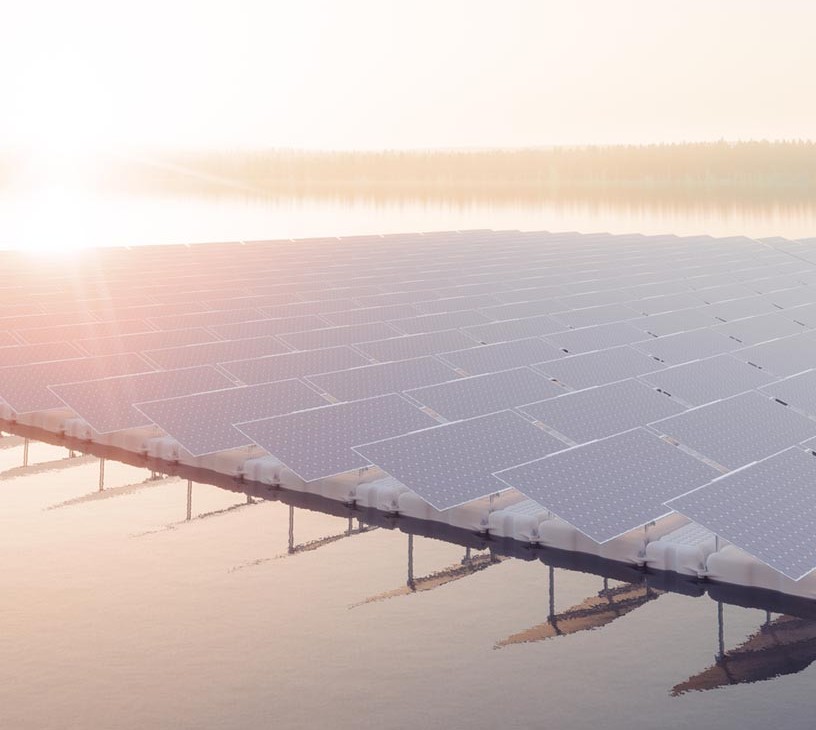


Floating Solar Panels Market Size 2025-2029
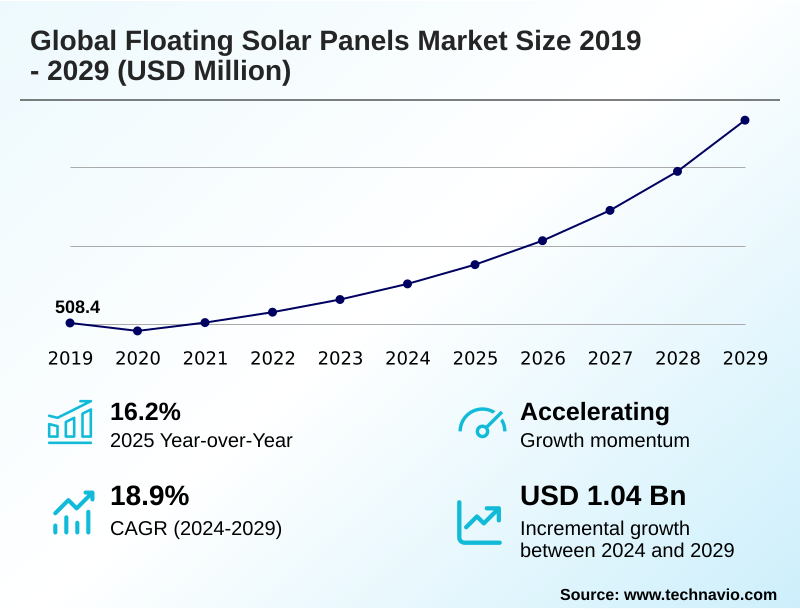
The floating solar panels market size is valued to increase by USD 1.04 billion, at a CAGR of 18.9% from 2024 to 2029. Increasing demand for renewable energy and government support will drive the floating solar panels market.
Major Market Trends & Insights
- APAC dominated the market and accounted for a 69.4% growth during the forecast period.
- By Product - Stationery segment was valued at USD 588.7 million in 2023
- By Technology - Photovoltaic (PV) segment accounted for the largest market revenue share in 2023
Market Size & Forecast
- Market Opportunities: USD 1.29 billion
- Market Future Opportunities: USD 1.04 billion
- CAGR from 2024 to 2029 : 18.9%
Market Summary
- The floating solar panels market is undergoing robust expansion, driven by the dual needs of increasing renewable energy capacity and overcoming land-use constraints. This technology, known as floatovoltaics, involves deploying photovoltaic systems on buoyant structures across water bodies like reservoirs and industrial ponds.
- It offers distinct advantages over terrestrial installations, including enhanced energy yields from the natural cooling effect of water and reduced water evaporation. As governments worldwide intensify their decarbonization efforts, floating solar has emerged as a key solution, particularly for densely populated regions where land is scarce or expensive. A prime business scenario involves a utility company operating a hydropower facility.
- By co-locating a floating solar array on the dam's reservoir, the utility can augment its power generation capacity, using the same grid connection infrastructure.
- This hybrid approach smooths out daily power output, as solar generation peaks during the day while hydropower can be dispatched to meet evening demand, enhancing overall grid stability and creating a more resilient and efficient energy system without requiring additional land acquisition. This synergy is a powerful catalyst for market adoption and investment in integrated renewable energy projects.
What will be the Size of the Floating Solar Panels Market during the forecast period?
Get Key Insights on Market Forecast (PDF) Request Free Sample
How is the Floating Solar Panels Market Segmented?
The floating solar panels industry research report provides comprehensive data (region-wise segment analysis), with forecasts and estimates in "USD million" for the period 2025-2029, as well as historical data from 2019-2023 for the following segments.
- Product
- Stationery
- Tracking
- Technology
- PV
- CPV
- CSP
- Capacity
- Below 5 MW
- 5 to 50 MW
- Above 50 MW
- Geography
- APAC
- China
- India
- Japan
- North America
- US
- Canada
- Mexico
- Europe
- Germany
- Spain
- France
- Middle East and Africa
- UAE
- Saudi Arabia
- South Africa
- South America
- Brazil
- Argentina
- Rest of World (ROW)
- APAC
By Product Insights
The stationery segment is estimated to witness significant growth during the forecast period.
The stationery sub-segment is foundational to the market, defined by fixed-tilt systems well-suited for calm water bodies.
These installations, often found on man-made reservoirs and in industrial pond solar solutions, leverage simpler engineering for their anchoring systems and FPV system components.
This approach reduces initial capital outlay and simplifies floating solar operational maintenance, accelerating project timelines for utility-scale floatovoltaics technology. The design prioritizes stability and durability, utilizing photovoltaic (PV) modules with high PID resistance and corrosion resistance.
While lacking the yield gains of tracking systems, stationery water body solar installations benefit from the natural water surface cooling effect, which can boost energy output by up to 15%.
This segment's growth is tied to its reliability and straightforward grid integration for FPV installation best practices.
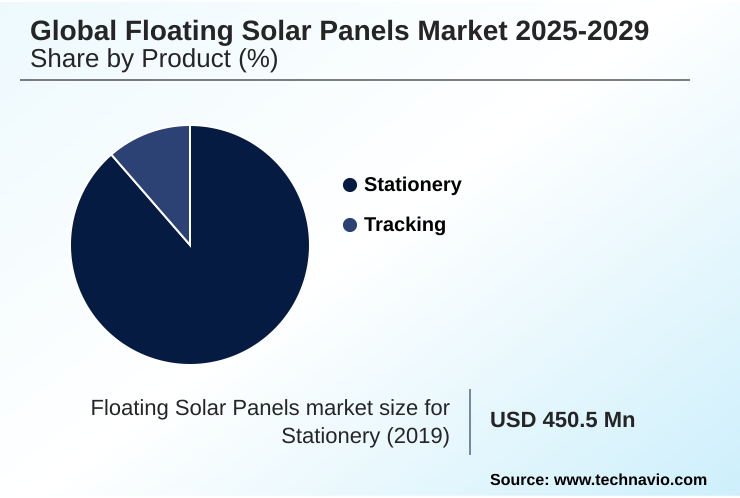
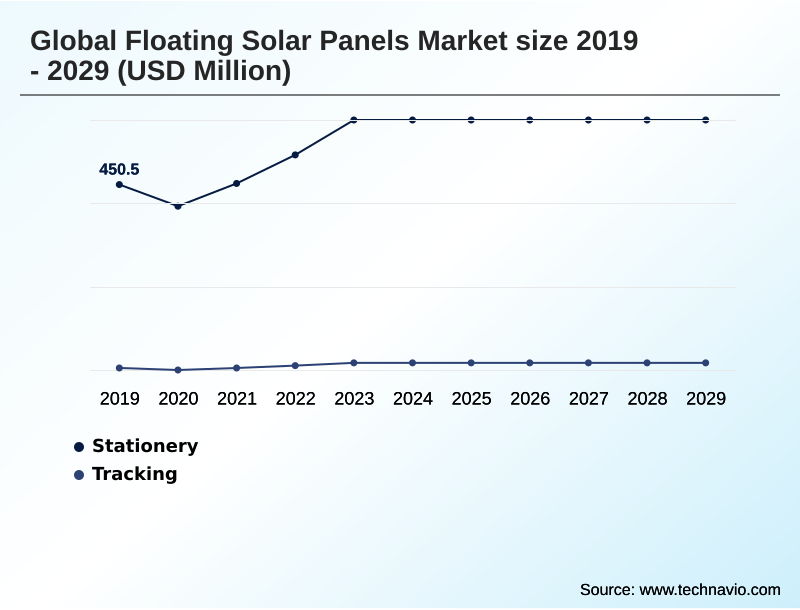
The Stationery segment was valued at USD 588.7 million in 2023 and showed a gradual increase during the forecast period.
Regional Analysis
APAC is estimated to contribute 69.4% to the growth of the global market during the forecast period.Technavio’s analysts have elaborately explained the regional trends and drivers that shape the market during the forecast period.
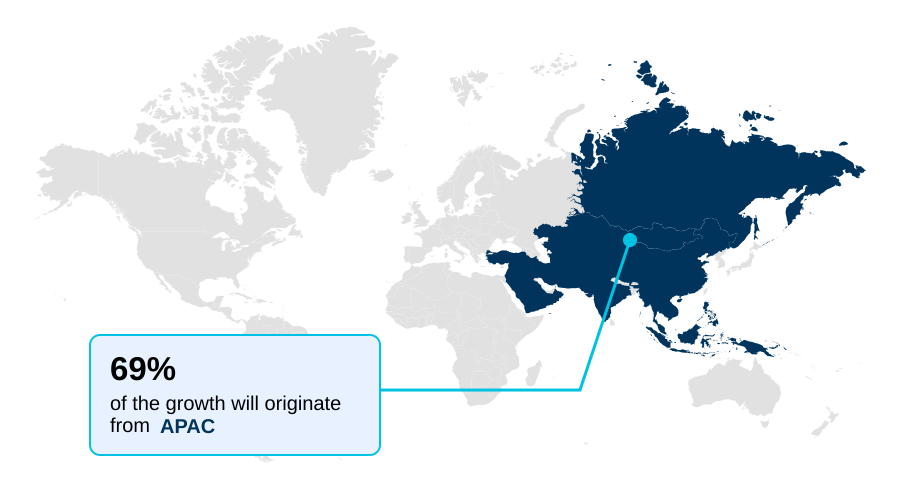
See How Floating Solar Panels Market Demand is Rising in APAC Request Free Sample
The geographic landscape of the market is predominantly led by the APAC region, which accounts for over 69% of the incremental growth, driven by ambitious floating solar project development in countries like China and India.
Europe is a rapidly maturing market, focusing on installations on quarry lakes and reservoirs, with countries like the Netherlands and France leading deployment. North America is an emerging market with significant potential, particularly for hybrid solar-hydropower configurations on existing dams.
The strategic focus in APAC is on large-scale reservoir solar farms, which require sophisticated floating PV system design and robust mooring systems.
In Europe, concerns around aquatic ecosystem management are driving innovation in materials and designs that support algae growth inhibition.
Across all regions, FPV project financing is increasingly tied to projects that offer grid stability services and incorporate advanced technologies like solar tracking systems and bifacial modules.
Market Dynamics
Our researchers analyzed the data with 2024 as the base year, along with the key drivers, trends, and challenges. A holistic analysis of drivers will help companies refine their marketing strategies to gain a competitive advantage.
- Strategic decision-making in the floating solar sector requires a thorough cost-benefit analysis of floating solar vs land-based installations, factoring in land acquisition costs and enhanced energy yields.
- The environmental impact of large-scale floating solar farms remains a critical consideration, necessitating detailed assessments of water quality impacts of floating solar panel shading and the development of effective decommissioning strategies for end-of-life floating solar farms.
- Navigating the technological challenges in offshore floating solar projects, particularly advancements in mooring and anchoring for deep water FPV, is essential for unlocking new markets. Similarly, understanding the diverse regulatory frameworks for floating solar installations is crucial for successful permitting and stakeholder engagement for floating solar development.
- For asset optimization, improving energy yield with floating solar tracking systems can provide returns that are over 25% higher than stationary setups. The long-term durability of floating solar components in water, analyzed through a comparison of different floating platform designs and materials, is fundamental to project bankability.
- Many case studies of successful utility-scale floating solar projects showcase the economic viability of aquavoltaics for dual-income streams and the importance of integrating floating solar with existing hydropower infrastructure.
- The role of floating solar in national decarbonization strategies is growing, but developers must address risk mitigation strategies for floating solar in extreme weather and overcome grid integration challenges for remote floating solar projects.
- The market also sees significant potential for floating solar on industrial and wastewater ponds, though maintenance requirements and costs for floating solar installations remain a key planning factor.
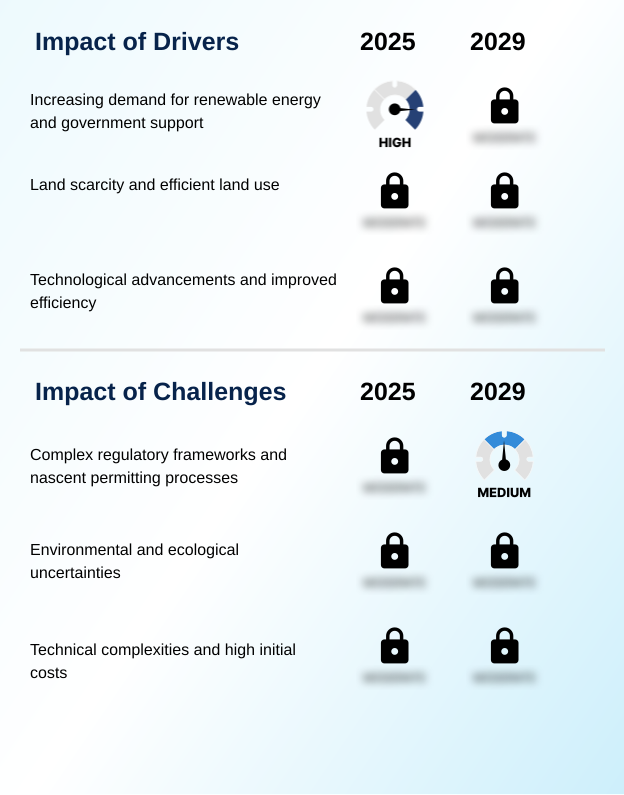
What are the key market drivers leading to the rise in the adoption of Floating Solar Panels Industry?
- Increasing global demand for renewable energy, driven by decarbonization commitments and reinforced by supportive government policies, is a primary driver of market expansion.
- Market growth is significantly driven by increasing land scarcity, positioning floating solar as a critical water surface land-use alternative for sustainable water infrastructure. This is particularly relevant for agricultural reservoir FPV and water treatment plant solar projects.
- Technological advancements are another key driver, with innovations in floating substructures made from materials like high-density polyethylene (HDPE) enhancing durability and salt mist corrosion resistance for marine environment solar power.
- The inherent water surface cooling effect naturally enhances panel efficiency by up to 15%, improving the economic viability of reservoir solar farms.
- Furthermore, government support for renewable energy is accelerating the deployment of offshore FPV, which is supported by advancements in underwater cabling systems and hydro-ecological modeling to ensure minimal environmental disruption.
What are the market trends shaping the Floating Solar Panels Industry?
- A predominant trend is the proliferation of large-scale projects and the expansion of installations into offshore environments. This strategic shift addresses land-use constraints and unlocks vast, untapped areas for solar energy generation.
- A primary trend is the shift toward hybrid renewable energy systems and dual-use water surface applications, such as aquavoltaics, which maximize land and resource efficiency. The market is also seeing accelerated innovation in system components, with a focus on modular floating platforms and wave-dampening structures to enable larger utility-scale floating solar projects, including on inland water solar projects.
- The adoption of advanced technologies like dual-axis trackers and panels with anti-soiling coating is increasing, with tracking systems capable of boosting floating solar energy generation by up to 25%. This focus on maximizing output is driving R&D into enhancing bifacial gain, which can be over 10% higher in aquatic settings.
- These technological advancements in solar power on man-made lakes are essential for improving project economics.
What challenges does the Floating Solar Panels Industry face during its growth?
- The industry's growth is challenged by complex regulatory frameworks and nascent permitting processes for floating solar projects.
- A primary challenge in the floating solar market dynamics is the high initial capital cost, with projects often being 20-25% more expensive than land-based counterparts, complicating FPV project financing. Technical complexities surrounding floating solar array stability, especially the design of mooring systems for deep water, add to these costs.
- The renewable energy permitting process is another significant hurdle, as it is often ill-defined for lake-mounted solar panels and requires detailed ecosystem impact analysis. Long-term environmental uncertainties are also a concern, as studies show that poorly designed industrial pond solar solutions can increase greenhouse gas emissions by nearly 27%.
- Ensuring the durability of components like inter-module connectors against moisture requires advanced materials with high corrosion resistance, further impacting project costs.
Exclusive Technavio Analysis on Customer Landscape
The floating solar panels market forecasting report includes the adoption lifecycle of the market, covering from the innovator’s stage to the laggard’s stage. It focuses on adoption rates in different regions based on penetration. Furthermore, the floating solar panels market report also includes key purchase criteria and drivers of price sensitivity to help companies evaluate and develop their market growth analysis strategies.
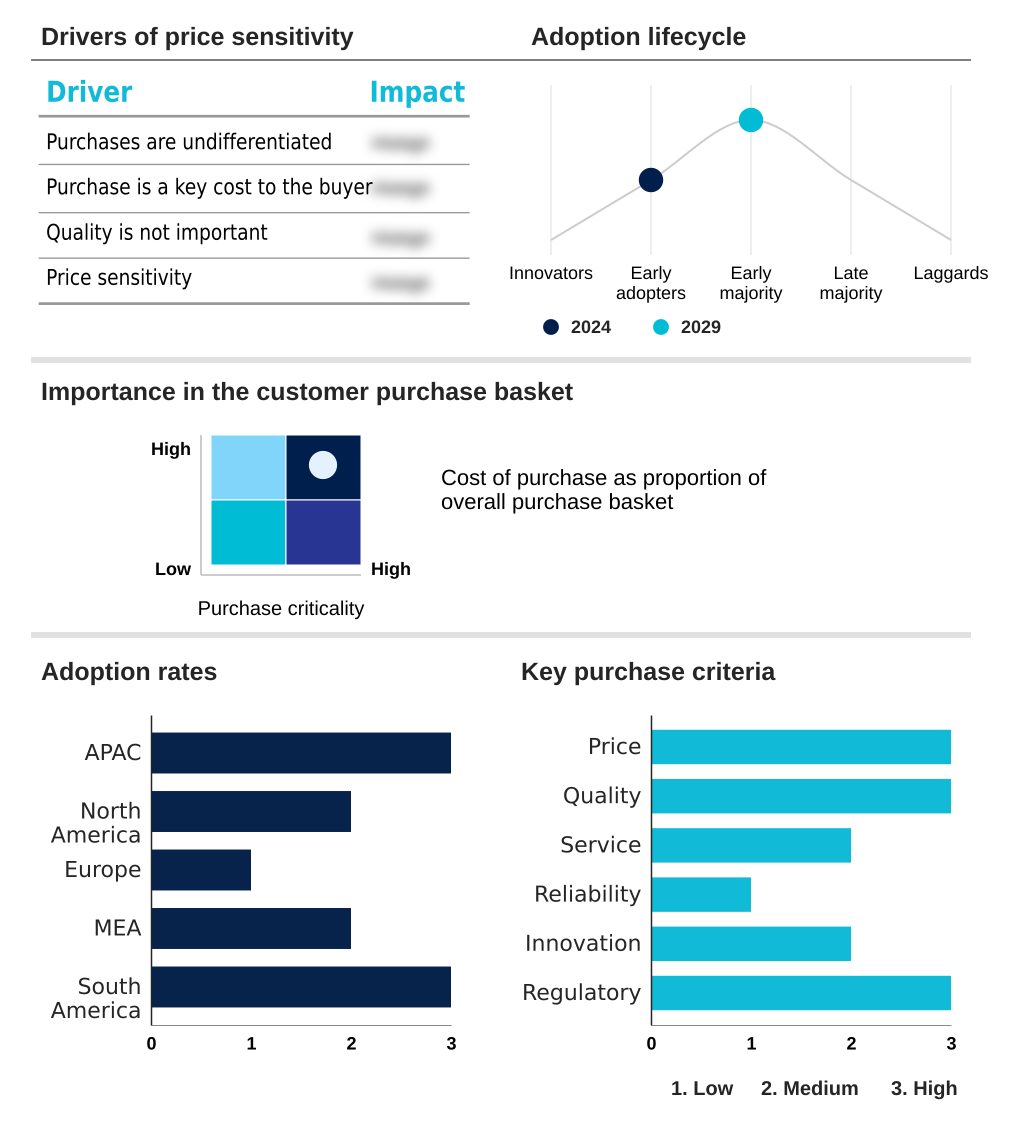
Customer Landscape of Floating Solar Panels Industry
Competitive Landscape
Companies are implementing various strategies, such as strategic alliances, floating solar panels market forecast, partnerships, mergers and acquisitions, geographical expansion, and product/service launches, to enhance their presence in the industry.
Ciel and Terre International - Offers patented, large-scale floating PV plant solutions, including the globally adopted Hydrelio floating solar system, which is utilized for diverse water-based installations worldwide.
The industry research and growth report includes detailed analyses of the competitive landscape of the market and information about key companies, including:
- Ciel and Terre International
- GCL System Integration Technology Co. Ltd.
- Hanwha Group
- JA Solar Technology Co. Ltd.
- JinkoSolar Holding Co. Ltd.
- KYOCERA Corp.
- LONGi Green Energy Technology Co. Ltd.
- Maxeon Solar Technologies Ltd.
- Ocean Sun AS
- Pristine Sun Corp.
- Quant Solar
- Sharp Corp.
- Sungrow FPV SCI and TECH Co. Ltd.
- Swimsol GmbH
- Tata Power Co. Ltd.
- Topper Floating Solar PV Mounting Manufacturer Co. Ltd.
- Trina Solar Co. Ltd.
- Vari Pontoons Pvt. Ltd.
- Vikram Solar Ltd.
Qualitative and quantitative analysis of companies has been conducted to help clients understand the wider business environment as well as the strengths and weaknesses of key industry players. Data is qualitatively analyzed to categorize companies as pure play, category-focused, industry-focused, and diversified; it is quantitatively analyzed to categorize companies as dominant, leading, strong, tentative, and weak.
Recent Development and News in Floating solar panels market
- In August 2024, Indonesian state utility PT PLN partnered with a Saudi Arabian firm to develop a 60-MW floating solar power plant at the Saguling Reservoir, signaling continued international investment in the region's renewable sector.
- In October 2024, a subsidiary of Coal India issued an e-tender for a 5 MW grid-connected floating solar power project, highlighting the increasing adoption of the technology by state-owned enterprises in the energy sector to diversify their portfolios.
- In January 2025, European industry experts advocated for prioritizing floating solar project development on man-made water bodies like sand pits to minimize ecological disruption and streamline permitting processes, reflecting a strategic shift toward sustainable siting.
- In April 2025, Third Pillar announced an agreement with Diamond Infrastructure Solutions to develop 500 MW of utility-scale floating solar projects on water reservoirs across the United States, representing a major expansion of large-scale FPV capacity in North America.
Dive into Technavio’s robust research methodology, blending expert interviews, extensive data synthesis, and validated models for unparalleled Floating Solar Panels Market insights. See full methodology.
| Market Scope | |
|---|---|
| Page number | 293 |
| Base year | 2024 |
| Historic period | 2019-2023 |
| Forecast period | 2025-2029 |
| Growth momentum & CAGR | Accelerate at a CAGR of 18.9% |
| Market growth 2025-2029 | USD 1041.7 million |
| Market structure | Fragmented |
| YoY growth 2024-2025(%) | 16.2% |
| Key countries | China, India, Japan, South Korea, Australia, Indonesia, US, Canada, Mexico, Germany, Spain, France, Italy, The Netherlands, UK, UAE, Saudi Arabia, Egypt, South Africa, Morocco, Brazil, Chile and Argentina |
| Competitive landscape | Leading Companies, Market Positioning of Companies, Competitive Strategies, and Industry Risks |
Research Analyst Overview
- The market is characterized by rapid technological evolution, moving beyond standard photovoltaic (PV) modules to embrace advanced solutions. Innovations in bifacial modules, optimized for high bifacial gain over water, are becoming central to system design.
- Component development is focused on improving the durability of floaters and buoyancy supports, with high-density polyethylene (HDPE) gaining prominence for its corrosion resistance and UV radiation resistance. The performance of anchoring systems and mooring systems is critical, especially for offshore FPV and nearshore FPV installations facing harsh marine conditions.
- At a strategic level, the trend toward hybrid solar-hydropower systems is influencing boardroom decisions on capital allocation, as companies seek dispatchable power generation and grid stability services. The integration of advanced solar tracking systems, including dual-axis trackers on modular floating platforms, can increase energy yields by over 20%.
- Attention is also turning to lifecycle management, including environmental impact assessment protocols and the development of materials with superior PID resistance and salt mist corrosion resistance to ensure long-term asset performance.
What are the Key Data Covered in this Floating Solar Panels Market Research and Growth Report?
-
What is the expected growth of the Floating Solar Panels Market between 2025 and 2029?
-
USD 1.04 billion, at a CAGR of 18.9%
-
-
What segmentation does the market report cover?
-
The report is segmented by Product (Stationery, and Tracking), Technology (Photovoltaic (PV), Concentrator photovoltaics (CPV), and Concentrated solar power (CSP)), Capacity (Below 5 MW, 5 to 50 MW, and Above 50 MW) and Geography (APAC, North America, Europe, Middle East and Africa, South America)
-
-
Which regions are analyzed in the report?
-
APAC, North America, Europe, Middle East and Africa and South America
-
-
What are the key growth drivers and market challenges?
-
Increasing demand for renewable energy and government support, Complex regulatory frameworks and nascent permitting processes
-
-
Who are the major players in the Floating Solar Panels Market?
-
Ciel and Terre International, GCL System Integration Technology Co. Ltd., Hanwha Group, JA Solar Technology Co. Ltd., JinkoSolar Holding Co. Ltd., KYOCERA Corp., LONGi Green Energy Technology Co. Ltd., Maxeon Solar Technologies Ltd., Ocean Sun AS, Pristine Sun Corp., Quant Solar, Sharp Corp., Sungrow FPV SCI and TECH Co. Ltd., Swimsol GmbH, Tata Power Co. Ltd., Topper Floating Solar PV Mounting Manufacturer Co. Ltd., Trina Solar Co. Ltd., Vari Pontoons Pvt. Ltd. and Vikram Solar Ltd.
-
Market Research Insights
- The dynamics of the floating solar panels market are shaped by a strategic push for renewable energy portfolio diversification. The adoption of floatovoltaics technology is accelerating as developers pursue dual-use water surface applications, moving beyond traditional land-based projects.
- FPV system efficiency is a key advantage, with the water surface cooling effect improving energy yields by up to 15% compared to terrestrial counterparts. Furthermore, advanced solar tracking systems can boost output by an additional 20%, a critical factor in the economic modeling for FPV project financing.
- While initial capital expenditure can be 20-25% higher than for ground-mounted systems, the benefits of water conservation and the viability of co-located energy projects often justify the investment. Effective floating solar asset management and adherence to FPV installation best practices are crucial for optimizing long-term returns and ensuring system reliability.
We can help! Our analysts can customize this floating solar panels market research report to meet your requirements.