


Flexible Packaging For Food And Beverages Market Size 2025-2029
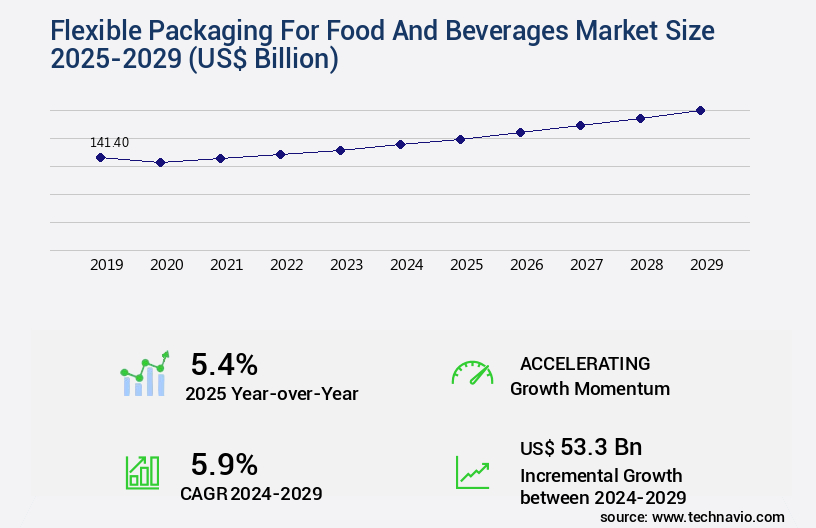
The flexible packaging for food and beverages market size is valued to increase USD 53.3 billion, at a CAGR of 5.9% from 2024 to 2029. Rise in demand for pouch packaging solutions will drive the flexible packaging for food and beverages market.
Major Market Trends & Insights
- APAC dominated the market and accounted for a 46% growth during the forecast period.
- By Material - Flexible plastic segment was valued at USD 120.40 billion in 2023
- By Product - Pouches segment accounted for the largest market revenue share in 2023
Market Size & Forecast
- Market Opportunities: USD 51.91 billion
- Market Future Opportunities: USD 53.30 billion
- CAGR : 5.9%
- APAC: Largest market in 2023
Market Summary
- The market is a dynamic and evolving industry, characterized by continuous innovation and adaptation to market demands. Core technologies, such as barrier coatings and laminates, drive the market's growth, enabling the production of high-performance packaging solutions. Applications, particularly in pouch packaging for snacks and beverages, have seen a significant rise in demand due to their convenience and sustainability benefits. Service types, including design, manufacturing, and recycling, continue to evolve, with advanced recycling technologies for flexible packaging waste gaining traction. Government regulations on packaging, such as those promoting the use of eco-friendly materials, pose both challenges and opportunities for market players.
- According to a recent study, the flexible packaging market for food and beverages is projected to account for over 25% of the global flexible packaging market share by 2026. This underscores the industry's importance and its ongoing evolution in response to market trends and regulatory requirements.
What will be the Size of the Flexible Packaging For Food And Beverages Market during the forecast period?
Get Key Insights on Market Forecast (PDF) Request Free Sample
How is the Flexible Packaging For Food And Beverages Market Segmented and what are the key trends of market segmentation?
The flexible packaging for food and beverages industry research report provides comprehensive data (region-wise segment analysis), with forecasts and estimates in "USD billion" for the period 2025-2029, as well as historical data from 2019-2023 for the following segments.
- Material
- Flexible plastic
- Flexible paper
- Flexible foil
- Product
- Pouches
- Bags
- Films and wraps
- Others
- Application
- Meat poultry and seafood
- Bakery and confectionery
- Dairy products
- Fruits and vegetables
- Others
- Geography
- North America
- US
- Canada
- Europe
- France
- Germany
- UK
- APAC
- Australia
- China
- India
- Japan
- South Korea
- Rest of World (ROW)
- North America
By Material Insights
The flexible plastic segment is estimated to witness significant growth during the forecast period.
The flexible packaging market for food and beverages experiences significant growth, driven by the increasing demand for convenient and extended shelf-life solutions. Retort pouches, a key segment, account for a substantial market share due to their ability to maintain product freshness and reduce waste. Gas flushing technology ensures product safety and product preservation, while material compatibility with various food types and printing processes enhances market appeal. Active packaging, including ethylene absorbers and oxygen scavengers, extends shelf life and improves food preservation. Closure systems, portion control packaging, and packaging lines streamline production efficiency. Sustainability metrics, such as recycled content and package design, gain importance as businesses prioritize eco-friendly practices.
High-barrier materials, like barrier films and food-grade polymers, provide excellent barrier properties to protect against oxygen, moisture, and other contaminants. Seal integrity and leak testing ensure product safety and prevent spoilage. Carbon footprint concerns lead to the adoption of vacuum packaging and heat sealing techniques. The market for flexible packaging materials continues to evolve, with advancements in aseptic packaging, lamination techniques, and flexible spouts. Modified atmosphere packaging and barrier films extend shelf life and maintain product freshness. Beverage containers and packaging waste reduction strategies further expand market opportunities. According to recent studies, the flexible packaging market for food and beverages is projected to grow by 15% in the next year.
Additionally, future industry growth is expected to reach 18% within the next five years. These figures reflect the continuous unfolding of market activities and the evolving patterns in the flexible packaging industry.
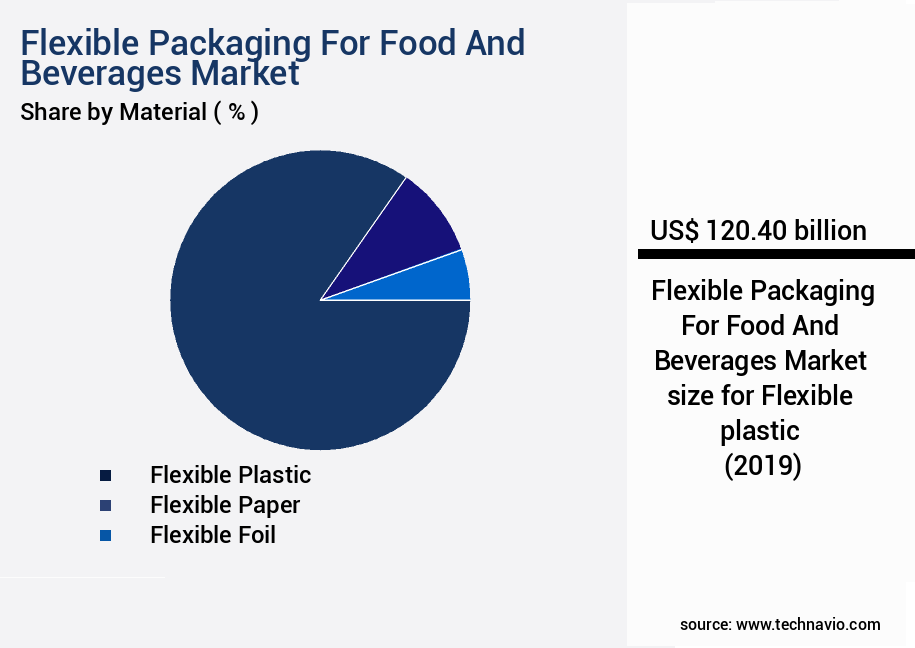
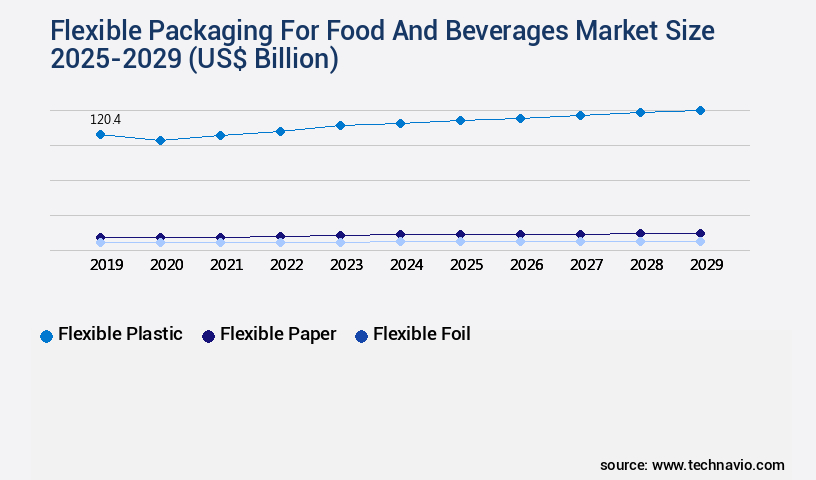
The Flexible plastic segment was valued at USD 120.40 billion in 2019 and showed a gradual increase during the forecast period.
Regional Analysis
APAC is estimated to contribute 46% to the growth of the global market during the forecast period.Technavio’s analysts have elaborately explained the regional trends and drivers that shape the market during the forecast period.
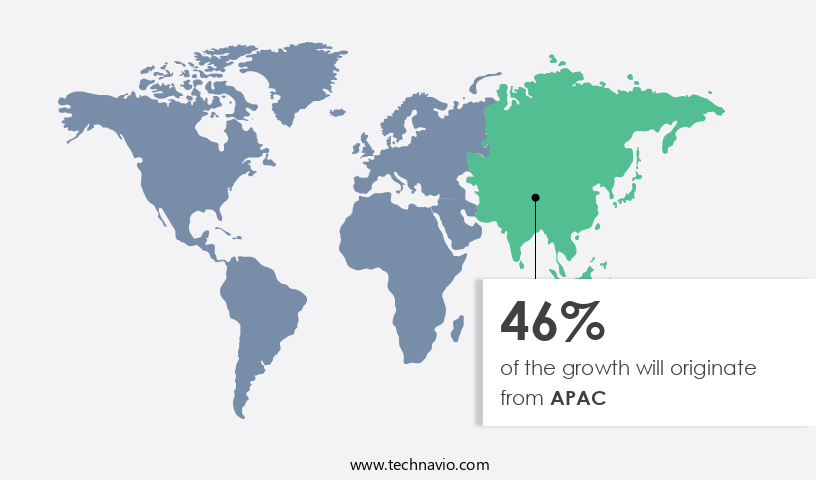
See How Flexible Packaging For Food And Beverages Market Demand is Rising in APAC Request Free Sample
The flexible packaging market for food and beverages in APAC is experiencing significant growth due to several factors. Improving economic conditions in countries like China, India, Indonesia, and Australia have led to increased investments in various sectors, including food and beverages. This trend is driven by urbanization and changing lifestyles that have boosted demand for convenience foods and beverages, such as soft drinks and ready-to-eat meals.
Furthermore, the e-commerce industry's evolution is a major catalyst for the market's expansion in APAC. The region's flexible packaging market is expected to witness substantial growth, fueled by these factors.
Market Dynamics
Our researchers analyzed the data with 2024 as the base year, along with the key drivers, trends, and challenges. A holistic analysis of drivers will help companies refine their marketing strategies to gain a competitive advantage.
The global flexible packaging market for food and beverages is a dynamic and innovative industry, driven by the demand for high-performance, sustainable, and consumer-preferred solutions. High-barrier flexible packaging is a significant trend, extending the shelf life of perishable goods and preserving food safety. Sustainable flexible packaging materials, such as biodegradable and recyclable options, are increasingly favored to reduce waste and minimize environmental impact. Aseptic packaging solutions for beverages are gaining popularity due to their ability to maintain product quality and extend shelf life without the need for refrigeration. Modified atmosphere packaging, with improved seal integrity, is another key technology for preserving the freshness of food products.
Advanced lamination techniques and flexible packaging design enhance product protection, while optimized production processes and automated packaging lines streamline manufacturing. Leak detection methods and quality control measures ensure the integrity and safety of flexible beverage packaging, addressing consumer concerns. Packaging waste reduction strategies are essential for the food industry, and life cycle assessment of flexible food packaging is a critical consideration for companies. Consumer preference for sustainable flexible packaging continues to grow, influencing market trends and driving innovation. The impact of packaging materials on food safety is a significant concern, and new flexible packaging materials for food preservation are continually being developed.
Design improvements for food and beverage pouches and advances in flexible packaging machinery further expand the capabilities of this versatile industry. Adoption rates of sustainable flexible packaging solutions in Europe are nearly double those in Asia Pacific, reflecting varying regulatory landscapes and consumer preferences. This comparative data underscores the importance of understanding regional market dynamics and tailoring strategies accordingly.
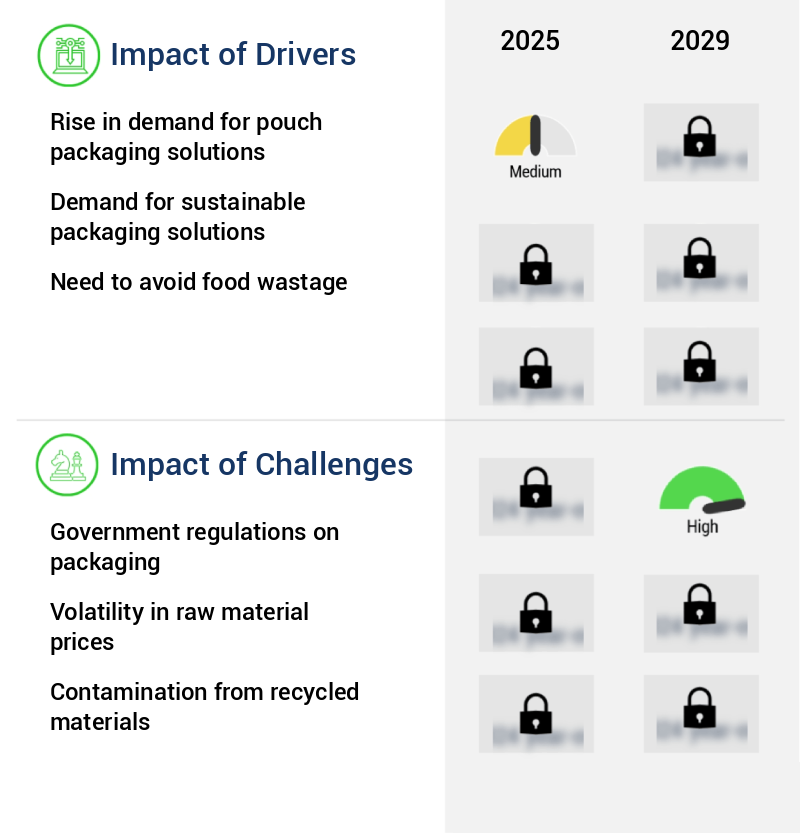
What are the key market drivers leading to the rise in the adoption of Flexible Packaging For Food And Beverages Industry?
- The pouch packaging solution market is experiencing significant growth due to increasing demand for these innovative and convenient packaging options from various industries.
- The global flexible packaging market for food and beverages is witnessing a significant trend toward pouch packaging solutions. Consumers' evolving lifestyles and preferences for convenient, lightweight, and easy-to-handle packaging have fueled this demand. Pouch packaging offers numerous advantages, including high printability and the ability to cater to single-serve uses. In the food and beverage industry, spout pouches have gained popularity due to their high product discharge rate of up to 99.5%, significantly reducing food and beverage wastage. This trend is contributing to the growth of the flexible packaging market, as it addresses consumer needs for sustainable and convenient packaging options.
- The shift towards pouch packaging is a reflection of the dynamic nature of consumer preferences and the industry's response to meet these demands.
What are the market trends shaping the Flexible Packaging For Food And Beverages Industry?
- Advanced recycling technologies represent the upcoming market trend for effectively processing flexible packaging waste.
- The food and beverage industry is witnessing a surging demand for lightweight, convenient, and economical packaging solutions. Flexible packaging, comprised of plastics and aluminum foil, is gaining popularity due to its ability to cater to these requirements. However, the non-recyclable nature of plastic materials poses a significant challenge to the expansion of the global flexible packaging market. In response, flexible packaging companies and raw material suppliers are innovating eco-friendly plastic film solutions and implementing recycling programs. For instance, the Materials Recovery for the Future (MRFF), an organization managed by the American Chemistry Council Foundation for Chemistry Research and Initiatives, focuses on effective and economical recycling of plastic materials throughout the entire lifecycle of the plastic film.
- This initiative signifies a crucial step towards enhancing sustainability within the flexible packaging supply chain.
What challenges does the Flexible Packaging For Food And Beverages Industry face during its growth?
- The growth of the industry is significantly impacted by stringent government regulations concerning packaging.
- Packaging plays a crucial role in the food and beverage industry, ensuring product safety and longevity. However, the choice of packaging materials is significant, with plastics, a common contributor to landfills and environmental pollution, facing increasing regulations. Governments worldwide have imposed restrictions on non-biodegradable plastic packaging materials due to their environmental impact. In response, the market for eco-friendly food packaging solutions has gained traction. Biodegradable and compostable alternatives, such as paper, bioplastics, and glass, have emerged as viable options. Regulations governing the use of food-safe materials have also been introduced to maintain food quality and consumer safety.
- The food packaging market's continuous evolution reflects these trends, with a growing emphasis on sustainable and eco-friendly solutions. The shift towards biodegradable packaging materials represents a substantial proportion of the market's growth, demonstrating the industry's commitment to reducing environmental impact.
Exclusive Technavio Analysis on Customer Landscape
The flexible packaging for food and beverages market forecasting report includes the adoption lifecycle of the market, covering from the innovator’s stage to the laggard’s stage. It focuses on adoption rates in different regions based on penetration. Furthermore, the flexible packaging for food and beverages market report also includes key purchase criteria and drivers of price sensitivity to help companies evaluate and develop their market growth analysis strategies.
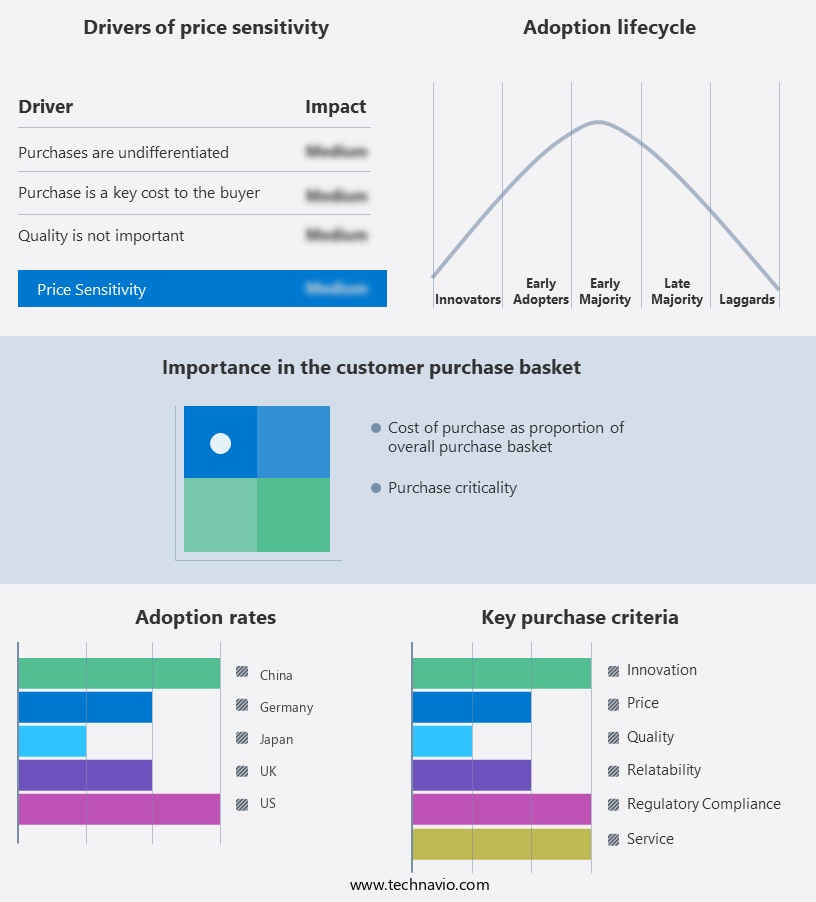
Customer Landscape of Flexible Packaging For Food And Beverages Industry
Competitive Landscape
Companies are implementing various strategies, such as strategic alliances, flexible packaging for food and beverages market forecast, partnerships, mergers and acquisitions, geographical expansion, and product/service launches, to enhance their presence in the industry.
Amcor Plc - The company specializes in innovative, recyclable packaging solutions for the food and beverage industry, including AmLite HeatFlex, AmPrima, and GoSmart. These flexible packaging options, the result of extensive research and development efforts, are designed to meet evolving consumer demands for sustainable alternatives.
The industry research and growth report includes detailed analyses of the competitive landscape of the market and information about key companies, including:
- Amcor Plc
- American Packaging Corp.
- Behr Bircher Cellpack BBC AG
- Berry Global Inc.
- Bischof Klein SE and Co. KG
- Bryce Corp.
- CCL Industries Inc.
- Constantia Flexibles Group GmbH
- Glenroy Inc.
- Huhtamaki Oyj
- Mondi Plc
- Novolex
- Printpack Inc.
- ProAmpac Holdings Inc.
- Sealed Air Corp.
- Sonoco Products Co.
- Transcontinental Inc.
- UFlex Ltd.
- WestRock Co.
- Wipak Group
Qualitative and quantitative analysis of companies has been conducted to help clients understand the wider business environment as well as the strengths and weaknesses of key industry players. Data is qualitatively analyzed to categorize companies as pure play, category-focused, industry-focused, and diversified; it is quantitatively analyzed to categorize companies as dominant, leading, strong, tentative, and weak.
Recent Development and News in Flexible Packaging For Food And Beverages Market
- In January 2024, Amcor, a global leader in packaging solutions, announced the launch of its new "Bio-based PET" packaging, made from renewable sugarcane-derived monomers, in collaboration with Danone and L'Oréal. This innovation marks a significant stride in sustainable packaging for the food and beverage industry (Amcor Press Release, 2024).
- In March 2024, Sealed Air, a leading provider of food safety and security solutions, completed the acquisition of Diversey's Food Hygiene business, expanding its offerings in the food and beverage sector. This strategic move strengthened Sealed Air's position in the market and enhanced its capabilities in food safety solutions (Sealed Air Press Release, 2024).
- In May 2024, Tetra Pak, a leading packaging solutions company, received approval from the European Commission for its new plant-based barrier technology, Tetra Rex Bio-based, which is expected to reduce the use of fossil-based materials in food packaging by up to 70%. This approval marks a significant milestone in the shift towards more sustainable packaging solutions (Tetra Pak Press Release, 2024).
- In April 2025, Berry Global, a global manufacturer of innovative plastic packaging, announced a strategic partnership with Danone to develop and commercialize a new range of mono-material, fully recyclable, and reusable packaging for the food and beverage industry. This collaboration aims to reduce plastic waste and promote circular economy practices within the industry (Berry Global Press Release, 2025).
Dive into Technavio’s robust research methodology, blending expert interviews, extensive data synthesis, and validated models for unparalleled Flexible Packaging For Food And Beverages Market insights. See full methodology.
|
Market Scope |
|
|
Report Coverage |
Details |
|
Page number |
233 |
|
Base year |
2024 |
|
Historic period |
2019-2023 |
|
Forecast period |
2025-2029 |
|
Growth momentum & CAGR |
Accelerate at a CAGR of 5.9% |
|
Market growth 2025-2029 |
USD 53.3 billion |
|
Market structure |
Fragmented |
|
YoY growth 2024-2025(%) |
5.4 |
|
Key countries |
US, China, Germany, India, Japan, Canada, South Korea, UK, France, and Australia |
|
Competitive landscape |
Leading Companies, Market Positioning of Companies, Competitive Strategies, and Industry Risks |
Research Analyst Overview
- In the dynamic and evolving landscape of flexible packaging for food and beverages, various trends and advancements continue to shape market activities. Retort pouches, a popular choice for their convenience and extended shelf life, are increasingly adopted for various food applications. Gas flushing, a critical process in retort pouch manufacturing, ensures product safety and preservation by displacing air with inert gases. Material compatibility plays a crucial role in the selection of packaging materials, with food-grade polymers and high-barrier materials gaining traction due to their ability to maintain product freshness and reduce carbon footprint. Printing processes, such as flexography and gravure, enable vibrant and detailed labeling, enhancing product appeal.
- Active packaging, incorporating ethylene absorbers and oxygen scavengers, extends shelf life and maintains product quality. Closure systems, from simple zippers to more sophisticated designs, ensure seal integrity and prevent leakage. Portion control packaging and packaging lines optimize production efficiency, while vacuum packaging and heat sealing offer superior food preservation through modified atmosphere packaging and barrier films. Sustainability metrics, including recycled content and reduced packaging waste, are increasingly important considerations. Package design, incorporating flexible spouts and innovative shapes, attracts consumer attention. Leak testing and shelf-life extension further ensure product safety and freshness. Market activities in flexible packaging for food and beverages are continually unfolding, with ongoing advancements in technology and consumer preferences driving innovation.
What are the Key Data Covered in this Flexible Packaging For Food And Beverages Market Research and Growth Report?
-
What is the expected growth of the Flexible Packaging For Food And Beverages Market between 2025 and 2029?
-
USD 53.3 billion, at a CAGR of 5.9%
-
-
What segmentation does the market report cover?
-
The report segmented by Material (Flexible plastic, Flexible paper, and Flexible foil), Product (Pouches, Bags, Films and wraps, and Others), Application (Meat poultry and seafood, Bakery and confectionery, Dairy products, Fruits and vegetables, and Others), and Geography (APAC, North America, Europe, South America, and Middle East and Africa)
-
-
Which regions are analyzed in the report?
-
APAC, North America, Europe, South America, and Middle East and Africa
-
-
What are the key growth drivers and market challenges?
-
Rise in demand for pouch packaging solutions, Government regulations on packaging
-
-
Who are the major players in the Flexible Packaging For Food And Beverages Market?
-
Key Companies Amcor Plc, American Packaging Corp., Behr Bircher Cellpack BBC AG, Berry Global Inc., Bischof Klein SE and Co. KG, Bryce Corp., CCL Industries Inc., Constantia Flexibles Group GmbH, Glenroy Inc., Huhtamaki Oyj, Mondi Plc, Novolex, Printpack Inc., ProAmpac Holdings Inc., Sealed Air Corp., Sonoco Products Co., Transcontinental Inc., UFlex Ltd., WestRock Co., and Wipak Group
-
Market Research Insights
- The flexible packaging market for food and beverages continues to evolve, driven by advancements in packaging engineering, material science, and regulatory compliance. According to industry estimates, this market is projected to reach USD270 billion by 2025, growing at a CAGR of 5% from 2020. Product protection and shelf-life extension are key priorities, leading to the adoption of advanced barrier technologies, such as coextrusion processes and biodegradable polymers. Quality control is ensured through rigorous testing protocols, including water vapor transmission rate, oxygen transmission rate, and flexographic printing. Packaging machinery innovations, such as logistics optimization and packaging line automation, streamline production and reduce waste.
- Sustainability initiatives, including compostable materials and waste reduction, are gaining traction, with companies investing in polymer selection and lifecycle assessment studies. Food safety regulations remain a critical consideration, driving the development of new packaging designs using software and digital printing technologies. Overall, the flexible packaging market for food and beverages is a dynamic and innovative industry, continually pushing the boundaries of polymer chemistry, material science, and packaging design.
We can help! Our analysts can customize this flexible packaging for food and beverages market research report to meet your requirements.
 RIA -
RIA -