


Middle East Facility Services Management Market Size 2025-2029
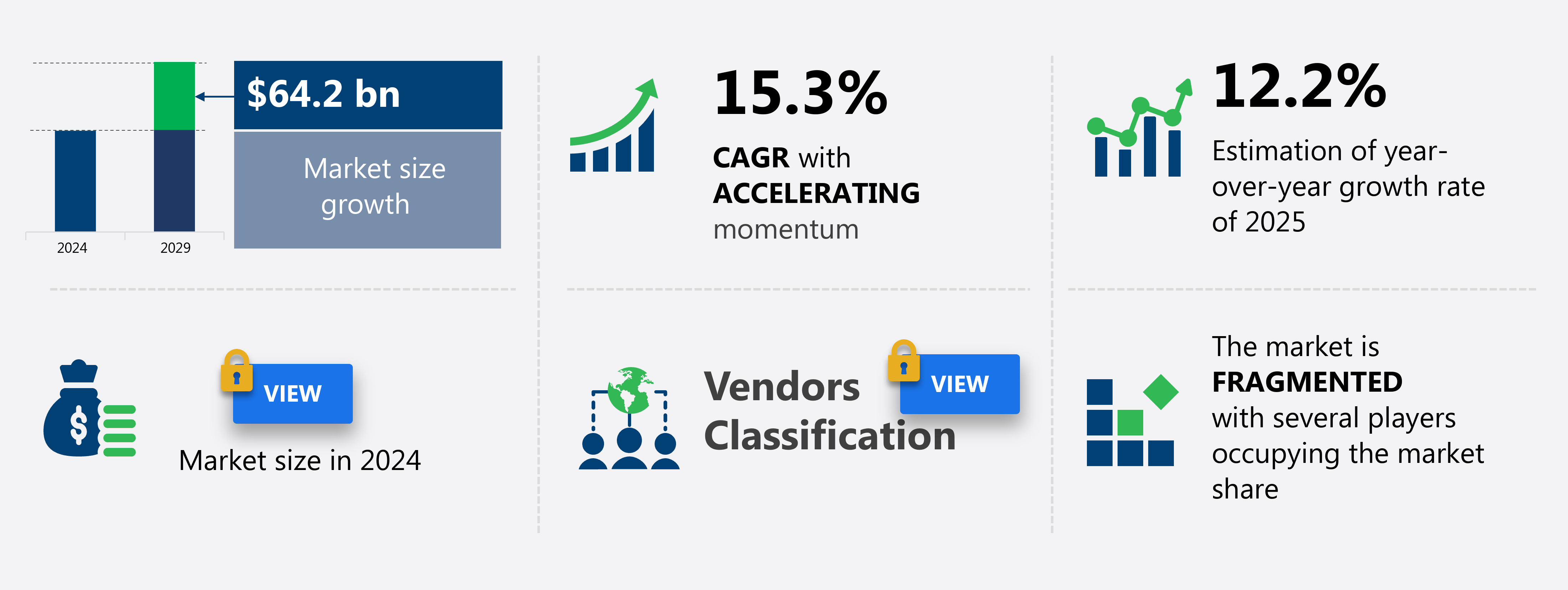
The Middle East facility services management market size is forecast to increase by USD 64.2 billion, at a CAGR of 15.3% between 2024 and 2029.
- In the market, the integration of advanced technologies such as artificial intelligence (AI), big data, robotics, chatbots, and IT services is revolutionizing the industry. The adoption of automation tools, including computer-assisted design and building information modeling, is streamlining operations and enhancing efficiency. Industrial services are benefiting from these technological advancements, allowing for predictive maintenance and real-time monitoring. Outsourcing and construction sectors are also embracing these trends, with cost constraints driving the need for more efficient and cost-effective solutions. The use of AI and big data analytics is enabling better decision-making and improving overall operational performance. Additionally, the implementation of server technologies and IT services is facilitating seamless data exchange and communication between various stakeholders in the facilities management ecosystem.
What will be the Size of the market during the Forecast Period?
- The market encompasses a range of offerings, including computer-aided facility management, building management systems, remote monitoring, mobile solutions, robotics, and artificial intelligence (AI). This market is experiencing significant growth due to the increasing demand for efficient and cost-effective building management. Building owners and service providers are increasingly adopting advanced technologies to enhance the longevity of assets, ensure qualitative maintenance, and promote sustainability. Remote monitoring and mobile solutions enable real-time tracking of building performance and maintenance needs, reducing response times and improving overall efficiency. Computer-aided facility management systems and building management systems help optimize energy usage and automate routine tasks.
- Robotics and AI are also being integrated into facility services management to streamline operations and enhance safety and security. The market is driven by societal demands for improved lifestyle, health, and safety, as well as a growing focus on environmental sustainability. In-house departments and service providers are investing in training centers and quality assurance and control measures to ensure high-quality services. The freehold sectors and middle-income group-housing sector are major contributors to the market's growth. Construction projects continue to drive demand for facility services management, with a focus on quality and sustainability. The market is also influenced by societal trends, such as the sinking fund model for long-term asset maintenance and the increasing importance of building fabric and qualitative maintenance.
How is this market segmented and which is the largest segment?
The market research report provides comprehensive data (region-wise segment analysis), with forecasts and estimates in "USD billion" for the period 2025-2029, as well as historical data from 2019-2023 for the following segments.
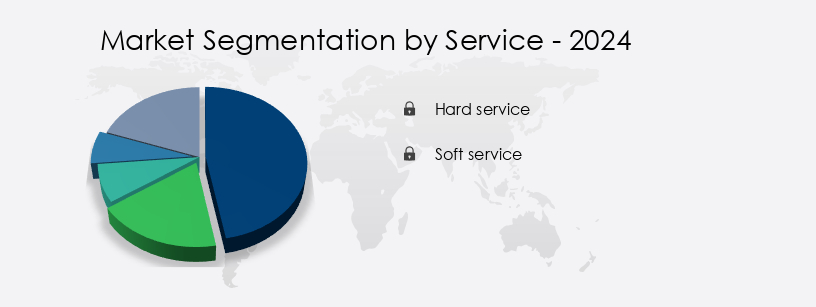
- Service
- Hard service
- Soft service
- Type
- Outsourced
- In-house
- Geography
- Middle East
By Service Insights
- The hard service segment is estimated to witness significant growth during the forecast period. Facility services management in the Middle East encompasses hard services, which involve specialized expertise in electrical, mechanical, water management, and energy services. While some businesses opt for in-house departments, outsourcing to specialist contractors or large multi-service companies has gained traction due to the efficiency and productivity benefits. The GCC region's focus on infrastructure development, particularly in countries like the UAE, Saudi Arabia, and Qatar, fuels the demand for hard services.
- Notable projects, such as Qiddiya Entertainment City and the Silicon Park Project, require extensive HVAC and utility maintenance, contributing to market growth. The integration of advanced technologies like computer-aided facility management, building management systems, remote monitoring, mobile solutions, robotics, AI, and IoT enhances service delivery and sustainability. The long-term focus on asset longevity, building fabric maintenance, and qualitative maintenance aligns with the societal emphasis on lifestyle, health, safety, and environmental concerns. The sinking fund and operating expenses associated with asset replacement costs and carbon-footprint reduction necessitate sustainable solutions.
Get a glance at the market report of share of various segments Request Free Sample
Market Dynamics
Our Middle East Facility Services Management Market researchers analyzed the data with 2024 as the base year, along with the key drivers, trends, and challenges. A holistic analysis of drivers will help companies refine their marketing strategies to gain a competitive advantage.
What are the key market drivers leading to the rise in adoption of the Middle East Facility Services Management Market?
- Rapid growth in commercial construction is the key driver of the market. The market has witnessed significant growth due to the increasing construction activities in various sectors, including transport, hospitality, entertainment, and healthcare, since 2022. This expansion is driven by the strategic vision of countries such as Saudi Arabia and Qatar, which have been steadily implementing infrastructure projects. Building management systems, such as computer-aided facility management and remote monitoring, have become increasingly popular in managing the operational expenses of these structures. Furthermore, the adoption of mobile solutions, robotics, and AI is on the rise to enhance service delivery and improve sustainability. Building owners and residents are prioritizing the longevity of assets, focusing on qualitative maintenance, and ensuring lifestyle, health, safety, and environmental concerns are met.
- Large multi-service companies, specialist contractors, and consortia offer Design, Build, Finance, Management functions to cater to the diverse needs of the market. The market encompasses the management of power plants, wastewater treatment systems, roads, airports, and port facilities. In the context of Hydrocarbon-based economies and desert climates, the importance of a sustainable solution is paramount. Asset replacement costs, operating expenses, and carbon-footprint are significant considerations for building fabric maintenance and service level management. The Middle-income group-housing sector is also a growing market, with a focus on quality assurance and quality control.
What are the market trends shaping the Middle East Facility Services Management Market?
- Growing prominence of technology in facility management is the upcoming trend in the market. The market is witnessing significant technological advancements, leading to enhanced efficiency and productivity. Artificial Intelligence (AI) is a key trend gaining traction among market participants. AI applications include project estimation and design analysis, customer service through online chatbots, and data-driven operations. The Internet of Things (IoT) is another trend, with companies implementing IoT-enabled devices, such as sensors and actuators, for waste management and energy efficiency. Additionally, computer-aided facility management systems, building management systems, remote monitoring, mobile solutions, and robotics are transforming the industry. These technologies enable better service level management, quality assurance, and quality control.
- Furthermore, AI and IoT solutions contribute to sustainability and the longevity of assets by optimizing building fabric maintenance, improving lifestyle, health, safety, and environmental factors. The integration of these technologies in facility management services is essential for reducing operating expenses, managing asset replacement costs, and minimizing a building's carbon footprint. The adoption of technology trends, including AI and IoT, is crucial for facility management service providers in the Middle East to remain competitive and meet the evolving needs of residents, building owners, and society.
What challenges does the Middle East Facility Services Management Market face during the growth?
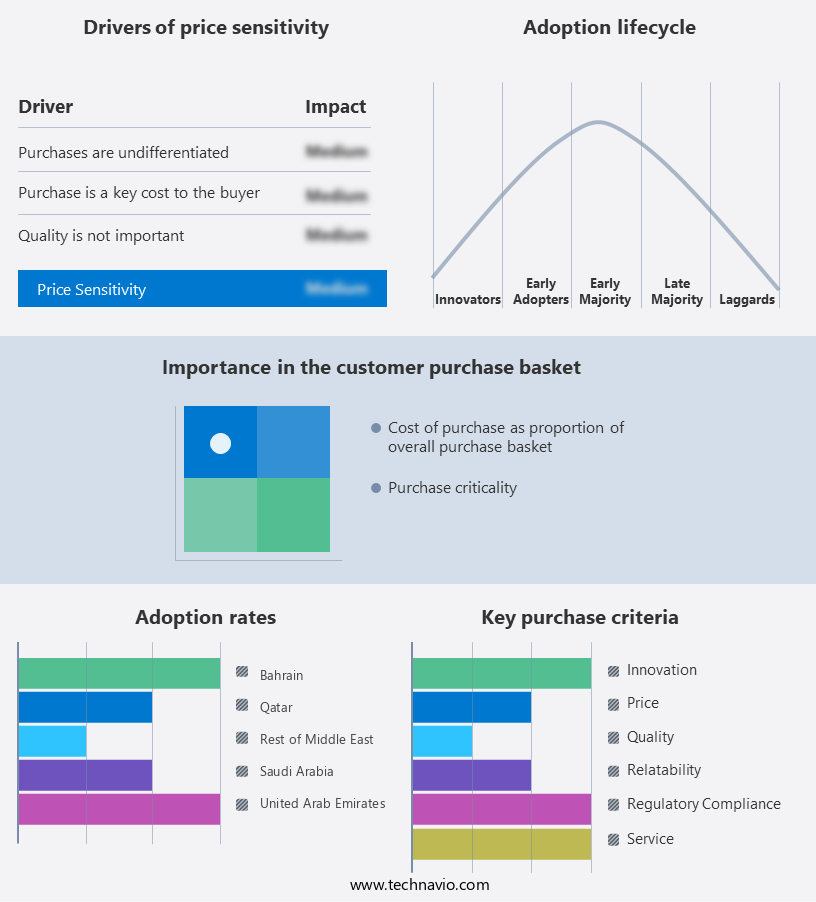
- Cost constraints in facility management services are a key challenge affecting the market growth. The market is characterized by price sensitivity, with various international and local companies vying for market share. End-users, including building owners and residents, view facility management services as an additional expense. Consequently, facility management companies are compelled to offer competitive pricing to secure contracts. The limited familiarity of the extensive benefits of facility management services in the region is a significant barrier. Facility management services encompass a range of functions, including computer-aided facility management, building management systems, remote monitoring, mobile solutions, robotics, and AI. However, Middle Eastern end-users often outsource only labor supply and equipment maintenance.
- The novelty of facility management services in the Middle East compared to developed markets necessitates the need for industry-specific benchmarks. This challenge poses an obstacle for international companies seeking to expand their operations In the region. The market dynamics include the integration of advanced technologies like AI, robotics, and IoT in facility management systems. These technologies contribute to enhancing service level management, improving asset longevity, and reducing operating expenses. Furthermore, there is a growing emphasis on sustainability and reducing carbon footprint, necessitating the adoption of sustainable facility management solutions. The market also caters to various sectors, including power plants, wastewater treatment systems, roads, airports, and port facilities, among others.
Exclusive Customer Landscape
The market forecasting report includes the adoption lifecycle of the market, covering from the innovator's stage to the laggard's stage. It focuses on adoption rates in different regions based on penetration. Furthermore, the market report also includes key purchase criteria and drivers of price sensitivity to help companies evaluate and develop their market growth analysis strategies.
Customer Landscape
Key Companies & Market Insights
Companies are implementing various strategies, such as strategic alliances, market forecast , partnerships, mergers and acquisitions, geographical expansion, and product/service launches, to enhance their presence In the market.
Al Asmakh Facilities Management - The company offers facility management services that helps ensure the functionality, comfort, safety and efficiency of businesses, buildings, assets, grounds and infrastructure.
The market research and growth report includes detailed analyses of the competitive landscape of the market and information about key companies, including:
- Al Asmakh Facilities Management
- Al Mulla Group
- Al Tamyoz
- Alghanim International
- Atlas Ontario LP.
- EMCOR Group Inc.
- Emrill Services LLC
- Etisalat Facilities Management LLC
- Farnek
- Galfar Al Misnad
- Gems industrial services W.L.L
- Imdaad LLC
- Khidmah Sole Proprietorship LLC
- MRC
- Muheel services for Maintenance and Operations LLC
- ONE Facilities Management
- Sbgom
- Transguard Group LLC
- United Facilities Management
- Veolia
Qualitative and quantitative analysis of companies has been conducted to help clients understand the wider business environment as well as the strengths and weaknesses of key market players. Data is qualitatively analyzed to categorize companies as pure play, category-focused, industry-focused, and diversified; it is quantitatively analyzed to categorize companies as dominant, leading, strong, tentative, and weak.
Research Analyst Overview
Facility services management is a critical aspect of maintaining the operational efficiency and effectiveness of buildings and infrastructure. This market encompasses various services, including computer-aided facility management, building management systems, remote monitoring, mobile solutions, robotics, and artificial intelligence (AI). These technologies enable efficient management of building functions, such as HVAC, lighting, security, and access control. Building management systems facilitate the integration of various building services, allowing for centralized control and monitoring. Remote monitoring enables real-time assessment of building performance, enabling proactive maintenance and reducing downtime. Mobile solutions offer flexibility and accessibility, enabling facility managers to manage their operations from anywhere.
Further, robotics and AI are increasingly being used for tasks such as cleaning, security, and maintenance inspections, enhancing productivity and reducing labor costs. The facility services management market caters to various sectors, including residential, commercial, industrial, and public. In the residential sector, in-house departments and specialist contractors provide services for both freehold and middle-income group-housing sectors. Large multi-service companies and consortia offer comprehensive solutions for commercial and industrial buildings, including design, build, finance, and management functions. Society's increasing focus on sustainability and the longevity of assets has led to a greater emphasis on qualitative maintenance, lifestyle, health, safety, and the environment.
In addition, building owners and service providers are investing in sustainable solutions to reduce their carbon footprint and operating expenses. Asset replacement costs are a significant consideration in facility services management, with power plants, wastewater treatment systems, roads, airports, and port facilities requiring substantial investment. Hydrocarbon-based economies and desert climates present unique challenges for facility services management, with high operating expenses and extreme environmental conditions. Operating expenses are a critical consideration in facility services management, with asset replacement costs and ongoing maintenance expenses representing significant portions of total expenses. Quality assurance and quality control are essential components of facility services management, ensuring that services are delivered efficiently and effectively.
|
Market Scope |
|
|
Report Coverage |
Details |
|
Page number |
171 |
|
Base year |
2024 |
|
Historic period |
2019-2023 |
|
Forecast period |
2025-2029 |
|
Growth momentum & CAGR |
Accelerate at a CAGR of 15.3% |
|
Market growth 2025-2029 |
USD 64.2 billion |
|
Market structure |
Fragmented |
|
YoY growth 2024-2025(%) |
12.2 |
|
Key countries |
Saudi Arabia, UAE, Qatar, Bahrain, and Rest of MEA |
|
Competitive landscape |
Leading Companies, Market Positioning of Companies, Competitive Strategies, and Industry Risks |
What are the Key Data Covered in this Market Research and Growth Report?
- CAGR of the market during the forecast period
- Detailed information on factors that will drive the market growth and forecasting between 2025 and 2029
- Precise estimation of the size of the market and its contribution of the market in focus to the parent market
- Accurate predictions about upcoming market growth and trends and changes in consumer behaviour
- Growth of the market across Middle East
- Thorough analysis of the market's competitive landscape and detailed information about companies
- Comprehensive analysis of factors that will challenge the growth of market companies
We can help! Our analysts can customize this market research report to meet your requirements.
 RIA -
RIA -