


US Expandable Polystyrene (EPS) Market by Type, Application and Distribution Channel - Forecast and Analysis 2024-2028

US Expandable Polystyrene (EPS) Market by Type, Application and Distribution Channel - Forecast and Analysis 2024-2028

Published: Mar 2024 149 Pages SKU: IRTNTR73321

Market Overview at a Glance

$587.88 Mn
Market Opportunity
4.46%
CAGR
4.32
YoY growth 2023-2024(%)

US EPS Market Size 2024-2028 

The US EPS market size is forecast to increase by USD 587.88 million, at a CAGR of 4.46% between 2023 and 2028.

  • The market is witnessing significant growth due to several key factors. The increasing trend towards e-commerce sales and the subsequent rise in demand for efficient and lightweight packaging solutions are driving the market. Moreover, the growing preference for sustainable and eco-friendly packaging options, such as bioplastics, is also fueling market growth. These trends are expected to continue, as consumers increasingly demand convenient, sustainable, and cost-effective packaging solutions. Additionally, advancements in technology are enabling the production of thinner, more flexible, and more energy-efficient EPS materials, further boosting market growth. Overall, the market is poised for strong expansion In the coming years, driven by these key market trends and growth factors.

What will be the size of the US EPS Market during the forecast period?
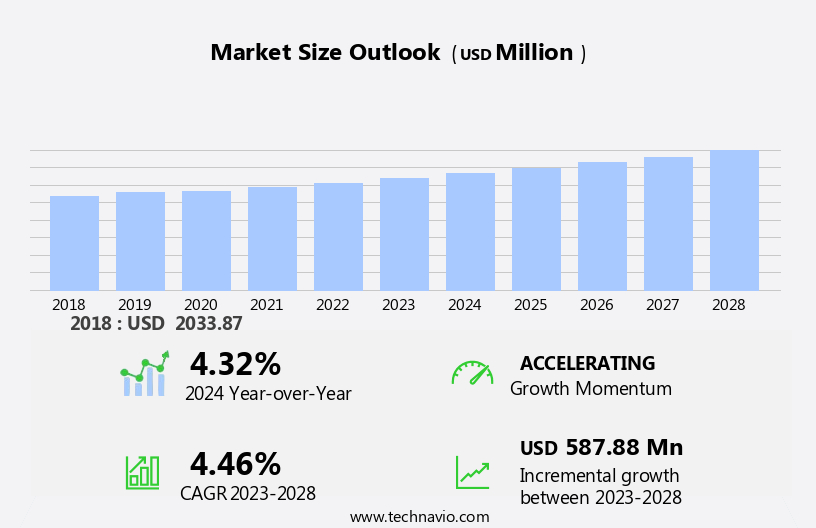
EPS Market in US Size

 Request Free Sample

  • The market exhibits strong growth due to its widespread application in various industries. EPS, also known as polystyrene, is a versatile polymer known for its insulation properties, chemical inertness, and closed-cell structure. These characteristics make it an ideal choice for construction elements, including insulated panel systems, facades, walls, and packaging applications in the construction, food service industry, consumer goods sector, and retail sector. Feedstock styrene costs and crude oil prices significantly impact the EPS market. The fast-food industry utilizes EPS for food packaging due to its excellent shock absorption and moisture resistance. 
  • In the construction sector, EPS is used for insulation due to its thermal properties, which help reduce energy consumption. However, environmental concerns surrounding the disposal of EPS waste in landfills have led to an increased focus on post-commercial EPS recycling. The phase-out of Chlorofluorocarbons (CFCs) as insulation agents has further boosted the demand for EPS as a viable alternative. The market is expected to continue its growth trajectory, driven by its superior insulation properties and increasing demand from various industries.

How is this market segmented and which is the largest segment?

The market research report provides comprehensive data (region-wise segment analysis), with forecasts and estimates in "USD million" for the period 2024-2028, as well as historical data from 2018-2022 for the following segments.

  • Type
    • White
    • Grey and silver
  • Application
    • Building and construction
    • Packaging
    • Others
  • Distribution Channel
    • Offline
    • Online
  • Geography
    • US

By Type Insights

  • The white segment is estimated to witness significant growth during the forecast period.

EPS, or expanded polystyrene, is a white foam plastic material derived from polystyrene beads. Its primary applications include packaging, insulation, and various other industries. Notably, EPS is used In the construction sector due to its closed-cell structure, which allows it to absorb water without promoting mold or decay when used as a core material. Its shock-absorbing properties make it ideal for transporting fragile items such as electronics, pharmaceuticals, and chemicals. In the food and beverage industry, EPS offers thermal insulation and moisture resistance, making it suitable for packaging perishable items like seafood, fruit, and vegetables. Additionally, EPS is widely used In the consumer goods, retail, and sports & leisure sectors for various packaging applications.
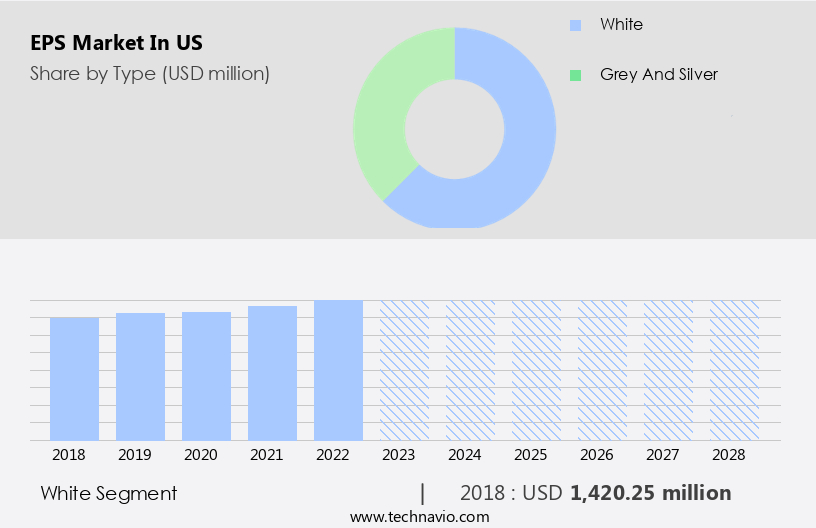
EPS Market in US Size

Get a glance at the market share of various segments Request Free Sample

The white segment was valued at  USD 1.42 billion in 2018 and showed a gradual increase during the forecast period.

Market Dynamics

Our researchers analyzed the data with 2023 as the base year, along with the key drivers, trends, and challenges. A holistic analysis of drivers will help companies refine their marketing strategies to gain a competitive advantage.

What are the key market drivers leading to the rise in the adoption of US EPS Market?

Growing e-commerce sales and increasing EPS sales is the key driver of the market.

  • The market has witnessed notable growth due to its extensive applications in various sectors. In the Building & Construction sector, EPS is utilized as an energy-efficient insulation material in insulated panel systems for facades, walls, roofs, and floors. Its closed-cell structure offers excellent insulation properties, chemical inertness, and moisture resistance, making it a preferred choice for construction elements. In the industrial packaging sector, EPS is used for its shock-absorbing properties to protect sensitive items such as medical equipment, electronic components, toys, horticultural products, and foam coolers. Its lightweight nature makes it an ideal choice for flotation material in marinas, pontoons, and as lightweight fill for void filling in concrete floor slabs.
  • In the Food Packaging sector, EPS is widely used due to its excellent insulation properties, maintaining the shelf life of perishable items like fruits, vegetables, seafood, and packaged food. Its physical properties, including toughness and rigidity, make it suitable for various packaging applications, such as fruit trays, clamshell containers, and drink cups. EPS is also recyclable, making it an eco-friendly alternative to traditional packaging materials like paper and Styrofoam cups. The growing e-commerce sector in the US, driven by the increasing penetration of the Internet and smartphones, has led to a rise in demand for EPS in packaging applications.
  • The convenience of online shopping has resulted in consumers spending less time in physical stores, making the first interaction with brands the packaging that is delivered to their doors. With the increasing focus on energy efficiency and sustainability, the demand for EPS as an insulation material and eco-friendly packaging alternative is expected to continue growing. EPS is also used in various industries such as automotive parts, foot pads, headrests & seats, storage compartments, bumper systems, and as white EPS and grey EPS for different physical properties. Its versatility and excellent insulation properties make it a valuable resource in various sectors, contributing significantly to the US economy.

What are the market trends shaping the US EPS Market?

Growing demand for lightweight containers and packaging is the upcoming trend In the market.

  • The market is witnessing significant growth due to the increasing demand for lightweight containers and packaging solutions in various industries, including food and beverage, healthcare, and electronic appliances. EPS, also known as polystyrene, is widely used for its insulation properties, chemical inertness, and closed-cell structure, making it an ideal choice for insulated panel systems, construction elements such as facades, walls, roofs, floors, and flotation material for marinas, pontoons, and lightweight fill. EPS is also used in industries like horticulture for packaging fruits, vegetables, and other perishable goods due to its excellent moisture resistance and shock-absorbing properties.
  • In the industrial packaging sector, EPS is used for packaging density, recyclability, and moulding into various shapes like fruit trays, clamshell containers, and drink cups. Moreover, EPS is used in various sectors, such as medical equipment, electronic components, toys, and automotive parts, for its shock-absorbing properties. The food packaging sector and building & construction sector are significant consumers of EPS due to its energy-efficient properties and ability to improve indoor environmental quality. The demand for EPS In the US is driven by factors such as increasing demand for energy-efficient building materials, growing consumer awareness towards sustainability, and the need for lightweight and cost-effective packaging solutions.
  • Additionally, the use of EPS in underfloor heating systems, concrete floor slabs, and void filling in commercial buildings is increasing due to its excellent insulation properties and low weight. EPS is also used in various applications such as white EPS and grey EPS, which have different physical properties like toughness, rigidity, and high density. The use of additives like graphite enhances the properties of EPS, making it suitable for non-residential construction projects, hospitals, commercial buildings, colleges, and other industrial applications. The EPS market In the US is expected to continue growing due to the increasing demand for sustainable and cost-effective packaging solutions, growing awareness towards energy efficiency, and the need for lightweight and durable construction materials.

What challenges does the US EPS Market face during the growth?

The popularity of bioplastic packaging is a key challenge affecting the market growth.

  • The market has witnessed significant growth due to the unique physical properties of EPS, including its insulation properties, chemical inertness, and closed-cell structure. These features make EPS an ideal choice for various applications In the construction industry, particularly in insulated panel systems for facades, walls, roofs, and floors. EPS is also used as flotation material in marinas, pontoons, and as lightweight fill in various industries. In the packaging sector, EPS is widely used for its shock-absorbing properties in packaging applications for industries such as food service, consumer goods, retail, and online shopping. EPS is commonly used for packaging food products like fruits, vegetables, and seafood, as well as for medical equipment, electronic components, toys, and horticultural products.
  • The demand for EPS In the packaging industry is driven by its excellent moisture resistance, thermal insulation, and recyclability. Moreover, EPS is used in various industrial applications, including as a void filling material, underfloor heating systems, and in concrete floor slabs. EPS is also used in automotive parts, such as foot pads, headrests & seats, storage compartments, and bumper systems. The versatility of EPS has led to its use in various industries, including the building & construction sector, where it is used as energy-efficient building materials. The US EPS market is influenced by various factors, including the cost of feedstock styrene, crude oil prices, and the availability of alternative materials.
  • The market is also impacted by regulatory initiatives aimed at reducing plastic waste and promoting the use of eco-friendly materials. The growing demand for energy-efficient and sustainable building materials, as well as the increasing popularity of insulated panel systems, is expected to drive the growth of the US EPS market In the coming years. EPS is available in various forms, including extruded and moulded, and is used in various applications, including food packaging, industrial packaging, and construction materials. EPS is available in different densities, including white EPS and grey EPS, which have different physical properties and applications. Overall, the US EPS market is expected to continue its growth trajectory, driven by its unique properties and the increasing demand for sustainable and energy-efficient materials.

Exclusive US EPS Market Customer Landscape

The market forecasting report includes the adoption lifecycle of the market, covering from the innovator's stage to the laggard's stage. It focuses on adoption rates in different regions based on penetration. Furthermore, the report also includes key purchase criteria and drivers of price sensitivity to help companies evaluate and develop their market growth analysis strategies.
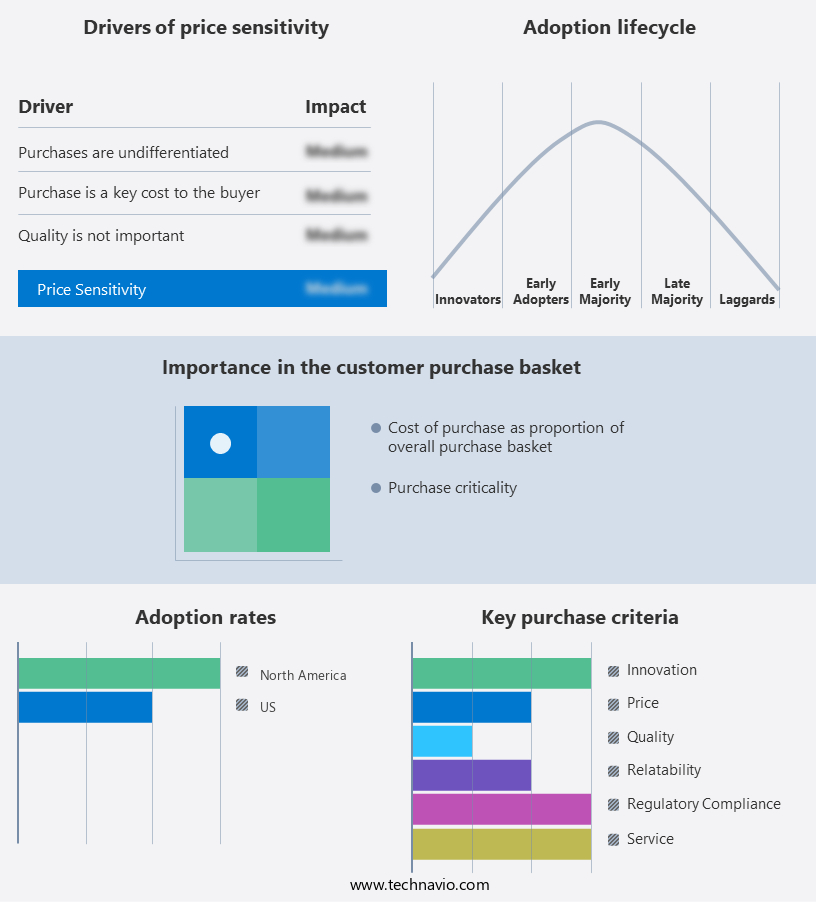
EPS Market in US Share by Geography

 Customer Landscape

Key Companies & Market Insights

Companies are implementing various strategies, such as strategic alliances, market forecast partnerships, mergers and acquisitions, geographical expansion, and product/service launches, to enhance their presence In the market.

The market research and growth report includes detailed analyses of the competitive landscape of the market and information about key companies, including:

  • Alfa Corporativo S.A. de C.V.
  • Alpek SAB de CV
  • Atlas Roofing Corp.
  • BEWI ASA
  • Dart Container Corp.
  • Epsilyte LLC
  • Foam Products Corp.
  • Foamcraft USA LLC
  • Integreon
  • Kaneka Corp.
  • Koch Industries Inc.
  • LG Chem Ltd.
  • Michigan Foam Products LLC
  • RAG Stiftung
  • RAPAC
  • Saudi Arabian Oil Co.
  • Styrotech Inc.
  • Synthos SA
  • TotalEnergies SE
  • BASF SE

Qualitative and quantitative analysis of companies has been conducted to help clients understand the wider business environment as well as the strengths and weaknesses of key market players. Data is qualitatively analyzed to categorize companies as pure play, category-focused, industry-focused, and diversified; it is quantitatively analyzed to categorize companies as dominant, leading, strong, tentative, and weak.

Research Analyst Overview

Expanded polystyrene (EPS), a type of plastic foam, has gained significant traction in various industries due to its unique physical properties and versatility. This insulating material is known for its closed-cell structure, which provides excellent insulation properties, chemical inertness, and moisture resistance. These features make EPS an ideal choice for numerous applications, including construction elements, insulated panel systems, and industrial packaging. The construction sector has embraced EPS as a valuable resource for enhancing energy efficiency in buildings. EPS is commonly used in facades, walls, roofs, and floors, providing excellent insulation and reducing energy consumption. Its closed-cell structure effectively prevents the transfer of heat, making it an essential component in underfloor heating systems and concrete floor slabs.

Moreover, its low weight makes it an excellent choice for void filling in non-residential construction projects, such as hospitals, commercial buildings, colleges, and other large structures. In the industrial packaging sector, EPS has proven its worth in various applications. Its shock-absorbing properties make it an ideal material for protecting sensitive goods during transportation, such as medical equipment, electronic components, toys, and horticultural products. EPS is also used In the production of foam coolers, ensuring the optimal preservation of temperature-sensitive items like food and beverages. EPS has also found a niche In the building & construction sector, particularly In the food packaging sector.

Further, its excellent insulation properties make it an essential component In the production of food service containers, drink cups, clamshell containers, and other packaging applications. EPS's ability to maintaIn the shelf life of perishable items, such as fruits, vegetables, seafood, and packaged food, is a significant advantage In the fast-food industry and retail sector, particularly In the context of online shopping. The strong economy has led to increased demand for EPS in various industries. In the commercial real estate sector, EPS is used In the construction of energy-efficient buildings, contributing to improved indoor environmental quality and reduced energy consumption. In the housing markets, EPS is used as an affordable insulation material, ensuring that homes remain warm during the winter and cool during the summer.

Market Scope

Report Coverage

Details

Page number

149

Base year

2023

Historic period

2018-2022

Forecast period

2024-2028

Growth momentum & CAGR

Accelerate at a CAGR of 4.46%

Market Growth 2024-2028

USD 587.88 million

Market structure

Fragmented

YoY growth 2023-2024(%)

4.32

Competitive landscape

Leading Companies, Market Positioning of Companies, Competitive Strategies, and Industry Risks

Request Free Sample

What are the Key Data Covered in this Market Research Report?

  • CAGR of the market during the forecast period
  • Detailed information on factors that will drive the market growth and forecasting between 2024 and 2028
  • Precise estimation of the size of the market  and its contribution of the market in focus to the parent market
  • Accurate predictions about upcoming market growth and trends and changes in consumer behaviour
  • Growth of the market across US
  • Thorough analysis of the market's competitive landscape and detailed information about companies
  • Comprehensive analysis of factors that will challenge the growth of market companies

We can help! Our analysts can customize this market research report to meet your requirements Get in touch

1 Executive Summary

  • 1.1 Market overview
    • Exhibit 01: Executive Summary – Chart on Market Overview
    • Exhibit 02: Executive Summary – Data Table on Market Overview
    • Exhibit 03: Executive Summary – Chart on Country Market Characteristics
    • Exhibit 04: Executive Summary – Chart on Market Segmentation by Type
    • Exhibit 05: Executive Summary – Chart on Market Segmentation by Application
    • Exhibit 06: Executive Summary – Chart on Market Segmentation by Distribution Channel
    • Exhibit 07: Executive Summary – Chart on Vendor Market Positioning

2 Market Landscape

  • 2.1 Market ecosystem
    • Exhibit 08: Parent market
    • Exhibit 09: Market Characteristics

3 Market Sizing

  • 3.1 Market definition
    • Exhibit 10: Offerings of vendors included in the market definition
  • 3.2 Market segment analysis
    • Exhibit 11: Market segments
  • 3.3 Market size 2023
    • 3.4 Market outlook: Forecast for 2023-2028
      • Exhibit 12: Chart on US - Market size and forecast 2023-2028 ($ million)
      • Exhibit 13: Data Table on US - Market size and forecast 2023-2028 ($ million)
      • Exhibit 14: Chart on US: Year-over-year growth 2023-2028 (%)
      • Exhibit 15: Data Table on US: Year-over-year growth 2023-2028 (%)

    4 Historic Market Size

    • 4.1 EPS market in US 2018 - 2022
      • Exhibit 16: Historic Market Size – Data Table on eps market in US 2018 - 2022 ($ million)
    • 4.2 Type Segment Analysis 2018 - 2022
      • Exhibit 17: Historic Market Size – Type Segment 2018 - 2022 ($ million)
    • 4.3 Application Segment Analysis 2018 - 2022
      • Exhibit 18: Historic Market Size – Application Segment 2018 - 2022 ($ million)
    • 4.4 Distribution channel Segment Analysis 2018 - 2022
      • Exhibit 19: Historic Market Size – Distribution channel Segment 2018 - 2022 ($ million)

    5 Five Forces Analysis

    • 5.1 Five forces summary
      • Exhibit 20: Five forces analysis - Comparison between 2023 and 2028
    • 5.2 Bargaining power of buyers
      • Exhibit 21: Chart on Bargaining power of buyers – Impact of key factors 2023 and 2028
    • 5.3 Bargaining power of suppliers
      • Exhibit 22: Bargaining power of suppliers – Impact of key factors in 2023 and 2028
    • 5.4 Threat of new entrants
      • Exhibit 23: Threat of new entrants – Impact of key factors in 2023 and 2028
    • 5.5 Threat of substitutes
      • Exhibit 24: Threat of substitutes – Impact of key factors in 2023 and 2028
    • 5.6 Threat of rivalry
      • Exhibit 25: Threat of rivalry – Impact of key factors in 2023 and 2028
    • 5.7 Market condition
      • Exhibit 26: Chart on Market condition - Five forces 2023 and 2028

    6 Market Segmentation by Type

    • 6.1 Market segments
      • Exhibit 27: Chart on Type - Market share 2023-2028 (%)
      • Exhibit 28: Data Table on Type - Market share 2023-2028 (%)
    • 6.2 Comparison by Type
      • Exhibit 29: Chart on Comparison by Type
      • Exhibit 30: Data Table on Comparison by Type
    • 6.3 White - Market size and forecast 2023-2028
      • Exhibit 31: Chart on White - Market size and forecast 2023-2028 ($ million)
      • Exhibit 32: Data Table on White - Market size and forecast 2023-2028 ($ million)
      • Exhibit 33: Chart on White - Year-over-year growth 2023-2028 (%)
      • Exhibit 34: Data Table on White - Year-over-year growth 2023-2028 (%)
    • 6.4 Grey and silver - Market size and forecast 2023-2028
      • Exhibit 35: Chart on Grey and silver - Market size and forecast 2023-2028 ($ million)
      • Exhibit 36: Data Table on Grey and silver - Market size and forecast 2023-2028 ($ million)
      • Exhibit 37: Chart on Grey and silver - Year-over-year growth 2023-2028 (%)
      • Exhibit 38: Data Table on Grey and silver - Year-over-year growth 2023-2028 (%)
    • 6.5 Market opportunity by Type
      • Exhibit 39: Market opportunity by Type ($ million)
      • Exhibit 40: Data Table on Market opportunity by Type ($ million)

    7 Market Segmentation by Application

    • 7.1 Market segments
      • Exhibit 41: Chart on Application - Market share 2023-2028 (%)
      • Exhibit 42: Data Table on Application - Market share 2023-2028 (%)
    • 7.2 Comparison by Application
      • Exhibit 43: Chart on Comparison by Application
      • Exhibit 44: Data Table on Comparison by Application
    • 7.3 Building and construction - Market size and forecast 2023-2028
      • Exhibit 45: Chart on Building and construction - Market size and forecast 2023-2028 ($ million)
      • Exhibit 46: Data Table on Building and construction - Market size and forecast 2023-2028 ($ million)
      • Exhibit 47: Chart on Building and construction - Year-over-year growth 2023-2028 (%)
      • Exhibit 48: Data Table on Building and construction - Year-over-year growth 2023-2028 (%)
    • 7.4 Packaging - Market size and forecast 2023-2028
      • Exhibit 49: Chart on Packaging - Market size and forecast 2023-2028 ($ million)
      • Exhibit 50: Data Table on Packaging - Market size and forecast 2023-2028 ($ million)
      • Exhibit 51: Chart on Packaging - Year-over-year growth 2023-2028 (%)
      • Exhibit 52: Data Table on Packaging - Year-over-year growth 2023-2028 (%)
    • 7.5 Others - Market size and forecast 2023-2028
      • Exhibit 53: Chart on Others - Market size and forecast 2023-2028 ($ million)
      • Exhibit 54: Data Table on Others - Market size and forecast 2023-2028 ($ million)
      • Exhibit 55: Chart on Others - Year-over-year growth 2023-2028 (%)
      • Exhibit 56: Data Table on Others - Year-over-year growth 2023-2028 (%)
    • 7.6 Market opportunity by Application
      • Exhibit 57: Market opportunity by Application ($ million)
      • Exhibit 58: Data Table on Market opportunity by Application ($ million)

    8 Market Segmentation by Distribution Channel

    • 8.1 Market segments
      • Exhibit 59: Chart on Distribution Channel - Market share 2023-2028 (%)
      • Exhibit 60: Data Table on Distribution Channel - Market share 2023-2028 (%)
    • 8.2 Comparison by Distribution Channel
      • Exhibit 61: Chart on Comparison by Distribution Channel
      • Exhibit 62: Data Table on Comparison by Distribution Channel
    • 8.3 Offline - Market size and forecast 2023-2028
      • Exhibit 63: Chart on Offline - Market size and forecast 2023-2028 ($ million)
      • Exhibit 64: Data Table on Offline - Market size and forecast 2023-2028 ($ million)
      • Exhibit 65: Chart on Offline - Year-over-year growth 2023-2028 (%)
      • Exhibit 66: Data Table on Offline - Year-over-year growth 2023-2028 (%)
    • 8.4 Online - Market size and forecast 2023-2028
      • Exhibit 67: Chart on Online - Market size and forecast 2023-2028 ($ million)
      • Exhibit 68: Data Table on Online - Market size and forecast 2023-2028 ($ million)
      • Exhibit 69: Chart on Online - Year-over-year growth 2023-2028 (%)
      • Exhibit 70: Data Table on Online - Year-over-year growth 2023-2028 (%)
    • 8.5 Market opportunity by Distribution Channel
      • Exhibit 71: Market opportunity by Distribution Channel ($ million)
      • Exhibit 72: Data Table on Market opportunity by Distribution Channel ($ million)

    9 Customer Landscape

    • 9.1 Customer landscape overview
      • Exhibit 73: Analysis of price sensitivity, lifecycle, customer purchase basket, adoption rates, and purchase criteria

    10 Drivers, Challenges, and Trends

    • 10.1 Market drivers
      • 10.2 Market challenges
        • 10.3 Impact of drivers and challenges
          • Exhibit 74: Impact of drivers and challenges in 2023 and 2028
        • 10.4 Market trends

          11 Vendor Landscape

          • 11.1 Overview
            • 11.2 Vendor landscape
              • Exhibit 75: Overview on Criticality of inputs and Factors of differentiation
            • 11.3 Landscape disruption
              • Exhibit 76: Overview on factors of disruption
            • 11.4 Industry risks
              • Exhibit 77: Impact of key risks on business

            12 Vendor Analysis

            • 12.1 Vendors covered
              • Exhibit 78: Vendors covered
            • 12.2 Market positioning of vendors
              • Exhibit 79: Matrix on vendor position and classification
            • 12.3 Alfa Corporativo S.A. de C.V.
              • Exhibit 80: Alfa Corporativo S.A. de C.V. - Overview
              • Exhibit 81: Alfa Corporativo S.A. de C.V. - Business segments
              • Exhibit 82: Alfa Corporativo S.A. de C.V. - Key offerings
              • Exhibit 83: Alfa Corporativo S.A. de C.V. - Segment focus
            • 12.4 Alpek SAB de CV
              • Exhibit 84: Alpek SAB de CV - Overview
              • Exhibit 85: Alpek SAB de CV - Business segments
              • Exhibit 86: Alpek SAB de CV - Key offerings
              • Exhibit 87: Alpek SAB de CV - Segment focus
            • 12.5 Atlas Roofing Corp.
              • Exhibit 88: Atlas Roofing Corp. - Overview
              • Exhibit 89: Atlas Roofing Corp. - Product / Service
              • Exhibit 90: Atlas Roofing Corp. - Key offerings
            • 12.6 BASF SE
              • Exhibit 91: BASF SE - Overview
              • Exhibit 92: BASF SE - Business segments
              • Exhibit 93: BASF SE - Key news
              • Exhibit 94: BASF SE - Key offerings
              • Exhibit 95: BASF SE - Segment focus
            • 12.7 BEWI ASA
              • Exhibit 96: BEWI ASA - Overview
              • Exhibit 97: BEWI ASA - Business segments
              • Exhibit 98: BEWI ASA - Key offerings
              • Exhibit 99: BEWI ASA - Segment focus
            • 12.8 Epsilyte LLC
              • Exhibit 100: Epsilyte LLC - Overview
              • Exhibit 101: Epsilyte LLC - Product / Service
              • Exhibit 102: Epsilyte LLC - Key offerings
            • 12.9 Integreon
              • Exhibit 103: Integreon - Overview
              • Exhibit 104: Integreon - Product / Service
              • Exhibit 105: Integreon - Key offerings
            • 12.10 Kaneka Corp.
              • Exhibit 106: Kaneka Corp. - Overview
              • Exhibit 107: Kaneka Corp. - Business segments
              • Exhibit 108: Kaneka Corp. - Key offerings
              • Exhibit 109: Kaneka Corp. - Segment focus
            • 12.11 Koch Industries Inc.
              • Exhibit 110: Koch Industries Inc. - Overview
              • Exhibit 111: Koch Industries Inc. - Product / Service
              • Exhibit 112: Koch Industries Inc. - Key offerings
            • 12.12 LG Chem Ltd.
              • Exhibit 113: LG Chem Ltd. - Overview
              • Exhibit 114: LG Chem Ltd. - Business segments
              • Exhibit 115: LG Chem Ltd. - Key news
              • Exhibit 116: LG Chem Ltd. - Key offerings
              • Exhibit 117: LG Chem Ltd. - Segment focus
            • 12.13 RAG Stiftung
              • Exhibit 118: RAG Stiftung - Overview
              • Exhibit 119: RAG Stiftung - Product / Service
              • Exhibit 120: RAG Stiftung - Key offerings
            • 12.14 RAPAC
              • Exhibit 121: RAPAC - Overview
              • Exhibit 122: RAPAC - Product / Service
              • Exhibit 123: RAPAC - Key offerings
            • 12.15 Saudi Arabian Oil Co.
              • Exhibit 124: Saudi Arabian Oil Co. - Overview
              • Exhibit 125: Saudi Arabian Oil Co. - Product / Service
              • Exhibit 126: Saudi Arabian Oil Co. - Key offerings
            • 12.16 Styrotech Inc.
              • Exhibit 127: Styrotech Inc. - Overview
              • Exhibit 128: Styrotech Inc. - Product / Service
              • Exhibit 129: Styrotech Inc. - Key offerings
            • 12.17 TotalEnergies SE
              • Exhibit 130: TotalEnergies SE - Overview
              • Exhibit 131: TotalEnergies SE - Business segments
              • Exhibit 132: TotalEnergies SE - Key news
              • Exhibit 133: TotalEnergies SE - Key offerings
              • Exhibit 134: TotalEnergies SE - Segment focus

            13 Appendix

            • 13.1 Scope of the report
              • 13.2 Inclusions and exclusions checklist
                • Exhibit 135: Inclusions checklist
                • Exhibit 136: Exclusions checklist
              • 13.3 Currency conversion rates for US$
                • Exhibit 137: Currency conversion rates for US$
              • 13.4 Research methodology
                • Exhibit 138: Research methodology
                • Exhibit 139: Validation techniques employed for market sizing
                • Exhibit 140: Information sources
              • 13.5 List of abbreviations
                • Exhibit 141: List of abbreviations

              Research Methodology

              Technavio presents a detailed picture of the market by way of study, synthesis, and summation of data from multiple sources. The analysts have presented the various facets of the market with a particular focus on identifying the key industry influencers. The data thus presented is comprehensive, reliable, and the result of extensive research, both primary and secondary.

              INFORMATION SOURCES

              Primary sources

              • Manufacturers and suppliers
              • Channel partners
              • Industry experts
              • Strategic decision makers

              Secondary sources

              • Industry journals and periodicals
              • Government data
              • Financial reports of key industry players
              • Historical data
              • Press releases

              DATA ANALYSIS

              Data Synthesis

              • Collation of data
              • Estimation of key figures
              • Analysis of derived insights

              Data Validation

              • Triangulation with data models
              • Reference against proprietary databases
              • Corroboration with industry experts

              REPORT WRITING

              Qualitative

              • Market drivers
              • Market challenges
              • Market trends
              • Five forces analysis

              Quantitative

              • Market size and forecast
              • Market segmentation
              • Geographical insights
              • Competitive landscape

              Interested in this report?

              Get your sample now to see our research methodology and insights!

              Download Now

              Frequently Asked Questions

              EPSin US market growth will increase by $ 587.88 mn during 2024-2028.

              The EPSin US market is expected to grow at a CAGR of 4.46% during 2024-2028.

              EPSin US market is segmented by Type( White, Grey and silver, silver, Others) Application( Building and construction, Packaging, Others) Distribution Channel( Offline, Online)

              Alfa Corporativo S.A. de C.V., Alpek SAB de CV, Atlas Roofing Corp., BEWI ASA, Dart Container Corp., Epsilyte LLC, Foam Products Corp., Foamcraft USA LLC, Integreon, Kaneka Corp., Koch Industries Inc., LG Chem Ltd., Michigan Foam Products LLC, RAG Stiftung, RAPAC, Saudi Arabian Oil Co., Styrotech Inc., Synthos SA, TotalEnergies SE, BASF SE are a few of the key vendors in the EPSin US market.

              North America will register the highest growth rate of 100% among the other regions. Therefore, the EPSin US market in North America is expected to garner significant business opportunities for the vendors during the forecast period.

              US, North America

              • Growing e-commerce sales increasing EPS salesThe e-commerce sector is growing significantly in the US due to the high penetration of the Internet and smartphones. For instance is the driving factor this market.
              • in an article published by Digital Commerce in February 2023 is the driving factor this market.
              • e-commerce sales in the US experienced a significant rise to $1.03 trillion in 2022 is the driving factor this market.
              • compared with $960.44 billion reported in 2021. The growth of the e-commerce sector has a direct impact on the packaging industry. Consumers are spending a limited period in stores owing to the increase in online shopping due to the comfort of shopping from their homes. Hence is the driving factor this market.
              • the first direct interaction that consumers have with brands is the package that is delivered to their doors. Packaging plays a major role in the first impression that consumers have of brands. Therefore is the driving factor this market.
              • most brands try to differentiate themselves by offering various types of packaging is the driving factor this market.
              • such as EPS packaging. Many vendors focus on offering premium EPS for packaging is the driving factor this market.
              • which can be used as an indication of high-quality products. Such EPS packaging will have innovative patterns and designs is the driving factor this market.
              • which can increase sales by attracting consumers. Some products that consumers buy from e-commerce platforms are food and beverages is the driving factor this market.
              • electronics is the driving factor this market.
              • personal care products is the driving factor this market.
              • and healthcare products. The key applications of EPS are food and beverages and electronic appliance packaging. In healthcare is the driving factor this market.
              • folding cartons are used for the packaging of medicines and drugs to protect them against unfavorable external elements is the driving factor this market.
              • such as biological contamination is the driving factor this market.
              • degradation is the driving factor this market.
              • physical damage is the driving factor this market.
              • and counterfeiting. Therefore is the driving factor this market.
              • the growth of the e-commerce sector will increase the growth of the EPS market in US during the forecast period. is the driving factor this market.

              The EPSin US market vendors should focus on grabbing business opportunities from the White segment as it accounted for the largest market share in the base year.