



Entertainment And Amusement Market Size 2026-2030
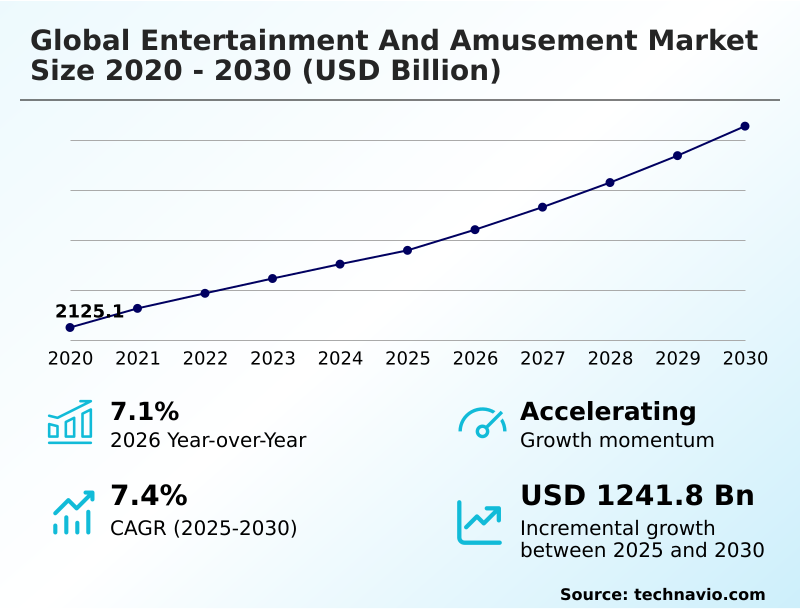
The entertainment and amusement market size is valued to increase by USD 1241.8 billion, at a CAGR of 7.4% from 2025 to 2030. Increasing consumer demand for experiential entertainment will drive the entertainment and amusement market.
Major Market Trends & Insights
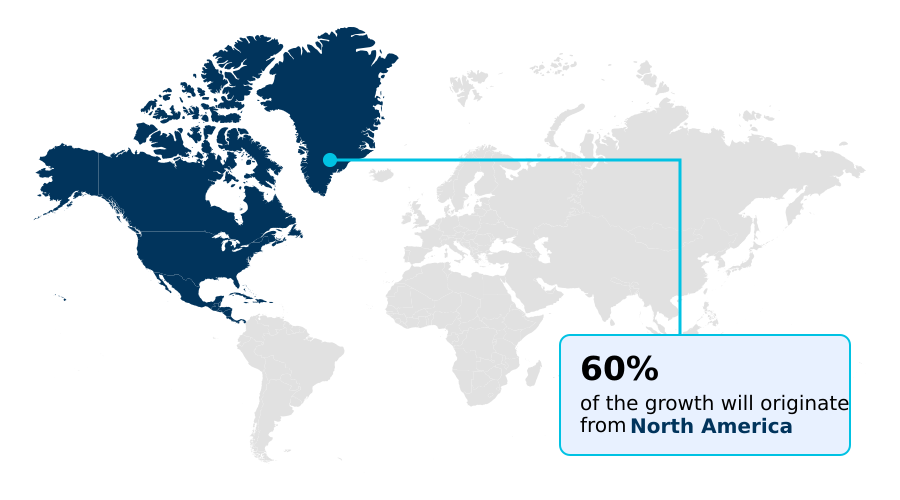
- North America dominated the market and accounted for a 59.8% growth during the forecast period.
- By Type - Entertainment segment was valued at USD 2615.4 billion in 2024
- By Age Group - 13 to 20 years segment accounted for the largest market revenue share in 2024
Market Size & Forecast
- Market Opportunities: USD 2013.3 billion
- Market Future Opportunities: USD 1241.8 billion
- CAGR from 2025 to 2030 : 7.4%
Market Summary
- The entertainment and amusement market is navigating a significant transformation, driven by evolving consumer expectations and technological advancements. A primary driver is the consumer shift towards experiential consumption, where memorable, shareable activities are valued over material goods. This has spurred investment in immersive experience design and attractions that leverage powerful intellectual property (ip) licensing.
- However, the industry faces substantial challenges, including escalating operational costs and the intense capital required to develop new, high-throughput attractions. For instance, a theme park operator must balance the high cost of ride system engineering with the need to constantly refresh offerings to maintain visitor interest.
- The convergence of physical and digital realms, through technologies like augmented reality overlays and personalized content delivery, represents a key trend. This allows for the creation of unique, interactive narrative design, which is essential for engaging a digitally native audience and encouraging repeat visitation in an increasingly competitive landscape.
What will be the Size of the Entertainment And Amusement Market during the forecast period?
Get Key Insights on Market Forecast (PDF) Request Free Sample
How is the Entertainment And Amusement Market Segmented?
The entertainment and amusement industry research report provides comprehensive data (region-wise segment analysis), with forecasts and estimates in "USD billion" for the period 2026-2030, as well as historical data from 2020-2024 for the following segments.
- Type
- Entertainment
- Amusement
- Age group
- 13 to 20 years
- Above 20 years
- Below 12 years
- User experience
- Active experiences
- Interactive experiences
- Passive experiences
- Themed experiences
- Educational experiences
- Geography
- North America
- US
- Canada
- Mexico
- Europe
- Germany
- France
- UK
- APAC
- China
- Japan
- India
- South America
- Brazil
- Argentina
- Middle East and Africa
- UAE
- Saudi Arabia
- South Africa
- Rest of World (ROW)
- North America
By Type Insights
The entertainment segment is estimated to witness significant growth during the forecast period.
The entertainment segment is defined by a curated value chain focused on content creation, distribution, and spectatorial consumption. This includes everything from motion pictures to live theater, where success hinges on compelling intellectual property and sophisticated multichannel distribution strategies.
This market is shifting from transactional models to recurring revenue streams, driven by new guest experience technology. Advanced immersive experience design and augmented reality overlays are being used to enhance passive viewing.
The application of dynamic pricing algorithms helps manage demand, with data showing that optimized strategies can improve yield by over 7% without negatively impacting volume.
Operators of family entertainment centers (fecs) and providers of cinema exhibition technology use contactless payment integration to improve throughput within this spectatorial, semi-passive form of engagement.
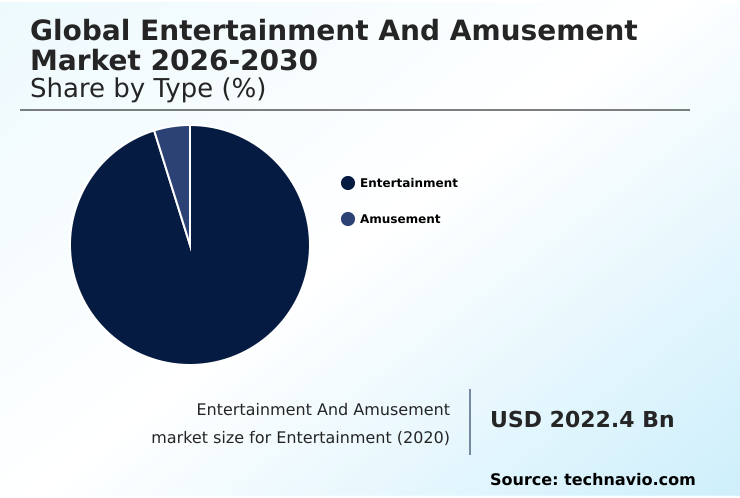
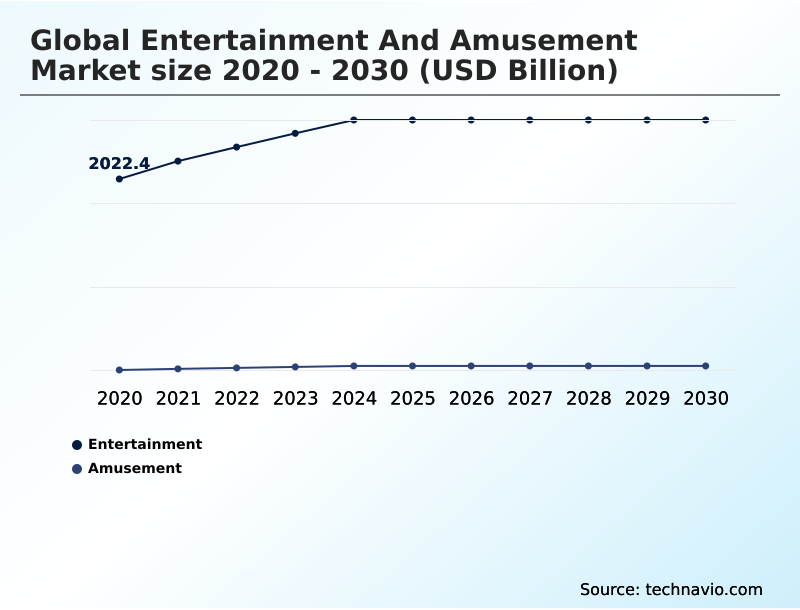
The Entertainment segment was valued at USD 2615.4 billion in 2024 and showed a gradual increase during the forecast period.
Regional Analysis
North America is estimated to contribute 59.8% to the growth of the global market during the forecast period.Technavio’s analysts have elaborately explained the regional trends and drivers that shape the market during the forecast period.
See How Entertainment And Amusement Market Demand is Rising in North America Request Free Sample
Geographically, the market shows varied maturity and growth trajectories, with North America poised to contribute nearly 60% of the incremental growth. This is driven by high consumer spending and significant investments in live entertainment production and theatrical lighting design.
The region's focus on special effects engineering and audio-visual integration for both new and existing attractions maintains its leadership.
Meanwhile, the APAC region, with the highest regional CAGR of 8.2%, demonstrates rapid adoption of mobile ticketing systems and biometric access control. This mobile-first environment accelerates the deployment of digital marketing for attractions and innovative brand integration strategies.
In Europe, a focus on sustainability and cultural integration shapes development, impacting everything from sponsorship and partnership models to workforce management solutions.
Market Dynamics
Our researchers analyzed the data with 2025 as the base year, along with the key drivers, trends, and challenges. A holistic analysis of drivers will help companies refine their marketing strategies to gain a competitive advantage.
- Strategic decision-making in the current market requires a deep analysis of several key questions. Stakeholders are evaluating the impact of ip integration on theme park attendance and calculating the roi of virtual reality in amusement parks. A critical focus is on strategies for reducing operational costs in theme parks and deploying technology for enhancing guest personalization.
- The financial modeling of comparing pay-per-ride vs all-inclusive pricing is a constant debate, alongside monitoring trends in sustainable amusement park development. Operationally, leveraging data analytics for guest flow optimization is now standard practice, though many still face challenges of integrating ar into existing parks.
- Marketing teams are refining best practices for social media engagement, understanding that the role of storytelling in attraction design is paramount. In parallel, the evolution of cinema experience post-streaming continues, fueled by growth drivers for location-based vr. Examining the future of interactive and immersive art and comparing regional vs destination park models inform long-term investment.
- These considerations are underpinned by rigorous safety standards in modern ride engineering.
- Furthermore, the importance of integrating f&b into the overall park experience, building effective loyalty programs for attractions, and crafting unique marketing strategies for family entertainment centers are key to overcoming issues like managing seasonality in the amusement industry, where the role of live entertainment in theme parks becomes a significant differentiator, boosting off-peak traffic by over 15% compared to parks without such offerings.
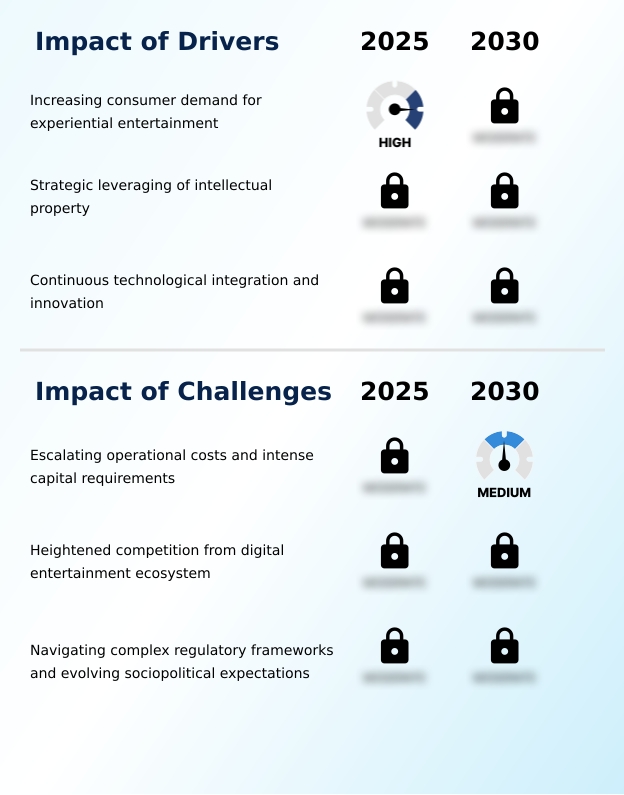
What are the key market drivers leading to the rise in the adoption of Entertainment And Amusement Industry?
- The market's primary driver is the increasing consumer demand for experiential entertainment, which prioritizes memorable activities over the acquisition of material goods.
- The market is propelled by the consumer economy's shift toward memorable experiences, demanding more than passive observation. Modern consumers seek active participation, driving development in gamification mechanics and personalized content delivery.
- This has spurred investment in attractions that are more complex and story-driven, utilizing everything from advanced dark ride systems to multi-sensory stimulation. The strategic imperative for providers of motion-based simulators and 4d theater technology is to curate holistic environments.
- The goal is to transform a simple visit into an immersive adventure, fostering deeper brand connection and encouraging higher spend on experiential retail concepts, with some venues seeing a 20% lift in ancillary revenue through integrated experience strategies.
What are the market trends shaping the Entertainment And Amusement Industry?
- The ascendancy of hyper-personalized and immersive experiences is a defining trend, pushing the industry from standardized offerings toward unique, individually resonant consumer engagements.
- A defining trend is the pivot toward deeply personalized engagement, leveraging technology to craft unique consumer journeys. The deployment of virtual reality attractions and advanced show control systems is central to this movement, enabling unprecedented levels of immersion. This shift necessitates investment in infrastructures for interactive narrative design, moving beyond passive spectatorship.
- For operators of destination resorts and social entertainment venues, this means integrating new hardware and data science capabilities. The focus is on creating distinct, shareable moments through sophisticated intellectual property (ip) licensing and water park slide technology, ensuring repeat visitation.
- Success in this area is measured by a more than 15% increase in guest satisfaction scores for personalized experiences versus generic offerings.
What challenges does the Entertainment And Amusement Industry face during its growth?
- A key industry challenge is the combination of escalating operational costs and the intense capital requirements necessary to remain competitive and innovative.
- A primary challenge is the relentless escalation of operational expenditures coupled with immense capital requirements. The resource-intensive nature of location-based entertainment is amplified by rising labor costs and supply chain volatility affecting everything from food and beverage management to predictive maintenance systems.
- The technological arms race, requiring continuous investment in high-throughput attractions and customer relationship management (crm) systems, puts immense pressure on balance sheets. Operators of marine life parks and those involved in roller coaster design face high barriers to entry and the need for constant innovation.
- Managing this dual pressure of rising daily costs and massive capital demands for sustainable park operations, with some projects seeing budgets overrun by up to 25%, is a critical strategic test for operators.
Exclusive Technavio Analysis on Customer Landscape
The entertainment and amusement market forecasting report includes the adoption lifecycle of the market, covering from the innovator’s stage to the laggard’s stage. It focuses on adoption rates in different regions based on penetration. Furthermore, the entertainment and amusement market report also includes key purchase criteria and drivers of price sensitivity to help companies evaluate and develop their market growth analysis strategies.
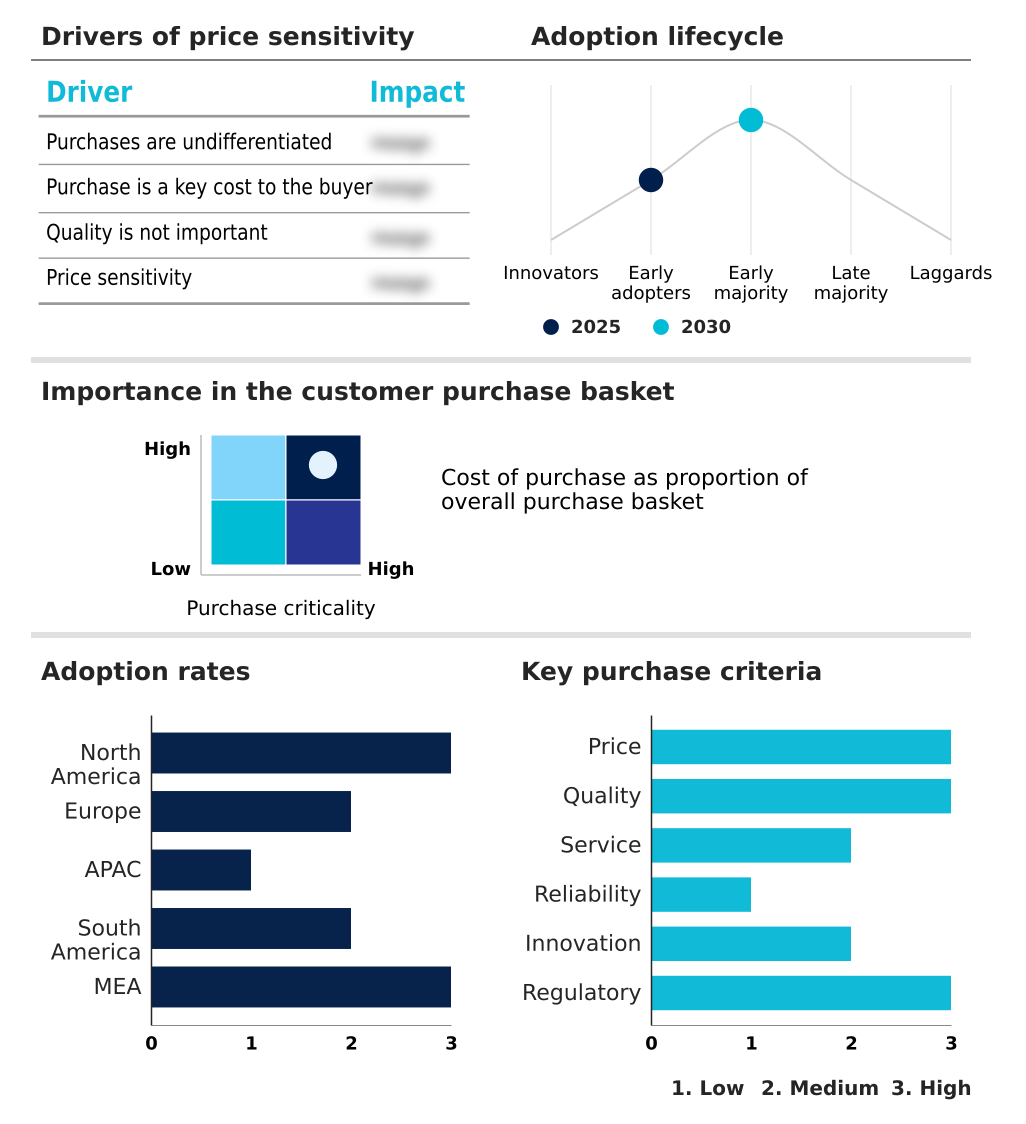
Customer Landscape of Entertainment And Amusement Industry
Competitive Landscape
Companies are implementing various strategies, such as strategic alliances, entertainment and amusement market forecast, partnerships, mergers and acquisitions, geographical expansion, and product/service launches, to enhance their presence in the industry.
AMC Entertainment Holdings Inc. - Analysis indicates a portfolio of entertainment and amusement offerings, including cinema exhibition, integrated theme parks, and location-based entertainment.
The industry research and growth report includes detailed analyses of the competitive landscape of the market and information about key companies, including:
- AMC Entertainment Holdings Inc.
- Bowlero Corp.
- Chimelong Group Co. Ltd.
- Cinemark Holdings Inc.
- Cirque du Soleil Entertainment
- Comcast Corp.
- Dave and Busters Entertainment
- Herschend Family Entertainment
- Meow Wolf
- Merlin Entertainments Ltd.
- Parques Reunidos SAU
- Raw Thrills Inc.
- Regal Entertainment Group
- Six Flags Entertainment Corp.
- The Walt Disney Co.
- Topgolf International Inc
- Trio Tech International Pte Ltd
- United Parks and Resorts Inc.
- Vail Resorts Inc
- WhiteWater West Industries Ltd
Qualitative and quantitative analysis of companies has been conducted to help clients understand the wider business environment as well as the strengths and weaknesses of key industry players. Data is qualitatively analyzed to categorize companies as pure play, category-focused, industry-focused, and diversified; it is quantitatively analyzed to categorize companies as dominant, leading, strong, tentative, and weak.
Recent Development and News in Entertainment and amusement market
- In January 2025, the operators of Shanghai Jinjiang Action Park announced strategic plans to redevelop the park into a premier destination centered on the Harry Potter intellectual property.
- In March 2025, Herschend Family Entertainment finalized its acquisition of more than twenty US-based amusement properties from Parques Reunidos, significantly expanding its portfolio and market presence in North America.
- In November 2024, Comcast Corp. announced a strategic partnership with a leading technology firm to develop and integrate park-wide augmented reality experiences across its Universal theme parks, enhancing its guest experience offerings.
- In May 2025, Six Flags Entertainment Corp. launched a comprehensive corporate sustainability initiative focused on reducing the environmental impact across all its properties, committing to new standards for park operations.
Dive into Technavio’s robust research methodology, blending expert interviews, extensive data synthesis, and validated models for unparalleled Entertainment And Amusement Market insights. See full methodology.
| Market Scope | |
|---|---|
| Page number | 296 |
| Base year | 2025 |
| Historic period | 2020-2024 |
| Forecast period | 2026-2030 |
| Growth momentum & CAGR | Accelerate at a CAGR of 7.4% |
| Market growth 2026-2030 | USD 1241.8 billion |
| Market structure | Fragmented |
| YoY growth 2025-2026(%) | 7.1% |
| Key countries | US, Canada, Mexico, Germany, France, UK, Spain, Italy, The Netherlands, China, Japan, India, South Korea, Australia, Indonesia, Brazil, Argentina, Chile, UAE, Saudi Arabia, South Africa, Egypt and Israel |
| Competitive landscape | Leading Companies, Market Positioning of Companies, Competitive Strategies, and Industry Risks |
Research Analyst Overview
- The entertainment and amusement market is undergoing a technical renaissance, driven by innovations in immersive experience design and guest experience technology. Advanced park management software now incorporates predictive maintenance systems and real-time data analytics for superior guest flow management and queue management technology.
- The integration of augmented reality overlays, virtual reality attractions, and detailed animatronics programming is central to modern themed environment design. Success hinges on sophisticated ride system engineering, including dark ride systems and water park slide technology, governed by precise show control systems.
- Behind the scenes, dynamic pricing algorithms and mobile ticketing systems, along with contactless payment integration and biometric access control, are streamlining operations. Strategic intellectual property (ip) licensing fuels personalized content delivery through complex gamification mechanics, while theatrical lighting design, special effects engineering, and audio-visual integration create multi-sensory stimulation for live entertainment production and experiential retail concepts.
- Firms are focusing on sustainable park operations, high-throughput attractions, loyalty program management, and robust customer relationship management (crm) supported by digital wayfinding solutions to define the future of interactive narrative design.
What are the Key Data Covered in this Entertainment And Amusement Market Research and Growth Report?
-
What is the expected growth of the Entertainment And Amusement Market between 2026 and 2030?
-
USD 1241.8 billion, at a CAGR of 7.4%
-
-
What segmentation does the market report cover?
-
The report is segmented by Type (Entertainment, and Amusement), Age Group (13 to 20 years, Above 20 years, and Below 12 years), User Experience (Active experiences, Interactive experiences, Passive experiences, Themed experiences, and Educational experiences) and Geography (North America, Europe, APAC, South America, Middle East and Africa)
-
-
Which regions are analyzed in the report?
-
North America, Europe, APAC, South America and Middle East and Africa
-
-
What are the key growth drivers and market challenges?
-
Increasing consumer demand for experiential entertainment, Escalating operational costs and intense capital requirements
-
-
Who are the major players in the Entertainment And Amusement Market?
-
AMC Entertainment Holdings Inc., Bowlero Corp., Chimelong Group Co. Ltd., Cinemark Holdings Inc., Cirque du Soleil Entertainment, Comcast Corp., Dave and Busters Entertainment, Herschend Family Entertainment, Meow Wolf, Merlin Entertainments Ltd., Parques Reunidos SAU, Raw Thrills Inc., Regal Entertainment Group, Six Flags Entertainment Corp., The Walt Disney Co., Topgolf International Inc, Trio Tech International Pte Ltd, United Parks and Resorts Inc., Vail Resorts Inc and WhiteWater West Industries Ltd
-
Market Research Insights
- The market's dynamism is evident across diverse segments, from regional theme parks and destination resorts to specialized family entertainment centers (fecs) and social entertainment venues. Innovations in cinema exhibition technology and premium large format (plf) cinema are reshaping movie-going, while bowling entertainment centers and arcade game manufacturing cater to interactive social demand.
- Visitor attraction management now encompasses everything from marine life parks and ski resort operations to immersive art installations and indoor water parks. The ecosystem relies on roller coaster design, water slide manufacturing, and the technology for interactive dark rides and 4d theater technology.
- Core business functions include strategic food and beverage management, retail merchandising strategy, and workforce management solutions, all governed by stringent guest safety protocols and ride inspection and certification.
- Successful brand integration strategies, digital marketing for attractions, and sponsorship and partnership models are crucial, alongside seasonal event planning and efficient ticketing and admission systems, all while considering the overall environmental impact assessment of live circus production and motion-based simulators.
- Adoption of integrated systems has led to a 10% increase in operational efficiency in some regional parks compared to those using disparate platforms.
We can help! Our analysts can customize this entertainment and amusement market research report to meet your requirements.
 RIA -
RIA -