



Emotion AI Market Size 2026-2030
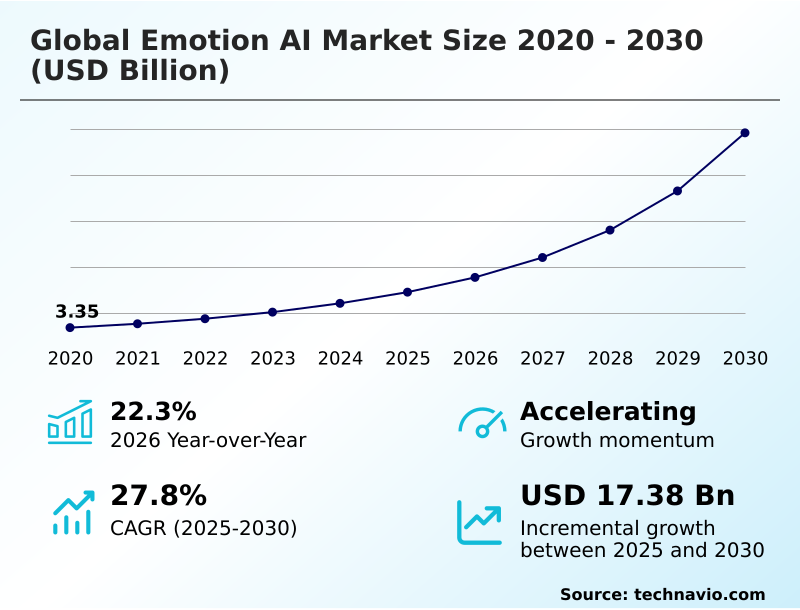
The emotion ai market size is valued to increase by USD 17.38 billion, at a CAGR of 27.8% from 2025 to 2030. Escalating demand for enhanced customer experience and personalization will drive the emotion ai market.
Major Market Trends & Insights
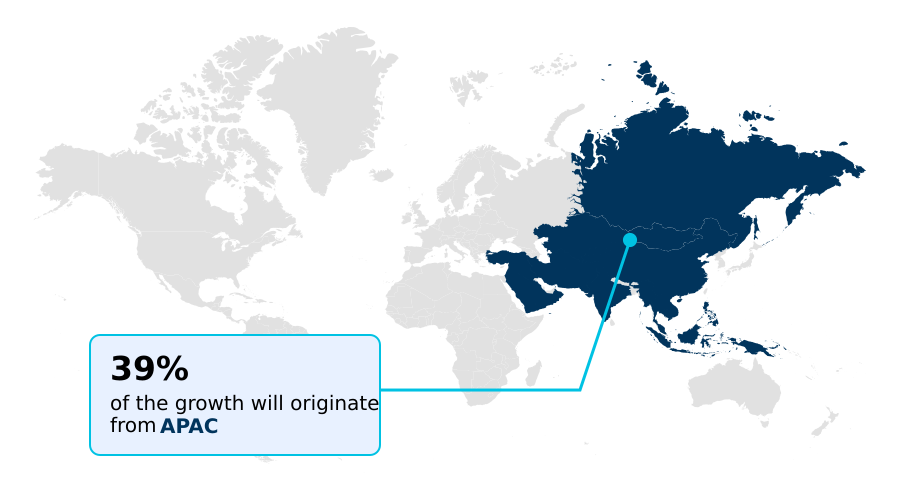
- APAC dominated the market and accounted for a 39% growth during the forecast period.
- By Type - Video segment was valued at USD 1.79 billion in 2024
- By Technology - Machine learning segment accounted for the largest market revenue share in 2024
Market Size & Forecast
- Market Opportunities: USD 21.25 billion
- Market Future Opportunities: USD 17.38 billion
- CAGR from 2025 to 2030 : 27.8%
Market Summary
- The emotion AI market is defined by its core capability to recognize, interpret, and simulate human feelings using affective computing. This technology analyzes multimodal inputs, including facial expressions, vocal prosody, and text-based sentiment, to bridge the gap between machine cognition and human emotional intelligence.
- A primary driver is the enterprise pursuit of superior customer experience management, where understanding implicit emotional cues leads to more personalized interactions. Key trends include the shift toward multimodal emotion AI for higher accuracy and the increasing focus on explainable AI to address algorithmic bias.
- For instance, in a contact center, systems analyze conversations in real time, not just for keywords but for emotional tone, enabling agents to de-escalate frustration and improve resolution rates. However, the industry grapples with significant challenges related to the privacy of biometric data and the need for contextual generalizability, as emotional expression varies widely across cultures.
- The development of robust, ethical frameworks is therefore essential for sustainable adoption and building user trust in these powerful systems.
What will be the Size of the Emotion AI Market during the forecast period?
Get Key Insights on Market Forecast (PDF) Request Free Sample
How is the Emotion AI Market Segmented?
The emotion ai industry research report provides comprehensive data (region-wise segment analysis), with forecasts and estimates in "USD million" for the period 2026-2030, as well as historical data from 2020-2024 for the following segments.
- Type
- Video
- Voice-focused
- Multimodal
- Text-focused
- Technology
- Machine learning
- Natural language processing
- Others
- Component
- Software
- Services
- Geography
- APAC
- China
- Japan
- South Korea
- North America
- US
- Canada
- Mexico
- Europe
- Germany
- UK
- France
- South America
- Brazil
- Argentina
- Colombia
- Middle East and Africa
- UAE
- Saudi Arabia
- South Africa
- Rest of World (ROW)
- APAC
By Type Insights
The video segment is estimated to witness significant growth during the forecast period.
The video-based segment, a critical component of the emotion AI market, is driven by advanced computer vision and deep learning models.
This technology performs facial expression analysis, using frameworks like the facial action coding system to decode subtle muscle movements for real-time emotional insights. In applications such as AI-powered consumer research, it delivers nuanced audience engagement analytics.
However, performance is highly dependent on environmental conditions, and the risk of algorithmic bias if training data lacks diversity remains a significant consideration.
Firms leveraging this emotion recognition technology report up to a 15% improvement in identifying key non-verbal cues in controlled settings, enhancing the granularity of feedback for optimizing digital experiences and creative campaigns without relying on explicit user feedback.
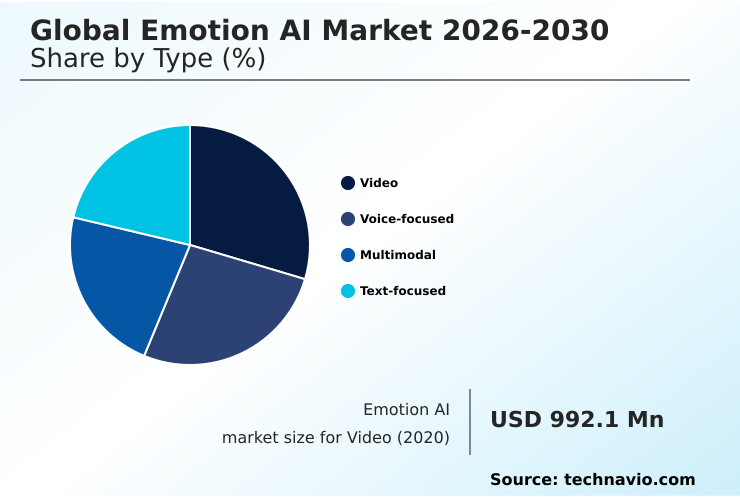
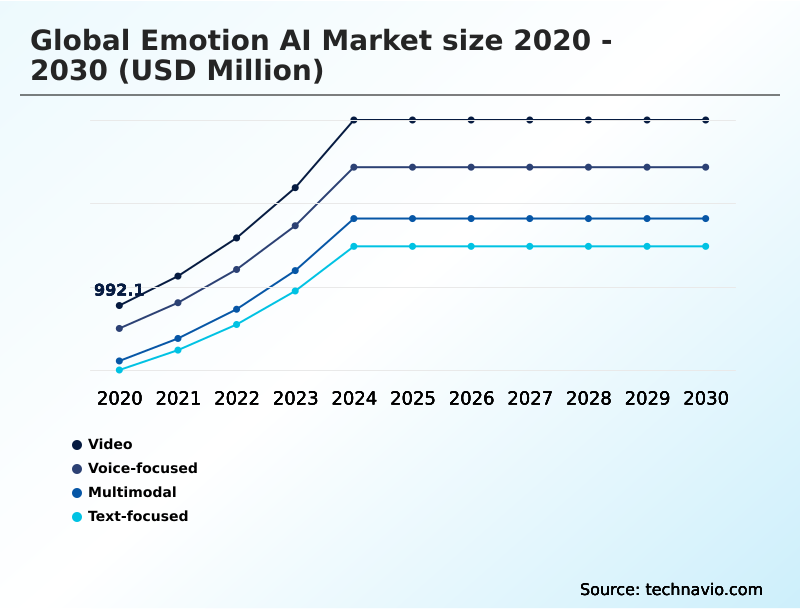
The Video segment was valued at USD 1.79 billion in 2024 and showed a gradual increase during the forecast period.
Regional Analysis
APAC is estimated to contribute 39% to the growth of the global market during the forecast period.Technavio’s analysts have elaborately explained the regional trends and drivers that shape the market during the forecast period.
See How Emotion AI Market Demand is Rising in APAC Request Free Sample
The geographic landscape is led by North America, but APAC is demonstrating the fastest expansion, with its contribution to incremental growth projected to be nearly 39%.
This region's growth is fueled by swift digitalization and strong government support for affective computing applications. In contrast, Europe's market is heavily influenced by stringent regulations demanding privacy-first emotion recognition and explainable AI, especially for systems processing physiological signals.
North America continues to dominate due to mature end-user industries adopting technologies like speech emotion recognition and in-cabin sensing solutions. The development of edge processing is a key factor globally, enabling real-time behavioral signal processing while addressing data privacy.
The demand for high-quality data annotation services is universal, as it underpins the accuracy of all regional models.
Market Dynamics
Our researchers analyzed the data with 2025 as the base year, along with the key drivers, trends, and challenges. A holistic analysis of drivers will help companies refine their marketing strategies to gain a competitive advantage.
- The strategic debate between multimodal vs unimodal emotion analysis is central to market evolution. While unimodal systems are mature, multimodal approaches offer superior accuracy, which is critical for high-stakes applications. The benefits of explainable emotion AI are becoming a primary purchasing criterion, as enterprises seek to mitigate risks associated with black-box algorithms and ensure ethical AI in emotion detection.
- This is particularly relevant given the significant challenges in emotion AI accuracy, where models must account for cultural and contextual nuances. In the automotive sector, the focus on emotion AI for automotive safety is driving innovation in driver monitoring systems.
- Concurrently, the increasing use of on-device processing for emotion AI addresses both latency and privacy concerns, making it a pivotal architectural shift. In parallel, the emotion AI role in healthcare is expanding beyond simple monitoring to include diagnostic support and digital therapeutics, demonstrating its versatile impact.
- The growth of emotion AI applications in retail, for example, has been shown to improve customer engagement metrics by a factor of two compared to traditional survey methods. This illustrates how a deeper understanding of emotional responses is translating into measurable business outcomes across various industries, pushing vendors to refine their technologies to meet diverse and complex requirements.
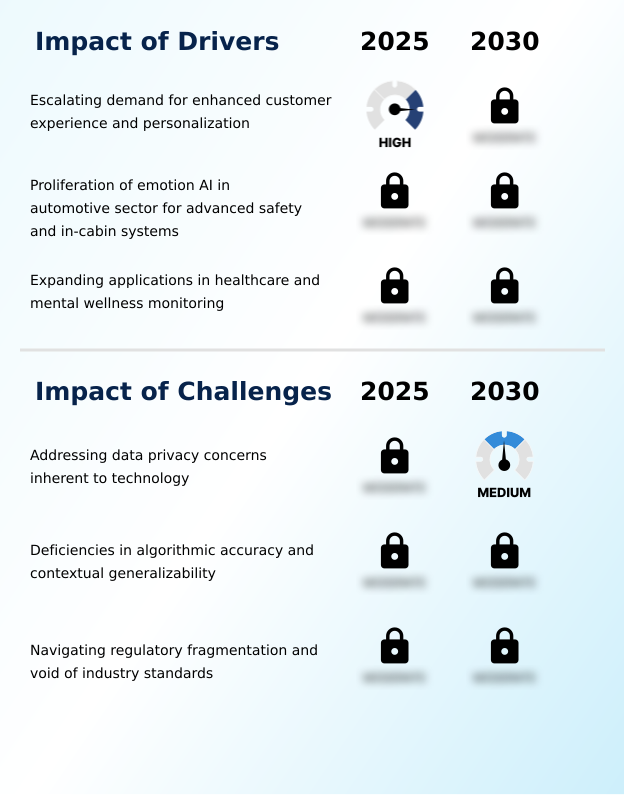
What are the key market drivers leading to the rise in the adoption of Emotion AI Industry?
- The escalating demand for enhanced customer experience and personalization is a key driver fueling the market's growth.
- The imperative for superior customer experience management is a primary market driver, with businesses leveraging natural language processing and vocal prosody analysis to gain real-time emotional insights.
- The implementation of conversational analytics AI in contact centers has been shown to boost agent performance scores by up to 30%. A second major driver is the expansion of applications in healthcare, particularly AI for mental wellness.
- The adoption of remote patient monitoring and digital therapeutics that incorporate voice emotion analytics helps providers track patient well-being more effectively.
- The integration of these technologies into telehealth platforms has been linked to a 25% increase in patient engagement for chronic care management, positioning the healthcare sector as a high-impact growth area.
What are the market trends shaping the Emotion AI Industry?
- The emergence of multimodal emotion AI, which integrates diverse data streams for more accurate analysis, is a significant upcoming trend. This approach moves beyond single-channel interpretation to provide a holistic emotional understanding.
- A defining market trend is the shift toward multimodal emotion AI, which fuses inputs like sentiment analysis and vocal cues to deliver more accurate results, with some systems demonstrating a 20% uplift in accuracy over single-channel methods. This move supports a more human-centric AI design.
- Concurrently, the demand for explainable AI is growing as organizations require transparency from emotion inference systems. Another fundamental trend is the migration toward edge processing, especially for applications like driver monitoring systems, where reducing latency by over 50% is critical for real-time alerts. This architecture enables emotionally adaptive experiences without constant cloud connectivity.
- These developments are paving the way for more sophisticated and trusted applications, including empathy-driven AI agents in customer-facing roles.
What challenges does the Emotion AI Industry face during its growth?
- Addressing the inherent data privacy concerns associated with the technology presents a key challenge to industry growth.
- A paramount challenge is the ethical handling of biometric data, driving demand for privacy-first emotion recognition. The risk of algorithmic bias is a significant technical hurdle; models trained on non-diverse datasets can show error rates up to 30% higher for underrepresented groups, undermining trust in affective computing. Achieving contextual generalizability remains difficult, as emotional expression varies across cultures.
- This limits the scalability of solutions like emotionally intelligent avatars and psycholinguistic analysis tools. Furthermore, the lack of industry-wide standards for data annotation and model validation increases compliance costs by an estimated 15% for companies operating globally. These deficiencies impact the reliability of automated quality assurance AI and other critical enterprise applications.
Exclusive Technavio Analysis on Customer Landscape
The emotion ai market forecasting report includes the adoption lifecycle of the market, covering from the innovator’s stage to the laggard’s stage. It focuses on adoption rates in different regions based on penetration. Furthermore, the emotion ai market report also includes key purchase criteria and drivers of price sensitivity to help companies evaluate and develop their market growth analysis strategies.
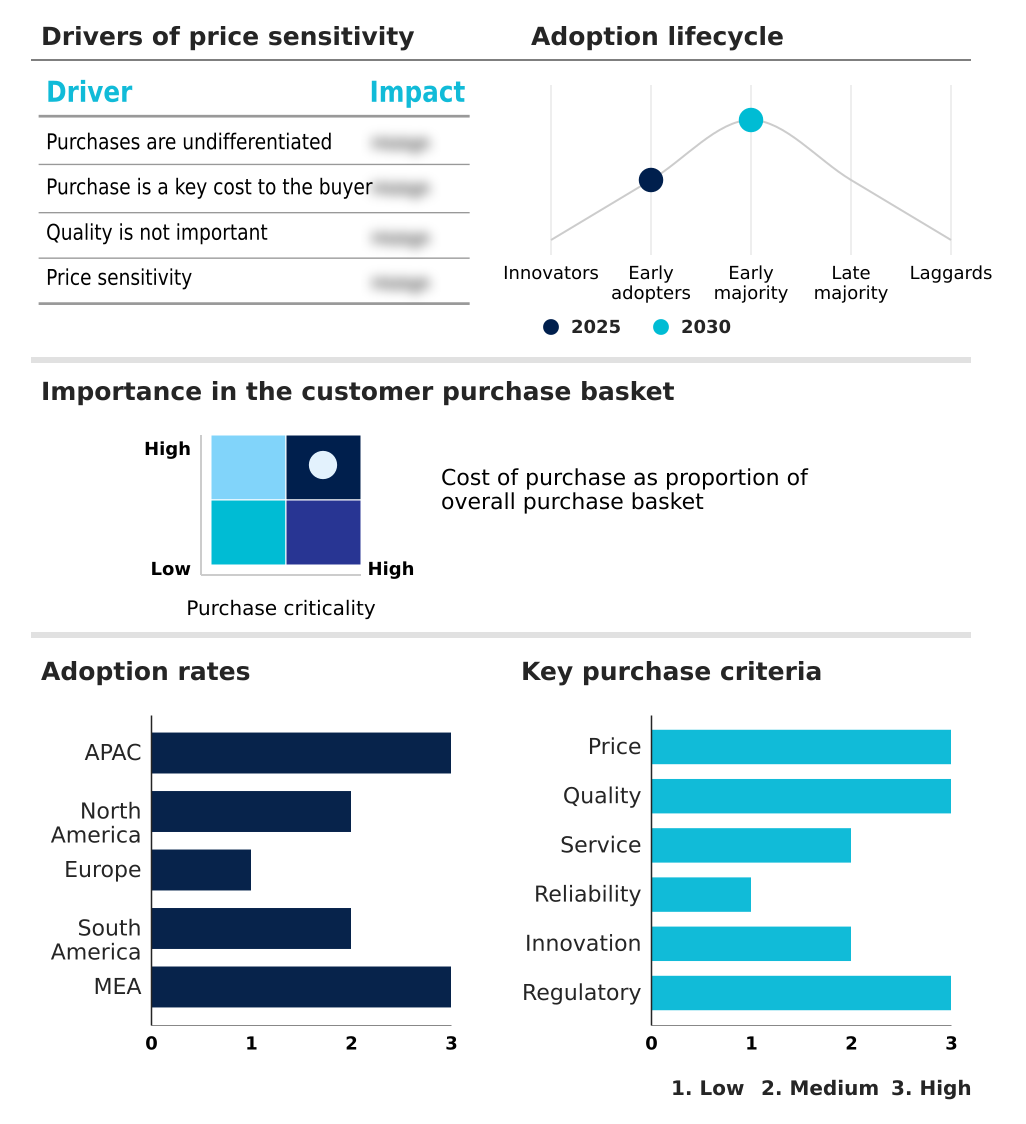
Customer Landscape of Emotion AI Industry
Competitive Landscape
Companies are implementing various strategies, such as strategic alliances, emotion ai market forecast, partnerships, mergers and acquisitions, geographical expansion, and product/service launches, to enhance their presence in the industry.
Amazon Web Services Inc. - Delivering real-time emotional insights, the offering integrates facial analysis and sentiment detection from image, video, and text data through cloud-based AI services.
The industry research and growth report includes detailed analyses of the competitive landscape of the market and information about key companies, including:
- Amazon Web Services Inc.
- audEERING GmbH
- Behavioral Signal
- Cipia Vision Ltd.
- Cogito Corp
- Entropik Technologies Pvt. Ltd
- Google LLC
- Hume AI Inc.
- IBM Corp.
- Microsoft Corp.
- Morphcast Inc.
- Noldus Information Technology
- Opsis Pte. Ltd.
- Realeyes
- Siena
- Superceed
- Symanto
- Uniphore Technologies Inc.
- VIER GmbH.
- Voicesense
Qualitative and quantitative analysis of companies has been conducted to help clients understand the wider business environment as well as the strengths and weaknesses of key industry players. Data is qualitatively analyzed to categorize companies as pure play, category-focused, industry-focused, and diversified; it is quantitatively analyzed to categorize companies as dominant, leading, strong, tentative, and weak.
Recent Development and News in Emotion ai market
- In April, 2025, Affectiva secured $50 million in a Series C funding round to expand its presence in the automotive and marketing sectors.
- In March, 2025, Alibaba Tongyi Lab unveiled its R1-Omni AI model, a multimodal system capable of understanding complex human emotions and analyzing intricate visual details.
- In February, 2025, The European Commission published detailed guidelines on its AI Act, clarifying prohibitions on using AI systems to infer emotions in specific settings like workplaces and educational institutions for non-medical or safety purposes.
- In January, 2025, UneeQ launched its UneeQ 2.0 platform, designed to power autonomous digital workers with emotionally intelligent avatars for lifelike interactions.
Dive into Technavio’s robust research methodology, blending expert interviews, extensive data synthesis, and validated models for unparalleled Emotion AI Market insights. See full methodology.
| Market Scope | |
|---|---|
| Page number | 296 |
| Base year | 2025 |
| Historic period | 2020-2024 |
| Forecast period | 2026-2030 |
| Growth momentum & CAGR | Accelerate at a CAGR of 27.8% |
| Market growth 2026-2030 | USD 17378.2 million |
| Market structure | Fragmented |
| YoY growth 2025-2026(%) | 22.3% |
| Key countries | China, Japan, South Korea, India, Australia, Indonesia, US, Canada, Mexico, Germany, UK, France, Italy, Spain, The Netherlands, Brazil, Argentina, Colombia, UAE, Saudi Arabia, South Africa, Israel and Turkey |
| Competitive landscape | Leading Companies, Market Positioning of Companies, Competitive Strategies, and Industry Risks |
Research Analyst Overview
- The emotion AI market is evolving from a niche technology into a foundational component of enterprise strategy, driven by advancements in affective computing. This shift is compelling boardroom decisions around data governance, as the use of biometric data requires stringent compliance frameworks.
- The development of sophisticated deep learning models and neural networks allows for more nuanced facial expression analysis and interpretation of vocal prosody. A key trend is the integration of multimodal emotion AI, which combines computer vision with physiological signals like heart rate variability and galvanic skin response to enhance accuracy.
- For instance, companies deploying these integrated driver monitoring systems have reported a 40% reduction in false positives for drowsiness detection. This progress in contextual generalizability is crucial for applications in remote patient monitoring and digital therapeutics. However, the industry must address challenges such as algorithmic bias, which requires meticulous data annotation.
- The push towards explainable AI and edge processing is a direct response to these operational and ethical demands, shaping the trajectory of customer experience management solutions.
What are the Key Data Covered in this Emotion AI Market Research and Growth Report?
-
What is the expected growth of the Emotion AI Market between 2026 and 2030?
-
USD 17.38 billion, at a CAGR of 27.8%
-
-
What segmentation does the market report cover?
-
The report is segmented by Type (Video, Voice-focused, Multimodal, and Text-focused), Technology (Machine learning, Natural language processing, and Others), Component (Software, and Services) and Geography (APAC, North America, Europe, South America, Middle East and Africa)
-
-
Which regions are analyzed in the report?
-
APAC, North America, Europe, South America and Middle East and Africa
-
-
What are the key growth drivers and market challenges?
-
Escalating demand for enhanced customer experience and personalization, Addressing data privacy concerns inherent to technology
-
-
Who are the major players in the Emotion AI Market?
-
Amazon Web Services Inc., audEERING GmbH, Behavioral Signal, Cipia Vision Ltd., Cogito Corp, Entropik Technologies Pvt. Ltd, Google LLC, Hume AI Inc., IBM Corp., Microsoft Corp., Morphcast Inc., Noldus Information Technology, Opsis Pte. Ltd., Realeyes, Siena, Superceed, Symanto, Uniphore Technologies Inc., VIER GmbH. and Voicesense
-
Market Research Insights
- Market dynamics are shaped by the drive for more human-centric AI design in enterprise applications. Emotion recognition technology is being integrated to deliver emotionally adaptive experiences, enhancing user engagement. For instance, the use of conversational analytics AI in customer service has led to a 20% improvement in first-contact resolution rates by providing agents with real-time emotional insights.
- Similarly, the deployment of empathic voice interfaces in digital assistants is boosting user satisfaction scores by over 15%. This shift toward emotion inference systems is not just about understanding sentiment but about creating responsive, personalized interactions.
- The success of these systems hinges on effective behavioral signal processing and the ability to build trust, particularly as applications for emotionally intelligent avatars expand into commercial roles, where demonstrating a clear return on investment is paramount.
We can help! Our analysts can customize this emotion ai market research report to meet your requirements.
 RIA -
RIA -