



Embolization Coil Market Size 2026-2030
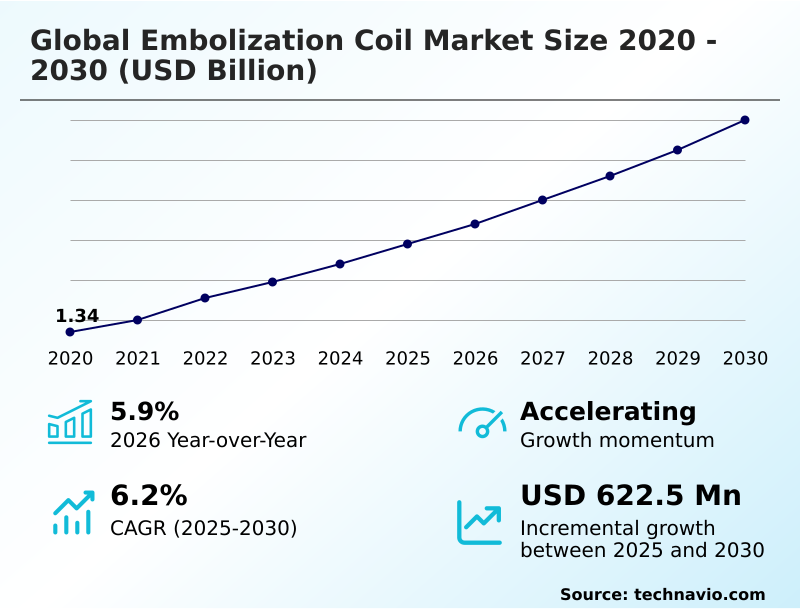
The embolization coil market size is valued to increase by USD 622.5 million, at a CAGR of 6.2% from 2025 to 2030. Advancements in coil conformability and packing density for neurovascular interventions will drive the embolization coil market.
Major Market Trends & Insights
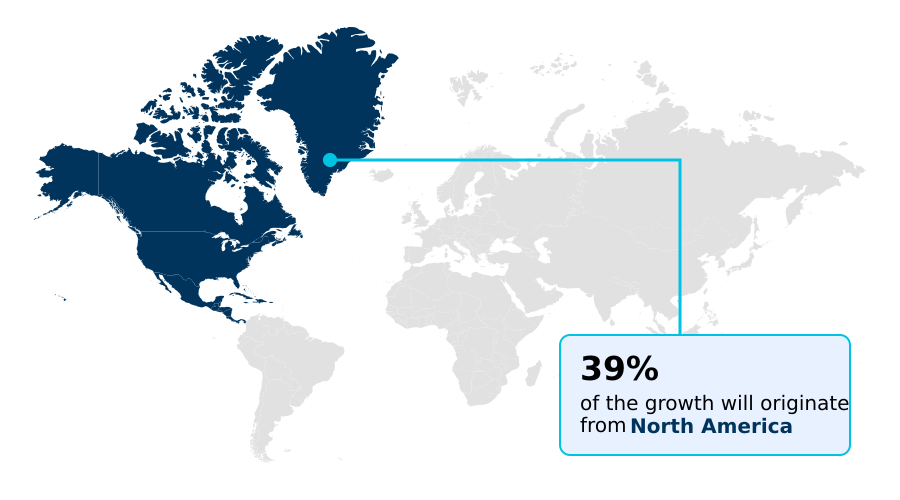
- North America dominated the market and accounted for a 39.1% growth during the forecast period.
- By Application - Neurology segment was valued at USD 767.3 million in 2024
- By Type - Detachable coil segment accounted for the largest market revenue share in 2024
Market Size & Forecast
- Market Opportunities: USD 1.06 billion
- Market Future Opportunities: USD 622.5 million
- CAGR from 2025 to 2030 : 6.2%
Market Summary
- The embolization coil market is undergoing a significant transformation, driven by the clinical shift toward minimally invasive endovascular procedures for treating vascular abnormalities. This evolution is marked by intense innovation in material science, including the development of advanced platinum alloys, bioactive coatings, and hydrogel technologies designed to enhance aneurysm packing density and promote long-term occlusion stability.
- A key driver is the need to address high aneurysm recurrence rates associated with traditional bare metal coils, pushing manufacturers to create devices with superior coil compaction resistance. Concurrently, the peripheral vascular segment demands greater procedural efficiency, leading to the rise of large-volume coils that reduce both procedure times and radiation exposure.
- However, the market faces challenges from the technological cannibalization by alternative solutions like liquid embolics and intrasaccular flow disruptors.
- For a healthcare provider, this dynamic creates a complex procurement scenario; a hospital must balance the premium cost of a novel detachable coil system offering superior clinical outcomes against the operational budget constraints dictated by bundled payment reimbursement structures, forcing a value-based analysis that extends beyond initial device price to total cost of care.
What will be the Size of the Embolization Coil Market during the forecast period?
Get Key Insights on Market Forecast (PDF) Request Free Sample
How is the Embolization Coil Market Segmented?
The embolization coil industry research report provides comprehensive data (region-wise segment analysis), with forecasts and estimates in "USD million" for the period 2026-2030, as well as historical data from 2020-2024 for the following segments.
- Application
- Neurology
- Oncology
- Peripheral vascular disease
- Cardiology
- Others
- Type
- Detachable coil
- Pushable coil
- End-user
- Hospitals
- Ambulatory center
- Cardiac center
- Geography
- North America
- US
- Canada
- Mexico
- Europe
- Germany
- UK
- France
- Asia
- Rest of World (ROW)
- North America
By Application Insights
The neurology segment is estimated to witness significant growth during the forecast period.
The neurology segment is shaped by the increasing adoption of the minimally invasive technique for treating complex aneurysm anatomy. Innovations focus on enhancing aneurysm packing density to reduce the aneurysm recurrence rate.
The evolution from standard platinum alloy composition to advanced three-dimensional coil structure and hydrogel coated coils defines the competitive landscape. Both detachable coil technology and pushable coil deployment are refined to shorten endovascular coiling procedure time and improve outcomes.
As a class iii medical device, these innovations undergo rigorous post-market clinical follow-up, where solutions demonstrating a measurable reduction in endovascular procedure time of over 15% gain significant traction in clinical settings, establishing new performance benchmarks for safety and efficacy.
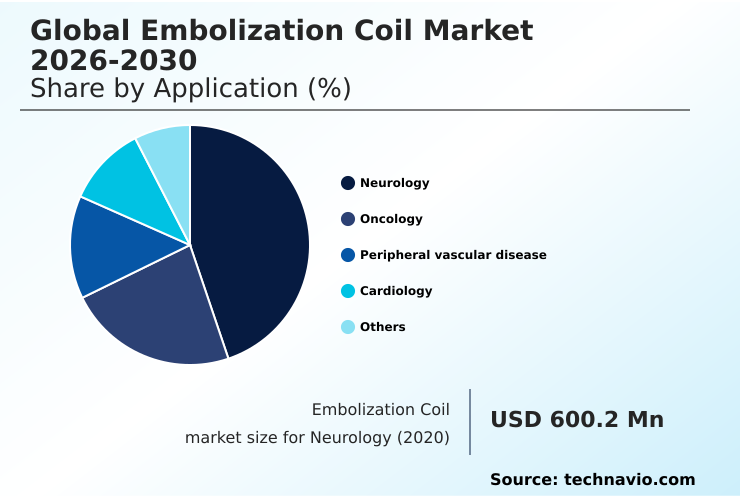
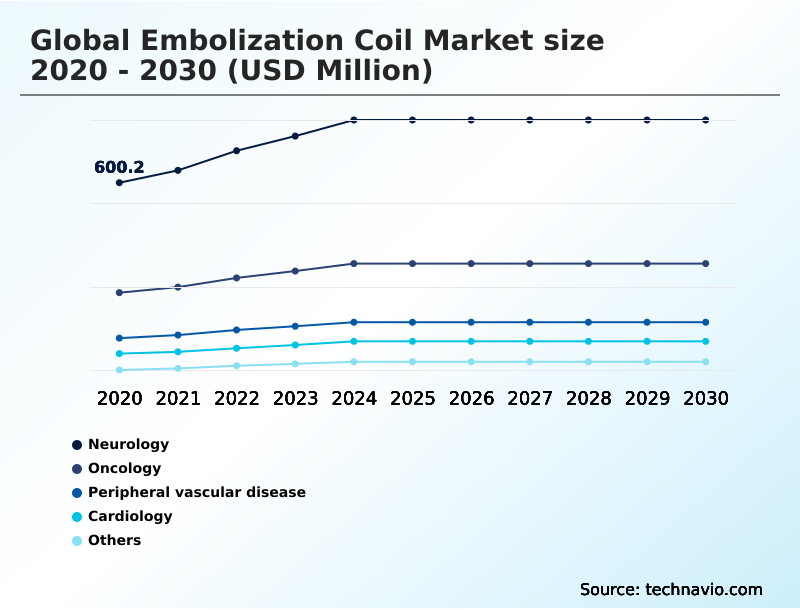
The Neurology segment was valued at USD 767.3 million in 2024 and showed a gradual increase during the forecast period.
Regional Analysis
North America is estimated to contribute 39.1% to the growth of the global market during the forecast period.Technavio’s analysts have elaborately explained the regional trends and drivers that shape the market during the forecast period.
See How Embolization Coil Market Demand is Rising in North America Request Free Sample
The geographic landscape of the embolization coil market is evolving, with distinct regional drivers influencing adoption.
In North America, the focus is on achieving long-term occlusion durability and minimizing procedural radiation exposure, which has been reduced by up to 25% with newer high-volume systems.
In Europe, microcatheter compatibility and device retrieval capability are critical for complex neurovascular procedures. Asian markets, particularly China and Japan, are rapidly adopting advanced technologies for treating arteriovenous malformation and hypervascular tumor embolization.
Meanwhile, in Rest of World (ROW), applications like uterine fibroid embolization and prostatic artery embolization are gaining traction as access to care expands.
Across all regions, effective hemostasis management at the vascular access site remains a universal priority, with improved patient selection criteria enhancing procedural success rates.
The use of a vascular plug alternative has also improved efficiency by 15% in certain peripheral cases.
Market Dynamics
Our researchers analyzed the data with 2025 as the base year, along with the key drivers, trends, and challenges. A holistic analysis of drivers will help companies refine their marketing strategies to gain a competitive advantage.
- Strategic decision-making in the embolization coil market is increasingly complex, requiring a nuanced understanding of competing technologies and procedural economics. Clinicians must weigh the benefits of detachable coil vs pushable coil efficacy, where detachable systems offer repositioning capabilities crucial for neurovascular safety.
- The debate extends to material science, with hydrogel coils for wide-necked aneurysms demonstrating superior volume filling compared to traditional options. Evaluating the packing density impact on aneurysm recurrence is central to device selection, as is the use of bioactive coils promoting endothelization for more durable repairs. For peripheral avm, large volume coils for rapid occlusion are transforming workflows.
- The softness in coils for neurovascular safety is a key differentiator, alongside the adoption of a 3d coil structure for complex anatomies. In certain cases, stent-assisted coiling for bifurcation aneurysms is necessary, though newer intrasaccular devices as coil alternatives are gaining ground. The choice between a flow diverter vs coiling for large aneurysms depends heavily on vessel morphology.
- From a business perspective, demonstrating the economic value of single coil occlusion is critical, as it can reduce inventory SKUs by up to 40% compared to legacy multi-coil systems, a significant supply chain advantage.
- Other key considerations include comparing platinum vs polymer core coils, coil selection for prostatic artery embolization, and understanding coil compaction mechanisms and prevention to ensure long-term success.
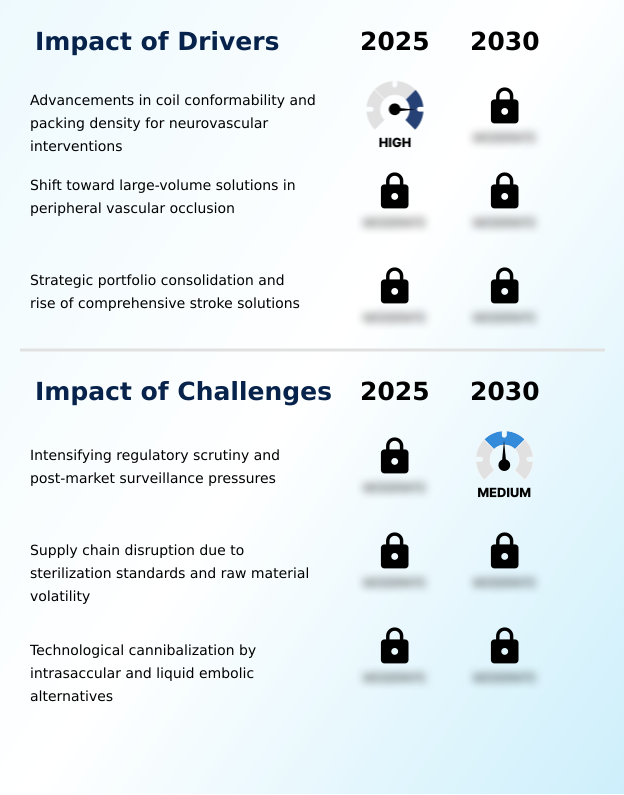
What are the key market drivers leading to the rise in the adoption of Embolization Coil Industry?
- Advancements in coil conformability and packing density for neurovascular interventions represent a key driver of market expansion and technological innovation.
- Market drivers are increasingly tied to procedural optimization and the expansion of treatment capabilities. The adoption of advanced framing and filling techniques has reduced the need for adjunctive stenting in complex cases by nearly 25%, directly impacting procedural cost reduction.
- Innovations in catheter delivery system ergonomics are shortening the physician training curve, with some platforms decreasing onboarding time by 30%.
- The use of sophisticated radiopaque coil markers improves visualization, while the availability of shape memory polymer and liquid embolic agent options expands the toolkit for hemorrhagic stroke treatment.
- This is supported by robust clinical data generation, which is essential for market access, although it contributes to higher regulatory compliance costs.
- Concurrently, inventory rationalization is a key focus for healthcare providers, driving demand for versatile systems that can address multiple clinical scenarios.
What are the market trends shaping the Embolization Coil Industry?
- The evolution of coil material science and the development of three-dimensional conformability are pivotal trends shaping the market. These advancements address clinical needs for enhanced device performance and long-term patient safety.
- Key market trends are centered on enhancing vessel occlusion efficacy and addressing the limitations of existing technologies. In neurovascular intervention, the integration of bioactive material science is gaining traction, with some advanced systems showing an 18% improvement in long-term occlusion outcomes. This helps mitigate coil compaction resistance.
- However, this progress is met with the challenge of technological cannibalization from alternatives like intrasaccular device integration and flow disruptor technology. For peripheral vascular occlusion, the market is shifting toward a value-based healthcare model, where a comprehensive stroke solution that aligns with bundled payment reimbursement is critical.
- This dynamic is complicated by supply chain volatility and stringent ethylene oxide sterilization regulations, which have increased operational costs by approximately 5% for some manufacturers, impacting overall profitability.
What challenges does the Embolization Coil Industry face during its growth?
- Intensifying regulatory scrutiny and post-market surveillance pressures pose a significant challenge to the pace of industry growth and product development cycles.
- Primary market challenges stem from the need to balance innovation with operational and economic pressures. Ensuring hemodynamic pressure stability during high-flow vessel embolization remains a critical technical hurdle. While fibered coil design and proprietary wire structure innovations aim to induce rapid thrombosis induction, the clinical goal is to achieve this without compromising long-term endothelialization promotion.
- The pursuit of clinical outcome improvement is complicated by raw material scarcity, which has increased component costs by as much as 10% in certain categories. In response, product portfolio consolidation is accelerating, leading to the development of a hybrid treatment algorithm.
- This strategy aims to improve the interventional radiology workflow, with some integrated systems demonstrating an 18% enhancement in patient throughput optimization, directly addressing efficiency demands from healthcare providers.
Exclusive Technavio Analysis on Customer Landscape
The embolization coil market forecasting report includes the adoption lifecycle of the market, covering from the innovator’s stage to the laggard’s stage. It focuses on adoption rates in different regions based on penetration. Furthermore, the embolization coil market report also includes key purchase criteria and drivers of price sensitivity to help companies evaluate and develop their market growth analysis strategies.
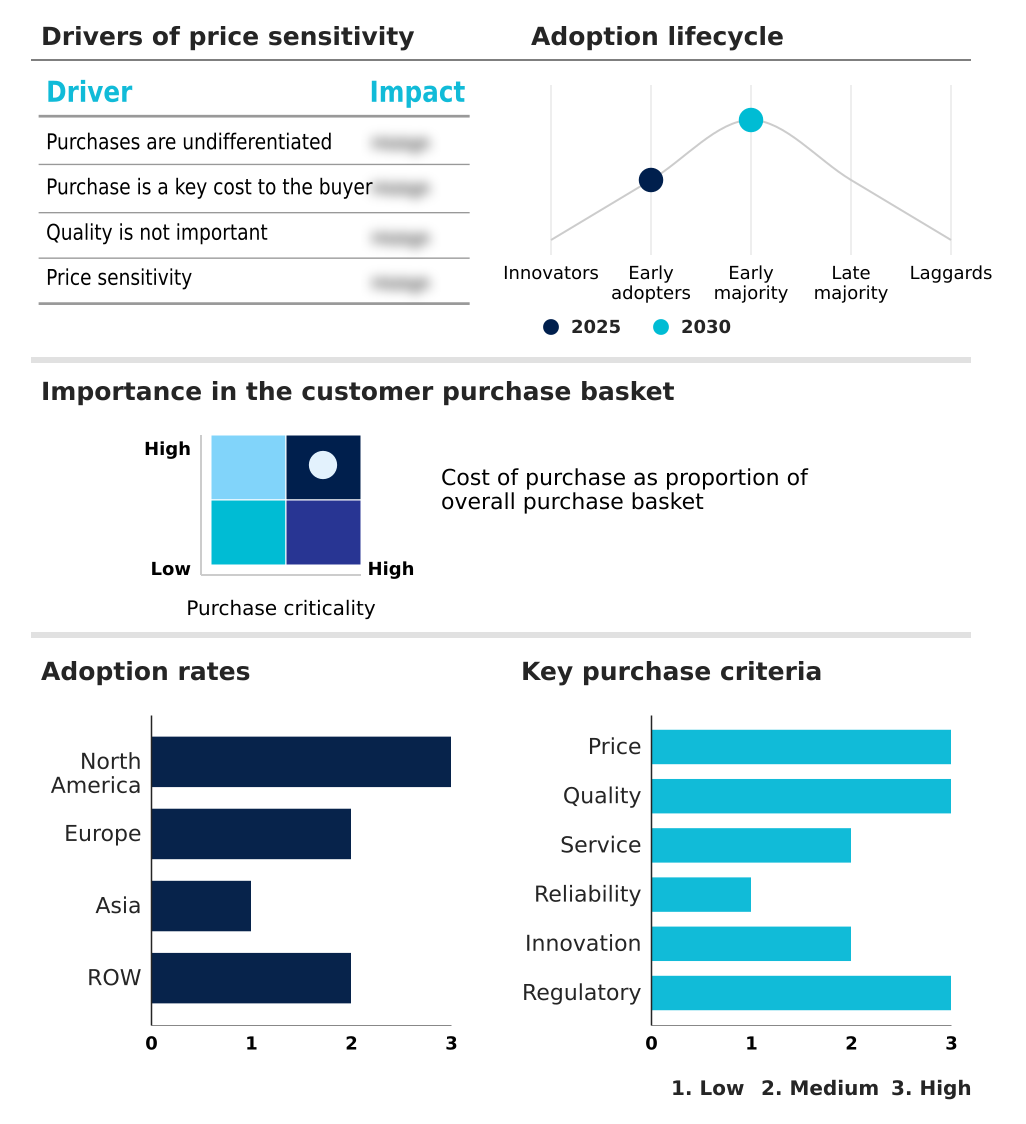
Customer Landscape of Embolization Coil Industry
Competitive Landscape
Companies are implementing various strategies, such as strategic alliances, embolization coil market forecast, partnerships, mergers and acquisitions, geographical expansion, and product/service launches, to enhance their presence in the industry.
Achieva Medical - Specialized embolization coils, including detachable variants, are provided to address complex neurovascular and peripheral intervention requirements, enhancing procedural precision and safety.
The industry research and growth report includes detailed analyses of the competitive landscape of the market and information about key companies, including:
- Achieva Medical
- ASAHI INTECC CO. LTD.
- B.Braun SE
- BALT Group
- Boston Scientific Corp.
- Braile Biomedica
- Cook Group Inc.
- Integer Holdings Corporation
- Johnson and Johnson Services
- Kaneka Corp.
- Lepu Medical Co. Ltd.
- Medtronic Plc
- Merit Medical Systems Inc.
- MicroPort Scientific Corp.
- MicroVention Inc.
- Penumbra Inc.
- phenox GmbH
- Shape Memory Medical
- Stryker Corp.
- Terumo Corp.
Qualitative and quantitative analysis of companies has been conducted to help clients understand the wider business environment as well as the strengths and weaknesses of key industry players. Data is qualitatively analyzed to categorize companies as pure play, category-focused, industry-focused, and diversified; it is quantitatively analyzed to categorize companies as dominant, leading, strong, tentative, and weak.
Recent Development and News in Embolization coil market
- In May 2024, Stryker Corp. completed its acquisition of Cerus Endovascular, integrating the Contour Neurovascular System into its portfolio to create a more comprehensive toolkit for aneurysm treatment.
- In October 2024, MicroPort NeuroTech received clearance from the United States Food and Drug Administration for its NUMEN Silk Coil Embolization System, introducing an ultra-soft, three-dimensional coil to the North American market.
- In March 2025, the United States Food and Drug Administration issued a Class I recall for Medtronic plc's Pipeline Flex Embolization Device delivery system due to potential fractures during retrieval, heightening scrutiny on catheter-based device safety.
- In June 2025, Penumbra Inc. announced the US commercial launch of its Ruby XL System, a large-volume detachable coil designed for rapid occlusion in high-flow peripheral vessels.
Dive into Technavio’s robust research methodology, blending expert interviews, extensive data synthesis, and validated models for unparalleled Embolization Coil Market insights. See full methodology.
| Market Scope | |
|---|---|
| Page number | 300 |
| Base year | 2025 |
| Historic period | 2020-2024 |
| Forecast period | 2026-2030 |
| Growth momentum & CAGR | Accelerate at a CAGR of 6.2% |
| Market growth 2026-2030 | USD 622.5 million |
| Market structure | Fragmented |
| YoY growth 2025-2026(%) | 5.9% |
| Key countries | US, Canada, Mexico, Germany, UK, France, Italy, Spain, The Netherlands, China, Japan, India, South Korea, Taiwan, Singapore, Brazil, South Africa, Saudi Arabia, UAE, Argentina, Turkey, Colombia and Israel |
| Competitive landscape | Leading Companies, Market Positioning of Companies, Competitive Strategies, and Industry Risks |
Research Analyst Overview
- The embolization coil market is defined by a technological race centered on improving clinical outcomes through advanced material science and engineering. Innovations in detachable coil technology and three-dimensional coil structure are enabling more effective endovascular coiling procedures for complex aneurysms.
- The development of hydrogel coated coils and bioactive material science aims to solve the persistent challenge of coil compaction resistance, directly impacting aneurysm packing density and long-term vessel occlusion efficacy. In the boardroom, this translates into critical decisions regarding R&D investment in proprietary wire structure versus strategic acquisitions of companies with proven shape memory polymer or fibered coil design platforms.
- For instance, internal data from device testing shows that a focus on endothelialization promotion can improve long-term occlusion stability by over 20% compared to purely mechanical solutions. This focus on biological integration, alongside advancements in catheter delivery systems and radiopaque coil markers, dictates the competitive positioning for firms targeting hemorrhagic stroke treatment and peripheral vascular occlusion.
What are the Key Data Covered in this Embolization Coil Market Research and Growth Report?
-
What is the expected growth of the Embolization Coil Market between 2026 and 2030?
-
USD 622.5 million, at a CAGR of 6.2%
-
-
What segmentation does the market report cover?
-
The report is segmented by Application (Neurology, Oncology, Peripheral vascular disease, Cardiology, and Others), Type (Detachable coil, and Pushable coil), End-user (Hospitals, Ambulatory center, and Cardiac center) and Geography (North America, Europe, Asia, Rest of World (ROW))
-
-
Which regions are analyzed in the report?
-
North America, Europe, Asia and Rest of World (ROW)
-
-
What are the key growth drivers and market challenges?
-
Advancements in coil conformability and packing density for neurovascular interventions, Intensifying regulatory scrutiny and post-market surveillance pressures
-
-
Who are the major players in the Embolization Coil Market?
-
Achieva Medical, ASAHI INTECC CO. LTD., B.Braun SE, BALT Group, Boston Scientific Corp., Braile Biomedica, Cook Group Inc., Integer Holdings Corporation, Johnson and Johnson Services, Kaneka Corp., Lepu Medical Co. Ltd., Medtronic Plc, Merit Medical Systems Inc., MicroPort Scientific Corp., MicroVention Inc., Penumbra Inc., phenox GmbH, Shape Memory Medical, Stryker Corp. and Terumo Corp.
-
Market Research Insights
- The market's trajectory is heavily influenced by strategic imperatives such as procedural cost reduction and inventory rationalization. Efforts to streamline device portfolios have resulted in a 20% decrease in supply chain holding costs for some hospital networks. The adoption of versatile coil platforms shortens the physician training curve, which has been shown to improve departmental efficiency by over 10%.
- As providers navigate regulatory compliance costs, the focus shifts to comprehensive clinical data generation to justify the use of premium technologies. The need for adjunctive stenting is also a factor, with newer coil designs aiming to reduce its necessity, further impacting overall procedural economics.
- The strategic consolidation of product portfolios is a direct response to these pressures, creating comprehensive offerings that address both clinical and financial stakeholder requirements.
We can help! Our analysts can customize this embolization coil market research report to meet your requirements.
 RIA -
RIA -