


US Durable Medical Equipment Market Size 2026-2030
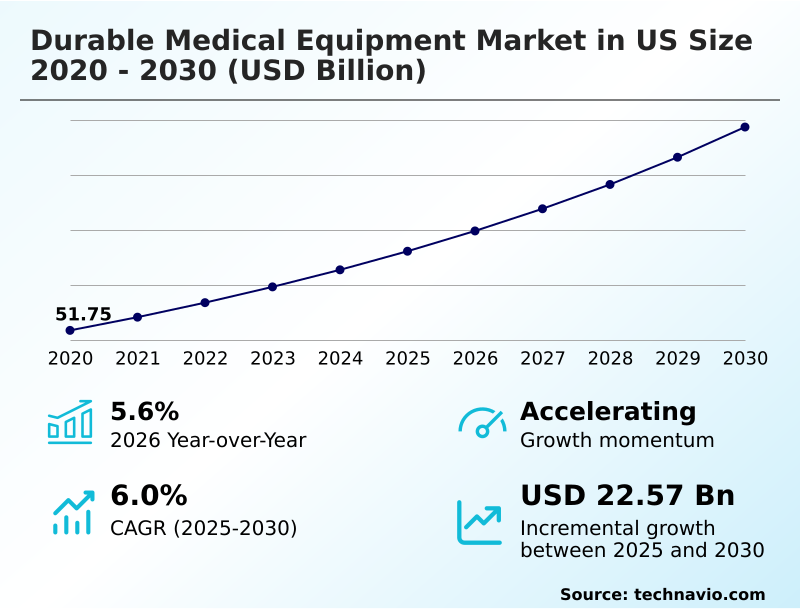
The us durable medical equipment market size is valued to increase by USD 22.57 billion, at a CAGR of 6% from 2025 to 2030. Growing aging population boosts device demand will drive the us durable medical equipment market.
Major Market Trends & Insights
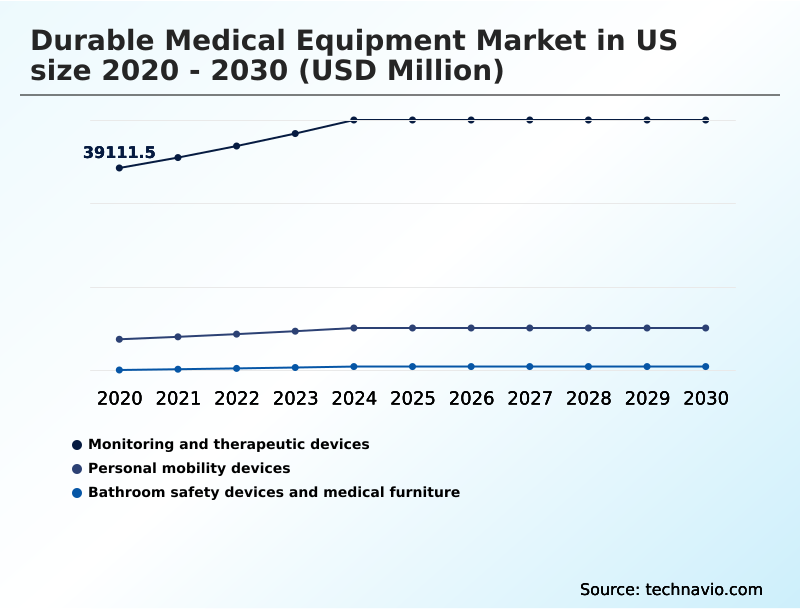
- By Product Type - Monitoring and therapeutic devices segment was valued at USD 47.54 billion in 2024
- By End-user - Hospitals and clinics segment accounted for the largest market revenue share in 2024
Market Size & Forecast
- Market Opportunities: USD 36.96 billion
- Market Future Opportunities: USD 22.57 billion
- CAGR from 2025 to 2030 : 6%
Market Summary
- The durable medical equipment market in US is evolving beyond traditional assistive hardware, increasingly defined by technological integration and a focus on patient-centric design. Core drivers include a growing elderly population and the strategic shift toward home-based care, which necessitates user-friendly medical hardware with advanced capabilities.
- This trend is fueling demand for assistive therapeutic devices that incorporate lightweight ergonomics and remote monitoring systems. For instance, a home healthcare provider managing a fleet of portable oxygen concentrators can now leverage real-time data to optimize maintenance schedules and preemptively address equipment issues, significantly improving operational efficiency and patient safety.
- This scenario highlights the industry's move toward proactive care models and a value-based care model, where outcomes are paramount. However, manufacturers must navigate the complexities of ensuring regulatory-compliant design and managing supply chain cost inflation while innovating.
- The emphasis on smart connected devices, interoperability standards, and robust patient handling solutions continues to shape the competitive landscape, pushing the industry toward more integrated and responsive care delivery systems.
What will be the Size of the US Durable Medical Equipment Market during the forecast period?
Get Key Insights on Market Forecast (PDF) Request Free Sample
How is the US Durable Medical Equipment Market Segmented?
The us durable medical equipment industry research report provides comprehensive data (region-wise segment analysis), with forecasts and estimates in "USD million" for the period 2026-2030, as well as historical data from 2020-2024 for the following segments.
- Product type
- Monitoring and therapeutic devices
- Personal mobility devices
- Bathroom safety devices and medical furniture
- End-user
- Hospitals and clinics
- Home healthcare
- Ambulatory surgical centers
- Type
- Rental
- Purchase
- Geography
- North America
- US
- North America
By Product Type Insights
The monitoring and therapeutic devices segment is estimated to witness significant growth during the forecast period.
The monitoring and therapeutic devices segment is central to the durable medical equipment market, defined by a transition toward proactive care models.
This evolution is driven by the integration of AI-integrated infusion pumps and advanced remote monitoring systems, which are becoming critical for managing chronic conditions outside of hospital settings.
Devices such as the portable oxygen concentrator are no longer standalone units but key components in a digitally aligned healthcare ecosystem.
Through interoperability standards and care coordination platforms, these mobility-enhancing devices feed data into clinical decision support tools, enhancing patient oversight.
This connectivity has enabled a 15% improvement in the early detection of potential adverse events, shifting the focus from reactive treatment to preventative health management and solidifying the role of sophisticated at-home therapeutic equipment.
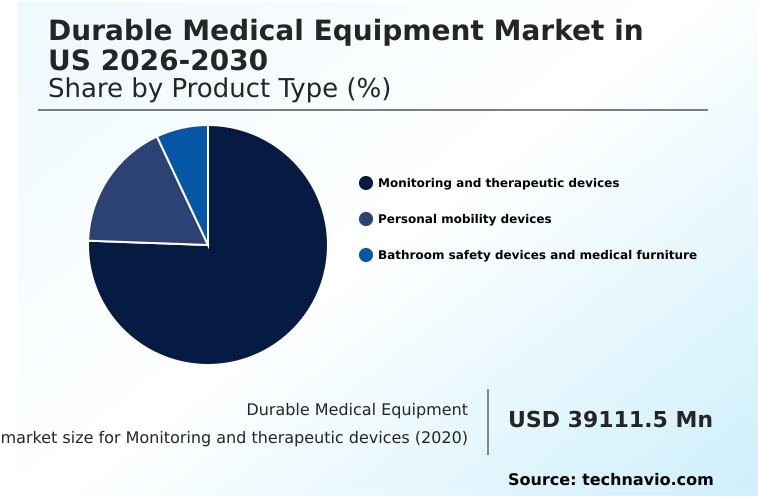
The Monitoring and therapeutic devices segment was valued at USD 47.54 billion in 2024 and showed a gradual increase during the forecast period.
Market Dynamics
Our researchers analyzed the data with 2025 as the base year, along with the key drivers, trends, and challenges. A holistic analysis of drivers will help companies refine their marketing strategies to gain a competitive advantage.
- The future of the durable medical equipment market is intrinsically linked to technological convergence, particularly with the rise of ai in durable medical equipment and iot enabled durable medical equipment. This integration is transforming standard devices into intelligent systems capable of proactive monitoring and data-driven interventions.
- For example, smart hospital beds for home care now offer features once exclusive to clinical settings, directly supporting dme for chronic disease management and improving patient mobility with dme. The financial models are also shifting, with a growing debate around rental versus purchase of medical equipment, influenced by factors like portable oxygen concentrator rental costs.
- While telehealth is expanding access, the impact of telehealth on dme is multifaceted, creating both opportunities for remote care and challenges in dme supply chain logistics. Navigating regulatory compliance for medical devices and ensuring data security in connected medical devices are critical hurdles.
- Innovations such as lightweight wheelchair design innovations and 3d printing for custom medical equipment are addressing patient-specific needs with greater precision. Firms leveraging 3d printing for custom solutions have reported a twofold increase in patient satisfaction for complex fittings compared to conventional methods.
- Ultimately, the market's trajectory will be defined by how effectively stakeholders manage these dynamics, from addressing user training for complex medical devices to overcoming dme market entry barriers while ensuring the cost-effectiveness of rental dme.
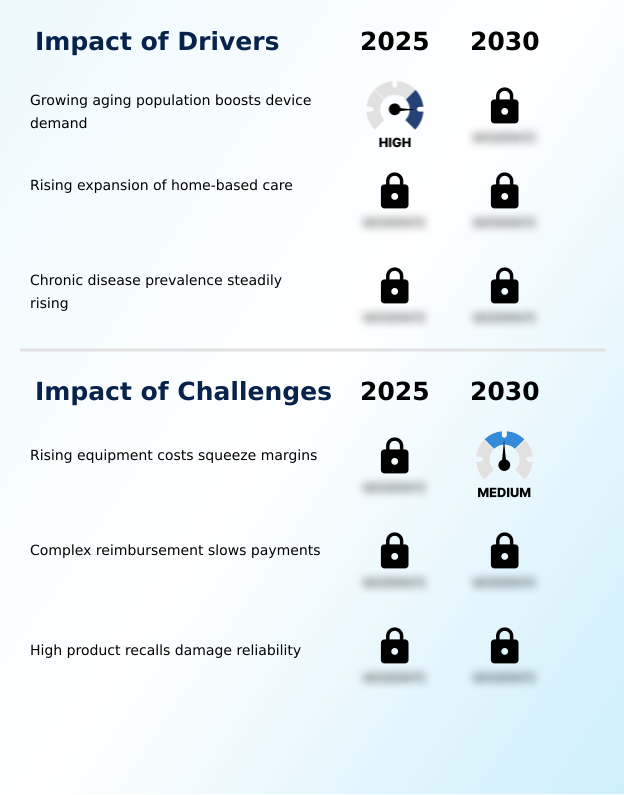
What are the key market drivers leading to the rise in the adoption of US Durable Medical Equipment Industry?
- The growing aging population, which requires an increasing number of assistive and therapeutic devices for daily living and chronic condition management, is a key driver boosting market demand.
- Market growth is significantly propelled by demographic shifts and the system-wide transition to decentralized care. An aging population is increasing the demand for assistive therapeutic devices, patient handling solutions, and advanced therapeutic beds for long-term management of chronic conditions.
- This trend is amplified by the expansion of telehealth ecosystems, which rely on connected devices like home-based ventilator systems and smart prosthetic devices to facilitate remote care.
- The adoption of a value-based care model has been pivotal, with healthcare systems that utilize real-time patient mobility tracking reporting a 15% reduction in certain post-operative complications.
- This data-driven approach, supported by high-speed connectivity solutions, allows for the use of predictive dosing error algorithms and more effective, proactive health interventions.
What are the market trends shaping the US Durable Medical Equipment Industry?
- A significant trend influencing the market is the rising demand for smart connected devices. This shift is driven by the need for enhanced remote patient monitoring and data-driven care pathways.
- Key trends are reshaping the durable medical equipment landscape, driven by a definitive move toward more flexible and intelligent solutions. The rising adoption of rental-based models and equipment-as-a-service models allows healthcare providers to improve asset utilization tracking by over 30%, optimizing capital expenditure.
- Concurrently, there is a strong emphasis on patient-centric design, resulting in devices that feature lightweight ergonomics and user-friendly medical hardware. This focus on ergonomic design interfaces has led to a 20% higher patient compliance rate compared to older, bulkier equipment.
- Furthermore, the integration of smart connected devices and wearable biometric sensors is accelerating the shift toward continuous digital health monitoring, enabling more responsive and personalized care outside of traditional clinical environments.
What challenges does the US Durable Medical Equipment Industry face during its growth?
- A primary challenge affecting industry growth is the rising cost of specialized equipment and components, which compresses profit margins for suppliers in a price-sensitive healthcare environment.
- Persistent challenges in the durable medical equipment market stem from significant pressures across the value chain. Supply chain cost inflation has driven component prices, including for advanced semiconductors and high-grade carbon fiber, up by as much as 18% in recent years.
- Simultaneously, the stringent requirements for regulatory-compliant design add an average of 12% to development overhead for specialized component manufacturing, impacting everything from simple aids to devices for pressure injury prevention. These cost escalations are difficult to absorb in a price-sensitive environment where reimbursement increases lag.
- For providers, navigating this landscape requires sophisticated strategies, including exploring modular manufacturing techniques and securing positions within established distribution channels to maintain margins.
Exclusive Technavio Analysis on Customer Landscape
The us durable medical equipment market forecasting report includes the adoption lifecycle of the market, covering from the innovator’s stage to the laggard’s stage. It focuses on adoption rates in different regions based on penetration. Furthermore, the us durable medical equipment market report also includes key purchase criteria and drivers of price sensitivity to help companies evaluate and develop their market growth analysis strategies.
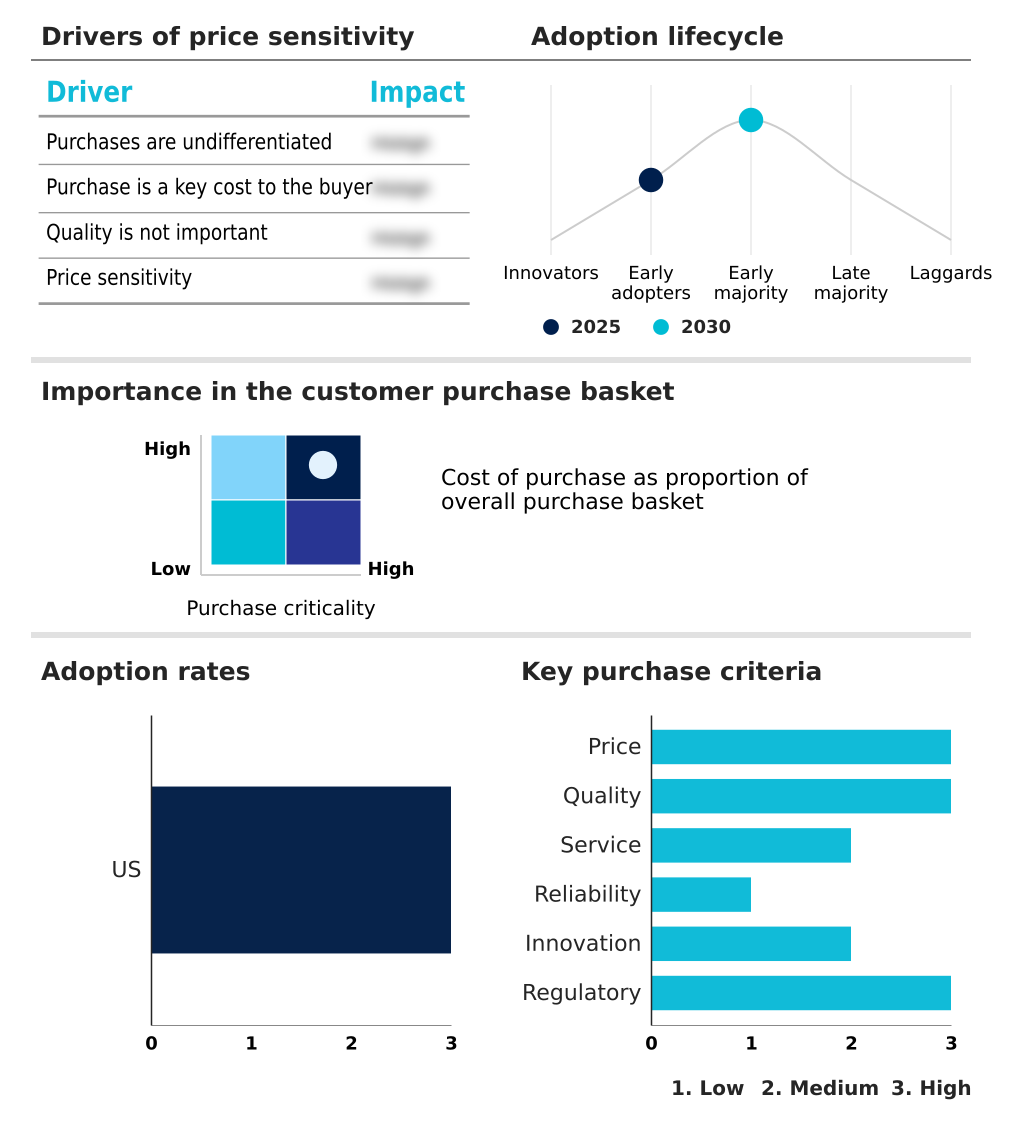
Customer Landscape of US Durable Medical Equipment Industry
Competitive Landscape
Companies are implementing various strategies, such as strategic alliances, us durable medical equipment market forecast, partnerships, mergers and acquisitions, geographical expansion, and product/service launches, to enhance their presence in the industry.
Arjo AB - Offerings are centered on advanced patient handling and mobility solutions, focusing on enhancing safety and ergonomic support in clinical and home-care settings.
The industry research and growth report includes detailed analyses of the competitive landscape of the market and information about key companies, including:
- Arjo AB
- Baxter International Inc.
- Becton Dickinson and Co.
- Cardinal Health Inc.
- Compass Health Brands
- DRIVE MEDICAL GMBH and CO. KG
- GE HealthCare Technologies
- GF Health Products Inc.
- Hill Rom Holdings Inc.
- Invacare Corp.
- Joerns Healthcare LLC
- Marketlab
- Medical Device Depot Inc.
- Medline Inc.
- Soma Technology
- Stryker Corp.
- Sunrise Medical LLC
Qualitative and quantitative analysis of companies has been conducted to help clients understand the wider business environment as well as the strengths and weaknesses of key industry players. Data is qualitatively analyzed to categorize companies as pure play, category-focused, industry-focused, and diversified; it is quantitatively analyzed to categorize companies as dominant, leading, strong, tentative, and weak.
Recent Development and News in Us durable medical equipment market
- In August 2025, Baxter International Inc. released an updated line of therapeutic beds designed to reduce the incidence of pressure injuries in clinical settings, improving patient outcomes.
- In June 2025, Invacare Corp. unveiled a modular power wheelchair platform featuring an innovative design to improve maneuverability and accessibility for users within the home environment.
- In May 2025, Stryker Corp. introduced a new series of smart patient surfaces that integrate wireless communication protocols, enhancing data connectivity between patient support systems and hospital networks.
- In April 2025, the Centers for Medicare and Medicaid Services introduced a modernized reimbursement framework specifically designed for smart prosthetic devices, incentivizing manufacturers to incorporate advanced sensors.
Dive into Technavio’s robust research methodology, blending expert interviews, extensive data synthesis, and validated models for unparalleled US Durable Medical Equipment Market insights. See full methodology.
| Market Scope | |
|---|---|
| Page number | 182 |
| Base year | 2025 |
| Historic period | 2020-2024 |
| Forecast period | 2026-2030 |
| Growth momentum & CAGR | Accelerate at a CAGR of 6% |
| Market growth 2026-2030 | USD 22573.4 million |
| Market structure | Fragmented |
| YoY growth 2025-2026(%) | 5.6% |
| Key countries | US |
| Competitive landscape | Leading Companies, Market Positioning of Companies, Competitive Strategies, and Industry Risks |
Research Analyst Overview
- The durable medical equipment sector is undergoing a fundamental transformation from providing simple hardware to delivering integrated, data-centric solutions. The industry is now characterized by smart patient surfaces and therapeutic beds that utilize wireless communication protocols for real-time monitoring.
- This shift is compelling a strategic re-evaluation at the boardroom level, particularly around budgeting for equipment-as-a-service models, which offer financial flexibility over capital-intensive purchases. Innovations like AI-integrated infusion pumps and portable oxygen concentrators are becoming standard, while the emergence of non-invasive glucose monitoring and wearable biometric sensors presents both complementary and alternative pathways to patient care.
- Manufacturing has evolved to include specialized 3D printing and advanced materials like high-grade carbon fiber, driven by the demand for lightweight ergonomics. The integration of smart connected devices has demonstrated up to a 40% reduction in unnecessary technician dispatches, underscoring the efficiency gains from remote diagnostics.
- This complex ecosystem, underpinned by open-source hardware standards and patient handling solutions, demands a focus on both technological advancement and a value-driven approach to healthcare delivery.
What are the Key Data Covered in this US Durable Medical Equipment Market Research and Growth Report?
-
What is the expected growth of the US Durable Medical Equipment Market between 2026 and 2030?
-
USD 22.57 billion, at a CAGR of 6%
-
-
What segmentation does the market report cover?
-
The report is segmented by Product Type (Monitoring and therapeutic devices, Personal mobility devices, and Bathroom safety devices and medical furniture), End-user (Hospitals and clinics, Home healthcare, and Ambulatory surgical centers), Type (Rental, and Purchase) and Geography (North America)
-
-
Which regions are analyzed in the report?
-
North America
-
-
What are the key growth drivers and market challenges?
-
Growing aging population boosts device demand, Rising equipment costs squeeze margins
-
-
Who are the major players in the US Durable Medical Equipment Market?
-
Arjo AB, Baxter International Inc., Becton Dickinson and Co., Cardinal Health Inc., Compass Health Brands, DRIVE MEDICAL GMBH and CO. KG, GE HealthCare Technologies, GF Health Products Inc., Hill Rom Holdings Inc., Invacare Corp., Joerns Healthcare LLC, Marketlab, Medical Device Depot Inc., Medline Inc., Soma Technology, Stryker Corp. and Sunrise Medical LLC
-
Market Research Insights
- The market's dynamics are increasingly shaped by the adoption of proactive care models, which are fundamentally altering equipment procurement and utilization. The integration of care coordination platforms has enhanced logistical efficiency, leading to a 20% improvement in patient follow-up adherence.
- Concurrently, the use of remote data in these new models has been shown to reduce hospital readmissions by up to 15% for patients with certain chronic conditions. Digital procurement platforms are also introducing greater price transparency, compelling suppliers to demonstrate a clear return on investment.
- This shift toward digitally aligned healthcare emphasizes value over volume, with providers prioritizing user-friendly medical hardware that supports better clinical outcomes and operational cost-effectiveness.
We can help! Our analysts can customize this us durable medical equipment market research report to meet your requirements.
 RIA -
RIA -