
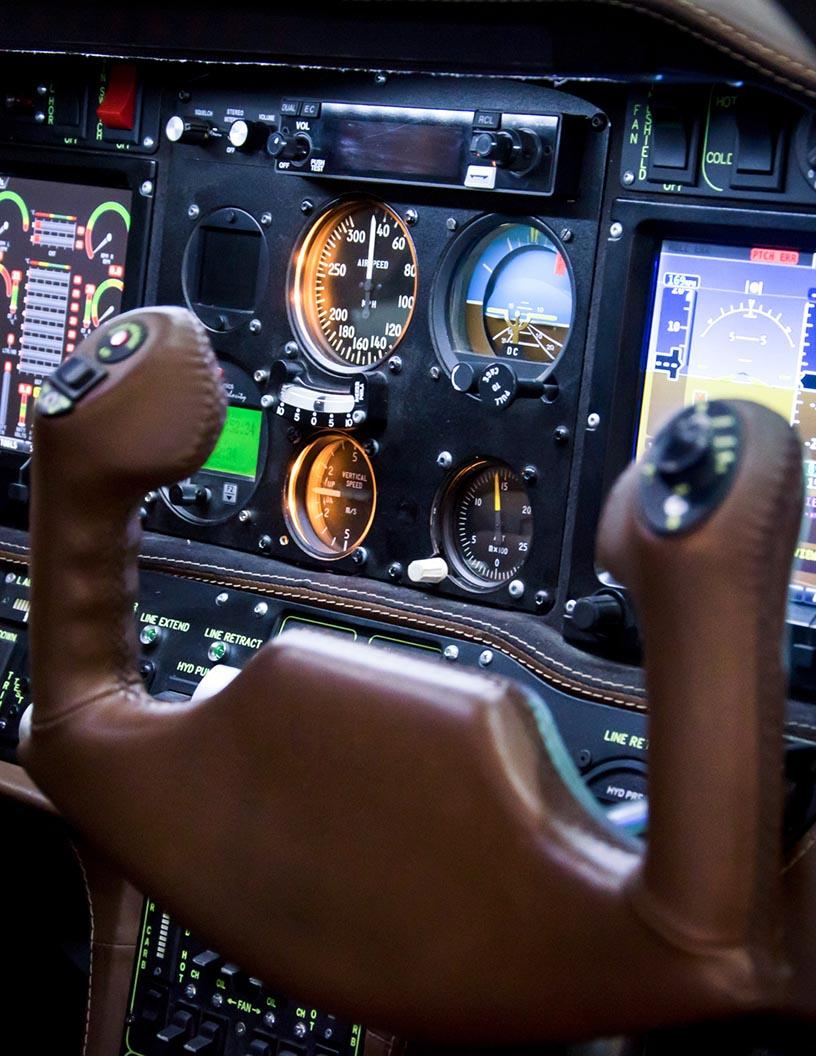


Display For Avionics Applications Market Size 2025-2029
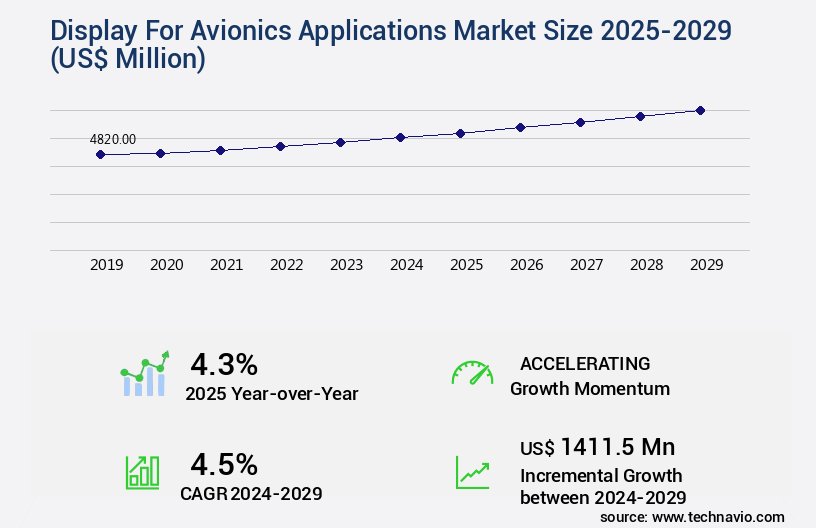
The display for avionics applications market size is valued to increase USD 1.41 billion, at a CAGR of 4.5% from 2024 to 2029. Growing demand for automation will drive the display for avionics applications market.
Major Market Trends & Insights
- North America dominated the market and accounted for a 48% growth during the forecast period.
- By End-user - Civil aviation segment was valued at USD 3.01 billion in 2023
- By Type - In-flight display segment accounted for the largest market revenue share in 2023
Market Size & Forecast
- Market Opportunities: USD 47.21 million
- Market Future Opportunities: USD 1411.50 million
- CAGR : 4.5%
- North America: Largest market in 2023
Market Summary
- The market is a dynamic and evolving sector, driven by the growing demand for automation and advanced technologies in avionics. Core technologies, such as Organic Light-Emitting Diodes (OLED) and Active Matrix Electro-Luminescent Displays (AMEL), continue to dominate the market due to their superior performance and durability. Meanwhile, applications in flight deck displays, head-up displays, and electronic flight instrument displays are expanding, driven by the increasing adoption of advanced avionics systems. Despite these opportunities, the market faces challenges, including high costs and complex regulatory requirements. For instance, the introduction of automatic Ground Collision Avoidance Systems (auto-GCAS) mandated by the Federal Aviation Administration (FAA) poses a significant investment for avionics manufacturers.
- Moreover, the barriers to adopting new technologies and equipment, such as high upfront costs and certification processes, hinder market growth. According to a recent industry report, the market is expected to account for over 30% of the total avionics market share by 2025. This growth is fueled by the increasing demand for advanced avionics systems, particularly in commercial aviation and defense sectors. The market's continuous evolution reflects the ongoing efforts to improve aviation safety, efficiency, and passenger experience.
What will be the Size of the Display For Avionics Applications Market during the forecast period?
Get Key Insights on Market Forecast (PDF) Request Free Sample
How is the Display For Avionics Applications Market Segmented and what are the key trends of market segmentation?
The display for avionics applications industry research report provides comprehensive data (region-wise segment analysis), with forecasts and estimates in "USD million" for the period 2025-2029, as well as historical data from 2019-2023 for the following segments.
- End-user
- Civil aviation
- Military aviation
- Type
- In-flight display
- Heads-up display
- Technology
- EFIS
- GNSS integration
- EVS
- SVS
- Touchscreen and gesture-controlled displays
- Geography
- North America
- US
- Canada
- Mexico
- Europe
- France
- Germany
- Italy
- UK
- APAC
- China
- India
- Japan
- Rest of World (ROW)
- North America
By End-user Insights
The civil aviation segment is estimated to witness significant growth during the forecast period.
The avionics display market encompasses two primary segments: primary flight displays (PFDs) and multifunctional displays (MFDs). PFDs, which provide pilots with vital flight information like altitude, speed, and navigational data, are utilized in both LCD and OLED technologies. These displays enhance situational awareness and flight control. MFDs, incorporating head-up displays (HUDs), are also essential components of avionics systems. Avionics systems integrate various displays, such as cockpit displays, cabin management displays, test and maintenance displays, and emergency and warning displays. These displays are integral to aviation operations, ensuring effective communication between pilots and systems. Display technologies, including LCD and OLED, undergo continuous advancements to meet the evolving demands of the aviation industry.
For instance, OLED displays offer advantages like longer display lifespan, improved image processing, and ARINC standards compliance. Ruggedized displays, sunlight readable displays, and high-resolution displays are other display types gaining popularity due to their reliability and performance. Display data processing, human-machine interface (HMI), and sensor data visualization are critical aspects of avionics displays. These features enable real-time data processing, high brightness displays, and do-160 environmental testing, ensuring optimal performance under various conditions. Moreover, avionics display integration with avionics software, touchscreen displays, and data bus communication is essential for seamless system functionality. Thermal management displays and fail-operational displays are also crucial for maintaining display reliability and ensuring safety during flight.
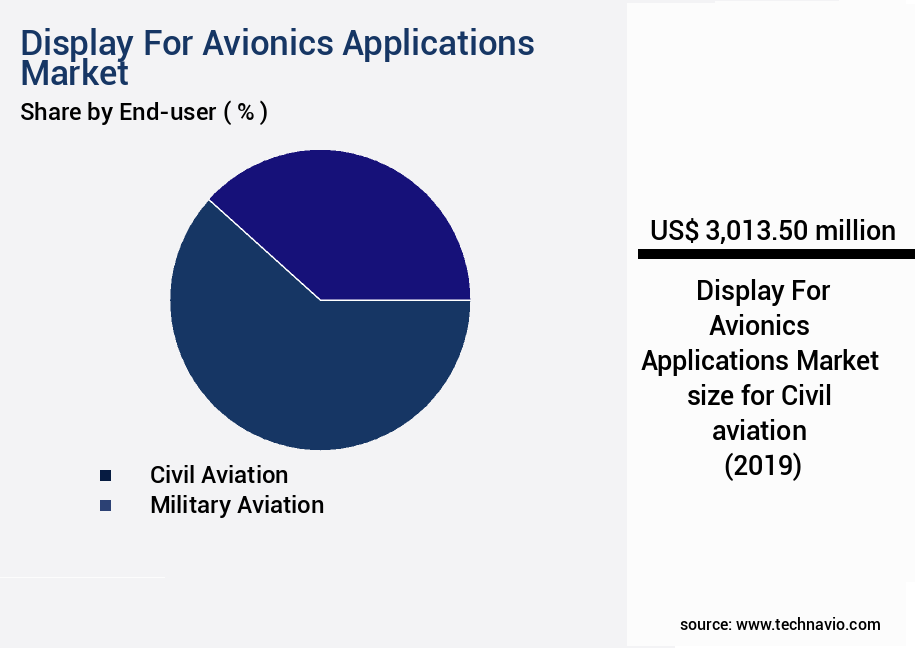
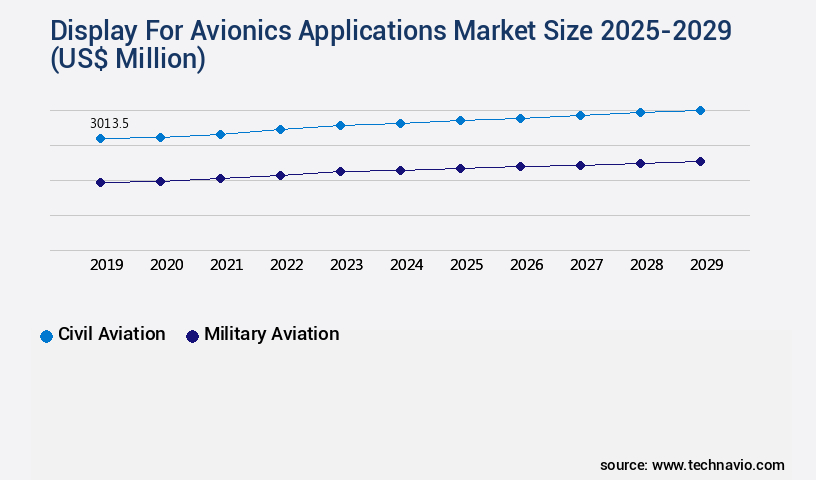
The Civil aviation segment was valued at USD 3.01 billion in 2019 and showed a gradual increase during the forecast period.
The avionics display market is experiencing significant growth, with an increasing number of applications in civil and military aviation sectors. For instance, the adoption of high-resolution displays in cockpit displays has grown by 15%, while the integration of touchscreen displays in avionics systems has expanded by 18%. Additionally, the market is expected to grow further due to the increasing demand for advanced display technologies in modern avionics systems. In summary, the avionics display market is a dynamic and evolving sector, with continuous advancements in display technologies and their applications. The market's growth is driven by factors like the increasing demand for advanced display technologies, the integration of touchscreen displays, and the need for real-time data processing and human-machine interface.
Regional Analysis
North America is estimated to contribute 48% to the growth of the global market during the forecast period. Technavio's analysts have elaborately explained the regional trends and drivers that shape the market during the forecast period.
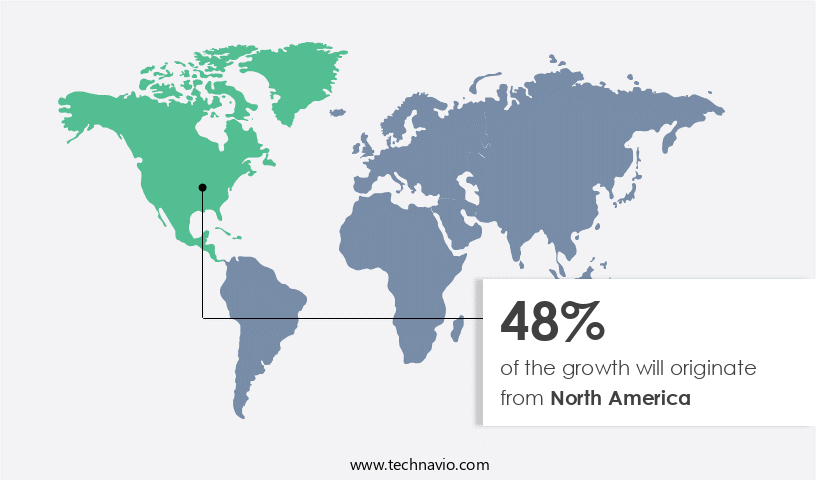
See How Display For Avionics Applications Market Demand is Rising in North America Request Free Sample
The display market for avionic applications in the North American region is experiencing significant growth, driven by the strong aviation industry in countries like the United States, Canada, and Mexico. The increasing demand for new aircraft has resulted in increased investments in aerospace components and equipment manufacturing, thereby fueling the market's expansion. Display system manufacturers are responding to this trend by investing in advanced production technologies to meet the growing demand for head-up displays (HUDs) and in-flight display systems from aircraft original equipment manufacturers (OEMs).
These initiatives will contribute to the market's growth during the forecast period.
Market Dynamics
Our researchers analyzed the data with 2024 as the base year, along with the key drivers, trends, and challenges. A holistic analysis of drivers will help companies refine their marketing strategies to gain a competitive advantage.
The avionics display system market for aircraft is experiencing significant growth, driven by the need for advanced technologies that enhance pilot situational awareness and improve human-machine interface design. One of the primary challenges in this market is the integration of high-brightness display technology for cockpits, which must meet stringent sunlight readability requirements. Advanced image processing algorithms and real-time data visualization techniques are essential to ensure effective thermal management solutions and reduce power consumption. The adoption of ARINC 664p standard for display communication is a significant trend, enabling seamless data transfer between various avionic systems. Improving display resolution and clarity, optimizing contrast ratio and viewing angle, and ensuring display reliability and fault tolerance are critical design considerations.
Testing and certification to DO-160 standards are mandatory for avionics displays, while ruggedized designs are essential for withstanding the harsh aviation environment. More than 70% of new product developments focus on implementing the latest advancements in cockpit display technology, such as augmented reality in head-up displays, predictive maintenance techniques for avionics displays, and effective use of synthetic vision systems in flight operations. These modern display technologies contribute significantly to enhanced flight safety and operational efficiency. Comparatively, the industrial application segment accounts for a larger share of the avionics display market compared to the academic segment, reflecting the growing demand for advanced avionic systems in commercial and military aircraft.
The use of high-end display technologies in aviation is transforming the industry, with a minority of players dominating the high-end instrument market. In conclusion, the avionics display system market is witnessing substantial growth, driven by the need for advanced technologies that address integration challenges, improve human-machine interface design, and ensure effective thermal management. The adoption of ARINC 664p standard, latest display technologies, and rigorous testing and certification are key trends shaping the market.
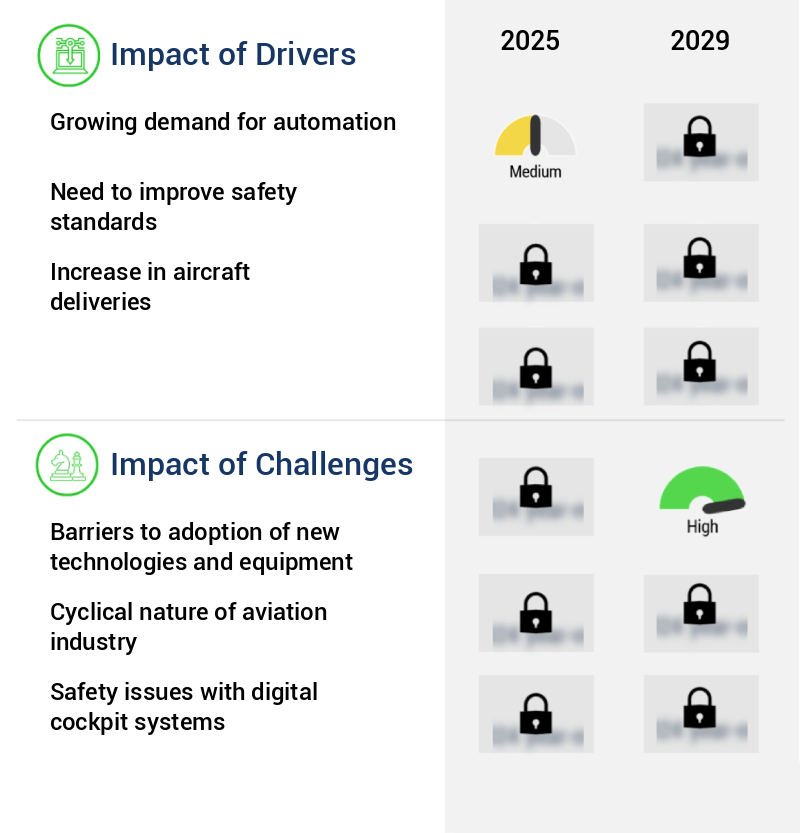
What are the key market drivers leading to the rise in the adoption of Display For Avionics Applications Industry?
- The increasing need for automation serves as the primary catalyst for market growth. Given the escalating demand for automation, the market is experiencing significant expansion. The market is undergoing substantial growth due to the mounting requirement for automation solutions. The key market trend propelling growth is the rising demand for automation technology. The market's expansion is being fueled by the increasing demand for automation in various industries.
- Digital cockpit systems significantly enhance flight safety by providing essential information and automating certain tasks during challenging conditions such as clouds, low visibility, or airspace congestion. These systems incorporate advanced-display technologies, autopilot systems, and Flight Management Systems (FMS). By integrating these components, cockpit workload is reduced, ensuring access to crucial flight data. The Federal Aviation Administration (FAA) advocates for the implementation of autopilots in aircraft, making it mandatory for single-pilot operations. FAA certifies these autopilots at a minimal cost, enabling manufacturers to invest in the development of smart digital autopilots. These new autopilots can be installed in multiple aircraft models without requiring additional certifications, reducing development costs.
- The integration of digital cockpit systems has become a priority in the aviation industry, with a growing number of aircraft manufacturers and operators adopting these technologies. The adoption rate of digital cockpit systems is projected to increase significantly in the coming years, with a substantial percentage of new aircraft being equipped with these systems. The integration of digital cockpit systems represents a major shift towards enhanced safety and operational efficiency in the aviation sector.
What are the market trends shaping the Display For Avionics Applications Industry?
- The introduction of the Automatic Ground Collision Avoidance System (Auto-GCAS) represents a significant market trend in aviation technology. This innovative system is mandatory for ensuring the safety of aircraft during landing approaches and takeoffs, preventing potential ground collisions.
- The auto-GCAS (Ground Collision Avoidance System) was pioneered by NASA, the US Air Force, and Lockheed Martin engineers in 2010, designed to prevent aircraft accidents by providing real-time information on an aircraft's position and altitude in relation to the ground. This technology is particularly crucial for military aviation, where pilots face challenging missions that increase the risk of ground collisions. To enhance the Navy's Boeing F/A-18C/D light-attack bombers' ability to prevent controlled flight into terrain, military aviation specialists have requested avionics and software upgrades. These upgrades aim to mitigate the risk of accidents when pilots are fixated on targets during attack dives, spatially disoriented, or experiencing medical conditions.
- The continuous evolution of technology in the aerospace sector underscores the importance of such upgrades, as the demand for advanced safety features grows. The integration of auto-GCAS and similar systems into aircraft represents a significant advancement in aviation safety, enabling pilots to maintain situational awareness and avoid potential collisions. This technology's ongoing development and implementation underscore the dynamic nature of the aerospace industry, where innovation and adaptation are essential to addressing the evolving needs of military and commercial aviation.
What challenges does the Display For Avionics Applications Industry face during its growth?
- The adoption of new technologies and equipment in the industry is hindered by various barriers, posing a significant challenge to its growth.
- The global commercial aircraft industry is subject to rigorous regulations, necessitating avionic systems providers to adhere to stringent certification requirements from regulatory bodies like the FAA, ICAO, and EASA. These organizations ensure the safety of passengers and aircraft through extensive testing and evaluation processes for advanced technologies. However, the adoption of new, technologically advanced equipment comes with challenges. High costs and the need for specialized expertise are significant hurdles in introducing new technologies. The demand for efficient, lightweight, reliable, and long-lasting equipment continues to drive up R&D expenses.
- Despite these challenges, the industry remains dynamic, with ongoing advancements in areas such as communication, navigation, surveillance, and collision avoidance systems. The integration of these technologies enhances aircraft safety, efficiency, and overall performance, making them indispensable in the rapidly evolving commercial aviation sector.
Exclusive Technavio Analysis on Customer Landscape
The display for avionics applications market forecasting report includes the adoption lifecycle of the market, covering from the innovator's stage to the laggard's stage. It focuses on adoption rates in different regions based on penetration. Furthermore, the display for avionics applications market report also includes key purchase criteria and drivers of price sensitivity to help companies evaluate and develop their market growth analysis strategies.
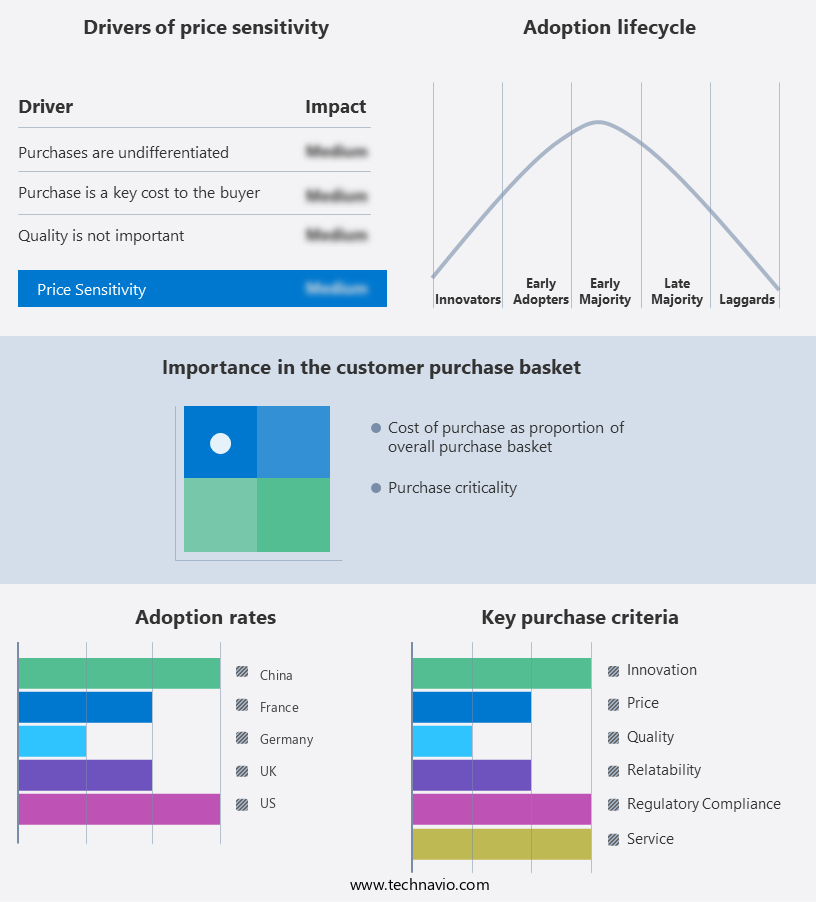
Customer Landscape of Display For Avionics Applications Industry
Competitive Landscape
Companies are implementing various strategies, such as strategic alliances, display for avionics applications market forecast, partnerships, mergers and acquisitions, geographical expansion, and product/service launches, to enhance their presence in the industry.
Astronautics Corp. of America - The company specializes in providing advanced display solutions for avionics applications, including the Badger Pro integrated primary flight display system.
The industry research and growth report includes detailed analyses of the competitive landscape of the market and information about key companies, including:
- Astronautics Corp. of America
- Astronics Corp.
- Avidyne Corp.
- BAE Systems Plc
- Diehl Stiftung and Co. KG
- Elbit Systems Ltd.
- Excelitas Technologies Corp.
- FDS Avionics Corp.
- Gables Engineering Inc.
- Garmin Ltd.
- General Electric Co.
- Honeywell International Inc.
- L3Harris Technologies Inc.
- Mercury Systems Inc.
- Nytric Ltd.
- Parker Hannifin Corp.
- RTX Corp.
- ScioTeq BV
- Thales Group
- The Boeing Co.
Qualitative and quantitative analysis of companies has been conducted to help clients understand the wider business environment as well as the strengths and weaknesses of key industry players. Data is qualitatively analyzed to categorize companies as pure play, category-focused, industry-focused, and diversified; it is quantitatively analyzed to categorize companies as dominant, leading, strong, tentative, and weak.
Recent Development and News in Display For Avionics Applications Market
- In January 2024, Thales, a leading technology company, announced the launch of its new Aviocockpit Pro glass cockpit solution for regional aviation, featuring advanced electronic flight instruments and large-format multifunction displays (MFDs) for enhanced situational awareness (Thales press release, 2024).
- In March 2024, Collins Aerospace, a subsidiary of Raytheon Technologies, and L3Harris Technologies, formed a strategic partnership to develop and produce advanced avionics systems for military and commercial aircraft, combining their expertise in display systems and avionics integration (Collins Aerospace press release, 2024).
- In April 2025, Garmin International, a global leader in aviation and consumer electronics, received FAA approval for its new G1000 NXi integrated flight deck system, featuring advanced displays and avionics for general aviation aircraft (Garmin International press release, 2025).
- In May 2025, Honeywell Aerospace announced the acquisition of Avionica, a leading provider of flight data recording and transmission systems, expanding its portfolio of avionics solutions and enhancing its capabilities in real-time data monitoring and transmission (Honeywell Aerospace press release, 2025).
Dive into Technavio's robust research methodology, blending expert interviews, extensive data synthesis, and validated models for unparalleled Display For Avionics Applications Market insights. See full methodology.
|
Market Scope |
|
|
Report Coverage |
Details |
|
Page number |
227 |
|
Base year |
2024 |
|
Historic period |
2019-2023 |
|
Forecast period |
2025-2029 |
|
Growth momentum & CAGR |
Accelerate at a CAGR of 4.5% |
|
Market growth 2025-2029 |
USD 1411.5 million |
|
Market structure |
Fragmented |
|
YoY growth 2024-2025(%) |
4.3 |
|
Key countries |
US, Canada, UK, China, France, Germany, Mexico, India, Italy, and Japan |
|
Competitive landscape |
Leading Companies, Market Positioning of Companies, Competitive Strategies, and Industry Risks |
Research Analyst Overview
- The dynamic avionics display market is characterized by the continuous evolution of technology and market activities. One significant trend is the increasing adoption of OLED display technology, offering superior image quality, longer lifespan, and lower power consumption compared to traditional LCD displays. Another critical aspect is the development of advanced image processing algorithms, ensuring ARINC standards compliance and enhancing display reliability through rigorous testing. Avionics software integration plays a crucial role in ensuring seamless interaction between displays and other aircraft systems. High-resolution displays, human-machine interfaces (HMI), fail-operational displays, heads-up displays (HUD), and touchscreen displays are becoming increasingly prevalent in avionics applications.
- Ruggedized displays, featuring thermal management and sunlight readability, are designed to withstand harsh environmental conditions. Display data processing capabilities have advanced significantly, enabling real-time sensor data visualization and real-time data processing for navigation and cockpit display systems. Data bus communication technologies facilitate efficient information exchange between various avionic components. LED backlight technology, offering energy efficiency and long lifespan, is gaining traction in avionics applications. Display power consumption remains a key concern, with ongoing efforts to minimize power usage while maintaining high brightness and reliability. DO-160 environmental testing ensures displays meet stringent aviation industry standards, ensuring optimal performance in various temperature, pressure, and vibration conditions.
- The market's ongoing evolution reflects the industry's commitment to enhancing safety, efficiency, and functionality in avionics systems.
What are the Key Data Covered in this Display For Avionics Applications Market Research and Growth Report?
-
What is the expected growth of the Display For Avionics Applications Market between 2025 and 2029?
-
USD 1.41 billion, at a CAGR of 4.5%
-
-
What segmentation does the market report cover?
-
The report segmented by End-user (Civil aviation and Military aviation), Type (In-flight display and Heads-up display), Technology (EFIS, GNSS integration, EVS, SVS, and Touchscreen and gesture-controlled displays), and Geography (North America, Europe, APAC, South America, and Middle East and Africa)
-
-
Which regions are analyzed in the report?
-
North America, Europe, APAC, South America, and Middle East and Africa
-
-
What are the key growth drivers and market challenges?
-
Growing demand for automation, Barriers to adoption of new technologies and equipment
-
-
Who are the major players in the Display For Avionics Applications Market?
-
Key Companies Astronautics Corp. of America, Astronics Corp., Avidyne Corp., BAE Systems Plc, Diehl Stiftung and Co. KG, Elbit Systems Ltd., Excelitas Technologies Corp., FDS Avionics Corp., Gables Engineering Inc., Garmin Ltd., General Electric Co., Honeywell International Inc., L3Harris Technologies Inc., Mercury Systems Inc., Nytric Ltd., Parker Hannifin Corp., RTX Corp., ScioTeq BV, Thales Group, and The Boeing Co.
-
Market Research Insights
- The market encompasses advanced technologies that enable efficient and reliable operation in demanding aerospace environments. Two key performance metrics underscore the importance of these displays: response time and image quality. Response time, measured in milliseconds, impacts system integration testing by ensuring the timely processing of input signal data. For instance, a display with a response time of 10ms can effectively reduce input signal processing delays. Image quality, on the other hand, is crucial for maintaining avionic system certification. High pixel density displays, with a minimum of 600 pixels per inch, offer improved data compression techniques and display calibration methods, resulting in better display brightness uniformity and contrast ratio.
- These enhancements contribute to more accurate data representation and reduced display diagnostics, ultimately ensuring optimal avionic system performance.
We can help! Our analysts can customize this display for avionics applications market research report to meet your requirements.
 RIA -
RIA -